

Engineering projects are growing more complex each year, raising the stakes for reliability and safety in every field. With new technologies emerging rapidly, the challenge of ensuring flawless products has never been greater.
This article dives into the crucial distinctions between engineering verification and testing. You will learn how each process plays a unique role in delivering successful engineering outcomes.
Expect to discover:
- Clear definitions and real-world examples
- Step-by-step processes and industry standards
- Insights into how both approaches shape quality assurance
Why does this matter?
- Complex projects mean higher risks of costly failure.
- Many professionals confuse verification with testing.
- Mastering these concepts leads to better, safer products.
- Read on to gain clarity and make the right choices in your engineering processes.
Understanding Engineering Verification
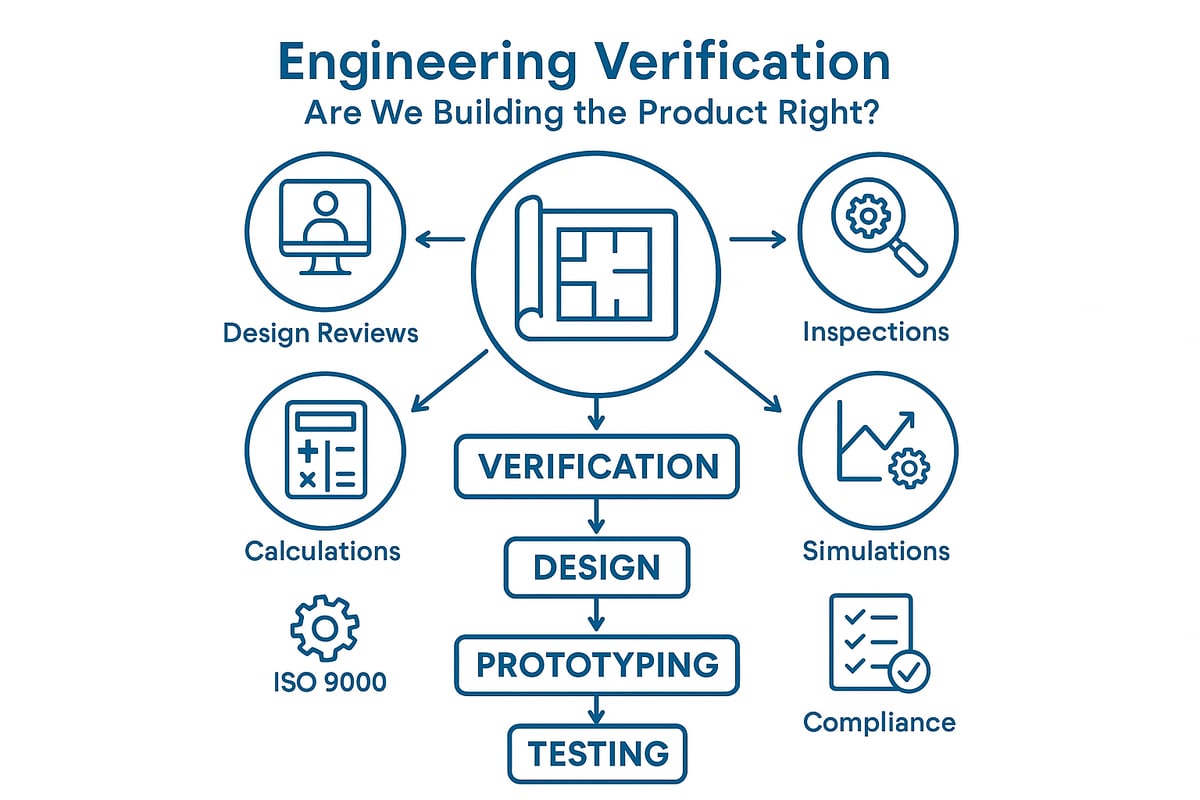
Engineering verification is a foundational process in the engineering field, focused on ensuring that every design, process, or product aligns with specified requirements. At its core, engineering verification asks, "Are we building the product right?" This question is central to quality assurance, as it drives teams to systematically confirm that technical specifications are met before further development steps occur.
The main purpose of engineering verification is to confirm compliance with all relevant technical standards and project requirements. By rigorously checking that designs meet set criteria, engineering teams can identify discrepancies early. This approach helps organizations avoid costly mistakes and rework later in the project lifecycle. Effective engineering verification not only upholds internal quality standards but also supports external regulatory compliance, which is critical for industries such as construction, aerospace, and electronics.
A variety of methods are used for engineering verification. Common activities include detailed design reviews, thorough inspections, simulations, and analytical calculations. For example, design reviews allow stakeholders to evaluate whether a bridge blueprint meets safety codes and load requirements. Simulations can test the performance of an electrical system against schematic diagrams to ensure conformance. Inspections of technical drawings and constructability reviews are also widely practiced. For a comprehensive overview of this approach, see the Constructability Review Guide in Engineering, which outlines how structured reviews help identify potential issues before construction begins.
The timing of engineering verification is crucial to its effectiveness. Typically, verification occurs during the design and pre-production phases, before any prototypes are built or products are manufactured. By integrating engineering verification early in the engineering lifecycle, teams can catch errors when they are least expensive and disruptive to fix. This proactive approach allows for smooth transitions to later stages, such as prototyping and testing, while maintaining strict adherence to requirements.
Industry standards play a significant role in shaping engineering verification practices. Frameworks like ISO 9000 emphasize the importance of verification in quality management systems. These standards require documented evidence that designs and processes meet defined criteria. Competitor content frequently highlights that engineering verification is a static, documentation-driven process—unlike testing, which involves physical execution. Verification focuses on reviewing plans, specifications, and calculations rather than running experiments or operating products.
To illustrate, consider a civil engineering team verifying bridge designs against local safety codes before moving to construction. In electrical engineering, teams might check circuit schematics for compliance with international standards. These activities collectively reduce the risk of design flaws, ensure regulatory approval, and support successful project delivery. By emphasizing engineering verification at each critical step, organizations strengthen their commitment to quality and reliability.
Exploring Engineering Testing
Engineering testing is a cornerstone of quality assurance, working hand in hand with engineering verification to deliver reliable, safe products. As engineering projects become more complex, the need for rigorous testing grows, ensuring that what is designed on paper performs as expected in the real world.
What Is Engineering Testing?
Engineering testing is the process of evaluating a product, component, or system under actual or simulated conditions to confirm it performs as intended. Unlike engineering verification, which checks if requirements are correctly implemented, testing demonstrates whether those requirements deliver the desired results in practice.
Testing plays a vital role by exposing real-world flaws that design documents or simulations may miss. It answers the critical question: Does the product work as intended when subjected to expected and unexpected stresses?
Purpose and Value of Testing
The primary purpose of engineering testing is validation. Testing confirms that a product, once built, meets user needs, regulatory requirements, and safety standards. While engineering verification ensures compliance with design specifications, testing provides evidence that the finished product functions correctly and reliably.
Effective testing reduces the risk of failures in the field, supports certification processes, and helps organizations avoid costly recalls or safety incidents.
Major Types of Engineering Testing
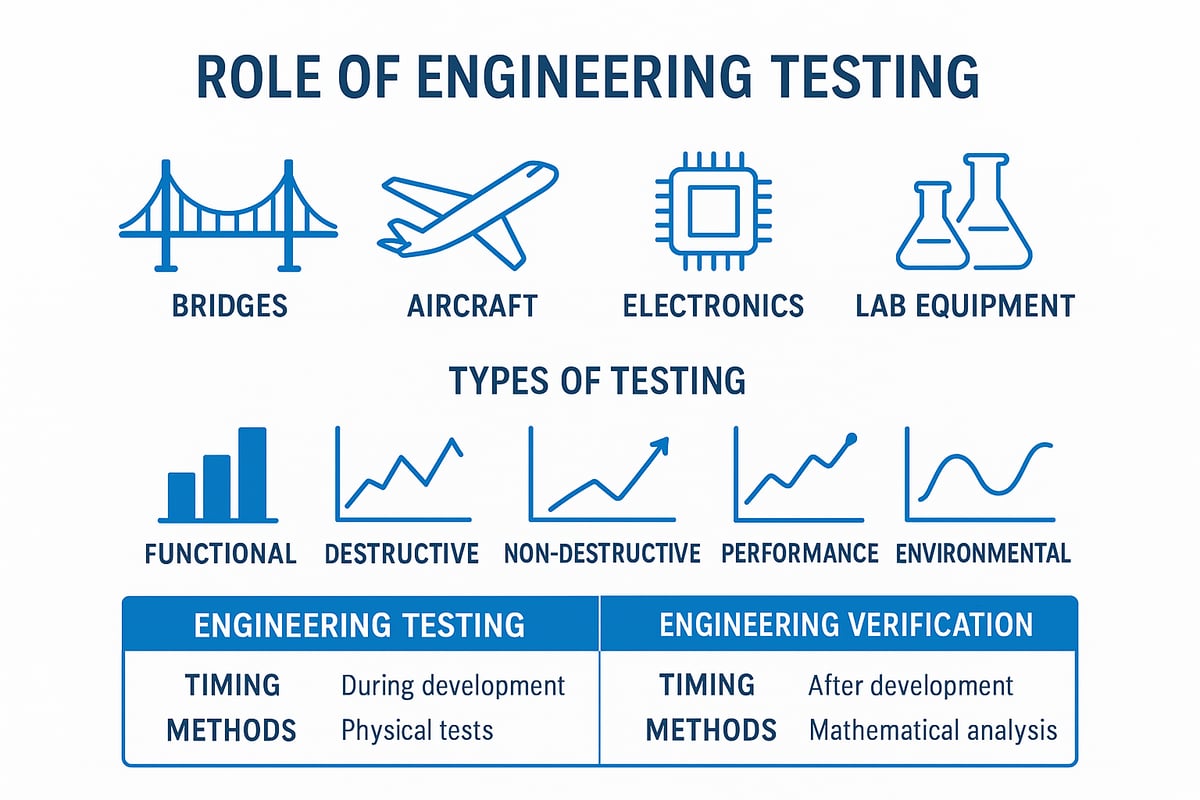
Engineers use a variety of testing methods, each tailored to specific goals and industries:
- Functional Testing: Checks if a product or system performs its intended operations.
- Destructive Testing: Pushes materials or components to failure to measure strength and safety margins.
- Non-Destructive Testing (NDT): Evaluates properties without causing damage, such as ultrasonic or X-ray inspections.
- Performance Testing: Measures how well a product operates under different loads, speeds, or conditions.
- Environmental Testing: Assesses durability when exposed to temperature changes, humidity, vibration, or corrosive environments.
These testing types are chosen based on project requirements and the nature of the risks involved. For instance, destructive testing is common in materials engineering, while non-destructive methods are essential for ongoing maintenance and safety checks.
Methods and Timing in the Engineering Lifecycle
Engineering testing typically follows engineering verification in the product development cycle. After verifying that designs and documents comply with requirements, engineers move to hands-on evaluation.
Common testing methods include:
- Laboratory experiments with controlled variables.
- Field trials that simulate real-world use.
- Prototype testing to validate design choices before full-scale production.
Testing often occurs during or after prototyping, but it can also continue into full production and even post-launch as part of ongoing quality assurance. This staged approach ensures that each phase of development builds on a solid foundation, reducing the chance of costly late-stage failures.
Real-World Examples and Industry Applications
Testing is indispensable across all engineering disciplines. Civil engineers perform load testing on bridges to verify structural integrity before opening to traffic. Aerospace teams conduct fatigue testing on aircraft components to ensure safety over thousands of flight cycles. Electronics manufacturers use environmental testing to confirm devices can withstand heat, moisture, and vibration.
For a detailed look at how specialized testing is applied in practice, the Geotechnical Testing Methods Overview provides insight into how soil and material testing supports the safety and reliability of construction projects.
Competitor content consistently highlights that while engineering verification is a static, documentation-driven process, testing is dynamic and execution-based. Testing reveals hidden flaws that paperwork alone cannot uncover.
Key Insights: Testing vs. Verification
A helpful way to distinguish testing from engineering verification is with this table:
| Aspect | Engineering Verification | Engineering Testing |
|---|---|---|
| Approach | Static, document-based | Dynamic, execution-based |
| Primary Question | Are we building the product right? | Does the product work as intended? |
| Timing | Design, pre-prototype | Prototype, production, field use |
| Deliverables | Compliance reports, specs | Test results, performance data |
Understanding both engineering verification and testing is essential for reducing defects, ensuring compliance, and achieving project success in 2026.
Engineering Verification vs Testing: Key Differences
In modern engineering, understanding the distinction between engineering verification and testing is crucial for project success. Although these terms are often used interchangeably, they serve unique functions throughout the product lifecycle. This section breaks down their core definitions, objectives, methods, timing, outcomes, and real-world applications.
Definitions and Objectives
Let us begin by clarifying the fundamental concepts of engineering verification and testing.
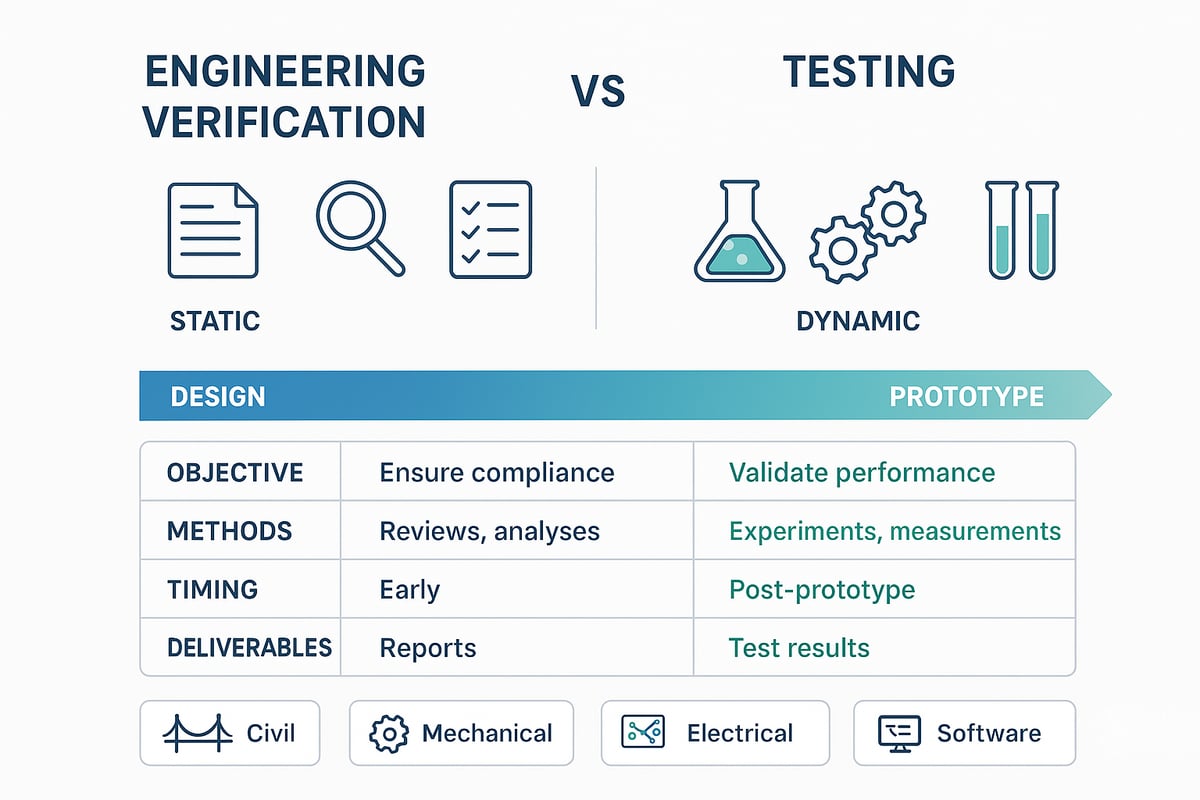
Engineering verification is the process of ensuring a design, process, or product strictly meets specified technical requirements and standards. Its objective is compliance, confirming that all documentation and design outputs align with predetermined criteria before moving forward.
Testing, in contrast, evaluates whether the final product performs as intended under real or simulated operating conditions. Its primary goal is to validate performance, safety, and user needs in practical scenarios.
Here is a concise comparison:
| Aspect | Engineering Verification | Testing |
|---|---|---|
| Objective | Compliance with requirements | Performance and fitness |
| Key Question | Are we building the product right? | Are we building the right product? |
| Method | Static checks, reviews | Dynamic execution, experiments |
| Focus | Documentation, design | Functionality, real-world use |
By establishing these definitions, teams can avoid confusion and ensure both processes are applied effectively.
Processes and Methodologies
The methodologies for engineering verification and testing differ significantly.
Engineering verification involves static methods. These include:
- Design reviews to confirm requirements are met
- Inspections of documentation and schematics
- Simulations and analytical calculations
These activities are focused on documentation and do not require the physical execution of the product. Verification is a non-execution process, relying on analysis, peer review, and comparison to standards. This approach helps prevent errors before resources are committed to prototypes or production.
Testing is dynamic. It involves:
- Laboratory experiments with physical prototypes
- Field trials in actual operating conditions
- Functional, performance, destructive, and non-destructive tests
Testing requires hands-on execution and measures how the product behaves under various scenarios. This process uncovers hidden flaws and validates if the end result meets expectations.
Documentation also varies. Engineering verification produces compliance matrices, review reports, and checklists, while testing generates data logs, performance charts, and test certificates.
For more on best practices in both verification and testing, see Quality Control and Assurance Practices.
Timing in Engineering Lifecycle
Timing is a key differentiator between engineering verification and testing.
Engineering verification occurs early, typically during the design and pre-production phases. Teams confirm that blueprints, models, and calculations are correct before any physical product is built.
Testing takes place later, after prototypes are developed or during production. It is used to validate the physical product’s performance and reliability before it reaches the market.
Sequencing matters. Performing engineering verification before testing ensures that only compliant designs are prototyped and tested, reducing wasted effort and resources. This structured approach is illustrated in engineering lifecycle diagrams, where verification gates precede testing milestones.
Outcomes and Deliverables
Each approach yields different deliverables.
Engineering verification produces:
- Verified documentation
- Compliance reports
- Completed checklists
These outputs show that requirements were met before moving forward.
Testing delivers:
- Test results and performance data
- Failure analysis reports
- Certification and approval records
These outcomes inform key go/no-go decisions, guiding whether a product can proceed to launch or needs redesign.
Both sets of deliverables are essential for audits, regulatory reviews, and continuous improvement.
Real-World Examples
The distinctions between engineering verification and testing become clear in practical scenarios.
In civil engineering, teams verify bridge blueprints against safety codes, then test materials like concrete for strength under load.
Mechanical engineers review CAD models for accuracy and compliance, then perform durability testing on manufactured parts.
Electrical engineering projects involve verifying circuit diagrams and PCB layouts before conducting electromagnetic compatibility and failure rate tests.
Software teams use code reviews and static analysis for engineering verification, followed by unit, integration, and system tests to assess real-world performance.
By applying engineering verification and testing at the right stages, organizations across disciplines ensure safer, more reliable, and compliant products.
The Role of Verification and Testing in Quality Assurance
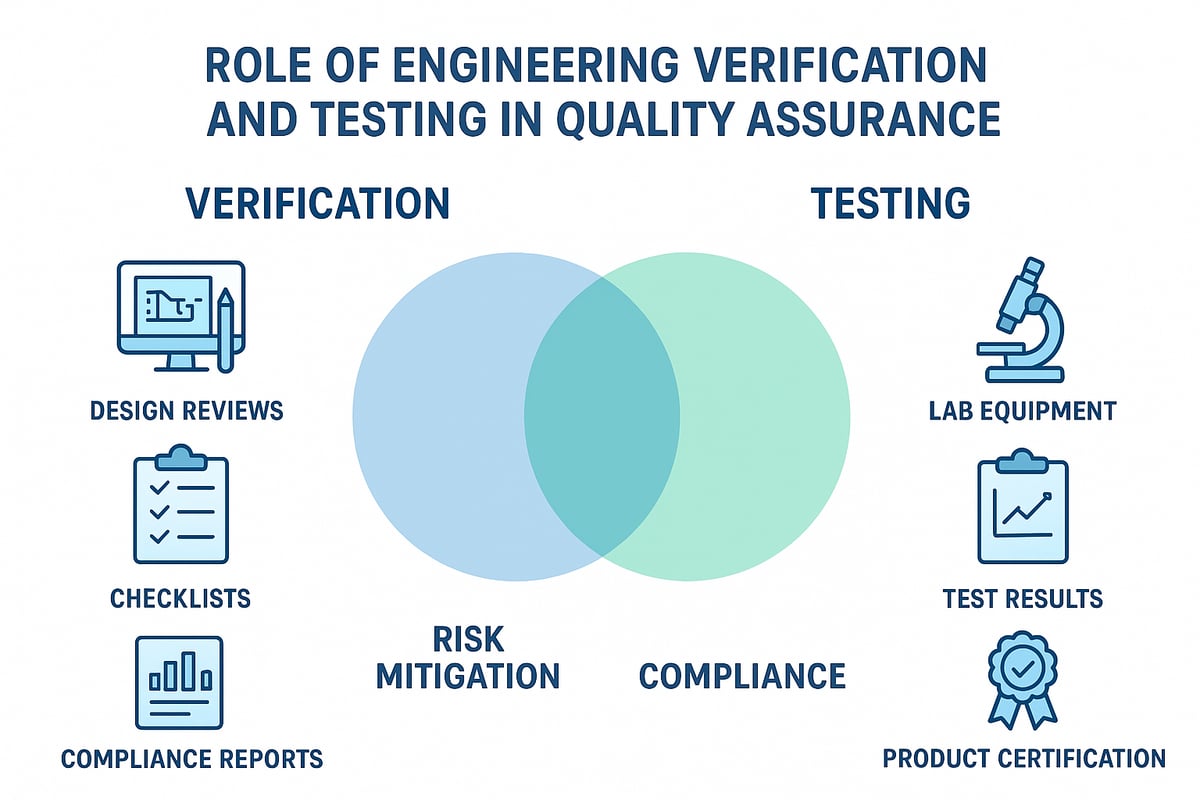
Ensuring quality in engineering projects depends on robust processes. Both engineering verification and testing are pillars of effective quality assurance, each playing a distinct role at different stages.
Contribution to Product Quality
Engineering verification is essential for confirming that every aspect of a design meets the required specifications before production begins. By establishing compliance early, teams can reduce the chance of defects appearing later in the process.
Testing complements this by confirming that the finished product works as intended in real conditions. Together, engineering verification and testing provide a dual shield against quality issues, supporting reliability throughout the product lifecycle.
Industry standards such as ISO 9000 emphasize integrating both practices to achieve consistent, high-quality outcomes. In short, these processes are foundational for reducing defects and ensuring customer satisfaction.
Risk Mitigation
Engineering verification helps identify potential design flaws before they reach the manufacturing floor. By reviewing plans and calculations, teams catch issues that could otherwise lead to costly failures.
Testing uncovers hidden operational problems that might not be visible during design reviews. For instance, stress testing can reveal weaknesses only apparent under real-world loads.
Combining engineering verification with rigorous testing minimizes the risk of both design and operational failures. This layered approach is a proven strategy for safeguarding project investments and reputations.
Regulatory and Safety Compliance
Compliance with industry regulations is non-negotiable in sectors like construction, automotive, and aerospace. Engineering verification ensures documentation and processes align with technical standards, while thorough testing demonstrates that products perform safely and reliably.
Certified material testing is a critical component, especially in construction. As explained in Why Certified Construction Material Testing Matters, certified processes reinforce both safety and regulatory adherence.
By integrating engineering verification and testing, organizations can confidently meet evolving compliance demands and avoid costly penalties.
Cost and Time Implications
Effective engineering verification saves time and resources by catching issues early, reducing the likelihood of expensive rework. Verifying designs and documentation before production means fewer surprises down the line.
Testing further reduces costs by identifying flaws in prototypes or finished products, preventing large-scale recalls. Industry data shows that investments in engineering verification and testing pay off by streamlining workflows and minimizing warranty claims.
Ultimately, a balanced approach to both processes delivers measurable efficiency gains and protects long-term profitability.
Industry Trends and Innovations in 2026
Engineering verification and testing are evolving rapidly as new technologies and methodologies reshape the field. In 2026, organizations are leveraging digital transformation, integrated workflows, updated standards, and real-world case studies to drive quality and efficiency.
Digital Transformation in Verification and Testing
The digital revolution is changing engineering verification and testing. Digital twins now let engineers create virtual models that mirror physical products, enabling early detection of design issues. AI-driven simulations speed up analysis and reveal patterns that manual reviews might miss.
Automated testing platforms reduce manual effort, improve repeatability, and shorten development cycles. These advances enable more comprehensive coverage of complex systems. For a deeper dive into the latest methodologies, the Verification, Validation, and Uncertainty Quantification Symposium 2026 offers expert insights and showcases cutting-edge practices.
Digital transformation ensures that engineering verification keeps pace with ever-increasing product complexity and market demands.
Integration of Verification and Testing
Modern engineering workflows increasingly blend verification and testing for continuous quality assurance. Model-based systems engineering (MBSE) enables teams to validate requirements, simulate behavior, and test designs within a unified digital environment.
This integration helps identify discrepancies earlier and maintains traceability from concept to deployment. By connecting engineering verification activities with real-time testing feedback, teams can respond quickly to issues and optimize designs.
The result is a seamless process that supports innovation, reduces silos, and ensures that products meet both specifications and real-world needs.
Evolving Standards and Best Practices
The landscape of engineering verification and testing is shaped by evolving standards like ISO 9000 and ASTM updates. In 2026, new guidelines emphasize sustainability, cybersecurity, and safety compliance across industries.
Organizations must adapt to these changes by updating their processes and documentation. Regulatory frameworks now require traceable verification steps and robust testing evidence for certification.
Staying ahead of industry best practices ensures that engineering verification remains effective, efficient, and aligned with global expectations.
Case Studies of Leading Companies
Industry leaders are setting benchmarks in engineering verification and testing. Aerospace firms use digital twins for real-time monitoring and predictive maintenance. Automotive companies employ automated test benches to validate safety-critical systems.
In the electronics sector, advanced simulation and formal verification methods protect against failures and ensure regulatory compliance. A recent case study highlights how formal verification of programmable logic controllers enhances safety in industrial automation.
These examples demonstrate how effective engineering verification, combined with innovative testing, drives project success and sets new industry standards.
Common Challenges and How to Overcome Them
In the dynamic field of engineering verification and testing, professionals encounter several recurring challenges. Addressing these obstacles is essential for ensuring accuracy, compliance, and project success. Let us explore the most common issues and practical solutions.
Misconceptions and Overlaps
A major challenge is the persistent confusion between engineering verification and testing. Many teams mistakenly use these terms interchangeably, leading to gaps in quality assurance. To clarify, engineering verification confirms if a product meets design specifications, while testing evaluates real-world functionality.
Here are simple guidelines to differentiate:
- Verification: "Are we building the product right?"
- Testing: "Are we building the right product?"
Understanding these distinctions prevents costly errors and ensures both processes receive proper attention. For advanced scenarios, formal methods such as Formal Verification of PLCs as a Service can provide clarity in complex, safety-critical systems.
Resource Allocation and Planning
Effective resource allocation is critical in engineering verification. Projects often struggle with limited budgets, tight schedules, and competing priorities. Neglecting verification tasks early in the process can lead to greater expenses later.
Best practices include:
- Allocating dedicated time for design reviews and inspections.
- Using risk-based approaches to prioritize verification activities.
- Consulting standards like the ANSI/NETA EMW-2026 Standard for guidance on personnel qualifications.
By planning for engineering verification from the outset, organizations avoid last-minute rushes and ensure consistent quality throughout the project lifecycle.
Documentation and Traceability
Maintaining thorough documentation is vital for engineering verification. Incomplete records can hinder audits, cause delays, and obscure the root causes of issues. Engineers must track every verification activity, from initial reviews to final approvals.
Tips for effective documentation:
- Use standardized templates for checklists and reports.
- Store records in a centralized, accessible repository.
- Ensure traceability by linking each verification step to specific requirements.
Following industry guidelines, such as those found in the ANSI/NETA EMW-2026 Standard, strengthens compliance and supports continuous improvement in engineering verification processes.
Training and Skill Development
Rapid advancements in engineering verification demand ongoing education and skill development. Teams lacking updated expertise may overlook critical steps or misuse verification tools.
To overcome this, organizations should:
- Invest in regular training on verification methodologies and standards.
- Encourage professional certifications in quality management or technical specialties.
- Stay informed about innovations, such as formal verification techniques and digital tools.
Prioritizing skill development ensures engineering verification remains robust, effective, and aligned with evolving industry requirements.
Practical Applications Across Engineering Disciplines
Engineering verification is integral across every branch of engineering, shaping how professionals approach design, compliance, and product reliability. Each discipline tailors engineering verification and testing to its unique standards and challenges, ensuring both safety and performance.
Civil and Structural Engineering
In civil and structural engineering, engineering verification starts with rigorous checks of design calculations and drawings. Engineers review blueprints to confirm compliance with building codes and safety regulations. For example, verifying load calculations before construction helps prevent structural failures.
Testing complements this by assessing the physical properties of materials and finished structures. Common tests include concrete compressive strength and steel tensile strength. These ensure materials meet specified standards and that completed structures perform as intended.
Both engineering verification and testing are essential for public safety, minimizing risks in bridges, buildings, and infrastructure projects.
Mechanical and Automotive Engineering
Engineering verification in mechanical and automotive fields involves reviewing CAD models, assembly instructions, and manufacturing specifications. Engineers ensure every component aligns with technical requirements before production begins, reducing the chance of assembly errors.
Testing is critical for evaluating durability, safety, and performance. Methods include fatigue testing, crash simulations, and non-destructive testing (NDT). As regulations evolve, understanding upcoming 2026 NDT Regulatory Compliance Changes is vital for staying compliant in automotive and mechanical sectors.
This dual approach protects consumers and supports innovation in vehicle and machinery design.
Electrical and Electronics Engineering
In electrical and electronics engineering, engineering verification is used to confirm circuit designs, PCB layouts, and schematic diagrams meet functional and safety standards. Detailed reviews and simulations help identify potential faults before fabrication.
Testing then assesses electromagnetic compatibility (EMC), thermal performance, and failure rates. Techniques like accelerated life testing and in-circuit testing validate product reliability under operational stress.
By combining engineering verification and testing, engineers reduce recalls, ensure regulatory compliance, and enhance product longevity in complex electronics.
Software and Systems Engineering
Software and systems engineering relies on engineering verification through code reviews, requirements analysis, and static analysis tools. These activities confirm that software matches design specifications and meets security standards.
Testing involves dynamic methods like unit, integration, and system tests. These uncover defects in real-world scenarios, ensuring the software operates as intended. Competitor insights highlight the importance of both static (verification) and dynamic (testing) processes to deliver robust, reliable systems.
Together, engineering verification and testing help prevent costly software failures and improve user satisfaction.
As you’ve seen, understanding the distinction between engineering verification and testing is crucial for ensuring both compliance and performance in any project. Whether you’re navigating complex industry standards or looking to enhance quality assurance, having expert support can make all the difference. If you want to discuss your geotechnical, environmental, or materials testing needs—or simply have questions about implementing best practices in Alberta—let’s connect. The team at ZALIG Consulting Ltd is here to help you move forward with confidence. Reach out today at Contact Us: info@zalig.ca or +1 800 515 0497 and get the answers you need.