

Infrastructure failures and climate change have thrust geotechnical material into the spotlight, making its selection more vital than ever for modern construction. As the backbone of safe, sustainable, and resilient engineering, geotechnical material ensures that every project stands the test of time and environment. In 2026, understanding these materials—what they are, how they perform, and why they matter—can mean the difference between success and costly setbacks. This guide explores the evolution of geotechnical material, their types and properties, testing standards, innovations, sustainability, and practical strategies for application. Discover the expert insights you need to make informed, future-ready decisions.
The Evolution of Geotechnical Materials: Trends and Drivers in 2026
The landscape of geotechnical material is rapidly evolving, responding to both historical challenges and modern demands. In 2026, understanding this evolution is critical for engineers, developers, and regulators aiming to build safe, sustainable, and resilient infrastructure.
Historical Context and Industry Shifts
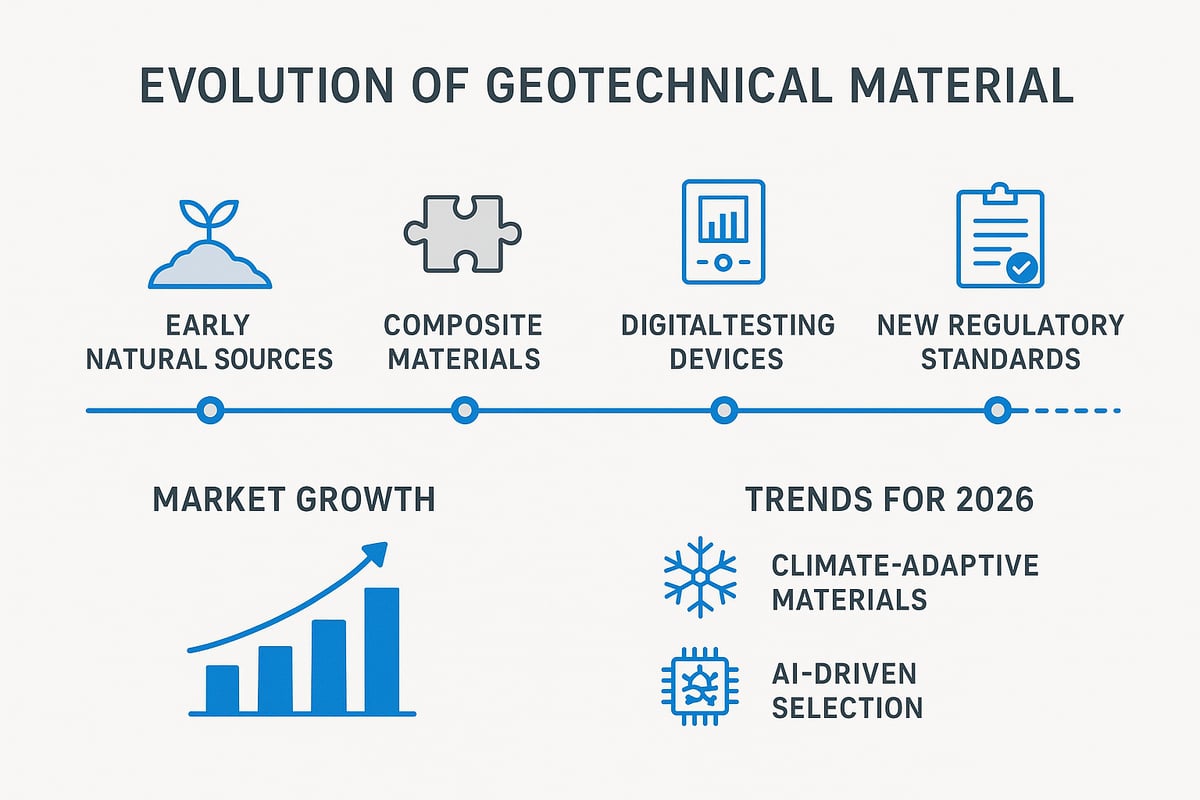
Early use of geotechnical material centered around natural soils and rocks, with selection driven by local availability and empirical knowledge. As civil engineering advanced, the 20th century saw the introduction of engineered fills and cementitious stabilizers, laying the groundwork for more controlled construction methods.
Key milestones in the evolution of geotechnical material include the adoption of geosynthetics in the 1970s, which provided new avenues for reinforcement, filtration, and drainage. The integration of digital testing methods in the late 20th and early 21st centuries allowed for more precise characterization of material behavior.
Significant infrastructure failures, such as dam collapses and landslide events, have acted as catalysts for updating material standards. These incidents underscored the importance of rigorous testing and documentation, shaping the regulatory environment that governs geotechnical material today.
Emerging Trends Shaping 2026
In 2026, the demand for resilient and climate-adaptive geotechnical material is at an all-time high. Smart materials embedded with sensors now offer real-time monitoring capabilities, enabling engineers to detect changes in load, moisture, or displacement before failure occurs.
AI and machine learning are revolutionizing how geotechnical material is selected and specified. Data-driven approaches streamline the decision-making process, reducing risk and optimizing performance. Modular and prefabricated solutions are also gaining traction, offering rapid deployment and consistent quality for large-scale projects.
For a deeper dive into these trends and how they're shaping the future of geotechnical material, refer to Geotechnical Engineering Market Trends 2025.
Regulatory and Environmental Drivers
Regulations governing geotechnical material have grown more stringent, reflecting increased awareness of safety and environmental concerns. Global and regional authorities now require comprehensive lifecycle assessments, ensuring materials are not only fit for purpose but also minimize environmental impact.
The adoption of updated ASTM and ISO standards has raised the bar for compliance. North America and Europe, for example, have introduced new guidelines for testing, documentation, and traceability. These changes encourage the use of sustainable geotechnical material, prompting innovation in sourcing, manufacturing, and end-of-life strategies.
Market Insights and Industry Data
The global market for geotechnical material is projected to grow at a compound annual growth rate (CAGR) of approximately 7 percent through 2026, according to recent industry reports. This surge is fueled by increased infrastructure spending, urbanization, and the need for resilient solutions in the face of climate change.
Recent projects highlight the integration of advanced geotechnical material, such as smart geosynthetics in urban tunneling and bio-mediated soils for erosion control. These examples demonstrate how innovation, regulation, and market demand are converging to reshape the industry.
The evolution of geotechnical material is driven by an ongoing commitment to safety, sustainability, and technological advancement. Staying informed about these trends is essential for every professional involved in infrastructure development.
Core Types of Geotechnical Materials and Their Properties
Understanding the landscape of geotechnical material in 2026 is essential for every engineering project. The right choice of material determines not just the stability of structures, but also their sustainability and long-term performance. Let us explore the primary types, their properties, and the criteria that drive material selection today.
Natural Geotechnical Materials
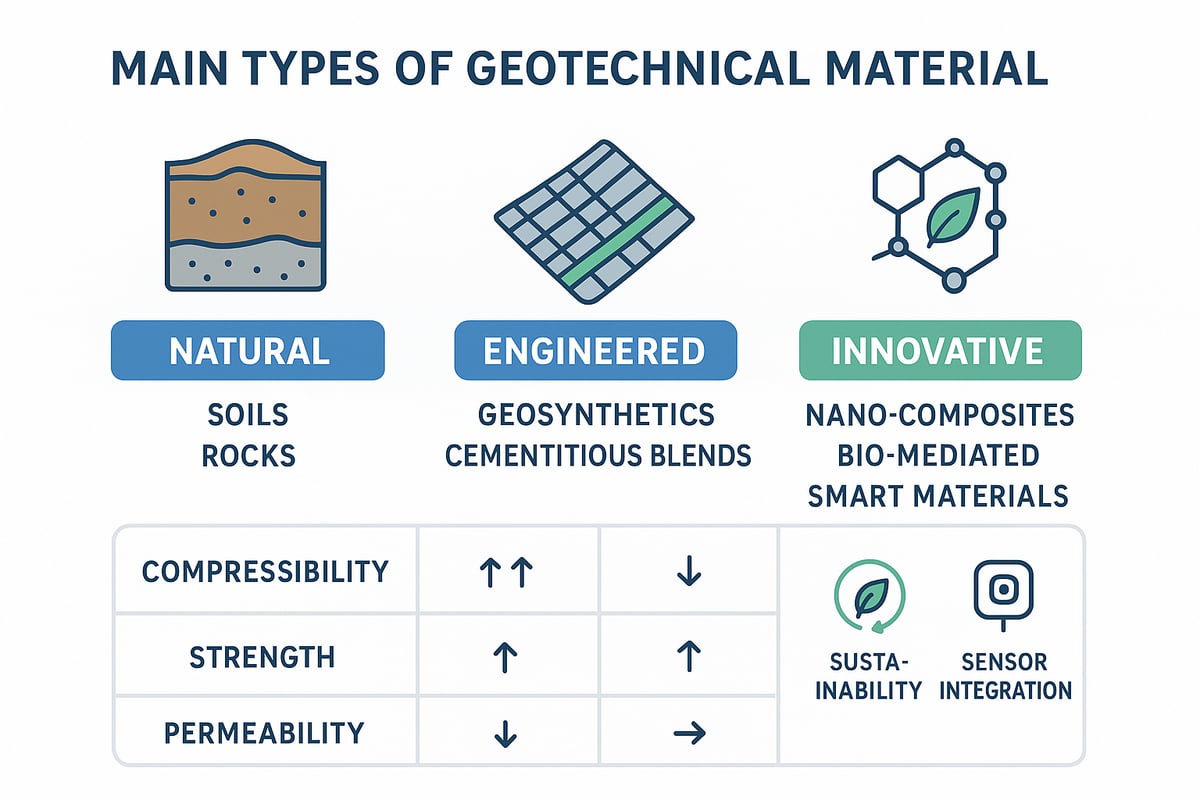
Natural geotechnical material forms the foundation for most civil engineering projects. Soils like clay, silt, sand, and gravel each have unique characteristics affecting load-bearing capacity and drainage. For example, clay is highly compressible, while gravel offers excellent permeability. Rocks, including igneous, sedimentary, and metamorphic types, provide varying degrees of strength and durability. Local sourcing of geotechnical material is often favored, as site-specific properties can significantly influence performance and cost.
- Soils: Varied grain sizes, plasticity, and water retention.
- Rocks: Strength, weathering resistance, and fissure patterns.
- Importance: Choosing the right geotechnical material ensures the stability and longevity of structures.
Engineered and Composite Materials
Engineered geotechnical material has revolutionized construction by offering tailored solutions for complex challenges. Geosynthetics, such as geotextiles, geomembranes, and geogrids, serve functions like separation, reinforcement, filtration, and drainage. Advanced cementitious materials combine traditional cement with additives to enhance durability and lower carbon impact. Polymer-based reinforcements are increasingly popular for their lightweight and corrosion-resistant properties. For more on these applications, visit Soil Stabilization and Ground Improvement.
- Geosynthetics: Versatile, customizable for soil reinforcement.
- Cementitious blends: Improved strength and sustainability.
- Polymers: Flexibility and resistance to chemical attack.
Innovative and Advanced Materials
The frontier of geotechnical material development is marked by innovation. Nano-engineered composites deliver superior strength and resilience at a molecular scale, making them ideal for high-demand environments. Bio-mediated materials, like bio-cementation, use natural processes to stabilize soils while reducing environmental impact. Smart materials with embedded sensors allow for real-time monitoring of structural health, providing an early warning system against failure.
- Nano-composites: Enhanced mechanical properties.
- Bio-mediated options: Sustainable stabilization methods.
- Smart materials: Integrated data collection and monitoring.
Mechanical and Chemical Properties
Every geotechnical material must be evaluated for its mechanical and chemical properties. Compressibility, shear strength, permeability, and durability are key indicators of suitability. These properties can shift dramatically with changes in temperature, pressure, or chemical exposure. For example, high-temperature cement-based matrices are critical for energy sector foundations. Accurate assessment ensures the chosen geotechnical material will perform as required under project-specific conditions.
| Property | Importance | Influencing Factors |
|---|---|---|
| Compressibility | Settlement potential | Soil type, moisture, pressure |
| Shear Strength | Slope stability | Particle size, cohesion, stress |
| Permeability | Drainage, erosion | Grain size, structure |
| Durability | Longevity, maintenance | Environment, material composition |
Material Selection Criteria
Selecting the right geotechnical material involves careful analysis. Properties must align with project requirements, such as load capacity, environmental exposure, and expected lifespan. Cost-benefit analysis and risk assessment are critical to avoid overdesign or underperformance. For instance, high-speed rail embankments demand materials with both high strength and low settlement characteristics. Using the correct geotechnical material ensures safety and cost-effectiveness.
- Match properties to project needs
- Assess lifecycle costs and risks
- Reference similar successful projects
Key Argument
Mastering the full range of geotechnical material options and understanding their properties is the cornerstone of engineering success in 2026. Professionals who invest in this knowledge can achieve safer, more sustainable, and resilient infrastructure.
Geotechnical Material Testing: Standards, Methods, and Best Practices
Testing is at the heart of every successful geotechnical material application. As projects grow in complexity and scale, up-to-date testing standards and best practices are critical for safety, compliance, and long-term performance. In 2026, how we test, report, and assure the quality of geotechnical material has evolved significantly, reflecting new technologies and regulatory demands.
Overview of Testing Standards in 2026
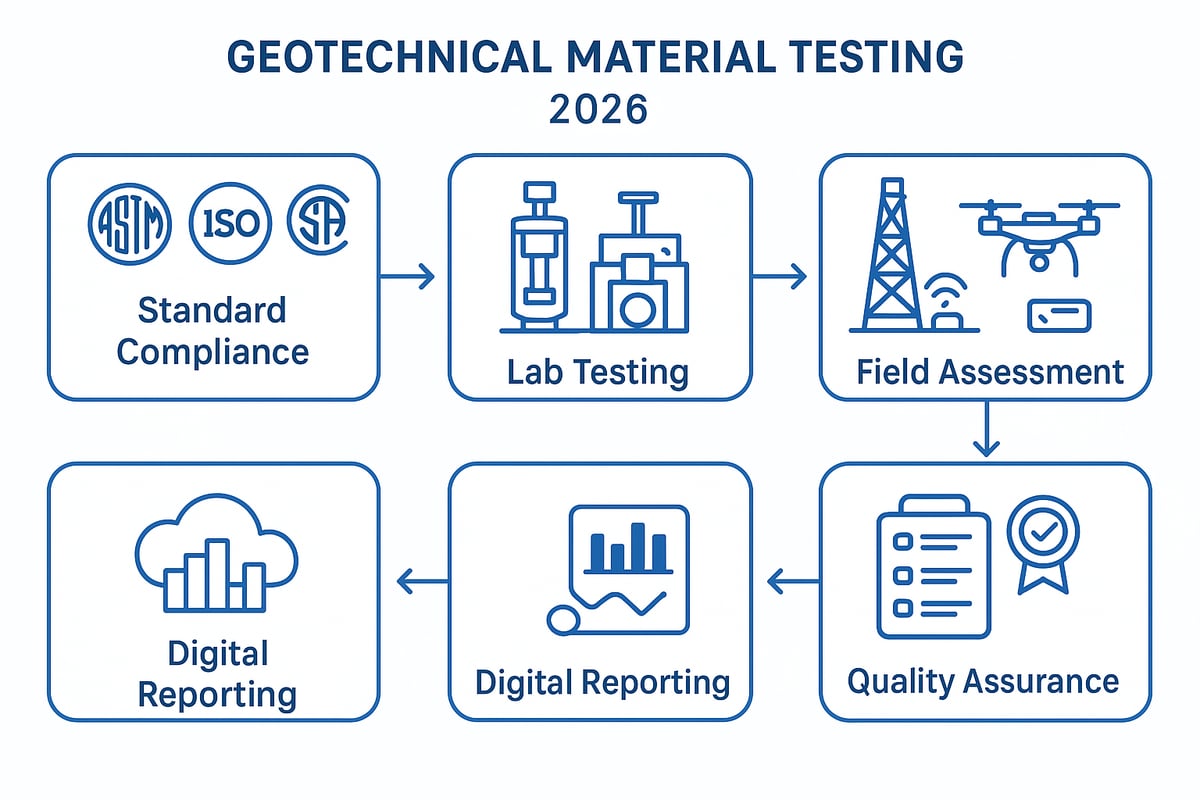
The landscape for geotechnical material testing is shaped by rigorous standards set by leading organizations. In 2026, ASTM, ISO, and CSA continue to drive the development of precise, universally accepted testing procedures. Recent updates, such as ISO 18674-7:2025, address advanced monitoring methods, ensuring that geotechnical material data is both accurate and actionable.
Public and private sector projects must demonstrate compliance with these standards. Regulatory requirements are now more stringent, especially for high-risk or public safety infrastructure. Failure to adhere to the latest geotechnical material standards can result in legal, financial, and environmental consequences.
Testing protocols are frequently updated to reflect technological advancements. This ensures that every geotechnical material used in construction is evaluated against the most current criteria for performance and safety.
Laboratory Testing Techniques
Laboratory testing remains the foundation for understanding geotechnical material properties. Standard soil classification tests, such as Atterberg limits, grain size analysis, and Proctor compaction, provide valuable insight into material behavior. For rocks and composites, strength tests like unconfined compression, triaxial shear, and direct shear are essential.
Durability and permeability testing are crucial for projects exposed to water or chemical environments. In 2026, laboratories integrate automation and digital data logging, reducing errors and increasing repeatability. For a detailed overview of these evolving methods, see Geotechnical Material Testing Methods.
Selecting the right laboratory tests ensures that each geotechnical material meets project-specific requirements. This step is vital for both engineered and natural materials, providing the data needed for informed decision-making.
Field Testing and In-Situ Assessment
Field testing complements laboratory work by providing real-world data on geotechnical material performance. The Cone Penetration Test (CPT) and Standard Penetration Test (SPT) remain industry mainstays, offering direct information on soil strength and stratification. Vane shear testing is commonly used for cohesive soils.
Advances in remote sensing and geophysical methods enable large-scale site characterization without extensive excavation. In 2026, drones are widely used for aerial mapping and automated data collection, streamlining the assessment of geotechnical material properties across vast sites.
Combining traditional tests with modern technology gives engineers a comprehensive understanding of site conditions. Reliable field data is essential for selecting and validating the appropriate geotechnical material for every project.
Data Interpretation and Reporting
Accurate data analysis is essential for translating test results into actionable insights. Best practices include minimizing errors through calibration, cross-checks, and the use of standardized reporting templates. In 2026, digital tools enable real-time collaboration, allowing teams to share and review geotechnical material test data from anywhere.
Cloud-based platforms store and organize large datasets, making it easier to identify trends or anomalies. Digital twin models are increasingly used for ongoing site monitoring, integrating testing data with predictive analytics to anticipate future performance.
Clear, concise reporting ensures that all stakeholders understand the implications of geotechnical material test results. Proper interpretation supports risk management and regulatory compliance throughout the project lifecycle.
Quality Assurance and Risk Mitigation
Quality assurance is non-negotiable when working with geotechnical material. Third-party testing and certification play a critical role in verifying results and ensuring impartiality. Repeatability and traceability are now standard requirements, with every test documented and linked to specific material batches.
A failure to follow best practices can have serious consequences. For example, a recent infrastructure project suffered costly delays and remediation after inadequate geotechnical material testing led to foundation settlement issues.
To prevent such outcomes, rigorous protocols are enforced at every stage. From initial sampling to final reporting, each step in the geotechnical material testing process is designed to minimize risk, safeguard public safety, and deliver reliable performance.
Innovations and Future Directions in Geotechnical Materials
The landscape of geotechnical material is transforming rapidly as technology, sustainability, and interdisciplinary research converge. In 2026, engineers are empowered by new tools and smarter materials that drive efficiency and resilience. Let us explore the innovations shaping the present and future of geotechnical material.
Smart and Responsive Materials
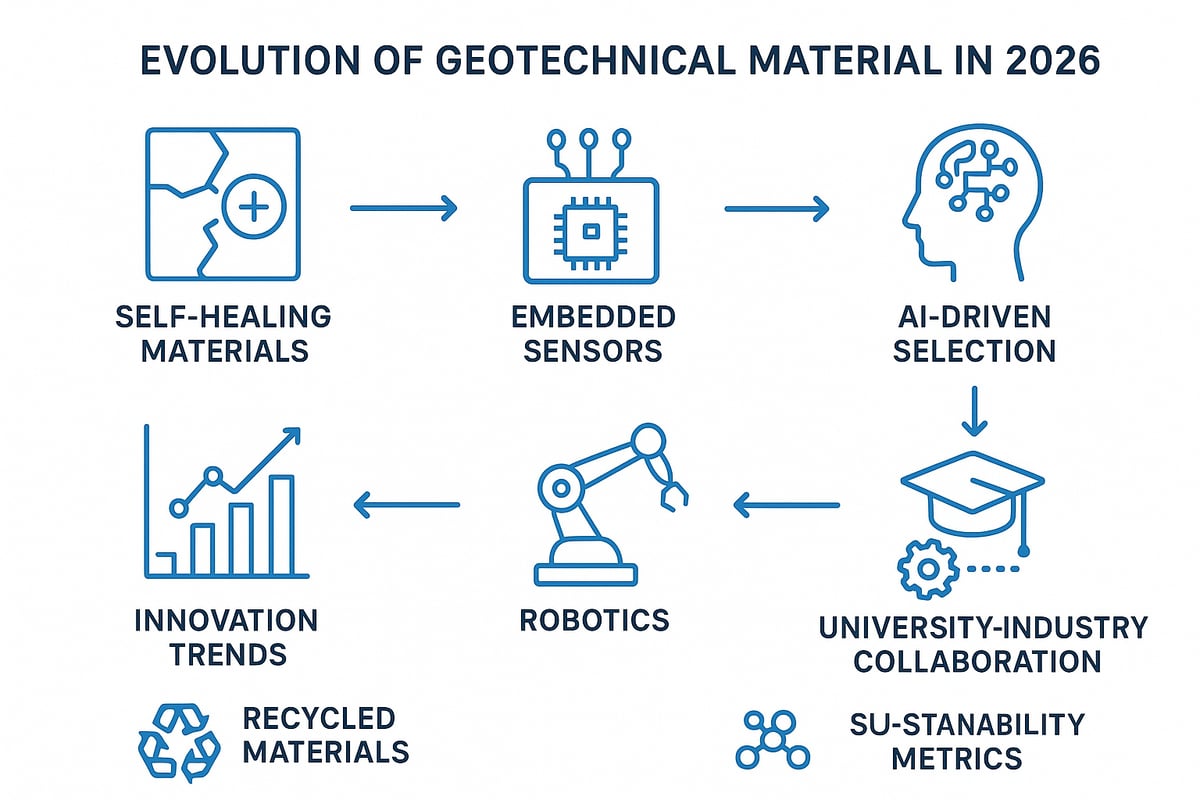
Smart materials have revolutionized geotechnical material applications in recent years. Self-healing composites are now integrated into foundation systems and retaining structures, automatically sealing microcracks to extend service life.
Embedded sensors within geotechnical material provide real-time data on stress, strain, and moisture changes, allowing engineers to monitor structural health and respond proactively to potential issues. This responsive approach enhances safety and optimizes maintenance schedules.
With these advancements, geotechnical material not only supports but actively protects infrastructure.
Digitalization and Automation
Digital transformation is propelling geotechnical material engineering into a new era. AI and machine learning now assist engineers in selecting the most suitable geotechnical material by analyzing site data, historical performance, and environmental factors.
Robotics are increasingly used for geotechnical material sample collection, laboratory testing, and even material placement during construction. This automation brings higher precision, reduces human error, and speeds up project timelines.
As a result, digitalization makes the use of geotechnical material more data-driven and efficient than ever before.
Sustainable and Circular Economy Approaches
Sustainability is at the forefront of geotechnical material innovation in 2026. Engineers are turning to recycled aggregates, industrial by-products, and bio-based geotextiles to reduce the environmental footprint of projects.
Life-cycle analysis is now a standard part of geotechnical material selection, ensuring materials are chosen not just for performance but also for their long-term ecological impact. Innovative concepts like Geomimicry in Earth-Mediated Materials inspire the design of solutions that mimic natural processes for greater resilience and sustainability.
Circular economy principles encourage the reuse and upcycling of geotechnical material, lowering waste and supporting a greener industry.
Integration with Other Engineering Disciplines
Modern geotechnical material solutions do not work in isolation. They are increasingly integrated with hydrotechnical, environmental, and transportation engineering to address complex challenges.
For example, geotechnical material is crucial in flood control systems, working alongside water management structures to protect communities from climate extremes. In erosion management, advanced materials stabilize slopes and shorelines, supporting both civil and environmental objectives.
This cross-disciplinary approach ensures geotechnical material delivers robust, adaptable results in diverse applications.
Research Frontiers and Academic Partnerships
Collaboration between universities and industry is accelerating the evolution of geotechnical material. Academic research is pushing the boundaries, with breakthroughs in nano-engineered composites and bio-mediated stabilization techniques.
Notable research projects in 2026 focus on making geotechnical material smarter, more durable, and more sustainable. These partnerships ensure new technologies are tested in real-world settings before widespread adoption.
Ultimately, innovation in geotechnical material is a collective effort, driving the industry toward greater efficiency, sustainability, and resilience.
Sustainability and Environmental Considerations in Geotechnical Material Selection
Modern infrastructure demands a fresh approach to sustainability, especially when it comes to geotechnical material. As environmental regulations tighten and climate risks increase, engineers must evaluate every phase of material selection for ecological impact and long-term viability. In 2026, the industry’s focus extends beyond compliance to proactive stewardship, integrating sustainability into every decision.
Environmental Impact Assessment
Evaluating the environmental impact of geotechnical material begins with a comprehensive lifecycle assessment. This process examines extraction, processing, transportation, and site use, quantifying emissions and ecological disturbance at each stage. In 2026, stricter regulations require documentation of these assessments, making compliance a baseline for public and private projects.
Regulatory frameworks increasingly reference updated standards, such as the AASHTO 45th Edition Materials Standards, which outline best practices for sustainable geotechnical material usage. This encourages engineers to adopt measures that reduce carbon footprint and minimize habitat disruption.
Sustainable Material Choices
Selecting sustainable geotechnical material is no longer optional. Engineers now prioritize low-carbon, renewable, and locally sourced materials. Bio-based geotextiles, for instance, offer erosion control with a fraction of the embodied energy of synthetics. Recycled aggregates from construction waste are increasingly used in roadbeds and foundations, cutting both costs and landfill use.
| Material Type | Environmental Benefit | Common Application |
|---|---|---|
| Bio-based geotextiles | Renewable, biodegradable | Slope stabilization, drainage |
| Recycled aggregates | Diverts waste, low energy | Road construction, backfill |
| Local quarried stone | Reduces transport impact | Retaining walls, embankments |
By matching geotechnical material properties to project needs while prioritizing sustainability, teams support both performance and environmental goals.
Waste Minimization and Resource Efficiency
A core strategy in sustainable geotechnical material selection is minimizing waste. This includes reducing excavation volumes, reusing site soils, and recycling demolition materials. Embracing circular economy principles, many projects now repurpose excavated materials directly into embankments or as fill, drastically lowering the need for virgin resources.
Effective waste management not only conserves resources but also reduces project costs and environmental liabilities. Engineers are encouraged to design for disassembly, enabling future material recovery and reuse.
Climate Adaptation and Resilience
Selecting geotechnical material that can withstand climate extremes is essential for long-term resilience. For example, projects in permafrost regions require materials with high freeze-thaw durability and low thermal conductivity. In flood-prone zones, bio-mediated soils and reinforced geotextile systems help stabilize embankments and prevent erosion.
A recent case study from Northern Canada demonstrated how climate-adaptive geotechnical material dramatically reduced maintenance costs and improved safety for remote transportation corridors.
Stakeholder Engagement and Social Responsibility
Sustainable geotechnical material practices hinge on transparent community engagement and ethical sourcing. Involving stakeholders early in the process ensures local concerns are addressed, from site selection to material procurement. Social license to operate is increasingly tied to traceability and responsible supply chains.
Best practices recommend third-party certification and rigorous quality control, as detailed in Quality Control and Assurance in Geotechnical Projects, to build trust and ensure compliance.
In summary, integrating sustainability into every stage of geotechnical material selection is no longer just a regulatory requirement—it is a critical pathway to project success, public trust, and environmental stewardship in 2026.
Practical Application: Steps for Selecting and Specifying Geotechnical Materials in 2026
Selecting and specifying geotechnical material in 2026 requires a methodical, data-driven approach. Each step in the process builds upon the last to ensure optimal performance, safety, and sustainability. By following a clear framework, engineers and project managers can minimize risks and maximize outcomes.
Step 1: Site Investigation and Data Collection
The foundation of every successful geotechnical material strategy is a comprehensive site investigation. In 2026, this involves a blend of traditional and digital methods.
- Drilling and sampling to assess subsurface conditions.
- Remote sensing and digital mapping for large-scale site analysis.
- Integration of historical site data with real-time field observations.
A detailed investigation ensures that the geotechnical material chosen is tailored to the site's unique geological and environmental context.
Step 2: Material Identification and Preliminary Selection
Once site data is collected, the next step is identifying available natural and engineered materials. Local soils, rocks, and advanced composites are evaluated for their suitability.
- Assess geotechnical material properties such as strength, permeability, and durability.
- Match material characteristics to project requirements and constraints.
- Consider availability, sourcing logistics, and potential environmental impacts.
Preliminary selection balances technical criteria with practical factors to narrow down the best options.
Step 3: Laboratory and Field Testing
Rigorous testing is essential to validate the performance of geotechnical material under project-specific conditions. Laboratory tests assess properties like compressibility, shear strength, and chemical resistance.
- Conduct in-situ tests such as the Cone Penetration Test (CPT) and Standard Penetration Test (SPT).
- Utilize advanced digital monitoring methods for real-time data collection.
- Reference the latest ISO 18674-7:2025 Standard for up-to-date testing protocols.
Test results inform final material selection and help ensure compliance with safety and quality standards.
Step 4: Compliance and Standard Verification
Every geotechnical material must meet or exceed relevant regulatory and industry standards. Documentation and third-party certification are vital for public and private sector projects.
- Verify material compliance with ASTM, ISO, and local codes.
- Maintain thorough records for traceability and future audits.
- Schedule periodic re-testing to confirm ongoing conformity.
Adherence to standards safeguards against performance failures and regulatory penalties.
Step 5: Environmental and Sustainability Assessment
Sustainability is a core consideration in 2026. Evaluate the environmental footprint of each geotechnical material option.
- Analyze sourcing, transportation, and embodied carbon impacts.
- Prioritize materials that are low-carbon, recycled, or locally sourced.
- Use life-cycle assessment tools to compare long-term sustainability metrics.
Selecting eco-friendly options supports regulatory compliance and community acceptance.
Step 6: Final Specification and Procurement
After technical and environmental vetting, prepare detailed specifications for contractors and suppliers.
- Clearly define material grades, quantities, and performance criteria.
- Establish procurement protocols to ensure quality and timely delivery.
- Implement quality assurance checks upon material arrival.
Well-crafted specifications prevent misunderstandings and ensure successful execution.
Step 7: Construction, Monitoring, and Maintenance
Proper handling and installation of geotechnical material are essential for long-term performance.
- Follow best practices for placement and compaction.
- Use embedded sensors and digital tools for ongoing monitoring.
- Schedule routine inspections and maintenance to address emerging issues.
Continuous monitoring helps detect early signs of distress and extends asset lifespan.
Example Applications
This systematic approach is applied in diverse scenarios, from foundation design for high-rise buildings to embankment stabilization in transportation projects. Soil improvement techniques for energy infrastructure also benefit from stepwise geotechnical material selection.
By following these steps, professionals ensure their projects are safe, compliant, and future-ready.
As you look ahead to the evolving landscape of geotechnical materials in 2026, it’s clear that expert guidance is more important than ever—especially when safety, sustainability, and innovation are on the line. Whether you’re planning a major infrastructure project or seeking the best materials for your unique site, we’re here to help you make informed, confident decisions every step of the way. If you have questions or would like to discuss your next project with our team of specialists, don’t hesitate to Contact Us: info@zalig.ca or +1 800 515 0497.