

In 2026, industries worldwide are facing a record surge in demand for skilled testing engineers, driven by rapid innovation, strict safety standards, and evolving compliance needs.
This guide explores how the role of testing engineers has transformed, highlighting their expanding skills, multidisciplinary impact, and crucial place in modern project success.
Whether you are a business leader, an engineering professional, or someone aspiring to join the field, you will find actionable insights on what defines excellence in testing engineers and how to fully leverage their expertise.
We will uncover the latest industry trends, essential qualifications, technology advancements, step-by-step processes for engaging top talent, and proven methods to measure their value.
The Evolving Role of Testing Engineers in 2026
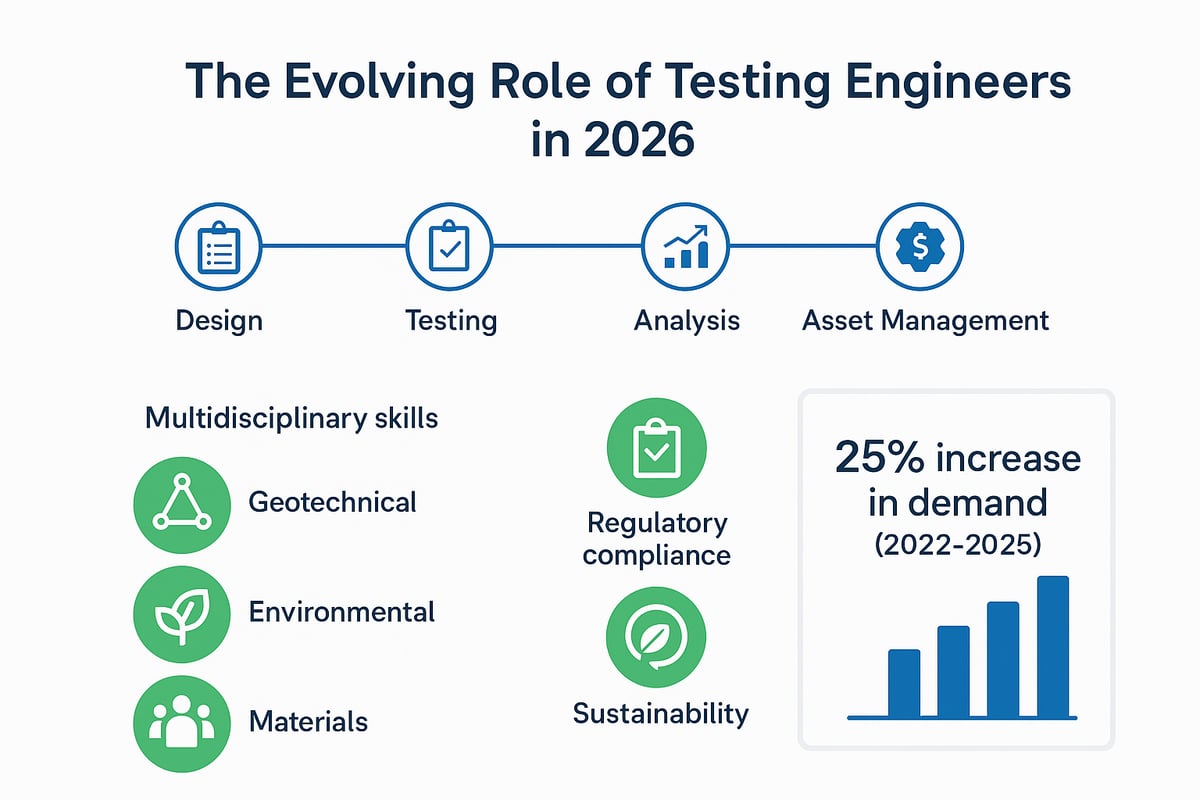
The landscape for testing engineers in 2026 has transformed dramatically. No longer confined to quality assurance, their responsibilities now span every phase of modern engineering projects. This shift is driven by the need for innovation, increased safety, and strict compliance in a rapidly changing industry.
Testing engineers are now involved from the earliest stages of project development. Their expertise is called upon during design, planning, and risk assessment, ensuring that quality and compliance are embedded from the start. This proactive integration helps identify potential issues before they escalate, saving both time and resources.
Key areas where testing engineers contribute early:
- Reviewing and influencing design specifications
- Participating in multidisciplinary planning meetings
- Conducting initial risk and feasibility assessments
Modern projects demand multidisciplinary expertise. Testing engineers are expected to blend skills in geotechnical, environmental, and materials engineering, adapting to diverse project requirements. Their ability to interpret and apply knowledge across these domains is critical for ensuring that structures meet both performance and sustainability goals.
Common multidisciplinary competencies:
- Geotechnical analysis for site suitability
- Environmental impact assessment and mitigation
- Materials selection and durability evaluation
Regulatory compliance has taken center stage in 2026. Testing engineers play a pivotal role in navigating evolving codes and standards, both local and international. As sustainability becomes a core objective, their work often includes verifying the use of eco-friendly materials and methods, aligning with global green building initiatives.
Industry data underscores this evolution. Reports indicate a 25 percent surge in demand for testing engineers between 2022 and 2025, a trend fueled by the complexity of infrastructure and smart city projects. For a detailed look at these trends, the TestEquity 2026 State of the Industry Report offers valuable insights into how testing engineers are shaping the future of engineering.
A notable development is the rise of employee-owned engineering firms, such as those following the TEI model. These organizations prioritize service quality and professional growth, empowering testing engineers to take ownership of project outcomes. This structure often leads to higher client satisfaction and consistent results.
Testing engineers are now indispensable throughout the entire project lifecycle. Their involvement stretches from site selection and early planning, through construction phases, to long-term asset management. This end-to-end participation ensures that quality, safety, and compliance are maintained at every stage.
Expanded role of testing engineers:
| Traditional QA Role | Evolving 2026 Role |
|---|---|
| Final-stage inspections | Early design and risk assessment |
| Routine material testing | Multidisciplinary consulting |
| Code compliance checks | Sustainability and lifecycle management |
| Reporting issues | Preventing issues proactively |
In summary, testing engineers have become strategic partners in modern engineering. Their expanded responsibilities, multidisciplinary expertise, and commitment to compliance position them as key drivers of project success in 2026. Organizations that leverage their skills from project inception to completion stand to benefit from reduced risk, improved efficiency, and lasting value.
Essential Skills and Qualifications for Testing Engineers
The landscape for testing engineers in 2026 demands a robust combination of technical, regulatory, and interpersonal skills. As the industry evolves, organizations increasingly seek professionals who can adapt to new technologies, maintain rigorous standards, and deliver insights that drive project success.

Core Technical Competencies
Modern testing engineers must excel in both field and laboratory environments. Their daily tasks range from site inspections to advanced material analysis, requiring hands-on expertise in sampling, instrumentation, and data interpretation.
Key competencies include:
- Field inspection and documentation
- Laboratory analysis and reporting
- Non-destructive testing (NDT)
- Consulting on project specifications and compliance
For a deeper understanding of these core areas, review the Construction Material Testing Services performed by leading testing engineers.
Certifications and Accreditations
Certifications are vital for testing engineers, ensuring consistent quality and regulatory compliance. Top professionals often hold multiple credentials, reflecting their commitment to excellence.
| Certification Body | Example Certifications |
|---|---|
| ICC | Special Inspector |
| AWS | Certified Welding Inspector |
| ACI | Concrete Field Testing Technician |
| ASNT | NDT Level II/III |
| ASTM | Proficiency Testing |
Industry surveys reveal that 85% of top-performing testing engineers possess more than one certification, underscoring the importance of continuous skill development.
Soft Skills and Multidisciplinary Expertise
Technical acumen alone is not enough. Testing engineers must communicate findings clearly, solve problems proactively, and collaborate with diverse teams.
Essential soft skills:
- Effective communication
- Analytical thinking
- Adaptability to changing project needs
- Teamwork and leadership
Increasingly, employers value multidisciplinary backgrounds in geotechnical, environmental, and materials engineering. This versatility allows testing engineers to address complex challenges across project phases.
Ongoing Education and Digital Literacy
Continuous learning is essential for testing engineers to stay ahead of evolving standards and technologies. Professional development programs, workshops, and industry conferences help maintain sharp technical skills.
Digital literacy is equally important. Familiarity with automated testing tools, data analytics platforms, and digital reporting systems enhances efficiency and accuracy. Leading firms invest in training to ensure their testing engineers are equipped for the digital age.
Professional Growth and Industry Impact
Employee ownership models, like those at TEI, emphasize career advancement and professional growth. These environments foster accountability, encourage skill sharing, and attract high-caliber testing engineers.
The most successful professionals combine technical expertise, multiple certifications, and a commitment to lifelong learning. Their skills not only ensure compliance and safety but also drive innovation and cost savings across projects.
Step-by-Step Guide to Engaging and Evaluating Testing Engineers in 2026
Selecting the right testing engineers for your project is critical to ensuring quality, compliance, and long-term success. The following guide breaks down each stage of the engagement process, providing actionable steps to help organizations, project managers, and stakeholders make informed decisions.
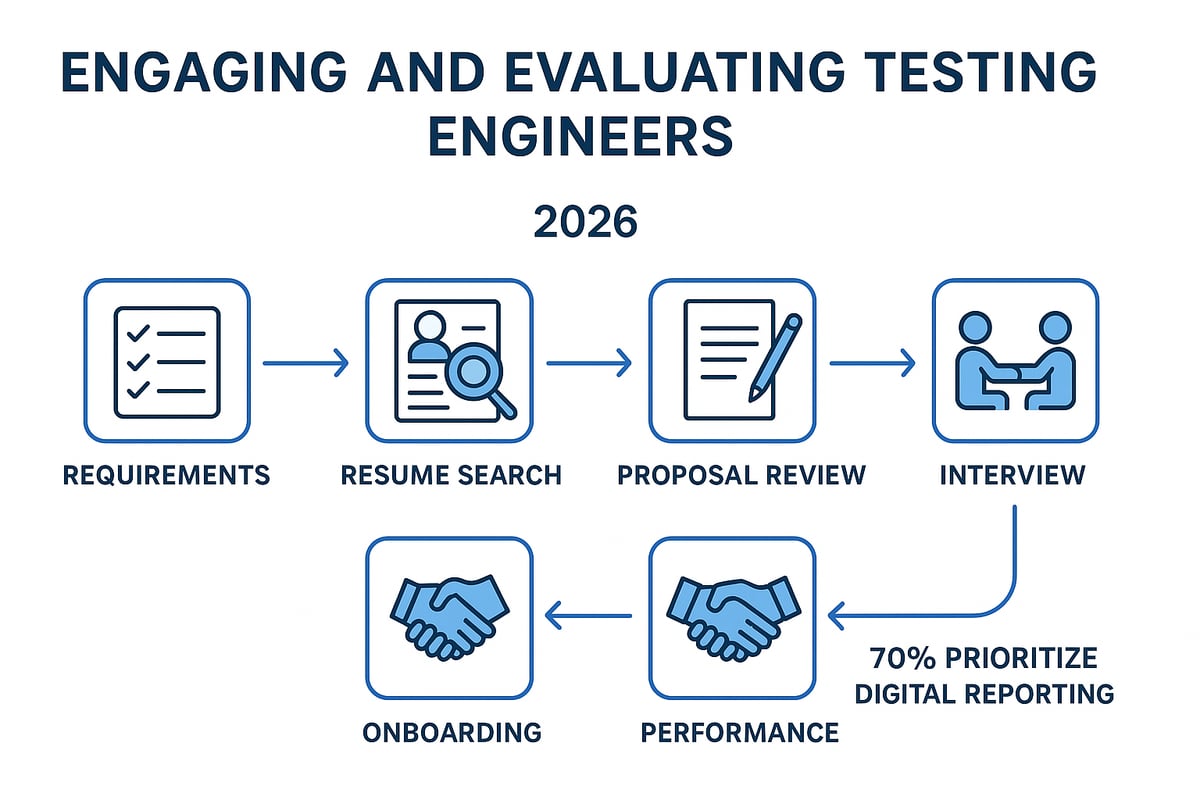
Step 1: Define Project Requirements and Scope
Begin by clarifying the type of project you are undertaking, such as commercial, infrastructure, or industrial developments. Assess which specializations in testing engineers are necessary, for example, non-destructive testing, environmental assessments, or geotechnical expertise.
List all regulatory, client-specific, and industry standards that must be met. Set clear objectives for what your testing engineers should achieve, from site selection to final asset management. For instance, large infrastructure projects often require input from testing engineers at every lifecycle stage.
Establishing these parameters early will streamline the subsequent selection process and ensure alignment with your organization’s goals.
Step 2: Search for Qualified Testing Engineers or Firms
Once your requirements are set, start searching for testing engineers or firms with proven experience in similar projects. Evaluate their certifications, track record, and overall reputation within the industry.
Review portfolios and relevant case studies to gauge performance on comparable assignments. Check for accreditations such as IAS, DSA, and ACI. Regional expertise is also important, especially if your project has specific local compliance needs.
Look for staff who possess essential qualifications, like WABO certifications in the Pacific Northwest, to ensure your project’s success.
Step 3: Request Proposals and Assess Service Offerings
Request detailed proposals from shortlisted testing engineers or firms. Compare the scope of services, methodologies, and cost structures presented. Pay close attention to sample reports and documentation processes, as these indicate the firm’s approach to transparency and accuracy.
Assess the adoption of technology, including digital tools and lab automation, which can significantly enhance efficiency. Responsiveness and client support are also critical factors to consider.
Data shows that 70 percent of clients now prioritize firms offering digital reporting and real-time data access for improved project oversight.
Step 4: Conduct Interviews and Technical Assessments
Prepare scenario-based questions that reflect the unique challenges of your project. During interviews, assess the technical knowledge and problem-solving abilities of the testing engineers, verifying certifications and hands-on experience in both field and laboratory settings.
Evaluate their communication and collaboration skills to ensure seamless integration into your project teams. Practical assessments or simulations can further highlight their competence.
Selecting testing engineers with both technical acumen and strong interpersonal skills will help drive project success from the outset.
Step 5: Final Selection and Onboarding
Negotiate contracts with clear deliverables and timelines. Establish communication protocols and reporting schedules to ensure everyone stays informed. Integrate testing engineers into project teams early so they can contribute to planning and compliance from the start.
Align all parties on safety and regulatory standards to minimize risks. For example, a well-structured onboarding process in a multi-phase infrastructure project often leads to better outcomes and fewer compliance issues.
A strong onboarding foundation helps testing engineers deliver their best work throughout the project lifecycle.
Step 6: Ongoing Performance Evaluation
Monitor the quality, accuracy, and timeliness of the reports provided by testing engineers. Hold regular review meetings and solicit feedback from project managers and stakeholders to identify areas for improvement.
Implement quality audits and ensure documentation meets stringent assurance standards. For further insights on maintaining robust quality control and compliance throughout your project, see Quality Control and Assurance Insights.
Continuous evaluation not only enhances performance but also builds long-term value from your investment in testing engineers.
Technology Trends Shaping Testing Engineering in 2026
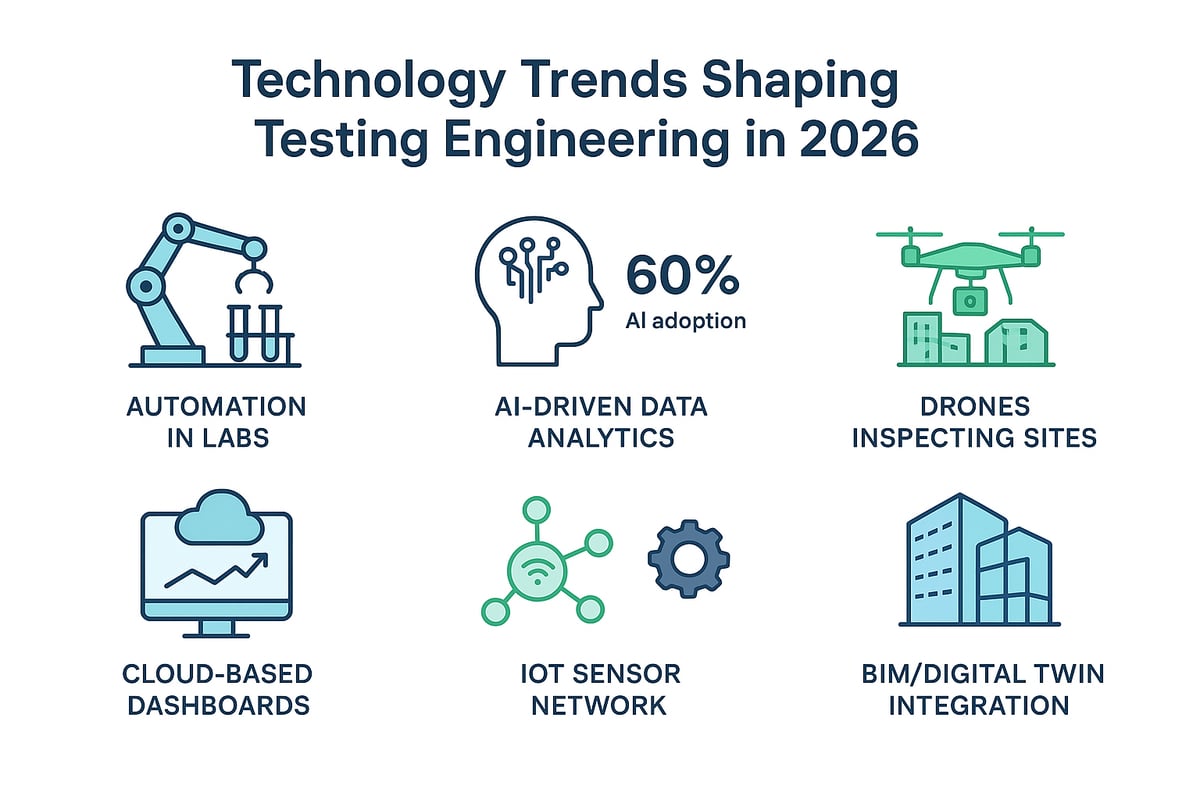
In 2026, technology is rapidly reshaping how testing engineers deliver value across complex projects. As digital transformation accelerates, firms are leveraging powerful new tools to boost efficiency, accuracy, and compliance. The landscape is evolving quickly, requiring testing engineers to stay ahead of emerging trends.
Automation and AI in Testing Engineering
Automation is now at the core of laboratory and field operations for testing engineers. Advanced equipment streamlines repetitive tasks and improves the quality of test results. AI-driven analytics enable teams to interpret large datasets quickly, uncovering patterns that human analysis might miss.
According to the Continuous Testing Market Analysis by Mordor Intelligence, the sector is witnessing a shift toward AI-supported, compliance-centric ecosystems. This means testing engineers are now expected to operate and interpret results from automated platforms, ensuring projects are safer and more reliable.
Drones, Remote Sensing, and Real-Time Monitoring
Drones and remote sensing technologies have become essential for modern testing engineers. These tools allow for rapid, high-resolution site inspections and data collection, reducing the need for manual fieldwork in hazardous or hard-to-reach locations.
IoT sensors provide continuous, real-time monitoring of construction sites and materials. This enables early detection of issues and supports proactive decision-making, keeping projects on track and minimizing the risk of costly delays.
Cloud-Based Project Management and Data Integration
Cloud platforms are transforming how testing engineers manage projects and share information. Secure data storage and real-time access ensure that all stakeholders can review test results, safety reports, and compliance documents instantly, no matter their location.
Integration with mobile devices and automated reporting tools has made communication smoother. This connected environment increases transparency, streamlines workflows, and strengthens collaboration between teams.
BIM, Digital Twins, and Predictive Maintenance
Building Information Modeling (BIM) and digital twin technologies are now standard for leading testing engineers. These digital tools create detailed, real-time models of assets and infrastructure, enabling predictive maintenance and advanced risk assessment.
As highlighted in the Top 5 Test & Measurement Trends for 2026, testing engineers use BIM to simulate scenarios, forecast asset performance, and optimize lifecycle management. This not only improves project outcomes but also supports sustainability and cost efficiency.
Impact of Digital Transformation
The adoption of automation, AI, cloud solutions, IoT, and BIM is driving major improvements in the work of testing engineers. Digital transformation has led to faster reporting, fewer errors, and significant cost savings for clients.
With 60% of engineering firms now using at least one AI-based tool, the industry continues to move toward smarter, more resilient practices. Testing engineers who embrace these technologies are set to play a pivotal role in shaping the future of safe, sustainable, and high-performing infrastructure.
Measuring the Impact and Value of Testing Engineers
Evaluating the true impact of testing engineers in 2026 requires a close look at both tangible project outcomes and broader organizational benefits. As projects grow in complexity, the value brought by robust testing practices becomes even more critical to long-term success.
Key Performance Indicators for Testing Engineers
Organizations increasingly rely on measurable KPIs to assess testing engineers. The most common indicators include:
- Cost savings: Early detection of issues reduces expensive repairs and change orders.
- Risk mitigation: Comprehensive inspections lower the chances of safety incidents and regulatory violations.
- Project longevity: Quality assurance leads to longer-lasting structures and systems.
- Schedule adherence: Timely testing ensures critical milestones are met.
- Stakeholder satisfaction: Effective communication and transparent reporting build trust.
These KPIs provide a clear framework for evaluating the effectiveness of testing engineers across diverse sectors.
Reducing Rework and Project Delays
Rework is one of the most significant hidden costs in construction and infrastructure projects. Testing engineers play a vital role in minimizing these setbacks by identifying potential failures before they escalate.
Their expertise in field inspections, laboratory testing, and real-time monitoring helps teams address issues proactively. This approach not only saves time but also preserves resources and maintains project momentum.
When testing engineers are involved from the earliest phases, projects experience fewer delays, resulting in smoother delivery and increased client satisfaction.
Quantifying ROI: Data and Case Study
Quantifying the return on investment for testing engineers involves comparing project outcomes with and without their involvement. Industry data reveals that projects utilizing certified testing engineers report up to 40% fewer quality-related delays and a 30% reduction in total rework costs.
A notable example occurred in a major transportation project where a testing engineer’s intervention uncovered a critical flaw in the concrete mix. By employing advanced Non-Destructive Testing Evolution methods, they prevented a structural failure that would have required costly demolition and rebuilding.
This case study highlights how investment in testing engineers leads directly to measurable financial and operational benefits. Reliable data and detailed documentation further support ROI calculations, making the value proposition clear for stakeholders.
The Value of Transparent Inspection Data
Accurate, timely inspection data is the backbone of decision-making for project managers and owners. Testing engineers ensure all findings are meticulously documented, providing a transparent record of compliance and quality assurance.
Regular, accessible reports allow for early intervention when issues arise. This transparency not only supports risk management but also enhances communication among all project stakeholders.
Moreover, robust documentation helps organizations defend against claims and audits, further illustrating the importance of skilled testing engineers.
Long-Term Value: Asset Management and Reputation
The impact of testing engineers extends far beyond project completion. Their work supports asset management by providing essential data for maintenance planning and lifecycle analysis. For sectors like geotechnical engineering, ongoing testing is crucial for long-term stability. See the Geotechnical Engineering Overview for details on how these services underpin asset reliability.
Organizations that prioritize collaboration with testing engineers report improved reputation, stronger stakeholder relationships, and reduced compliance issues over the long term. Continuous engagement ensures assets remain safe, efficient, and valuable throughout their lifecycle.
As we look ahead to 2026, it’s clear that working with the right testing engineers can make all the difference for your projects—from staying ahead of evolving regulations, to leveraging advanced technologies, to ensuring safety and quality at every step. If you’re ready to take your next project to the highest standard, let’s connect and discuss how ZALIG Consulting Ltd’s tailored geotechnical, environmental, and materials testing expertise can support your goals. We’re here to help you build with confidence—reach out today at Contact Us: info@zalig.ca or +1 800 515 0497 and let’s get started.