
Subgrade stabilization represents a critical process in construction and civil engineering, transforming weak or unsuitable soils into stable foundation layers capable of supporting pavements, buildings, and infrastructure. In regions like Alberta, where varying soil conditions present unique challenges, understanding and implementing effective stabilization techniques becomes essential for project success. This comprehensive guide explores the methods, materials, and best practices that engineering professionals use to enhance soil performance and ensure long-term structural integrity.
Understanding Subgrade Stabilization Fundamentals
Subgrade stabilization involves modifying the physical and chemical properties of soil to improve its load-bearing capacity, reduce compressibility, and minimize moisture sensitivity. The process addresses problematic soil conditions that would otherwise compromise structural performance or require expensive excavation and replacement.
Why Stabilization Matters
Weak subgrades lead to numerous construction challenges that impact project timelines and budgets. Inadequate bearing capacity causes excessive settlement, pavement cracking, and premature structural failure. Moisture-sensitive soils expand and contract with seasonal changes, creating uneven surfaces and compromising integrity.
Key benefits of proper subgrade stabilization include:
- Enhanced load distribution across foundation systems
- Reduced long-term maintenance requirements
- Improved construction efficiency and site accessibility
- Lower overall project costs through material optimization
- Extended service life for pavements and structures
The economic advantages extend beyond initial construction. ZALIG Consulting Ltd frequently observes that proper stabilization reduces lifecycle costs significantly compared to addressing failures after construction completion.
Common Stabilization Methods and Materials
Engineers select stabilization approaches based on soil type, project requirements, environmental conditions, and budget constraints. Each method offers distinct advantages for specific applications.
Chemical Stabilization Techniques
Chemical stabilizers react with soil particles to create stronger, more stable matrices. These treatments modify soil properties at a molecular level, producing lasting improvements.
| Stabilizer Type | Best Soil Applications | Primary Benefits | Typical Dosage Rates |
|---|---|---|---|
| Portland Cement | Granular and sandy soils | High strength gain, rapid curing | 3-10% by weight |
| Hydrated Lime | Clay soils, expansive soils | Reduces plasticity, long-term strength | 2-8% by weight |
| Fly Ash | Fine-grained soils | Cost-effective, environmental benefits | 10-30% by weight |
| Calcium Chloride | Granular base courses | Moisture retention, dust control | 0.5-2% by weight |
Portland cement stabilization creates immediate strength improvements, making it ideal for projects with tight construction schedules. The National Academies provides comprehensive guidelines on selecting appropriate stabilizers for specific soil types and environmental conditions.
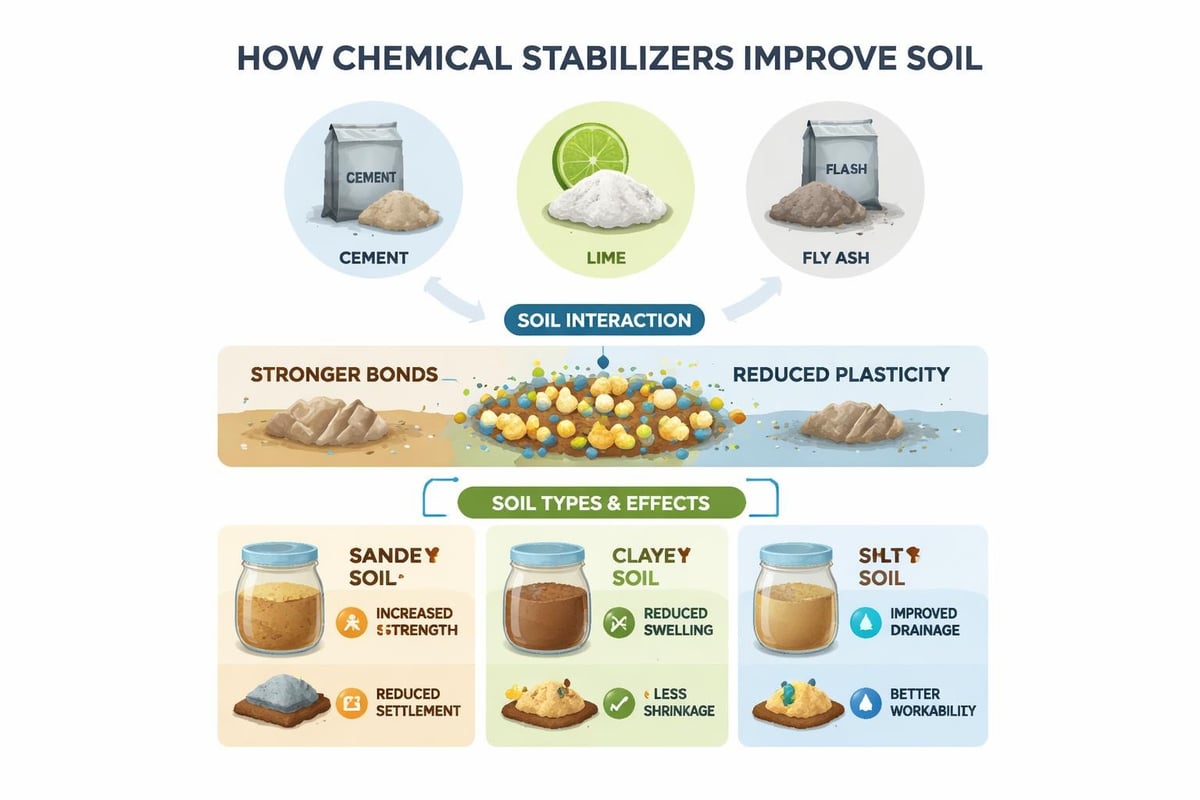
Lime stabilization excels with high-plasticity clays common throughout Alberta. The chemical reaction between lime and clay minerals reduces moisture sensitivity while improving workability. Research on highway pavement subgrade stabilization demonstrates the long-term benefits of properly designed lime treatment programs.
Mechanical Stabilization Approaches
Mechanical methods improve subgrade performance through physical modification without chemical additives. These techniques work particularly well when combined with proper drainage systems.
Compaction optimization increases soil density and reduces void spaces. Dynamic compaction, vibratory rollers, and proof rolling achieve different results depending on soil characteristics. Proper moisture content during compaction proves critical for achieving specified density requirements.
Soil blending combines materials with different properties to create improved composite subgrades. Mixing granular materials with cohesive soils often produces better load distribution than either material alone. This approach requires careful geotechnical engineering analysis to determine optimal proportions.
Geosynthetic Reinforcement Solutions
Geosynthetics offer innovative stabilization solutions that enhance subgrade performance through reinforcement and separation functions. These synthetic materials provide cost-effective alternatives or supplements to traditional methods.
Types and Applications
Geotextiles separate subgrade from base course materials, preventing intermixing while allowing drainage. They distribute loads more evenly across weak subgrades, reducing localized stress concentrations. Critical reviews of geosynthetic applications highlight their effectiveness in enhancing load distribution and bearing capacity.
Geogrids provide tensile reinforcement that restrains lateral soil movement. The grid structure interlocks with aggregate base materials, creating composite systems with improved stiffness and strength. These materials prove particularly valuable on projects with limited subgrade bearing capacity.
Selection criteria for geosynthetic reinforcement:
- Subgrade soil strength and deformation characteristics
- Expected traffic loads and frequency
- Environmental exposure conditions
- Construction methodology and equipment access
- Long-term durability requirements
- Budget and material availability
Geocells create three-dimensional confinement systems that dramatically improve load distribution. These honeycomb structures prevent lateral spreading of fill materials while increasing effective bearing capacity. Alberta's frost-susceptible soils benefit significantly from geocell stabilization in seasonal applications.
Site Investigation and Testing Requirements
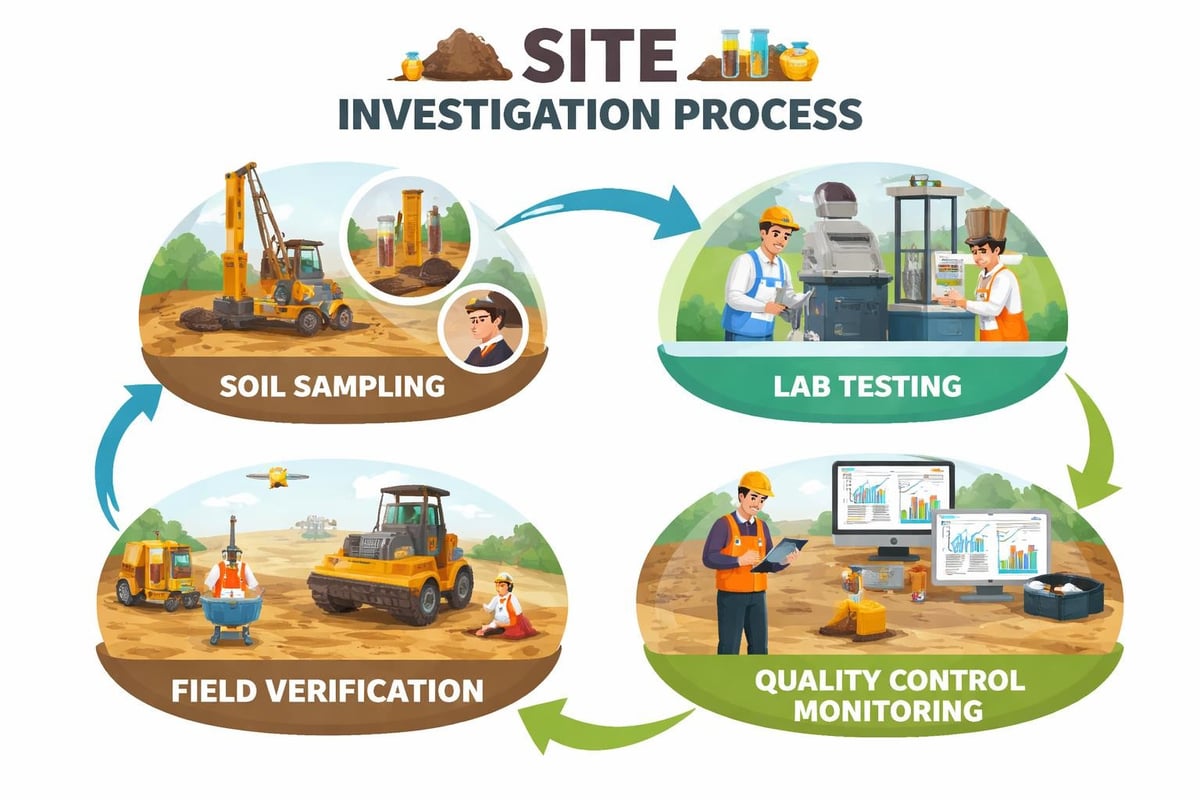
Successful subgrade stabilization begins with comprehensive site characterization. Understanding existing soil conditions informs method selection and design parameters.
Essential Testing Protocols
Laboratory testing establishes baseline soil properties and evaluates stabilization effectiveness. Standard tests include moisture-density relationships, unconfined compressive strength, California Bearing Ratio (CBR), and Atterberg limits. Construction material testing services provide critical data for design decisions.
Field testing validates laboratory predictions and verifies construction quality. Dynamic cone penetrometer tests, nuclear density gauge readings, and plate load tests confirm achieved performance levels. Quality assurance programs should incorporate both laboratory and field verification at specified intervals.
| Test Type | Purpose | Frequency | Acceptance Criteria |
|---|---|---|---|
| CBR | Bearing capacity | Per soil type/area | Project-specific design values |
| Density | Compaction verification | Every 500 m² or layer | 95-100% maximum dry density |
| Moisture Content | Compaction optimization | Daily during placement | ±2% of optimum |
| UCS | Strength development | Weekly during curing | Minimum design strength |
Design Considerations for Alberta Conditions
Alberta's climate and geology create unique challenges for subgrade stabilization. Freeze-thaw cycles, expansive clays, and variable moisture conditions require specialized design approaches.
Climate-Responsive Design
Frost penetration depths throughout Alberta range from 1.5 to 2.5 meters depending on location and winter severity. Stabilized subgrades must maintain integrity through repeated freeze-thaw cycles without degradation. Chemical stabilizers that create water-resistant bonds perform better than moisture-sensitive alternatives.
Seasonal construction windows affect stabilization method selection. Cement and lime treatments require minimum temperatures for proper curing, typically above 5°C for cement and 10°C for lime. Cold weather slows chemical reactions and may prevent achieving design strength within project timelines.
Soil-Specific Strategies
Clay-rich soils dominate many Alberta sites, particularly in the Edmonton and Fort Saskatchewan regions. These materials exhibit high plasticity and significant volume change potential. Lime stabilization reduces plasticity index and creates more workable materials while providing long-term strength development.
Organic soils require special consideration due to their high compressibility and low bearing capacity. Complete removal and replacement often proves more economical than attempted stabilization. When stabilization becomes necessary, cement treatment at high dosage rates combined with staged construction can achieve acceptable results.
Till and glacial deposits present variable conditions requiring careful characterization. These mixed soils may contain boulders, cobbles, fine sands, silts, and clays in unpredictable proportions. Mechanical stabilization through selective grading and moisture conditioning often works well before applying chemical treatments.
Construction Implementation and Quality Control
Proper execution determines whether stabilization designs achieve intended performance. Field procedures must align with laboratory-established parameters and manufacturer recommendations.
Preparation and Placement
Site preparation includes removing unsuitable materials, establishing proper grades, and ensuring adequate drainage. Existing subgrade should be scarified to appropriate depth before stabilizer application. Uniform mixing ensures consistent treatment throughout the stabilized layer.
Critical construction steps:
- Strip topsoil and organic materials from treatment area
- Grade and compact existing subgrade to design elevation
- Apply stabilizer uniformly at specified dosage rates
- Mix thoroughly to design depth using appropriate equipment
- Compact mixed material to specified density requirements
- Cure under controlled conditions per material specifications
- Protect from traffic and adverse weather during curing
Moisture content management proves essential for chemical stabilization success. Both cement and lime treatments require specific moisture ranges for optimal performance. Too dry conditions prevent proper chemical reactions, while excessive moisture creates pumping and reduces achievable density.
Guidelines for subgrade improvement emphasize the importance of quality control during construction, including continuous monitoring and adjustment of procedures based on field conditions.
Innovative Stabilization Materials
Research continues advancing stabilization technology through alternative and supplementary materials. These innovations address cost, sustainability, and performance objectives.
Emerging Solutions
Recycled materials offer environmental and economic benefits while providing effective stabilization. Crushed concrete aggregate, reclaimed asphalt pavement, and recycled base materials reduce virgin material consumption. These alternatives often perform comparably to conventional materials when properly processed and applied.
Studies on bamboo charcoal, quarry dust, and lime combinations explore sustainable stabilization approaches for expansive soils. Bio-based additives and waste-derived stabilizers continue gaining acceptance as performance data accumulates.
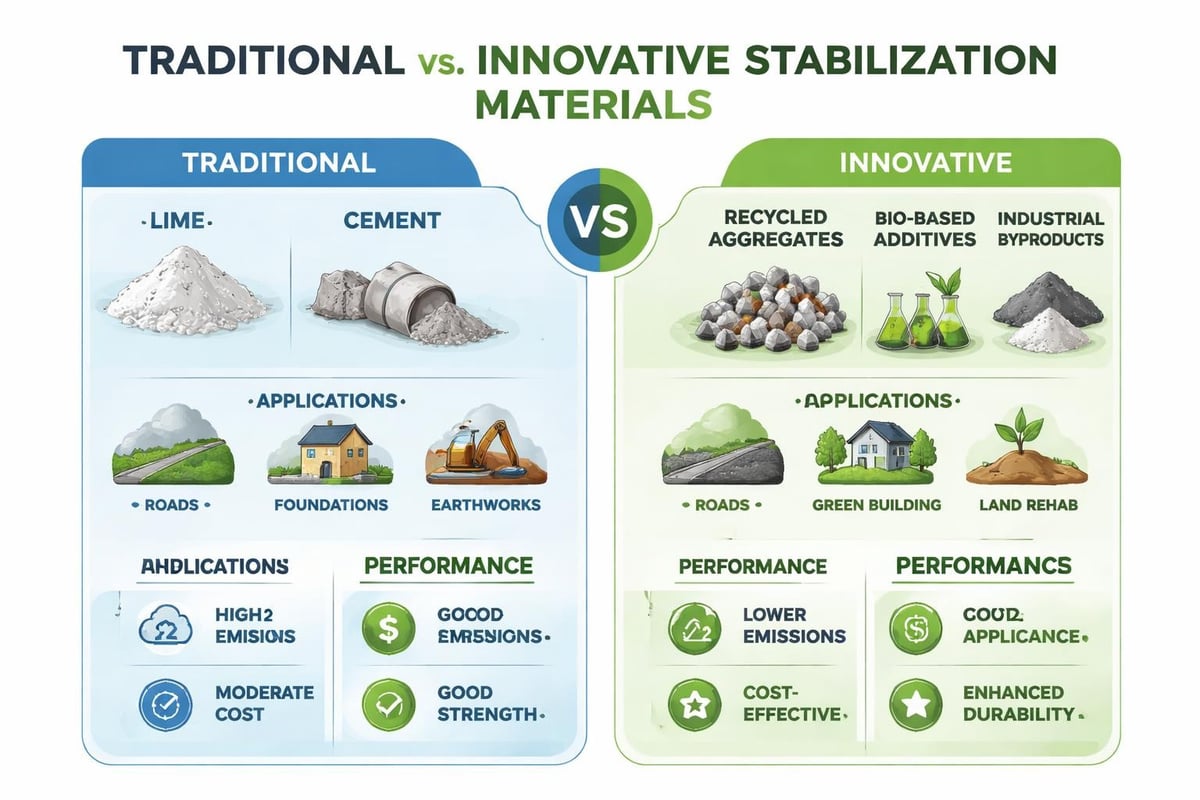
Polymer-based stabilizers create water-resistant bonds without requiring specific curing conditions. These materials work across broader temperature ranges than traditional chemical stabilizers, extending construction seasons in northern climates. Higher material costs often balance against reduced construction time and improved weather tolerance.
Performance Monitoring and Verification
Long-term performance assessment validates design assumptions and informs future projects. Monitoring programs track critical parameters throughout service life.
Assessment Protocols
Visual inspections identify surface distress, cracking patterns, and settlement. Regular observations during the first two years after construction reveal early performance issues requiring intervention. Seasonal inspections capture freeze-thaw impacts and drainage effectiveness.
Instrumentation provides quantitative performance data. Settlement monuments track vertical movement, inclinometers measure lateral displacement, and piezometers monitor groundwater conditions. This data helps correlate observed performance with design predictions.
Performance indicators for stabilized subgrades:
- Surface deflection under traffic loading
- Rutting and permanent deformation patterns
- Crack development and propagation rates
- Moisture content variations through seasons
- Load transfer efficiency at joints and transitions
Economic Analysis and Project Planning
Stabilization decisions require balancing initial costs against long-term benefits. Comprehensive economic analysis considers multiple factors beyond material unit prices.
Cost Components
Direct costs include materials, equipment, labor, and quality control testing. Cement and lime prices fluctuate with market conditions, affecting project budgets. Specialized mixing and application equipment may require rental or subcontractor mobilization, particularly for smaller projects.
Indirect costs encompass schedule impacts, traffic management, and environmental compliance. Evaluating chemical stabilization implementation includes both laboratory and field testing procedures that add time and expense but ensure performance.
Lifecycle cost analysis reveals stabilization value propositions. Preventing premature failure saves major reconstruction expenses. Reduced maintenance requirements lower annual operating budgets. Extended service life defers capital replacement expenditures.
| Cost Factor | Conventional Base | Cement Stabilization | Lime Stabilization | Geosynthetic Reinforcement |
|---|---|---|---|---|
| Material | Moderate | Moderate-High | Moderate | Moderate-High |
| Installation | Low | Moderate | Moderate | Low-Moderate |
| Quality Control | Low | Moderate-High | Moderate-High | Moderate |
| Maintenance | High | Low | Low | Low-Moderate |
| Service Life | 15-20 years | 30-40 years | 30-40 years | 25-35 years |
Regulatory Compliance and Standards
Subgrade stabilization projects must comply with applicable standards, specifications, and environmental regulations. Understanding these requirements prevents costly delays and rework.
Applicable Standards
Provincial and municipal specifications establish minimum performance criteria for stabilized subgrades. Alberta Transportation provides detailed requirements for highway applications. Local jurisdictions may impose additional restrictions or modify provincial standards.
Environmental considerations include dust control, groundwater protection, and material disposal. Chemical stabilizers require proper handling and storage to prevent environmental contamination. Hazardous waste regulations may apply when using certain industrial byproducts as stabilizers.
Quality assurance standards specify testing frequencies, acceptance criteria, and verification procedures. ASTM International, Canadian Standards Association (CSA), and American Association of State Highway and Transportation Officials (AASHTO) publish relevant test methods and specifications.
Troubleshooting Common Challenges
Even well-designed stabilization programs encounter field challenges requiring adaptive management and problem-solving.
Addressing Performance Issues
Inadequate strength development may result from improper mixing, incorrect dosage rates, or unfavorable curing conditions. Additional stabilizer application or supplementary treatments can address localized weaknesses. Methods for stabilizing existing subgrades during reconstruction provide strategies for correcting deficiencies.
Moisture-related problems including pumping, softening, and loss of support require drainage improvements. Installing edge drains, adjusting grades, or adding permeable layers can resolve water accumulation issues. In severe cases, partial reconstruction with improved drainage systems becomes necessary.
Variable soil conditions discovered during construction demand flexible response strategies. Selective stabilization treating only problematic areas optimizes budgets while addressing critical needs. Alternatively, transitioning to different stabilization methods for unexpected soil types maintains project momentum.
Subgrade stabilization provides essential foundation support for infrastructure projects across Alberta's diverse soil conditions, combining proven methods with innovative materials to achieve lasting performance. Whether your project involves highway reconstruction, building foundations, or industrial site development, professional geotechnical expertise ensures optimal stabilization design and implementation. ZALIG Consulting Ltd delivers comprehensive geotechnical engineering, construction material testing, and quality assurance services throughout Alberta, helping clients achieve superior subgrade performance through scientifically sound stabilization solutions tailored to project-specific requirements.