

Site evaluation represents one of the most critical phases in any development or construction project. Whether you're planning a new commercial facility, civil infrastructure upgrade, or land development venture, understanding the existing conditions of a property forms the foundation for informed decision-making. A thorough site evaluation identifies constraints, quantifies risks, and reveals opportunities that directly impact project feasibility, budgeting, regulatory approvals, and long-term performance. In 2026, as development pressures intensify and regulatory oversight becomes more stringent, the importance of comprehensive site assessment has never been greater.
What Site Evaluation Entails
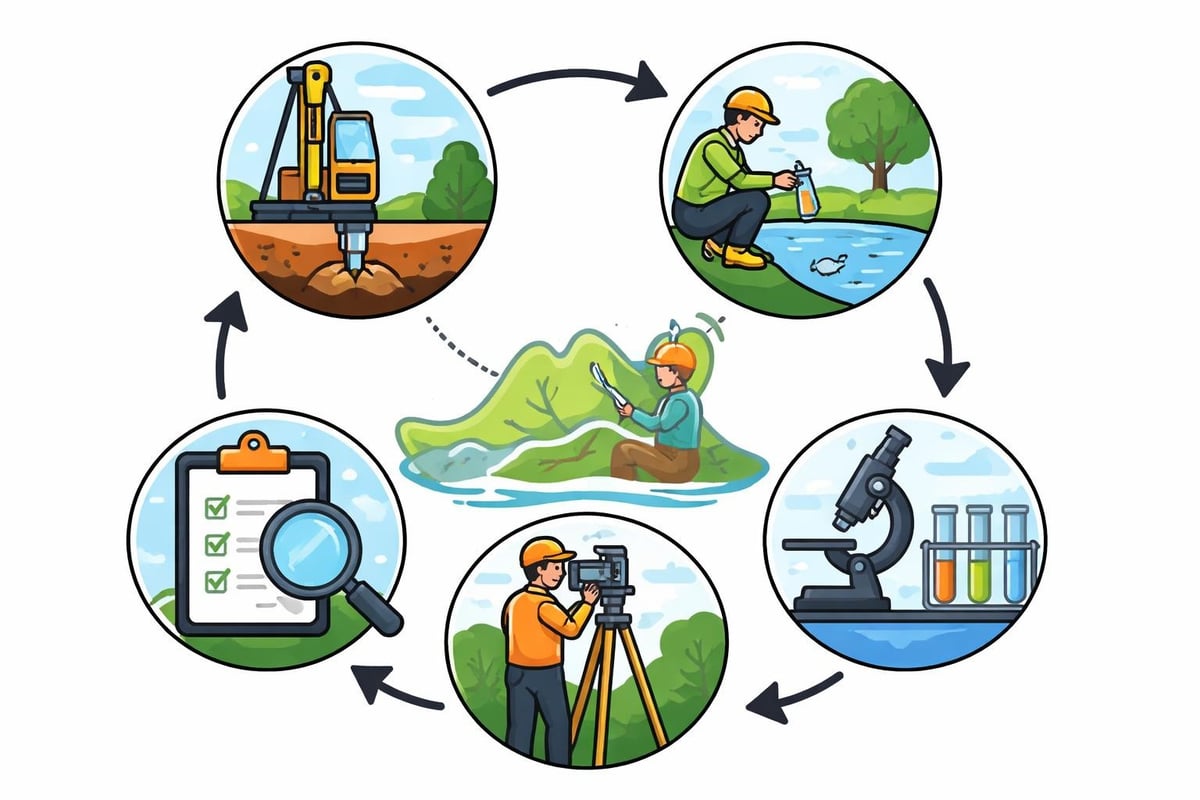
Site evaluation encompasses a systematic investigation of physical, environmental, and regulatory characteristics that influence how a property can be developed or improved. This multidisciplinary process integrates field observations, subsurface exploration, laboratory testing, records review, and engineering analysis to create a complete picture of site conditions.
The core components of site evaluation typically include:
- Geotechnical investigation to characterize soil and groundwater conditions
- Environmental assessment to identify contamination risks and regulatory constraints
- Topographic survey and drainage analysis
- Utilities identification and infrastructure capacity review
- Regulatory compliance verification and permitting pathway assessment
- Access and transportation considerations
Each discipline contributes unique insights that together inform site development strategy. The evaluation of site conditions requires both technical expertise and practical experience to translate field data into actionable engineering recommendations.
Why Site Evaluation Matters for Project Success
Skipping or minimizing site evaluation introduces significant risk into projects of any scale. Unexpected subsurface conditions account for a substantial portion of construction claims and project delays. Contaminated soil discovered during excavation can halt work and multiply remediation costs. Inadequate understanding of groundwater conditions may compromise foundation performance or require costly dewatering systems.
A comprehensive site evaluation delivers measurable benefits throughout the project lifecycle. During planning and due diligence, it establishes realistic budgets and schedules based on actual site conditions rather than assumptions. For financing and transactions, it provides the technical documentation lenders and investors require to assess risk. During design, it enables engineers to specify appropriate foundation systems, earthwork strategies, and construction methods. Throughout construction, baseline site data helps resolve differing site conditions disputes and supports quality control decisions.
Financial and Risk Management Value
| Evaluation Component | Risk Mitigated | Value Delivered |
|---|---|---|
| Geotechnical Investigation | Foundation failures, settlement issues | Optimized foundation design, reduced contingencies |
| Environmental Assessment | Contamination liability, regulatory penalties | Transaction confidence, remediation planning |
| Drainage and Hydrology | Flooding, erosion, regulatory non-compliance | Stormwater design, permit approvals |
The return on investment for proper site evaluation typically ranges from 10:1 to 50:1 when compared to the cost of addressing unforeseen conditions during construction. This economic reality makes thorough assessment a prudent business decision rather than an optional expense.
Geotechnical Site Evaluation Fundamentals
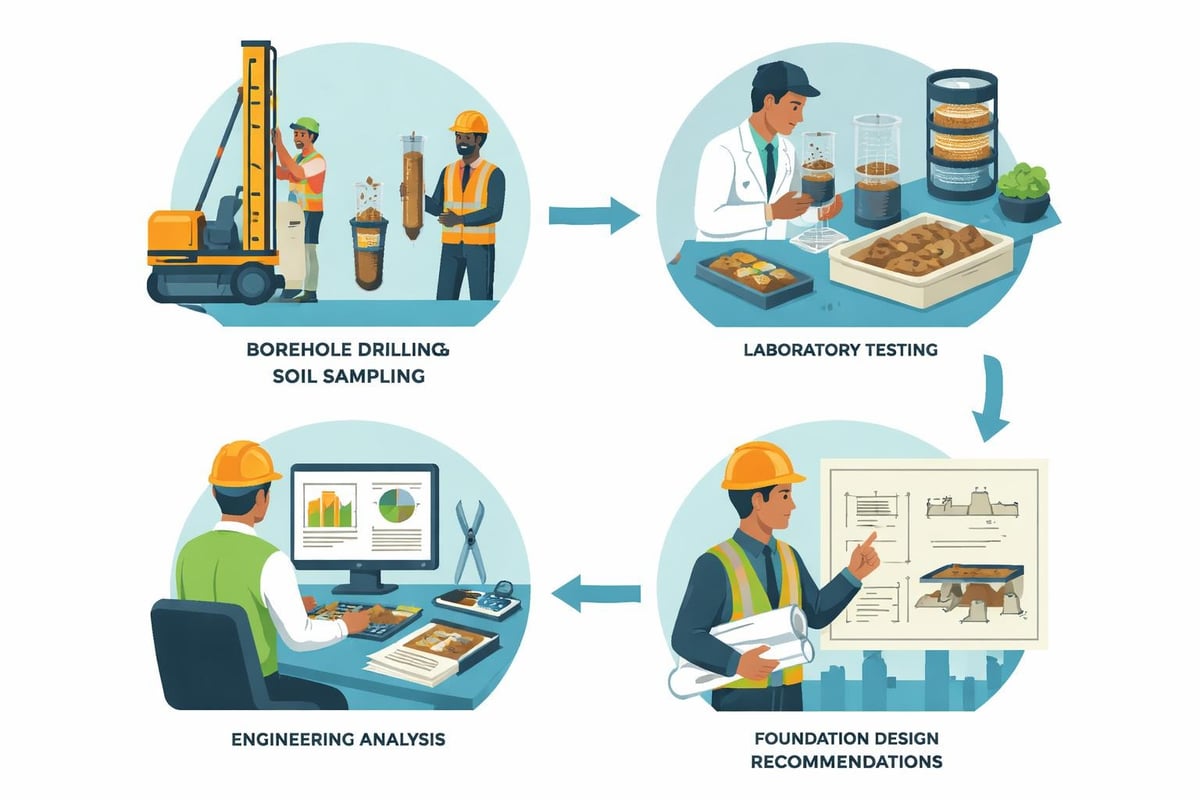
Geotechnical site evaluation characterizes subsurface soil, rock, and groundwater conditions that govern foundation design, earthwork planning, and construction approach. This investigation combines field exploration with laboratory testing to develop soil profiles, engineering parameters, and foundation recommendations.
Standard geotechnical evaluation procedures include:
- Desktop review of geological maps, previous reports, and aerial photography
- Field reconnaissance to observe surface conditions, drainage patterns, and nearby structures
- Subsurface exploration using boreholes, test pits, or specialized equipment
- Soil and rock sampling for laboratory characterization
- In-situ testing to measure strength, density, and permeability properties
- Groundwater monitoring and seasonal fluctuation assessment
- Engineering analysis and foundation recommendations
The depth and intensity of geotechnical investigation depends on project complexity, building loads, soil variability, and regulatory requirements. A single-story industrial building on competent soil requires less investigation than a multi-story structure on soft clay or fill materials.
In-situ geotechnical testing provides real-time data about soil behavior under field conditions. Standard Penetration Tests (SPT), Cone Penetration Tests (CPT), and pressuremeter testing deliver strength and deformation parameters that cannot be reliably obtained from disturbed samples alone. This field data complements laboratory testing to build defensible design parameters.
Laboratory Testing and Soil Classification
Once samples reach the laboratory, a battery of tests characterizes soil composition, moisture content, grain size distribution, plasticity, strength, and compressibility. Advanced geotechnical laboratory testing enables engineers to predict how soils will behave under foundation loads, determine if special ground improvement measures are needed, and assess construction challenges like excavation stability or frost susceptibility.
The classification of soils using the Unified Soil Classification System (USCS) or AASHTO system provides a common language for describing subsurface conditions. This standardized approach ensures that geotechnical findings can be clearly communicated to structural engineers, contractors, and regulatory reviewers.
Environmental Site Evaluation and Due Diligence
Environmental site evaluation identifies potential contamination, assesses compliance with environmental regulations, and quantifies liability risks associated with property transactions or redevelopment. In 2026, environmental due diligence has become standard practice for real estate transactions, financing arrangements, and brownfield redevelopment initiatives.
The National Park Service evaluation guidelines demonstrate the systematic approach required for assessing sites with historical significance, which often parallels the rigor needed for environmental investigations. The phased approach to environmental assessment balances investigation costs against the need for definitive answers about site conditions.
Phase I Environmental Site Assessment involves records review, site reconnaissance, interviews, and regulatory database searches to identify recognized environmental conditions (RECs) without physical sampling. This desktop evaluation satisfies ASTM E1527-21 standards and typically meets the "all appropriate inquiry" requirements for CERCLA liability protection.
When Phase I findings indicate potential contamination, Phase II Environmental Site Assessment conducts intrusive investigation through soil borings, monitoring well installation, and laboratory analysis of soil and groundwater samples. This testing quantifies contaminant concentrations and compares results to regulatory standards and risk-based screening levels.
Phase III Environmental Site Assessment develops remediation strategies, cost estimates, and implementation plans to address confirmed contamination. Environmental Phases I, II, and III services provide the technical foundation for informed risk management decisions and successful project execution on challenged properties.
Drainage and Hydrotechnical Considerations
Water management represents a critical aspect of site evaluation that influences grading design, stormwater infrastructure, foundation performance, and regulatory approvals. Hydrotechnical assessment characterizes watershed boundaries, runoff patterns, flood risks, and watercourse constraints that govern site development.
Site evaluation for drainage purposes examines existing topography, soil infiltration capacity, seasonal water table fluctuations, proximity to waterbodies, and municipal stormwater requirements. This analysis determines whether development will increase downstream flood risk, identifies opportunities for low-impact development approaches, and sizes stormwater management facilities.
For sites adjacent to rivers, streams, or wetlands, hydrotechnical evaluation assesses setback requirements, erosion potential, habitat considerations, and permitting pathways for watercourse crossings or floodplain development. Hydrologic and hydraulic modeling predicts how proposed development will alter runoff volumes and peak flows under various storm events.
Stormwater Management and Regulatory Compliance
Modern stormwater regulations increasingly require development to maintain or reduce pre-development runoff rates and provide water quality treatment. Site evaluation must identify sufficient space for detention ponds, bioswales, permeable pavement, or other best management practices while considering soil permeability, groundwater depth, and winter performance in cold climates.
The integration of hydrotechnical assessment with geotechnical investigation prevents conflicts between foundation requirements and stormwater infrastructure. High groundwater conditions may necessitate raised building elevations, underdrain systems, or alternate foundation approaches that influence site layout and construction costs.
Transportation and Access Evaluation
Transportation site evaluation examines existing road networks, traffic volumes, access points, sight distance, parking requirements, and circulation patterns that affect site functionality and regulatory approvals. This assessment determines whether existing infrastructure can accommodate development-generated traffic or if upgrades are necessary.
Key elements of transportation site evaluation include:
- Average daily traffic counts and peak hour volumes on adjacent roads
- Intersection level of service analysis
- Access location review for sight distance and safety
- On-site circulation and parking capacity verification
- Transportation demand management opportunities
- Construction traffic routing and staging
Many municipalities require Traffic Impact Assessments for developments exceeding specific size thresholds. These studies quantify trip generation, distribute traffic to the road network, and analyze impacts at critical intersections. The findings inform intersection improvements, access design, and development phasing strategies.

Integrating Multiple Disciplines for Comprehensive Assessment
The most effective site evaluation integrates findings from geotechnical, environmental, hydrotechnical, and transportation disciplines into a cohesive understanding of development opportunities and constraints. This multidisciplinary approach identifies interactions between different site conditions that single-discipline evaluations might miss.
For example, high groundwater identified during geotechnical investigation affects environmental sampling strategies, influences stormwater infiltration feasibility, and may require foundation design modifications. Similarly, contaminated soil discovered during environmental assessment impacts earthwork management, disposal costs, and construction sequencing.
| Integration Benefit | Example Application | Project Impact |
|---|---|---|
| Cost optimization | Coordinating borings for geotechnical and environmental sampling | Reduced mobilization costs |
| Schedule efficiency | Concurrent field investigations across disciplines | Faster project approvals |
| Risk reduction | Identifying conflicts between foundation depth and contaminated zones | Proactive mitigation planning |
ZALIG Consulting Ltd provides integrated site evaluation services that coordinate geotechnical investigations, environmental assessments, hydrotechnical analysis, and transportation studies under unified project management. This coordination ensures that technical findings from different disciplines inform each other and support cohesive development strategies.
Best Practices for Effective Site Evaluation
Successful site evaluation requires careful planning, experienced execution, and clear communication of findings. Understanding how to evaluate information sources applies equally to assessing the quality and reliability of site investigation reports and technical data.
Establish clear objectives at the project outset. Define what questions the site evaluation must answer, what level of confidence is required, and how findings will inform decision-making. A preliminary feasibility study requires different investigation intensity than final design or construction support.
Scale investigation to project risk. High-value buildings, complex soil conditions, environmentally sensitive locations, and sites with known issues justify more extensive evaluation. The critical evaluation of site conditions should be proportionate to potential consequences of unforeseen conditions.
Engage qualified professionals early. Experienced geotechnical engineers, environmental scientists, and other specialists bring site-specific knowledge, regulatory familiarity, and technical judgment that generic investigations cannot provide. Their input during site selection and conceptual planning adds more value than involvement only after design commitments are made.
Document findings thoroughly. Site evaluation reports should present data clearly, explain analytical methods, acknowledge limitations, and provide actionable recommendations. Proper documentation serves future users, supports regulatory submittals, and protects against liability disputes.
Common Pitfalls to Avoid
- Insufficient investigation density: Too few boreholes or test locations may miss critical soil variability or contamination zones
- Inadequate depth of exploration: Shallow investigations fail to characterize bearing strata or deep contamination
- Ignoring seasonal variations: Single-visit assessments may not capture high groundwater conditions or drainage issues
- Overlooking regulatory triggers: Development plans that ignore setbacks, protected areas, or permit requirements face costly redesign
- Poor communication between disciplines: Siloed investigations miss opportunities for efficiency and integration
Site Evaluation for Specific Project Types
Different development types emphasize particular aspects of site evaluation based on their unique requirements and risk profiles. Understanding these priorities ensures that investigation programs address the most critical project needs.
Industrial and commercial facilities prioritize geotechnical capacity for heavy floor loads and equipment foundations, environmental clearance for financing and liability protection, and adequate utility infrastructure. Transportation access for trucks and employee vehicles often drives site selection decisions.
Residential subdivisions focus on grading feasibility, stormwater management, geotechnical suitability for typical housing foundations, and environmental clearance for sensitive receptors. Municipal servicing capacity and transportation connectivity influence development density and phasing.
Infrastructure projects including roads, bridges, and utilities emphasize corridor-level assessment, right-of-way constraints, geotechnical conditions along linear alignments, and environmental permitting for watercourse crossings or protected areas. Soil stabilization and ground improvement techniques may be necessary for marginal soil conditions along transportation routes.
Redevelopment and brownfield sites require intensive environmental investigation to characterize contamination extent, assess vapor intrusion risks, and develop remediation approaches. Geotechnical evaluation must consider previous site use, buried structures, and fill materials that complicate foundation design.
Regulatory Framework and Approval Processes
Site evaluation directly supports regulatory compliance and permitting by providing technical documentation that agencies require to assess development applications. Understanding applicable regulations during site evaluation ensures that investigations address specific agency requirements and information gaps.
Building permits require geotechnical reports demonstrating that foundation design meets building code requirements for soil bearing capacity, settlement limits, and seismic considerations. Environmental clearance may be needed to address contamination or species habitat.
Development permits from municipal planning departments evaluate conformance with zoning bylaws, setback requirements, stormwater management standards, and transportation policies. Site evaluation findings inform applications and demonstrate technical feasibility.
Environmental permits from provincial and federal regulators govern activities affecting watercourses, wetlands, fisheries habitat, and contaminated sites. Best practices for site operations emphasize proactive compliance and documentation that site evaluation supports.
Infrastructure agreements with municipalities require engineering studies demonstrating adequate servicing capacity, acceptable stormwater management, and safe traffic operations. Site evaluation provides the technical foundation for these submissions.
The evaluation methodology and criteria applied by regulatory reviewers emphasizes technical rigor, adherence to standards, and clarity of presentation. Professional engineers who understand agency expectations can structure site evaluation deliverables to facilitate efficient review and approval.
Emerging Trends in Site Evaluation
Site evaluation practices continue to evolve with advancing technology, changing regulatory priorities, and growing emphasis on sustainability. In 2026, several trends are reshaping how professionals assess and characterize development sites.
Digital site characterization integrates geospatial data, subsurface modeling, drone surveys, and LiDAR topography to create three-dimensional site representations. This technology improves visualization, supports design optimization, and enables collaborative review among project stakeholders.
Sustainability metrics increasingly factor into site evaluation as clients seek to minimize environmental footprint, optimize material use, and achieve green building certifications. Assessment of renewable energy potential, greywater reuse opportunities, and low-impact development feasibility has become more common.
Climate resilience considerations evaluate flood risks under future precipitation scenarios, assess erosion potential with changing weather patterns, and identify adaptation strategies for long-term infrastructure performance. Site evaluation now looks beyond historical conditions to anticipate future climate impacts.
Expedited assessment techniques including rapid environmental screening, real-time contamination analysis, and continuous penetration testing accelerate site characterization without sacrificing data quality. These approaches reduce investigation timelines and support faster project advancement.
Comprehensive site evaluation creates the technical foundation for successful project delivery by identifying constraints early, quantifying risks accurately, and informing design decisions with reliable data. Whether addressing geotechnical challenges, environmental liabilities, drainage complexities, or transportation requirements, systematic site assessment protects investments and enables confident decision-making. ZALIG Consulting Ltd delivers integrated site evaluation services across geotechnical, environmental, hydrotechnical, and transportation disciplines, combining field expertise with engineering analysis to support projects from initial due diligence through construction completion. Contact our multidisciplinary team to discuss how thorough site evaluation can reduce risk and enhance the success of your next development or infrastructure project.