
Screw piles represent one of the most versatile and efficient deep foundation solutions available to modern engineers, combining rapid installation with minimal soil disturbance and immediate load-bearing capacity. These helical foundation elements consist of a central steel shaft with one or more helical bearing plates welded along their length, designed to be screwed into the ground rather than driven or cast in place. Originally developed in the 1830s for moorings and lighthouses, screw piles have evolved into sophisticated engineered systems serving applications from residential underpinning to major infrastructure projects. Their ability to develop capacity in both tension and compression, coupled with installation techniques that produce minimal noise and vibration, makes them particularly valuable in urban environments and sensitive soil conditions.
Understanding Screw Pile Design and Mechanics
The fundamental design principle behind screw piles involves transferring structural loads through helical bearing plates into competent soil or bedrock layers. Unlike conventional driven piles that rely primarily on skin friction and end bearing, screw piles develop their capacity through the bearing resistance of individual helical plates acting as circular footings at depth.
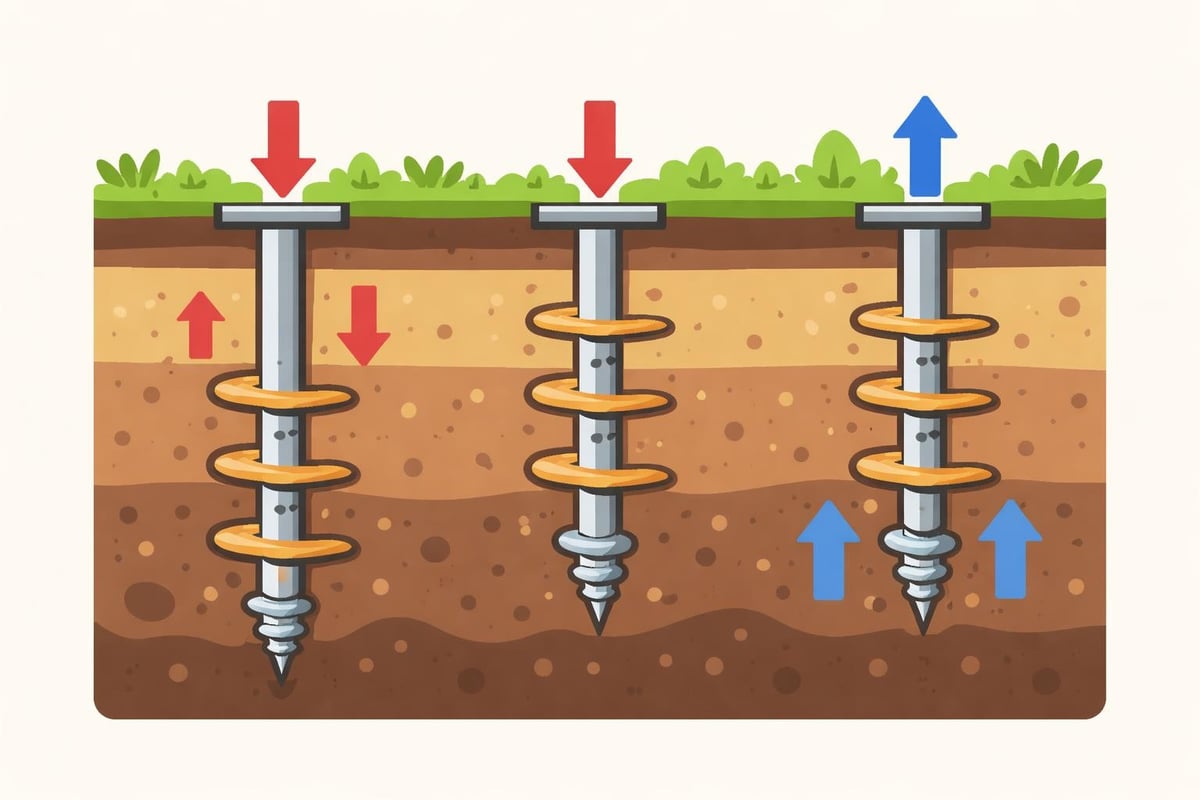
The geometry of these helical plates significantly influences performance characteristics. Typical configurations include:
- Single helix designs for lighter residential and commercial applications
- Multi-helix arrangements for higher capacity industrial and infrastructure foundations
- Variable pitch configurations optimized for specific soil profiles
- Tapered shaft geometries that reduce installation torque in dense formations
Installation torque provides a direct correlation to ultimate pile capacity, enabling real-time quality control during construction. This relationship, extensively documented in research on screw pile performance, allows engineers to verify design assumptions without waiting for concrete curing or conducting costly load tests on every pile.
Material Specifications and Corrosion Considerations
Modern screw piles utilize high-strength steel shafts meeting ASTM A252 or equivalent standards, with helical plates fabricated from structural steel conforming to ASTM A572 Grade 50 or higher. The shaft diameter typically ranges from 76 mm to 406 mm, while helix diameters span from 200 mm to 914 mm depending on load requirements and soil conditions.
Corrosion protection remains critical for long-term performance, particularly in aggressive soil environments. Common protection strategies include hot-dip galvanizing per ASTM A123, epoxy coating systems, and metallizing for marine applications. Service life predictions require careful assessment of soil resistivity, pH levels, and chloride content, parameters typically evaluated during preliminary geotechnical investigations.
| Material Component | Standard Specification | Typical Properties |
|---|---|---|
| Central Shaft | ASTM A252 Grade 3 | 310 MPa yield strength |
| Helical Plates | ASTM A572 Grade 50 | 345 MPa yield strength |
| Protective Coating | ASTM A123 (galvanizing) | 610 g/m² minimum |
Installation Methods and Equipment
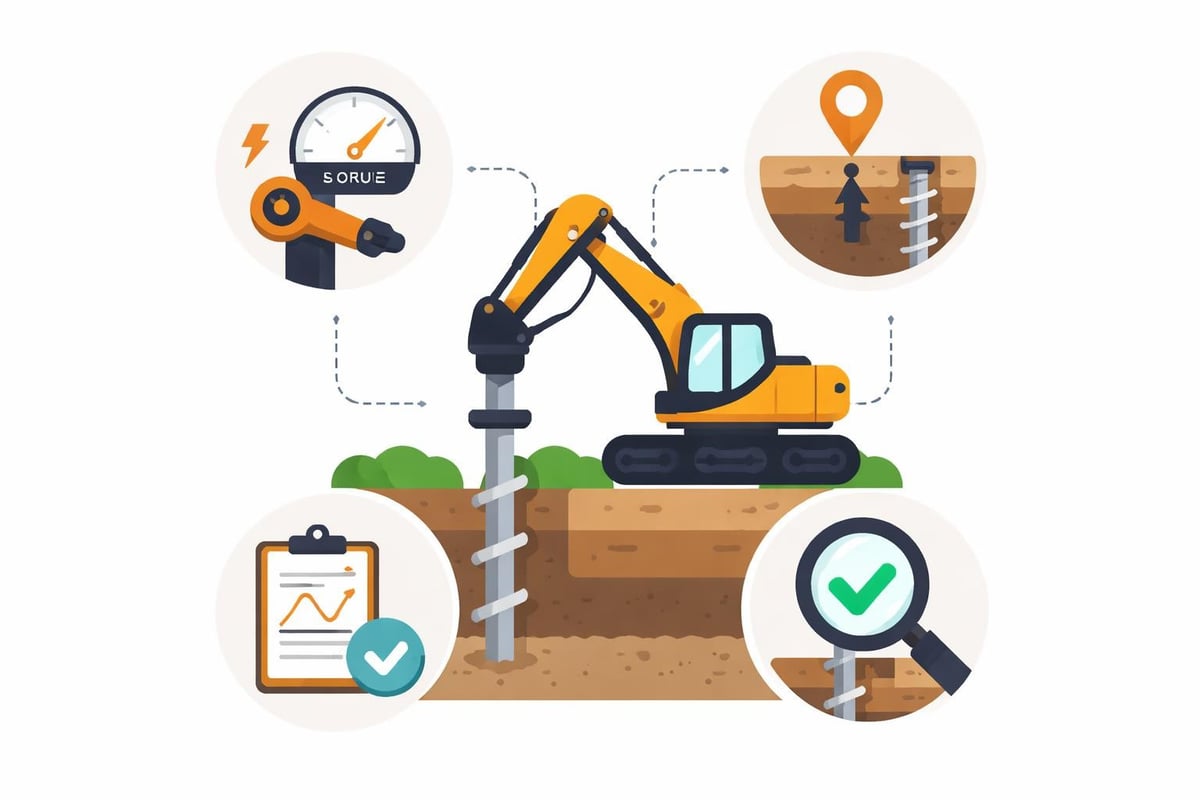
The installation process distinguishes screw piles from other deep foundation types through its speed, precision, and minimal environmental impact. Specialized hydraulic drive heads mounted on tracked excavators, skid steers, or dedicated pile rigs apply controlled rotational torque while crowd force advances the pile to design depth.
Installation monitoring equipment records real-time data including:
- Applied torque at regular depth intervals
- Crowd pressure required to maintain advancement
- Vertical penetration rate throughout installation
- Final seating torque at design elevation
These parameters enable immediate assessment of bearing stratum engagement and capacity verification. When installation torque consistently exceeds predicted values based on soil investigation data, engineers can adjust embedment depths or specify additional capacity testing to optimize the foundation design.
Quality Control During Construction
Unlike cast-in-place concrete piles where defects may remain undetected until failure occurs, screw pile installation provides continuous feedback on subsurface conditions. Sudden changes in torque response indicate encountering boulders, utility conflicts, or unexpected soil stratification requiring engineering review.
The Australian Steel Institute guidelines emphasize documenting complete installation records for each pile, creating an as-built foundation database that supports future maintenance, modifications, or forensic investigations. This documentation proves particularly valuable when projects require regulatory approval or third-party verification of foundation adequacy.
Applications Across Engineering Disciplines
Screw piles serve diverse applications spanning residential, commercial, industrial, and infrastructure sectors. Their versatility stems from adaptability to varying load magnitudes, soil conditions, and project constraints that challenge conventional foundation systems.
Residential and Light Commercial Structures
Foundation repair and underpinning represent significant market segments where screw piles excel. Existing structures experiencing settlement from consolidating soils, changing groundwater conditions, or inadequate original design benefit from screw pile retrofits that stabilize foundations with minimal disruption to occupants.
The installation process typically requires only small equipment accessing confined spaces through standard doorways, eliminating extensive excavation that would otherwise necessitate relocating building contents or suspending operations. Concerns about underpinning safety and design considerations emphasize proper analysis of bending moments in inclined pile configurations and adequate lateral restraint to prevent buckling.
New construction applications include decks, additions, boardwalks, and solar array foundations where screw piles provide economical solutions with immediate loading capability. The elimination of concrete curing time accelerates project schedules, particularly valuable in northern climates with short construction seasons.
Industrial and Infrastructure Projects
Heavy industrial facilities, telecommunication towers, pipeline supports, and temporary structures utilize screw piles for foundations requiring high capacity in challenging conditions. Testing programs for tower foundations demonstrate that properly designed multi-helix configurations develop capacities exceeding 1,000 kN in competent soils while maintaining acceptable settlement tolerances.
Transportation infrastructure benefits from screw pile applications including:
- Sound barrier walls along highways
- Sign and signal foundations at intersections
- Retaining walls for grade separations
- Bridge abutment repair and rehabilitation
- Temporary shoring for excavations
ZALIG's expertise in geotechnical engineering and foundation design encompasses screw pile specification and verification testing, ensuring these versatile foundation elements meet project-specific performance criteria while maintaining constructability and cost-effectiveness.
Design Considerations and Load Capacity Determination
Accurate capacity prediction requires integrating theoretical bearing capacity analysis with empirical correlations derived from installation torque monitoring. The individual bearing method treats each helix as an independent circular footing, calculating ultimate bearing capacity using Terzaghi or Meyerhof bearing capacity equations modified for depth effects.
Theoretical Capacity Analysis
For compression loading, capacity per helix depends on soil shear strength parameters, helix diameter, and embedment depth. The general bearing capacity equation becomes:
Q_ult = (c × N_c × s_c + q × N_q × s_q + 0.5 × γ × D × N_γ × s_γ) × A
Where soil cohesion, surcharge pressure, and soil unit weight combine with bearing capacity factors and shape factors to predict ultimate resistance. The projected area of each helix contributes to total capacity, with spacing between helices maintained at minimum three diameters to prevent overlapping failure zones.
Tension capacity develops through combined cylindrical shear failure and individual plate bearing, with the critical failure mechanism depending on helix spacing, soil type, and loading rate. Studies on instrumented screw piles in soft soils demonstrate that tension capacity may govern design in cohesive deposits where undrained shear strength limits uplift resistance.
Empirical Torque Correlation
The relationship between installation torque and ultimate capacity provides a practical verification tool during construction. The empirical torque factor K_t relates final installation torque to capacity:
Q_ult = K_t × T
Where T represents measured installation torque and K_t varies based on pile geometry and soil conditions. Published K_t values range from 3 m⁻¹ to 33 m⁻¹, with calibration through static load testing recommended for critical projects or unfamiliar soil profiles.
Research linking installation response to capacity demonstrates that monitoring torque throughout the installation depth profile reveals stratigraphic transitions and confirms engagement with design bearing layers, providing confidence that assumptions underlying capacity calculations reflect actual subsurface conditions.
Geotechnical Investigation Requirements
Successful screw pile design begins with thorough subsurface characterization identifying soil stratigraphy, strength parameters, groundwater conditions, and potential obstacles to installation. Standard geotechnical investigations should include sufficient boreholes or test pits to establish lateral continuity of bearing strata and detect anomalies such as buried debris, utilities, or glacial erratics.
Critical soil parameters for screw pile design include:
- Standard Penetration Test (SPT) N-values for granular soil density
- Undrained shear strength from vane shear or unconsolidated undrained triaxial tests for cohesive soils
- Soil classification and moisture content affecting installation torque prediction
- Groundwater elevation influencing effective stress and corrosion potential
Advanced laboratory testing may include direct shear or triaxial testing to determine friction angle and cohesion for bearing capacity calculations, particularly when pile loads exceed empirical design chart limits or site conditions involve unusual soil types.
Integration with advanced geotechnical laboratory testing ensures design parameters reflect actual soil behavior under anticipated loading conditions, reducing uncertainty and supporting cost-effective foundation solutions.
Installation Challenges and Solutions
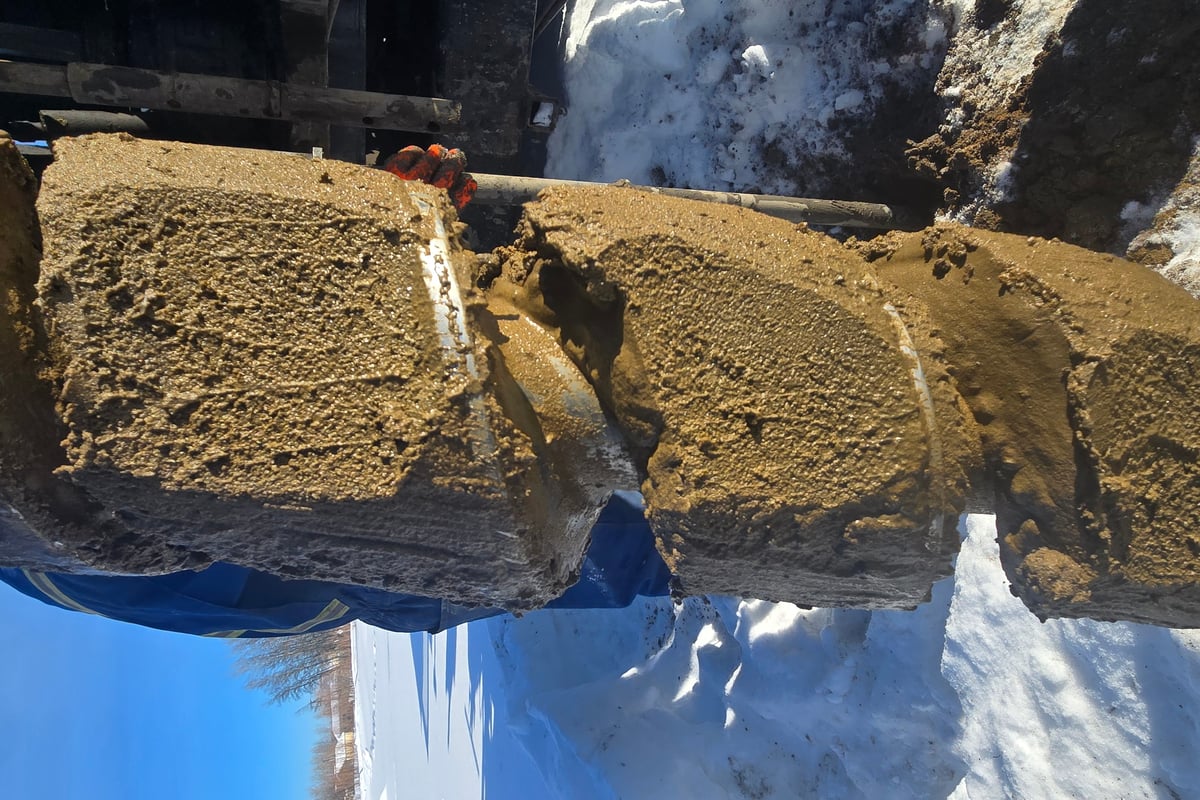
Despite their versatility, screw pile installation encounters obstacles requiring engineering judgment and adaptive strategies. Dense glacial tills, cemented layers, and cobble-boulder deposits may resist helical advancement, necessitating pilot holes, pre-augering, or modified installation techniques.
Overcoming Subsurface Obstacles
When installation torque exceeds equipment capacity before reaching design depth, several solutions exist:
- Pre-drilling through obstructions using augers sized smaller than helix diameter
- High-torque drive heads providing increased rotational force
- Rock shoe attachments facilitating penetration of weathered bedrock
- Redesign with larger shaft diameter to increase torsional capacity
Modern foundation systems incorporate specialized equipment for addressing these challenges, including percussion tools that fracture boulders encountered during installation and high-flow hydraulic systems delivering torque outputs exceeding 100,000 Nm for large-diameter applications.
Regulatory Compliance and Standards
Screw pile design and installation must comply with applicable building codes and industry standards ensuring structural safety and serviceability. The International Building Code (IBC) references deep foundation provisions requiring load testing verification when installation in new geographic regions or unfamiliar soil conditions introduces uncertainty.
| Standard/Code | Scope | Key Requirements |
|---|---|---|
| ICC-ES AC358 | Helical pile acceptance criteria | Load testing protocols, quality control |
| ASTM D1143 | Static load testing (compression) | Test procedures, failure criteria |
| ASTM D3689 | Static load testing (tension) | Uplift capacity verification |
| CSA S6 | Canadian bridge design | Foundation safety factors, serviceability limits |
Compliance and certification requirements extend beyond material specifications to encompass installer qualifications, quality assurance programs, and engineering oversight ensuring constructed foundations meet design intent. Documentation of installation parameters, load test results, and as-built conditions supports regulatory approval processes and provides liability protection for all project stakeholders.
Projects requiring specialized deep foundation solutions benefit from early engagement with building officials and peer reviewers to establish acceptance criteria and testing protocols satisfying local jurisdiction requirements.
Comparative Advantages Over Alternative Foundations
Screw piles offer distinct advantages compared to driven piles, drilled shafts, and shallow foundations in specific applications and site conditions. Understanding these comparative benefits enables optimal foundation selection during project planning and value engineering exercises.
Speed of installation represents a primary advantage, with typical production rates of 20 to 50 piles per day depending on pile size and soil conditions. This productivity exceeds drilled shaft construction and eliminates concrete curing delays, compressing project schedules and reducing weather-related risks.
Environmental impact remains minimal compared to driven pile alternatives. The absence of impact vibrations protects adjacent structures from settlement or cosmetic damage, while the clean installation process generates no spoils requiring disposal, a significant consideration in contaminated soil environments.
Load testing flexibility allows verification testing immediately following installation, with maintained load tests or Osterberg cell procedures confirming capacity before superstructure construction proceeds. This capability reduces foundation risk and supports performance-based design approaches.
Economic Considerations
Cost comparisons between screw piles and alternatives depend heavily on project-specific factors including site access, soil conditions, loading requirements, and construction timeline constraints. In general, screw piles prove most economical when:
- Site access limitations preclude large drilling rigs or pile driving equipment
- Environmental restrictions prohibit vibration or soil spoils generation
- Schedule acceleration justifies premium for immediate loading
- Temporary foundations require future removal and site restoration
Long-Term Performance and Monitoring
Field performance monitoring of installed screw piles provides validation of design assumptions and informs future projects in similar geological settings. Instrumentation options include strain gauges for load distribution assessment, tiltmeters for lateral movement detection, and settlement monitoring surveys tracking vertical displacement over time.
Comprehensive understanding of pile foundations recognizes that long-term capacity may evolve due to changes in soil conditions, structural loading patterns, or corrosion progression. Periodic inspection programs examining exposed pile sections for deterioration, verifying connection integrity, and documenting any distress indicators support proactive maintenance strategies extending foundation service life.
Performance data from existing installations inform calibration of design methods and installation procedures, reducing conservatism in capacity predictions while maintaining appropriate safety margins. This continuous improvement cycle benefits owners through cost savings and engineers through expanded knowledge of screw pile behavior across diverse applications.
Screw piles deliver proven foundation performance across residential, commercial, industrial, and infrastructure applications through their unique combination of rapid installation, immediate loading capability, and adaptability to challenging site conditions. Their versatility in addressing both new construction requirements and remedial underpinning applications positions them as valuable solutions within comprehensive foundation engineering practice. When your project demands reliable foundation performance with minimal site disturbance and accelerated construction timelines, ZALIG Consulting Ltd provides the geotechnical expertise, field investigation capabilities, and engineering design services necessary to specify, verify, and oversee screw pile foundations that meet performance objectives while managing risk and supporting regulatory approval processes.