
Are you preparing for a major home project in 2026 and want to ensure every step leads to lasting value? The world of residential engineering services is evolving rapidly, offering more than just compliance—it is now the foundation for safe, efficient, and future-ready homes.
In this guide, you will discover how residential engineering services can help you avoid costly mistakes, meet new regulations, and unlock your home’s full potential. We will break down exactly what these services include, why they matter, and how to select the right experts for your vision.
Ready to take the guesswork out of your next build, renovation, or investment? Let’s explore the proven path to success for your home project.
Understanding Residential Engineering Services
Residential engineering services provide the technical backbone for safe, efficient, and future-ready homes. These services encompass a range of specialized engineering disciplines designed specifically for residential properties. From structural to mechanical systems, residential engineering services ensure your home meets all safety and performance standards.
Definition and Scope of Residential Engineering
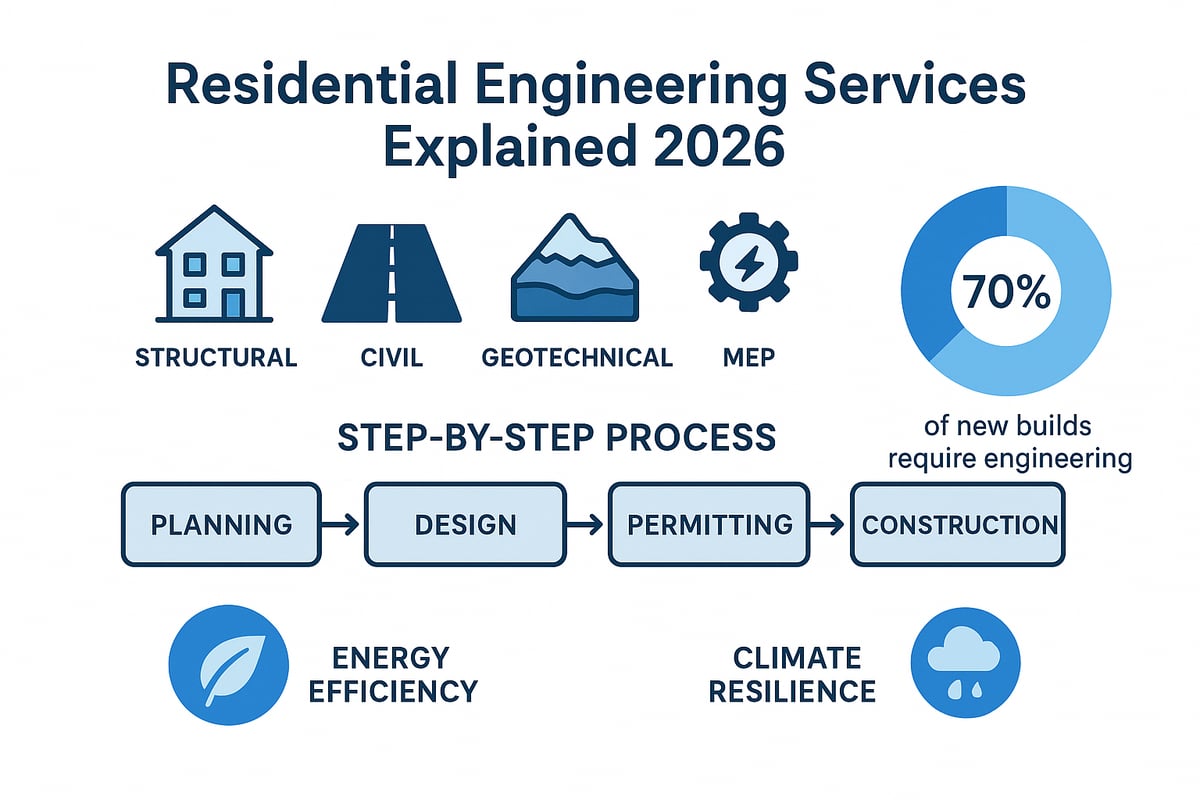
Residential engineering services cover a broad spectrum of technical expertise tailored for homes. This includes structural analysis, civil site planning, geotechnical studies, and MEP (mechanical, electrical, plumbing) design. Unlike commercial engineering, residential engineering services focus on the unique needs of homeowners, such as load calculations for smaller structures and adapting to neighborhood zoning. Licensed engineers play a vital role, overseeing foundation design, soil evaluations, and environmental assessments. Over 70% of new home builds in North America require some form of engineering input. Learn more about the importance of geotechnical analysis in Geotechnical engineering services overview, a core part of residential engineering services.
Core Services Offered
Residential engineering services include several core offerings to guarantee the safety and functionality of your home. Structural assessments and custom designs are foundational, ensuring each element of your property is built to code. Site evaluations and soil testing provide critical data before construction begins. Environmental impact studies help homeowners comply with regulations and protect the environment. Engineers also prepare permit documentation, advise on code compliance, and consult on retrofitting or renovations. For example, a two-story home addition requires precise structural engineering to safely integrate new and existing elements. These services form the cornerstone of successful residential engineering services.
Why Residential Engineering is Essential in 2026
The landscape for residential engineering services is continually evolving. By 2026, stricter regulations for energy efficiency and safety are in place, making engineering input more critical than ever. Climate change brings new challenges, such as increased flood zones, shifting soil stability, and wildfire risks. Insurance providers have raised their standards, with a 2025 survey revealing that 85% of claims were denied due to lack of engineering sign-off. Cities are updating building codes in response to recent wildfires, further highlighting the need for professional oversight. Residential engineering services help homeowners navigate this complex environment and secure lasting value.
Common Myths and Misconceptions
Several myths surround residential engineering services. Some believe only large projects require engineers, but even minor renovations can benefit from expert input. While costs may seem high upfront, professional engineering often leads to significant long-term savings by preventing costly repairs. Many homeowners confuse the roles of architects and engineers; engineers focus on technical safety and compliance, while architects handle design aesthetics. Attempting to bypass permits or engineering can result in serious risks. Studies show that homeowners who skip residential engineering services face a threefold increase in costly repairs and project setbacks.
The 2026 Residential Engineering Process: Step-by-Step
Embarking on a home project in 2026 requires a clear understanding of how residential engineering services guide every stage. This step-by-step process ensures your project is safe, efficient, and fully compliant with evolving standards. Here is how each phase unfolds for homeowners and investors.
Step 1: Initial Consultation and Needs Assessment
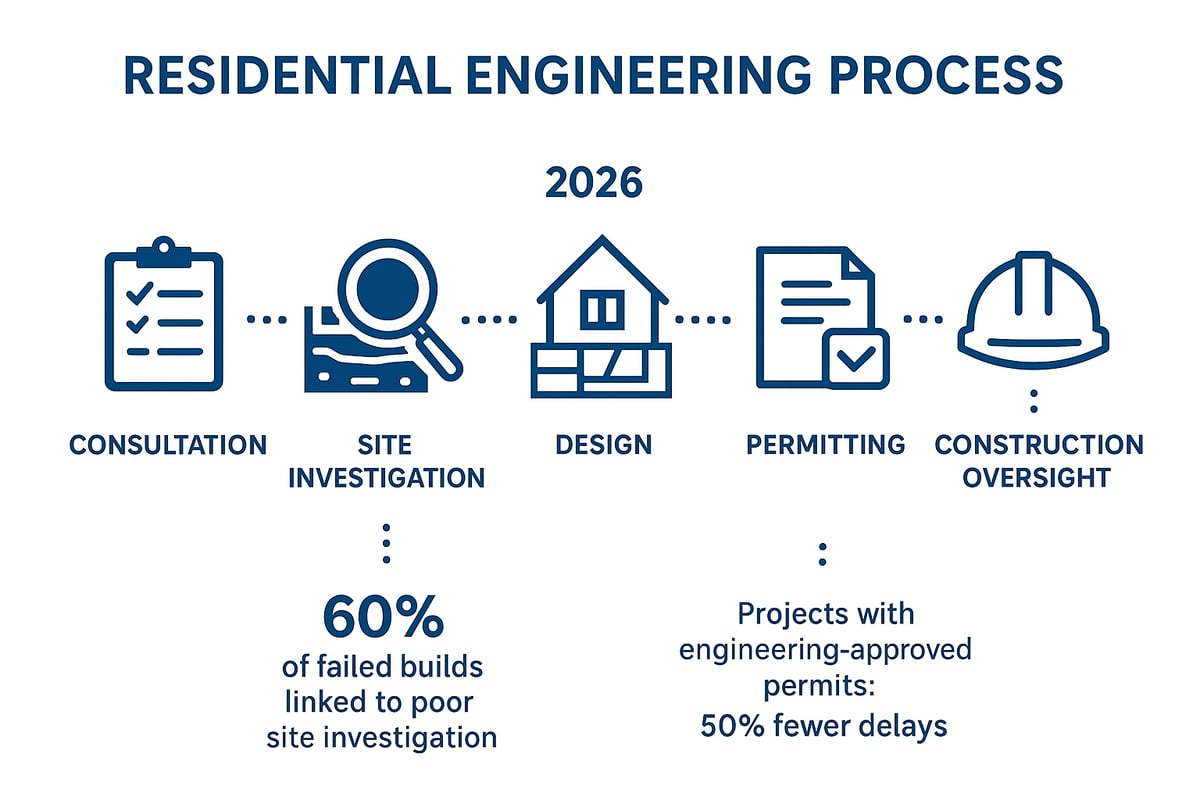
Every successful project with residential engineering services starts with a thorough consultation. This phase helps you define your goals, whether building a new home, renovating, or investing. Licensed engineers will examine your property's history, review existing documentation, and identify unique challenges, such as irregular terrain or aging infrastructure.
For projects on sloped lots or challenging sites, a tailored approach is crucial. For example, a Residential slope stability and set-back case study demonstrates how expert assessment prevents costly surprises and ensures stability. Open, clear communication at this stage sets the foundation for a seamless engineering journey.
Step 2: Site Investigation and Feasibility Studies
The next step in residential engineering services is a detailed site investigation. Engineers conduct soil testing, geotechnical analysis, and assess environmental factors like groundwater or contamination. These investigations reveal the site's true potential and highlight possible risks.
A surprising fact: 60% of failed builds in 2024 were linked to inadequate site investigation. Comprehensive feasibility studies help determine if your vision aligns with the realities of the land. By identifying issues early, you avoid costly changes and set realistic expectations for your project.
Step 3: Design and Engineering Solutions
Once the groundwork is complete, residential engineering services move to the design phase. Here, engineers perform structural design, load calculations, and select the best materials for safety and efficiency. Sustainability is woven into every solution, ensuring your home meets future energy standards.
Collaboration is key. Engineers work closely with architects and contractors, aligning designs with your vision and regulatory codes. For instance, passive house engineering in Alberta demonstrates how energy-efficient design can be adapted for local climates, delivering comfort and savings.
Step 4: Permitting and Regulatory Compliance
Navigating permits and compliance is a critical role of residential engineering services. Engineers ensure your plans meet municipal and provincial building codes, preparing and submitting all required documentation. This includes addressing zoning issues, setbacks, and easements that could impact your timeline.
Projects with engineering-approved permits face 50% fewer delays compared to those without. Clear documentation and a proactive approach to regulations help your build progress smoothly. Staying ahead of code changes minimizes risk and supports long-term project viability.
Step 5: Construction Oversight and Quality Assurance
During construction, residential engineering services provide essential oversight. Engineers perform site inspections, generate progress reports, and coordinate material testing to ensure everything meets the specified standards. Addressing issues as they arise protects your investment.
For example, early identification of foundation cracks can prevent major repairs later on. Quality assurance is not just about checking boxes, it is about safeguarding the safety, durability, and value of your home. Consistent oversight delivers peace of mind from groundbreaking to completion.
Key Considerations for Choosing a Residential Engineering Provider
Selecting the right partner for your residential engineering services is a pivotal step in ensuring project success. With a crowded market and evolving 2026 standards, making an informed choice can protect your investment, guarantee compliance, and streamline your build or renovation.
Credentials and Licensing
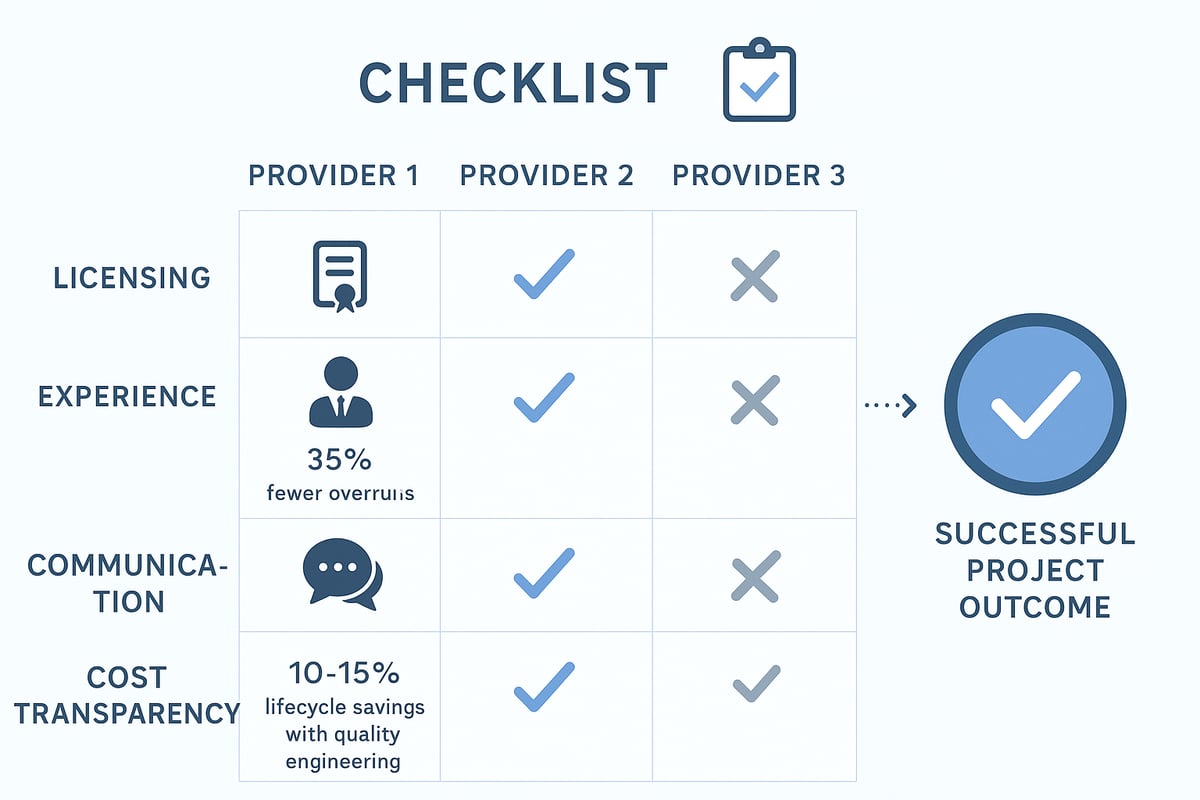
Always verify that your chosen provider of residential engineering services holds current licensing and professional insurance. This ensures work meets provincial and national standards. Look for affiliations with regulatory bodies such as APEGA or PEO, which confirm their commitment to ethical practices and ongoing education.
Unlicensed providers may seem cost-effective, but they introduce serious risks. For example, unpermitted structural changes can lead to legal complications, denied insurance claims, and unsafe living conditions.
Key credentials to check:
- Active provincial engineering license
- Proof of professional liability insurance
- Membership in recognized engineering associations
Taking these steps protects your project from costly setbacks and aligns your residential engineering services with legal requirements.
Experience and Specialization
Experience in residential engineering services is a major factor in project outcomes. Providers with a proven track record in similar home builds, renovations, or heritage property upgrades bring valuable insight to your project. Specializations such as custom home design or energy-efficient retrofits can add further value.
Review portfolios and request client testimonials to gauge quality and reliability. A 2023 study found that providers with over 10 years of experience deliver 35% fewer project overruns compared to less seasoned firms.
When evaluating experience, consider:
- Years in business and types of projects completed
- Specializations relevant to your needs
- References from past clients
Selecting a provider with the right background ensures your residential engineering services meet both your expectations and regulatory demands.
Communication and Project Management
Transparent, proactive communication is essential throughout your residential engineering services journey. Providers should offer clear timelines, frequent updates, and easy access to project documentation. Modern firms use project management tools that allow you to track progress and address issues before they escalate.
For example, weekly update meetings prevent miscommunications and keep all stakeholders aligned. Strong project management minimizes delays and surprises.
Key elements of effective communication:
- Regular status reports and meetings
- Accessible project dashboards or software
- Rapid response to questions and concerns
Prioritizing these factors leads to smoother collaboration and a more predictable project path.
Cost Transparency and Value
Understanding the fee structure of residential engineering services is crucial for budgeting and decision-making. Ask providers to clarify whether their fees are flat-rate or hourly, and compare quotes to identify what is included. Value-added services, such as energy modeling, 3D renderings, or construction material testing for homes, can set one provider apart from another.
Investing in comprehensive engineering services often results in 10-15% savings over your home’s lifecycle by preventing costly mistakes and ensuring quality from the start.
Consider these cost factors:
- Transparent breakdown of fees and deliverables
- Inclusion of advanced services and technology
- Long-term savings from higher quality and compliance
A clear understanding of costs and value helps you make the best choice for your residential engineering services.
Navigating Residential Engineering Trends and Technologies for 2026
Residential engineering services are evolving rapidly, with new trends and technologies setting the pace for safer, more efficient, and future-ready homes. Understanding these advancements will help you make informed choices for your next project.
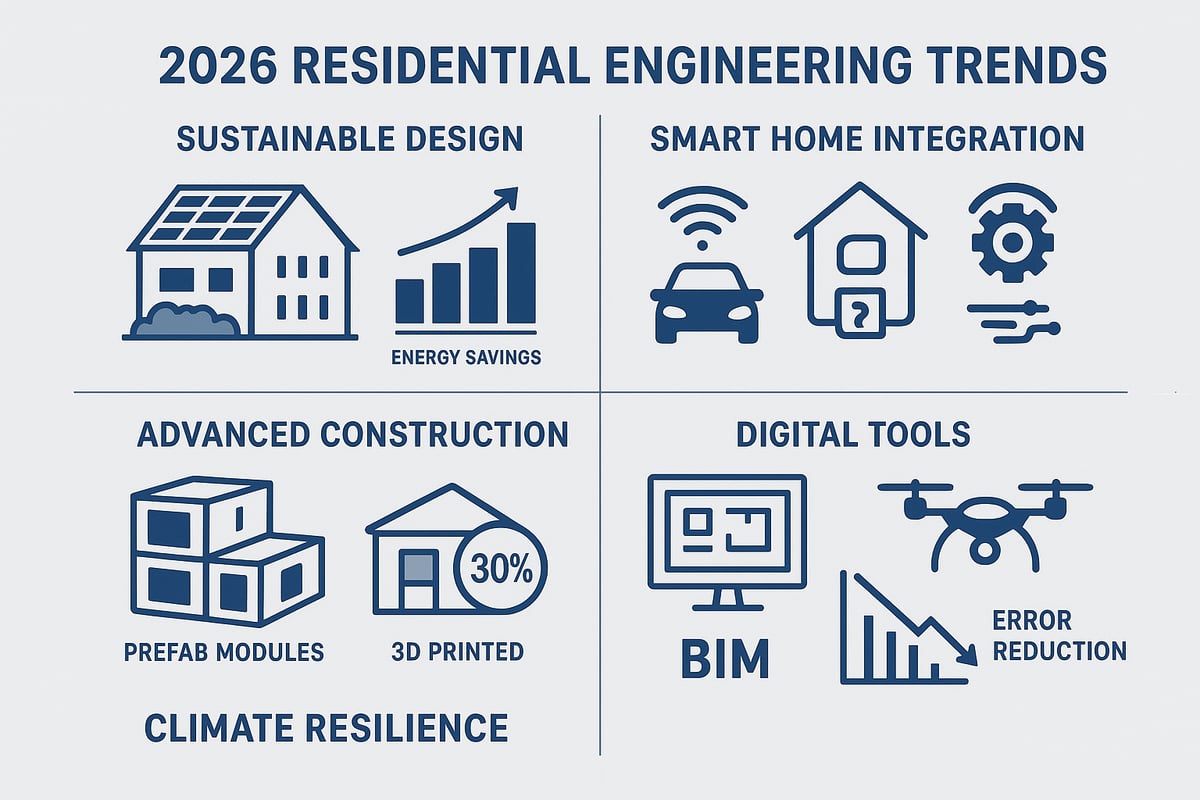
Sustainable and Energy-Efficient Design
Sustainability is at the heart of residential engineering services in 2026. Homeowners and investors are prioritizing green building standards like LEED, Net Zero, and Passive House certification. Engineers now routinely specify recycled and low-carbon materials, supporting both environmental goals and regulatory compliance.
For example, solar-ready home designs are trending across Alberta, providing long-term utility savings and reducing carbon footprints. Homes built to stringent energy codes can save up to $1,200 annually on utilities, making energy efficiency a smart investment. To gain more insight into where the industry is heading, you can explore the Top 5 Trends in Civil Engineering Design Services for 2026, which highlights how these shifts impact residential engineering services.
Smart Home Integration and Automation
Modern homeowners expect seamless technology integration, and residential engineering services are meeting this demand. Engineers are designing homes to support IoT devices, centralized control systems, and smart automation features.
Electrical load planning is more complex, accounting for electric vehicle charging stations, solar panels, and battery storage. By collaborating early with engineers, you can ensure your home’s infrastructure is future-proof and ready for upgrades. Integrating automation directly into the structural design avoids costly retrofits and maximizes convenience.
Advanced Materials and Construction Methods
Innovations in construction are reshaping residential engineering services. Prefabricated and modular systems are gaining ground due to their speed, cost savings, and reduced waste. Engineers are also leveraging 3D printing technology, as seen in Edmonton’s pilot projects, to create durable, custom homes faster than traditional methods.
These advanced approaches allow for greater design flexibility and quicker project delivery. By choosing residential engineering services familiar with these technologies, you gain a competitive edge and reduce your project’s environmental impact.
Climate Resilience and Disaster-Proofing
With climate risks on the rise, residential engineering services focus on resilient design. Engineers assess wildfire, flood, and extreme weather threats, then specify materials and methods that offer maximum protection.
Fire-resistant cladding, flood barriers, and elevated foundations are now standard recommendations in vulnerable areas. A notable example is Fort Saskatchewan, where flood mitigation strategies have protected neighborhoods from repeat disasters. Prioritizing climate resilience ensures your investment stands strong for decades.
Digital Tools and Building Information Modeling (BIM)
Digital transformation is revolutionizing residential engineering services. Building Information Modeling (BIM) enables precise 3D visualization, clash detection, and real-time collaboration among stakeholders.
Drones and remote sensing streamline site analysis, capturing detailed data efficiently. According to a 2024 industry report, BIM adoption has reduced design errors by 40 percent. Leveraging these digital tools leads to better project outcomes, fewer delays, and enhanced transparency throughout the build process.
Regulatory Landscape and Compliance in Canada (with Alberta Focus)
Understanding the regulatory landscape is crucial for anyone planning new builds or renovations in Canada. In 2026, the rules and standards for residential engineering services are more rigorous than ever, especially with Alberta-specific updates. Staying compliant not only protects your investment but also ensures your project can withstand future challenges.
National and Provincial Building Codes
The 2025 National Building Code introduced significant changes affecting residential engineering services. Alberta has added its own amendments, particularly around energy efficiency, fire safety, and climate resilience. These updates set new standards for home construction, impacting everything from insulation values to structural requirements.
Licensed professionals in residential engineering services must now navigate stricter criteria. Alberta’s amendments often require additional documentation or calculations, making it vital to work with experts who understand both the national and provincial nuances. Staying current with these codes helps avoid costly redesigns or compliance issues down the line.
Permitting and Approval Processes
Securing permits is a multi-step process that starts with detailed plans and ends with final inspections. For residential engineering services, this means preparing precise documentation that meets all municipal and provincial standards. Cities like Edmonton have introduced expedited e-permitting systems to streamline submissions and reduce wait times.
However, delays can still occur if requirements are missed or documents are incomplete. Working with seasoned professionals in residential engineering services ensures every form, drawing, and report aligns with the latest regulations. Staying informed about evolving industry trends is also helpful, as outlined in the 2025 North American Engineering and Construction Industry Overview.
Environmental and Safety Regulations
Environmental and safety regulations are integral to residential engineering services. Projects must undergo environmental impact assessments, checking for issues like groundwater contamination or protected habitats. Alberta enforces strict rules regarding hazardous materials, such as asbestos and radon, especially in older properties.
Professional guidance is invaluable during these assessments. For example, Environmental engineering in residential projects plays a key role in site evaluations and compliance. By addressing environmental and safety concerns early, you reduce risks and avoid costly remediation later.
Insurance, Liability, and Documentation
Proper documentation is essential for insurance and liability protection in residential engineering services. Most insurance providers now require stamped engineering reports to validate claims, especially after incidents like fire or flood. Without the right paperwork, homeowners may face denied claims or legal disputes.
Comprehensive records also protect both you and your engineering team. Liability coverage, backed by accurate documentation, ensures all parties are shielded from unexpected issues. Keeping thorough files throughout your project is a best practice that pays off in peace of mind and financial security.
Maximizing Value: Tips for Homeowners and Investors
Unlocking the full value of your residential engineering services investment starts with careful planning, informed decisions, and proactive collaboration. Whether you are a homeowner or investor, these strategies will help you navigate every stage of your project for optimal results.
Planning for Long-Term Success
Start your project by setting clear goals and realistic budgets. Factor in not only immediate needs but also future possibilities, such as expanding your living space or accommodating a growing family. With residential engineering services, you gain access to expertise that helps anticipate and plan for long-term changes.
Consider the potential for resale by designing flexible spaces and energy-efficient systems. For example, multi-generational living layouts are gaining popularity because they adapt as family needs change. Tracking cost trends using resources like the US Producer Price Index: Engineering Services: Residential Building Projects can help you stay informed about market shifts and budget accordingly.
Avoiding Common Pitfalls
Many homeowners make the mistake of skipping essential steps, such as thorough site investigations or proper permitting, hoping to save time or money. However, neglecting these fundamentals in residential engineering services often leads to costly delays and unexpected repairs.
Be vigilant about regulatory requirements, and always verify the credentials of your contractors. Avoid relying on unverified providers, as this can compromise both safety and compliance. Remember, 1 in 4 renovations experiences setbacks due to overlooked engineering needs. Taking a methodical approach now prevents expensive surprises later.
Collaborating with Your Engineering Team
Effective collaboration with your engineering team is crucial for a successful project. Open communication ensures your vision aligns with technical realities, and residential engineering services professionals can offer creative solutions tailored to your needs.
Ask detailed questions about design options, timelines, and potential challenges. Regular update meetings keep everyone on track and address issues early. For example, value engineering discussions can help you achieve the desired outcome without sacrificing quality or exceeding your budget.
Future-Proofing Your Investment
Future-proofing begins with designing homes that adapt to evolving codes, technologies, and market expectations. Incorporate flexible infrastructure like electric vehicle charging stations and solar-ready wiring from the start. These upgrades make your property more attractive and resilient.
Staying informed about emerging trends, such as those outlined in Residential Structural Engineering: 3 Trends That Will Shape 2024, empowers you to integrate sustainable design and smart technologies. Data shows that future-ready homes built with residential engineering services command up to 12% higher resale value, offering a significant return on investment.
As you plan your path to a successful home project in 2026, remember that partnering with a trusted engineering team can make all the difference. From navigating new building codes to ensuring your investment stands strong against climate challenges, having experts by your side brings peace of mind and real value. If you’re ready to turn your vision into reality with reliable geotechnical, environmental, and construction material testing services, let’s connect. Reach out to ZALIG Consulting Ltd for personalized guidance and start your journey with confidence: Contact Us: info@zalig.ca or +1 800 515 0497