

Thinking about remodeling, building, or safeguarding your dream home in 2026? Today’s homes are more complex than ever, and overlooking structural integrity can put your investment and family at risk.
Proper planning brings peace of mind, ensuring safety and boosting your home's long-term value. The right approach helps you avoid costly mistakes and keeps your project on track.
This essential guide demystifies residential engineering for homeowners, explaining its importance, outlining the key processes, and providing actionable steps for 2026. Learn what residential engineering covers, when to hire a professional, how to navigate the process, avoid common pitfalls, and stay ahead of future trends.
Understanding Residential Engineering: What Every Homeowner Needs to Know
Residential engineering is the backbone of a safe, lasting home. It covers the design, analysis, and ongoing care of structural elements, making it essential for every homeowner. Unlike general contracting or home inspection, residential engineering focuses on the science that keeps your house standing strong, from the ground up.
What is Residential Engineering?
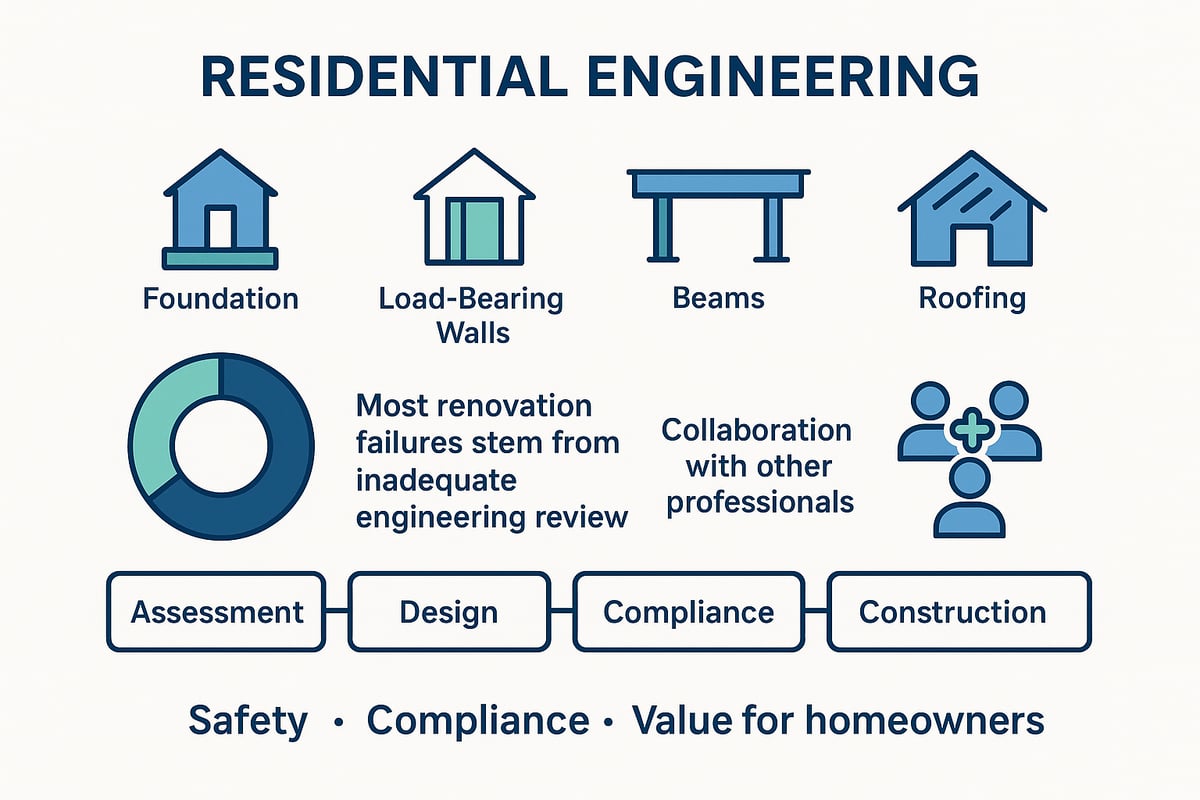
Residential engineering involves the design, analysis, and maintenance of home structures. It goes far beyond what a general contractor or home inspector provides. While contractors focus on building and inspectors look for issues, residential engineering ensures every structural component is safe and up to code.
Key components include:
- Foundations
- Load-bearing walls
- Beams
- Roofing
The discipline plays a vital role in new construction, renovations, and repairs. For example, removing a load-bearing wall needs engineering approval to maintain structural integrity. Without proper review, you risk safety and legal issues. In fact, the majority of renovation failures are linked to inadequate engineering assessment. If your project involves unique soil or site conditions, Geotechnical engineering services are often a crucial part of the process.
The Role of the Residential Engineer
A residential engineering professional is a licensed expert with specialized training in home structures. Their main responsibility is to evaluate, design, and oversee the systems that keep your house secure. They work closely with architects, contractors, and officials to ensure every plan meets local codes and standards.
When facing unique challenges, such as building on a slope or using advanced materials, their problem-solving skills come into play. For instance, if you want to add a second story, the engineer determines how the current structure can handle the extra load. Their expertise safeguards your investment and ensures your project’s success.
When Do You Need a Residential Engineer?
There are several scenarios where residential engineering becomes essential:
- Major renovations, like removing walls or building additions
- New home construction
- Foundation issues or visible structural damage
- Compliance with permits and building codes
- Upgrades using advanced materials or energy efficiency improvements
For example, if you notice cracks in your foundation or sagging floors, it’s time to call an expert early. Their input prevents costly redesigns and ensures your plans meet all regulations. Early involvement from a residential engineering professional keeps your project on track and within budget.
Key Benefits for Homeowners
Choosing residential engineering services offers several advantages. First, it protects your investment by ensuring structural safety from the start. Second, it helps prevent expensive construction errors that could surface years later. Third, it adds value and credibility to your property, making permit and inspection processes smoother.
You’ll also gain peace of mind knowing your family is safe. A key statistic to remember: early engineering assessment can reduce project costs by up to 20 percent. With the right guidance, homeowners can confidently navigate even complex projects and avoid unnecessary risks.
The Residential Engineering Process: Step-by-Step Guide for Homeowners
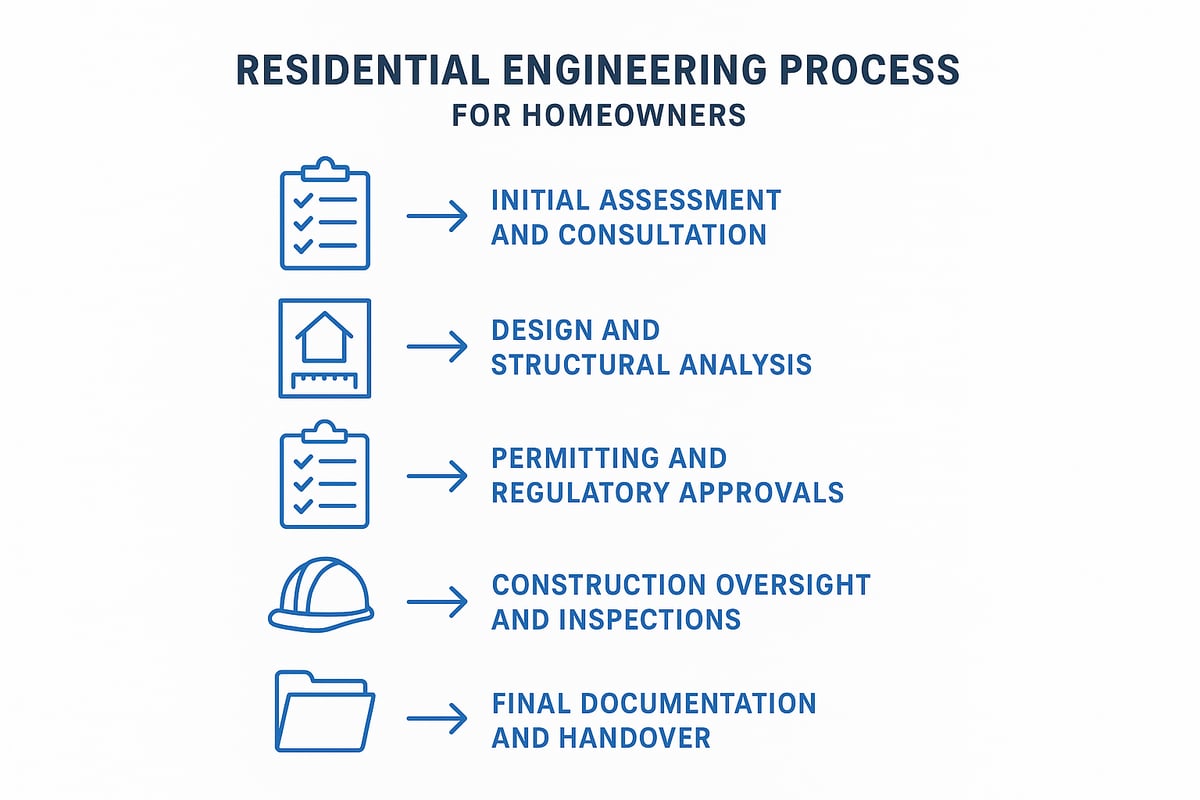
Embarking on a home project can feel overwhelming. Understanding the residential engineering process gives homeowners clarity, streamlines communication, and helps avoid costly surprises. By following these five essential steps, you will see how residential engineering supports every stage of your build or renovation.
Step 1: Initial Assessment and Consultation
The first step in residential engineering is the initial assessment and consultation. During this phase, a professional visits your property to evaluate current conditions and discuss your goals. This is the time to identify any visible issues, such as cracks or uneven floors, and to outline the project’s scope.
You will receive preliminary advice on feasibility and potential risks. For example, if you want to remove a wall, the engineer will check if it is load-bearing. Setting clear expectations about timeline and budget is crucial at this stage. Early involvement in residential engineering helps ensure a solid foundation for the entire project.
Step 2: Design and Structural Analysis
Once goals are set, the design and structural analysis phase begins. Here, the residential engineering team creates detailed plans using advanced modeling tools like CAD or BIM. They select materials and construction methods best suited for your site and climate.
Critical concerns like snow load, soil condition, and even slope stability for homes are factored in, especially for properties on hillsides or with unique landscapes. The goal is to ensure every detail meets safety codes and supports long-term durability. This step is where the technical expertise of residential engineering truly shines.
Step 3: Permitting and Regulatory Approvals
With plans ready, the next step in residential engineering is securing permits and regulatory approvals. The engineer prepares required documents and works with municipal authorities to ensure designs comply with all local and national building codes.
This process can be complex, but professional guidance streamlines it and helps avoid costly delays. For instance, meeting regional codes like the Alberta Building Code is essential for approval. Proactive residential engineering involvement at this stage keeps your project on track.
Step 4: Construction Oversight and Inspections
During construction, residential engineering continues to play a vital role. Engineers visit the site regularly to monitor progress and ensure all work aligns with the approved plans. They address questions from contractors and adapt strategies if unexpected conditions arise, such as discovering unstable soil during foundation work.
A final inspection is performed before completion to verify that all elements meet engineering standards. This oversight is key to preventing errors and ensuring safety throughout the build.
Step 5: Final Documentation and Handover
The last step in residential engineering is final documentation and handover. Your engineer compiles as-built drawings, compliance certificates, and maintenance recommendations. These records are invaluable for future renovations, insurance, or resale.
A closing meeting gives homeowners the chance to ask questions and understand ongoing maintenance needs. Proper documentation ensures your investment is protected and your home’s value is preserved for years to come.
Common Residential Engineering Projects and When to Call an Expert
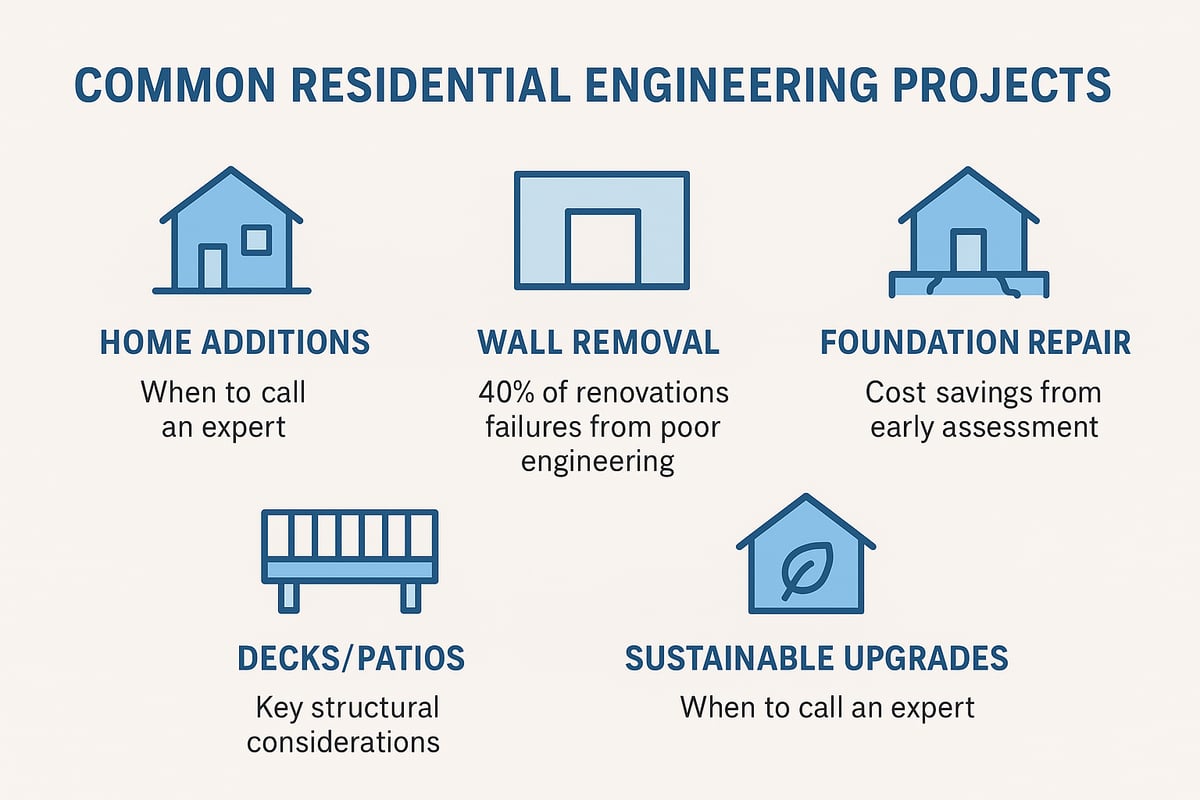
Modern homes present a range of challenges that make residential engineering essential for safety, comfort, and long-term value. Whether planning a major addition or tackling a structural repair, knowing when to involve an expert can save you time, money, and stress.
Home Additions and Remodels
Expanding your living space or remodeling a room often requires careful residential engineering analysis. Adding a second story or extending a ground floor impacts the existing foundation and load distribution.
- Assess how new spaces affect structural integrity
- Engineer drawings for permit approval
- Prevent uneven settling or future failures
For example, a new master suite above a garage demands detailed calculations to ensure safety. Consulting a residential engineering professional early ensures your plans meet all safety codes and avoid costly mistakes.
Load-Bearing Wall Removal
Open-concept designs are popular, but removing walls without proper residential engineering input is risky. Not all walls are created equal; some carry crucial loads.
- Identify which walls are structural
- Engineer solutions like beams or columns
- Ensure compliance with local codes
Imagine transforming a kitchen by eliminating a barrier wall. An engineer will specify the right support, preventing sagging ceilings or collapse. Always involve residential engineering before altering structural elements.
Foundation Repairs and Upgrades
Foundation issues threaten the entire home. Signs like cracks, shifting, or water intrusion call for immediate residential engineering assessment.
- Diagnose root causes, not just symptoms
- Recommend repairs: underpinning, drainage fixes
- Provide documentation for insurance or resale
A sinking corner or persistent dampness may indicate complex soil or slope problems. In some cases, a residential slope stability case study offers insight into how engineering solutions address these challenges. Timely residential engineering involvement is crucial for preventing escalation.
Decks, Patios, and Outdoor Structures
Outdoor spaces face unique structural demands, especially in regions with heavy snow or shifting soil. Residential engineering ensures decks and patios are safe and durable.
- Evaluate load capacity and weather resistance
- Design for elevated or complex structures
- Meet local building codes
For example, a large deck might require reinforced posts and specialized fasteners. Engaging residential engineering expertise from the start helps avoid premature failure or safety hazards.
Advanced Materials and Sustainable Solutions
The push for energy efficiency and durability is reshaping residential engineering. Modern projects may use structural insulated panels, insulated concrete forms, or integrate solar panels.
- Engineer for new materials and green tech
- Improve energy performance and longevity
- Stay ahead of 2026 construction trends
Designing for advanced materials requires specialized knowledge. Residential engineering professionals guide homeowners in selecting solutions that match their goals and local codes.
Avoiding Costly Mistakes: The Value of Early Engineering Involvement
Early involvement in residential engineering is crucial for every homeowner planning a remodel, addition, or new build. Addressing potential issues from the start helps safeguard your investment, streamline your project, and enhance safety. Understanding the value of timely engineering input can save you from expensive headaches down the road.
Why Early Assessments Matter
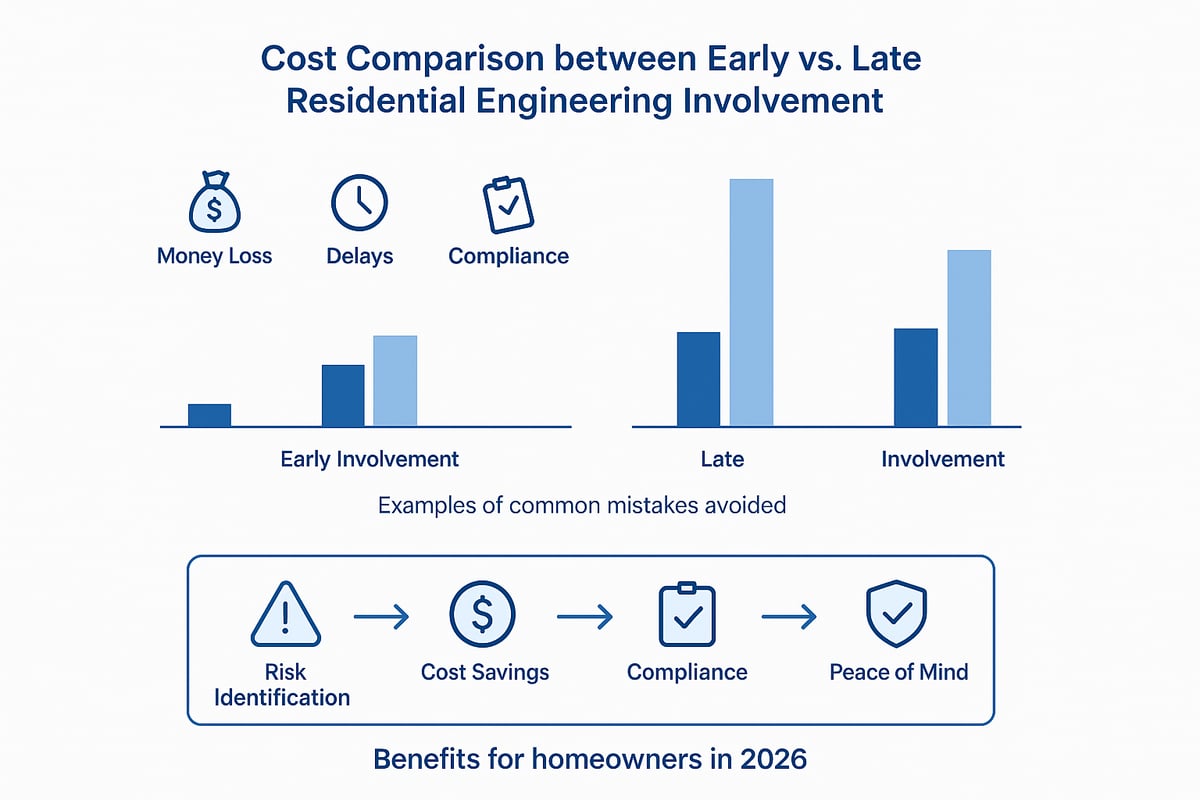
Initiating residential engineering assessments early in your project can make the difference between a smooth build and a costly disaster. Early evaluations identify risks, structural flaws, and code issues before construction begins. This proactive step allows you to address potential setbacks on paper rather than on site, saving time and money.
For instance, discovering a design flaw during the planning phase is far less expensive to fix than after construction has started. According to the 2025 North American Engineering and Construction Outlook, industry leaders anticipate increasing complexity and tighter regulations in residential engineering projects. Addressing these challenges early helps avoid up to 30 percent of failures linked to late-stage engineering input.
Financial Impact of Delayed Repairs or Oversights
Delaying residential engineering assessments can lead to mounting repair costs and project delays. Minor issues, like a small foundation crack, can escalate into significant structural failures if left unchecked. Early intervention often means straightforward fixes, while waiting increases the risk and expense.
List of common costly oversights:
- Ignoring early signs of water damage
- Overlooking small structural shifts in walls or floors
- Proceeding with renovations without proper engineering review
Homeowners who act quickly with residential engineering support often avoid insurance complications and enjoy lower long-term maintenance costs. Proactive assessments keep your project on budget and protect your financial interests.
Compliance and Liability Risks
Residential engineering is not just about building strength; it is also about staying compliant with local and national codes. Skipping or delaying engineering involvement can expose you to legal and financial risks. Non-compliant work may result in denied insurance claims, costly rework, or even fines.
Key risks of neglecting engineering documentation:
- Legal disputes during resale
- Insurance issues due to unapproved modifications
- Fines for code violations
Having thorough residential engineering documentation ensures you can prove compliance, safeguard your investment, and facilitate smoother permit processes. Clear records also help in future renovations or property sales.
Real-World Examples and Lessons Learned
Many successful projects highlight the value of early residential engineering involvement. For example, a homeowner who brought in an engineer before removing a load-bearing wall avoided structural failure and expensive retrofits. Conversely, skipping this step has led others to face significant repairs and legal battles.
Lessons for homeowners:
- Always involve a residential engineering professional at the start.
- Keep detailed documentation for every phase.
- Learn from past mistakes by reviewing case studies and seeking expert guidance.
In 2026, homeowners who prioritize early engineering input position themselves for safer, more cost-effective, and compliant projects.
Choosing the Right Residential Engineer: What to Look For in 2026
Selecting the right professional for your residential engineering project is crucial to the success, safety, and value of your home. With the evolving demands of modern construction, making an informed choice ensures your project stays on track and compliant. Let us break down what to look for when hiring a residential engineer in 2026.
Licensing and Credentials
The foundation of any residential engineering relationship is proper licensing and credentials. Always verify that your engineer holds a valid Professional Engineer (PE) license in your jurisdiction. This certification proves they have met rigorous educational and experience requirements.
A PE stamp on structural drawings is often mandatory for permit approval. Check their background for residential engineering expertise, and confirm familiarity with local building codes. For more insight into professional standards and job outlooks, explore the BLS Architecture and Engineering Occupations Outlook.
Key points to verify:
- PE license validity and jurisdiction
- Up-to-date insurance and bonding
- Recent continuing education in residential engineering
Relevant Experience and Specializations
Residential engineering covers a broad range of structures and technologies. Seek engineers with a proven track record in projects similar to yours, whether that means new builds, additions, or renovations.
Review their portfolio for experience with advanced materials, energy-efficient designs, or sustainable solutions. For example, if you are interested in high-performance homes, look for knowledge in the latest innovations, such as those detailed by NREL’s Residential Research Initiatives.
Ask for:
- Case studies or references from past projects
- Familiarity with climate-specific challenges
- Specialization in modern or green construction methods
Communication and Collaboration Skills
Clear communication is essential in residential engineering. Your engineer should be able to explain technical concepts in plain language, ensuring you understand every step of the process.
They must be comfortable working with architects, contractors, and local authorities, promoting seamless project coordination. Responsiveness and transparency are signs of a true professional. For instance, an engineer who quickly resolves a design conflict between construction teams can save time and avoid costly setbacks.
Look for:
- Willingness to answer questions and provide updates
- Ability to mediate and facilitate teamwork
- Proactive approach to addressing concerns
Cost, Value, and Service Agreements
Understanding the financial aspects of residential engineering is as important as technical expertise. Request a detailed fee structure and clear breakdown of deliverables before signing a contract.
Balance cost against long-term value, knowing that investing in quality engineering can prevent expensive mistakes down the line. A comprehensive service agreement should outline what is included, key milestones, and any potential extra charges. This transparency helps you avoid hidden costs or scope creep.
Key contract inclusions:
- Itemized fee schedule and payment terms
- Timeline and deliverable milestones
- Warranty or follow-up support details
The Future of Residential Engineering: Trends and Innovations for Homeowners
The landscape of residential engineering is evolving rapidly, offering homeowners exciting possibilities for smarter, safer, and more sustainable living. As we approach 2026, new technologies and construction methods are redefining what is possible in home building and renovation. Staying ahead of these innovations ensures your property remains valuable, resilient, and future-ready.
Smart Home Integration and Structural Engineering
Smart home technology is becoming integral to residential engineering, blending convenience with structural planning. Engineers must account for the weight and placement of automated systems, such as motorized blinds, security cameras, and whole-home audio. These systems often require dedicated supports or wiring paths within walls and ceilings.
Proper integration ensures that future upgrades, like advanced HVAC controls or robotic appliances, can be accommodated without compromising the structure. Residential engineering professionals collaborate with technology experts to design frameworks that support evolving smart home features. This approach not only enhances daily comfort but also safeguards the home's long-term integrity.
Sustainable and Resilient Design
Sustainability is now at the forefront of residential engineering, with homeowners seeking energy efficiency and climate resilience. Engineers are increasingly applying passive house principles, optimizing insulation, airtightness, and orientation to reduce energy consumption.
In regions prone to natural disasters, designs are evolving to withstand fire, floods, and high winds. Materials like fire-resistant cladding and reinforced windows are standard features in forward-looking homes. Residential engineering in 2026 means balancing eco-friendly choices with robust safety, ensuring your family and investment are protected against future challenges.
Advanced Materials and Construction Methods
The adoption of innovative building techniques is transforming residential engineering. Prefabricated panels, modular construction, and even 3D-printed concrete walls are becoming more common, offering faster build times and reduced waste. These methods allow for exceptional quality control and customization.
Industry optimism about these advances is reflected in ACEC’s 2024 Economic Assessment of Engineering Services, which highlights both growth and new workforce challenges in residential engineering. Staying informed about these trends empowers homeowners to request cutting-edge solutions that deliver value and durability.
Data-Driven Engineering and Predictive Maintenance
Advancements in sensors and analytics are revolutionizing residential engineering by enabling real-time structural health monitoring. Engineers can now embed sensors in foundations, beams, and roofs to detect shifts, moisture, or stress.
These systems send alerts about emerging issues, allowing for predictive maintenance before costly damage occurs. Homeowners benefit from peace of mind and reduced long-term repair costs. Residential engineering is now as much about ongoing performance as it is about initial design, making technology an essential partner in homeownership.
As you plan your next renovation or dream home in 2026, remember that solid residential engineering is the best way to protect your investment and your family’s safety. By working with experienced professionals who understand the complexities of Alberta’s environment and building codes, you can navigate every step—from design to final inspection—with confidence and peace of mind. If you have questions or are ready to take the next step, we’re here to help you make informed, smart decisions for your property. Reach out anytime at Contact Us: info@zalig.ca or +1 800 515 0497