
The public sector represents a critical domain for engineering and consulting firms, encompassing government agencies, municipalities, and public institutions that require specialized technical services for infrastructure development and maintenance. Engineering work within this sphere demands rigorous compliance with regulatory frameworks, transparent procurement processes, and adherence to public accountability standards that differ substantially from private sector engagement. Understanding the unique requirements, expectations, and operational constraints of public sector clients is essential for firms seeking to deliver successful projects that serve communities while meeting budgetary and regulatory obligations.
Understanding Public Sector Project Requirements
Public sector infrastructure projects operate under fundamentally different constraints than private development. Government agencies and municipalities must balance competing priorities including fiscal responsibility, public safety, environmental protection, and long-term asset management. These organizations typically work with multi-year capital budgets, complex approval processes, and extensive stakeholder consultation requirements.
The public sector encompasses a broad range of entities including federal, provincial, and municipal governments, school boards, healthcare facilities, and utilities. Each level brings distinct procurement rules, technical specifications, and oversight mechanisms. Engineering firms must navigate these variations while maintaining consistent service quality and technical excellence.
Regulatory Compliance and Standards
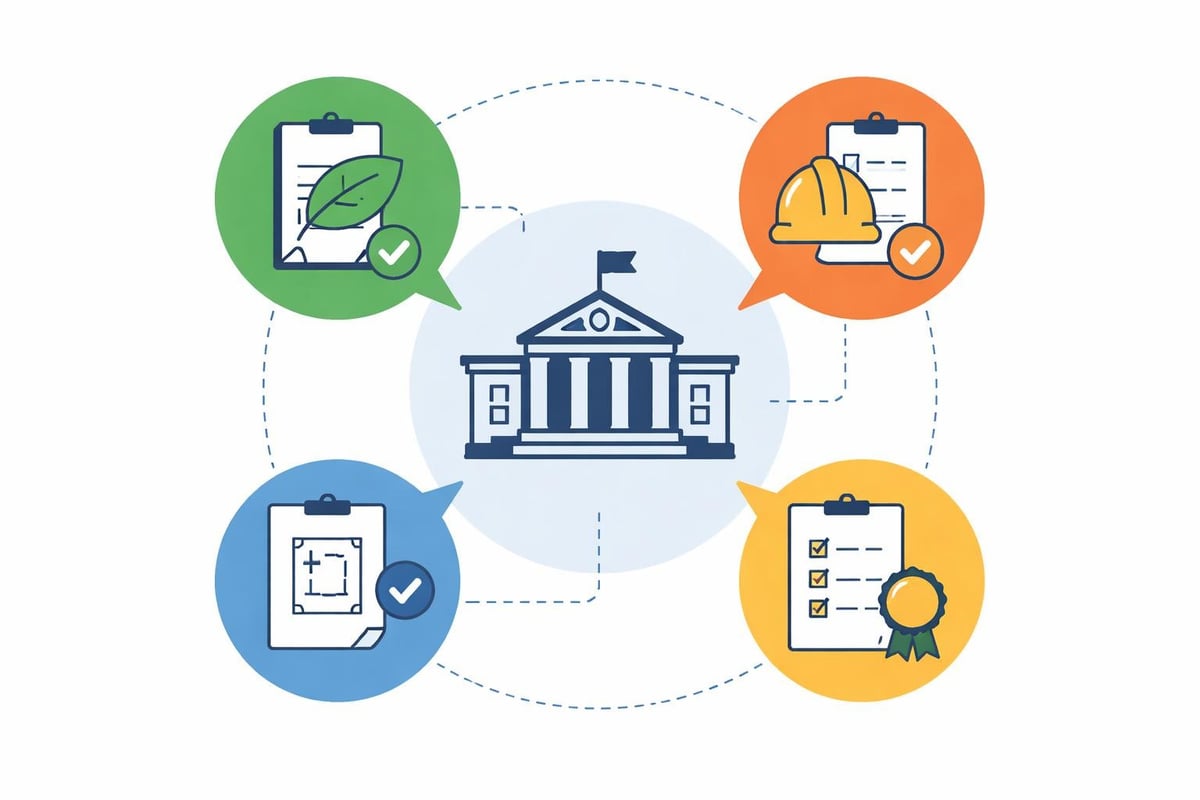
Compliance forms the foundation of all public sector engineering work. Projects must align with:
- Building codes and zoning regulations specific to each jurisdiction
- Environmental protection requirements including impact assessments and permitting
- Accessibility standards ensuring public infrastructure serves all community members
- Safety codes and workplace regulations governing construction activities
- Quality assurance protocols documented through certified testing and inspections
Professional engineering stamps, certified laboratory testing, and documented quality control processes carry heightened importance in public work. Regulatory authorities expect complete traceability from initial investigations through final commissioning, creating paper trails that support public accountability and risk management.
Procurement and Contract Mechanisms
Public sector procurement follows structured processes designed to ensure fair competition, value for taxpayers, and transparency. Most jurisdictions mandate competitive bidding for projects exceeding specified thresholds, with evaluation criteria balancing technical qualifications, experience, and pricing. Request for Proposals (RFPs) and Request for Qualifications (RFQs) dominate the landscape, requiring detailed submissions demonstrating capability and methodology.
Understanding procurement vehicles proves essential for successful public sector engagement. Standing offer agreements, prequalified vendor lists, and framework contracts provide streamlined access for recurring services. These mechanisms reduce administrative burden while maintaining competitive principles that govern public spending.
| Procurement Type | Typical Use | Selection Criteria | Contract Duration |
|---|---|---|---|
| Competitive Bid | Capital projects over threshold | Lowest qualified bid | Project-specific |
| RFP | Professional services | Qualifications and price weighted | 1-3 years typical |
| Standing Offer | Recurring testing/inspection | Prequalification process | Multi-year agreements |
| Single Source | Specialized or emergency work | Technical justification required | Project-specific |
Financial and Administrative Considerations
Public sector clients operate within strict budgetary frameworks established through annual appropriations and long-term capital plans. Payment terms, invoicing requirements, and budget management differ from private sector norms. Engineering firms must adapt administrative processes to accommodate:
- Detailed cost breakdowns and transparent pricing structures
- Progress billing aligned with milestone completion
- Retention holdbacks and payment timelines governed by legislation
- Comprehensive documentation supporting all charges
- Compliance with prevailing wage requirements where applicable
Budget constraints influence project scoping, phasing, and delivery timelines. Public agencies frequently structure larger initiatives into discrete phases aligned with fiscal years, requiring flexible engagement models that accommodate funding uncertainties while maintaining technical continuity.
Technical Service Delivery Excellence
Delivering engineering services to public sector clients demands rigorous technical standards coupled with clear communication. Government agencies expect defensible results backed by recognized methodologies, certified equipment, and qualified personnel. Documentation requirements exceed typical private sector expectations, supporting both immediate project needs and long-term asset management strategies.
Geotechnical and Foundation Engineering
Public infrastructure projects require comprehensive subsurface investigations and foundation design that account for site variability, long design lives, and public safety considerations. Geotechnical work supporting roads, bridges, buildings, and utilities must address settlement tolerance, bearing capacity, slope stability, and environmental constraints through detailed field and laboratory programs.
Geotechnical engineering services for public sector clients integrate investigation, analysis, and design with quality assurance testing during construction. Foundation systems for public facilities demand particular attention to durability, performance monitoring provisions, and constructability under competitive bidding scenarios. Engineering recommendations must balance optimal technical solutions with realistic budget constraints and construction scheduling requirements.

Environmental Due Diligence and Compliance
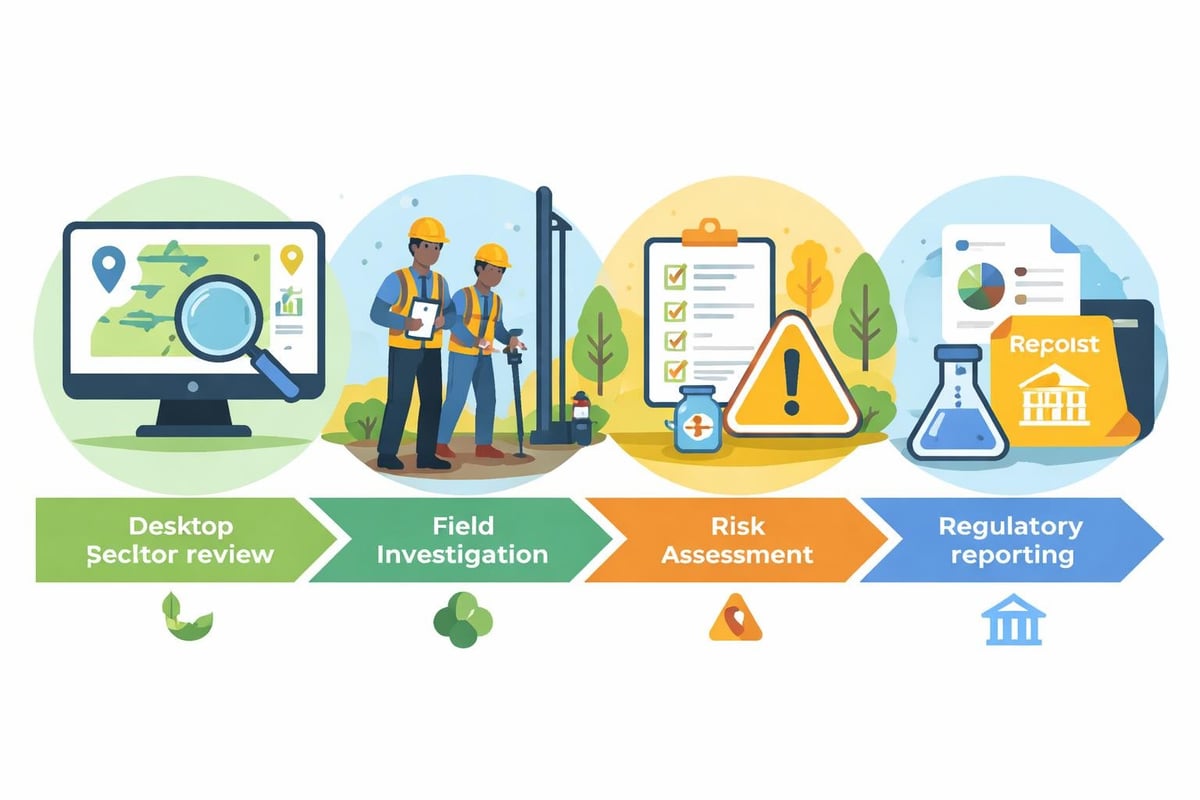
Public land transactions, redevelopment initiatives, and infrastructure projects require thorough environmental assessments addressing both regulatory compliance and fiscal risk. Environmental Site Assessments provide municipalities and agencies with documented due diligence supporting property acquisitions, brownfield redevelopment, and capital project approvals. Phase I assessments establish baseline conditions, while Phase II investigations quantify potential contamination requiring management or remediation.
Public sector environmental work extends beyond transaction support to include ongoing compliance monitoring, waste management planning, and environmental protection during construction. Agencies managing diverse property portfolios require systematic environmental risk assessment frameworks that prioritize limited remediation budgets and support strategic decision-making.
Construction Quality Assurance and Materials Testing
Quality assurance during construction protects public investment and ensures infrastructure longevity. Construction materials testing provides independent verification that installed materials and workmanship meet design specifications and applicable standards. Public agencies increasingly require certified testing laboratories and qualified technicians to document compliance throughout construction phases.
Materials testing programs for public infrastructure encompass:
- Concrete testing including cylinder sampling, compression testing, and air content verification
- Asphalt verification through mix design review, density testing, and quality control sampling
- Aggregate testing for gradation, durability, and suitability in various applications
- Soil compaction ensuring proper density in fills, backfills, and pavement subgrades
- Steel and reinforcement inspection and testing per structural requirements
Results feed directly into payment approvals, deficiency identification, and warranty documentation. The U.S. Census Bureau tracks infrastructure spending and provides data illustrating the scale of public sector construction investment requiring quality oversight.
Field Inspection and Construction Support
Beyond laboratory testing, public projects require field inspection services ensuring construction proceeds according to approved plans and specifications. Inspectors document daily activities, verify material deliveries, observe critical construction operations, and identify non-conformances requiring correction. This oversight protects public interests while supporting contractors through technical clarifications and real-time problem-solving.
Inspection reports create permanent project records supporting asset management, warranty claims, and future maintenance planning. Public accountability demands thorough documentation accessible to stakeholders including elected officials, ratepayers, and oversight agencies. Engineering firms providing construction support must balance rigorous quality enforcement with collaborative problem-solving that keeps projects on schedule and within budget.
Transportation Infrastructure and Traffic Engineering
Public sector transportation projects span from local road reconstruction to major corridor improvements, each requiring specialized engineering addressing safety, capacity, accessibility, and community impact. Transportation engineering for municipalities integrates traffic analysis, geometric design, drainage, and pavement engineering with extensive public consultation and regulatory approvals.
Traffic Impact Assessments (TIAs) evaluate how proposed developments affect existing road networks, identifying required improvements to maintain acceptable service levels. These studies inform development approval conditions, cost-sharing agreements, and capital planning priorities. Transportation design for public agencies must accommodate diverse users including vehicles, transit, cyclists, and pedestrians while addressing maintenance operations and long-term rehabilitation needs.
Intersection and Road Design Standards
Municipalities adopt design standards governing geometric features, signage, marking, and traffic control devices. Engineering designs must demonstrate compliance while optimizing safety and operational efficiency within right-of-way and budgetary constraints. Public sector road projects typically require:
- Functional design establishing alignment, cross-section, and intersection configuration
- Detailed engineering producing construction-ready drawings and specifications
- Utility coordination integrating underground services with roadway geometry
- Drainage design managing surface runoff and protecting pavement structures
- Accessibility compliance ensuring pedestrian facilities meet standards
- Signage and marking plans supporting safe navigation and traffic control
Design submissions undergo multi-stage review by municipal engineering departments, accessibility committees, and sometimes elected councils. Revisions addressing stakeholder input require flexible engagement models and clear communication of technical trade-offs.
Hydrological Analysis and Drainage Infrastructure
Water management represents a critical public sector responsibility encompassing stormwater drainage, flood protection, watercourse crossings, and erosion control. Hydrotechnical engineering supports these functions through analysis, design, and regulatory approvals addressing increasingly stringent environmental and climate adaptation requirements.
Public drainage infrastructure must handle design storm events while protecting water quality, aquatic habitat, and downstream properties. Hydrologic and hydraulic analysis establishes design flows, evaluates existing capacity constraints, and sizes proposed improvements. Climate change considerations influence design standards, with many jurisdictions adopting enhanced rainfall intensities and freeboard requirements.
| Analysis Type | Typical Application | Key Outputs | Regulatory Use |
|---|---|---|---|
| Rainfall-Runoff | Catchment hydrology | Peak flows and hydrographs | Stormwater approvals |
| Hydraulic Modeling | Channel and culvert capacity | Water levels and velocities | Flood hazard assessment |
| Erosion Analysis | Watercourse stability | Scour depth and protection needs | Environmental permits |
| Water Quality | Treatment sizing | Pollutant removal performance | Discharge authorizations |
Watercourse crossing design requires fisheries agency approvals, navigable waters authorizations, and environmental protection measures. Engineering submissions must demonstrate minimal environmental impact while providing adequate hydraulic capacity and structural integrity for design life requirements often exceeding 75 years.
Asset Management and Long-Term Planning
Public infrastructure represents substantial capital investment requiring systematic management to optimize service delivery, minimize lifecycle costs, and plan renewal activities. Asset management programs integrate condition assessment, performance monitoring, and predictive modeling to inform capital budgets and maintenance priorities.
Engineering firms support asset management through condition assessments, remaining life analysis, and rehabilitation design. These services help public agencies transition from reactive maintenance toward proactive strategies that extend asset life and reduce total ownership costs. The Partnership for Public Service advocates for improved public sector management practices including data-driven infrastructure stewardship.
Risk Assessment and Prioritization
Limited budgets necessitate risk-based prioritization of infrastructure investments. Engineering assessments evaluate failure consequences, probability of deterioration, and service criticality to rank competing needs. This analytical framework supports defensible decision-making transparent to elected officials and ratepayers.
Risk assessment considers multiple factors:
- Public safety implications of asset failure
- Service disruption impacts on communities and economies
- Environmental consequences from infrastructure deficiencies
- Financial exposure from emergency repairs versus planned renewal
- Regulatory compliance risks and potential enforcement actions
Quantified risk profiles enable agencies to optimize limited capital dollars, addressing highest-priority needs while planning systematic renewal of aging infrastructure portfolios.
Emerging Technologies and Innovation Adoption
Public sector agencies increasingly adopt technologies improving service delivery, operational efficiency, and community engagement. Building Information Modeling (BIM), geographic information systems (GIS), and digital asset management platforms transform how infrastructure projects are designed, constructed, and maintained. Engineering firms must adapt service delivery to leverage these tools while ensuring accessibility and long-term usability for public sector clients.
The trust framework for government use of artificial intelligence addresses ethical implementation challenges as public agencies explore automation and data analytics. Engineering applications include predictive maintenance algorithms, automated design optimization, and enhanced public consultation through visualization tools.
Data Management and Open Government
Public sector data management emphasizes transparency, interoperability, and long-term preservation. The Directive on the re-use of public sector information promotes open data policies enabling innovation and public accountability. Engineering deliverables increasingly require machine-readable formats, metadata standards, and licensing supporting data sharing.
Project documentation must remain accessible throughout infrastructure life cycles spanning decades. File formats, software dependencies, and data structures require careful consideration ensuring future users can access design rationale, as-built information, and performance records supporting informed decision-making.
Workforce Development and Professional Standards
Public sector engineering work demands qualified professionals maintaining current competencies through continuing education and professional development. Licensing requirements, professional association memberships, and specialized certifications demonstrate commitment to technical excellence and ethical practice. Career opportunities in firms serving public sector clients offer exposure to diverse project types and complex technical challenges.
Professional development priorities for public sector work include:
- Regulatory frameworks and approval processes
- Contract administration and claims management
- Public consultation and stakeholder engagement
- Indigenous consultation protocols and reconciliation principles
- Accessibility standards and universal design
- Climate adaptation and resilience engineering
Firms investing in workforce development build capacity to deliver sophisticated services meeting evolving public sector expectations. Knowledge transfer from experienced professionals to emerging practitioners ensures continuity and maintains institutional expertise in navigating complex regulatory environments.
Accountability and Performance Measurement
Public agencies operate under heightened accountability expectations requiring transparent reporting, performance measurement, and value demonstration. Engineering services contribute to these obligations through clear communication, defensible technical work, and documentation supporting public scrutiny. The International Public Sector Accounting Standards provide frameworks improving financial reporting and resource allocation decisions.
Performance metrics for public infrastructure projects extend beyond traditional schedule and budget measures to encompass:
- Service level achievement measured against established standards
- Public satisfaction with project delivery and outcomes
- Environmental performance including emissions reduction and habitat protection
- Accessibility improvements quantifying barrier removal and inclusion
- Economic impact from job creation and community development
- Climate resilience enhancing adaptation capacity
Engineering firms demonstrating project contributions across these dimensions strengthen public sector relationships and support client accountability requirements. Regular reporting, stakeholder updates, and transparent issue resolution build trust essential for long-term partnerships.
Successfully delivering engineering services to public sector clients requires understanding unique regulatory environments, procurement mechanisms, and accountability standards that distinguish government work from private sector engagement. Technical excellence, rigorous documentation, and collaborative stakeholder engagement form the foundation of successful public infrastructure projects that serve communities for generations. ZALIG Consulting Ltd provides comprehensive geotechnical, environmental, transportation, hydrotechnical, and materials testing services supporting public sector clients from project conception through construction and commissioning. Our multidisciplinary team delivers defensible, practical solutions that manage risk, support regulatory approvals, and optimize public infrastructure investments. Contact ZALIG Consulting Ltd to discuss how our integrated engineering services can support your next public sector project.