

Did you know that over 70% of civil engineering projects face delays or cost overruns when effective project management civil engineering practices are missing? As 2026 brings even larger, more complex projects, mastering these skills is more critical than ever. This guide offers a clear, actionable roadmap designed for today’s challenges, covering key principles, project phases, essential tools, risk management, communication, technology trends, and best practices. Ready to unlock project success? Dive in and follow this comprehensive guide to ensure your next project delivers on time and within budget.
Understanding Project Management in Civil Engineering
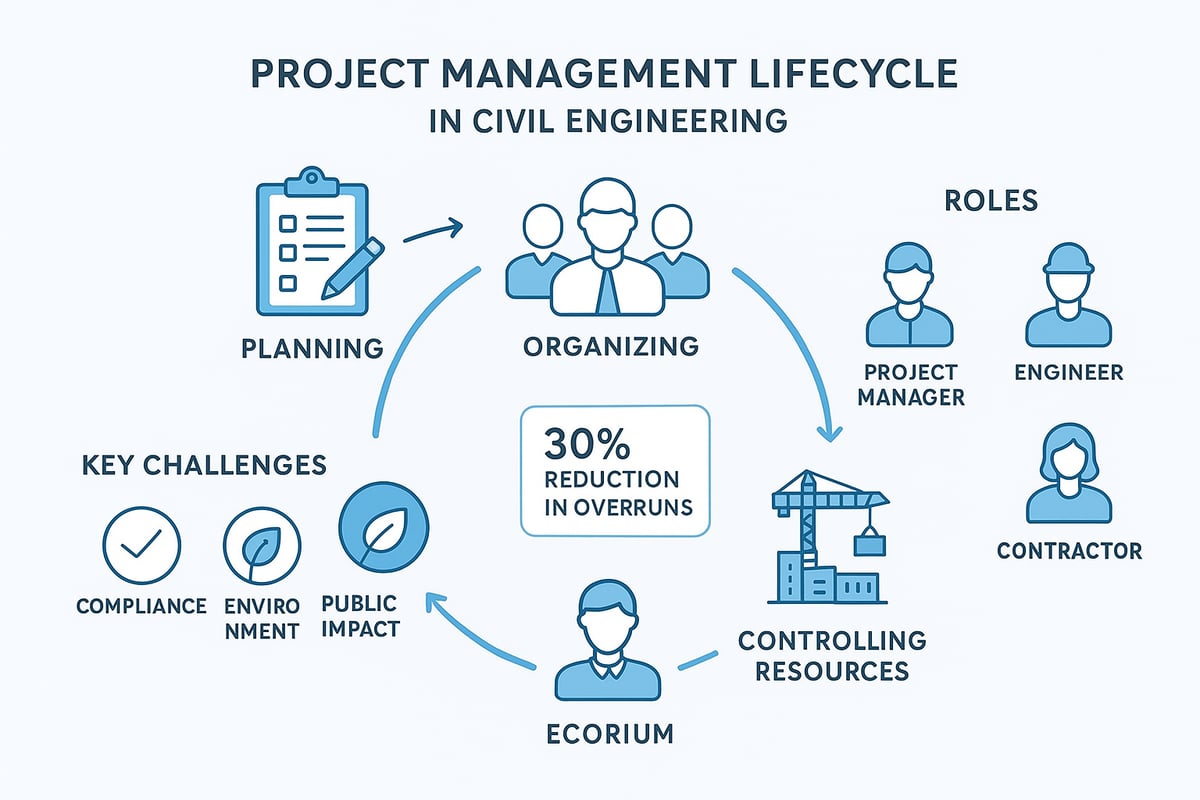
Project management civil engineering is the backbone of successful infrastructure development. It involves planning, organizing, and controlling resources to achieve specific project goals while meeting stringent requirements. As civil engineering projects grow more complex in 2026, mastering these management skills becomes essential for delivering results that stand the test of time.
Defining Project Management in Civil Engineering
At its core, project management civil engineering is about transforming concepts into reality through structured processes. It encompasses everything from initial feasibility studies to final project handover. The aim is to balance technical requirements, costs, timelines, and quality standards, ensuring all objectives are met.
Civil engineering projects require a tailored approach due to their scale and impact. For a detailed summary of the essential services and their integration in project workflows, see the Civil Engineering Services Overview.
Unique Challenges in Civil Engineering Projects
Civil engineering projects face a unique set of hurdles. These include coordinating large multidisciplinary teams, maintaining compliance with evolving regulations, and managing environmental impacts. Public scrutiny and community engagement add further complexity, requiring careful stakeholder management.
Project management civil engineering must address these factors from the outset. Early planning helps anticipate constraints, such as land use approvals or environmental permits, that could otherwise stall progress.
Key Project Management Principles
Success in project management civil engineering depends on adherence to several core principles:
| Principle | Description |
|---|---|
| Scope Management | Define and control what is included in the project |
| Schedule | Develop and track timelines for all activities |
| Cost | Monitor budgets and control expenditures |
| Quality | Set benchmarks and ensure standards are met |
| Stakeholder | Engage and satisfy all involved parties |
Balancing these principles requires a systematic approach throughout the project lifecycle. Each one is interdependent, and neglecting any area can jeopardize the entire project.
Leadership, Roles, and Responsibilities
Strong leadership is vital in project management civil engineering. Project managers must make timely decisions, resolve conflicts, and motivate teams. Their role involves coordinating between engineers, contractors, suppliers, and stakeholders to keep the project aligned with its objectives.
Key responsibilities include risk assessment, resource allocation, and ensuring quality control. Effective leaders foster collaboration and uphold safety standards, especially in high-stakes environments like bridge or highway construction.
Real-World Examples and Industry Insights
Consider a bridge construction project. Here, project management civil engineering ensures seamless coordination between design, procurement, and construction teams. Urban infrastructure upgrades, such as water main replacements, demand careful stakeholder engagement to minimize public disruption.
Transportation projects highlight the value of integrated delivery and multidisciplinary teams. According to sector studies, effective project management can reduce project overruns by up to 30 percent. In 2026, the demand for integrated teams and digital tools will only grow, making these skills more critical than ever.
The Civil Engineering Project Lifecycle: Step-by-Step Success
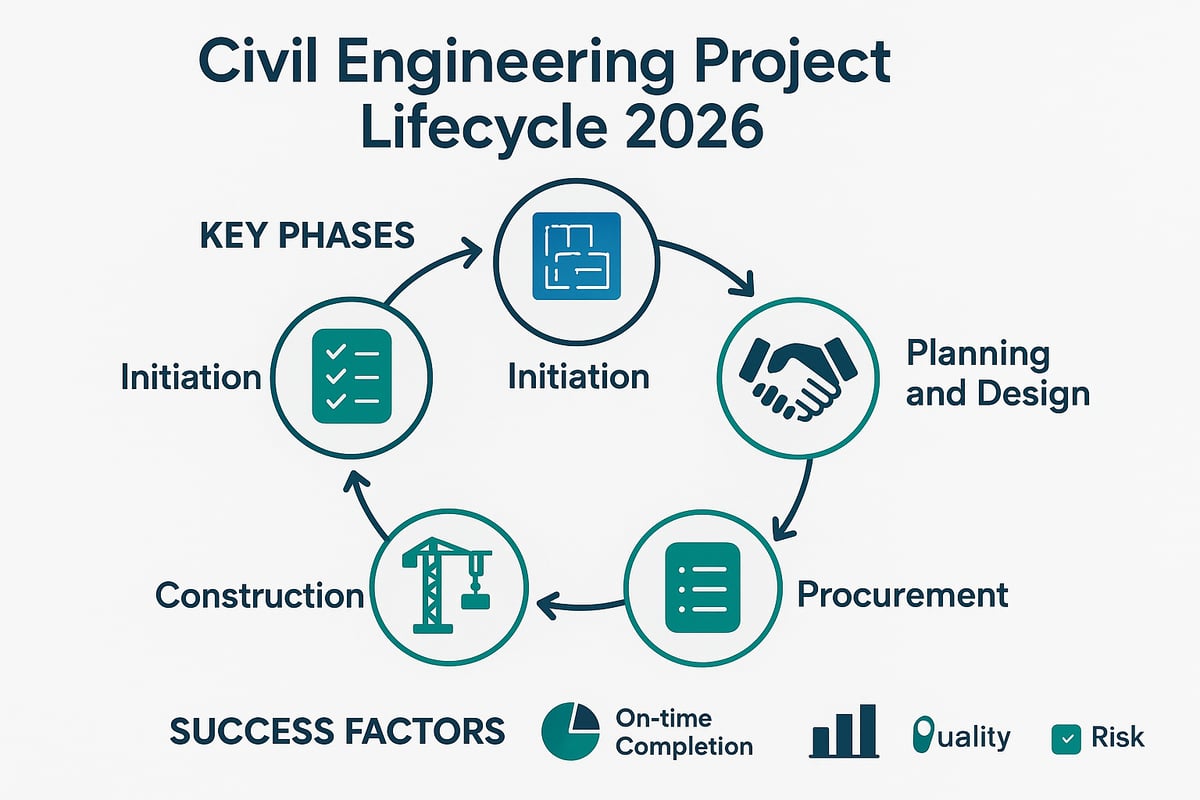
Civil engineering projects move through a structured lifecycle, each phase critical for quality outcomes. Understanding the full project management civil engineering lifecycle helps teams address challenges early and deliver successful results. Let’s walk through each step, using real-world examples and actionable insights.
Project Initiation and Feasibility
Every project management civil engineering process begins with clear objectives. Teams identify stakeholders, define constraints, and establish what success looks like. Early engagement helps set a realistic foundation and aligns expectations.
Feasibility studies are vital. Technical assessments check if the design is possible, financial reviews ensure cost-effectiveness, and environmental analysis protects local ecosystems. For example, when evaluating a new highway, teams must analyze traffic demand, soil stability, financial returns, and environmental impact. Early identification of regulatory requirements and risks prevents costly surprises later.
A robust governance structure is set up, defining decision-making processes and responsibilities. For those interested in how these principles apply to real transportation work, see how Transportation Engineering Project Solutions are delivered in practice.
Planning and Design
Planning is where project management civil engineering shines. Teams develop detailed plans covering scope, schedule, budget, and quality benchmarks. This phase sets out the roadmap for the entire project.
The design stage integrates sustainability, innovation, and constructability. Modern projects use Building Information Modeling (BIM) to visualize structures, improve coordination, and reduce errors. In urban redevelopment, for example, BIM helps teams simulate construction sequences, foresee clashes, and engage stakeholders early.
Stakeholder engagement is crucial. Regular consultations and transparent approvals keep everyone aligned. Data shows that projects with strong planning and design phases are 40% more likely to finish on time. This phase also ensures regulatory compliance and readiness for the next steps in the project management civil engineering lifecycle.
Procurement and Contracting
Once designs are approved, procurement begins. Transparent bidding processes help select qualified contractors and suppliers. Choosing the right contract type is essential for managing risk and cost.
Common contract types include:
| Contract Type | Description |
|---|---|
| Lump Sum | Fixed price for all work |
| Unit Price | Payment per unit |
| Cost-Plus | Costs plus a fee |
Clear specifications and deliverables in contracts reduce misunderstandings. Effective project management civil engineering practices also address procurement risks and set realistic timelines, ensuring resources arrive when needed.
Construction and Execution
Construction is where plans come to life. Teams mobilize equipment, allocate resources, and manage the site. Progress is tracked against milestones, and adjustments are made as needed.
Quality assurance and safety protocols protect workers and the public. Unforeseen challenges such as weather or supply chain issues can arise, but proactive project management civil engineering ensures teams respond quickly, keeping the project on track.
Monitoring, Control, and Closeout
The final phase involves continuous monitoring and control. Key performance indicators and earned value management help track progress and budget.
Change management processes ensure that any alterations are well documented. Final inspections, commissioning, and handover mark the project’s completion. Effective project management civil engineering ends with thorough documentation and lessons learned, setting the stage for future success.
Essential Tools and Techniques for Civil Engineering Project Management
Modern project management civil engineering relies on a suite of specialized tools and techniques to coordinate teams, control costs, and deliver projects efficiently. As projects become more complex in 2026, digital transformation is not just an advantage, it is essential for competitive success.
Project Management Software and Scheduling Methods
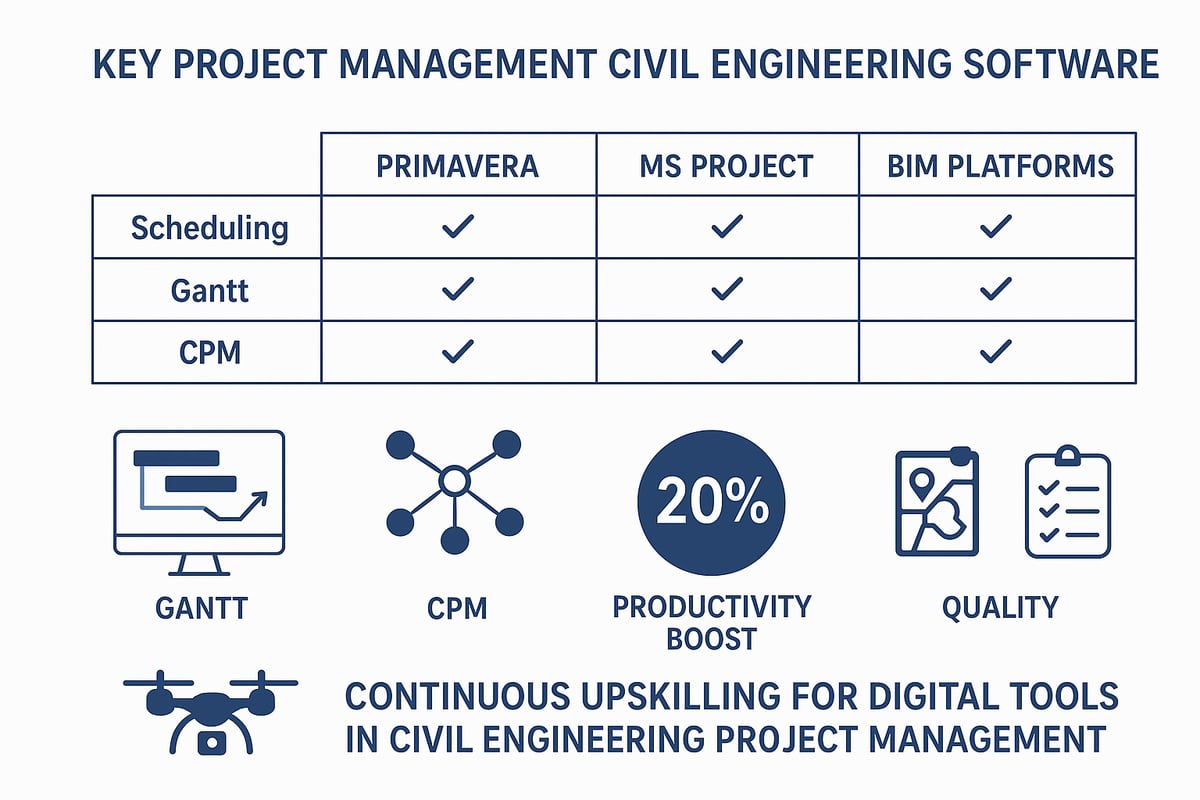
Digital platforms are at the heart of project management civil engineering. Leading software like Primavera and MS Project enable teams to plan, schedule, and track progress in real time. These solutions support detailed work breakdown structures and resource allocation, making it easier to keep large-scale projects on track.
Building Information Modeling (BIM) has become indispensable for design coordination, clash detection, and visualization. BIM-integrated platforms promote collaboration across disciplines and help reduce errors. For a deeper look at BIM's impact on project delivery and error reduction, explore Building Information Modeling (BIM) Advancements.
Scheduling techniques also play a vital role. Tools like Gantt charts offer visual clarity on project timelines, while Critical Path Method (CPM) and Program Evaluation and Review Technique (PERT) allow managers to identify dependencies and critical tasks. These methods are foundational for project management civil engineering in 2026.
| Software/Tool | Main Function | Benefit |
|---|---|---|
| Primavera | Scheduling/Tracking | Complex schedule management |
| MS Project | Planning/Reporting | Resource allocation |
| BIM Platforms | Design/Coordination | Error reduction, collaboration |
Budgeting, Cost Control, and Quality Management
Effective budgeting and real-time cost control are central to project management civil engineering. Earned value analysis and cost forecasting tools provide early warnings for budget overruns, enabling corrective action before issues escalate.
Quality management systems, including digital checklists and inspection apps, ensure project standards are consistently met. These tools support compliance with regulations and help maintain a culture of continuous quality improvement.
Integrating quality control and cost management tools allows project teams to balance financial targets with technical excellence. This strategic approach is essential for delivering value and maintaining stakeholder trust in project management civil engineering.
Risk Assessment Frameworks and Site Monitoring Technologies
Risk management is a cornerstone of successful project management civil engineering. Frameworks like Failure Mode and Effects Analysis (FMEA) and Monte Carlo simulations enable teams to anticipate, quantify, and mitigate potential issues before they impact project delivery.
Site monitoring has evolved rapidly thanks to technology. Drones provide aerial surveys for progress tracking and inspection, while Geographic Information Systems (GIS) offer spatial analysis to support decision-making. These innovations enhance visibility and control across every stage of project management civil engineering.
- FMEA: Identifies potential failure points.
- Monte Carlo: Simulates project outcomes under uncertainty.
- Drones: Real-time site data, progress verification.
- GIS: Maps, analyzes, and manages project data.
Digital Tools, Productivity Data, and Upskilling for 2026
The impact of digital tools on project management civil engineering is measurable. Industry studies show that adopting advanced software and automation can boost project productivity by up to 20%. This gain translates directly into faster delivery and reduced costs.
As technology evolves, continuous upskilling is vital. Project managers and teams must stay current with new platforms, data analytics, and digital collaboration tools. Investing in training ensures that project management civil engineering remains agile, competitive, and ready for the demands of 2026.
Risk Management Strategies in Civil Engineering Projects
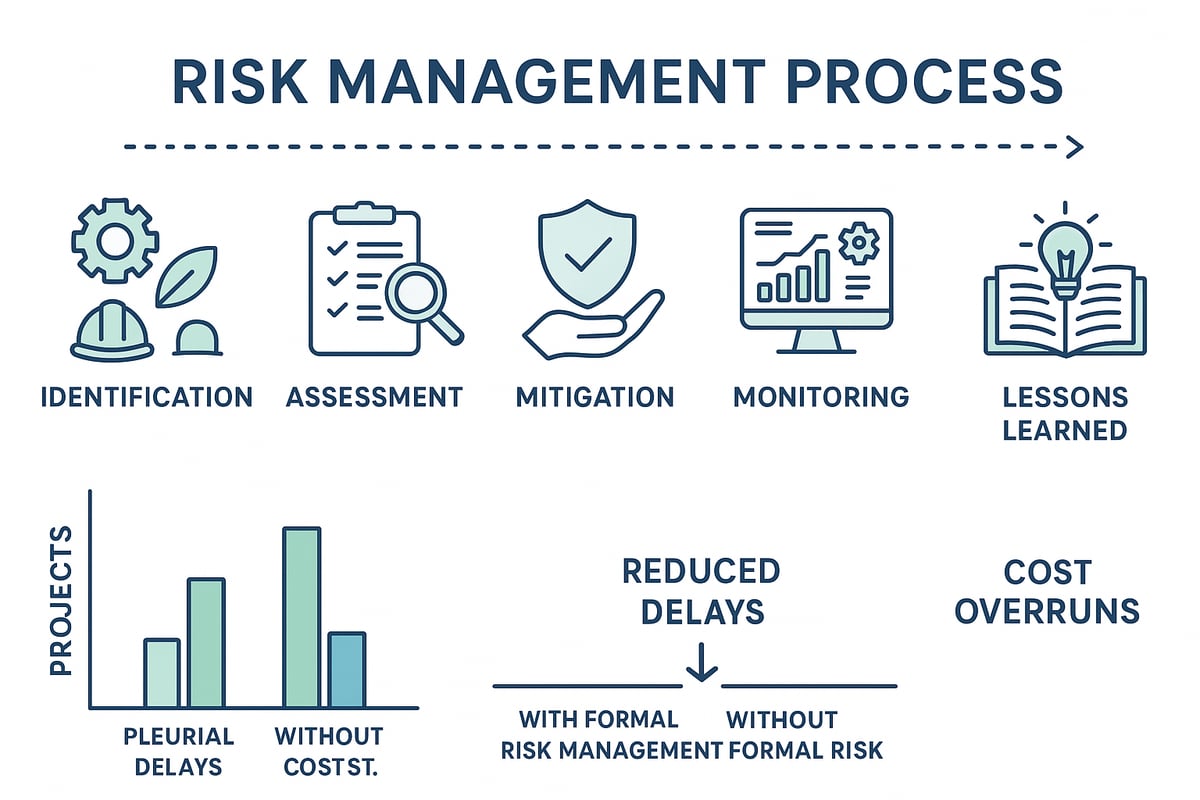
Effectively managing risk is at the heart of project management civil engineering. With projects growing in complexity and scale, risk management ensures that teams anticipate challenges before they escalate. A robust approach protects investments, maintains safety, and keeps projects on track.
Identification and Assessment of Risks
In project management civil engineering, risk identification is the foundation for effective risk control. Projects face a range of risks, from technical uncertainties to environmental hazards and regulatory hurdles. Financial and safety risks are also central concerns, often requiring specialized attention.
Common risk types include:
| Risk Type | Example |
|---|---|
| Technical | Design flaws, equipment failure |
| Environmental | Floods, erosion, contamination |
| Financial | Cost overruns, funding gaps |
| Legal | Permitting, contract disputes |
| Safety | On-site accidents, health hazards |
Teams use workshops, structured checklists, and expert interviews to uncover risks early. For instance, mapping risks for a flood mitigation project involves both quantitative and qualitative tools. Techniques like probability-impact matrices and Monte Carlo simulations help teams understand potential impacts. Early, thorough risk identification in project management civil engineering is crucial for minimizing surprises and aligning all stakeholders on priorities.
Mitigation, Monitoring, and Contingency Planning
Once risks are identified, mitigation strategies become essential in project management civil engineering. Approaches include insurance, design modifications, and allocating buffer budgets. By putting these measures in place, teams reduce the likelihood and severity of adverse events.
Ongoing monitoring is key. Risk registers are updated regularly, ensuring new threats are addressed promptly. Scenario planning helps teams prepare for unexpected events, such as material shortages or sudden regulatory changes. For example, during a major slope stabilization project, contingency plans may involve alternate suppliers or rapid design adjustments. For more on specialized approaches, see Risk Management in Geotechnical Projects.
Effective mitigation and monitoring transform risk from a looming threat into a manageable aspect of project management civil engineering. Proactive planning and communication underpin every successful outcome.
Case Studies and Lessons Learned
Learning from real-world experience is a cornerstone of project management civil engineering. Projects that implemented formal risk management, such as urban transit expansions, often overcame significant threats and delivered results on time.
Key lessons include:
- Early identification prevents costly delays
- Regular risk reviews keep teams agile
- Transparent communication fosters stakeholder trust
According to industry studies, projects with structured risk management are 25 percent less likely to face major delays. Embedding risk management strategies into every phase leads to consistent project success.
Communication and Stakeholder Engagement for Project Success
Clear and effective communication is fundamental to project management civil engineering. As projects grow in scope and complexity, the ability to connect teams, stakeholders, and decision-makers becomes a critical factor for success. Mastering communication and stakeholder engagement ensures that goals are met, risks are minimized, and projects deliver value to communities.
Building Effective Communication Channels
In project management civil engineering, establishing robust communication channels is vital for aligning teams and stakeholders. Clear and consistent updates prevent misunderstandings, reduce errors, and keep everyone focused on shared objectives. Digital collaboration platforms, such as dashboards and centralized document repositories, have become standard tools for project teams.
Weekly progress meetings are essential for tracking milestones and addressing challenges proactively. For example, a municipal infrastructure project might rely on structured weekly briefings, where progress is visualized through real-time dashboards and action items are assigned transparently. These meetings not only keep teams informed but also foster accountability.
Effective communication is further enhanced by integrating AI-powered tools, which automate reporting and streamline information sharing. Solutions highlighted in AI-Powered Project Management Enhancements demonstrate how automation and predictive analytics can improve decision-making and coordination in project management civil engineering. According to recent data, projects with strong communication practices are 50% more likely to achieve their goals.
Stakeholder Analysis and Management
Identifying and engaging stakeholders is a cornerstone of successful project management civil engineering. Internal stakeholders include project managers, engineers, and contractors, while external stakeholders may be regulatory agencies, community groups, and the public. Conducting a stakeholder analysis helps map each party's influence and interest, guiding engagement strategies.
A common approach involves creating a stakeholder matrix, categorizing stakeholders by their power and level of concern. This allows project leaders to prioritize communication efforts and allocate resources efficiently. For example, in urban transit projects, early community consultations can surface concerns and build trust, reducing resistance and delays.
Strategies for stakeholder engagement include regular updates, public meetings, and transparent decision-making processes. Conflict resolution plans should be established in advance, ensuring issues are addressed promptly. By prioritizing stakeholder needs and expectations, project management civil engineering teams can minimize disruptions and foster positive relationships that support project success.
Documentation and Reporting Best Practices
Maintaining accurate and accessible records is crucial in project management civil engineering. Detailed logs, change orders, and progress reports create an audit trail that supports regulatory compliance and project transparency. Digital documentation platforms make it easier to organize, update, and share information with stakeholders.
Best practices include establishing standardized templates for reporting, regularly updating logs, and conducting periodic audits to ensure data integrity. Leveraging digital tools allows for real-time reporting and easy retrieval of critical documents. This not only streamlines communication but also enhances accountability throughout the project lifecycle.
In project management civil engineering, comprehensive documentation supports quality assurance and facilitates post-project reviews. By embedding these practices into daily workflows, teams can ensure that all project activities are traceable, measurable, and aligned with both internal standards and external regulations.
Technology Trends Shaping Civil Engineering Project Management in 2026
The landscape of project management civil engineering is evolving rapidly as we approach 2026. Technology is at the forefront, transforming the way projects are planned, executed, and monitored. Let’s explore the most influential trends every civil engineering professional should know.
Digital Transformation and Automation
Digital transformation is revolutionizing project management civil engineering by introducing powerful tools like AI, machine learning, and automation. These technologies streamline tasks such as scheduling, cost estimation, and resource allocation. For example, predictive analytics can identify project bottlenecks before they escalate, allowing teams to make proactive adjustments.
Industry studies show that automation can reduce manual errors by up to 60 percent, directly impacting project outcomes. Integrating advanced platforms also enhances collaboration between multidisciplinary teams, ensuring everyone stays aligned throughout the project lifecycle.
AI applications are particularly impactful in civil engineering. From structural analysis to transportation planning, AI-driven insights help teams make faster, more informed decisions. To delve deeper into the possibilities, review this comprehensive overview of AI Applications in Civil Engineering.
By embracing these digital advancements, project management civil engineering teams can increase efficiency, minimize risk, and deliver better results for clients and stakeholders.
Sustainable and Smart Infrastructure
Sustainability is no longer optional in project management civil engineering. Modern projects now incorporate sustainability metrics during planning, emphasizing energy efficiency, reduced emissions, and long-term resilience. Smart infrastructure is on the rise, with IoT sensors and real-time monitoring becoming standard on construction sites.
A leading example is the deployment of smart bridges equipped with sensors that continually track structural health. This approach enables teams to detect issues early and schedule predictive maintenance, reducing downtime and costs. The concept of digital twins plays a crucial role in this evolution. Digital twins create virtual replicas of physical structures, offering real-time data for proactive maintenance and safety. For more on this innovative trend, explore the Digital Twin Framework for Structural Health Monitoring.
As these technologies become mainstream, project management civil engineering professionals must adapt to new methods for measuring and improving sustainability across all phases.
Future Skills for Project Managers
To thrive in project management civil engineering in 2026, professionals must prioritize digital literacy and data analysis. The ability to interpret project data, leverage digital platforms, and collaborate across disciplines is now essential. Project managers should pursue ongoing training and certification to stay current with emerging technologies and industry standards.
Interdisciplinary collaboration also takes center stage, as projects increasingly require input from experts in technology, sustainability, and communications. By upskilling and embracing continuous learning, project managers will be well-equipped to lead successful, future-ready teams.
Best Practices and Strategies for Civil Engineering Project Success
Civil engineering projects in 2026 demand a holistic approach to project management civil engineering, blending leadership, quality, sustainability, and measurable outcomes. Adopting best practices across these areas ensures teams can navigate complexity and deliver lasting value.
Leadership, Team Dynamics, and Culture
Effective project management civil engineering begins with strong leadership and a positive team culture. Project leaders set the tone, motivating teams to align with project vision and goals. They foster collaboration, encourage open communication, and guide teams through challenges.
A culture that prioritizes safety, quality, and continuous improvement is essential. Leaders should promote accountability and recognize individual contributions. In large-scale projects, team dynamics often determine success. Multidisciplinary collaboration and knowledge sharing reduce silos and enable innovative solutions.
Key leadership qualities for project management civil engineering include:
- Clear vision and decision-making
- Conflict resolution skills
- Adaptability to change
- Empathy and stakeholder engagement
Project managers who invest in team development and foster trust see higher morale and productivity. This foundation is vital for sustainable project delivery.
Quality Assurance and Continuous Improvement
Quality management is at the heart of project management civil engineering. Setting clear quality benchmarks and conducting regular inspections ensures compliance with specifications and standards. Implementing lessons learned and feedback loops helps teams adapt and improve processes over time.
Continuous improvement programs, such as Six Sigma or Lean, can drive efficiency and reduce errors. According to industry research, these initiatives can increase project ROI by up to 15%. To establish robust quality systems, consider:
- Regular quality audits and peer reviews
- Documented procedures and checklists
- Training on updated standards and best practices
For more insights on quality management practices essential for successful civil engineering project execution, visit Quality Control and Assurance in Projects.
Integrating quality assurance into every project phase supports long-term success and client satisfaction.
Sustainability and Regulatory Compliance
Sustainability is now a core component of project management civil engineering. Teams must integrate environmental, social, and governance (ESG) factors into planning and execution. This includes reducing carbon footprints, optimizing resource use, and engaging with local communities.
Navigating regulations at local, provincial, and national levels is also crucial. Project managers should stay updated on evolving standards to avoid costly delays and penalties. For example, compliance in pipeline or highway projects requires coordinated documentation and proactive engagement with authorities.
Embedding sustainability and compliance into project workflows not only protects the environment but also enhances reputation and stakeholder trust.
Measuring and Celebrating Success
Defining and measuring success is a central element of project management civil engineering. Success metrics typically include on-time delivery, staying within budget, and achieving stakeholder satisfaction.
Post-project reviews and knowledge sharing help capture valuable lessons for future initiatives. Recognizing team achievements builds morale and encourages a culture of excellence.
Consider using dashboards and regular reporting to track progress against goals. Celebrating milestones, both big and small, reinforces positive behaviors and drives continuous improvement across the organization.
As you've seen throughout this guide, mastering project management in civil engineering for 2026 means balancing technical expertise, collaboration, and the latest technology. Whether you're navigating complex regulations, driving sustainability, or looking to improve project outcomes, having expert support can make all the difference. If you're ready to elevate your next project with comprehensive geotechnical and material testing services, we're here to help. Let's work together to turn your vision into lasting success—reach out to us today at Contact Us: info@zalig.ca or +1 800 515 0497.