

The engineering industry continues to evolve beyond traditional prescriptive design methods, embracing innovative approaches that prioritize measurable outcomes over rigid specifications. Performance-based design represents a fundamental shift in how engineers conceptualize, develop, and deliver projects across multiple disciplines. This methodology focuses on defining specific performance criteria that structures, systems, and materials must achieve rather than prescribing exact methods or materials to reach those goals. By establishing clear objectives tied to safety, durability, functionality, and economic viability, this approach empowers engineering teams to explore creative solutions while maintaining rigorous standards.
Understanding Performance-Based Design Fundamentals
Performance-based design establishes a framework where project requirements are defined by what must be achieved rather than how to achieve it. This methodology requires engineers to identify measurable performance targets early in the planning phase, including structural capacity, environmental resilience, service life expectations, and safety thresholds. The Federal Highway Administration’s Performance-Based Practical Design initiative demonstrates how transportation projects benefit from this outcome-focused approach.
The core principle involves separating performance objectives from prescriptive specifications. Traditional design codes often mandate specific materials, dimensions, or construction methods based on historical practices. Performance-based approaches instead challenge engineers to demonstrate that their solutions will meet or exceed defined performance criteria through analytical methods, testing, and validation.
Key Components of Performance Objectives
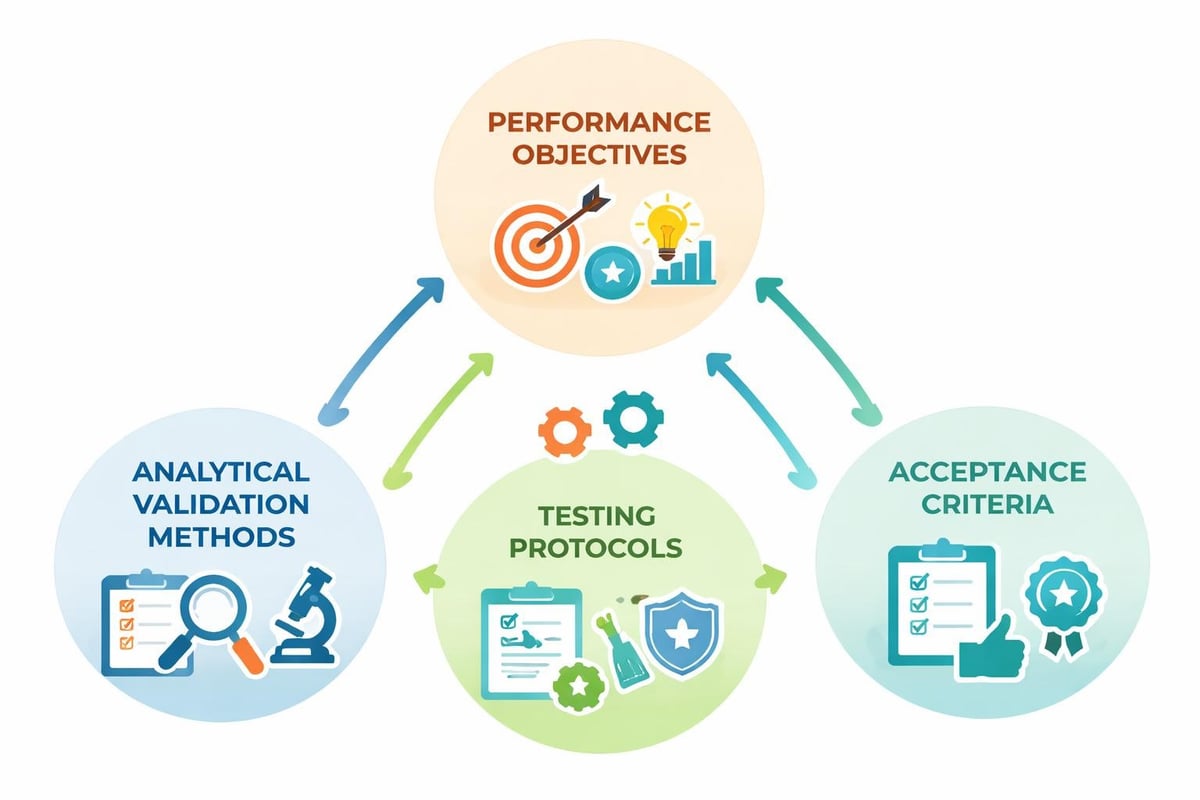
Successful implementation requires clearly defined performance objectives across multiple dimensions:
- Safety criteria establishing acceptable risk levels for various hazard scenarios
- Serviceability limits defining functional requirements under normal operating conditions
- Durability standards specifying minimum service life and degradation thresholds
- Economic parameters balancing initial costs against lifecycle performance
- Environmental considerations addressing sustainability and ecological impact
Each objective must include quantifiable metrics that allow for objective assessment. For instance, rather than specifying a particular foundation type, performance criteria might define allowable settlement limits, bearing capacity requirements, and response to seismic events. This flexibility enables advanced geotechnical laboratory testing to validate site-specific solutions.
Applications Across Engineering Disciplines
Structural Engineering Implementation
The structural engineering sector has pioneered performance-based methodologies, particularly for seismic and wind load scenarios. Walter P Moore’s approach to performance-based design showcases how this methodology achieves superior building performance through rigorous analysis rather than code-minimum compliance.
Engineers develop multiple performance levels tied to different hazard intensities. A commercial building might be designed to remain fully operational during frequent minor earthquakes, sustain repairable damage during moderate events, and prevent collapse during rare maximum considered earthquakes. This tiered approach aligns investment with risk tolerance and functional requirements.
| Performance Level | Event Frequency | Structural Response | Functional Impact |
|---|---|---|---|
| Operational | Frequent (10-year) | Minimal damage | Immediate occupancy |
| Immediate Occupancy | Occasional (50-year) | Minor damage | Brief interruption |
| Life Safety | Rare (500-year) | Significant damage | Extended closure |
| Collapse Prevention | Very Rare (2500-year) | Severe damage | Total loss acceptable |
Geotechnical Engineering Advantages
GeoEngineers highlights how performance-based design in geotechnical engineering improves safety while maximizing investment through advanced modeling techniques. This approach proves particularly valuable for complex ground conditions where prescriptive methods may be overly conservative or inadequately address site-specific challenges.
Performance-based methodologies allow geotechnical engineers to optimize soil stabilization and ground improvement strategies based on actual performance requirements rather than standardized specifications. Site investigation data feeds directly into predictive models that demonstrate how proposed solutions will perform under various loading and environmental conditions.
For Alberta's diverse geological settings, this flexibility enables cost-effective solutions for challenging conditions including expansive clays, collapsible soils, permafrost zones, and areas with high groundwater tables. Performance criteria might address settlement magnitude and rate, lateral movement limits, frost heave restrictions, and long-term stability under changing moisture regimes.
Design Development and Validation Process
Establishing Performance Criteria
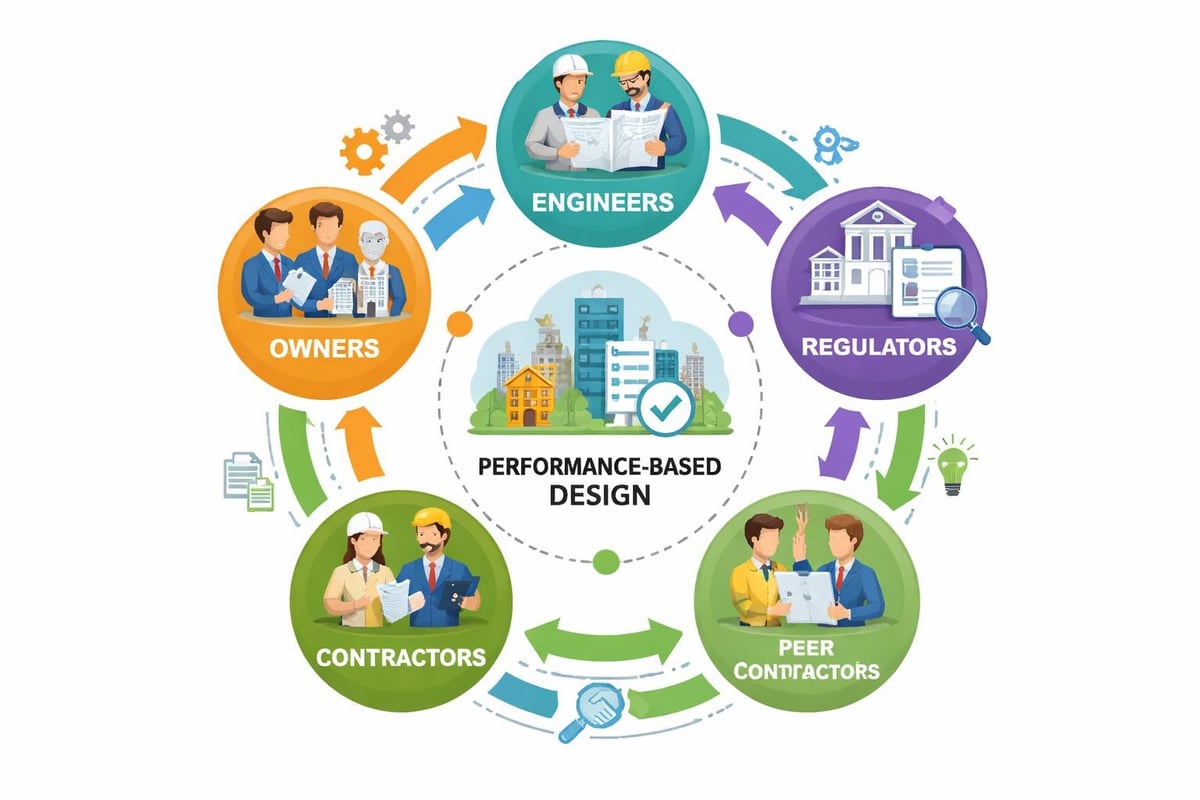
The initial phase requires collaboration among stakeholders to define acceptable performance limits. This process involves:
- Hazard identification cataloging potential risks including environmental, operational, and natural hazards
- Consequence analysis evaluating potential impacts of performance failures
- Risk tolerance assessment determining acceptable probability levels for various failure modes
- Performance target specification translating risk tolerance into quantifiable engineering parameters
- Acceptance criteria development establishing testing and analysis methods to verify compliance
Stakeholder engagement ensures that performance targets reflect actual project needs rather than generic benchmarks. An industrial facility may accept higher deformation limits than a hospital, while temporary structures justify different criteria than permanent infrastructure.
Analytical Methods and Modeling
Performance-based design relies heavily on sophisticated analytical techniques that predict system behavior under various conditions. Advanced finite element analysis, computational fluid dynamics, probabilistic risk assessment, and time-history dynamic analysis enable engineers to evaluate performance across the full range of expected scenarios.
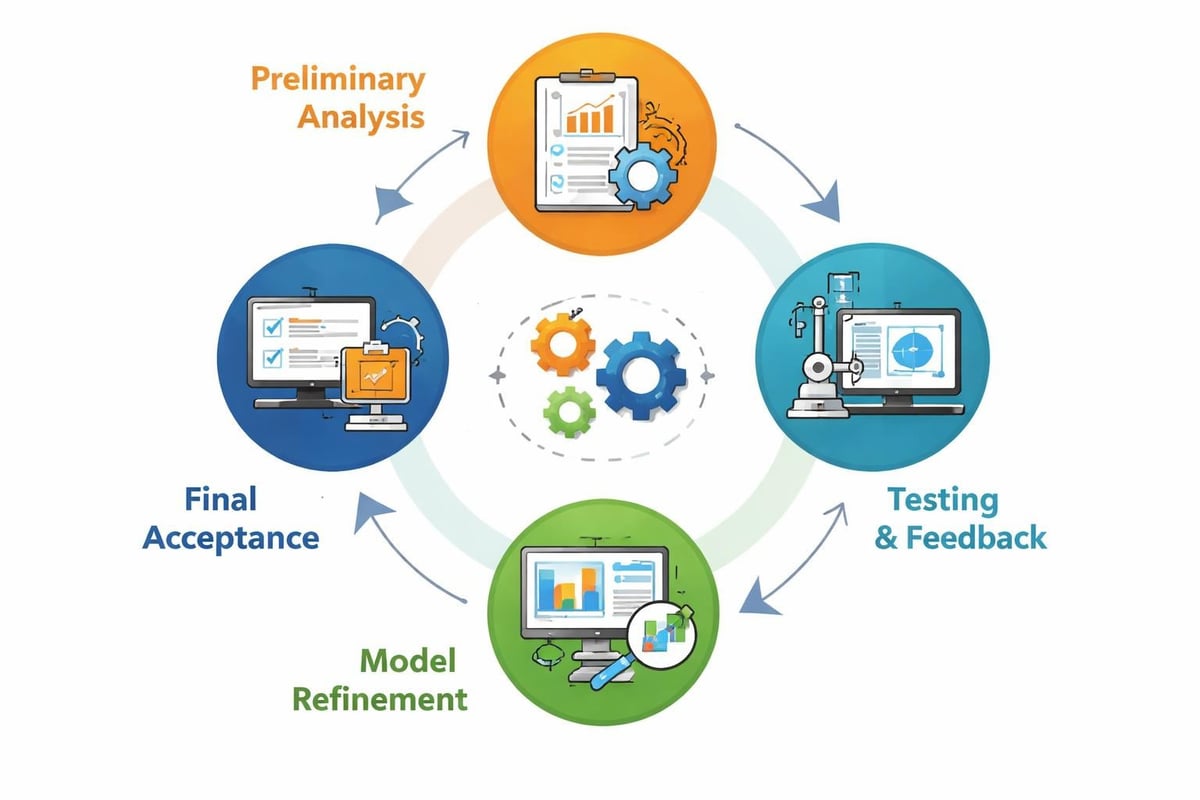
These methods must be validated through physical testing and empirical data. Material properties determined through laboratory testing feed into models that predict full-scale performance. Calibration against documented case histories builds confidence in analytical predictions.
The National Institute of Standards and Technology’s work on performance-based design methodologies for structures in fire demonstrates this integration of advanced modeling with experimental validation. Similar approaches apply across engineering disciplines wherever performance under extreme or unusual conditions must be verified.
Economic and Practical Benefits
Cost Optimization Through Flexibility
Performance-based design frequently yields economic advantages by eliminating unnecessary conservatism while maintaining safety. When prescriptive codes require specific solutions regardless of site conditions or project requirements, costs may exceed what is necessary to achieve adequate performance.
By defining only the required outcomes, this methodology allows engineers to:
- Select materials based on lifecycle value rather than initial cost alone
- Optimize structural systems for specific load patterns and environmental conditions
- Reduce over-design in low-risk scenarios
- Concentrate resources on critical performance areas
- Incorporate innovative materials and construction methods not addressed in prescriptive codes
A foundation design using performance criteria might demonstrate that ground improvement techniques provide equivalent or superior performance compared to deep foundations at significantly reduced cost and environmental impact.
Innovation and Technological Advancement
The flexibility inherent in performance-based approaches accelerates adoption of new technologies and methods. Performance-based design principles encourage engineers to evaluate emerging solutions on their merits rather than waiting for code recognition.
This environment fosters continuous improvement as engineers develop more efficient ways to achieve performance targets. High-performance materials, advanced monitoring systems, adaptive design strategies, and integrated project delivery methods all benefit from frameworks that reward innovation rather than mandate conformity.
Implementation Challenges and Solutions
Documentation and Peer Review Requirements
Performance-based projects require more extensive documentation than prescriptive designs. Engineers must clearly articulate performance objectives, justify analytical methods, present validation evidence, and demonstrate that proposed solutions meet acceptance criteria.
This documentation serves multiple purposes:
- Provides basis for regulatory approval and building official acceptance
- Facilitates peer review by independent experts
- Creates record for future modifications or expansions
- Demonstrates due diligence for liability purposes
- Enables knowledge transfer for similar future projects
Third-party peer review becomes essential for performance-based projects, particularly those involving innovative solutions or critical facilities. Review teams assess whether performance objectives appropriately address project risks, analytical methods are appropriate and correctly applied, and proposed designs demonstrably achieve stated performance targets.
Regulatory Acceptance and Code Compliance
Many jurisdictions still operate primarily under prescriptive building codes, creating potential friction for performance-based approaches. The Arizona Department of Transportation’s overview of Performance-Based Practical Design illustrates how agencies develop frameworks to evaluate and approve alternative compliance methods.
Successful navigation of regulatory processes requires:
- Early engagement with approval authorities to establish acceptance criteria
- Clear demonstration of equivalence or superiority to prescriptive requirements
- Comprehensive documentation addressing code intent and public safety
- Third-party validation from recognized experts
- Precedent research showing successful similar applications
Building relationships with regulatory officials and educating them about performance-based methodologies facilitates smoother approval processes. Some jurisdictions now explicitly recognize performance-based design as an acceptable alternative compliance path.
Risk Management and Quality Assurance
Probabilistic Risk Assessment
Performance-based design inherently involves probabilistic thinking rather than deterministic assumptions. Rather than designing for a single worst-case scenario, engineers evaluate performance across a spectrum of events with different probabilities of occurrence.
This approach requires quantifying uncertainties in loads, material properties, environmental conditions, and analytical predictions. Monte Carlo simulations, reliability analysis, and sensitivity studies help identify which uncertainties most significantly impact performance and where design refinement provides greatest benefit.
| Risk Factor | Quantification Method | Impact on Design | Mitigation Strategy |
|---|---|---|---|
| Material variability | Statistical analysis of test data | Foundation capacity | Increased testing density |
| Load uncertainty | Probabilistic load models | Structural sizing | Load monitoring systems |
| Model accuracy | Validation against case histories | Safety factors | Conservative assumptions |
| Construction quality | Historical quality control data | Acceptance criteria | Enhanced inspection protocols |
Construction Quality Control
Performance-based designs place greater emphasis on construction quality since analytical predictions assume materials and workmanship meet specified standards. Quality assurance programs must verify that as-built conditions match design assumptions.
For geotechnical engineering services, this might include increased frequency of density testing for compacted fills, continuous monitoring during ground improvement operations, and verification testing of installed foundation elements. Performance-based specifications define acceptance criteria based on measured properties rather than prescriptive construction methods.
Documentation of construction quality provides essential validation that completed works will achieve predicted performance. This record also serves as baseline for future condition assessment and maintenance planning.
Future Directions and Industry Evolution
Integration with Building Information Modeling
Digital design platforms enable more sophisticated implementation of performance-based methodologies. Building Information Modeling (BIM) environments integrate analytical tools, facilitate multi-disciplinary coordination, support parametric optimization, and maintain comprehensive documentation throughout project lifecycles.
Performance criteria embedded in digital models enable automated compliance checking and real-time design validation. As proposed solutions evolve, integrated analysis tools continuously verify that performance objectives remain satisfied.
Sustainability and Resilience Considerations
Performance-based design naturally aligns with sustainability goals by focusing on lifecycle performance rather than initial construction. Embodied carbon, operational energy, adaptability to changing use, and end-of-life considerations can all be incorporated as performance criteria alongside traditional structural and functional requirements.
Climate change adaptation particularly benefits from performance-based approaches as engineers must design for future conditions that may differ significantly from historical patterns. Rather than extrapolating past data, performance frameworks can incorporate climate projections and evaluate resilience across multiple scenarios.
The methodology also supports circular economy principles by allowing engineers to demonstrate that recycled or unconventional materials achieve required performance, reducing dependence on virgin resources.
Professional Development and Education
Widespread adoption of performance-based design requires evolution in engineering education and professional development. Engineers need stronger foundations in probability and statistics, advanced analytical methods, risk assessment frameworks, and communication skills to articulate performance requirements to diverse stakeholders.
Professional organizations increasingly offer training and certification in performance-based methodologies. As more projects demonstrate successful implementation, the knowledge base expands and best practices become better defined across various engineering disciplines.
Performance-based design represents the future of engineering practice, enabling innovative, cost-effective solutions while maintaining rigorous safety and quality standards. This outcome-focused approach aligns perfectly with Alberta's diverse engineering challenges, from complex geotechnical conditions to harsh environmental demands. ZALIG Consulting Ltd combines deep technical expertise with practical experience to develop performance-based solutions tailored to your project's unique requirements, delivering measurable results that optimize safety, functionality, and value throughout the asset lifecycle.