
Complex engineering and construction projects demand sophisticated oversight to protect stakeholder interests and ensure successful outcomes. Property owners and developers often lack the specialized knowledge, time, or resources to manage every technical detail, creating a critical need for professional advocacy. This is where owner representation becomes essential, serving as the owner's eyes, ears, and voice throughout the entire project lifecycle. By bridging the gap between vision and execution, these professionals safeguard investments while maintaining focus on quality, budget, and timeline objectives.
Understanding Owner Representation in Engineering Projects
Owner representation involves hiring a qualified professional to act on behalf of a project owner throughout planning, design, and construction phases. This individual or team serves as the owner’s advocate, ensuring that all project activities align with the owner's objectives, budget constraints, and quality expectations. Unlike project managers who work for contractors or general oversight consultants, the owner's representative maintains undivided loyalty to the property owner's interests.
The scope of this role extends far beyond simple supervision. An owner's representative integrates technical expertise with business acumen to navigate complex engineering challenges, contractual obligations, and regulatory requirements. They coordinate between multiple stakeholders, including architects, engineers, contractors, and regulatory agencies, creating a unified approach to project delivery.
Core Responsibilities and Functions
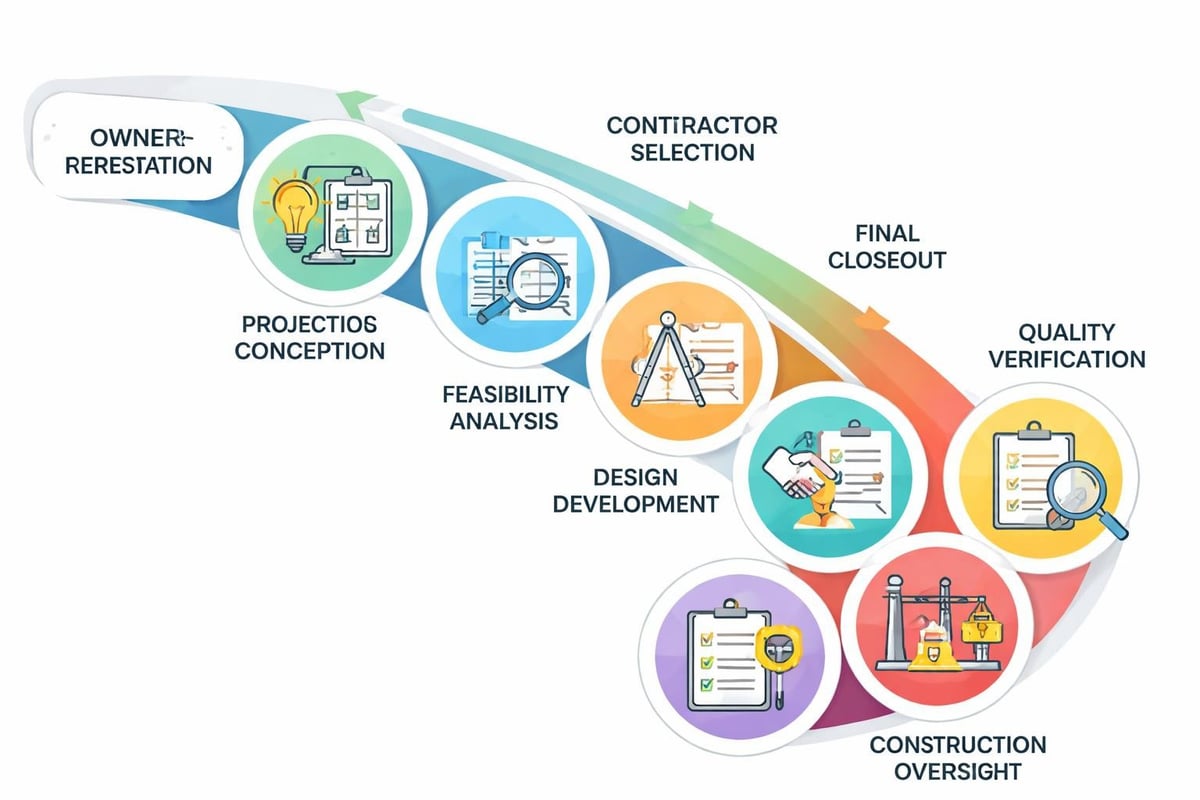
The duties of an owner's representative encompass numerous critical functions that protect project interests. These professionals provide comprehensive oversight while allowing owners to focus on their core business operations.
Key responsibilities include:
- Developing detailed project scopes and realistic budgets
- Evaluating and selecting qualified design teams and contractors
- Reviewing architectural and engineering drawings for compliance
- Monitoring construction progress against approved schedules
- Verifying quality control measures and material specifications
- Managing change orders and preventing scope creep
- Coordinating testing and inspection services
- Ensuring regulatory compliance and permit acquisition
- Facilitating effective communication among all parties
- Protecting the owner's financial and legal interests
According to detailed job descriptions for owner’s representatives, these professionals must balance technical knowledge with strong interpersonal skills. They serve as the communication hub, translating complex engineering terminology into actionable business decisions that owners can understand and approve.
Value Proposition for Engineering and Construction Projects
The investment in owner representation typically yields substantial returns through risk mitigation, cost savings, and enhanced project outcomes. Many owners discover that professional representation pays for itself multiple times over through avoided mistakes, optimized resource allocation, and accelerated timelines.
Financial Benefits and Cost Control
Professional owner representation delivers measurable financial advantages throughout the project lifecycle. These experts identify potential cost overruns before they materialize, negotiate favorable contract terms, and prevent expensive rework caused by miscommunication or inadequate oversight.
| Financial Benefit | Impact Mechanism | Typical Savings Range |
|---|---|---|
| Contract Negotiation | Competitive bidding, favorable terms | 5-15% of project cost |
| Change Order Management | Scope verification, cost justification | 10-20% reduction |
| Schedule Optimization | Efficient sequencing, delay prevention | 3-8% of total budget |
| Quality Assurance | Preventing rework, ensuring compliance | 7-12% cost avoidance |
The representative's experience enables them to spot red flags in proposals, challenge unjustified costs, and ensure competitive pricing across all project phases. They understand market rates for materials and labor, preventing contractors from inflating estimates. This expertise proves particularly valuable in specialized fields like geotechnical engineering, where technical testing requirements demand precise specification and verification.
Risk Management and Quality Assurance
Construction projects inherently carry substantial risks ranging from safety concerns to regulatory violations. Owner representation establishes robust risk management frameworks that identify, assess, and mitigate potential problems before they escalate into costly failures.
These professionals implement comprehensive quality control protocols, ensuring that all work meets or exceeds specified standards. They coordinate independent testing, verify material certifications, and inspect workmanship at critical stages. This vigilance prevents substandard construction that could compromise structural integrity or require expensive remediation.
Professional owner’s representatives also manage contractual risks by ensuring proper documentation, maintaining clear communication channels, and addressing disputes before they require legal intervention. Their presence significantly reduces the likelihood of litigation while protecting the owner's interests if conflicts do arise.
Selection Criteria for Owner's Representatives
Choosing the right owner's representative significantly influences project success. The ideal candidate combines technical expertise, industry experience, and personal characteristics that align with the project's specific requirements and the owner's management style.
Essential Qualifications and Experience
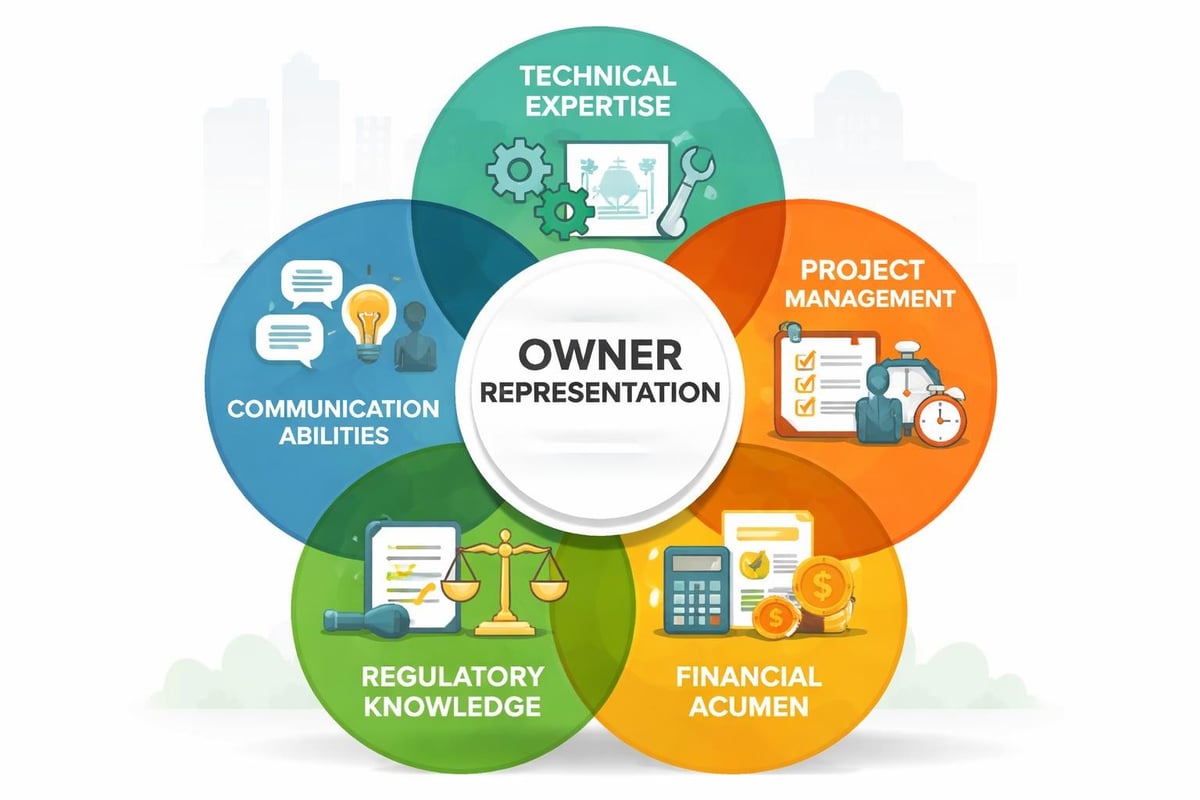
Technical competency forms the foundation of effective owner representation. Professionals should possess relevant engineering credentials, construction management certifications, or architectural licenses appropriate to the project type. Many successful representatives hold professional engineer (PE) designations or Project Management Professional (PMP) certifications.
Critical qualifications include:
- Educational Background: Engineering, architecture, or construction management degrees
- Professional Certifications: PE, PMP, LEED AP, or specialty credentials
- Industry Experience: Minimum 10-15 years in relevant construction sectors
- Project Portfolio: Demonstrated success with similar scope and complexity
- Technical Knowledge: Understanding of building systems, materials, and methods
Beyond credentials, successful owner’s representatives demonstrate strong business acumen and financial literacy. They must read construction documents, analyze budgets, interpret contracts, and make sound decisions under pressure. Experience with projects of comparable scale, complexity, and building type ensures familiarity with potential challenges and effective solutions.
Interpersonal Skills and Communication Abilities
Technical knowledge alone cannot guarantee successful owner representation. The role demands exceptional communication skills to facilitate collaboration among diverse stakeholders with competing interests and perspectives. Representatives must translate complex engineering concepts into clear business language while maintaining credibility with technical professionals.
Effective representatives exhibit strong negotiation abilities, diplomatic conflict resolution skills, and the capacity to make difficult decisions objectively. They build trust with all parties while maintaining unwavering focus on the owner's interests. This balance requires emotional intelligence, professional maturity, and the confidence to challenge questionable recommendations regardless of their source.
Integration with Engineering and Construction Teams
The owner's representative functions as a crucial link between the project owner and the execution team. This position requires careful integration into existing organizational structures without creating redundancies or communication bottlenecks that could slow progress.
Establishing Authority and Accountability
Clear definition of roles and responsibilities prevents confusion and ensures efficient decision-making. The owner must formally establish the representative's authority level, approval limits, and reporting relationships before project commencement. This clarity enables decisive action while maintaining appropriate oversight.
The representative typically reports directly to the owner or senior leadership, providing regular updates on progress, budget status, and emerging issues. They hold authority to approve or reject work, authorize expenditures within defined limits, and direct corrective actions when necessary. However, they do not replace the design team's professional judgment or the contractor's construction expertise.
| Stakeholder | Relationship with Owner's Rep | Communication Frequency |
|---|---|---|
| Project Owner | Direct reporting, decision authority | Weekly or as needed |
| Architect/Engineer | Collaborative oversight, design review | 2-3 times weekly |
| General Contractor | Supervisory monitoring, issue resolution | Daily site visits |
| Subcontractors | Indirect through GC, quality verification | As required |
| Inspectors/Testers | Coordination, results review | Per testing schedule |
Facilitating Effective Communication
Owner’s representatives serve as the project’s communication hub, ensuring information flows smoothly among all participants. They establish communication protocols, document critical decisions, and maintain comprehensive project records. This centralized approach prevents miscommunication, tracks commitments, and creates an auditable trail for future reference.
Regular coordination meetings bring together key stakeholders to review progress, address concerns, and plan upcoming activities. The representative chairs these sessions, ensuring productive discussions focused on actionable outcomes. They also maintain one-on-one relationships with team members, building rapport that facilitates problem-solving when challenges emerge.
Industry-Specific Applications in Engineering Services
Owner representation adapts to various engineering disciplines, each presenting unique technical challenges and regulatory requirements. Understanding these sector-specific considerations ensures appropriate expertise alignment and effective project oversight.
Geotechnical and Environmental Projects
Geotechnical and environmental engineering projects demand specialized knowledge of subsurface conditions, soil mechanics, and contamination assessment protocols. Owner representation in these contexts requires understanding complex testing methodologies, interpretation of laboratory results, and evaluation of remediation strategies.
Representatives coordinate comprehensive site investigations, ensure proper sampling procedures, and verify that recommendations align with actual field conditions. They monitor compliance with environmental regulations, coordinate with regulatory agencies, and oversee implementation of mitigation measures. This oversight proves critical when projects involve advanced geotechnical analysis or contaminated site remediation.
The representative ensures that geotechnical recommendations are properly incorporated into structural designs and that construction methods account for soil characteristics. They verify that contractors follow specified compaction procedures, foundation installation techniques, and drainage provisions that protect long-term performance.
Infrastructure and Transportation Engineering
Transportation infrastructure projects involve complex coordination with public agencies, extensive regulatory compliance, and significant community impact. Owner representation for these initiatives requires understanding traffic engineering principles, pavement design specifications, and utility coordination requirements.
These representatives navigate permitting processes with municipal, provincial, and federal authorities while ensuring designs meet current standards and future capacity needs. They coordinate utility relocations, manage public communication during construction, and verify adherence to safety protocols in active traffic zones. When projects involve specialized transportation engineering services, the representative ensures proper integration of all technical elements.
Implementation Strategies for Successful Engagement
Maximizing value from owner representation requires thoughtful engagement strategies that leverage professional expertise while maintaining project efficiency. The timing, scope, and structure of this relationship significantly influence outcomes.
Optimal Engagement Timing
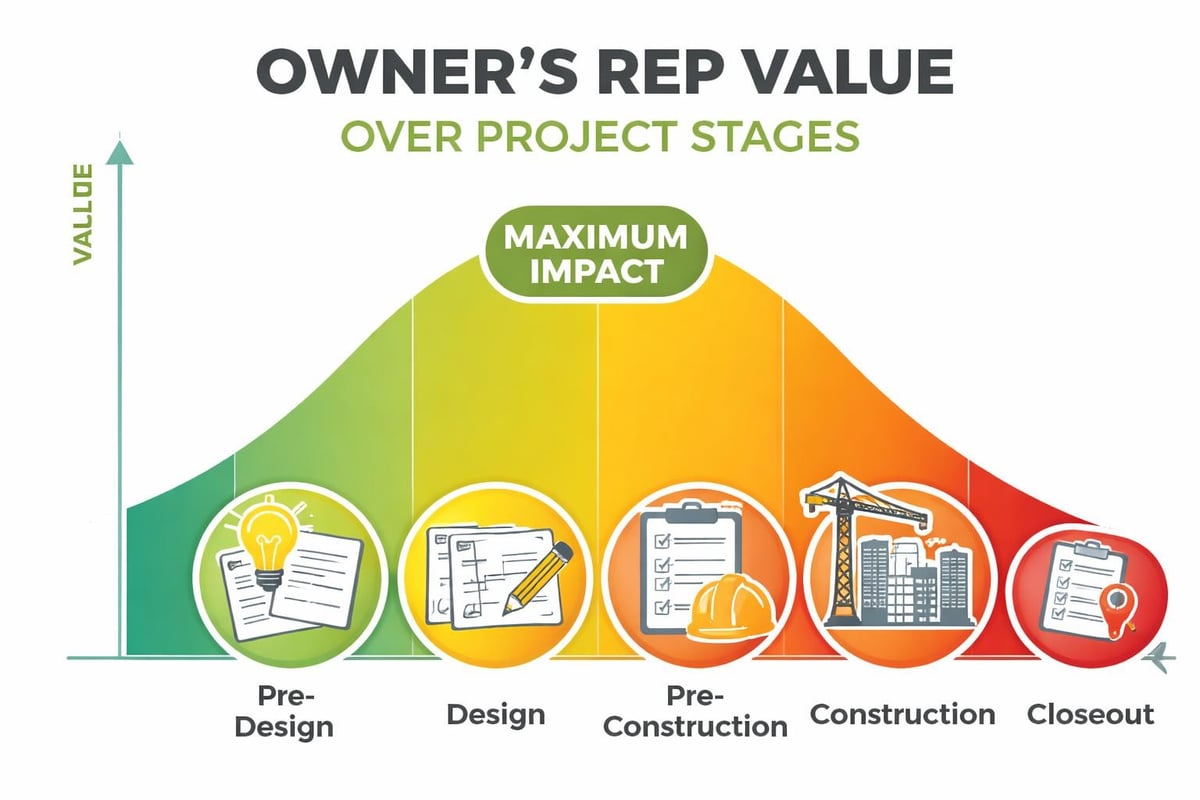
Early involvement of the owner's representative yields maximum benefit by preventing costly mistakes during initial planning phases. Engaging these professionals during feasibility analysis and conceptual design allows them to shape project parameters, establish realistic budgets, and identify potential challenges before commitments are made.
Project phase benefits of early engagement:
- Pre-Design: Market analysis, site evaluation, budget development
- Schematic Design: Program validation, team selection, cost estimating
- Design Development: Drawing review, value engineering, constructability analysis
- Construction Documents: Specification review, bid package preparation, contractor prequalification
- Construction: Daily oversight, quality control, schedule monitoring, payment certification
- Closeout: Punch list management, warranty coordination, as-built documentation
While representatives can add value at any project stage, late engagement limits their ability to influence fundamental decisions that drive costs and quality outcomes. Comprehensive owner representation services typically span from initial concept through final occupancy, ensuring continuity and consistent advocacy throughout the entire journey.
Defining Scope and Compensation Models
Clear scope definition prevents misunderstandings and ensures appropriate resource allocation. Owners should document specific deliverables, decision authority levels, and performance expectations in formal engagement agreements. This clarity protects both parties while establishing accountability metrics.
Common compensation models include fixed fees for defined scopes, hourly rates for flexible engagements, percentage of construction cost for comprehensive oversight, and hybrid approaches combining elements of each. The optimal structure depends on project complexity, duration, and the owner's risk tolerance.
| Compensation Model | Best Applications | Advantages | Considerations |
|---|---|---|---|
| Fixed Fee | Well-defined scope, stable projects | Budget certainty, clear deliverables | Less flexibility for scope changes |
| Hourly Rate | Evolving scope, advisory roles | Flexibility, pay for actual services | Unpredictable total cost |
| Percentage of Cost | Large construction projects | Aligned incentives, comprehensive coverage | Higher fees on expensive projects |
| Hybrid Model | Complex, phased developments | Balanced risk, adaptable structure | Requires careful documentation |
Measuring Success and Performance Outcomes
Effective owner representation delivers tangible results that justify the investment through improved project metrics and enhanced stakeholder satisfaction. Establishing clear performance indicators enables objective evaluation of the representative's contribution.
Key Performance Indicators
Quantifiable metrics provide objective assessment of owner representation value. These indicators should be established at project commencement and tracked consistently throughout execution. Regular performance reviews ensure accountability while identifying opportunities for process improvement.
Critical success metrics include:
- Budget Performance: Percentage variance from approved budget, change order ratio, cost per square foot compared to market averages
- Schedule Adherence: Milestone achievement rate, substantial completion timing, delay minimization
- Quality Standards: Deficiency rates, rework frequency, warranty claim volume
- Safety Record: Incident frequency, OSHA compliance, safety protocol adherence
- Stakeholder Satisfaction: Owner feedback scores, team collaboration ratings, dispute resolution effectiveness
Understanding the owner’s representative role includes recognizing that success extends beyond basic project completion. The best representatives deliver projects that meet functional requirements while exceeding quality expectations and staying within budget constraints. They create positive team dynamics that facilitate problem-solving and build relationships that benefit future projects.
Long-Term Value Assessment
The true value of owner representation often becomes apparent months or years after project completion. Well-executed projects minimize operational issues, reduce maintenance costs, and deliver superior long-term performance. Representatives who ensure proper construction and comprehensive documentation enable efficient facility management and protect property values.
Owners should evaluate representatives based on the sustained performance of completed projects, not just construction phase metrics. Buildings that require minimal warranty work, maintain energy efficiency targets, and satisfy occupant needs demonstrate the lasting impact of quality oversight. This perspective encourages representatives to prioritize sustainable solutions over expedient shortcuts that create future problems.
Professional Standards and Industry Best Practices
Owner representation operates within established professional frameworks that define ethical standards, technical competencies, and accountability requirements. Adherence to these guidelines ensures consistent service quality while protecting all project stakeholders.
Ethical Obligations and Conflict Management
Owner's representatives must maintain undivided loyalty to their clients while treating all project participants fairly and professionally. This balance requires avoiding conflicts of interest, disclosing any relationships that could influence objectivity, and refusing compensation from parties other than the owner for project-related services.
Professional codes of ethics prohibit representatives from accepting kickbacks, steering contracts to favored vendors, or allowing personal relationships to compromise judgment. They must evaluate all recommendations based solely on technical merit and the owner's best interests. Detailed responsibilities of owner’s representatives emphasize this fiduciary duty as fundamental to the role.
When conflicts arise, representatives should disclose them immediately and seek guidance on appropriate resolution. Transparency builds trust and protects the representative's professional reputation while ensuring the owner receives unbiased advice.
Continuing Education and Professional Development
The construction industry evolves continuously through new materials, methods, technologies, and regulations. Effective owner's representatives invest in ongoing education to maintain current knowledge and enhance their value to clients. They participate in professional associations, attend industry conferences, and pursue relevant certifications that demonstrate commitment to excellence.
Staying informed about emerging trends enables representatives to recommend innovative solutions that improve project outcomes. Knowledge of building information modeling (BIM), sustainable design practices, advanced construction techniques, and evolving code requirements positions them as strategic advisors rather than mere project monitors.
Technology Integration in Modern Owner Representation
Digital tools transform how owner's representatives manage projects, communicate with stakeholders, and deliver value. Embracing technology enhances efficiency while providing real-time visibility into project status and performance metrics.
Project Management and Collaboration Platforms
Cloud-based project management systems centralize documentation, streamline communication, and maintain comprehensive project records accessible to authorized stakeholders. These platforms enable real-time updates, automated reporting, and mobile access that keeps representatives connected regardless of location.
Representatives leverage these tools to track submittals, manage RFIs (requests for information), document site conditions, and maintain punch lists. Photo documentation capabilities create visual records of construction progress and quality issues. Integration with scheduling software enables critical path analysis and proactive delay prevention.
Quality Control and Inspection Technologies
Advanced inspection technologies enhance the owner representative's ability to verify construction quality and identify deficiencies. Drones provide aerial photography for site monitoring and progress documentation. Thermal imaging detects insulation gaps and moisture intrusion. 3D laser scanning verifies as-built conditions against design intent with millimeter accuracy.
These tools supplement traditional inspection methods, providing objective data that supports informed decision-making. Representatives who effectively integrate technology deliver more comprehensive oversight while reducing time requirements and associated costs. Digital documentation also creates valuable records for facility management and future renovation planning.
Successful engineering and construction projects require dedicated advocacy that protects owner interests while fostering collaborative relationships among all stakeholders. Owner representation delivers this critical function through expert oversight, proactive risk management, and unwavering focus on quality outcomes. Whether your project involves complex geotechnical challenges, environmental remediation, or infrastructure development, professional representation ensures that technical excellence and business objectives remain aligned throughout execution. ZALIG Consulting Ltd brings comprehensive engineering expertise and client-focused service to projects across Alberta, providing the technical knowledge and professional oversight that transforms ambitious visions into successful realities.