
Municipal engineering represents the backbone of modern urban life, encompassing the design, construction, operation, and maintenance of public infrastructure systems that communities depend on daily. From water supply networks and wastewater treatment facilities to road systems and stormwater management, this specialized branch of civil engineering addresses the complex technical challenges cities face as they grow and evolve. As urban populations continue to expand in 2026, the demand for qualified municipal engineering professionals who can balance infrastructure needs with sustainability, regulatory compliance, and fiscal responsibility has never been greater. Understanding the scope, processes, and emerging trends within this field provides valuable context for stakeholders across public and private sectors.
The Scope and Responsibilities of Municipal Engineering
Municipal engineering addresses a broad spectrum of infrastructure systems that define functional urban environments. The American Society of Civil Engineers (ASCE) recognizes this discipline as fundamental to community health, safety, and economic vitality. At its core, the field involves planning and delivering essential services that residents often take for granted until disruptions occur.
Water distribution systems form a critical component, requiring engineers to design networks that maintain adequate pressure, flow rates, and water quality across varying elevations and demand patterns. These systems must account for peak usage periods, fire protection requirements, and future growth projections while minimizing energy consumption and water loss through leakage detection programs.
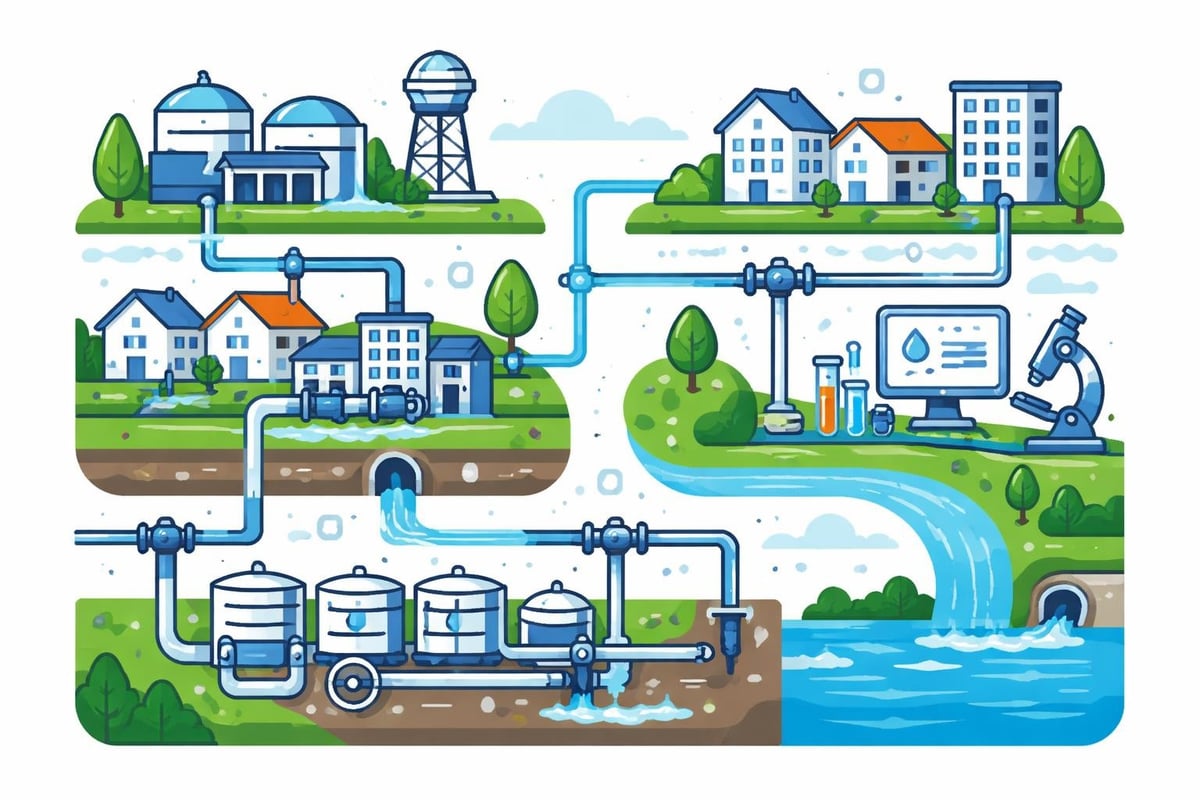
Wastewater collection and treatment represents another essential responsibility. Engineers must design gravity-fed collection systems that efficiently transport sewage to treatment facilities while preventing infiltration and exfiltration. Treatment plant design requires knowledge of biological processes, chemical treatment methods, and regulatory discharge standards that protect receiving waters.
Transportation Infrastructure Planning
Municipal engineering extends significantly into transportation infrastructure, encompassing roads, bridges, sidewalks, cycling facilities, and public transit corridors. According to municipal engineering principles, transportation planning requires integrating traffic analysis, geometric design, pavement engineering, and accessibility standards to create safe, efficient networks.
Modern transportation projects demand comprehensive analysis:
- Traffic impact assessments that quantify development effects on existing networks
- Intersection design optimizing capacity, safety, and multimodal accommodation
- Pavement design balancing structural performance with lifecycle costs
- Active transportation facilities supporting pedestrian and cycling safety
- Transit integration coordinating infrastructure with public transportation services
ZALIG Consulting Ltd delivers transportation planning and design services including Traffic Impact Assessments, road and intersection design, and construction support that help municipalities and developers navigate complex approval processes while ensuring compliance with local standards. These services bridge the gap between conceptual planning and constructible, permitting-ready designs that meet community needs.
Stormwater Management Systems
Stormwater management has evolved from simple conveyance to comprehensive watershed-based approaches that address quantity control, quality treatment, and aquatic habitat protection. Engineers design systems incorporating catch basins, storm sewers, detention ponds, constructed wetlands, and low-impact development features that mimic natural hydrologic processes.
| Stormwater Component | Primary Function | Design Considerations |
|---|---|---|
| Storm sewers | Conveyance | Hydraulic capacity, slope, materials |
| Detention ponds | Peak flow reduction | Storage volume, outlet control, emergency overflow |
| Quality treatment | Pollutant removal | Sediment capture, filtration, residence time |
| LID features | Source control | Infiltration rates, soil conditions, maintenance access |
Climate change adaptation has become central to stormwater design in 2026, with engineers applying updated rainfall intensity-duration-frequency curves and incorporating additional freeboard into critical infrastructure to account for intensifying precipitation events.
Planning and Design Process for Municipal Projects
Municipal engineering projects follow structured processes that balance technical requirements, regulatory frameworks, stakeholder input, and fiscal constraints. Public works standards and specifications provide the foundation for consistent, defensible design approaches across jurisdictions.
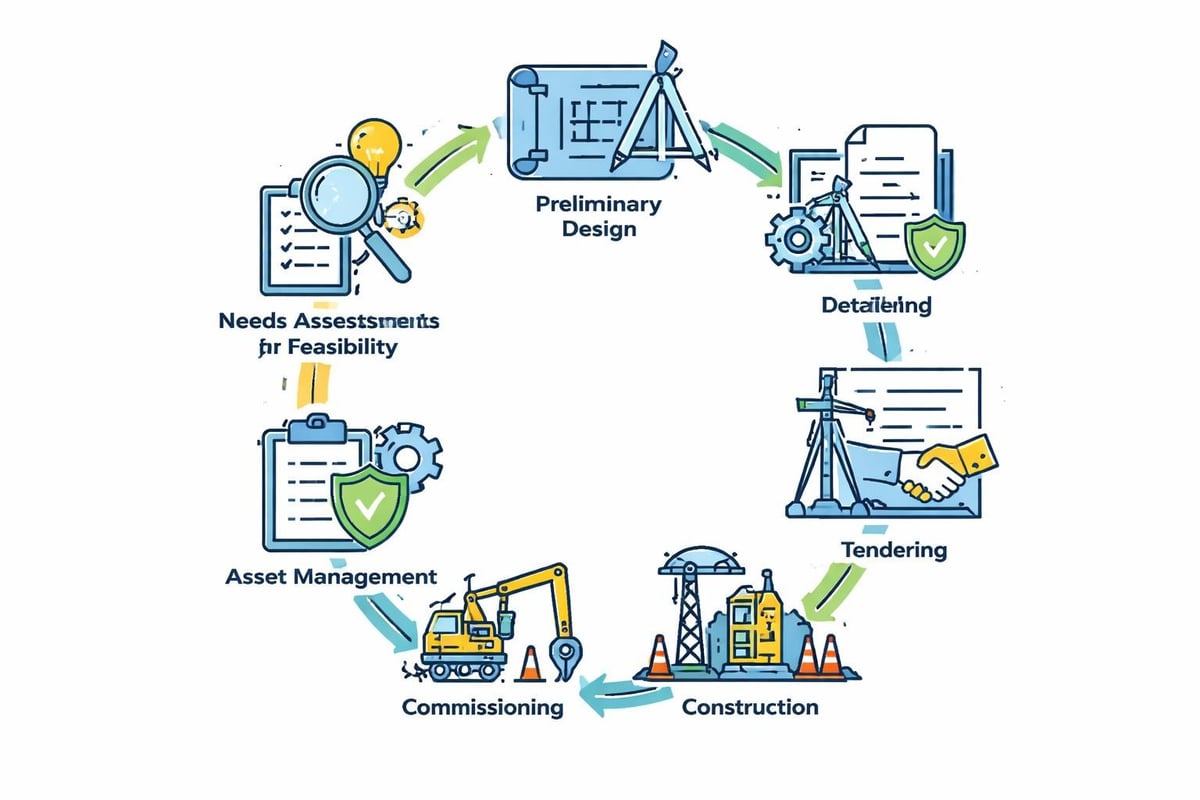
The planning phase typically begins with needs assessment and feasibility analysis. Engineers collaborate with municipal staff, elected officials, and community members to identify infrastructure deficiencies, prioritize improvements, and establish performance objectives. Financial analysis determines funding mechanisms, whether through municipal budgets, grants, development levies, or public-private partnerships.
Preliminary and Detailed Design Stages
Preliminary design develops conceptual solutions, evaluates alternatives, and establishes project scope. This phase includes:
- Site investigations to characterize existing conditions
- Utility coordination to identify conflicts and relocation requirements
- Environmental screening to assess regulatory triggers
- Conceptual layouts illustrating proposed infrastructure configurations
- Order-of-magnitude costing for budget refinement
Detailed design translates approved concepts into construction-ready documents. Engineers prepare technical drawings, specifications, quantity estimates, and tender documents that communicate design intent to contractors while ensuring competitive, compliant bidding.
Geotechnical investigations become particularly important during detailed design, informing foundation requirements for structures, pavement design parameters, and excavation challenges. Geotechnical engineering services support municipal projects through subsurface exploration, laboratory testing, and foundation recommendations that manage risk and optimize construction approaches.
Regulatory Approvals and Permitting
Municipal infrastructure projects navigate complex regulatory landscapes requiring approvals from multiple agencies. Environmental assessments evaluate potential impacts on terrestrial and aquatic ecosystems, heritage resources, and community amenities. Permits may be required from provincial environmental ministries, federal fisheries authorities, conservation agencies, and railway or highway authorities where infrastructure crossings occur.
Engineers must demonstrate compliance with design standards, environmental protection requirements, and accessibility regulations. Documentation packages typically include technical reports, impact assessments, mitigation plans, and monitoring programs that satisfy regulatory expectations while supporting defendable decision-making.
Construction Oversight and Quality Assurance
The construction phase transforms engineering designs into physical infrastructure, requiring diligent oversight to ensure compliance with plans, specifications, and applicable standards. Municipal engineers or their consultants provide contract administration services that include shop drawing review, site inspections, testing coordination, progress payment certification, and change order management.
Materials testing and quality control programs verify that installed materials meet specified requirements. Concrete strength testing, aggregate gradation analysis, compaction verification, and asphalt density testing provide objective evidence of quality conformance. ZALIG Consulting Ltd delivers CCIL-certified construction materials testing services that support municipal projects with defensible laboratory and field results aligned with CSA, ASTM, and AASHTO standards.
Construction challenges commonly encountered in municipal projects include:
- Utility conflicts requiring field adjustments
- Groundwater management during excavation
- Traffic maintenance during roadway reconstruction
- Weather-related schedule impacts
- Coordination with multiple stakeholders and properties
Effective communication between design engineers, construction inspectors, contractors, and municipal staff minimizes delays, controls costs, and achieves quality outcomes. Regular site meetings, progress reporting, and issue resolution protocols maintain project momentum through the construction phase.
Asset Management and Infrastructure Renewal
Modern municipal engineering extends well beyond initial construction to encompass lifecycle asset management that optimizes infrastructure performance and renewal timing. Municipalities manage extensive inventories of aging infrastructure requiring strategic investment to prevent service disruptions and manage fiscal burdens.
Asset management systems integrate condition assessments, failure risk analysis, and financial modeling to prioritize rehabilitation and replacement projects. Engineers conduct infrastructure audits documenting asset inventories, condition ratings, remaining service life estimates, and criticality rankings that inform capital planning.
| Asset Type | Typical Service Life | Key Deterioration Factors |
|---|---|---|
| Water mains | 80-100 years | Corrosion, joint failures, pressure cycling |
| Sanitary sewers | 75-100 years | Infiltration, root intrusion, structural defects |
| Storm sewers | 75-100 years | Sediment accumulation, corrosion, structural deterioration |
| Roads (asphalt) | 15-25 years | Traffic loading, oxidation, moisture damage |
| Bridges | 75+ years | Corrosion, fatigue, environmental exposure |
Predictive modeling uses historical performance data, inspection records, and failure rates to forecast future infrastructure needs and optimize intervention timing. Proactive maintenance and rehabilitation strategies extend asset life while deferring more costly replacement projects.
Sustainable and Resilient Infrastructure Design
Sustainability principles have fundamentally reshaped municipal engineering practice in 2026. Engineers now routinely evaluate environmental impacts, energy consumption, greenhouse gas emissions, and material selections throughout project lifecycles. Research on sustainable urban planning demonstrates how geospatial data and integrated analysis support environmentally responsible infrastructure decisions.
Green infrastructure approaches integrate natural systems with engineered solutions to achieve multiple benefits. Bioswales, permeable pavements, green roofs, and urban tree canopy programs manage stormwater while improving air quality, reducing urban heat island effects, and enhancing community aesthetics. These nature-based solutions often prove more cost-effective than conventional grey infrastructure while providing ecosystem services.
Climate Resilience Considerations
Climate adaptation has become mandatory rather than optional in infrastructure planning. Engineers now design for increased rainfall intensities, extended drought periods, freeze-thaw cycle changes, and extreme weather event frequency. Resilience assessment frameworks evaluate infrastructure vulnerability to climate impacts and identify adaptation measures.
Critical infrastructure receives priority attention:
- Emergency access routes maintained during flood events
- Water treatment facilities protected from inundation
- Pump stations with backup power and flood protection
- Communication systems with redundancy and hardening
- Cooling centers and emergency shelters strategically located
Adaptation strategies balance no-regrets measures providing immediate benefits with flexible approaches that accommodate future uncertainty. Adaptive management frameworks allow infrastructure to evolve as climate science and community needs develop.
Emerging Technologies and Innovation
Technological advancement continues reshaping municipal engineering practice. Building Information Modeling (BIM) and digital twins enable visualization, clash detection, and lifecycle simulation before construction begins. These tools improve coordination, reduce errors, and support asset management through operation and maintenance phases.
Sensor networks and Internet of Things (IoT) devices provide real-time infrastructure monitoring. Smart water meters detect leaks, flow sensors identify sewer blockages, and pavement sensors monitor structural conditions. Data analytics transform this information into actionable insights that optimize operations and target maintenance interventions.
Geographic Information Systems (GIS) have evolved into powerful platforms integrating infrastructure inventories, condition assessments, work orders, and public engagement. Municipalities leverage spatial analysis to visualize service gaps, model growth scenarios, and communicate project needs to stakeholders and funding agencies.
Material innovations offer improved performance and sustainability. Recycled asphalt and concrete reduce virgin material consumption and landfill waste. High-performance concrete mixtures extend structure durability while reducing carbon footprints. Trenchless technologies minimize excavation impacts when rehabilitating underground infrastructure.
Collaboration Across Disciplines and Stakeholders
Municipal engineering projects rarely occur in isolation. Successful outcomes require collaboration among diverse professionals including planners, architects, landscape architects, environmental scientists, surveyors, and specialized engineers. Multidisciplinary engineering firms integrate these expertise areas to deliver comprehensive solutions addressing technical, environmental, and social dimensions.
Public engagement has become essential to project success. Community consultation identifies local knowledge, concerns, and priorities that inform design decisions. Transparent communication about project benefits, impacts, construction disruptions, and mitigation measures builds trust and support. Digital engagement tools supplement traditional open houses with online surveys, interactive mapping, and virtual presentations that increase participation.
Coordination with utility providers prevents conflicts and ensures efficient infrastructure placement. Early involvement of electric, gas, telecommunications, and water/wastewater utilities identifies shared corridor opportunities, joint trenching possibilities, and construction sequencing requirements that minimize disruption and costs.
Regulatory agencies function as important partners rather than obstacles when engaged proactively. Pre-application consultations clarify approval requirements, identify potential issues early, and streamline formal review processes. Collaborative problem-solving often identifies creative solutions satisfying regulatory objectives while maintaining project feasibility.
Professional Development and Standards
Municipal engineering demands comprehensive technical knowledge coupled with practical judgment developed through experience. Professional engineers must maintain licensure through continuing education that keeps pace with evolving standards, technologies, and regulatory frameworks. Professional organizations provide resources, networking opportunities, and technical publications supporting career-long learning.
Design standards and best practices evolve continuously as research advances understanding and field experience reveals performance lessons. Engineers must stay current with updates to:
- Material specifications and testing protocols
- Hydraulic and hydrologic modeling methods
- Traffic analysis and safety evaluation procedures
- Environmental assessment requirements
- Accessibility and universal design standards
Quality management systems ensure consistent application of standards across projects and personnel. Documented procedures, design checklists, and independent review processes catch errors before they reach construction, protecting public safety and professional reputation.
Municipal engineering encompasses the essential infrastructure systems that enable communities to function, grow, and thrive in 2026 and beyond. Success in this field requires balancing technical excellence with regulatory compliance, fiscal responsibility, environmental stewardship, and stakeholder collaboration. Whether you're a municipality planning infrastructure renewal, a developer navigating approvals, or a contractor seeking quality assurance, having experienced engineering partners makes the difference between successful projects and costly complications. ZALIG Consulting Ltd brings together geotechnical, environmental, transportation, hydrotechnical, and materials testing expertise to support municipal infrastructure projects from planning through commissioning with practical, defensible solutions.