

Accurate moisture content testing forms the foundation of quality control in construction, geotechnical engineering, and environmental projects. Whether evaluating soil compaction for roadway embankments, verifying concrete cure conditions, or assessing aggregate suitability for asphalt production, understanding water content directly impacts material performance, structural integrity, and project longevity. This comprehensive guide examines the methods, standards, and practical considerations that engineering professionals rely on to deliver defensible results and manage construction risk.
Understanding Moisture Content and Its Engineering Significance
Moisture content represents the ratio of water mass to solid material mass, typically expressed as a percentage. This fundamental parameter influences virtually every aspect of construction material behavior, from soil workability and compaction characteristics to concrete strength development and aggregate stability.
In geotechnical applications, moisture content directly affects soil consistency, bearing capacity, and compaction efficiency. The Proctor compaction test establishes the relationship between moisture content and dry density, identifying the optimum water content at which soil achieves maximum compaction. Operating at moisture levels significantly above or below this optimum can compromise foundation stability, increase settlement risk, and reduce pavement service life.
For construction materials, water content governs fresh concrete workability, influences asphalt mix temperature management, and determines aggregate freeze-thaw durability. Excessive moisture in aggregates affects mix design proportions, while insufficient water in concrete reduces hydration efficiency and ultimate strength.

Key Applications Across Construction Disciplines
Moisture content testing serves multiple engineering disciplines with specific performance requirements:
- Earthwork and compaction control for embankments, roadway subgrades, and structural fills
- Concrete production and placement monitoring for strength development and durability
- Aggregate quality verification ensuring suitability for asphalt and concrete applications
- Pavement construction validating asphalt mix properties and field density achievement
- Foundation engineering assessing soil conditions for bearing capacity and settlement analysis
- Environmental remediation characterizing contaminated soil moisture for treatment planning
Each application demands appropriate testing methods, sampling frequencies, and acceptance criteria aligned with project specifications and regulatory requirements.
Standard Test Methods and Laboratory Procedures
The engineering community relies on standardized procedures to ensure consistency, repeatability, and defensibility of moisture content testing results. These methods provide the technical foundation for quality assurance programs and regulatory compliance.
Oven Drying Method
The ASTM D2216 standard test method represents the most widely accepted laboratory procedure for determining moisture content in soil and rock materials. This gravimetric method involves weighing a representative sample, drying it in a controlled temperature oven until constant mass is achieved, and calculating the moisture percentage from the mass difference.
Standard oven drying typically occurs at 110°C ± 5°C for most soils, with drying times ranging from several hours to overnight depending on sample size and material characteristics. This method provides accurate, reliable results and serves as the reference standard against which other techniques are calibrated.
Microwave Oven Method
The ASTM D4643 microwave oven heating method offers a faster alternative for moisture content determination, particularly valuable for field quality control applications requiring rapid turnaround. While not suitable for all soil types due to potential organic matter oxidation, this approach significantly reduces testing time compared to conventional oven drying.
Microwave methods require careful calibration against standard oven drying procedures and attention to sample size, heating power, and cooling protocols to ensure accurate results.
Calcium Carbide Method
The calcium carbide pressure method provides immediate field results through chemical reaction between calcium carbide and water, producing acetylene gas measured by pressure gauge. This rapid test enables real-time construction decisions but requires proper calibration, experienced technicians, and verification through laboratory methods for critical applications.
| Test Method | Typical Duration | Accuracy | Primary Applications | Equipment Complexity |
|---|---|---|---|---|
| Standard Oven Drying | 12-24 hours | High (reference standard) | All soil types, final verification | Low |
| Microwave Oven | 15-30 minutes | Moderate (requires calibration) | Field QC, granular soils | Moderate |
| Calcium Carbide | 5-10 minutes | Moderate (method dependent) | Immediate field decisions | Low |
| Nuclear Density Gauge | 2-4 minutes | Good (when calibrated) | Compaction control, large volumes | High |
Field Testing Technologies and Non-Destructive Methods
Modern construction projects increasingly incorporate field testing technologies that provide immediate results without sample transportation delays. These tools enable real-time quality decisions and optimize construction productivity.
The nuclear density gauge combines moisture content measurement with density determination in a single non-destructive test. Using neutron scattering and gamma radiation, these instruments measure moisture and density at various depths beneath the pavement or embankment surface. While highly efficient for large-scale earthwork projects, nuclear gauges require regulatory licensing, radiation safety protocols, and correlation with laboratory standards.
Time-domain reflectometry (TDR) represents another field technology gaining acceptance in specialized applications. TDR moisture sensors measure the dielectric constant of soil, which varies predictably with water content, providing continuous or periodic moisture monitoring for slopes, embankments, and subsurface conditions.
Electrical Resistance and Capacitance Methods
Portable electrical resistance and capacitance meters offer rapid moisture assessment for concrete, wood, and aggregate stockpiles. Concrete moisture meters prove particularly valuable for flooring installations and coating applications where substrate moisture must meet strict tolerances before material placement.
These instruments require material-specific calibration and perform best when validated against laboratory oven drying results to establish site-specific correlation curves.

Materials Testing Integration and Quality Control Programs
ZALIG provides CCIL-certified construction materials testing services that integrate moisture content analysis with comprehensive quality assurance programs. This holistic approach ensures compliance with CSA, ASTM, and AASHTO standards while delivering defensible results that manage construction risk and support long-term performance. Our field and laboratory teams coordinate sampling protocols, testing frequencies, and acceptance criteria to maintain project momentum while protecting quality objectives.
Effective quality control programs establish clear moisture content specifications, define sampling locations and frequencies, and outline corrective action protocols for non-conforming results. These programs typically include:
- Pre-construction testing to verify material sources and establish baseline characteristics
- Production control testing during material manufacturing or processing
- Placement verification confirming moisture specifications during construction
- Post-construction validation documenting as-built conditions for long-term performance tracking
Sampling frequency varies by project scale, material variability, and specification requirements, commonly ranging from one test per 500 cubic meters for earthwork to multiple tests per concrete pour for structural elements.
Moisture Content Specifications and Acceptance Criteria
Construction specifications establish moisture content limits based on material type, intended use, and performance requirements. These criteria balance constructability, quality objectives, and economic considerations.
Soil Compaction Specifications
Earthwork specifications typically require moisture content within a defined range of optimum, commonly ±2% to ±4% depending on soil classification and compaction method. Cohesive soils exhibit greater sensitivity to moisture variations than granular materials, demanding tighter control to achieve specified density and bearing capacity.
For slope stability applications and structural fills, moisture specifications may impose narrower tolerances to minimize settlement risk and ensure long-term performance under loading conditions.
Aggregate Moisture Requirements
Aggregate moisture content affects concrete and asphalt mix design proportions, requiring adjustment of batch water or mix temperatures to maintain target properties. Stockpile moisture monitoring enables producers to compensate for natural moisture variations and maintain consistent product quality.
Aggregate specifications often limit maximum moisture content to prevent handling difficulties, segregation, or freezing problems during winter construction. Surface moisture on aggregates must be quantified to calculate effective water-cement ratios in concrete production.
Concrete and Asphalt Considerations
Fresh concrete moisture management involves balancing workability requirements against strength objectives and durability performance. While not typically specified as a direct acceptance criterion, moisture content influences slump, air content, and setting characteristics that govern placement quality.
Asphalt mixtures require careful moisture control in aggregates to prevent foaming during mixing, maintain temperature uniformity, and achieve proper compaction in the field. Wet aggregates reduce mix temperature and can compromise adhesion between asphalt binder and aggregate particles.
Sampling Protocols and Quality Assurance
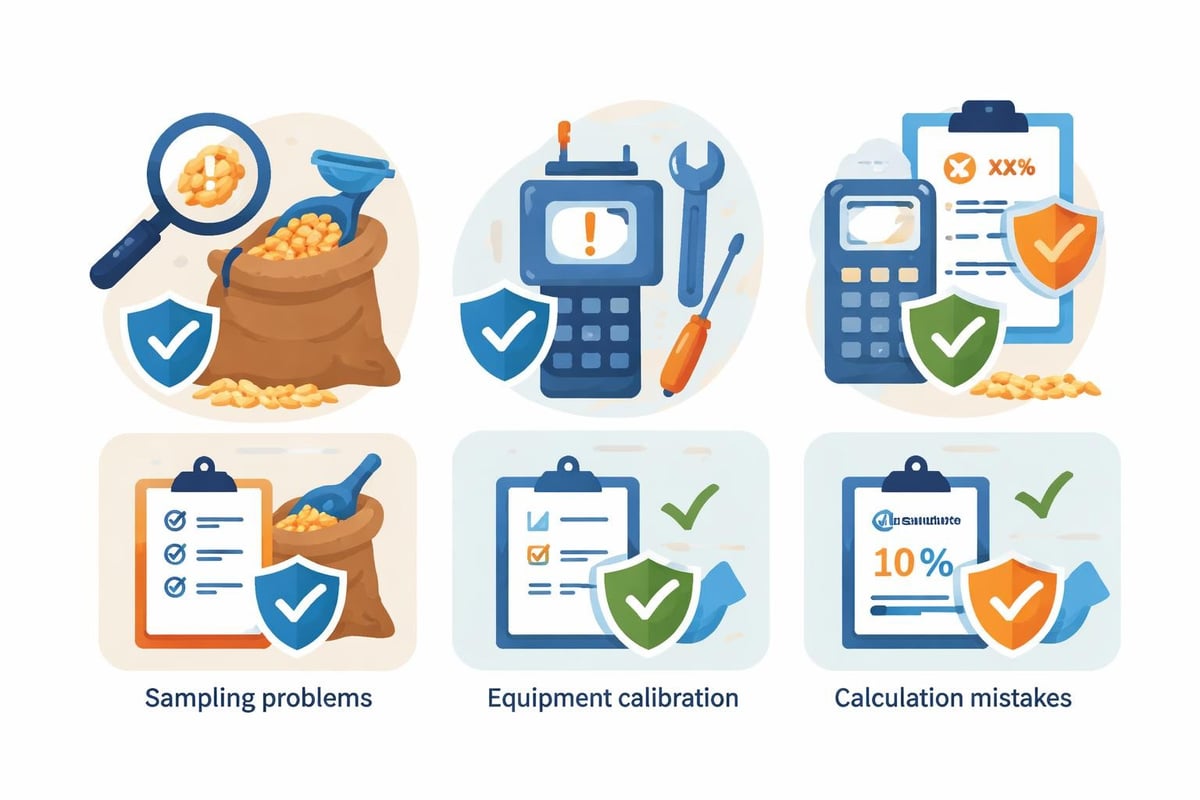
Representative sampling forms the critical first step in obtaining meaningful moisture content results. Poorly collected samples introduce variability that no laboratory precision can overcome, compromising quality decisions and potentially leading to construction disputes.
Proper soil sampling requires excavating below the surface oxidation zone, collecting material from the zone of influence being tested, and protecting samples from moisture loss during transport. Sample containers should be sealed immediately after collection, clearly labeled with location and depth information, and transported to the laboratory within specified time limits.
Sample Size and Preparation Requirements
Minimum sample mass depends on material gradation and maximum particle size, with coarser materials requiring proportionally larger samples to ensure statistical representation. ASTM standards specify minimum sample masses ranging from 20 grams for fine-grained soils to several kilograms for coarse aggregates.
Laboratory preparation involves thorough mixing to homogenize moisture distribution, quartering or splitting to obtain test portions, and prompt testing to minimize moisture loss from handling. Temperature-sensitive materials may require conditioning periods before testing to eliminate transient moisture effects.
Common Testing Challenges and Technical Considerations
Moisture content testing encounters various technical challenges that require understanding and mitigation to ensure result reliability and defensibility.
Hygroscopic materials absorb or release moisture based on ambient humidity conditions, complicating sample handling and storage. Organic soils, clays with high specific surface area, and some industrial byproducts exhibit significant hygroscopic behavior requiring special protocols.
Material heterogeneity introduces sampling variability, particularly in stratified soils, segregated aggregate stockpiles, or concrete with variable aggregate distribution. Statistical sampling plans and increased testing frequency help characterize variability and establish representative values.
Equipment Calibration and Maintenance
Laboratory ovens require periodic temperature calibration and verification to ensure drying temperatures remain within specified tolerances. Temperature variations across oven chambers can produce systematic errors if samples are consistently placed in hot or cool zones.
Balances must provide sufficient resolution and accuracy for the sample masses being tested, typically reading to 0.01 grams for soil samples and 0.1 grams for larger aggregate specimens. Regular calibration against certified weights maintains measurement traceability and accuracy.
Field instruments demand correlation testing against laboratory standards, routine calibration checks, and proper maintenance to deliver reliable results. Nuclear gauges require daily standard counts, periodic depth-check source verification, and annual regulatory inspections.
Advanced Applications and Specialized Testing
Beyond routine quality control, moisture content testing supports specialized engineering applications requiring detailed characterization or continuous monitoring.
Geotechnical investigations incorporate moisture content data with other index properties to classify soils, estimate engineering parameters, and evaluate foundation conditions. Moisture-density relationships established through laboratory compaction testing guide field construction specifications and acceptance criteria.
Environmental site assessments utilize moisture content data to characterize contaminated soil conditions, plan remediation strategies, and validate treatment effectiveness. Moisture affects contaminant mobility, biodegradation rates, and excavation feasibility for cleanup projects.
Forensic investigations rely on moisture content evidence to evaluate failure mechanisms, assess construction compliance, and support expert testimony. Historical moisture conditions reconstructed from field sampling and laboratory testing help establish causation in disputes involving settlement, heave, or structural distress.
Continuous Monitoring Systems
Permanent moisture monitoring installations provide long-term data for infrastructure performance evaluation and early warning systems. Embankment dams, highway slopes, and culvert installations may incorporate moisture sensors to detect seepage, track seasonal variations, or trigger maintenance protocols.
These systems require robust sensor selection, reliable data acquisition, and interpretation frameworks that translate raw moisture readings into actionable engineering decisions. Baseline testing and periodic manual verification maintain system credibility throughout the monitoring period.
Regulatory Framework and Standard Compliance
Construction projects operate within regulatory frameworks that mandate specific testing standards, qualified personnel, and documentation requirements. Understanding these requirements ensures project compliance and defensible quality records.
Provincial and territorial regulations often require certification or accreditation for testing laboratories and field technicians. The Canadian Construction Innovations Laboratory (CCIL) provides certification programs validating technical competence in various materials testing disciplines including moisture content determination.
ASTM International, the Canadian Standards Association (CSA), and the American Association of State Highway and Transportation Officials (AASHTO) publish consensus standards governing test procedures, equipment specifications, and reporting requirements. Project specifications typically reference these standards by designation, establishing enforceable technical requirements.
Data Management and Reporting Best Practices
Effective moisture content testing programs generate substantial data requiring organization, analysis, and communication to support project decisions and document compliance.
Laboratory information management systems (LIMS) streamline data entry, calculation automation, and report generation while maintaining audit trails and quality control records. Digital systems reduce transcription errors, enable statistical analysis, and facilitate data sharing among project stakeholders.
Test reports should clearly identify sample locations, testing standards employed, results obtained, and comparison against specification limits. Graphical presentations including control charts, trend analyses, and statistical summaries help stakeholders quickly assess compliance status and identify concerning patterns.
| Report Element | Purpose | Critical Information |
|---|---|---|
| Project identification | Traceability | Project name, location, client, date |
| Sample information | Documentation | Sample ID, location, depth, date collected |
| Test methodology | Technical defensibility | Standard reference, deviations, equipment used |
| Results and calculations | Decision support | Moisture content, specification limits, pass/fail |
| Technician credentials | Qualification verification | Name, certification number, signature |
Chain of custody documentation tracks samples from field collection through laboratory analysis, maintaining evidence integrity for regulatory compliance and dispute resolution. Proper documentation becomes particularly important for environmental projects, forensic investigations, and projects with heightened quality scrutiny.
Emerging Technologies and Future Directions
Moisture content testing continues evolving with technological advancement and industry demand for faster, more accurate, and less invasive methods.
Spectroscopic techniques including near-infrared (NIR) and laser-induced breakdown spectroscopy (LIBS) show promise for rapid, non-contact moisture determination. While still primarily research tools, these technologies may eventually provide real-time moisture mapping during construction operations.
Wireless sensor networks and Internet of Things (IoT) integration enable distributed moisture monitoring with cloud-based data management and automated alerting. These systems support smart construction practices and performance-based specifications that move beyond prescriptive requirements toward outcome-focused quality assurance.
Machine learning applications analyze historical moisture data to predict seasonal variations, optimize testing frequencies, and identify anomalous conditions warranting investigation. As data volumes grow and analytical tools mature, predictive capabilities will enhance proactive quality management and risk mitigation.
Moisture content testing remains essential for construction quality assurance, material performance verification, and regulatory compliance across civil infrastructure projects. By selecting appropriate test methods, following standardized procedures, and implementing robust quality control programs, engineering teams deliver defensible results that support successful project outcomes. Whether your project requires routine construction materials testing, specialized geotechnical investigations, or comprehensive quality assurance programs, ZALIG Consulting Ltd integrates field services, laboratory testing, and engineering expertise to provide practical solutions that manage risk and ensure long-term performance.