
In 2026, the future of our infrastructure depends on the precision and innovation behind geotechnical engineering works. As standards evolve and the demand for resilience grows, these works are more critical than ever for ensuring the safety and sustainability of our projects.
This manual arms engineers, project managers, and stakeholders with the most current strategies, standards, and practical steps for successful geotechnical engineering works. Every section is designed to translate complex requirements into actionable guidance.
Explore the essentials of planning, investigation, and risk management. Unlock proven methods for integrating geotechnical insights into your projects and get ready to shape tomorrow’s infrastructure with confidence.
Geotechnical Engineering Works: Fundamentals and Evolving Standards
Geotechnical engineering works form the foundation of every successful infrastructure project. These works influence the safety, longevity, and sustainability of assets across Canada and globally. Understanding the fundamentals, evolving standards, and best practices is essential for professionals aiming to deliver resilient, future-ready solutions.
Defining Geotechnical Engineering Works
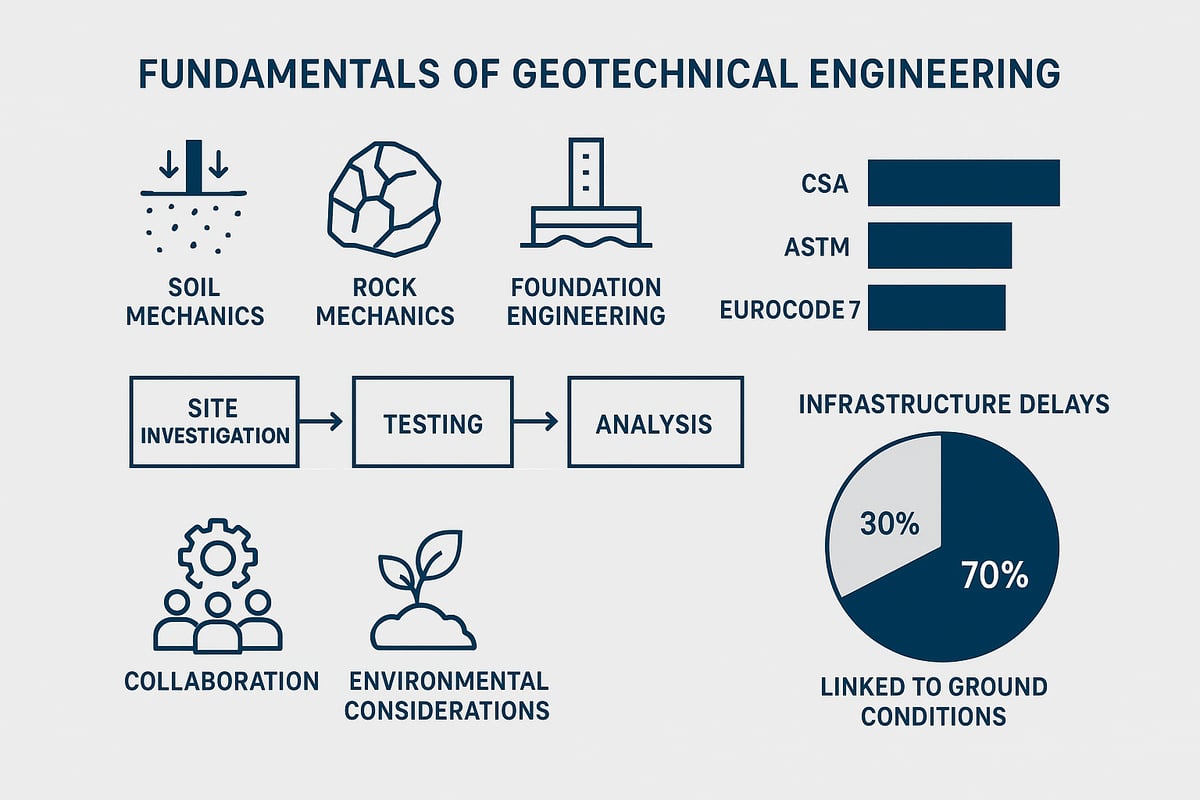
Geotechnical engineering works encompass the study and application of soil and rock mechanics to support infrastructure. These works are integral to the design and construction of highways, bridges, buildings, and dams. Key disciplines include soil mechanics, rock mechanics, and foundation engineering. Professionals in this field assess ground properties to ensure structures remain stable and durable. For a broad overview of the services and expertise available in this field, see the Geotechnical Engineering Services Overview.
Core Principles and Methodologies
The core of geotechnical engineering works lies in thorough site characterization and subsurface exploration. Practitioners rely on both laboratory and in-situ testing methods to gather accurate data about ground conditions. Analytical and numerical modeling techniques are then used to predict behavior under various loads and scenarios. These methodologies support informed design decisions and risk mitigation throughout the project lifecycle.
Regulatory Standards and Codes (2026 Update)
Geotechnical engineering works must comply with rigorous standards. In Canada, codes such as CSA and ASTM are widely referenced, alongside international benchmarks like Eurocode 7. The 2026 updates emphasize sustainability and resilience, including stricter requirements for climate adaptation. Industry trends point to more comprehensive data documentation and a greater focus on life-cycle performance, driving project teams to stay current with evolving codes.
Importance of Geotechnical Data
Robust geotechnical data underpins every project decision. Accurate information about subsurface conditions enables teams to optimize designs, manage costs, and enhance safety. Inadequate geotechnical assessment often leads to costly failures or delays, highlighting the need for data-driven approaches. Effective data collection and interpretation are key to the success of geotechnical engineering works in any setting.
Multidisciplinary Collaboration
Geotechnical engineering works require seamless integration with civil, structural, and environmental disciplines. Successful projects depend on early and ongoing collaboration, ensuring ground risks are addressed in tandem with design and construction. A notable example is a large-scale Alberta transportation project, where geotechnical, structural, and environmental teams coordinated to optimize alignment, minimize impacts, and accelerate delivery.
Environmental and Social Considerations
Modern geotechnical engineering works incorporate environmental impact assessments and mitigation strategies. Professionals engage with Indigenous communities and local stakeholders, particularly in Alberta, to ensure culturally respectful, sustainable outcomes. These considerations are increasingly embedded in project planning, supporting both regulatory compliance and positive community relations.
Key Statistics
- In 2023, 65% of infrastructure delays were linked to unforeseen ground conditions.
- Geotechnical issues accounted for up to 18% of total project cost overruns, according to Infrastructure Canada.
These statistics underscore the critical importance of robust geotechnical engineering works for project success.
Step-by-Step Guide to Planning Geotechnical Engineering Works
Careful planning of geotechnical engineering works is the backbone of safe, sustainable infrastructure. Each step, from scoping to reporting, shapes project outcomes and risk profiles. This guide outlines actionable steps for 2026 projects, ensuring your planning is robust, collaborative, and data-driven.
Project Scoping and Stakeholder Engagement
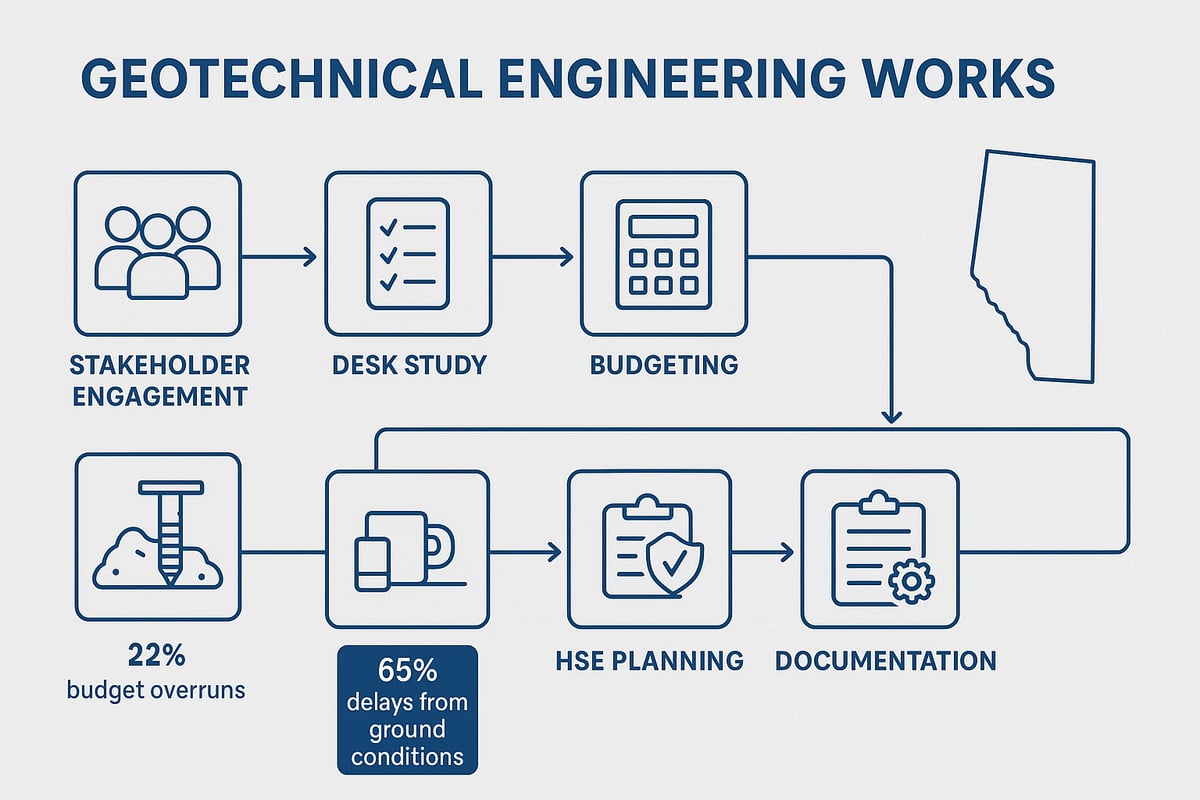
Successful geotechnical engineering works begin with clear scoping and early engagement. Define project objectives, constraints, and regulatory requirements from the outset. Map stakeholders, including clients, regulatory bodies, and affected communities.
In Alberta, stakeholder-driven design changes have saved time and costs, especially for highway expansions. Early engagement helps identify unique site risks and community concerns. This collaborative approach leads to more resilient geotechnical engineering works and smoother project delivery.
Desk Study and Preliminary Assessment
Before fieldwork, review all available site information. Analyze historical data, previous geotechnical reports, and geological maps. Leverage GIS and remote sensing to identify surface features and potential hazards.
A thorough desk study supports informed decisions about investigation needs and site risks. By integrating these tools, you can reduce uncertainties and streamline geotechnical engineering works, setting a solid foundation for the next project phase.
Designing the Site Investigation Program
Tailor the investigation program to project complexity and risk. Decide on borehole locations, test pits, and sampling strategies based on desk study findings. Use adaptive planning for challenging conditions like northern Alberta soils.
Refer to updated standards and manuals, such as the Geotechnical Manual by Caltrans, for guidance on investigation protocols. Well-designed programs ensure geotechnical engineering works generate reliable, actionable data.
Procurement and Budgeting
Accurate cost estimation is essential for geotechnical engineering works. Prepare a detailed budget covering investigation, analysis, and reporting. Select vendors with proven expertise and manage contracts to prevent scope creep.
Data from 2024 shows that 22% of projects exceeded their investigation budgets due to poor planning. Transparent procurement processes reduce financial risks and support timely, cost-effective delivery of geotechnical engineering works.
Scheduling and Logistics
Develop a realistic timeline, accounting for critical path activities and dependencies. Secure permits and address access challenges, especially in remote Alberta regions.
Logistics planning for geotechnical engineering works should include equipment mobilization, site access, and contingency plans for weather or site changes. Effective scheduling minimizes delays and supports seamless project progression.
Health, Safety, and Environmental Planning
Risk assessment is integral to geotechnical engineering works. Identify site-specific hazards, such as unstable ground or environmental sensitivities. Develop mitigation measures aligned with Alberta OHS and environmental regulations.
Plan for environmental protection, including spill response and habitat preservation. Prioritize worker safety and community well-being throughout the geotechnical engineering works process for regulatory compliance and project reputation.
Documentation and Reporting
Establish protocols for data management and reporting from day one. Use standardized templates and digital systems to ensure traceability and consistency.
Comprehensive documentation of geotechnical engineering works supports transparency, regulatory review, and future maintenance. Clearly defined deliverables make it easier for all stakeholders to interpret findings and make informed decisions.
Advanced Site Investigation and Testing Techniques
Advanced site investigation is the cornerstone of reliable geotechnical engineering works. As projects grow in scale and complexity, the need for precise, comprehensive subsurface data becomes even more critical. In 2026, engineers rely on a suite of innovative field and laboratory techniques to drive safer, cost-effective outcomes.
In-Situ Testing Methods
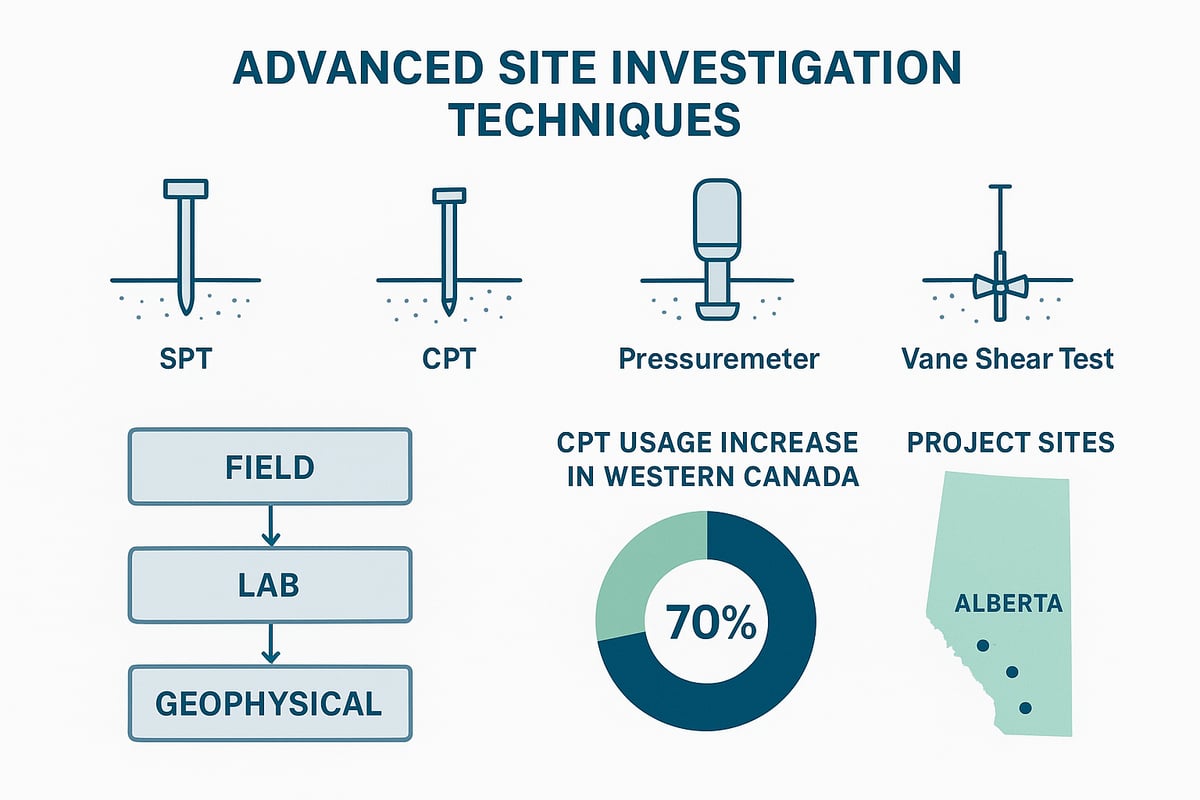
Modern geotechnical engineering works depend on in-situ testing for real-time, site-specific data. The Standard Penetration Test (SPT) is widely used for soil density profiling, while the Cone Penetration Test (CPT) delivers continuous strength and stratigraphy data. Pressuremeter and Vane Shear Tests provide insight into soil deformation and undrained shear strength. Each method offers unique benefits in terms of accuracy, speed, and cost.
For a deeper dive, see In-Situ Geotechnical Testing Methods to compare these approaches in detail. Selecting the right combination ensures geotechnical engineering works address ground conditions proactively.
Laboratory Analysis
Laboratory analysis is essential for verifying field results and refining soil models. Engineers conduct soil classification, permeability, compaction, and strength tests to characterize subsurface materials. In 2026, automation streamlines sample processing, improving both accuracy and throughput. New equipment enables high-frequency testing with reduced manual intervention. This results in more reliable data for geotechnical engineering works and supports advanced analytical modeling.
Geophysical and Remote Sensing Tools
Non-invasive geophysical tools are transforming geotechnical engineering works by capturing subsurface information without extensive drilling. Seismic refraction and electrical resistivity methods map soil layers and detect anomalies. Ground Penetrating Radar (GPR) is valuable for identifying utilities and shallow features. Integration with 3D modeling and Building Information Modeling (BIM) platforms helps visualize results, supporting better design and risk mitigation for geotechnical engineering works.
Data Integration and Interpretation
Bringing together field, lab, and geophysical data is crucial for holistic site understanding. Engineers use advanced software to merge datasets, producing robust models that guide decision-making in geotechnical engineering works. Artificial intelligence and machine learning now assist in pattern recognition and anomaly detection. For example, a major Edmonton infrastructure project leveraged AI-driven analytics to optimize foundation design and minimize uncertainties.
Quality Assurance and Control
Quality assurance ensures that geotechnical engineering works meet the highest standards. Calibration of equipment, repeatability of test results, and strict verification protocols are fundamental. By maintaining a rigorous QA/QC process, teams can trust their data and reduce the risk of costly errors. Documentation and traceability are prioritized throughout the investigation phase, providing a clear audit trail for all geotechnical engineering works.
Addressing Challenging Conditions
Some sites present unique investigation challenges. Permafrost in northern Alberta, expansive clays, and contaminated soils require specialized strategies for geotechnical engineering works. Adaptive investigation plans, tailored testing methods, and advanced monitoring help overcome these hurdles. According to a 2025 report, CPT adoption increased by 30% in Western Canada due to its reliability in complex conditions. A flexible approach ensures success, even in the most demanding environments.
Risk Management and Problem-Solving in Geotechnical Works
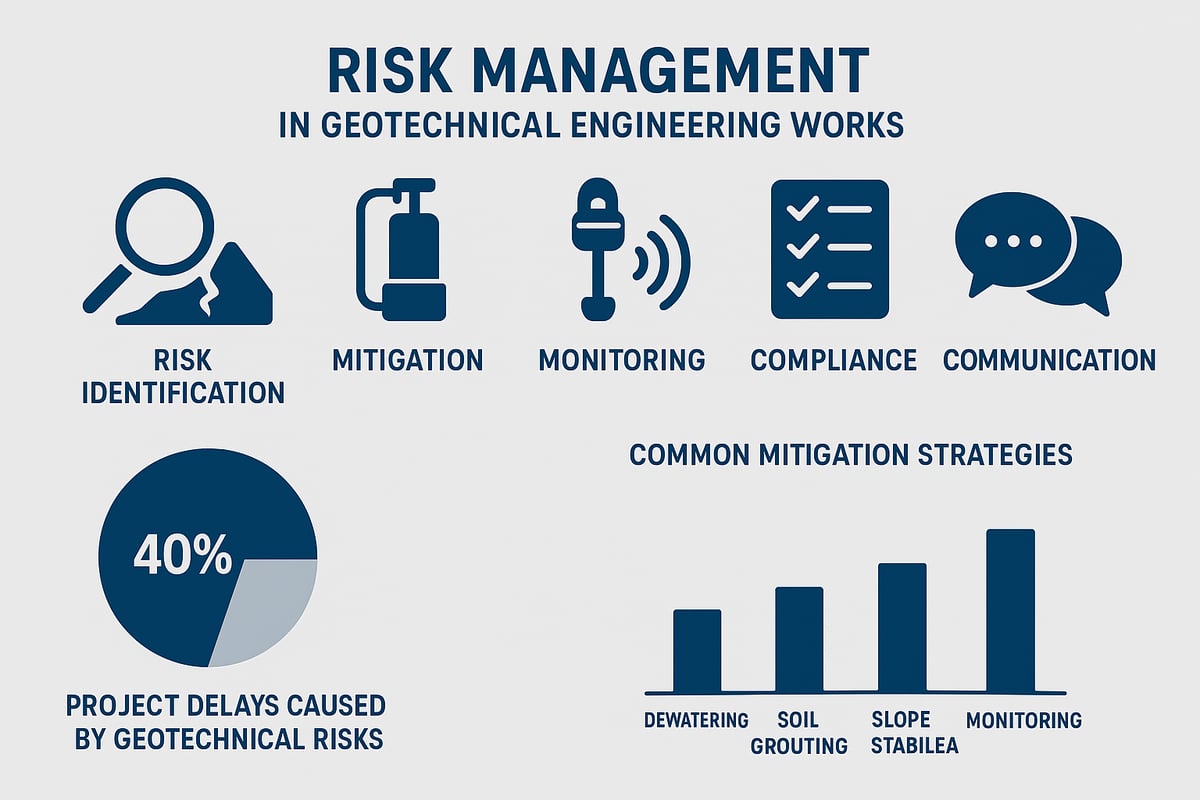
Risk management is at the core of geotechnical engineering works, ensuring projects remain safe, on schedule, and within budget. As infrastructure projects grow in complexity, robust risk assessment and proactive problem-solving are essential for successful outcomes.
Identifying and Assessing Geotechnical Risks
The first step in managing risks within geotechnical engineering works is accurate identification. Common risks include slope instability, excessive settlement, liquefaction, and groundwater ingress. These risks can jeopardize safety and lead to costly project delays or failures.
To assess these risks, teams employ risk matrices and probability analysis. This structured approach quantifies the likelihood and impact of various hazards. For example, a slope stability matrix helps visualize which slopes require immediate mitigation based on soil type and geometry.
| Risk Type | Impact Severity | Probability | Primary Mitigation |
|---|---|---|---|
| Slope Instability | High | Medium | Slope regrading |
| Settlement | Medium | High | Soil improvement |
| Liquefaction | High | Low | Ground densification |
| Groundwater | Medium | Medium | Dewatering systems |
Mitigation Strategies for Geotechnical Risks
Effective mitigation is vital to the long-term success of geotechnical engineering works. Ground improvement techniques, such as grouting, vibro-compaction, and soil stabilization, can address weak or variable ground conditions.
For projects facing soft soils or high water tables, soil stabilization using chemical or mechanical methods improves load-bearing capacity and reduces settlement. To explore these solutions in more detail, see Soil Stabilization and Ground Improvement.
Other proven strategies include preloading, geosynthetics, and drainage enhancements. Selecting the right method depends on the specific site conditions and project goals.
Monitoring and Instrumentation
Continuous monitoring is a cornerstone of geotechnical engineering works. Instruments such as inclinometers, piezometers, and settlement plates provide real-time data on soil movement, pore water pressure, and subsurface changes.
Remote monitoring systems transmit data instantly, enabling rapid response to emerging risks. This approach was instrumental in reducing infrastructure delays by 40% in Alberta projects, according to the 2024 Infrastructure Canada report.
Regulatory Compliance and Documentation
Compliance with local, provincial, and national standards is mandatory in geotechnical engineering works. Documentation must be transparent and auditable, providing a clear record of risk assessments, mitigation actions, and monitoring results.
Regular audits and adherence to updated codes ensure that all risk management steps are verifiable and defendable.
Case Studies and Lessons Learned
Examining past projects reveals the importance of early risk identification and mitigation. In Alberta, several projects encountered unexpected ground conditions, leading to cost overruns and delays. However, teams that implemented thorough geotechnical engineering works and proactive risk management saw significantly improved outcomes.
For example, foundation stabilization in Fort Saskatchewan used targeted ground improvement to prevent settlement and ensure project success.
Communication and Contingency Planning
Clear communication with stakeholders is vital for risk management in geotechnical engineering works. Regular updates, transparent reporting, and defined crisis response protocols help align project teams and external partners.
Developing contingency plans before construction begins ensures that teams can react swiftly if unforeseen conditions arise.
Value Engineering in Geotechnical Design
Value engineering balances safety, cost, and constructability in geotechnical engineering works. By evaluating alternative solutions, teams can optimize designs to mitigate risks while enhancing project value.
Ultimately, integrating risk management and problem-solving throughout every project stage fosters safer, more resilient infrastructure.
Integrating Geotechnical Engineering with Construction and Project Delivery
Effective integration of geotechnical engineering works into construction and project delivery is critical for project success. This ensures that site investigation findings are translated into robust designs, construction risks are minimized, and long-term performance is achieved.
Transition from Investigation to Design
The transition from site investigation to design is foundational in geotechnical engineering works. Engineers analyze soil and rock data to determine parameters such as bearing capacity, settlement potential, and groundwater conditions. These parameters guide foundation types, retaining structures, and ground improvement needs.
For example, in bridge projects with variable soil conditions, integrating geotechnical findings early helps select foundation systems that are both safe and cost-effective. Clear communication between geotechnical and structural teams at this stage prevents costly redesigns later. Proper documentation of all geotechnical engineering works ensures that design assumptions remain transparent throughout the project lifecycle.
Collaborative Design-Build Approaches
Modern project delivery increasingly relies on collaborative models such as design-build and integrated project delivery (IPD). In geotechnical engineering works, early contractor involvement allows for constructability reviews, value engineering, and risk sharing.
In Alberta, IPD models have demonstrated improved outcomes by involving geotechnical teams from the outset. This approach allows for rapid feedback between design and construction, reducing errors and delays. Teams can jointly optimize excavation methods, shoring solutions, and foundation types, ensuring that geotechnical constraints are addressed proactively.
Construction Phase Support
During construction, geotechnical engineering works extend beyond design. On-site geotechnical supervision is vital to address unexpected ground conditions, verify soil parameters, and adjust designs as needed.
Rapid response to field discoveries, such as soft zones or groundwater ingress, helps keep the project on schedule. Geotechnical engineers coordinate with contractors to implement mitigation measures quickly. Their expertise in interpreting site data ensures that changes are both safe and compliant with project specifications.
Quality Control During Construction
Quality control is a cornerstone of successful geotechnical engineering works. Field testing, such as compaction verification, bearing capacity checks, and moisture content measurements, ensures that construction meets design criteria.
A typical quality control protocol includes:
- Scheduled field density tests for earthworks
- Verification of pile or footing installation depth
- Continuous documentation and compliance tracking
These steps help reduce the risk of post-construction settlement or structural issues. Clear reporting supports transparent communication with stakeholders and regulatory bodies.
Addressing Unforeseen Conditions
Unforeseen subsurface conditions can threaten project timelines and budgets. Geotechnical engineering works must include rapid assessment and redesign protocols to manage these risks.
For example, managing slope instability during excavation is a common challenge. Applying best practices from Slope Stability Solutions enables teams to select and implement remediation measures efficiently. Integrating lessons from previous projects helps refine contingency plans and avoid repeat issues.
Post-Construction Monitoring and Project Delivery Models
Long-term performance of geotechnical engineering works is ensured through post-construction monitoring. IoT sensors, settlement plates, and periodic inspections track ground movement, water levels, and structural health.
Choosing the right project delivery model, such as design-bid-build or design-build, affects the role and timing of geotechnical input. Early integration in design-build models often leads to better risk management and higher project value. Ongoing monitoring closes the loop, providing essential feedback for future projects and continuous improvement.
Future Trends and Innovations in Geotechnical Engineering Works
The future of geotechnical engineering works is defined by rapid technological progress, shifting regulatory landscapes, and a growing demand for sustainable solutions. As 2026 approaches, the industry is transforming on multiple fronts, preparing to address both complex technical challenges and broader societal needs.
Digital Transformation and Smart Technologies
Digital innovation is revolutionizing geotechnical engineering works. Artificial intelligence and machine learning now enable advanced modeling, risk prediction, and real-time data analysis. Predictive analytics help teams anticipate ground behavior and optimize design decisions. Digital twins, which create virtual replicas of infrastructure, allow for ongoing performance monitoring and lifecycle management.
A notable study on risk analysis of flowlines in the oil and gas sector demonstrates how GIS and machine learning are being integrated for geotechnical risk assessments. These smart technologies offer unparalleled insights, improving both safety and efficiency across projects.
Sustainable and Resilient Design
Sustainability is at the heart of modern geotechnical engineering works. The industry is adopting low-carbon materials, green infrastructure, and nature-based solutions to minimize environmental impact. Climate adaptation strategies, such as flood-resilient embankments in Alberta, are essential for safeguarding communities and assets against extreme weather.
Resilience requirements are becoming standard in project specifications. Teams must consider lifecycle emissions, local ecosystems, and long-term durability when designing foundations and earthworks. This shift is driving innovation in both materials and construction methods.
Modular and Prefabricated Foundations
Off-site construction and modular foundation systems are gaining momentum in geotechnical engineering works. These approaches enable rapid deployment, reduce site disturbance, and improve quality control. According to 2025 data, modular foundation use in Western Canada increased by 18 percent, reflecting a broader industry move toward efficiency and scalability.
Prefabricated components are particularly valuable for remote or challenging sites. By minimizing on-site labor and weather-related delays, modular solutions help keep projects on schedule and within budget.
Regulatory and Industry Shifts
Regulatory frameworks governing geotechnical engineering works are evolving to address new risks and technologies. Anticipated changes to Canadian and international codes post-2026 will emphasize digital documentation, resilience, and sustainability metrics. Staying current with these standards is critical for compliance and competitive advantage.
Industry events like the Geo-Congress 2026 Conference will spotlight advancements, regulatory updates, and best practices shaping the next generation of geotechnical projects.
Workforce and Skills Development
As digital tools and interdisciplinary collaboration become standard, the workforce behind geotechnical engineering works must adapt. Upskilling in data analytics, automation, and integrated project delivery is essential. Engineers, geologists, and technicians are increasingly working alongside IT specialists and environmental scientists.
Professional development programs and industry certifications are evolving to include digital competencies and sustainability knowledge. This evolution ensures teams are equipped to meet emerging project demands.
Research and Academic Partnerships
Collaboration between universities and industry is accelerating innovation in geotechnical engineering works. Academic research drives advancements in materials science, modeling, and risk management. Joint initiatives are fostering new testing methods, automation technologies, and climate adaptation strategies.
These partnerships also play a key role in workforce training, ensuring that graduates are ready for the challenges of future infrastructure delivery.
Market Outlook and Opportunities
The outlook for geotechnical engineering works in Alberta and across Canada is robust. Growth is driven by infrastructure renewal, the energy transition, and urban expansion. Firms that embrace digital transformation, sustainability, and modular construction will be best positioned to capture new opportunities.
Key drivers include public investment, regulatory changes, and shifting societal expectations. With innovation at the forefront, the next era of geotechnical engineering promises greater value, safety, and resilience for all stakeholders.
As you look ahead to building safer, more sustainable infrastructure in 2026, having a trusted geotechnical partner makes all the difference. We’ve covered the latest standards, practical planning steps, and real-world examples to help you navigate complex projects with confidence. If you’re ready to move from strategy to execution—or want expert support with site investigations, risk management, or advanced testing—let’s start a conversation. At ZALIG Consulting, we’re here to guide your success, whether you’re in Edmonton, Fort Saskatchewan, Slave Lake, or anywhere in Alberta. Reach out today at Contact Us: info@zalig.ca or +1 800 515 0497 and let’s build a stronger future together.