
Are you ready to unlock the secrets to a thriving career in geotechnical engg as 2026 approaches? The future of this field is shaped by rising demand, rapid innovation, and expanding opportunities.
This guide will reveal how geotechnical engg is evolving, what new skills are required, and the practical steps you can take to excel. Whether you are just starting out or looking to advance, you will find a comprehensive roadmap for success.
Explore the trends, qualifications, core skills, career pathways, and expert strategies that will help you navigate industry changes. Get ready to capture attention with future-ready insights, spark your interest in new career prospects, build desire with actionable advice, and take decisive steps toward a rewarding future in geotechnical engg.
The Evolving Landscape of Geotechnical Engineering in 2026
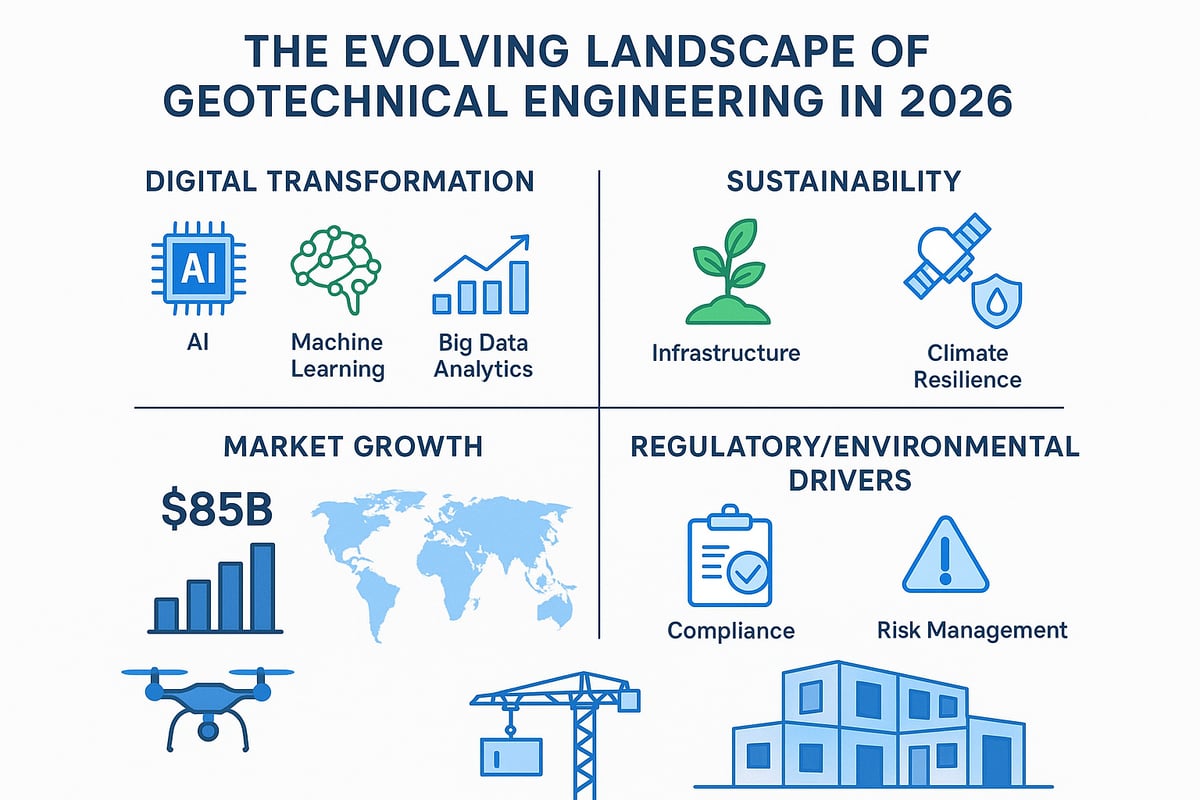
The world of geotechnical engg is undergoing a remarkable transformation as we approach 2026. Rapid advances in technology, new market dynamics, and a strong focus on sustainability are reshaping how professionals operate and deliver value. Understanding these changes is essential for anyone looking to thrive in geotechnical engg.
Key Industry Trends and Technological Advancements
Digital transformation is at the core of geotechnical engg innovation. AI, machine learning, and big data are streamlining site analysis, improving risk prediction, and enabling more accurate modeling. Remote sensing and drones now offer real-time data collection, making site investigations faster and safer.
Sustainability is another defining trend. There is growing emphasis on green infrastructure, low-impact development, and creating climate-resilient solutions. Modular and prefabricated construction methods are influencing soil-structure interactions and require new analytical approaches.
A recent example is the use of AI-powered geotechnical modeling in major infrastructure projects, which has led to reduced risk and optimized resource use. For a deeper dive into these advancements, explore Emerging Trends in Geotechnical Engineering.
These trends are setting a new standard for geotechnical engg professionals, who must adapt quickly to stay relevant.
Market Demand and Growth Projections
The geotechnical engg market is projected to reach $85 billion globally by 2026. This rapid growth is driven by increased investment in infrastructure, renewable energy, and urban development.
North America is a focal point, with significant opportunities in transportation and energy sectors. Regional investment in public transit, highways, and energy infrastructure is fueling demand for specialized geotechnical engg expertise.
The following table summarizes projected market growth by region:
| Region | Growth Drivers | Opportunity Areas |
|---|---|---|
| North America | Infrastructure, energy | Transit, renewables |
| Europe | Urban expansion, green policy | Smart cities, flood defense |
| Asia-Pacific | Urbanization, mega-projects | High-speed rail, skyscrapers |
With these dynamic changes, professionals in geotechnical engg can expect a vibrant job market and expanding career options.
Regulatory and Environmental Drivers
Stricter environmental regulations are shaping the future of geotechnical engg projects. Governments in Canada and the United States are implementing tougher standards for site assessments, remediation, and risk management.
Projects now require rigorous documentation, transparent risk mitigation plans, and compliance with local, national, and international codes. This regulatory landscape is pushing firms to adopt advanced technologies and robust quality controls.
For example, the impact of Canadian and US environmental standards has broadened the scope of geotechnical engg work, requiring more comprehensive site investigations and long-term monitoring.
Adapting to these evolving standards is essential for firms and individuals aiming to lead in geotechnical engg.
Challenges and Opportunities
The rapid pace of change brings both challenges and opportunities for geotechnical engg professionals. Talent shortages are becoming more pronounced, making upskilling and continuous learning essential.
Increasing soil-structure complexity, particularly in urban and climate-sensitive environments, requires innovative solutions and interdisciplinary collaboration. However, these complexities also open the door for leadership, research, and creative problem-solving.
Opportunities abound for those ready to embrace new technologies, champion sustainability, and lead diverse teams. The future of geotechnical engg belongs to those who are agile, knowledgeable, and forward-thinking.
Core Qualifications and Educational Pathways
Building a successful career in geotechnical engg requires a blend of strong academic credentials, recognized certifications, hands-on experience, and a commitment to lifelong learning. As the field evolves, professionals must adapt by acquiring both foundational and advanced qualifications.
Academic Foundations
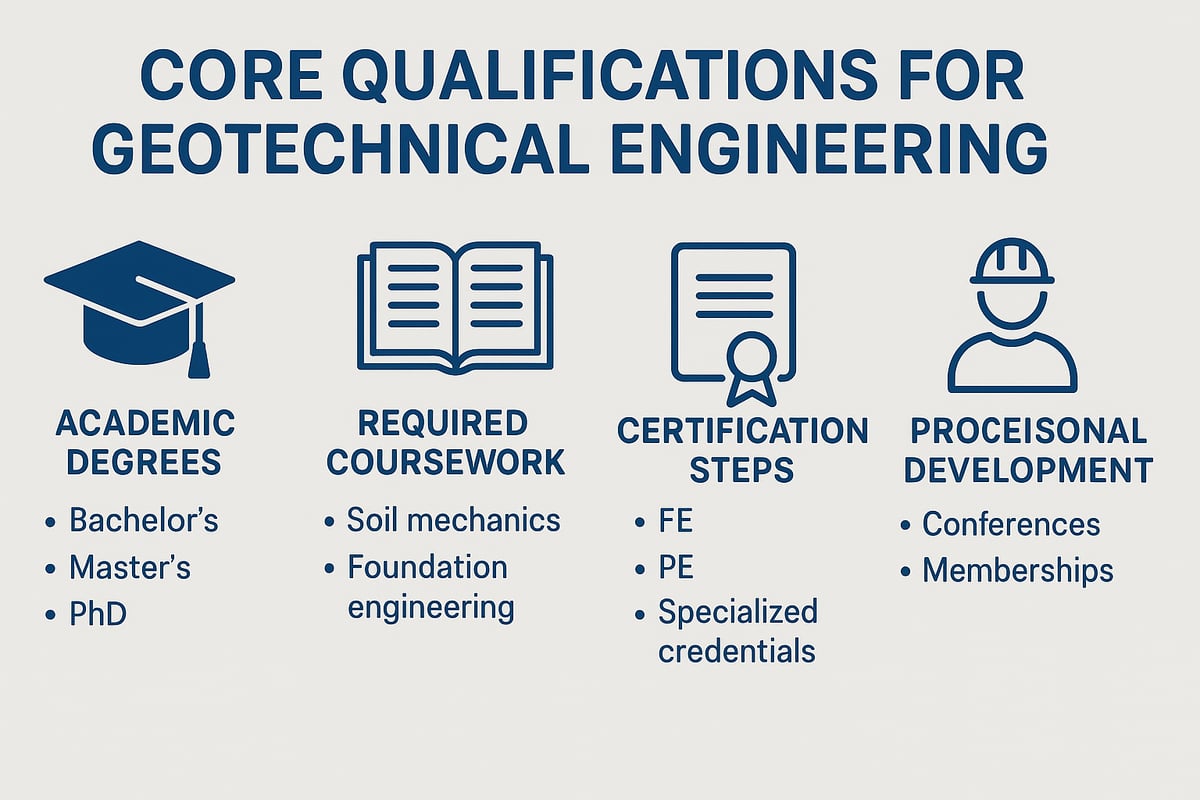
The journey in geotechnical engg begins with a bachelor's degree in civil, geological, or geotechnical engineering. Choosing an ABET-accredited program ensures that your education meets industry standards and supports future licensure.
Core courses such as soil mechanics, foundation engineering, geosynthetics, and environmental geotechnics are critical. These subjects provide the technical base needed for analyzing soil behavior, designing foundations, and assessing environmental impacts.
A strong academic foundation prepares students for real-world challenges and positions them for advanced study or immediate entry into the workforce.
Professional Certifications and Licensure
Earning professional credentials is essential for anyone pursuing geotechnical engg. After graduation, engineers must pass the Fundamentals of Engineering (FE) exam, followed by gaining work experience under a licensed engineer. The next step is passing the Professional Engineer (PE) exam, which is often required for higher responsibility roles.
Specialized certifications, such as Geotechnical PE or PMP, can further enhance your profile. Each region, like Alberta, may have its own licensing process, so staying informed is crucial. For comprehensive resources on certification and career development, visit the ASCE Geotechnical Education & Careers page.
Advanced Education and Specializations
Pursuing a master's or PhD in geotechnical engg can unlock opportunities in research, academia, and leadership. Advanced degrees allow engineers to specialize in areas like earthquake engineering, environmental geotechnics, or geoinformatics.
About 30 percent of professionals in geotechnical engg choose graduate education, reflecting the value placed on deeper technical expertise. Specialized knowledge not only enhances career prospects but also equips engineers to tackle complex, high-impact projects.
Internships and Practical Experience
Hands-on experience is a cornerstone of geotechnical engg. Internships, co-op programs, and fieldwork expose students to real-life challenges, tools, and industry practices.
Universities often collaborate with local firms, especially in regions like Alberta, to offer placements that bridge academic learning with professional application. Engaging in practical experiences builds confidence, technical acumen, and a professional network that can support future job opportunities.
Continuous Learning and Professional Development
The dynamic nature of geotechnical engg demands lifelong learning. Attending conferences, workshops, and webinars helps professionals stay current with emerging trends and technologies.
Membership in organizations such as ASCE, CGS, and ISSMGE provides access to technical resources and networking opportunities. Continuous development ensures that geotechnical engg professionals remain competitive and adaptable in an ever-changing industry landscape.
Essential Technical and Soft Skills for 2026
The future of geotechnical engg is shaped by a blend of advanced technical know-how and vital soft skills. As projects grow more complex and technology-driven, engineers must master both cutting-edge tools and effective collaboration. Excelling in geotechnical engg by 2026 means being adaptable, safety-focused, and ready to lead multidisciplinary teams.
Technical Expertise
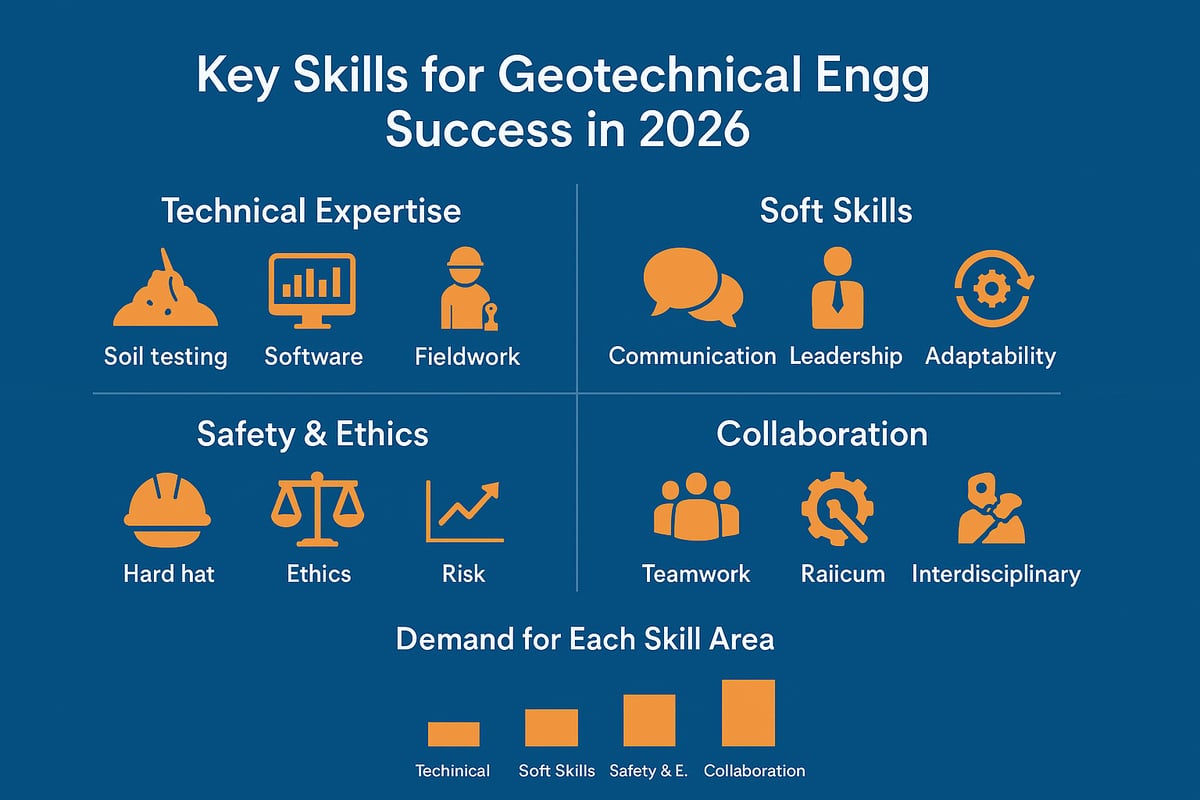
Technical skills are the backbone of geotechnical engg. Engineers must be proficient in advanced soil testing, such as cone penetration tests (CPT) and standard penetration tests (SPT). Familiarity with geophysical surveys is increasingly important for accurate site characterization.
Mastery of software like PLAXIS, GeoStudio, and AutoCAD Civil 3D enables sophisticated modeling and analysis. Data-driven decision-making, especially through finite element modeling, is critical for tasks like slope stability analysis. For practical insights, see Slope Stability Analysis in Practice.
Field investigation techniques remain essential. Geotechnical engg also demands staying current with emerging digital tools to interpret large datasets and predict site performance.
Key Technical Skills Table
| Skill | Description |
|---|---|
| Advanced Soil Testing | CPT, SPT, geophysical surveys |
| Software Proficiency | PLAXIS, GeoStudio, AutoCAD Civil 3D |
| Data-Driven Modeling | Finite element analysis, big data |
| Field Investigations | On-site data collection, monitoring |
Soft Skills and Leadership Abilities
Success in geotechnical engg requires more than technical acumen. Strong communication skills help translate complex data for diverse audiences, including clients and regulators. Project management abilities—covering scheduling, budgeting, and team coordination—are increasingly valued.
Critical thinking and adaptability allow engineers to solve new challenges and embrace evolving technologies. Leadership is vital for mentoring junior staff and guiding multidisciplinary teams through complex projects.
- Communicate findings clearly to stakeholders
- Manage projects efficiently and coordinate teams
- Lead by example and foster a collaborative environment
These soft skills set apart top performers in geotechnical engg.
Safety, Ethics, and Risk Management
Safety and ethics are non-negotiable in geotechnical engg. Strict adherence to safety protocols protects teams and communities. Engineers must uphold high ethical standards, especially when assessing contaminated sites or navigating regulatory requirements.
Risk management is central to project success. Identifying and mitigating hazards early reduces costly surprises. Ethical decision-making ensures public trust and compliance with industry standards.
Key considerations include:
- Following established safety guidelines
- Practicing transparency in reporting
- Prioritizing sound risk mitigation strategies
In geotechnical engg, a reputation for integrity and reliability is invaluable.
Collaboration and Interdisciplinary Work
Modern geotechnical engg involves working closely with environmental scientists, architects, and construction professionals. Cross-functional communication ensures that soil and site data inform every stage of design and construction.
Collaborative projects in urban redevelopment often require blending geotechnical engg insights with sustainability and regulatory goals. Teamwork and open dialogue enable successful outcomes, especially in fast-paced, high-stakes settings.
- Coordinate with diverse teams to solve complex problems
- Share knowledge and leverage interdisciplinary strengths
- Adapt communication style for different professional backgrounds
Ultimately, thriving in geotechnical engg by 2026 means building strong partnerships and fostering innovation through teamwork.
Step-by-Step Guide: Building a Successful Geotechnical Engineering Career
Embarking on a career in geotechnical engg requires more than just technical know-how. You need a clear roadmap, actionable steps, and a proactive approach to keep pace with industry changes. This step-by-step guide will help you navigate each stage, from education to leadership, ensuring you are well-prepared for a dynamic future in geotechnical engg.
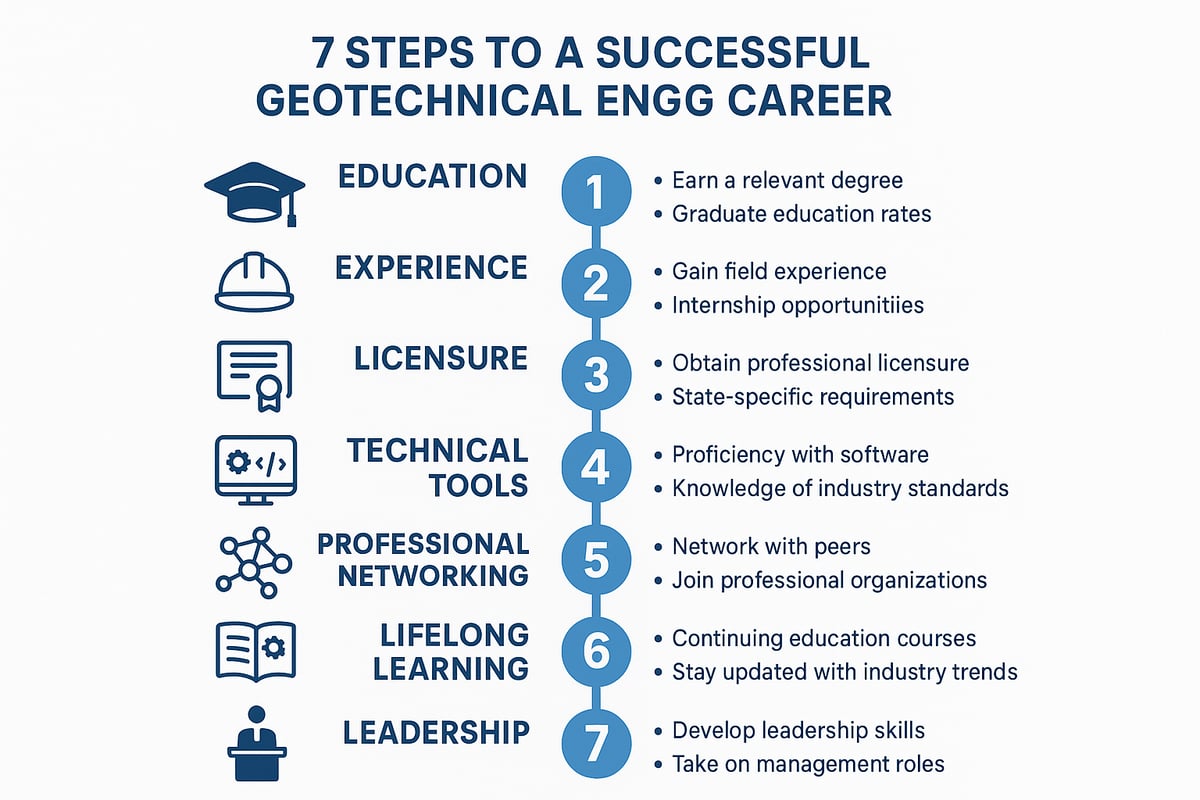
Step 1: Lay a Strong Educational Foundation
Success in geotechnical engg begins with choosing the right academic path. Enroll in an accredited engineering program, ideally one focused on geotechnical or civil engineering. Prioritize courses like soil mechanics, foundation engineering, and environmental geotechnics.
Participate in lab work and join student chapters of professional societies. These experiences provide exposure to real-world challenges and foster early networking. A solid education prepares you for the evolving demands of geotechnical engg and builds the analytical mindset needed for career growth.
| Degree Level | Focus Areas | Value |
|---|---|---|
| Bachelor’s | Soil mechanics, foundations | Entry-level qualification |
| Master’s/PhD | Earthquake, environmental, data | Advanced research, leadership |
Step 2: Gain Practical Experience Early
Hands-on experience is essential in geotechnical engg. Seek internships, summer jobs, or co-op placements with reputable firms. Fieldwork and research projects allow you to apply classroom knowledge and develop critical problem-solving skills.
Volunteer for local infrastructure projects or university-industry partnerships. These opportunities help you understand site investigation methods and expose you to the daily realities of geotechnical engg. Early experience often leads to long-term career connections and valuable industry insight.
- Internships: Real-world exposure
- Fieldwork: Soil testing, site visits
- Research: Innovative solutions
Step 3: Obtain Professional Licensure and Certifications
Professional licensure is a cornerstone of credibility in geotechnical engg. Start by passing the Fundamentals of Engineering (FE) exam, then gain relevant experience to qualify for the Professional Engineer (PE) license. Stay informed about regional requirements, as they can vary.
Consider specialized certifications, such as the Geotechnical PE or project management credentials. These not only enhance your expertise but also boost your marketability within geotechnical engg. Regularly update your credentials to stay ahead in a competitive field.
Step 4: Master Technical Tools and Software
Modern geotechnical engg relies on advanced software and analysis tools. Develop proficiency in industry standards like PLAXIS, GeoStudio, and AutoCAD Civil 3D. These tools enable accurate modeling, risk assessment, and efficient project delivery.
Attend workshops and online courses to keep your skills sharp. For deeper insights, explore Advancements in Geotechnical Numerical Analysis to understand the latest innovations shaping the field. Mastery of these tools is a must for anyone aiming to excel in geotechnical engg.
- PLAXIS: Slope stability, settlement analysis
- GeoStudio: Seepage, stress modeling
- AutoCAD Civil 3D: Drafting, design
Step 5: Build a Professional Network
Networking is a powerful catalyst for growth in geotechnical engg. Join professional organizations and attend industry conferences to meet peers and mentors. Engage in online communities, such as LinkedIn groups, to stay updated on trends and job openings.
Seek out mentorship from experienced engineers. Their guidance can help you avoid common pitfalls, refine your career goals, and open doors to new opportunities in geotechnical engg. Building relationships is as important as technical skills for lasting success.
- Join: ASCE, CGS, ISSMGE
- Attend: Workshops, seminars
- Connect: LinkedIn, alumni networks
Step 6: Embrace Lifelong Learning and Adaptability
Continuous learning is vital in the fast-evolving world of geotechnical engg. Stay current with emerging technologies, regulatory changes, and industry best practices. Participate in webinars, pursue advanced degrees, or earn additional certifications to deepen your expertise.
Engage in research, contribute to publications, and share knowledge with peers. Adaptability ensures you remain competitive and prepared for shifts in geotechnical engg, from climate resilience to digital transformation.
- Webinars: Latest trends
- Certifications: Niche expertise
- Research: Innovative approaches
Step 7: Develop Leadership and Project Management Skills
Leadership is the final step to advancing in geotechnical engg. Take on roles that involve team coordination, client communication, and project oversight. Effective leaders can manage multidisciplinary teams and deliver complex projects on time and within budget.
Refine your project management skills through formal training and real-world experience. Leading projects, mentoring junior engineers, and engaging with clients all contribute to a well-rounded geotechnical engg professional ready for senior roles.
Whether you are just starting or looking to advance, following these steps will position you for a successful and fulfilling journey in geotechnical engg.
Career Pathways and Advancement Opportunities
Exploring career pathways in geotechnical engg opens a world of possibilities, whether you are just starting out or looking to advance into specialized or leadership roles. As the industry evolves, understanding the structure of professional growth and the variety of opportunities available is essential for long-term success. Let us break down each stage and the diverse directions your geotechnical engg journey can take.
Entry-Level Roles and Responsibilities
Graduates entering geotechnical engg typically start as field engineers, laboratory technicians, or junior project engineers. These roles focus on foundational skills, hands-on technical work, and developing an understanding of soil behavior and site investigation procedures.
Key responsibilities include:
- Conducting field investigations and in-situ testing
- Collecting, analyzing, and interpreting soil and rock samples
- Preparing technical reports and supporting senior engineers
Entry-level positions offer invaluable exposure to geotechnical engg project lifecycles. Early-career professionals learn to operate key equipment, follow safety protocols, and collaborate with multidisciplinary teams. Building a solid foundation at this stage is crucial for future advancement in geotechnical engg.
Mid-Level and Senior Positions
As professionals gain experience in geotechnical engg, they transition into roles such as project engineer, senior geotechnical engineer, or technical specialist. Responsibilities expand to include project management, client liaison, and mentoring junior staff.
Core duties often involve:
- Leading field teams and overseeing investigations
- Designing foundations, retaining structures, and slope stabilization measures
- Managing project budgets, schedules, and quality assurance
Career growth at this stage is marked by increased autonomy and leadership opportunities. For a comprehensive overview of advancement options, explore Geotechnical Engineering Career Paths, which details the many ways geotechnical engg professionals can progress and specialize. Developing advanced technical and communication skills is key to thriving in mid-to-senior geotechnical engg roles.
Specialized Career Tracks
Many geotechnical engg professionals choose to specialize, pursuing fields such as environmental geotechnics, earthquake engineering, geosynthetics, or offshore and marine geotechnics. Specialization allows deeper technical mastery and the ability to tackle complex, high-impact projects.
Examples of specialized tracks include:
- Environmental geotechnics: Focus on contaminated sites and remediation
- Earthquake engineering: Seismic hazard assessment and resilient design
- Offshore and marine geotechnics: Foundations for wind farms and oil platforms
Industry data shows approximately 20% of geotechnical engg professionals work in specialized sectors. Specialization often requires additional certifications or graduate education, but opens doors to leadership and research roles.
Consulting, Research, and Academia
Beyond traditional engineering firms, geotechnical engg careers flourish in consulting, research, and academic settings. Consulting firms offer fast-paced environments, exposure to diverse projects, and opportunities to build client relationships.
In research and academia, professionals:
- Conduct applied research in soil mechanics, materials, or modeling
- Teach and mentor the next generation of geotechnical engg students
- Publish findings and contribute to industry standards
Combining practice with research or teaching can be especially rewarding for those passionate about innovation and knowledge sharing. These paths also enable professionals to influence the evolution of geotechnical engg.
Entrepreneurship and Independent Practice
Some geotechnical engg professionals choose to establish their own consultancies or laboratories. Entrepreneurship requires technical expertise as well as business acumen, including marketing, client management, and regulatory compliance.
Key steps to independent practice:
- Building a network of clients and industry contacts
- Navigating licensing and insurance requirements
- Developing a reputation for technical excellence and reliability
Entrepreneurial ventures in geotechnical engg allow for greater flexibility, creative control, and the potential to shape the direction of the company. Success relies on a blend of engineering skill and strategic thinking.
International Opportunities
Geotechnical engg is a global profession, with increasing demand for expertise on infrastructure and development projects worldwide. International roles offer exposure to diverse geologic conditions, regulatory frameworks, and cultural perspectives.
Professionals working abroad may:
- Collaborate on large-scale transportation, energy, or urban projects
- Adapt designs to local codes and environmental conditions
- Gain language skills and cross-cultural experience
International opportunities in geotechnical engg foster adaptability and broaden professional horizons. They also provide a unique platform for career growth and global impact.
Future-Proofing Your Geotechnical Engineering Career
Adapting to change is essential to excel in geotechnical engg as the industry evolves. As we look toward 2026, professionals must embrace innovation, sustainability, and continuous personal development to stay ahead. Let’s explore proven strategies to make your career resilient and future-ready.
Embracing Innovation and Digital Tools
Innovation is at the core of future-proofing your geotechnical engg career. The adoption of AI, machine learning, and advanced digital tools like BIM and GIS is transforming site analysis, predictive modeling, and project management. Drones and remote monitoring enable real-time data capture, improving decision-making and reducing field risks.
Staying updated with cutting-edge technologies is vital. For example, learning about in-situ geotechnical testing methods can enhance your expertise in modern site investigations. The global market is also projected to grow, creating new opportunities for those who master digital skills.
Sustainability and Climate Resilience
Sustainability is now a central pillar in geotechnical engg. Designing for climate resilience, such as flood or seismic risk adaptation, is increasingly required by clients and regulators. The use of eco-friendly materials and green infrastructure solutions is not just a trend but an expectation.
Professionals must integrate sustainability into every project phase. Data shows that a majority of new infrastructure by 2026 will need climate resilience features, making it imperative for engineers to stay informed on best practices and evolving standards.
Building a Personal Brand and Thought Leadership
Establishing yourself as a leader in geotechnical engg means more than technical skill. Personal branding elevates your professional profile, opening doors to new roles and collaborations. Publish articles, present at industry conferences, and actively participate in online forums.
A strong online presence also helps you connect with peers and mentors. Sharing your insights on LinkedIn or contributing to industry publications can set you apart as a thought leader and trusted advisor.
Navigating Industry Disruptions and Global Shifts
The landscape of geotechnical engg is impacted by global trends like remote work, supply chain challenges, and regulatory shifts. Being adaptable and resilient is essential to navigate these uncertainties. Staying informed about industry growth and projections, such as those highlighted in Geotechnical Engineering Market Growth Projections, can help you anticipate changes and seize emerging opportunities.
Proactive learning and flexibility will ensure you remain valuable regardless of how the industry evolves.
The Importance of Mentorship and Giving Back
Mentorship is a cornerstone of a thriving geotechnical engg community. By guiding the next generation and participating in STEM outreach, you reinforce your own knowledge and contribute to the profession’s long-term health.
Giving back through community initiatives or educational programs also enhances your leadership skills and broadens your professional network. This approach ensures the growth and resilience of both your career and the field itself.
As you map out your future in geotechnical engineering, having the right support and resources is key to turning your ambitions into real achievements. Whether you’re just starting or looking to advance your expertise, partnering with experienced professionals like ZALIG Consulting Ltd can give you a distinct edge. Their commitment to quality, innovation, and tailored solutions aligns perfectly with the evolving demands and opportunities outlined in this guide. If you’re ready to discuss your career goals, explore potential collaborations, or seek guidance on the next steps, I encourage you to Contact Us: info@zalig.ca or +1 800 515 0497.