

Frost heave is causing billions in property damage and infrastructure disruption across cold regions in 2026. Cracked foundations, buckled roads, and shifting landscapes are now common problems for homeowners and cities alike.
This comprehensive guide delivers clear answers on what frost heave is, why it happens, and the most effective ways to prevent and fix it. Discover the science behind the phenomenon, learn to spot warning signs, explore proven prevention strategies, and gain insights from leading experts.
Take action to protect your property and investments—use this guide to safeguard your assets from the rising threat of frost heave.
Understanding Frost Heave: Causes and Mechanisms
Frost heave is a widespread phenomenon that can lead to significant ground movement and structural damage in cold climates. At its core, the process is driven by the interaction of soil, water, and freezing temperatures. Understanding why frost heave occurs is the first step in mitigating its costly effects.
The Science Behind Frost Heave
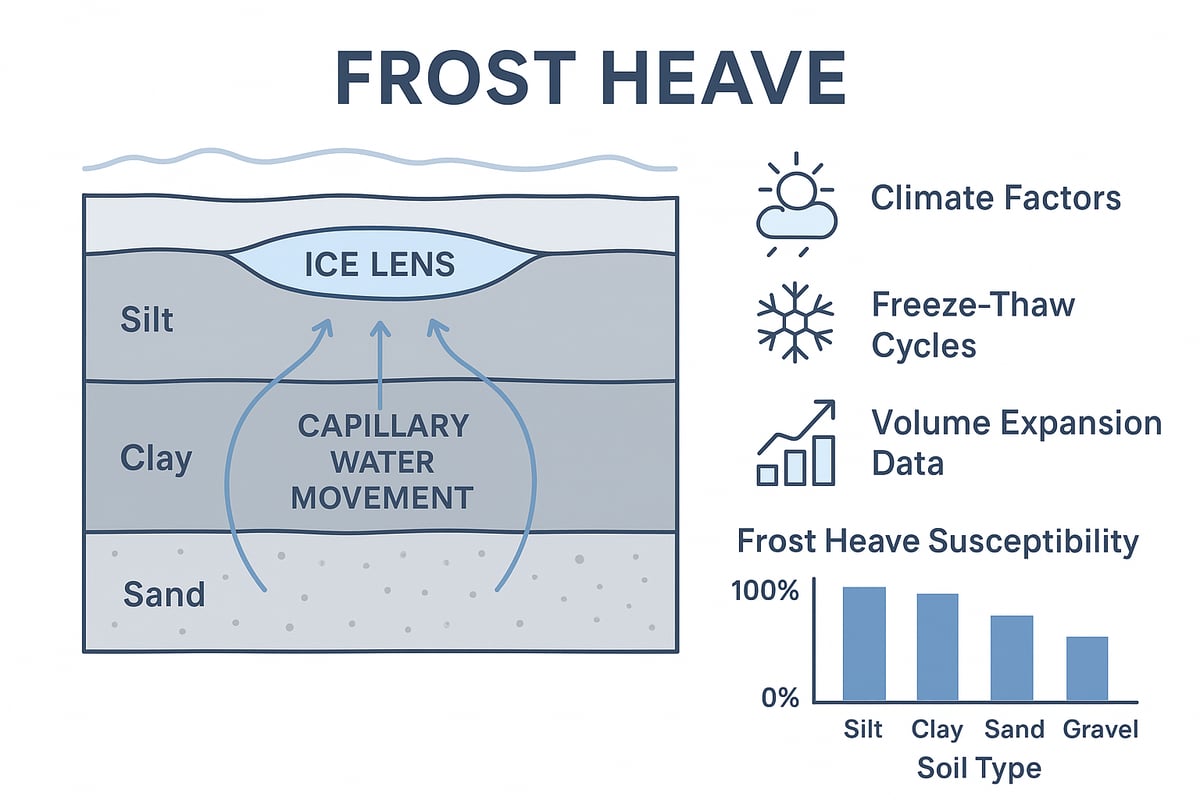
Frost heave occurs when moisture in the ground freezes, causing the soil to lift or shift. The most critical factor in frost heave is the formation of ice lenses: thin layers of ice that grow within the soil as water migrates toward the freezing front. This process, called ice segregation, is the primary cause of frost heave. While volumetric expansion of water as it freezes and water injection from below the frost line contribute, they play smaller roles.
Three conditions must be present for frost heave to develop:
- Frost-susceptible soils, typically silty or clay-rich, with fine particles that allow capillary water movement.
- Sufficient soil moisture, which acts as a reservoir for ice lens formation.
- Sustained freezing temperatures to drive the migration and freezing of water.
Capillary action is key. As the ground surface freezes, water is drawn upward from unfrozen layers, accumulating and forming distinct ice lenses. This process exerts upward pressure, lifting soil and anything built upon it.
Open systems, where there is a continuous supply of groundwater, are especially prone to severe frost heave. Closed systems, lacking external water sources, experience much less movement. The soil type is crucial: silty soils, with their fine particles, can experience up to 9 percent volume expansion from ice formation.
Repeated freeze-thaw cycles intensify the problem, leading to progressive displacement each winter. In regions with fluctuating temperatures, these cycles can cause substantial cumulative movement.
A variety of methods exist for assessing the susceptibility of soils to frost heave, and recent research provides a comparative evaluation of methods assessing frost heave susceptibility, helping engineers better predict and manage risk.
| Critical Condition | Role in Frost Heave | Typical Example |
|---|---|---|
| Soil Type | High silt or clay | Silty subgrades |
| Soil Moisture | Needed for ice lenses | Poor drainage |
| Freezing Temperatures | Drives ice formation | Cold winters |
Environmental and Climatic Factors
Frost heave occurs most frequently in periglacial and temperate climates, where freezing temperatures and moisture are seasonally abundant. These regions, including the northern United States, Canada, and parts of northern Europe, are especially vulnerable due to their climate profiles.
Climate change is influencing the dynamics of frost heave. In some areas, deeper frost penetration and increased groundwater availability are making the problem more severe. As average winter temperatures fluctuate, freeze-thaw cycles have become more frequent, leading to greater soil movement and structural risk.
Geographically, frost heave is most prevalent in areas where silty and clay-rich soils are common. Seasonal variability means that some years see more damage accumulation than others, depending on the timing and intensity of freezes.
For example, the Pacific Northwest experiences frequent freeze-thaw cycles during winter, causing repeated soil movement. Over years, this cycle can lead to significant infrastructure damage and ongoing property concerns.
Understanding these environmental and climatic factors is essential for anyone dealing with frost heave, as prevention and mitigation strategies must be tailored to local conditions.
Identifying Frost Heave: Warning Signs and Diagnosis
Spotting frost heave early can save property owners significant time and money. Recognizing the warning signs, both visible and hidden, is essential for prompt intervention. Below, we break down the most common indicators and diagnostic methods to help you stay ahead of frost heave damage.
Exterior and Structural Indicators
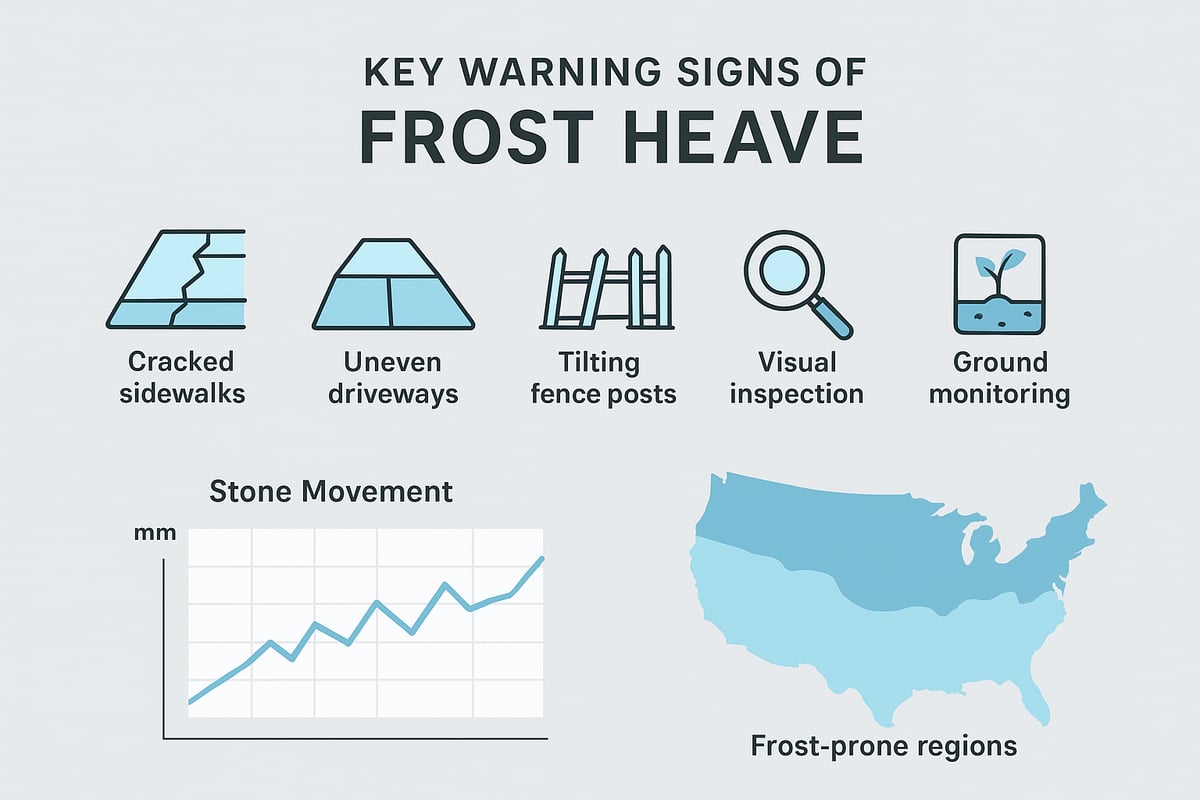
The first clues of frost heave often appear outdoors. Look for uneven or raised concrete slabs, sidewalks, and driveways. These surfaces may lift or tilt as the soil beneath them expands due to frost heave. Cracks in patios, foundations, or retaining walls are also common and should not be ignored.
Frost heave can cause fence posts, deck supports, or bollards to tilt or even lift out of the ground. You might notice gaps forming between soil and foundation walls, another telltale sign. In the Pacific Northwest, homeowners frequently report visible driveway heaving after winter, an unmistakable result of frost heave activity.
Stay alert for these changes, especially after freeze-thaw cycles. Early identification allows for faster, less costly repairs and helps prevent further structural compromise.
Interior and Subtle Signs
Not all evidence of frost heave is visible from the outside. Indoors, doors and windows that stick or jam—especially during colder months—can signal shifting foundations. Cracks in drywall, ceilings, or where floors meet walls may also indicate underlying frost heave.
Floors that slope or feel uneven are another subtle warning. Recurring settlement or the need to repeatedly jack up structures after winter points to ongoing frost heave beneath the building. These issues often worsen with each freeze-thaw cycle if not addressed.
It is critical to act quickly when these signs appear. Early detection is the best defense against the progressive, cumulative damage frost heave can inflict on your property.
Diagnostic Methods
Effective diagnosis of frost heave begins with a thorough visual inspection. Check for surface irregularities, cracks, and any movement in structures. Soil testing is key to determining frost susceptibility, especially if the soil contains high silt or clay content and retains moisture.
Monitoring ground temperature and moisture levels can help identify conditions favorable to frost heave. In ambiguous or advanced cases, a professional assessment is invaluable. Experts often analyze soil composition and look for deleterious soils and their risks to accurately gauge frost heave potential.
Research shows that in periglacial regions, stone movement of up to 7.4 cm has been recorded over 30 years, highlighting the importance of ongoing monitoring. Combining these diagnostic methods ensures timely intervention and long-term protection.
The Impact of Frost Heave: Risks and Consequences
Frost heave poses significant risks that extend far beyond surface cracks or uneven ground. Its effects ripple through buildings, infrastructure, and entire communities. Understanding the full scope of frost heave consequences is crucial for effective prevention and management.
Structural and Infrastructure Damage
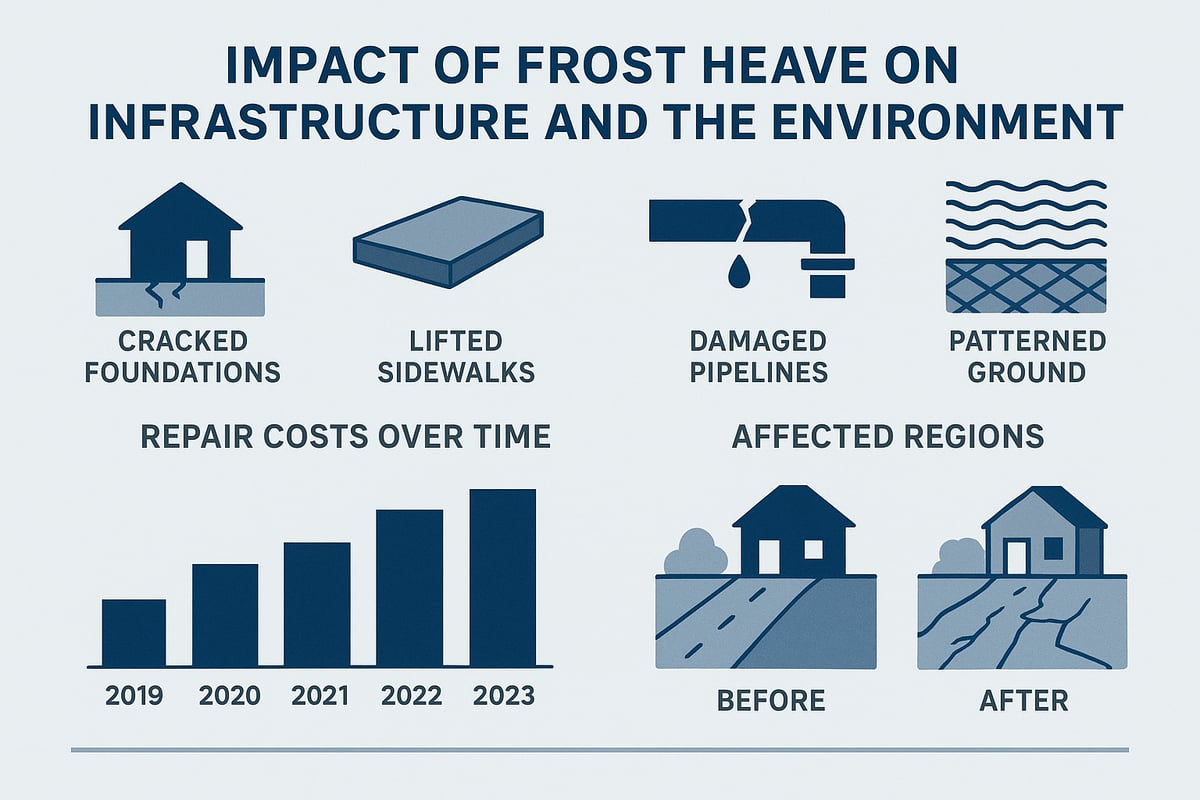
Frost heave is notorious for disrupting structures from the ground up. When ice lenses form beneath foundations, the upward force can displace concrete slabs, crack patios, and tilt fence posts. This movement compromises the stability of homes and commercial buildings, often requiring expensive repairs.
Roadways and utility lines are also at high risk. Frost heave can cause asphalt to buckle, creating hazardous driving conditions. Buried pipelines may shift, leading to leaks or ruptures. For example, in northern climates, the jacking of piles beneath buildings has resulted in uneven floors and long-term structural instability.
Frost-jacking is another consequence, where objects like fence posts and piles are progressively lifted out of the ground. This phenomenon increases maintenance costs for property owners and municipalities alike. Research into innovative solutions, such as using heat pipes to transfer geothermal energy, offers hope for mitigating these issues, as detailed in this Numerical Research on Mitigating Soil Frost Heave Around Gas Pipelines.
Environmental and Geomorphological Effects
Beyond buildings and roads, frost heave transforms landscapes in subtle but significant ways. In periglacial regions, it drives the formation of patterned ground, such as stone polygons and sorted circles. These geomorphological features are markers of seasonal freeze-thaw activity and ongoing soil movement.
Soil sorting and mixing induced by frost heave impact agricultural productivity. Crops can suffer from disrupted root zones and uneven ground, reducing yields and complicating farm operations. Changes in drainage patterns are another concern, as raised soil can redirect water flow, increasing erosion risk and altering wetland boundaries.
Frost heave can also create feedback loops in the environment. As certain areas experience more displacement, they become more susceptible to future movement, further shaping the landscape over time.
Economic and Social Implications
The consequences of frost heave reach into the economic and social fabric of affected regions. Transportation disruptions are common when roads buckle or bridges shift, leading to delays and increased costs for commuters and businesses. Utility outages may occur if pipelines or cables are damaged, compounding inconvenience and repair expenses.
Insurance claims for frost heave damage can be substantial, often resulting in higher premiums or reduced property values. Homeowners and communities may face tough choices about repair priorities and long-term resilience planning.
In areas with aging infrastructure, frost heave can accelerate the need for upgrades, straining municipal budgets. The cumulative effect of these challenges makes frost heave a pressing concern for anyone invested in the durability and safety of their property or community.
Prevention: Modern Strategies to Minimize Frost Heave
Effectively minimizing frost heave requires a proactive, multi-layered approach. By combining careful site assessment, engineering innovation, robust water management, and vigilant maintenance, property owners and builders can significantly reduce the risks associated with frost heave. Below, we outline the most current, evidence-based strategies for prevention.
Site Assessment and Soil Management
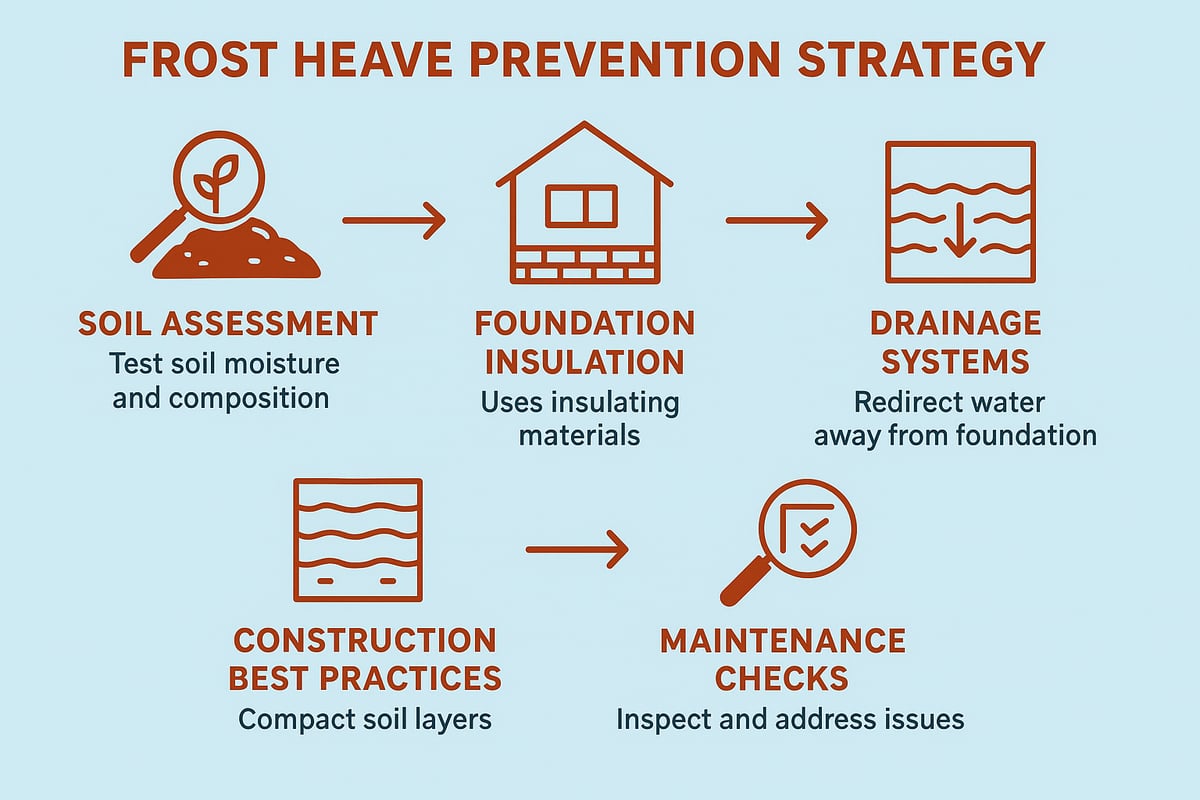
The foundation of frost heave prevention is understanding your site's unique risks. Begin with thorough soil testing to identify frost-susceptible materials, such as silty or clay-rich soils with high moisture content. These soils are particularly prone to frost heave due to their ability to retain water and facilitate ice lens formation.
Key steps include:
- Conducting laboratory analysis for particle size and moisture.
- Replacing problematic soils with coarse, granular fill when possible.
- Enhancing site drainage to keep moisture levels in check.
For advanced methods such as deep soil mixing or chemical stabilization, consult resources like Soil Stabilization and Ground Improvement, which detail professional techniques to reduce frost heave risk.
Design and Engineering Solutions
Engineering plays a crucial role in protecting structures from frost heave. Select foundation systems that bypass or insulate against frost-susceptible layers, such as deep piles or frost-protected shallow foundations.
Recommended design strategies:
- Install rigid foam insulation around and beneath foundations.
- Use vapor barriers and sub-slab drainage to limit water migration.
- Design for local frost depth, accounting for regional soil and climate data.
Incorporating these elements into new builds, or retrofitting existing structures, greatly diminishes the likelihood of frost heave damage.
Water Management and Site Drainage
Controlling water movement is essential for minimizing frost heave. Water is the key ingredient in ice lens formation, so reducing soil moisture near structures is a top priority.
Effective water management tactics:
- Grade the land to direct runoff away from buildings.
- Install perimeter drains, swales, and sump pumps.
- Maintain gutters and downspouts to prevent localized saturation.
By eliminating one of the three critical factors for frost heave—excess water—you can disrupt the cycle that leads to ground movement and structural issues.
Construction Best Practices
Implementing best practices during construction is vital for long-term frost heave prevention. Schedule earthwork during dry periods to minimize fill moisture and compact soils thoroughly to close voids and reduce capillary action.
Construction guidelines include:
- Using non-frost-susceptible fill in high-risk areas.
- Placing geotextiles and engineered barriers to block water movement.
- Layering insulation and drainage materials beneath critical infrastructure.
By integrating these measures, you address frost heave at its source and create a resilient foundation for any structure. Consistent use of these practices helps prevent frost heave recurrence and reduces the risk of future repairs.
Maintenance and Monitoring
Prevention does not end after construction. Ongoing vigilance is crucial for managing frost heave risk. Inspect known problem areas after each winter, looking for signs of movement or cracking.
Essential maintenance actions:
- Regularly monitor ground moisture and temperature.
- Promptly repair minor cracks or drainage issues.
- Keep records of seasonal changes and repairs for future reference.
With a proactive maintenance plan, you can catch early signs of frost heave and intervene before small issues become major structural problems.
Solutions: Repair and Remediation of Frost Heave Damage
Addressing frost heave damage requires a systematic approach, starting with accurate evaluation and moving through targeted repair and long-term prevention. Timely intervention can help property owners minimize both immediate disruptions and future risks. Understanding the most effective solutions ensures that investments in repairs yield lasting results.
Assessment and Damage Evaluation
The first step in managing frost heave is a thorough assessment by a qualified professional. Frost heave can manifest as uneven surfaces, cracks, or shifted foundations. Identifying whether the movement is due to frost heave or other subsidence issues is crucial for selecting the right solution.
A comprehensive evaluation includes visual inspection, soil testing, and determining the extent of damage. Professionals prioritize repairs based on safety and structural integrity, focusing on areas most affected by frost heave. Early detection and expert input help prevent escalation and reduce future costs.
Repair Techniques for Concrete and Structures
Several effective methods exist to restore structures affected by frost heave. Slab jacking and concrete leveling can lift displaced surfaces back to their original position, especially for sidewalks and driveways. Severely damaged foundations may require replacement or underpinning, using helical piers or piles to reach stable soil layers.
Cracks are sealed to prevent water infiltration, which can trigger further frost heave. Innovative techniques, such as Frost Heave Mitigation Using Polymer Injection and Frost Depth Prediction, involve injecting expanding polymers beneath pavements to create insulation layers, reducing the risk of future frost heave. These methods offer practical and efficient solutions for infrastructure protection.
Soil and Site Remediation
Remediation often involves replacing frost-susceptible soils with coarse, granular fill that drains efficiently and resists ice lens formation. Installing insulation or heated ground mats beneath repaired surfaces helps prevent freezing. Improving site drainage is another vital step, directing water away from vulnerable areas to limit moisture available for frost heave.
Municipalities may repair sidewalks and roads using subgrade insulation, minimizing the risk of repeat frost heave. These soil and site modifications are essential for maintaining long-term stability.
Long-Term Mitigation
To guard against future frost heave, permanent solutions are implemented. This includes installing robust drainage systems, continuous soil management, and retrofitting structures with insulation. Community-wide infrastructure upgrades may be needed in regions with persistent frost heave problems.
Ongoing monitoring and proactive maintenance ensure that minor issues are addressed before they become severe. By investing in these strategies, property owners and municipalities can significantly reduce the impact of frost heave over time.
Costs and Considerations
When choosing between immediate repairs and long-term prevention, a careful cost-benefit analysis is essential. While upfront repair costs for frost heave can be substantial, early intervention often reduces total expenses. Insurance coverage and local government programs may help offset costs, particularly for widespread or recurring damage.
Data shows that timely action and preventive measures can lower repair bills dramatically. Investing in expert evaluation and modern remediation techniques is a smart way to protect property value and ensure lasting resilience against frost heave.
Advances and Insights: Research, Technologies, and Future Trends
Advancements in understanding frost heave have accelerated in recent years, reshaping how experts approach prevention and mitigation. Cutting-edge research, new materials, and evolving policy are transforming the landscape for property owners and engineers alike. As the climate shifts, staying ahead of these changes is essential.
Recent Scientific Developments
Researchers have made significant strides in decoding the science behind frost heave. Advanced imaging and soil analysis techniques now allow scientists to observe ice lens formation at the microscopic level. This has clarified the role of soil-water interactions and the precise conditions that trigger frost heave.
Modern modeling tools can simulate differential ground movement, helping experts predict where frost heave is most likely to occur. These tools incorporate real-world data on soil type, moisture, and temperature to create more accurate risk maps. Ongoing studies indicate that climate change, with its shifting freeze-thaw patterns, is already influencing the severity and frequency of frost heave events.
Innovative Materials and Construction Techniques
The construction industry is rapidly adopting new materials to combat frost heave. Insulation with higher R-values is now used in subgrade applications, helping to regulate ground temperatures and prevent deep freezes. Geosynthetics and engineered barriers are disrupting the capillary flow of water, one of the main drivers of frost heave in vulnerable soils.
Smart monitoring systems are another breakthrough, using sensors to track ground temperature and moisture in real time. These innovations enable early detection and fast response to frost heave risks. In railway construction, recent studies, such as the Frost Heave Behavior of Coarse-Grained Materials for High-Speed Railways Subgrade, use experimental and machine learning approaches to optimize subgrade design and reduce deformation caused by frost heave.
Regional and Global Perspectives
Across the globe, cold regions continue to refine their strategies for managing frost heave. In northern Europe and Canada, engineers have adopted layered insulation and advanced drainage to protect infrastructure. Alaska’s urban planners are redesigning roads and utilities to withstand shifting permafrost and increased frost heave activity.
Case studies from permafrost zones demonstrate that patterned ground and stone polygons can be managed with targeted interventions. Urban areas are now considering frost heave as a core element in land use planning, ensuring that both new and existing developments are resilient.
Policy, Regulation, and Best Practices
Governments and industry bodies are updating building codes to address frost heave more effectively. New standards require frost-protected shallow foundations, improved drainage, and soil testing before construction. Funding and incentives are supporting infrastructure upgrades, especially in high-risk communities.
Collaboration between engineers, geologists, and policymakers is leading to best practices that prioritize long-term resilience. These changes are helping to reduce the economic and social impacts of frost heave, while also promoting sustainable land use.
Expert Recommendations for 2026 and Beyond
Leading experts recommend an integrated approach to frost heave management. This includes thorough site assessment, smart design, and ongoing maintenance. With climate conditions evolving, proactive adaptation is now essential.
Public awareness campaigns are also critical, educating property owners about the risks and early warning signs of frost heave. By combining innovative technology, strong policy, and expert guidance, communities can better protect their assets and infrastructure for the future.
When to Consult a Geotechnical Expert
Frost heave can silently undermine the stability of your property. Knowing when to consult a geotechnical expert is crucial for preventing costly repairs and ensuring long-term safety. Many property owners underestimate the complexity of frost heave, but professional guidance is often the difference between minor fixes and major reconstruction.
Importance of Professional Assessment
Attempting to diagnose frost heave without expert input can lead to missteps. Geotechnical professionals bring specialized knowledge, using scientific methods to evaluate soil conditions and the extent of ground movement. Frost heave is influenced by a mix of soil type, moisture, and temperature, making accurate assessment challenging for non-specialists.
A professional assessment ensures that the root cause is identified, not just the visible symptoms. This approach addresses frost heave at its source, reducing the risk of recurring problems. Ignoring early warning signs or relying solely on DIY fixes can allow the issue to worsen over time.
What to Expect from a Consultation
When you engage a geotechnical consultant to address frost heave, the process is thorough and evidence-based. Experts will conduct detailed soil analysis, measuring moisture content, particle size, and frost susceptibility. They also evaluate site drainage, ground temperature, and the presence of vulnerable structures.
You can expect clear recommendations for foundation design, site grading, and insulation to minimize future frost heave risks. Consultants often provide ongoing monitoring plans, ensuring that changes in soil conditions are detected early. This proactive approach helps maintain property value and structural integrity.
Choosing the Right Partner
Selecting the right geotechnical expert is essential for effective frost heave mitigation. Look for consultants with a proven track record in cold climate engineering and familiarity with local soil conditions. Regional experience is vital, as frost heave patterns can vary dramatically.
Key criteria for choosing a partner include:
| Criteria | Why It Matters |
|---|---|
| Local expertise | Tailored solutions for your area |
| Technical services | Comprehensive soil and site analysis |
| Project portfolio | Evidence of successful frost heave work |
| Communication | Clear, actionable recommendations |
For projects where frost heave could impact slope stability or cause ground movement, seek firms offering Slope Stability Analysis Solutions. This ensures all potential risks are addressed in your site assessment.
ZALIG Consulting Ltd: Your Local Geotechnical Partner
ZALIG Consulting Ltd stands out as a trusted resource for frost heave solutions in Alberta. With offices in Edmonton, Fort Saskatchewan, and Slave Lake, their team brings deep local knowledge to every project. They specialize in site investigations, soil testing, and risk mitigation for frost heave and other ground movement challenges.
ZALIG offers tailored consulting to public, industrial, and private clients, focusing on quality and cost-effectiveness. Their expertise covers the full spectrum of frost heave prevention and remediation, from initial assessment to long-term monitoring. With a strong reputation for delivering results in cold climates, ZALIG Consulting Ltd is a reliable partner for safeguarding your property.
As you’ve seen, frost heave poses a real threat to everything from home foundations to major infrastructure, especially here in Alberta’s demanding climate. Understanding the warning signs and taking proactive steps can save you from costly repairs down the line. If you’re unsure about your site’s risk or need expert guidance on prevention, you don’t have to tackle it alone. We’re here to help you protect your investment with tailored, science-backed solutions. Reach out today—let’s discuss how you can safeguard your property with confidence.
Contact Us: info@zalig.ca or +1 800 515 0497