

Expansive soils represent one of the most significant geotechnical hazards in civil engineering, causing billions of dollars in structural damage annually across North America. These problematic soil types undergo dramatic volume changes as moisture content fluctuates, leading to foundation heave, cracking, and structural distress in residential, commercial, and infrastructure projects. Understanding the behavior of expansive soils is essential for engineers, developers, and property owners working in regions where these materials are prevalent. This article examines the characteristics, identification methods, and engineering solutions necessary to manage the risks associated with these challenging subsurface conditions.
Understanding Expansive Soil Behavior
Expansive soils contain clay minerals, particularly montmorillonite, that absorb water into their crystalline structure and swell significantly. This process can generate pressures exceeding 10,000 pounds per square foot, sufficient to lift and crack properly designed foundations. The swelling potential depends on the mineralogical composition, moisture availability, overburden stress, and soil density.
The shrink-swell cycle creates particularly damaging conditions. When soil moisture increases from precipitation, irrigation, or changes in drainage patterns, the clay swells upward. During dry periods, the soil contracts and settles. This cyclical movement creates differential heave, where portions of a structure move independently, causing cracks in foundations, walls, and floor slabs.
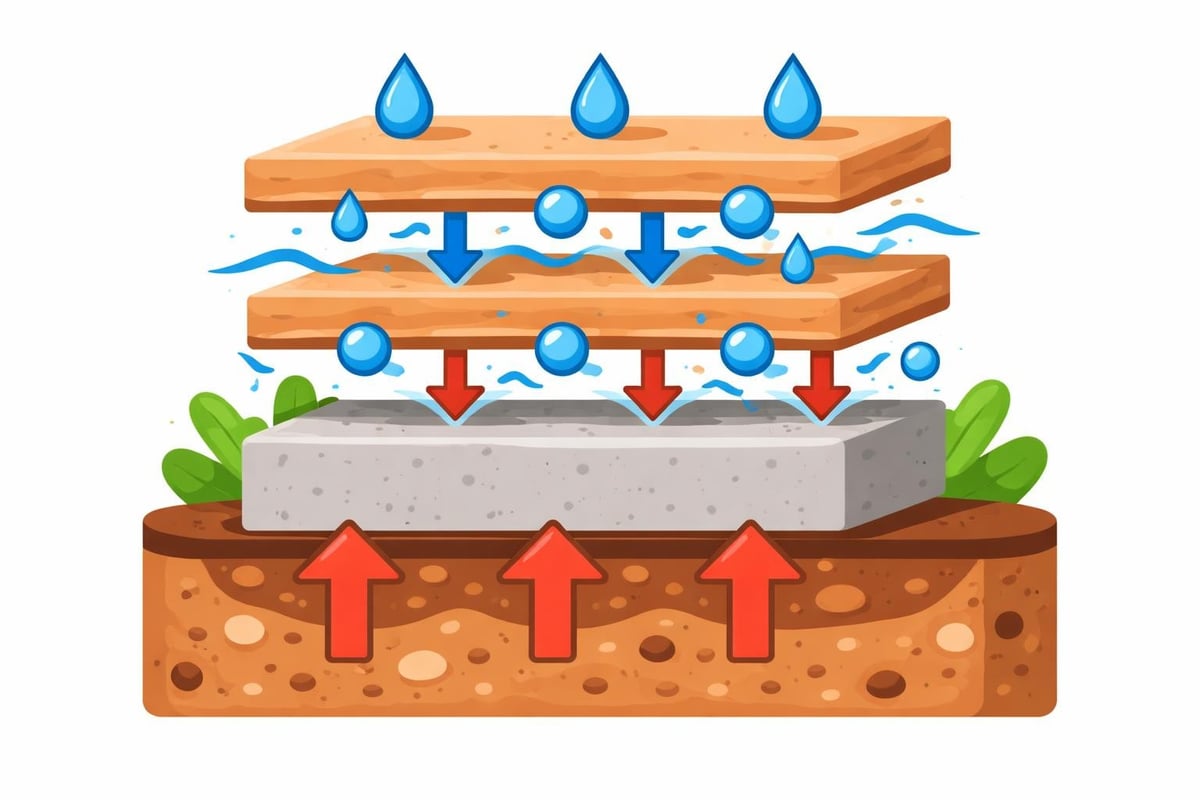
Several factors influence the severity of expansive soil problems:
- Plasticity index: Higher plasticity indicates greater swell potential
- Initial moisture content: Drier soils have more capacity to absorb water
- Depth to seasonal moisture fluctuation: Typically ranges from 3 to 15 feet
- Soil structure: Fissured clays allow faster moisture migration
- Loading conditions: Lighter structures experience more movement
Regional geology plays a crucial role in expansive soil distribution. The Colorado Geological Survey identifies extensive areas throughout the western United States where expansive soils and rocks pose significant construction challenges. Marine shales, bentonite deposits, and weathered volcanic materials commonly exhibit high swell potential.
Identification and Testing Methods
Proper identification begins during the preliminary site investigation phase. Visual indicators include surface cracking patterns, desiccation cracks in exposed soil, and existing structural damage in nearby buildings. However, laboratory testing provides quantitative data essential for engineering design.
Standard Laboratory Testing
The plasticity index (PI) offers a quick screening tool. Soils with PI values exceeding 35 generally warrant detailed investigation for expansion potential. The Atterberg limits test determines both the liquid limit and plastic limit, with their difference yielding the plasticity index.
Swell testing follows standardized procedures to measure expansion under controlled conditions. The AASHTO T258 standard method provides reliable protocols for determining swell potential through oedometer testing. Samples are loaded to simulate field overburden stress, then inundated with water while vertical displacement is measured.
| Test Method | Parameter Measured | Typical Results | Application |
|---|---|---|---|
| Atterberg Limits | Plasticity Index | 15-60+ | Preliminary screening |
| Free Swell Test | Percent Volume Change | 50-150% | General classification |
| Consolidation-Swell | Swell Pressure | 1,000-10,000 psf | Foundation design |
| X-Ray Diffraction | Clay Mineralogy | Mineral percentages | Detailed assessment |
Advanced geotechnical laboratory testing capabilities enable comprehensive characterization of soil behavior. X-ray diffraction identifies specific clay minerals, while suction testing measures the soil's affinity for water absorption.
Field Investigation Techniques
Subsurface exploration programs must extend below the depth of seasonal moisture variation. This zone typically ranges from 10 to 15 feet in most North American climates but can extend deeper in arid regions with established vegetation.
Continuous sampling through shelby tubes or split-spoon samplers captures representative specimens for laboratory analysis. In-situ geotechnical testing complements laboratory work by measuring soil properties at natural moisture content and stress conditions.
Moisture content profiling reveals the existing moisture distribution and helps predict future changes. Dry conditions in the upper soil profile suggest higher swell potential if moisture increases occur. Establishing baseline moisture conditions aids in monitoring long-term trends.
Engineering Design Considerations
Foundation systems for structures built on expansive soils require specialized design approaches. The primary objective involves either avoiding the zone of moisture fluctuation or providing sufficient structural rigidity to resist differential movement.
Foundation Solutions
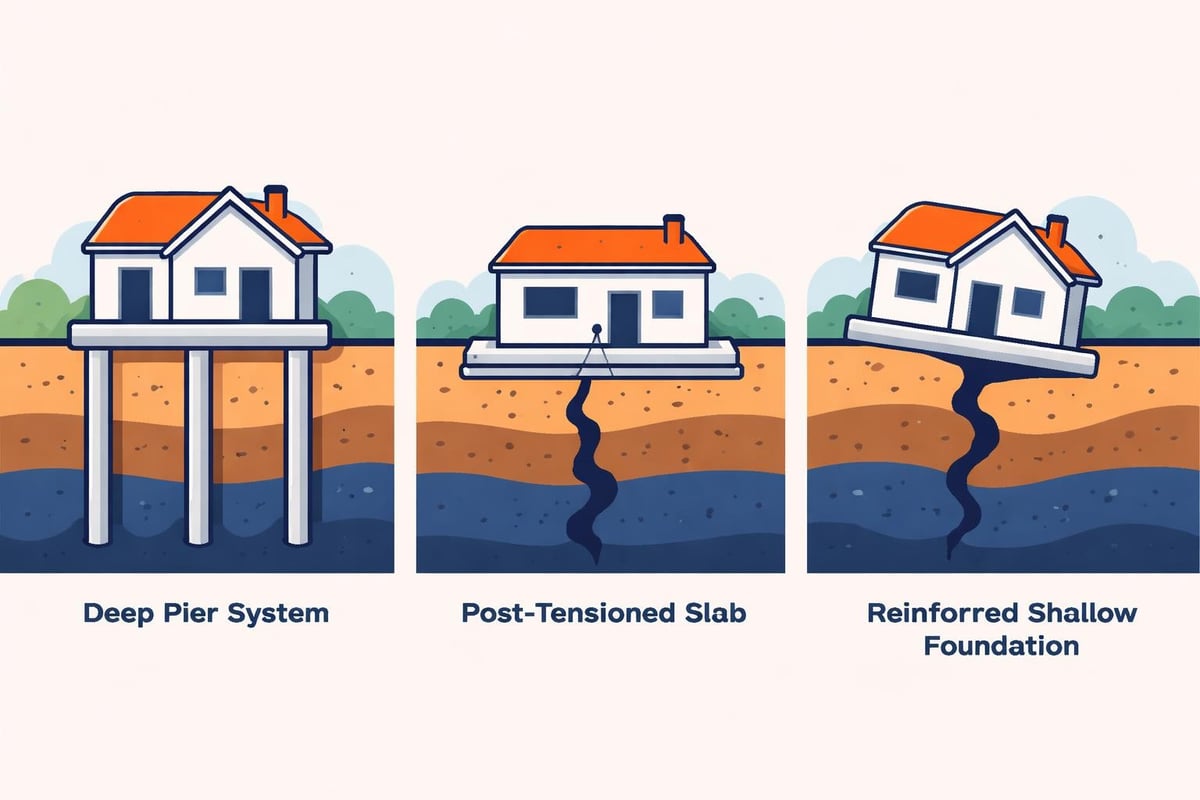
Deep pier and grade beam systems extend structural support below the active zone, typically to depths of 10 to 20 feet. Drilled piers or driven piles transfer building loads to stable soil or bedrock, while suspended grade beams span between piers without bearing on the expansive material. This approach effectively isolates the structure from surface soil movements.
Post-tensioned slab foundations provide an alternative for lighter structures. These reinforced concrete slabs, typically 4 to 6 inches thick with integral beams, gain strength through internal tensioned cables. The monolithic construction distributes loads and resists bending from differential heave. Proper design requires accurate swell pressure estimates and moisture variation predictions.
Conventional shallow foundations can function in moderately expansive soils when properly designed. Increased structural rigidity through continuous footings, reinforced grade beams, and thickened slab sections helps resist differential movement. However, this approach demands more maintenance and accepts some risk of minor cracking.
The Journal of the National Academy of Forensic Engineers provides valuable guidance on selecting appropriate foundation systems based on swell testing results and structure type. Their research emphasizes the importance of matching foundation rigidity to anticipated soil movement.
Moisture Management Strategies
Controlling moisture content within the soil profile represents a critical aspect of managing expansive soil risks. Many structural failures result not from inadequate foundation design but from changes in site hydrology after construction.
Site Grading and Drainage
Proper grading directs surface water away from structures, minimizing infiltration near foundations. Slopes of at least 5 percent for the first 10 feet from building perimeters help shed precipitation before it enters the soil. Swales, drainage channels, and underground collection systems remove water from the site entirely.
Impermeable barriers such as concrete aprons, geomembrane liners, or compacted clay layers reduce moisture migration into the active zone. These systems work best when combined with perimeter drainage to collect and remove any water that does penetrate surface barriers.
Landscaping practices significantly influence soil moisture. Deep-rooted trees and large shrubs planted near foundations create localized drying that can trigger differential movement. Maintaining consistent moisture through controlled irrigation reduces seasonal fluctuation amplitude.
Subsurface drainage systems installed at the base of the active zone intercept downward-migrating moisture before it reaches deeper soil layers. French drains, perforated pipes in gravel trenches, and geosynthetic drainage composites provide effective collection and removal capacity.
Moisture Monitoring Programs
Long-term monitoring helps identify changing conditions before structural damage occurs. Installed moisture sensors at various depths track seasonal patterns and alert property owners to unusual trends. Periodic surveys comparing current and baseline measurements reveal whether site modifications have altered the moisture regime.
Geotechnical engineers conducting advanced testing programs can establish site-specific moisture thresholds that trigger intervention. This proactive approach prevents rather than repairs damage, offering substantial cost savings over the building lifespan.
Soil Modification Techniques
When avoidance or structural solutions prove impractical, modifying the soil itself offers an alternative approach. Several soil stabilization and ground improvement methods reduce swell potential and improve engineering properties.
Chemical stabilization using hydrated lime represents the most common modification technique for expansive clays. Lime reacts with clay minerals to reduce plasticity, decrease swell potential, and increase strength. Typical application rates range from 3 to 8 percent by dry weight, thoroughly mixed into the upper 12 to 18 inches of soil. The treatment creates a non-expansive working platform and reduces long-term movement.
Cement stabilization achieves similar results through different chemical reactions. Portland cement binds soil particles and fills voids, creating a semi-rigid mass with reduced moisture sensitivity. This method works well for road subgrades and structural fills where high strength is desirable.
Moisture conditioning before construction reduces the swell potential remaining in the soil. Pre-wetting fills the clay structure with water, completing much of the expansion before structures are built. Controlled wetting requires careful management to achieve uniform moisture distribution without creating instability. The Texas Department of Licensing and Regulation offers technical guidance on moisture conditioning protocols for residential construction.
| Modification Method | Depth of Treatment | Cost Relative | Long-term Effectiveness | Best Application |
|---|---|---|---|---|
| Lime Stabilization | 12-24 inches | Moderate | High | Building pads, roads |
| Cement Stabilization | 8-18 inches | Moderate-High | Very High | Heavy loads, pavements |
| Moisture Conditioning | 36-60 inches | Low-Moderate | Moderate | Light structures |
| Soil Replacement | Variable | High | Very High | Small critical areas |
Complete soil replacement involves excavating expansive material and backfilling with non-expansive granular soil or engineered fill. While expensive, this approach eliminates the problem entirely and provides predictable foundation support. Economic feasibility depends on excavation depth, site access, and availability of suitable fill material.
Construction Phase Considerations
Even properly designed foundation systems can fail if construction procedures introduce problems. The National Academies of Engineering emphasizes the importance of construction quality control in managing geotechnical risks, including those associated with expansive soils.
Moisture content at the time of construction significantly influences future performance. Foundations built during dry seasons bear on desiccated soil with high subsequent swell potential. Conversely, wet-season construction places loads on saturated soil less likely to expand further but potentially weaker during placement.
Proper compaction of structural fills requires special attention. Over-compaction of highly plastic clays can create a dense, dry material with extreme swell potential. Under-compaction produces weak zones susceptible to settlement and non-uniform moisture absorption. Specifications should establish both maximum dry density and moisture content ranges appropriate for the specific soil type.
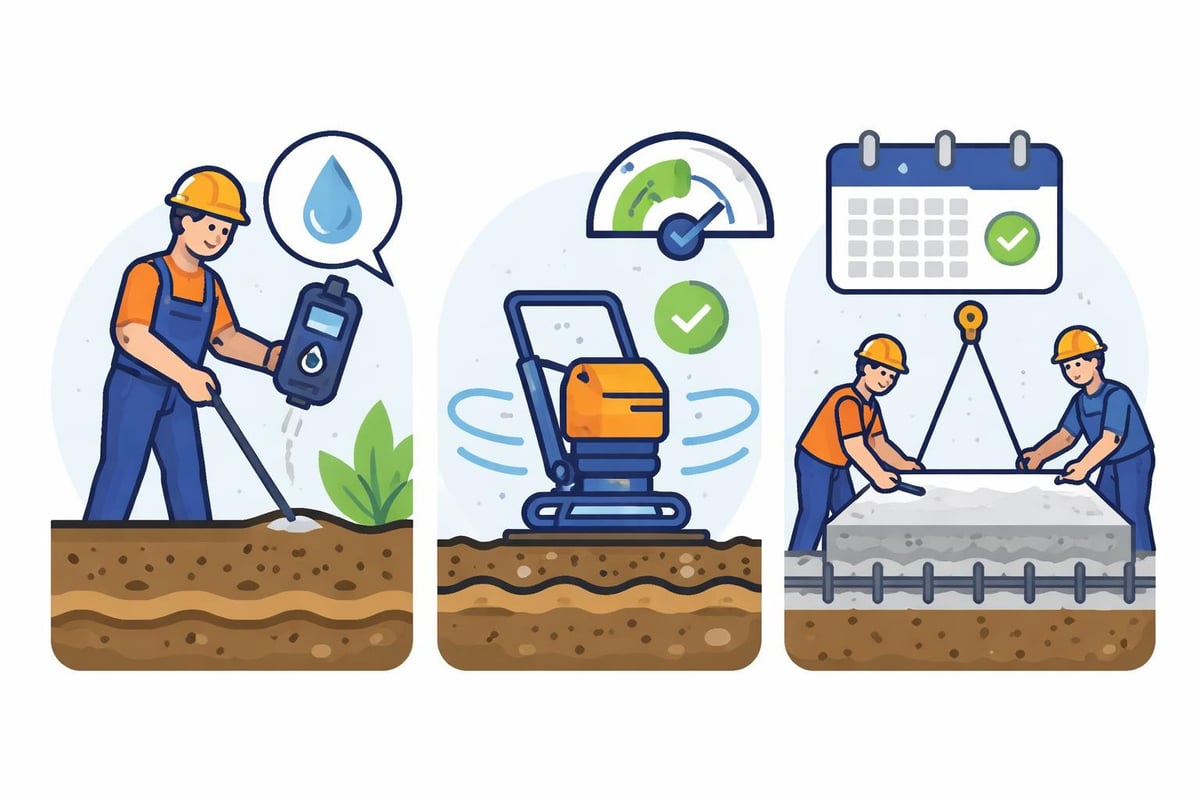
Timing between site grading and structure construction affects moisture equilibrium. Allowing graded surfaces to stabilize under seasonal moisture cycles before building helps identify problem areas and permits corrective action. However, extended exposure can lead to excessive drying that triggers rebound when loads are applied.
Protection of exposed subgrades prevents uncontrolled moisture changes during construction. Temporary covers, prompt foundation placement, and sealed trenches maintain consistent conditions until permanent moisture control systems activate. Construction sequencing should prioritize establishing drainage systems early in the project schedule.
Forensic Investigation of Distress
When structures exhibit distress potentially related to expansive soils, forensic investigation determines causation and guides remediation. The Journal of the National Academy of Forensic Engineers documents numerous case studies examining the effects of changing soil moisture content on structural performance.
Distress patterns provide clues to underlying mechanisms. Center-lift conditions with floor doming and perimeter wall cracks suggest moisture accumulation beneath the structure interior, often from plumbing leaks or poor drainage. Edge-lift manifests as perimeter heave with interior settlement, typically resulting from exterior moisture sources and interior desiccation.
Comprehensive forensic investigations include:
- Detailed distress mapping: Documenting crack patterns, locations, and widths
- Foundation exposure: Excavating to examine construction details and current conditions
- Subsurface exploration: Drilling adjacent to foundations to sample soil and measure moisture
- Laboratory testing: Comparing current properties to design assumptions
- Drainage evaluation: Assessing surface and subsurface water management systems
Comparing current moisture content profiles to baseline conditions reveals whether moisture migration has occurred. Significant deviation from expected patterns indicates changes in site hydrology requiring corrective action. Swell testing on samples recovered from beneath foundations quantifies remaining expansion potential under future moisture increases.
Engineering services firms providing comprehensive geotechnical engineering capabilities can conduct thorough forensic assessments that identify root causes and develop effective remediation strategies. These investigations integrate field observations, laboratory data, and engineering analysis to deliver defensible conclusions.
Remediation and Repair Strategies
Repairing structures damaged by expansive soils requires addressing both symptoms and underlying causes. Superficial repairs that merely patch cracks without controlling moisture or providing structural support inevitably fail as movement continues.
Underpinning transfers loads to deeper, stable soil layers, effectively retrofitting structures with deep foundation systems. Helical piers, hydraulically driven piers, or drilled piers installed around the building perimeter or at interior locations stabilize the structure and provide lift to close cracks. This approach works well for severe distress cases where structural integrity is compromised.
Slab jacking and mud jacking raise settled concrete floors and foundations by pumping grout or polyurethane foam beneath the affected areas. While effective for addressing differential settlement, these techniques do not prevent future movement unless combined with moisture control improvements. They serve best as interim solutions or in conjunction with other remediation methods.
Improving drainage represents the most cost-effective long-term solution for many distressed structures. Installing perimeter drains, regrading surfaces, sealing foundation penetrations, and managing irrigation reduces moisture variation that drives continued movement. When combined with structural monitoring, drainage improvements often arrest damage progression without expensive foundation modifications.
Chemical grouting injects stabilizing agents directly into the soil mass surrounding foundations. Expanding polyurethane or acrylamide grouts fill voids, densify loose soil, and create moisture barriers. This approach provides localized improvement without extensive excavation but requires skilled application to achieve uniform treatment.
The Encyclopedia of Engineering Geology provides comprehensive coverage of remediation techniques applicable to various expansive soil scenarios, emphasizing the importance of matching solutions to specific site conditions and distress patterns.
Managing expansive soils requires integrated approaches combining proper site characterization, appropriate foundation design, effective moisture control, and quality construction practices. Understanding the mechanisms driving soil volume change and implementing proven mitigation strategies protects structures from costly damage while ensuring long-term performance. ZALIG Consulting Ltd delivers comprehensive geotechnical engineering services tailored to expansive soil challenges, from initial site investigations and foundation design through construction monitoring and forensic assessment. Our multidisciplinary team integrates field testing, laboratory analysis, and practical engineering solutions to manage risk and support successful project delivery.