
As the world faces mounting challenges from climate change and urban growth, the need for sustainable infrastructure has never been more urgent. This guide explores environmental civil engineering, offering a roadmap to the latest trends, challenges, and solutions shaping the industry for 2026. Readers will discover how the field has evolved, what core areas define modern practice, and which innovations are transforming projects globally. We will also examine the regulatory and educational landscape, and highlight new opportunities for professionals. Dive in to gain actionable insights and prepare for the future of environmental civil engineering.
The Evolution of Environmental Civil Engineering
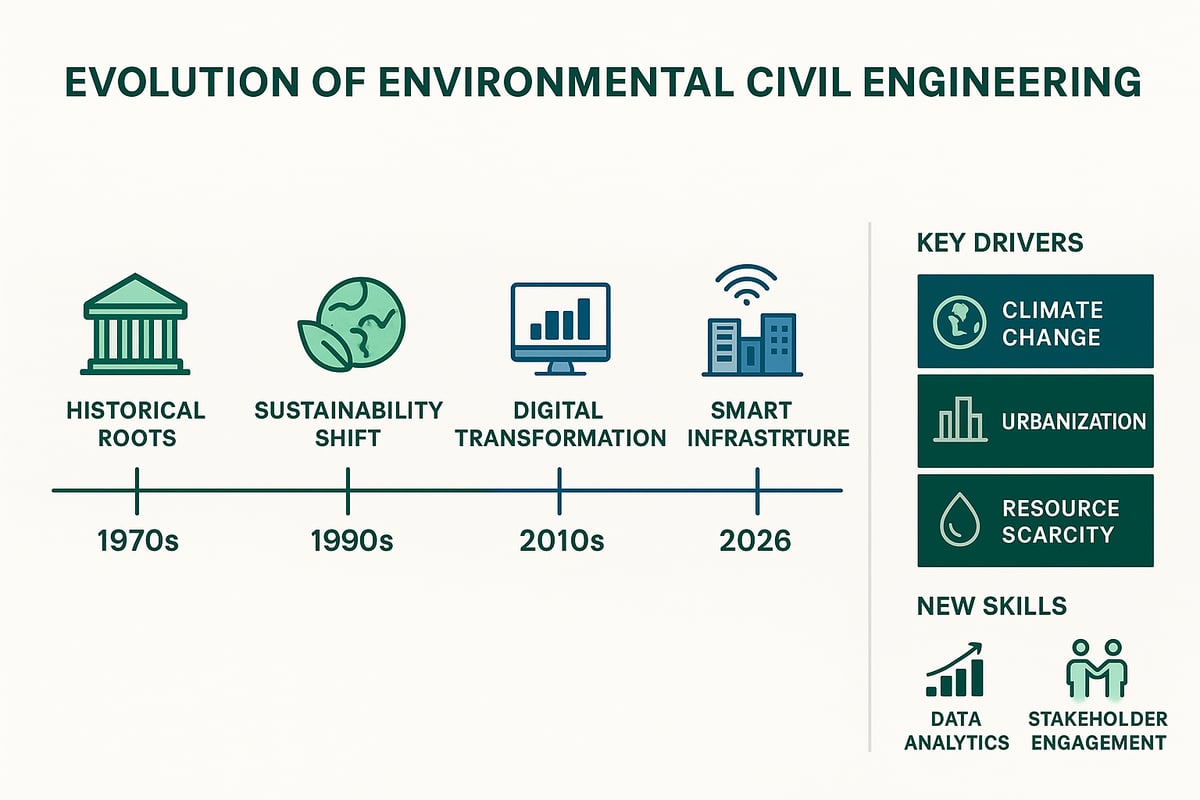
As we approach 2026, environmental civil engineering has rapidly transformed from a traditional, project-focused discipline to a dynamic field centered on sustainability, innovation, and interdisciplinary collaboration. This evolution is driven by pressing environmental challenges, technological advancements, and shifting societal expectations. Understanding how environmental civil engineering has changed in recent decades is essential for professionals and organizations aiming to build resilient, future-ready infrastructure.
Defining Environmental Civil Engineering
Environmental civil engineering represents the integrated approach to designing, constructing, and maintaining infrastructure with a focus on environmental stewardship. This discipline combines the principles of civil engineering with environmental science, aiming to minimize negative ecological impacts throughout the project lifecycle.
Historically, civil engineering prioritized structural integrity, efficiency, and cost-effectiveness. In recent decades, however, global awareness of climate change and resource limitations prompted a significant shift. Environmental civil engineering now emphasizes sustainable practices, such as reducing carbon footprints, conserving resources, and enhancing ecosystem health.
This evolution began in the late 20th century, when environmental engineering emerged as a recognized discipline within civil engineering. Professionals started to address pollution control, water management, and waste reduction as core project concerns. Today, environmental civil engineering is central to the development of infrastructure that not only meets human needs but also supports the planet's long-term health.
The growing importance of environmental civil engineering is evident in public policy, funding priorities, and industry standards. Sustainable design certifications, such as LEED and Envision, have become benchmarks for excellence. As a result, the profession now requires a broader skill set and a deeper commitment to environmental outcomes.
Key Drivers of Change (2020–2026)
Several powerful forces have accelerated the evolution of environmental civil engineering since 2020. Chief among these are climate change pressures, rapid urbanization, and escalating resource scarcity. As urban populations swell, infrastructure demands grow, placing unprecedented stress on water, energy, and land systems.
Recent data shows that by 2026, over 60 percent of the world’s population will reside in urban areas, amplifying the need for resilient and adaptive infrastructure. Climate change has intensified extreme weather events, compelling engineers to design with both mitigation and adaptation in mind.
The United Nations Sustainable Development Goals (SDGs) have also shaped the field, establishing global benchmarks for responsible infrastructure and resource use. Advances in materials science, such as the development of high-performance and recycled materials, have further expanded design possibilities.
Digital technology is another game-changer. Tools like building information modeling (BIM), AI-driven simulations, and sensor networks enable real-time monitoring and predictive maintenance. Smart city initiatives illustrate how environmental civil engineering leverages data and automation to enhance efficiency and resilience.
Key drivers include:
- Climate adaptation and mitigation needs
- Urban population growth and densification
- Resource scarcity and circular economy models
- Technological innovation in materials and digital systems
- Policy frameworks inspired by the UN SDGs
As these drivers converge, they redefine the scope and priorities of environmental civil engineering.
Evolving Professional Roles and Skills
The rapid evolution of environmental civil engineering has transformed professional expectations and required competencies. Today’s engineers must possess interdisciplinary expertise that blends technical proficiency with environmental awareness and digital literacy.
Collaboration is now central to project delivery. Teams often include experts in engineering, ecology, data science, and public health. Stakeholder engagement is vital, ensuring community voices shape infrastructure outcomes. Educational institutions have responded by offering dual degrees and flexible learning pathways, such as combined BS/MS programs and interdisciplinary graduate tracks.
Experiential learning, through internships and research, is increasingly valued. Graduates are expected to navigate complex regulatory environments, manage cross-sector partnerships, and drive innovation in sustainability.
The need for ongoing professional development is clear. Forums like the World Infrastructure Forum 2026 highlight global trends and connect professionals with emerging best practices in environmental civil engineering.
As the field continues to evolve, those who embrace lifelong learning, adaptability, and inclusive leadership will be best positioned to shape the future of sustainable infrastructure.
Core Areas of Environmental Civil Engineering Practice
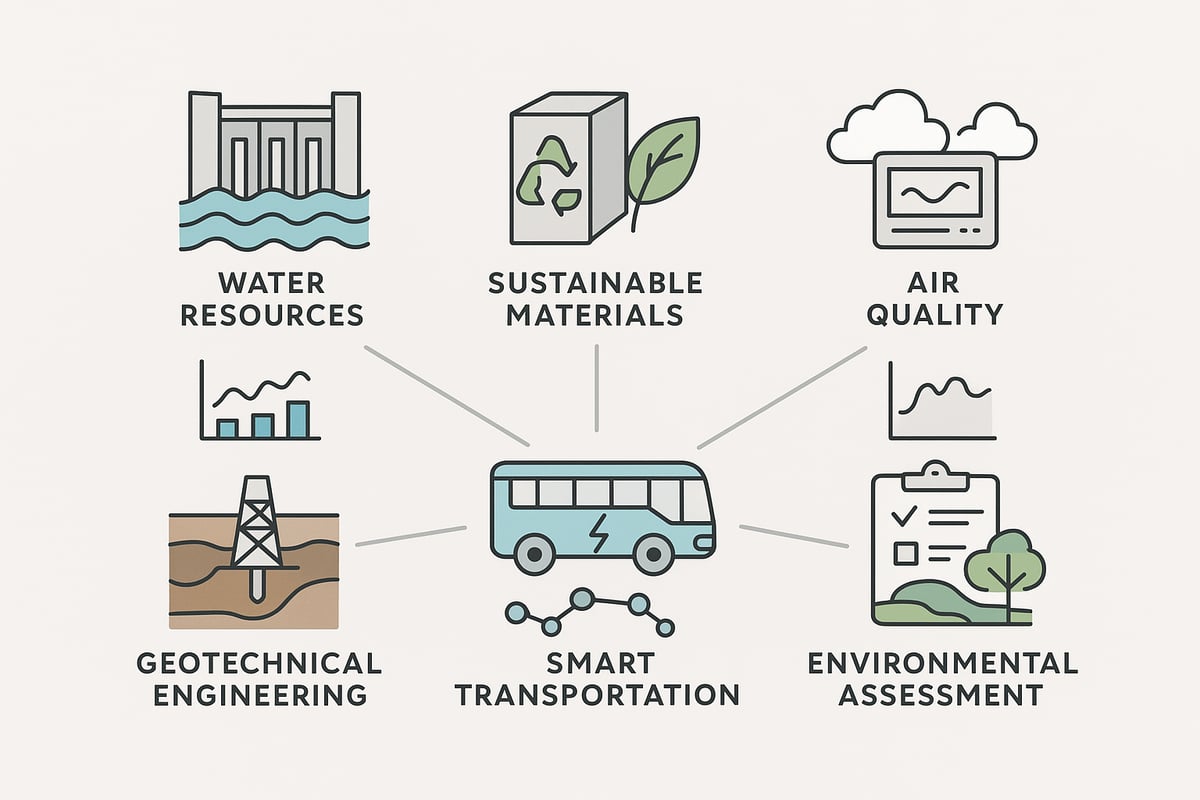
Environmental civil engineering spans a wide array of disciplines, each vital to building a sustainable future. As cities grow and environmental pressures mount, professionals in this field address complex challenges across water, air, soil, and infrastructure systems. Understanding these core areas is essential for anyone looking to contribute to resilient, eco-friendly communities.
Water Resources and Hydrotechnical Engineering
Water management remains at the heart of environmental civil engineering. Engineers develop solutions for reliable water supply, treatment, and distribution, while also tackling flood control and stormwater challenges. In 2026, innovations in hydrotechnical engineering, such as advanced flood modeling and smart irrigation systems, play a pivotal role in adapting to climate change.
Laboratory research on glacial melt and hydro labs inform real-world designs for dams, reservoirs, and urban drainage. Projects increasingly integrate nature-based solutions, like constructed wetlands, to enhance resilience.
For a deeper look at the full spectrum of services in this area, explore the Environmental Engineering Services Overview.
Sustainable Construction and Materials
The drive for sustainability has transformed construction practices within environmental civil engineering. Eco-friendly materials, such as recycled aggregates, low-carbon cement, and timber composites, are now mainstream. Construction material recycling initiatives reduce waste and support circular economy goals.
Rigorous laboratory and field testing ensure materials meet safety and performance standards. Concrete mixing labs and sustainable building certifications, like LEED, showcase real-world progress in green construction.
Collaboration among engineers, architects, and material scientists is crucial to accelerate innovation and adoption of new building solutions.
Air Quality and Pollution Control
Urbanization and industrial activity present ongoing air quality challenges. Environmental civil engineering professionals design and implement monitoring networks to track pollutants in real time. These systems guide interventions to reduce emissions from transportation, industry, and construction.
Pollution control technologies, such as air filtration and emission capture systems, are integrated into urban planning. Regulatory compliance remains a top priority, ensuring that projects meet evolving environmental standards.
Recent projects highlight air quality monitoring in dense metropolitan areas, demonstrating measurable reductions in harmful particulates.
Geotechnical and Soil Management
Understanding soil properties is essential for safe and sustainable infrastructure. Environmental civil engineering teams conduct site investigations, soil analysis, and foundation design to minimize risk and ensure long-term stability.
Contaminated site remediation is a major focus, driven by both regulatory requirements and public health concerns. Geosystems engineering and soil stabilization projects restore degraded land and support urban development.
Field data and geotechnical labs provide critical insights for complex projects, especially in regions with challenging ground conditions.
Transportation and Smart Infrastructure
Modern transportation systems are increasingly designed with sustainability and resilience in mind. Environmental civil engineering integrates sensor networks, data-driven maintenance, and electrified transit to reduce environmental impacts.
Smart infrastructure projects, such as intelligent traffic management and real-time monitoring, enhance public safety and optimize resource use. Equity considerations ensure that sustainable transportation options are accessible to all community members.
Collaboration with urban planners and public health experts is key to creating integrated, future-ready mobility solutions.
Environmental Impact Assessment and Restoration
Every major infrastructure project undergoes an environmental impact assessment. This process evaluates potential ecological, social, and economic effects, guiding decision-making and regulatory approvals.
Environmental civil engineering professionals lead these studies, employing advanced modeling and stakeholder engagement. Ecological restoration and habitat enhancement are increasingly part of project lifecycles, reflecting a commitment to long-term stewardship.
Data shows a significant increase in environmental assessments, especially for large-scale developments, underscoring the growing importance of this discipline.
Innovations and Emerging Technologies for 2026
The landscape of environmental civil engineering is rapidly evolving as we approach 2026. New technologies and innovative approaches are reshaping how projects are designed, built, and managed. These advancements help address complex environmental challenges, drive sustainability, and improve project outcomes for communities around the globe.
Digital Transformation in Civil Engineering
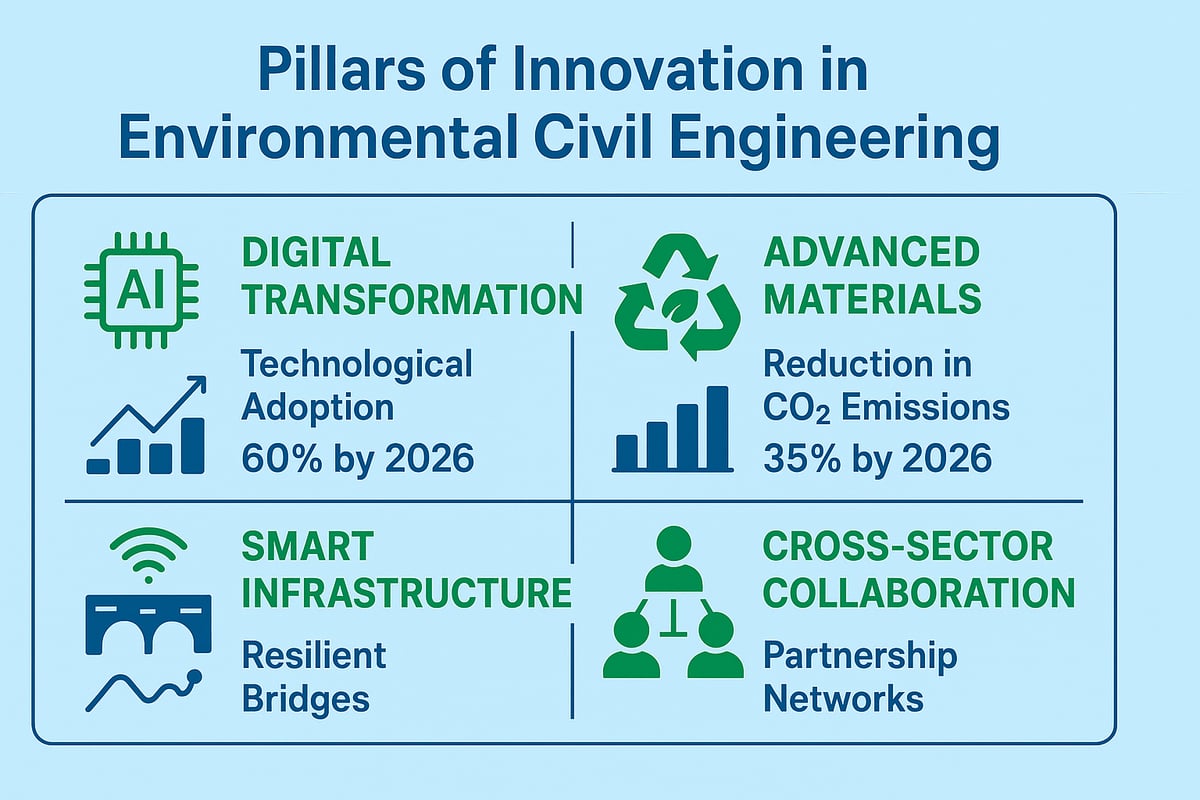
Digital technologies are at the core of the evolution in environmental civil engineering. The integration of artificial intelligence, Internet of Things devices, and big data analytics is transforming project planning and execution. Engineers now use digital twins and advanced simulation tools to create virtual models of infrastructure before any construction begins.
This digital transformation enables real-time monitoring of bridges, water systems, and transportation networks. As a result, issues like structural stress or environmental impact can be detected and addressed early. Common digital tools include:
- Digital twins for predictive maintenance
- AI-driven design optimization
- IoT sensors for environmental monitoring
Digital workflows also support collaboration among teams, helping them make data-driven decisions for more sustainable outcomes. The demand for digital literacy in environmental civil engineering is higher than ever.
Advanced Materials and Sustainable Solutions
Material innovation is a driving force behind sustainability in environmental civil engineering. Engineers are now leveraging bio-based, recycled, and high-performance materials to reduce environmental footprints. These materials offer durability, energy efficiency, and improved lifecycle performance.
Lifecycle assessment tools allow teams to evaluate a material's environmental impact from production to disposal. Circular economy principles are increasingly embedded in project planning, promoting reuse and recycling. Noteworthy advancements include:
- New concrete formulations with lower carbon emissions
- Use of recycled plastics and composites in construction
- Implementation of green infrastructure solutions
Rigorous laboratory testing ensures that these materials meet safety and performance standards. Sustainable materials are central to meeting regulatory requirements and public expectations in environmental civil engineering.
Smart and Resilient Infrastructure
Smart infrastructure is redefining resilience in environmental civil engineering. The integration of sensors, automation, and predictive analytics allows for real-time assessment and adaptation of critical systems. For example, urban bridges and tunnels equipped with monitoring devices can quickly respond to extreme weather or seismic activity.
Recent projects highlight features such as:
- Sensor networks for traffic and air quality management
- Automated systems for flood control and stormwater management
- Predictive maintenance to extend asset lifespans
Smart cities are leading the way by combining digital innovation with resilient design. Research into electric road systems and dynamic wireless charging, as explored in recent studies, demonstrates the potential of scalable, sustainable urban mobility.
Collaboration and Interdisciplinary Approaches
The future of environmental civil engineering depends on strong partnerships across sectors. Collaboration between engineers, urban planners, public health experts, and policymakers leads to more effective and sustainable solutions. Cross-disciplinary teams can address complex challenges, from climate adaptation to community engagement.
Key elements of successful collaboration include:
- Joint research initiatives
- Industry-academia partnerships
- Community stakeholder involvement
Events such as the Sustainable Innovations & Partnerships Conference 2026 unite global leaders to share best practices, foster innovation, and accelerate progress in environmental civil engineering. These networks are essential for driving systemic change and achieving ambitious sustainability goals.
Regulatory, Educational, and Professional Landscape
Navigating the regulatory, educational, and professional landscape is crucial for success in environmental civil engineering. As the field evolves, professionals must adapt to new standards, educational requirements, and a changing workforce. Let’s explore the key trends shaping the industry in 2026.
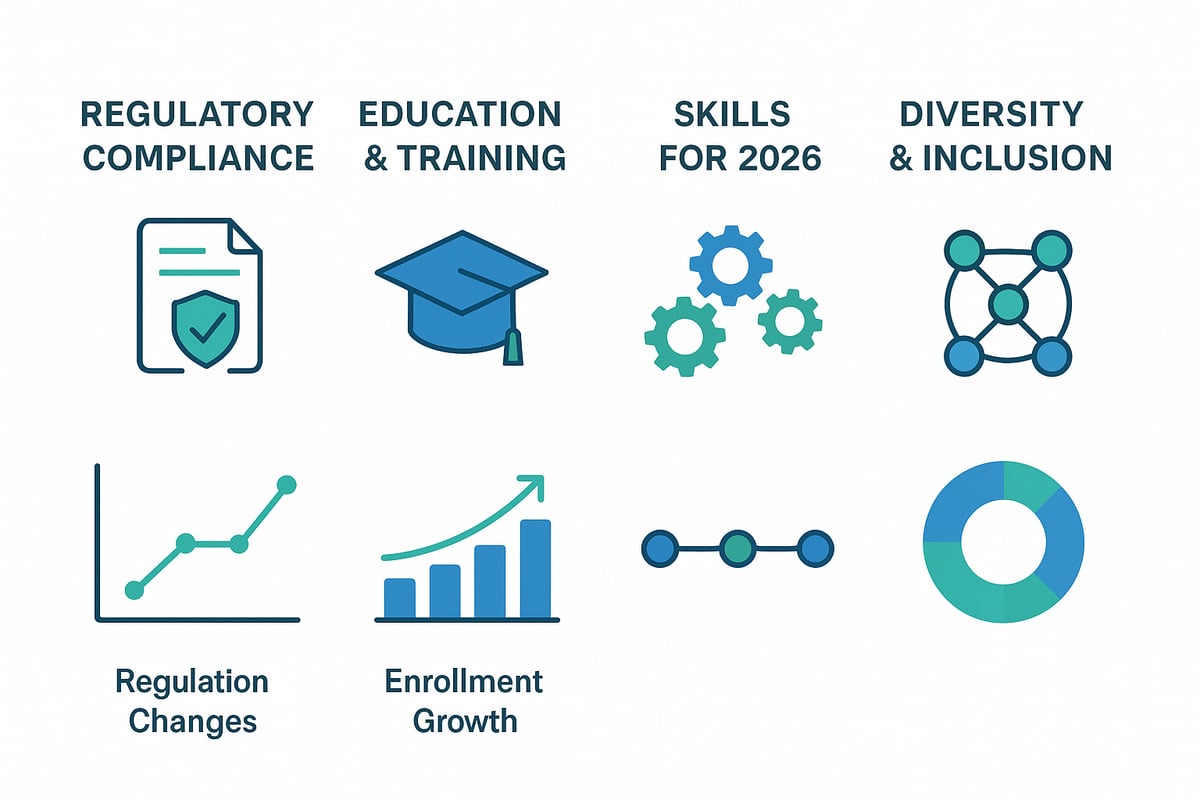
Regulatory Trends and Compliance
Environmental civil engineering operates within a dynamic regulatory framework. In recent years, local, national, and international policies have shifted toward stricter sustainability and resilience standards. Compliance now involves meeting not only technical codes, but also environmental stewardship requirements.
Key regulatory trends include the adoption of lifecycle analysis and circular economy principles. These align with global initiatives such as Sustainable Development Goal 9 Overview, which emphasizes resilient infrastructure and sustainable industrialization. Accreditation bodies like ABET continue to update standards for civil and environmental programs, ensuring that curricula reflect the latest industry needs.
Staying current with policy changes is essential. Many organizations now assign dedicated compliance officers or teams to monitor regulations impacting environmental civil engineering projects. This proactive approach minimizes risks and supports long-term project viability.
Education and Training Pathways
The demand for expertise in environmental civil engineering has driven significant changes in education. Universities now offer a range of undergraduate and graduate programs focused on sustainability, water resources, and green construction.
Flexible pathways are increasingly popular. Dual-degree options, such as BS/MS programs, allow students to specialize in environmental civil engineering while building interdisciplinary skills. Some institutions also offer MS degrees in related fields like bioengineering.
Experiential learning is a cornerstone of modern education. Internships, co-ops, and hands-on research provide real-world experience, making graduates more competitive. Enrollment in environmental civil engineering programs has risen steadily over the past five years, reflecting the growing importance of this discipline.
Skills and Competencies for 2026
Success in environmental civil engineering requires a broad skill set. Technical proficiency remains important, but digital literacy and project management have become essential. Engineers must now interpret data from sensors, manage complex modeling software, and collaborate with diverse teams.
Key competencies for 2026 include:
- Sustainability analysis and lifecycle thinking
- Data analytics and digital tools
- Stakeholder engagement and communication
- Regulatory knowledge and compliance
Continuous professional development is vital. Many employers support ongoing training, certifications, and participation in industry workshops. As new technologies emerge, engineers must adapt quickly to maintain relevance in environmental civil engineering.
Diversity, Equity, and Inclusion in the Profession
The environmental civil engineering profession is actively working to broaden participation and promote equity. Industry groups, academic institutions, and employers are launching initiatives to support underrepresented groups in engineering.
Examples include:
- Outreach programs for K-12 students to spark early interest
- Scholarships targeting women and minority students
- Inclusive curricula and mentorship opportunities
These efforts are shaping a more diverse workforce, which brings fresh perspectives and innovative solutions to environmental civil engineering challenges. By fostering an inclusive environment, the field is better positioned to address complex societal needs and drive sustainable progress.
Real-World Applications and Case Studies
Environmental civil engineering is transforming the way communities confront environmental and societal challenges. By applying innovative solutions and rigorous science, engineers are delivering real-world projects that protect people, resources, and the planet.
Infrastructure Projects Addressing Climate Change
Across the globe, environmental civil engineering is at the forefront of climate adaptation. Cities are investing in resilient infrastructure to withstand extreme weather, flooding, and rising temperatures. For example, storm surge barriers, green roofs, and permeable pavements are now standard features in major urban areas.
A recent surge in climate-adaptive projects reflects the urgent need for resilient solutions. In 2023 alone, global investment in flood control infrastructure surpassed $80 billion, with significant allocations for sustainable transportation and energy-efficient buildings. Engineers are integrating nature-based solutions like urban wetlands and bioswales to manage stormwater, reduce heat, and enhance biodiversity.
These projects highlight how environmental civil engineering addresses both immediate risks and long-term sustainability. By designing infrastructure with flexibility and redundancy, professionals ensure that communities can recover quickly from climate-related disruptions. This proactive approach is essential for safeguarding public health, economic stability, and environmental quality.
Water and Environmental Restoration Initiatives
Water management and ecosystem restoration are central pillars of environmental civil engineering. Engineers collaborate with public agencies and communities to restore rivers, wetlands, and watersheds, improving water quality and supporting biodiversity. Recent projects have focused on innovative techniques like constructed wetlands and advanced hydrotechnical modeling to enhance ecosystem resilience.
Successful initiatives often combine scientific research with practical solutions. For instance, partnerships between municipalities and research institutions have led to breakthroughs in glacial melt monitoring and flood risk reduction. These efforts are supported by specialized Hydrotechnical Engineering Solutions, which provide expertise in water resource management and restoration.
Environmental civil engineering teams also address natural gas leak detection and groundwater contamination, ensuring safe drinking water for vulnerable populations. By integrating restoration work with regulatory compliance, professionals deliver projects that are both effective and sustainable, setting new standards for environmental stewardship.
Urban Sustainability and Smart Cities
Urban environments are evolving rapidly, and environmental civil engineering is shaping the future of smart, sustainable cities. Engineers are integrating green infrastructure, sensor networks, and data-driven systems to reduce emissions and improve quality of life. Projects include installing real-time air quality monitors, developing sustainable transit systems, and retrofitting buildings for energy efficiency.
Research into Electric Road Systems for Smart Cities Study demonstrates the potential of dynamic wireless charging for electric vehicles, reducing reliance on fossil fuels and supporting clean mobility. These advancements are complemented by urban planning strategies that emphasize walkability, green spaces, and equitable access to resources.
Measurable outcomes from these projects include reduced carbon footprints, improved public health metrics, and enhanced community resilience. Environmental civil engineering plays a pivotal role in aligning urban growth with sustainability goals, ensuring that technology and infrastructure benefit all residents.
Innovative Testing and Quality Assurance
Rigorous testing and quality assurance are foundational to environmental civil engineering. Laboratories and field teams perform advanced material testing, soil analysis, and geotechnical assessments to guarantee the safety and durability of infrastructure projects. For example, concrete mixing labs and soil stabilization studies help optimize construction materials for specific site conditions.
Recent developments in geotechnical site investigations have improved risk assessment and remediation strategies. Case studies demonstrate how early detection of subsurface hazards prevents costly failures and environmental damage. Collaboration between engineers, contractors, and regulatory bodies ensures compliance with evolving standards.
Through continuous innovation and adoption of best practices, environmental civil engineering professionals deliver projects that meet the highest benchmarks for safety, performance, and sustainability. Their commitment to quality assurance underpins the long-term success of infrastructure across diverse sectors.
Future Outlook and Opportunities in Environmental Civil Engineering
The future of environmental civil engineering is being shaped by rapid technological advancements, shifting societal needs, and a growing focus on sustainability. As 2026 approaches, professionals in the field must stay ahead of emerging trends and seize new opportunities to drive impactful change.
Anticipated Trends for 2026 and Beyond
Environmental civil engineering is set to experience significant transformation as new technologies and global priorities redefine the industry. Digital tools such as artificial intelligence, big data analytics, and the Internet of Things are becoming essential for designing smarter, more resilient infrastructure. These advancements enable engineers to make data-driven decisions, monitor assets in real time, and optimize resource use.
Climate adaptation will be at the forefront of infrastructure planning. Projects will increasingly focus on resilience, with lifecycle thinking and the circular economy guiding material selection and waste reduction efforts. The integration of environmental civil engineering with urban planning and public health will ensure that communities can withstand climate extremes and recover quickly from disruptions.
Job growth in the sector is expected to accelerate, with new career paths emerging in sustainability consulting, smart infrastructure engineering, and data analysis. Professionals who embrace these trends will be well-positioned to lead the next wave of innovation in environmental civil engineering.
Opportunities for Professionals and Organizations
The evolving landscape of environmental civil engineering presents abundant opportunities for both individuals and organizations. Those with interdisciplinary expertise in engineering, environmental science, and digital technology will find themselves in high demand. Organizations that invest in upskilling their teams and adopting new technologies will gain a competitive edge.
Emerging roles include sustainability consultants, data analysts, and smart infrastructure specialists. Collaboration across sectors—such as partnerships with urban planners, public health experts, and technology providers—will be vital to achieving holistic project outcomes. For professionals, continuous learning and active participation in research and innovation hubs are key to staying relevant in environmental civil engineering.
By leveraging advanced modeling tools and participating in initiatives like Geotechnical Site Investigation Insights, organizations can demonstrate their commitment to quality and sustainable practices. This not only enhances project outcomes but also strengthens stakeholder trust.
Challenges and Solutions Moving Forward
Despite the promising outlook, environmental civil engineering faces persistent challenges. Funding constraints, evolving regulatory requirements, and skill gaps can hinder progress. Navigating complex approval processes, such as the Environmental Assessment Process, often requires specialized expertise and proactive planning.
The solution lies in upskilling the workforce, fostering public-private partnerships, and advocating for forward-thinking policies. Organizations should prioritize professional development, encourage interdisciplinary collaboration, and invest in digital tools that streamline compliance and reporting. By embracing innovation and adaptability, the field can overcome obstacles and continue to deliver sustainable solutions.
Engaging with the Community and Stakeholders
Meaningful engagement with communities and stakeholders is essential for the future success of environmental civil engineering. Transparent communication builds trust and ensures that diverse perspectives are considered in project planning. Engineers play a central role in facilitating stakeholder collaboration, from early consultation to project delivery.
Successful examples include community workshops, public feedback sessions, and inclusive planning processes that address equity and environmental justice. By fostering these connections, environmental civil engineering professionals can help shape sustainable, resilient, and equitable communities for generations to come.
As you look ahead to 2026 and consider how environmental civil engineering is evolving, it’s clear that innovative, sustainable solutions are more important than ever. Whether you’re planning a major infrastructure project, need expert site investigations, or want to ensure rigorous testing and compliance, having a trusted partner can make all the difference. If you’re ready to explore how tailored engineering and environmental services can help you achieve your goals, I invite you to reach out—we’re here to support your vision for a more resilient Alberta.
Contact Us: info@zalig.ca or +1 800 515 0497