
The world is facing urgent environmental challenges, from rising temperatures to dwindling resources. These issues demand immediate action and innovative solutions.
That is where engineering in environment takes center stage. Engineers are developing new ways to manage water, reduce pollution, and create sustainable cities.
Understanding the latest trends in this field is vital. This guide explores how engineering in environment is evolving, the technologies shaping our future, and the opportunities ahead.
Are you ready to discover actionable insights and prepare for what lies ahead in 2026? Dive in to learn how you can make a difference.
The Evolution of Environmental Engineering
Understanding the evolution of engineering in environment reveals how the discipline has adapted to society’s most pressing challenges. From ancient civilizations to today’s advanced, data-driven solutions, this journey highlights continuous innovation and expanding impact.
Historical Foundations and Milestones
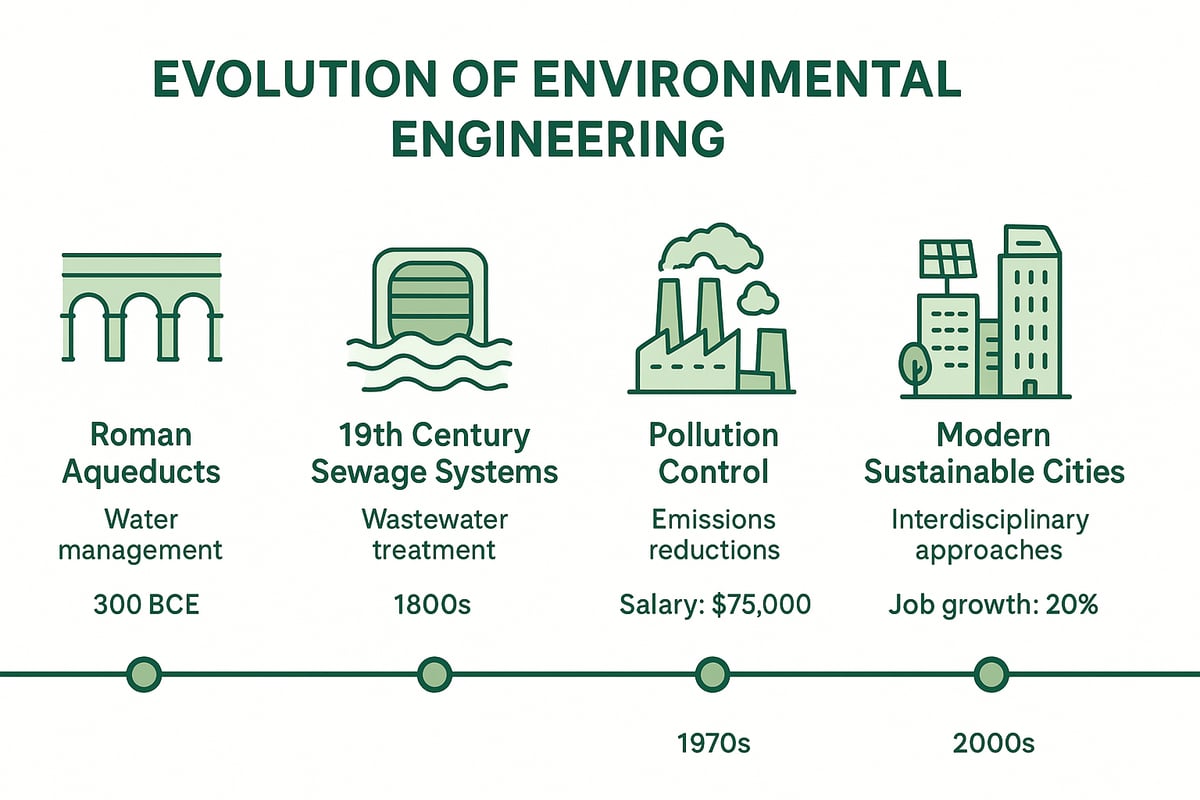
The roots of engineering in environment stretch back thousands of years. Ancient societies, such as the Romans, engineered aqueducts and irrigation channels to secure water supply and promote public health. Early flood control and waste management projects set the stage for environmental problem-solving.
The 19th century saw a leap forward with London’s modern sewage system, which greatly reduced disease and set a new standard for public health engineering. As industrialization accelerated, new environmental hazards emerged. The 20th century responded with landmark legislation, such as the Clean Water Act, and large-scale pollution control efforts.
Over time, engineering in environment began to integrate civil, chemical, and biological engineering. These collaborations enabled more effective solutions for air quality, waste, and water management. Early projects, like air pollution monitoring and urban waste systems, laid the groundwork for today’s comprehensive approach.
Environmental Engineering 1.0 to 3.0
The first era of engineering in environment, known as Environmental Engineering 1.0, focused on basic sanitation and disease prevention. This stage prioritized clean water and effective waste disposal to protect communities.
Environmental Engineering 2.0 introduced pollution control and regulatory frameworks. Legislation such as the Clean Water Act formalized standards for protecting natural resources. The field expanded to address industrial pollution and ecosystem impacts.
Today, Environmental Engineering 3.0 is defined by systems thinking, sustainability, and the circular economy. The discipline has shifted from reactive fixes to proactive, holistic strategies. Engineers now consider long-term resource use, lifecycle impacts, and resilience. For a comprehensive overview of current services and innovations in this field, visit the Environmental Engineering Services Overview.
The profession also offers strong financial prospects. According to the BLS in 2024, the median annual salary for environmental engineers is $110,570, reflecting the field’s growing value and complexity.
The Modern Scope: Interdisciplinary Expansion
Modern engineering in environment is characterized by its interdisciplinary reach. Collaboration with urban planning, ecology, public health, and industry is now standard practice. This approach enables teams to address complex challenges, such as climate adaptation and sustainable resource management.
Advanced modeling, data analytics, and remote sensing tools are transforming the field. Engineers use these technologies to design sustainable cities, optimize water use, and predict environmental risks. Cross-disciplinary teams bring together expertise in transportation, green infrastructure, and energy systems.
Current global issues demand integrated solutions. Urbanization, resource scarcity, and climate change require engineers to think beyond traditional boundaries. Sustainable city design now includes everything from water recycling to green roofs, demonstrating the broad impact of engineering in environment.
Core Disciplines and Applications in Environmental Engineering
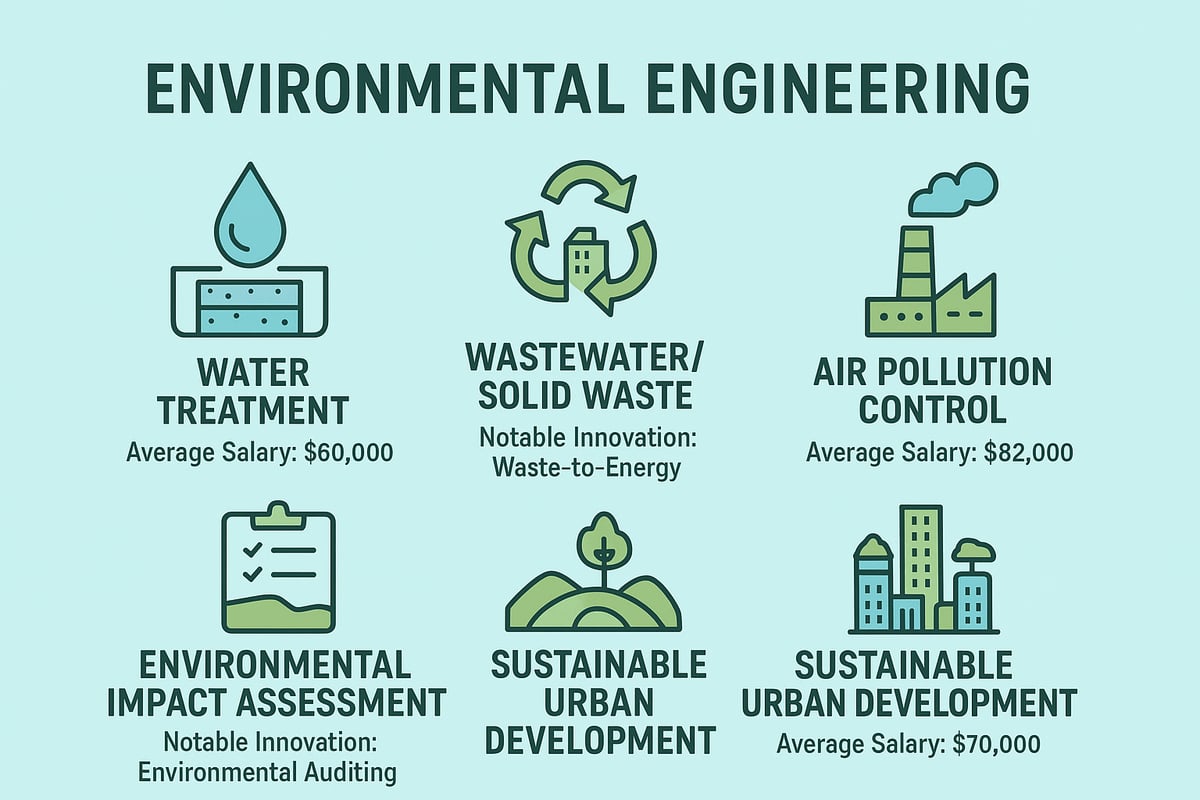
Environmental challenges are diverse, requiring expertise across multiple disciplines. The field of engineering in environment addresses water, waste, air, impact assessment, and sustainable development. Each core area plays a critical role in building a healthier, more resilient world.
Water Supply, Treatment, and Management
Ensuring clean, reliable water is a foundational goal of engineering in environment. Professionals in this field design and operate complex treatment and distribution systems, safeguarding communities from contaminants and shortages.
Modern water systems must address new pollutants, such as pharmaceuticals and microplastics, which require advanced filtration and monitoring. Engineers use hydrological modeling to predict water flow, assess flood risks, and plan for droughts. Urban centers increasingly adopt water recycling and reuse to optimize scarce resources.
For a deeper look at how these systems operate, explore Water and Wastewater Treatment Engineering for real-world examples. Hydrologists, who often collaborate with environmental engineers, earn a mean annual salary of $98,130 (BLS, 2024). Engineering in environment is vital to building safe, sustainable water infrastructure.
Wastewater and Solid Waste Management
Effective waste management is a cornerstone of engineering in environment. Engineers develop biological, chemical, and physical processes to treat municipal and industrial wastewater, ensuring harmful substances do not reach ecosystems or water supplies.
Innovations in recycling and resource recovery are helping cities move toward zero-waste goals. Advanced facilities now capture methane for energy, recover valuable materials, and minimize landfill use. Regulatory compliance and public health remain top priorities throughout the design and operation of treatment plants.
A focus on engineering in environment ensures communities benefit from cleaner surroundings and reduced environmental risks. Municipalities worldwide look to these solutions to address growing urban populations and stricter environmental standards.
| Role | Mean Annual Salary (USD) |
|---|---|
| Environmental Engineer | $110,570 |
| Hydrologist | $98,130 |
Air Pollution Control and Climate Solutions
The fight against air pollution is central to engineering in environment. Engineers design systems to monitor air quality, identify pollutant sources, and implement mitigation technologies in both urban and industrial settings.
Cutting-edge solutions integrate climate change adaptation strategies, such as green roofs, urban forests, and advanced air filtration. Renewable energy projects, like solar and wind, reduce greenhouse gas emissions, while carbon capture technologies help industries meet stricter targets.
By weaving together pollution control and climate resilience, engineering in environment supports healthier communities and a more stable climate. Cities worldwide are investing in these technologies to meet ambitious sustainability goals.
Environmental Impact Assessment and Mitigation
Environmental impact assessment (EIA) is a structured process guiding responsible development. In the realm of engineering in environment, the EIA process includes scoping, impact evaluation, mitigation planning, and ongoing monitoring.
Engineers collaborate with project developers, regulators, and communities to ensure infrastructure projects meet environmental standards. Comprehensive EIAs are mandatory for major developments, such as highways, pipelines, and industrial plants.
Community engagement is integral, allowing stakeholders to participate in decision-making. By embedding engineering in environment principles into every stage, EIAs help balance growth with ecological protection and social responsibility.
Sustainable Urban and Industrial Development
Sustainable urban and industrial growth is a defining challenge for engineering in environment. Engineers apply green design principles in architecture, construction, and city planning to reduce resource use and environmental impact.
Resource-efficient manufacturing and circular economy approaches transform waste into valuable resources. LEED-certified buildings and eco-industrial parks are prime examples, demonstrating how sustainability can drive both innovation and profitability.
Through cross-disciplinary collaboration, engineering in environment helps create cities and industries that thrive while protecting natural systems. The integration of these principles is essential for a resilient future.
Regulatory Frameworks and Standards Shaping the Field
Navigating the complex world of regulatory frameworks is essential for anyone interested in engineering in environment. Regulations shape the practice, set standards for safety, and ensure sustainable outcomes. As environmental challenges intensify, these standards become increasingly crucial for protecting ecosystems and communities.
Key Environmental Agencies and Regulations
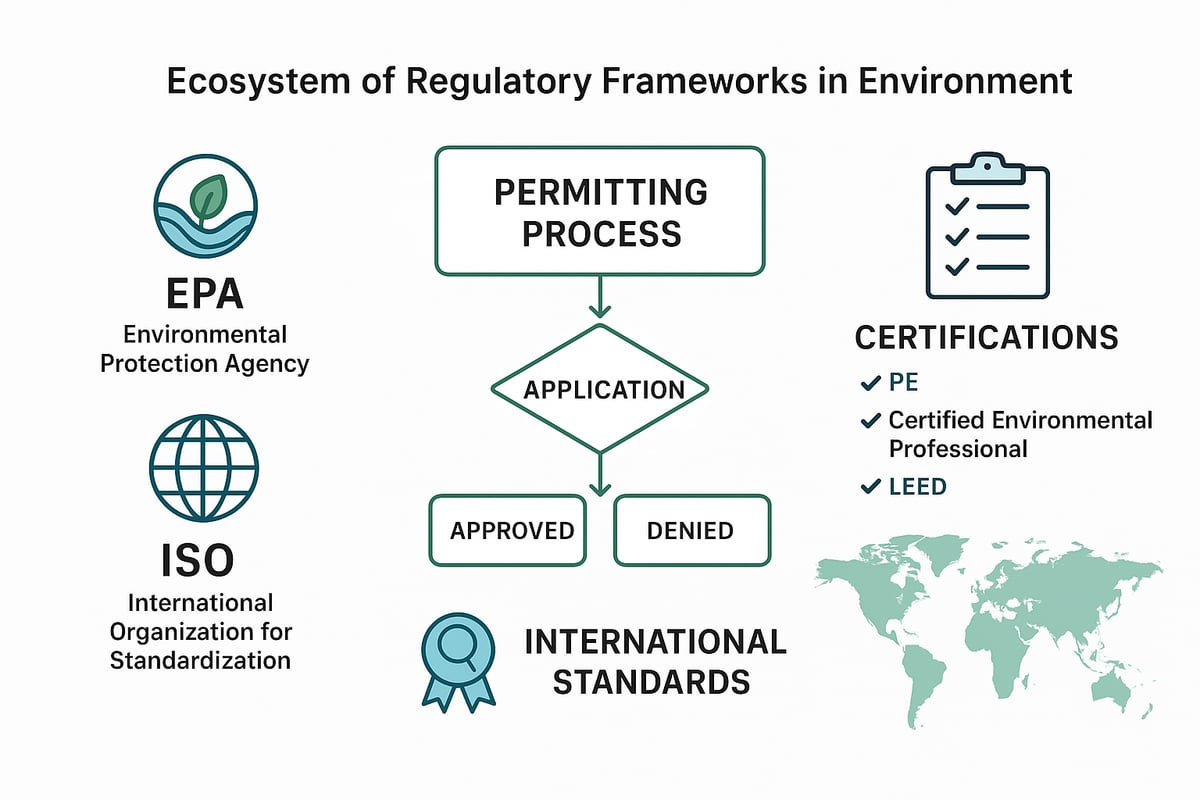
The foundation of engineering in environment rests on the work of major regulatory agencies. In North America, the Environmental Protection Agency (EPA) oversees air and water quality, hazardous waste, and chemical safety. Provincial and state regulators handle regional enforcement and adaptation of national standards.
Critical regulations include the Clean Water Act and Clean Air Act, which set benchmarks for pollution control and resource protection. Environmental assessment acts mandate rigorous reviews before major projects proceed, ensuring that environmental risks are identified and managed. Internationally, standards like ISO 14001 promote a systematic approach to environmental management, while global treaties address cross-border issues such as climate change and transboundary pollution.
Together, these regulatory pillars create a safety net that guides engineering in environment toward best practices and accountability.
Compliance, Permitting, and Risk Management
For professionals practicing engineering in environment, understanding the compliance and permitting process is non-negotiable. Every project, from industrial facilities to municipal infrastructure, must secure permits that demonstrate adherence to environmental laws and standards.
The permitting process typically involves:
- Submitting detailed project descriptions and environmental studies
- Engaging in public consultations and stakeholder feedback
- Completing risk assessments and mitigation plans
- Ongoing monitoring and reporting
Risk management is a central element, requiring engineers to anticipate, assess, and address potential environmental impacts. Regulatory hurdles can delay or reshape projects, especially when new developments intersect with sensitive ecosystems or community concerns.
A critical step in many projects is the Environmental Assessment Process, which ensures that all potential impacts are evaluated, and effective mitigation strategies are in place. This process highlights the importance of transparency and rigorous evaluation in engineering in environment.
The Role of Professional Associations and Certification
Professional associations play a vital part in shaping the standards of engineering in environment. Membership in organizations such as the American Academy of Environmental Engineers, along with credentials like P.Eng., PE, or QEP, signals a commitment to ethical practice and continuous learning.
Certification requirements often include formal education, work experience, and passing rigorous exams. Associations provide ongoing professional development, disseminate best practices, and advocate for the advancement of the field.
Continuing education is essential as regulations evolve and new challenges emerge. By staying engaged with professional bodies, engineers ensure their skills and knowledge remain current, strengthening the entire discipline of engineering in environment.
Emerging Technologies and Innovations for 2026
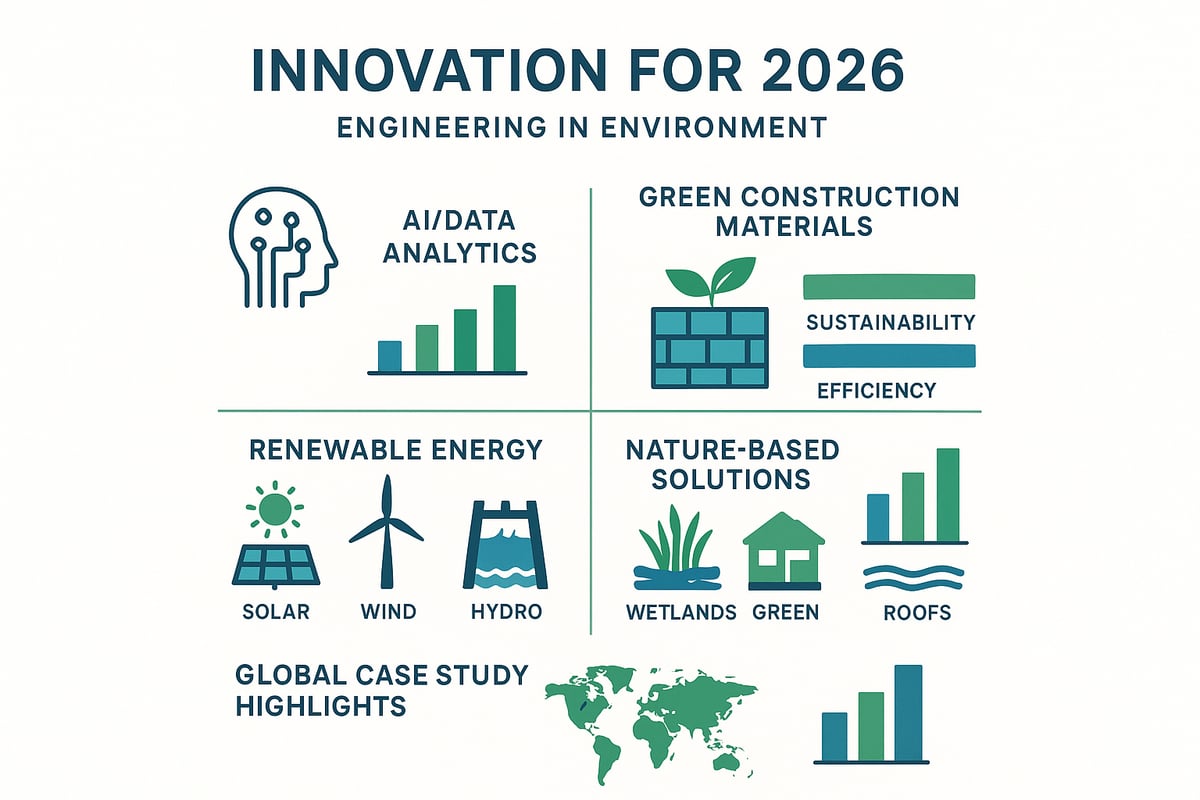
The landscape of engineering in environment is rapidly changing, driven by breakthrough technologies and a growing demand for sustainable solutions. As we look toward 2026, professionals must stay ahead of emerging trends to address evolving challenges effectively. This section explores the most transformative innovations shaping the future of environmental engineering.
Digital Transformation: Modeling, AI, and Data Analytics
Digital transformation is revolutionizing engineering in environment, enabling smarter, data-driven decisions. Advanced modeling tools such as digital twins replicate real-world systems, allowing engineers to simulate environmental impacts before implementation. Geographic Information Systems (GIS) and remote sensing provide real-time monitoring of air, water, and soil conditions, enhancing response strategies.
Artificial intelligence is powering predictive analytics for pollution control, disaster response, and resource allocation. Machine learning algorithms help identify patterns, optimize processes, and forecast environmental risks. For example, smart water grids equipped with sensors deliver instant data on quality and usage, supporting efficient resource management.
Collaboration across disciplines is now seamless, with cloud-based platforms allowing teams to share insights, visualize scenarios, and coordinate interventions. As digital tools become more accessible, engineering in environment will continue to evolve, offering new opportunities for innovation and impact.
Green Materials and Circular Economy Integration
Sustainable materials are at the core of next-generation engineering in environment. The shift toward low-impact construction materials, such as recycled composites and bio-based alternatives, is reducing the carbon footprint of infrastructure projects. Innovations in material science are enabling buildings and infrastructure to last longer while using fewer resources.
Circular economy principles, like design for reuse and lifecycle analysis, are being embedded into project planning. Closed-loop systems capture waste and transform it into valuable resources, supporting zero-waste initiatives. A prime example is the use of green nanotechnology, which enhances material performance and environmental compatibility for a cleaner, safer future. Learn more about Green nanotechnology and its role in sustainable engineering.
These advancements are making it easier for engineering in environment specialists to design projects that are both economically and environmentally sustainable.
Renewable Energy and Decarbonization Strategies
Engineering in environment is central to the global transition toward renewable energy sources. Solar, wind, hydro, and bioenergy systems are being integrated into both urban and rural infrastructure. Engineers are designing energy storage solutions and smart grids to ensure reliable, resilient power supplies.
Carbon capture, storage, and utilization technologies are gaining traction, reducing the carbon intensity of industrial operations. Net-zero energy buildings, which generate as much energy as they consume, are becoming the gold standard for sustainable development. Renewable-powered water treatment facilities further demonstrate how innovative engineering drives decarbonization.
By embracing these solutions, professionals in engineering in environment are making significant strides toward a low-carbon future.
Nature-Based and Resilient Infrastructure Solutions
Nature-based solutions are redefining the future of engineering in environment. Instead of relying solely on traditional infrastructure, engineers are integrating green infrastructure like wetlands, green roofs, and permeable pavements into city planning. These features help manage stormwater, improve air quality, and enhance biodiversity in urban spaces.
Climate resilience is a top priority, with projects designed to withstand extreme weather events and adapt to changing conditions. Engineered wetlands, for example, provide natural flood mitigation and water purification, benefiting both communities and ecosystems.
These approaches not only address immediate environmental challenges but also create healthier, more livable cities for generations to come.
Case Studies: Pioneering Projects and Global Best Practices
Across the globe, innovative projects are setting new benchmarks for engineering in environment. Cities like Singapore and Copenhagen are leading with smart water management, green transportation systems, and integrated waste solutions. In Canada, municipalities are piloting closed-loop recycling and renewable-powered treatment plants, building on lessons from international best practices.
A growing number of projects are focusing on inclusive design, stakeholder collaboration, and measurable sustainability outcomes. The projected 7 percent job growth for environmental engineers reflects the expanding scope and relevance of these innovations.
By learning from global pioneers, professionals in engineering in environment can adapt proven models and drive positive change in their own communities.
Career Pathways, Skills, and Opportunities in Environmental Engineering
Environmental challenges demand a new generation of professionals skilled in engineering in environment. This field offers diverse pathways, rewarding opportunities, and the chance to drive real-world impact. Whether you are planning your academic path or considering a career shift, understanding the required competencies and emerging trends is essential.
Core Skills and Interdisciplinary Competencies
Success in engineering in environment starts with a strong technical foundation. Essential skills include mathematics, biology, chemistry, physics, and geology. Today’s projects also require critical thinking, creative problem-solving, and effective communication.
Professionals must collaborate across disciplines. Teams often blend engineering expertise with public policy, community engagement, and environmental science. For example, interdisciplinary groups design sustainable cities by integrating infrastructure, natural systems, and public needs.
Key skills:
- Data analysis and modeling
- Project management
- Stakeholder collaboration
- Technical writing
These competencies ensure adaptability as the field evolves.
Career Options and Industry Sectors
Engineering in environment opens doors across multiple sectors. In the public sector, opportunities exist in government agencies, regulatory bodies, and infrastructure planning. The private sector offers roles in consulting, construction, manufacturing, and energy.
Nonprofits and research institutions focus on advocacy, innovation, and education. Specialists in water management, air quality, and Solid Waste Management Solutions are increasingly in demand. Interdisciplinary teams address complex challenges, making this field both dynamic and impactful.
Industry sectors:
- Government and public works
- Environmental consulting
- Industrial and manufacturing firms
- Research and academia
Salary Outlook and Job Market Trends
Careers in engineering in environment are both stable and lucrative. According to Payscale (2024), entry-level professionals earn a median salary of $64,873. The Bureau of Labor Statistics (2024) reports a mean annual salary of $110,570, with the top 10 percent earning up to $161,910.
| Career Stage | Median Salary | Mean Salary | Top 10% Salary |
|---|---|---|---|
| Entry-level | $64,873 | – | – |
| Experienced | – | $110,570 | $161,910 |
Job prospects are especially strong in Alberta and Western Canada due to infrastructure growth and environmental regulations. There is a rising need for experts in climate adaptation and resource management, reflecting the expanding influence of engineering in environment.
Education and Professional Development
Education is the foundation of a successful career in engineering in environment. Most professionals begin with a bachelor’s degree, then may pursue graduate studies for specialized roles. High school students benefit from AP courses in science and math.
Professional development continues with internships, co-op programs, and certifications. Many choose to specialize further through master’s or doctoral degrees. Lifelong learning is vital, as emerging technologies and regulations shape the field.
Pathways:
- Bachelor’s degree (civil, chemical, environmental engineering)
- Master’s or PhD for advanced research
- Internships and co-op placements
- Ongoing certification and training
Staying current ensures continued growth and adaptability.
The Future of Environmental Engineering: Trends and Predictions for 2026
The landscape of engineering in environment is rapidly evolving. As we approach 2026, professionals in this field must anticipate and adapt to transformative trends that will shape sustainable development, public health, and global collaboration. Here is a closer look at the most influential directions set to define the future.
Climate Change Adaptation and Resilience
Climate change adaptation is taking center stage in engineering in environment. Engineers are developing infrastructure to withstand floods, wildfires, and extreme weather. This shift requires integrating resilience into every project phase, from planning to execution. By prioritizing adaptive strategies, engineering in environment professionals are ensuring critical systems remain operational and communities are better protected against future uncertainties.
Smart Cities and Urban Sustainability
Smart cities are revolutionizing engineering in environment by leveraging sensors, data analytics, and automation. These innovations optimize energy use, enhance water management, and reduce emissions. Integrating concepts like Biodesign in architecture allows urban planners and engineers to create buildings that mimic natural systems, further boosting sustainability. The result is healthier, more efficient, and environmentally responsible urban spaces.
Globalization and Cross-Border Collaboration
The future of engineering in environment is global. Increasingly, engineers are working across borders to address water management, air quality, and renewable energy challenges. International partnerships promote harmonized standards, knowledge exchange, and the pooling of resources. As projects become more complex, collaboration ensures that solutions are both locally relevant and globally scalable, benefiting communities worldwide.
Workforce Diversity and Inclusion
A diverse workforce is essential for innovation in engineering in environment. By attracting talent from various backgrounds, the industry gains new perspectives and creative solutions. Inclusive teams are better equipped to solve complex problems and build trust with communities. Efforts to mentor underrepresented groups and foster equitable workplaces are strengthening the field and preparing it for future challenges.
Evolving Regulatory and Ethical Landscape
Regulations and ethics are evolving alongside advancements in engineering in environment. Governments are enacting stricter emissions targets and expanding environmental justice considerations. These changes demand that engineers stay informed of legal updates and prioritize transparency. Ethical decision-making, especially in emerging technologies, is becoming a core competency for all professionals in the sector.
Lifelong Learning and Innovation Culture
Continuous learning is now a cornerstone of engineering in environment. Rapid advancements in technology, such as AI-driven modeling or sustainable materials, require ongoing education and adaptability. Companies and institutions are encouraging professional development through workshops, certifications, and research initiatives. By fostering a culture of innovation, the industry remains agile and well-prepared for whatever the future may hold.
As you explore the complexities and opportunities outlined in this guide, you’ll see just how vital expert engineering and testing are for building a sustainable future in Alberta and beyond. Whether you’re a professional navigating new regulatory standards, a business planning your next project, or someone passionate about environmental innovation, having the right support makes all the difference. If you want tailored guidance or have questions specific to your needs, I encourage you to reach out to our experienced team at ZALIG Consulting. Let’s take the next step toward a greener tomorrow—Contact Us: info@zalig.ca or +1 800 515 0497.