

Engineering expertise represents the foundation upon which successful infrastructure projects are built. In 2026, as civil infrastructure demands grow increasingly complex, the depth and breadth of technical knowledge required to navigate regulatory frameworks, manage construction risks, and deliver defensible engineering solutions has never been more critical. Whether addressing geotechnical challenges, environmental compliance, or transportation system design, the quality of engineering expertise directly impacts project outcomes, timelines, and long-term performance.
The Components of Engineering Expertise
Engineering expertise extends far beyond academic credentials. It encompasses technical knowledge, practical field experience, regulatory understanding, and professional judgment honed through years of problem-solving across diverse project conditions.
Technical Competence and Specialized Knowledge
Technical competence forms the core of engineering expertise. Engineers must maintain current knowledge of design codes, construction standards, and analytical methods specific to their disciplines. This includes understanding soil mechanics for foundation design, contaminant fate and transport for environmental assessments, traffic engineering principles for transportation planning, and hydraulic modeling for drainage systems.
The American Society of Mechanical Engineers provides extensive resources on engineering standards and research that support continuous professional development. Staying current with evolving standards requires deliberate effort through continuing education, technical literature review, and participation in professional societies.
Specialized knowledge becomes particularly valuable when projects present unusual conditions. For example, engineers working on slope stability must understand not only theoretical failure mechanisms but also regional geology, groundwater conditions, and construction constraints that influence stabilization design.
Professional Credentials and Ethical Standards
Professional licensure serves as a baseline validation of engineering expertise. Licensed Professional Engineers (P.Eng. in Canada, PE in the United States) have demonstrated minimum competency through education, examination, and experience requirements. However, licensure alone does not guarantee expertise in specialized practice areas.
The NSPE Code of Ethics establishes fundamental principles that guide professional conduct:
- Holding paramount the safety, health, and welfare of the public
- Performing services only in areas of competence
- Issuing public statements only in an objective and truthful manner
- Acting for each employer or client as faithful agents or trustees
- Avoiding deceptive acts
These ethical obligations create accountability frameworks that protect the public interest while setting expectations for professional practice. Engineers who develop true expertise recognize that ethical conduct and technical competence are inseparable.
| Credential Type | Purpose | Renewal Requirements |
|---|---|---|
| Professional Engineer (P.Eng./PE) | Legal authorization to practice | Continuing education, annual fees |
| Specialty Certifications | Domain-specific competency | Field-specific training, recertification |
| CCIL Laboratory Certification | Materials testing standards | Quality system audits, proficiency testing |
Building Engineering Expertise Through Experience
Real-world project experience provides the context that transforms theoretical knowledge into practical engineering expertise. Field exposure teaches engineers to recognize site-specific conditions, anticipate construction challenges, and develop solutions that balance technical requirements with economic constraints.
Learning From Diverse Project Types
Engineers build expertise by working across varied project types, geological conditions, and regulatory jurisdictions. An engineer who has only designed foundations in stable soils lacks the perspective gained from addressing challenging conditions like high groundwater, expansive clays, or seismic zones.
Multidisciplinary firms offer unique advantages for developing broad engineering expertise. When geotechnical engineers collaborate with environmental specialists on contaminated site redevelopment, or when transportation engineers work alongside hydrotechnical specialists on roadway drainage, each discipline gains insight into adjacent fields that improves overall project coordination.
The National Institute of Standards and Technology Engineering Laboratory conducts research that advances engineering practices across multiple disciplines, providing resources that help practitioners stay current with emerging methodologies.
Mentorship and Knowledge Transfer
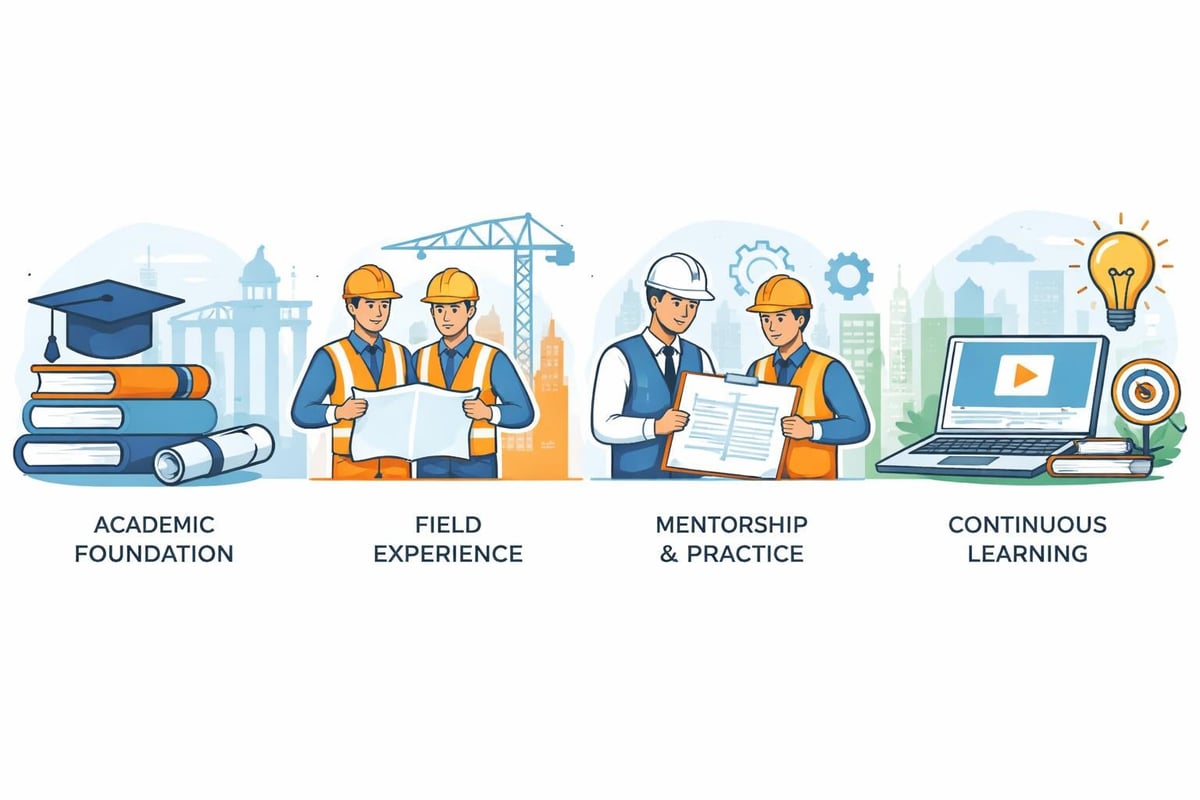
Engineering expertise develops most effectively through mentorship relationships where experienced practitioners guide newer engineers through complex problem-solving. Mentors share judgment developed through decades of practice, including recognition of warning signs, common failure modes, and practical solutions that may not appear in textbooks.
- Observation of field conditions under supervision builds pattern recognition
- Review of calculations and designs by senior engineers identifies gaps in understanding
- Debriefing after construction challenges creates learning opportunities from unexpected conditions
- Participation in forensic investigations reveals how designs perform long-term
- Exposure to peer review processes demonstrates different analytical approaches
Knowledge transfer becomes particularly critical as experienced engineers approach retirement. Organizations that systematically document project lessons, maintain technical libraries, and create opportunities for junior engineers to work alongside senior staff preserve institutional expertise that might otherwise be lost.
Domain-Specific Engineering Expertise
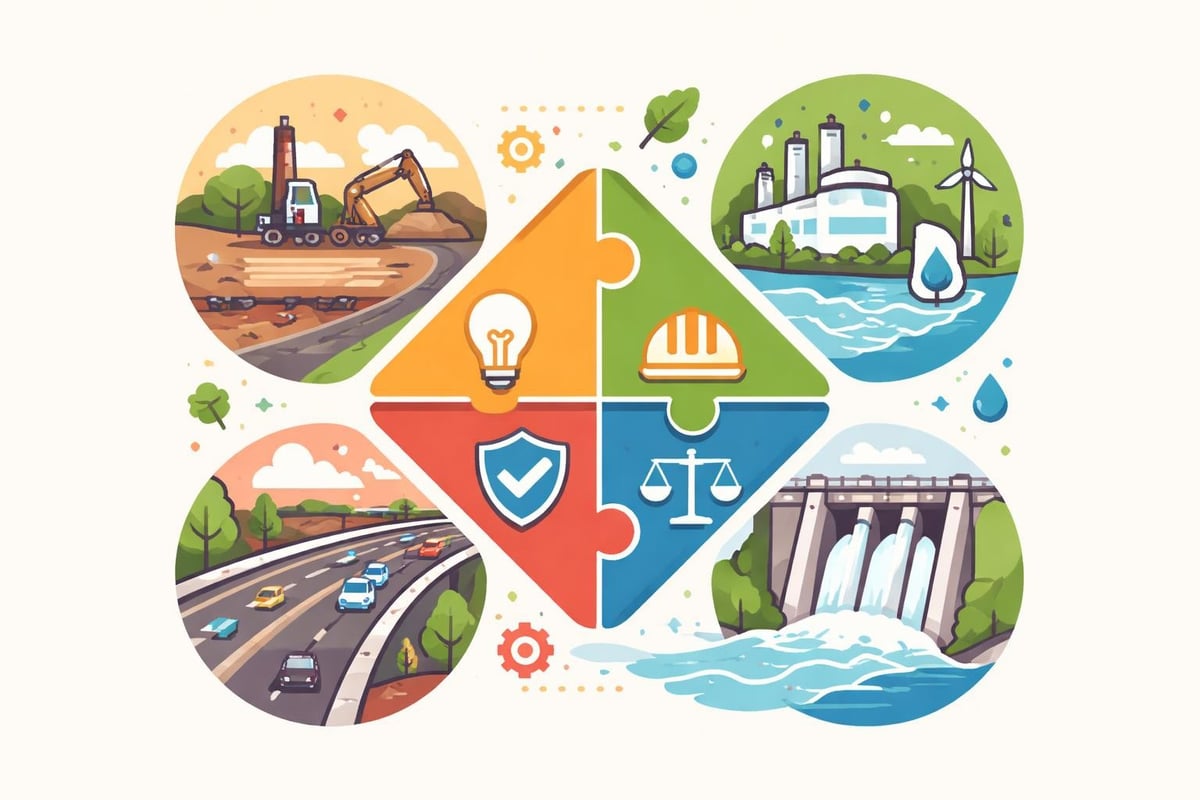
Each engineering discipline requires specialized knowledge that takes years to develop. Understanding the distinctions between domains helps project owners select appropriate expertise for their specific needs.
Geotechnical Engineering Expertise
Geotechnical engineering expertise involves understanding subsurface conditions and their implications for foundation design, earthwork construction, and slope stability. This expertise develops through subsurface investigation experience, laboratory testing interpretation, and observation of foundation performance during and after construction.
Skilled geotechnical engineers recognize soil and rock behavior patterns that influence design decisions. They understand when standard solutions apply and when site-specific conditions require customized approaches. Geotechnical engineering services often integrate field investigation, laboratory testing, and design to address complex foundation challenges.
Key competencies include:
- Soil classification and characterization
- Foundation bearing capacity analysis
- Settlement prediction and monitoring
- Slope stability evaluation and stabilization design
- Earth pressure theory for retaining structures
- Seepage and dewatering analysis
Environmental Engineering Expertise
Environmental engineering expertise encompasses regulatory knowledge, contaminant chemistry, risk assessment methodology, and remediation technology. Environmental specialists must stay current with changing regulations while understanding practical constraints on investigation and cleanup activities.
Phase I, II, and III Environmental Site Assessments require expertise in historical research, field investigation techniques, sampling protocols, and risk communication. Engineers must interpret analytical results in context of applicable standards while recommending cost-effective risk management strategies.
The environmental regulatory landscape continues to evolve with new contaminants of concern, updated screening levels, and changing liability frameworks. Expertise in this domain requires continuous monitoring of regulatory developments across federal, state, provincial, and local jurisdictions.
Transportation Engineering Expertise
Transportation engineering expertise combines traffic analysis, geometric design, safety evaluation, and multi-modal planning. Transportation engineers must understand driver behavior, vehicle dynamics, and how infrastructure design influences safety and operational efficiency.
Traffic Impact Assessments require expertise in traffic forecasting, capacity analysis, and access management. Engineers must balance development needs with network performance while ensuring designs meet accessibility requirements and safety standards.
Modern transportation practice increasingly incorporates complete streets principles, active transportation considerations, and traffic calming measures alongside traditional vehicular capacity analysis. The National Society of Professional Engineers regularly publishes articles on evolving transportation engineering practices.
Hydrotechnical Engineering Expertise
Hydrotechnical engineering expertise addresses water resource management, flood risk assessment, drainage design, and erosion control. This specialization requires understanding hydrologic processes, hydraulic modeling, sediment transport, and how infrastructure interacts with natural watercourses.
Engineers working on stormwater management, culvert design, or watercourse realignment must balance hydraulic performance with environmental protection, regulatory compliance, and construction feasibility. Climate change considerations have added complexity to hydrotechnical design, requiring engineers to incorporate increased precipitation intensities and changing runoff patterns into infrastructure planning.
| Engineering Discipline | Primary Focus Areas | Typical Project Deliverables |
|---|---|---|
| Geotechnical | Subsurface conditions, foundations, earthworks | Investigation reports, foundation recommendations, slope stability analyses |
| Environmental | Contamination, regulatory compliance, risk assessment | Phase I/II/III ESAs, remedial action plans, compliance monitoring |
| Transportation | Traffic operations, roadway design, safety | Traffic impact studies, geometric design plans, signal warrants |
| Hydrotechnical | Drainage, flood control, watercourse management | Hydrologic studies, hydraulic models, stormwater management plans |
Maintaining and Advancing Engineering Expertise
Engineering expertise requires continuous renewal. Design codes update, construction technologies evolve, regulatory requirements change, and new analytical tools emerge. Engineers who stop learning quickly find their expertise becoming outdated.
Continuing Education and Professional Development
Professional engineering associations require continuing education for license renewal, but effective professional development extends beyond minimum compliance. Engineers develop expertise by selectively pursuing education aligned with their practice areas and career goals.
Effective continuing education strategies include:
- Attending conferences focused on specific technical domains
- Completing graduate coursework in specialized subjects
- Participating in workshops on emerging technologies
- Reviewing recent technical literature in practice areas
- Obtaining specialty certifications in focused competencies
Coursera offers engineering courses that allow professionals to expand knowledge in specialized areas through flexible online learning. However, the most valuable professional development often comes from immersive experiences like field courses, laboratory training, and peer-reviewed technical conferences.
Technology Integration and Tool Proficiency
Modern engineering expertise increasingly requires proficiency with specialized software and analytical tools. Geotechnical engineers use finite element analysis for complex stability problems. Environmental engineers employ fate and transport models for contaminant assessment. Transportation engineers utilize microsimulation software for intersection analysis. Hydrotechnical engineers work with hydraulic modeling packages for drainage design.
Tool proficiency alone does not constitute expertise. Engineers must understand the theoretical basis of analytical methods, recognize software limitations, and validate results against engineering judgment. Technology amplifies expertise but cannot replace fundamental understanding.

Collaboration and Peer Review
Engineering expertise improves through exposure to different perspectives and approaches. Peer review processes, where engineers critique one another's work, identify blind spots and challenge assumptions. Collaboration with specialists from adjacent disciplines expands understanding of how engineering systems interact.
Professional engineering practice increasingly emphasizes multidisciplinary collaboration. A transportation project may require geotechnical input for pavement design, environmental assessment for wetland impacts, and hydrotechnical analysis for roadside drainage. Engineers who understand adjacent disciplines can better coordinate these interfaces and anticipate potential conflicts.
Applying Engineering Expertise to Real-World Challenges
The true test of engineering expertise lies in applying technical knowledge to solve practical problems under real-world constraints. Projects rarely present textbook conditions, and successful outcomes depend on engineers' ability to adapt theoretical principles to site-specific circumstances.
Risk Assessment and Management
Experienced engineers recognize that all projects involve uncertainty and risk. Subsurface conditions may differ from investigation findings. Construction methods may encounter unanticipated challenges. Material properties may vary from design assumptions. Engineering expertise includes identifying these risks and developing mitigation strategies.
For projects involving soil stabilization and ground improvement, engineers must assess the reliability of investigation data, evaluate performance uncertainties, and recommend appropriate design factors of safety. Risk management might include contingency plans, performance monitoring programs, or adaptive management approaches that allow design modifications based on observed conditions.
Balancing Technical Requirements and Economic Constraints
Engineering expertise involves more than selecting the most technically robust solution. Engineers must deliver value by balancing performance requirements with budget constraints, schedule limitations, and constructability considerations.
An over-designed foundation may provide excessive safety margins but waste resources. An under-designed foundation creates unacceptable risk. Expertise lies in finding the appropriate balance through understanding load characteristics, site conditions, acceptable risk levels, and construction economics.
This judgment develops through experience observing how designs perform, understanding construction costs, and recognizing where refined analysis justifies its expense versus where conservative assumptions provide adequate solutions more efficiently.
Regulatory Compliance and Approval Processes
Engineering expertise includes navigating regulatory frameworks that govern infrastructure development. Engineers must understand which regulations apply to specific project types, what documentation regulators require, and how to present technical information to support approval processes.
Environmental assessments must comply with federal and state/provincial environmental laws. Transportation designs must meet municipal design standards and accessibility requirements. Stormwater management must satisfy watershed planning policies. Geotechnical designs must address building code requirements for foundation safety.
Engineers who understand regulatory landscapes can streamline approval processes by anticipating agency concerns and providing appropriate documentation proactively. This expertise proves particularly valuable on complex projects involving multiple approval authorities.
Communication and Stakeholder Management
Technical competence alone does not ensure project success. Engineering expertise includes communicating complex technical concepts to non-technical audiences, including owners, contractors, regulators, and the public.
Effective engineers translate technical findings into actionable recommendations. They explain uncertainties honestly while providing clear guidance for decision-making. They document their work thoroughly to create defensible records that withstand third-party review.
- Written communication: Clear, organized reports that present findings logically
- Verbal communication: Ability to explain technical concepts in accessible language
- Visual communication: Effective use of drawings, charts, and graphics to convey information
- Active listening: Understanding stakeholder concerns and constraints
The National Academy of Engineering regularly publishes reports on engineering challenges that require not only technical solutions but also effective communication with diverse stakeholders.
The Business Value of Engineering Expertise
Organizations that invest in developing engineering expertise gain competitive advantages through higher quality deliverables, reduced project risks, and stronger client relationships. Expertise enables engineers to identify problems earlier, develop more efficient solutions, and provide more reliable counsel to clients.
Quality and Defensibility
Projects delivered by experienced engineers typically exhibit fewer errors, more appropriate design margins, and better constructability. This quality reduces change orders during construction, minimizes performance issues post-construction, and creates defensible documentation if disputes arise.
For construction projects requiring in-situ geotechnical testing, experienced engineers select appropriate test methods, interpret results in context of site conditions, and provide foundation recommendations supported by sound engineering judgment. This expertise helps projects obtain building permits, satisfy contractor questions during construction, and perform as designed over their service life.
Efficiency and Problem-Solving
Engineering expertise creates efficiency by reducing the time required to analyze problems, identify solutions, and produce deliverables. Experienced engineers recognize familiar patterns quickly, know which analytical approaches apply to specific situations, and avoid unproductive paths that less experienced engineers might pursue.
When unexpected conditions arise during construction, expertise proves invaluable. Engineers who have encountered similar challenges previously can rapidly develop solutions that keep projects moving. This responsiveness minimizes construction delays and associated costs.
Client Trust and Relationships
Clients value engineering expertise because it reduces their risk and improves project outcomes. Organizations that consistently demonstrate deep technical knowledge, sound judgment, and reliable performance build reputations that generate repeat business and referrals.
Engineering firms build trust by operating within their areas of competence, communicating limitations honestly, and collaborating with specialists when projects require expertise beyond their in-house capabilities. This professional approach creates long-term client relationships based on mutual respect and confidence.
ZALIG Consulting Ltd demonstrates this multidisciplinary approach by integrating geotechnical investigations and foundation design, environmental assessments, transportation planning, hydrotechnical analysis, and construction materials testing to deliver comprehensive solutions. When projects require coordinated input across multiple engineering disciplines, working with a firm that maintains broad expertise in-house streamlines communication and improves integration between design elements.
Engineering expertise represents the cumulative value of education, experience, professional development, and practical problem-solving that enables engineers to deliver safe, efficient, and defensible infrastructure solutions. As projects grow more complex and regulatory requirements become more stringent, the depth of technical knowledge and judgment required continues to increase. Organizations that prioritize expertise development through mentorship, continuing education, and diverse project experience position themselves to meet these challenges while delivering exceptional value to clients. ZALIG Consulting Ltd brings multidisciplinary engineering expertise across geotechnical, environmental, transportation, and hydrotechnical disciplines to support your infrastructure projects from planning through construction, providing integrated field services, laboratory testing, and engineering design that manages risk and improves project outcomes.