
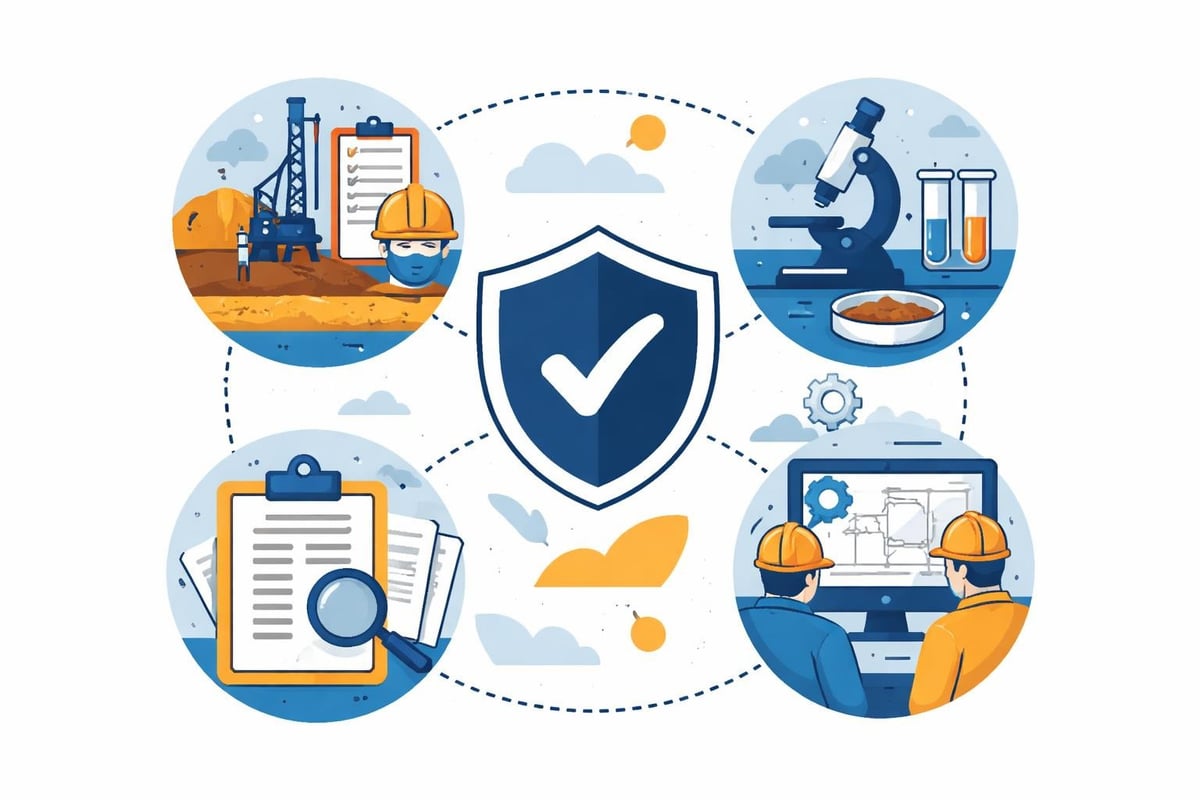
Engineering excellence represents more than technical competence. It encompasses a commitment to quality, safety, continuous improvement, and collaborative problem-solving that defines successful infrastructure projects. In 2026, organizations that embrace engineering excellence as a core value deliver projects that meet regulatory requirements, exceed client expectations, and stand the test of time. This approach integrates rigorous technical standards with practical field experience, defensible documentation, and accountability at every project phase.
Defining Engineering Excellence in Modern Practice
Engineering excellence involves systematic application of proven methodologies combined with innovation where it adds value. The concept extends beyond individual technical skills to encompass organizational culture, quality systems, and collaborative workflows. Engineering serves as a strategic enabler for innovation, speed-to-market, and sustainability when organizations commit to rigorous standards.
Core Components of Excellence
Several foundational elements distinguish excellent engineering practice from adequate performance. Technical competence forms the baseline, but excellence requires additional dimensions that ensure consistent, defensible results.
Key elements include:
- Adherence to recognized standards (CSA, ASTM, AASHTO)
- Rigorous quality assurance and quality control protocols
- Comprehensive documentation and traceability
- Proactive risk identification and mitigation
- Clear communication across all project stakeholders
- Continuous professional development and learning
The integration of these elements creates resilience in project delivery. When field observations, laboratory testing, and engineering analysis work in concert, teams can identify potential issues early and implement practical solutions before they escalate into costly problems.
Building Quality Into Every Project Phase
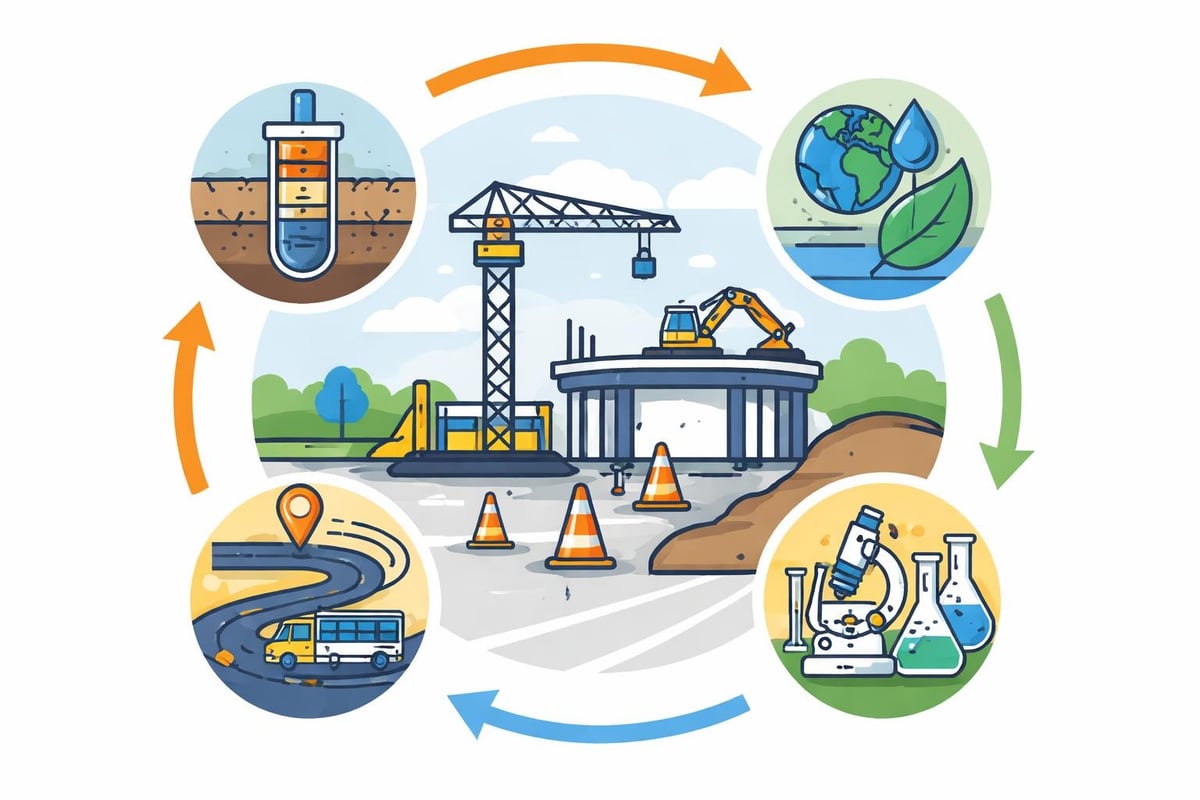
Engineering excellence requires intentional quality management from initial planning through final commissioning. Organizations that embed quality checkpoints throughout project lifecycles reduce rework, minimize change orders, and deliver more predictable outcomes. This systematic approach applies equally to geotechnical investigations, environmental assessments, and construction oversight.
Planning and Due Diligence
Excellence begins with thorough project scoping and risk assessment. Understanding site conditions, regulatory requirements, and client objectives before mobilizing teams prevents misaligned expectations and scope gaps. Phase I/II/III Environmental Site Assessments exemplify this principle, where comprehensive records review and systematic site investigation provide the foundation for informed decision-making.
Due diligence activities should identify data gaps, potential constraints, and alternative approaches. This front-end investment in planning reduces uncertainty during design and construction phases. Teams that invest time in understanding subsurface conditions, environmental concerns, and regulatory pathways deliver more constructible designs with fewer surprises.
| Project Phase | Quality Focus | Typical Deliverables |
|---|---|---|
| Planning | Risk identification, scope definition | Terms of reference, work plans |
| Investigation | Field accuracy, sample integrity | Borehole logs, lab reports |
| Design | Code compliance, constructability | Drawings, specifications, calculations |
| Construction | QA/QC testing, compliance verification | Test reports, inspection records |
| Commissioning | Performance verification, documentation | As-built drawings, O&M manuals |
Design and Engineering Analysis
Design phase excellence requires balancing code compliance with practical constructability. Engineers must consider site constraints, material availability, construction sequencing, and long-term performance. Slope stability analysis demonstrates this balance, where theoretical calculations must account for soil variability, groundwater fluctuations, and construction limitations.
Defensible engineering relies on appropriate factors of safety, conservative assumptions where uncertainty exists, and clear documentation of design criteria. Peer reviews and independent checks catch errors before they reach the field. This investment in design quality prevents costly redesigns and construction delays.
Collaboration as a Cornerstone of Excellence
Engineering excellence thrives in collaborative environments where owners, contractors, regulators, and consultants communicate openly and frequently. Siloed decision-making and adversarial relationships undermine project success regardless of technical competence. Cross-functional collaboration enables teams to integrate diverse perspectives and expertise into unified solutions.
Stakeholder Integration
Effective projects engage stakeholders early and maintain regular communication throughout delivery. Owners bring project objectives and constraints. Contractors provide constructability insights and field expertise. Regulators clarify approval pathways and compliance requirements. Consultants integrate these perspectives into technically sound, permittable designs.
Regular coordination meetings, clear action item tracking, and transparent issue escalation prevent misunderstandings that delay projects. When teams establish communication protocols at project outset, they create mechanisms for resolving conflicts before they impact critical paths.
Collaboration best practices:
- Define roles, responsibilities, and decision authorities at project kickoff
- Establish regular communication rhythms (weekly calls, monthly reviews)
- Document decisions and action items with assigned owners
- Create shared project repositories for drawings, reports, and correspondence
- Implement formal change management processes
Contractor and Field Team Coordination
Construction phase excellence depends on strong relationships between design teams and field personnel. Site conditions rarely match investigation assumptions perfectly. Effective teams adapt to field realities while maintaining design intent and safety margins. This requires responsive communication and empowered field staff who can identify issues and escalate appropriately.
Daily inspection reports, regular site meetings, and prompt RFI responses keep construction moving efficiently. When design teams visit sites regularly and maintain accessibility to field staff, they build credibility and trust that facilitates problem-solving under pressure.
Technology and Tools Supporting Excellence
Modern engineering practice leverages technology to improve accuracy, efficiency, and documentation quality. However, technology serves as an enabler rather than a replacement for engineering judgment. Organizations that implement tools strategically see measurable improvements in delivery speed and quality consistency.
Digital Workflows and Documentation
Electronic field data collection reduces transcription errors and accelerates data availability for analysis. Tablet-based inspection forms, GPS-tagged sampling locations, and cloud-synchronized databases enable real-time quality monitoring. Modernizing enterprise architecture through digital tools creates agility while maintaining governance and compliance.
Laboratory information management systems (LIMS) track samples from field collection through testing and reporting. This chain of custody documentation proves critical during regulatory reviews and dispute resolution. Digital signatures, automated calculations, and standardized report templates reduce manual errors while improving turnaround times.
Analysis and Modeling Tools
Specialized software enables sophisticated analysis that would be impractical manually. Finite element modeling for slope stability, hydraulic modeling for drainage design, and traffic simulation for intersection planning provide insights that inform better decisions. However, modeling quality depends entirely on input accuracy and appropriate boundary conditions.
Engineers must validate model results against field observations, historical performance data, and engineering judgment. Models serve as decision support tools rather than definitive answers. Documenting modeling assumptions, limitations, and sensitivity analyses demonstrates professional rigor and builds confidence in recommendations.
| Technology Category | Application | Excellence Benefit |
|---|---|---|
| Field data collection | Mobile forms, GPS integration | Reduced errors, faster turnaround |
| Laboratory management | Sample tracking, automated QC | Improved traceability, compliance |
| Engineering analysis | FEA, hydraulic modeling, traffic simulation | Better-informed decisions, optimized designs |
| Project management | Scheduling, document control, collaboration platforms | Improved coordination, accountability |
Standards, Codes, and Regulatory Compliance
Engineering excellence requires thorough knowledge of applicable standards and proactive engagement with regulatory authorities. Code compliance represents the minimum threshold, not the definition of excellence. Leading organizations implement internal standards that exceed code requirements in critical areas like safety factors, quality control frequency, and documentation detail.
Professional Standards and Certifications
Third-party certifications like CCIL accreditation for materials testing demonstrate organizational commitment to quality systems. These programs require documented procedures, regular calibration, proficiency testing, and independent audits. Certification maintains technical credibility and provides assurance to clients and regulators that results meet recognized standards.
Professional engineering licensure ensures individual competency and accountability. Licensed professionals accept personal responsibility for work under their seal, creating clear accountability chains. This professional oversight protects public safety and maintains engineering profession credibility.
Critical standards for infrastructure projects include:
- CSA standards for materials and construction methods
- ASTM standards for testing procedures and acceptance criteria
- AASHTO standards for transportation infrastructure
- National Building Code and provincial amendments
- Environmental regulations (federal and provincial)
- Municipal design guidelines and development standards
Regulatory Engagement Strategy
Proactive regulator engagement prevents approval delays and scope misunderstandings. Early consultation clarifies interpretation questions, identifies additional requirements, and builds relationships that facilitate efficient reviews. Treating regulators as partners rather than obstacles creates collaborative problem-solving opportunities.
Complete, well-organized submission packages that directly address regulatory requirements receive faster approvals. ZALIG’s transportation planning services demonstrate this approach through comprehensive Traffic Impact Assessments that anticipate municipal review criteria and provide all required supporting documentation in initial submissions.
Continuous Improvement and Organizational Learning
Engineering excellence requires organizational commitment to learning from both successes and failures. Post-project reviews, lessons learned documentation, and knowledge sharing prevent repeated mistakes and propagate effective practices. Building high-quality software through proven practices offers lessons applicable across engineering disciplines regarding systematic improvement and knowledge management.
Performance Measurement
What gets measured gets managed. Organizations committed to excellence track key performance indicators that reveal quality trends and improvement opportunities. Metrics might include plan approval cycle times, field observation closure rates, construction issue frequency, or client satisfaction scores.
Useful performance metrics:
- First-time approval rates for regulatory submissions
- Rework frequency during construction
- Schedule adherence (design and construction phases)
- Budget variance (hours and costs)
- Safety incident rates
- Client satisfaction and repeat business rates
Tracking these metrics over time reveals improvement trends and highlights areas needing attention. However, metrics must drive improvement actions rather than becoming bureaucratic reporting exercises. Regular management reviews that analyze trends and implement corrective actions close the improvement loop.
Knowledge Management Systems
Capturing and sharing organizational knowledge prevents information loss when experienced staff transition. Technical libraries, standard details, lessons learned databases, and mentorship programs transfer expertise to developing professionals. This knowledge infrastructure accelerates new project startups and reduces reliance on individual expertise.

Internal technical reviews and peer checking create learning opportunities while catching errors. When senior engineers review junior staff work constructively, they transfer judgment and decision-making frameworks that formal education rarely provides. This mentorship culture builds organizational capability and maintains quality consistency.
Risk Management and Safety Culture
Engineering excellence prioritizes risk identification and mitigation throughout project delivery. This extends beyond worker safety to encompass project risks, financial risks, and reputational risks. Organizations that systematically assess and manage risks deliver more predictable outcomes and maintain client confidence through inevitable project challenges.
Proactive Hazard Identification
Safety excellence begins with hazard identification before field mobilization. Task hazard assessments, site-specific safety plans, and pre-job safety meetings establish safety expectations and control measures. Field personnel empowered to stop unsafe work without fear of reprisal create cultures where safety truly comes first.
Regular safety training, near-miss reporting, and incident investigation prevent repeated accidents. When organizations treat safety incidents as learning opportunities rather than solely disciplinary matters, they encourage reporting that reveals systemic issues requiring corrective action.
Technical Risk Mitigation
Engineering risks often stem from incomplete information, uncertain soil conditions, or construction challenges. Experienced teams identify these risks early through thorough site investigations, constructability reviews, and contingency planning. Geotechnical engineering services demonstrate this through comprehensive subsurface investigations that characterize soil variability and identify potential foundation challenges before design commitments.
Risk registers that document identified risks, likelihood assessments, impact evaluations, and mitigation strategies provide frameworks for systematic risk management. Regular risk review meetings keep teams focused on evolving challenges throughout project delivery.
| Risk Category | Common Sources | Mitigation Approaches |
|---|---|---|
| Technical | Incomplete data, design assumptions | Additional investigation, conservative design |
| Schedule | Weather, supply chain, approval delays | Contingency buffers, early procurement |
| Budget | Scope changes, unforeseen conditions | Clear change management, contingency funds |
| Safety | Hazardous conditions, human error | Training, hazard controls, safety culture |
| Regulatory | Approval delays, interpretation differences | Early engagement, complete submissions |
Case Studies in Engineering Excellence
Real-world applications demonstrate how engineering excellence principles translate into successful project outcomes. Case studies across industries showcase innovative engineering solutions and systematic approaches that overcome complex challenges.
Infrastructure Rehabilitation Projects
Urban infrastructure rehabilitation demands excellence across multiple disciplines. Existing utilities, traffic maintenance, environmental constraints, and tight construction windows create complex coordination requirements. Projects succeeding in these environments demonstrate strong stakeholder collaboration, detailed pre-construction planning, and adaptive problem-solving.
Comprehensive condition assessments that integrate geotechnical investigations, materials testing, and structural evaluations inform rehabilitation strategies. When investigation programs provide accurate baseline conditions, design teams develop appropriate repair strategies that balance performance requirements with budget constraints.
Land Development Applications
Large-scale land development projects require integration across geotechnical, environmental, transportation, and hydrotechnical disciplines. Excellence emerges when these specialties coordinate seamlessly to support cohesive site designs that satisfy regulatory requirements and owner objectives.
Early master planning that considers servicing strategies, stormwater management, transportation networks, and environmental constraints prevents costly redesigns during detailed design phases. Projects that invest in comprehensive planning achieve faster regulatory approvals and more efficient construction sequencing.
Building Excellence Through People and Culture
Technical systems and quality processes enable excellence, but people and organizational culture ultimately determine success. Organizations that attract talented professionals, invest in development, and foster collaborative cultures consistently outperform competitors regardless of market conditions.
Talent Development
Professional development programs that combine formal training, mentorship, and challenging project assignments build organizational capability. Junior engineers learning from experienced professionals through structured programs develop judgment and decision-making skills that formal education cannot provide. Engineering excellence for the public good emphasizes community culture and partnerships as foundations for sustained excellence.
Encouraging professional involvement, conference attendance, and continuing education demonstrates organizational commitment to staff growth. Engineers who maintain current knowledge through professional development bring fresh perspectives and emerging practices to project teams.
Development program elements:
- Structured mentorship pairing junior and senior staff
- Internal technical training on standards and procedures
- External course attendance and conference participation
- Professional licensure support and examination preparation
- Challenging project assignments with appropriate supervision
- Regular performance feedback and development planning
Recognition and Accountability
Cultures of excellence balance recognition for quality work with accountability for deficiencies. Celebrating project successes, technical innovations, and exceptional client service reinforces desired behaviors. Simultaneously, addressing quality issues promptly and constructively prevents normalized deviation from standards.
Clear performance expectations, regular feedback, and fair evaluation processes create environments where excellence becomes standard practice. When organizations reward behaviors aligned with engineering excellence values, they attract and retain professionals who share those commitments.
Implementing Excellence Systematically
Organizations transitioning toward engineering excellence require systematic implementation approaches. Platforms that provide visibility and guardrails help leaders standardize practices while maintaining agility. Change management principles apply when shifting organizational culture toward quality-focused practices.
Quality Management Systems
Formal quality management systems document procedures, define responsibilities, and establish verification mechanisms. ISO 9001 certification represents one framework, though smaller organizations may implement simplified systems achieving similar benefits. Key elements include documented procedures, internal audits, corrective action processes, and management reviews.
Quality manuals should be practical working documents rather than shelf-ware. Procedures that reflect actual practice and provide useful guidance gain adoption. Overly bureaucratic systems that burden staff without adding value face resistance and eventual abandonment.
Leadership Commitment
Leadership sets the tone for engineering excellence. When executives prioritize quality over expedience, allocate resources for proper investigations, and support staff who identify issues, they create permission for excellence. Conversely, leadership that emphasizes speed and cost over quality signals that shortcuts are acceptable.
Visible leadership participation in quality initiatives, project reviews, and continuous improvement programs demonstrates authentic commitment. Leaders who discuss quality performance in business reviews, celebrate excellence achievements, and address deficiencies personally signal organizational priorities clearly.
Materials testing excellence demands CCIL-certified personnel, calibrated equipment, and rigorous quality control protocols. Organizations maintaining these certifications demonstrate commitment to defensible results that withstand regulatory scrutiny and litigation challenges. Construction materials testing services that follow CSA, ASTM, and AASHTO standards provide owners and contractors confidence in infrastructure quality and long-term performance.
Future Directions in Engineering Excellence
Engineering practice continues evolving through technological advancement, regulatory changes, and shifting client expectations. Excellence in 2026 requires staying current with emerging tools while maintaining commitment to fundamental quality principles. Organizations that balance innovation with proven practices position themselves for sustained success.
Emerging Technologies
Artificial intelligence applications in engineering range from automated code checking to predictive maintenance algorithms. These tools augment engineering judgment rather than replacing it. Successful implementation requires understanding both capabilities and limitations. Automating governance with AI while maintaining human oversight demonstrates balanced technology adoption.
Remote sensing technologies including drone surveys, LiDAR scanning, and geophysical methods enhance site characterization efficiency. These tools provide data density impossible through traditional methods. However, validation through conventional investigation techniques remains essential for quality assurance.
Sustainability Integration
Engineering excellence increasingly incorporates sustainability considerations beyond regulatory requirements. Life cycle assessments, embodied carbon calculations, and climate resilience planning inform design decisions. Projects that optimize environmental performance while meeting functional requirements demonstrate holistic excellence.
Climate change adaptation requires engineering approaches that account for changing precipitation patterns, temperature extremes, and flood risks. Forward-thinking designs incorporate resilience measures that protect infrastructure investments over multi-decade service lives.
Regulatory Evolution
Regulatory frameworks continue evolving to address emerging challenges and incorporate new knowledge. Excellence requires staying current with code updates, regulatory policy changes, and emerging best practices. Professional organizations, technical committees, and industry associations provide forums for tracking these developments.
Proactive engagement in standard development and code revision processes allows engineering organizations to shape future requirements while preparing for changes. This participation demonstrates technical leadership and ensures organizational readiness for regulatory transitions.
Engineering excellence integrates technical competence, quality systems, collaborative culture, and continuous improvement into organizational DNA that consistently delivers superior project outcomes. These principles apply across all engineering disciplines and project types, from initial investigations through final commissioning. Organizations and professionals committed to excellence create lasting value for clients, protect public safety, and advance infrastructure performance. ZALIG Consulting Ltd brings this commitment to engineering excellence across geotechnical, environmental, transportation, hydrotechnical, and materials testing services, delivering practical, defensible solutions that manage risk and support project success from planning through construction.