
In 2026, engineering design services are at the heart of business innovation and global competitiveness. Organizations now face greater challenges, from complex prototyping to strict compliance standards, making expert support essential.
This article spotlights the top 7 leading engineering design services to watch. Each provider stands out for their unique expertise, advanced technology integration, and tailored industry solutions.
You will discover a clear comparison of features, benefits, ideal use cases, and the pros and cons of each firm. Ready to find the right partner? Let this practical guide help you make informed, strategic decisions for your next project.
What to Look for in a Leading Engineering Design Service
Selecting the right engineering design services is a critical step for businesses aiming to innovate and stay competitive in 2026. The landscape is rapidly changing, with new demands and technologies shaping what organizations need from their engineering partners.
Understanding the Evolving Role of Engineering Design Firms
Engineering design services have evolved beyond traditional drafting and isolated specialties. Firms now deliver integrated, multidisciplinary solutions, blending mechanical, electrical, and civil expertise under one roof.
Digital transformation is accelerating this shift. Advanced modeling tools, cloud-based collaboration, and real-time data are now standard in engineering design services. Sustainability and strict regulatory compliance are also front and center, as clients demand greener solutions and adherence to evolving standards.
Organizations increasingly seek end-to-end engineering support, from early concept through prototyping and production. This holistic approach streamlines project delivery and reduces risk, making engineering design services essential for modern innovation.
Key Selection Criteria for 2026
Choosing the right engineering design services provider in 2026 involves careful evaluation of several core factors. First, consider the firm's technical expertise and depth of industry experience. A strong technology stack, including simulation tools and digital platforms, is vital.
Scalability and robust project management capabilities ensure the provider can handle projects of varying sizes and complexity. Look for relevant certifications, such as ISO and industry-specific credentials, as these demonstrate a commitment to quality and compliance.
Other important criteria include a proven track record, broad geographic reach, and adaptable global delivery models. The right engineering design services partner will combine these elements to align with your project goals.
| Selection Criteria | Why It Matters |
|---|---|
| Technical expertise | Ensures high-quality, innovative results |
| Certifications | Guarantees compliance and best practices |
| Technology stack | Enables advanced modeling and efficiency |
| Project management | Delivers projects on time, within scope |
| Geographic reach | Provides local insight and global support |
Core Service Offerings to Expect
Leading engineering design services in 2026 provide a comprehensive suite of solutions. These include mechanical, electrical, and civil engineering design tailored to diverse industries. Prototyping, simulation, and rigorous testing capabilities are also standard, ensuring that concepts are validated before full-scale production.
Integration of advanced technologies is a major differentiator. Top firms leverage AI, IoT, digital twins, and VR/AR to enhance design accuracy and collaboration. This tech-forward approach allows engineering design services to deliver innovative, future-ready solutions.
Clients should expect seamless workflows that incorporate these offerings, enabling efficient project execution and superior end results.
Benefits of Partnering with Top-Tier Providers
Engaging top-tier engineering design services offers significant advantages. Accelerated time-to-market is one clear benefit, as expert partners streamline every project phase and help reduce costly delays. Risk mitigation is improved through robust quality assurance and compliance processes.
Cost efficiencies arise from lean project management and optimized resource use. Access to specialized talent and the latest tools further empowers organizations to achieve ambitious goals. For example, companies have cut development cycles by up to 30 percent through expert partnerships. For a deeper understanding of quality assurance and risk mitigation practices, see this quality control and assurance in engineering overview.
Ultimately, the right engineering design services provider becomes a strategic ally, delivering measurable results and driving lasting value for your business.
7 Leading Engineering Design Services to Consider in 2026
Selecting the right partner for engineering design services is crucial for success in 2026. Each leading provider brings a distinct blend of expertise, innovation, and industry focus. Below, we review seven top firms, highlighting what sets them apart, their strengths, and the ideal scenarios for their services.
ZALIG Consulting Ltd
ZALIG Consulting Ltd stands out as a premier provider of engineering design services across Alberta and Western Canada. This Alberta-based firm is renowned for its multidisciplinary approach, excelling in geotechnical, environmental, and construction material testing. Their integrated service model means clients benefit from seamless support from project conception to completion.
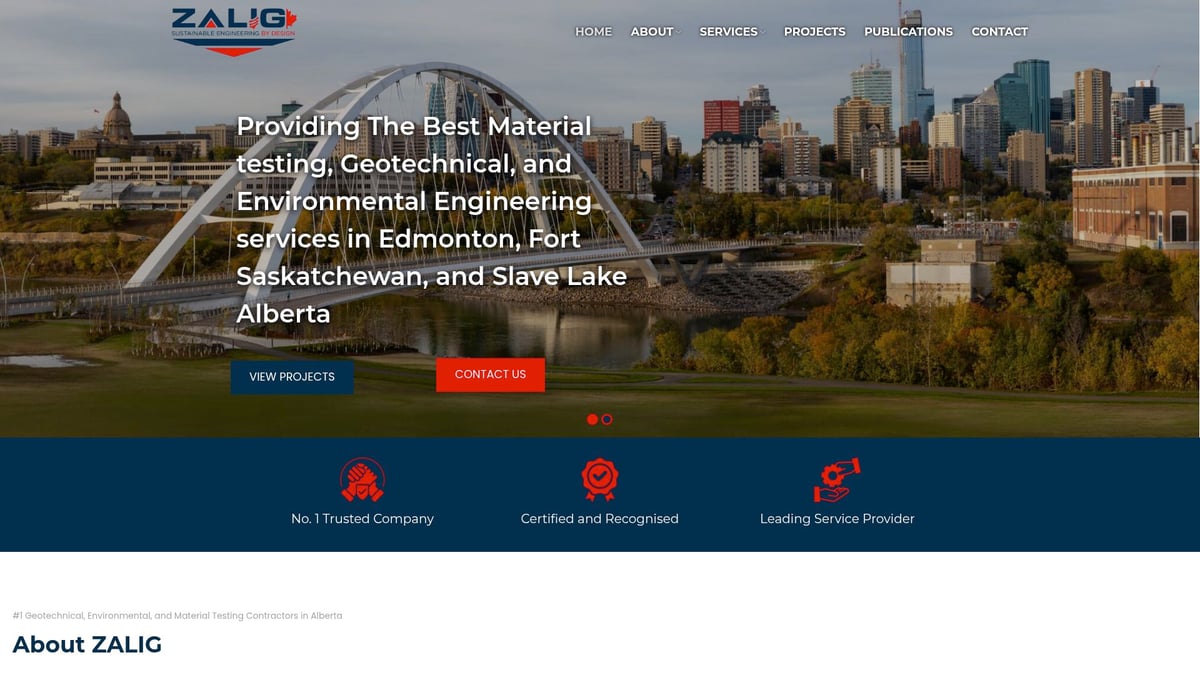
Core features include in-depth laboratory and field testing, comprehensive environmental assessments, as well as expertise in transportation and hydrotechnical engineering. Their team brings local insights and a client-centric mindset to every project, ensuring compliance and quality assurance.
What makes ZALIG unique is its focus on certified processes and trust built with major clients. The firm is recognized as the #1 trusted provider in the region. Their services are tailored for public sector agencies, industrial clients, commercial developers, and private organizations seeking reliable engineering design services.
Pros and Cons Table:
| Pros | Cons |
|---|---|
| Comprehensive solutions | Pricing not publicly listed |
| Cost-effective | Primarily regional focus |
| Local expertise | |
| Client-centric approach |
ZALIG is especially effective for infrastructure projects, regulatory compliance, and risk assessments. Their expertise in geotechnical engineering services ensures robust foundations and mitigated project risks.
A real-world example is their successful delivery of complex projects for ATCO Electric and Rogers Communications, where their engineering design services streamlined regulatory approval and improved project timelines.
WSP
WSP is a global powerhouse in engineering design services, known for its expansive reach and multidisciplinary team. Their service portfolio covers everything from facility design and infrastructure to advanced digital engineering and sustainability consulting.
Clients benefit from WSP's strong project management and innovative practices. Their integration of digital tools and experience across automotive, aerospace, and process industries make them a go-to partner for large-scale, complex initiatives. WSP’s global presence enables them to support organizations with cross-border needs and cutting-edge technology requirements.
Unique selling points include their worldwide delivery model, advanced technology integration, and a proven track record of successful mega-projects. WSP primarily serves large enterprises, public sector entities, and international organizations seeking robust engineering design services.
Pros and Cons Table:
| Pros | Cons |
|---|---|
| Broad service portfolio | Higher costs for smaller projects |
| Strong project management | Less flexible for niche needs |
| Innovation leader | |
| Global reach |
WSP is ideal for large-scale infrastructure, smart city developments, and complex industrial projects. For instance, they led multi-billion-dollar transportation projects, leveraging integrated digital solutions to optimize outcomes.
Their engineering design services are best suited for organizations requiring a partner with global resources and a commitment to innovation.
IDE Incorporated
IDE Incorporated is a veteran Silicon Valley firm with a legacy of excellence in product design and development since 1985. Their focus is on delivering end-to-end engineering design services, from ideation and prototyping to hardware/software integration and user-centric design.
Their award-winning team is known for agile processes and a deep understanding of the technology sector. IDE's expertise is particularly valuable for startups and established firms looking to accelerate product launches and bring innovative ideas to market.
What sets IDE apart is their long-standing reputation, industry awards, and flexible approach to complex product challenges. They cater to technology companies and innovators who prioritize rapid prototyping and advanced product development.
Pros and Cons Table:
| Pros | Cons |
|---|---|
| Highly experienced team | Focused on product design |
| Agile development | Less suited for infrastructure projects |
| Industry accolades | |
| Strong startup support |
Ideal use cases include consumer electronics, medical devices, and other high-tech products. IDE’s engineering design services have helped multiple startups reduce time-to-market and navigate technical challenges efficiently.
A notable example is their support for new device launches, where their expertise in engineering design services enabled clients to outpace competitors.
Aria Group
Aria Group is an end-to-end engineering design firm specializing in automotive, transportation, and aerospace industries. Their comprehensive services span prototyping, project management, design engineering, and both series and one-off manufacturing.
The firm’s in-house production facility and hands-on approach allow them to tackle complex, high-performance projects. Aria’s demonstrated capability is best highlighted by the creation of the Aria FXE supercar, showcasing their technical prowess and innovative spirit.
Aria Group’s unique selling point lies in their ability to handle bespoke, high-stakes projects. Their target audience includes automotive OEMs, aerospace companies, and advanced manufacturing sectors looking for specialized engineering design services.
Pros and Cons Table:
| Pros | Cons |
|---|---|
| Handles complex projects | Industry focus may not suit all sectors |
| Flexible production scale | Premium pricing for custom work |
| In-house manufacturing | |
| Proven innovation |
Best use cases involve prototype vehicles, aerospace components, and advanced transportation solutions. For example, Aria developed a production supercar, underlining their capability to deliver unique engineering design services for high-demand clients.
Their expertise ensures that even the most demanding projects are executed with precision and innovation.
KBR
KBR is a multinational leader in engineering design services, offering a broad spectrum of capabilities from value engineering and test/evaluation to cybersecurity and plant operations. With 16 specialized engineering subcategories, KBR’s reach covers government agencies, defense, energy, and large industrial organizations.
Their global resource network and award-winning collaborations, such as those with NASA, position KBR as a top choice for mission-critical projects. Clients value their extensive experience, regulatory compliance, and robust project management.
KBR's unique selling points include a proven track record in high-stakes environments, comprehensive service offerings, and a commitment to excellence across the project lifecycle.
Pros and Cons Table:
| Pros | Cons |
|---|---|
| Extensive experience | Best suited for large-scale projects |
| Broad capabilities | Complex organizational structure |
| Recognized for excellence | |
| Global resource network |
Ideal scenarios for KBR’s engineering design services include aerospace, defense, energy infrastructure, and large-scale industrial systems. Their multiple NASA awards for engineering support showcase their reliability and expertise.
Clients seeking a partner for complex, regulated, and high-value projects consistently turn to KBR for their engineering design services.
Bay Area Innovations
Bay Area Innovations is a Florida-based firm with over 75 years of combined experience in design, prototyping, and production. Their cross-industry solutions emphasize quality, clear communication, and teamwork in every project.
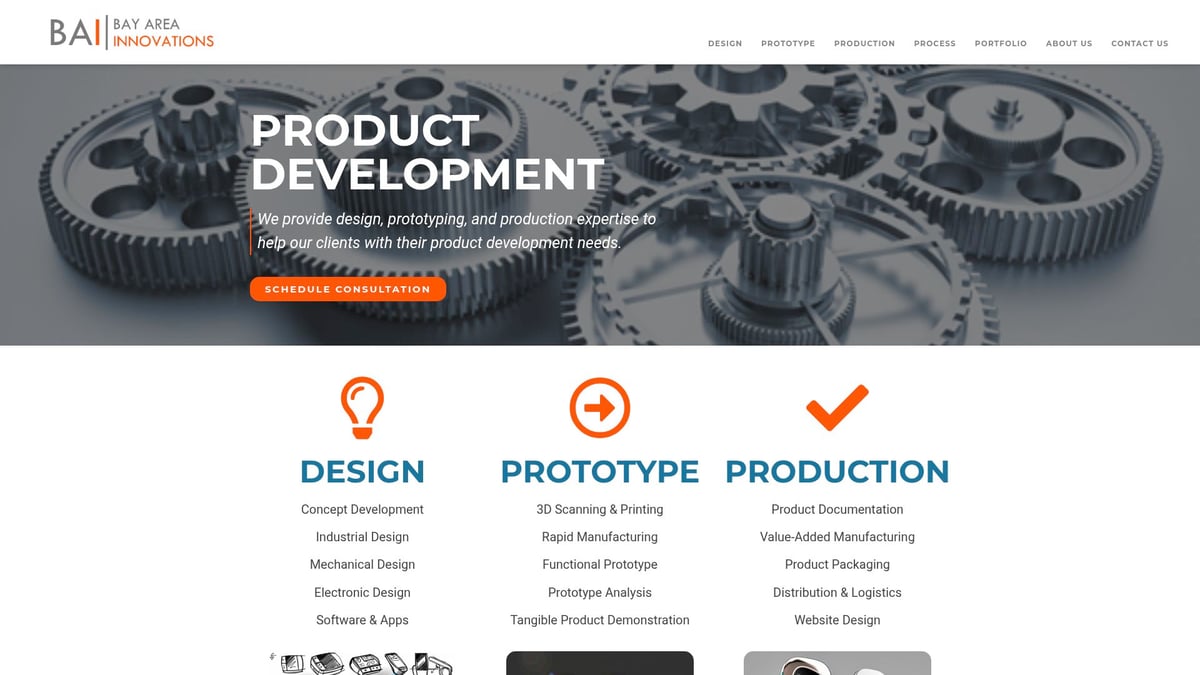
Their engineering design services are tailored to industrial, commercial, and private sector clients who require customized design solutions. The firm is known for its collaborative approach, high customer satisfaction, and versatility across industries.
Unique selling points include strong client feedback, broad design expertise, and flexible project engagement models. While smaller in scale compared to global firms, Bay Area Innovations excels in delivering personalized attention and practical solutions.
Pros and Cons Table:
| Pros | Cons |
|---|---|
| Strong client feedback | Smaller scale than global firms |
| Broad design expertise | Regional focus |
| Collaborative approach | |
| Flexible engagement |
Ideal use cases include custom product development, industrial design, and manufacturing support. Clients consistently praise Bay Area Innovations for solving complex engineering challenges and exceeding expectations.
Their engineering design services are best for organizations that value partnership, adaptability, and a hands-on approach.
Synergie Cad
Synergie Cad is a global specialist in electronics and semiconductor engineering design services. With three decades of experience, the firm is a trusted partner for electronics manufacturers, IoT developers, and tech companies needing advanced semiconductor solutions.
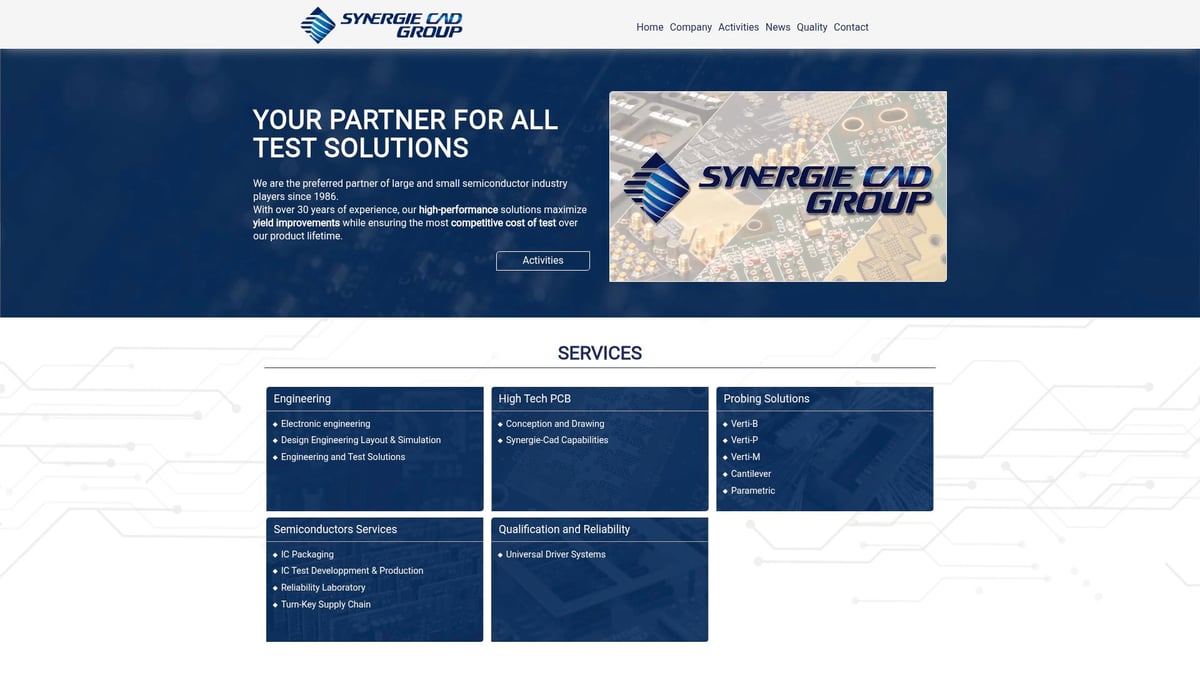
Their offerings include conception, development, and testing of semiconductors and smart devices. Synergie Cad’s niche focus ensures deep expertise, with a network of global offices supporting clients worldwide.
Unique selling points are their specialized knowledge in electronics, international reach, and consistent delivery of high-quality, reliable engineering design services.
Pros and Cons Table:
| Pros | Cons |
|---|---|
| Deep electronics expertise | Limited to electronics/semiconductor sector |
| International presence | Not a generalist firm |
| Focused service offering | |
| 30 years in business |
Synergie Cad is ideal for semiconductor design, smart device prototyping, and electronics testing. For example, they have supported global electronics clients with specialized design and testing, ensuring quality and compliance.
For organizations in the electronics sector, Synergie Cad’s engineering design services deliver the technical depth and reliability needed for next-generation devices.
Emerging Trends Shaping Engineering Design Services in 2026
The landscape for engineering design services is rapidly evolving as new technologies and business models reshape the industry. To remain competitive, providers and clients alike must stay ahead of key trends shaping the future of engineering design services. Let us explore the most significant changes influencing the sector in 2026.
Integration of Digital Technologies
Advanced digital tools are transforming engineering design services by streamlining workflows and enhancing collaboration. Providers now leverage artificial intelligence, machine learning, and digital twins to automate repetitive tasks and improve accuracy throughout the design process. The adoption of VR and AR enables immersive visualization, allowing clients to interact with prototypes before physical production.
For example, digital twins help organizations reduce prototyping costs by up to 25 percent, offering dynamic simulations and real-time feedback. According to Top Engineering Trends for 2026, the integration of these technologies is one of the main drivers of innovation across engineering design services. As a result, companies can accelerate project timelines and deliver more precise outcomes.
Focus on Sustainability and Green Engineering
Sustainability is now a central requirement in engineering design services. Clients increasingly demand the use of eco-friendly materials, energy-efficient systems, and circular economy principles in every project. Providers respond by offering specialized sustainability consulting and ensuring compliance with global green standards.
Statistics reveal that 60 percent of clients now prioritize sustainability credentials when selecting engineering design services partners. This shift encourages firms to optimize for low-carbon footprints and seek innovative solutions for waste reduction and resource management. Such commitment to green engineering not only benefits the environment but also enhances brand reputation and client trust.
Agile and Lean Project Management
A significant trend in engineering design services is the adoption of agile and lean project management methodologies. Agile approaches enable faster iteration, continuous stakeholder engagement, and adaptability to evolving project requirements. Lean principles help minimize waste, optimize resource allocation, and improve overall efficiency.
Companies implementing agile strategies within engineering design services report a 20 percent reduction in delivery timelines. This efficiency translates to quicker time-to-market and improved responsiveness to client feedback. By combining structured frameworks with flexible execution, providers ensure successful project outcomes while maintaining cost control.
Globalization and Remote Collaboration
Engineering design services have become increasingly global, thanks to advances in remote collaboration and cloud-based technologies. Firms now operate cross-border project teams, drawing on specialized talent from around the world. Cloud platforms facilitate seamless communication, document sharing, and real-time project tracking.
This globalization enables 24/7 project cycles, as teams in different time zones contribute to continuous progress. The result is faster project delivery and enhanced access to expertise. For clients, partnering with engineering design services that embrace remote collaboration means broader innovation possibilities and greater flexibility in project execution.
How to Choose the Right Engineering Design Partner for Your Project
Selecting the ideal partner for engineering design services is a critical step that shapes your project's outcome, efficiency, and long-term value. With the wide array of providers available in 2026, making an informed choice requires a structured approach that considers your unique goals, industry standards, and return on investment.
Assessing Your Project Scope and Needs
Begin by clearly defining your project objectives, desired outcomes, and timeline. Evaluate the complexity of your initiative, whether it involves product development, infrastructure, or compliance-driven tasks. Pinpoint the level of expertise and technical specialization required for your sector.
Consider industry-specific regulations and compliance mandates that may affect your project. For instance, infrastructure projects in regulated environments often benefit from partners with strong local knowledge and proven industry experience. Explore industry-specific engineering solutions to understand how different providers address sector requirements.
By aligning your needs with the capabilities of engineering design services, you lay the groundwork for a successful collaboration tailored to your project's demands.
Evaluating Provider Credentials and Fit
Once your project scope is clear, assess potential engineering design services providers by reviewing their certifications, case studies, and references. Look for evidence of ISO or industry-specific credentials that demonstrate a commitment to quality and regulatory compliance.
Evaluate cultural fit and communication style. Does the provider’s project management approach align with your internal teams? Initiating a pilot project or phased engagement helps test the provider’s responsiveness and adaptability before making a long-term commitment.
Prioritizing these factors ensures that your chosen partner not only meets technical expectations but also supports a collaborative and transparent working relationship.
Budgeting and ROI Considerations
Budget plays a pivotal role in selecting engineering design services. Balance upfront costs against the value delivered, considering factors like speed, innovation, and quality. Discuss pricing models—fixed, milestone-based, or scalable—to find what aligns with your financial framework.
Leading providers often deliver significant cost savings through process optimization and technology adoption. According to Engineering Services Market Trends, organizations partnering with top-tier firms report up to 30% reduction in project expenses and faster time-to-market.
Careful evaluation of ROI ensures your investment in engineering design services drives measurable results and positions your business for sustained growth.
Frequently Asked Questions About Engineering Design Services
Navigating the world of engineering design services can raise many questions for organizations seeking the best partner. Below, we address the most common queries to help you understand what to expect, how to compare providers, and how to ensure successful outcomes for your projects.
What types of projects benefit most from external engineering design services?
Engineering design services are especially valuable for projects involving product development, infrastructure upgrades, retrofitting, and those driven by strict compliance needs. Companies often turn to these experts for new product launches, complex facility expansions, or when specialized knowledge is required for regulatory approval. This partnership accelerates innovation and ensures technical accuracy across industries.
How do engineering design firms ensure quality and compliance?
Top engineering design services use certified processes, robust quality management systems, and deep regulatory expertise. They often provide services like construction material testing services, which help verify that all materials and processes meet project specifications and industry standards. Regular audits, documentation, and third-party assessments support ongoing compliance and reliable project outcomes.
What is the typical engagement process with a design engineering firm?
The engagement process for engineering design services usually starts with an initial consultation to define project goals and requirements. This is followed by a detailed proposal, collaborative design, prototyping, and comprehensive testing. Clients stay involved through regular updates before final delivery. This structured approach reduces risk and helps ensure the project aligns with all expectations.
How do I compare providers on technology and innovation?
When evaluating engineering design services, look for investment in research and development, adoption of digital tools, and a strong record of innovation. Some providers leverage advanced technologies such as AI, which is transforming workflows and accelerating design cycles. For example, AI in Engineering Design demonstrates how AI agents can streamline automotive design, offering a clear competitive advantage.
What should I look for in client testimonials and case studies?
Effective engineering design services are reflected in testimonials that highlight successful outcomes, problem-solving skills, and long-term partnerships. Look for examples where the provider clearly addressed complex challenges, delivered on time, and exceeded client expectations. Case studies should detail measurable results, such as reduced development time or improved product quality, indicating proven expertise.
As you explore these leading engineering design services for 2026, it’s clear that having the right partner can make all the difference—whether you’re tackling complex infrastructure, striving for compliance, or seeking innovative solutions tailored to your sector. If you want to learn more about how a trusted, Alberta-based team can support your next project with geotechnical, environmental, and material testing expertise, we’re here to help. Let’s discuss your goals and how we can drive measurable results together.
Contact Us: info@zalig.ca or +1 800 515 0497