

Earthwork services form the foundational phase of nearly every construction and infrastructure project, transforming raw land into stable, construction-ready sites. These services encompass excavation, grading, compaction, soil stabilization, and drainage management-activities that directly influence project timelines, budgets, and long-term performance. Whether preparing a commercial development site, building transportation corridors, or establishing industrial facilities, the quality of earthwork determines structural integrity, regulatory compliance, and environmental stewardship. Understanding the scope, technical requirements, and best practices surrounding earthwork services enables project owners, contractors, and engineers to manage risk, optimize constructability, and deliver resilient infrastructure that meets modern standards.
Scope and Core Components of Earthwork Services
Earthwork services involve a broad range of activities designed to manipulate natural terrain and subsurface conditions to meet project specifications. The primary components include site clearing, topsoil stripping, bulk excavation, cut-and-fill operations, and final grading. Each activity requires careful planning, precise execution, and integration with geotechnical and environmental considerations.
Site Preparation and Clearing
Initial site preparation removes vegetation, debris, and unsuitable surface materials to expose the natural ground. This phase establishes access routes, defines work areas, and identifies geotechnical constraints that may affect subsequent operations. Proper clearing minimizes disturbance to adjacent properties, protects sensitive environmental features, and sets the stage for accurate surveying and earthwork layout.
Topsoil stripping separates organic-rich surface layers from underlying mineral soils, preserving valuable material for landscape restoration and erosion control. The depth and extent of stripping depend on soil profiles, vegetation density, and project requirements. Stockpiling topsoil in designated areas prevents contamination and degradation, ensuring its availability for final restoration activities.
Excavation and Material Movement
Bulk excavation removes soil and rock to achieve design grades, create building pads, or establish utility corridors. The volume and characteristics of excavated material dictate equipment selection, hauling logistics, and disposal or reuse strategies. Material classification-such as common earth, rock, or unsuitable soils-affects both cost and scheduling.
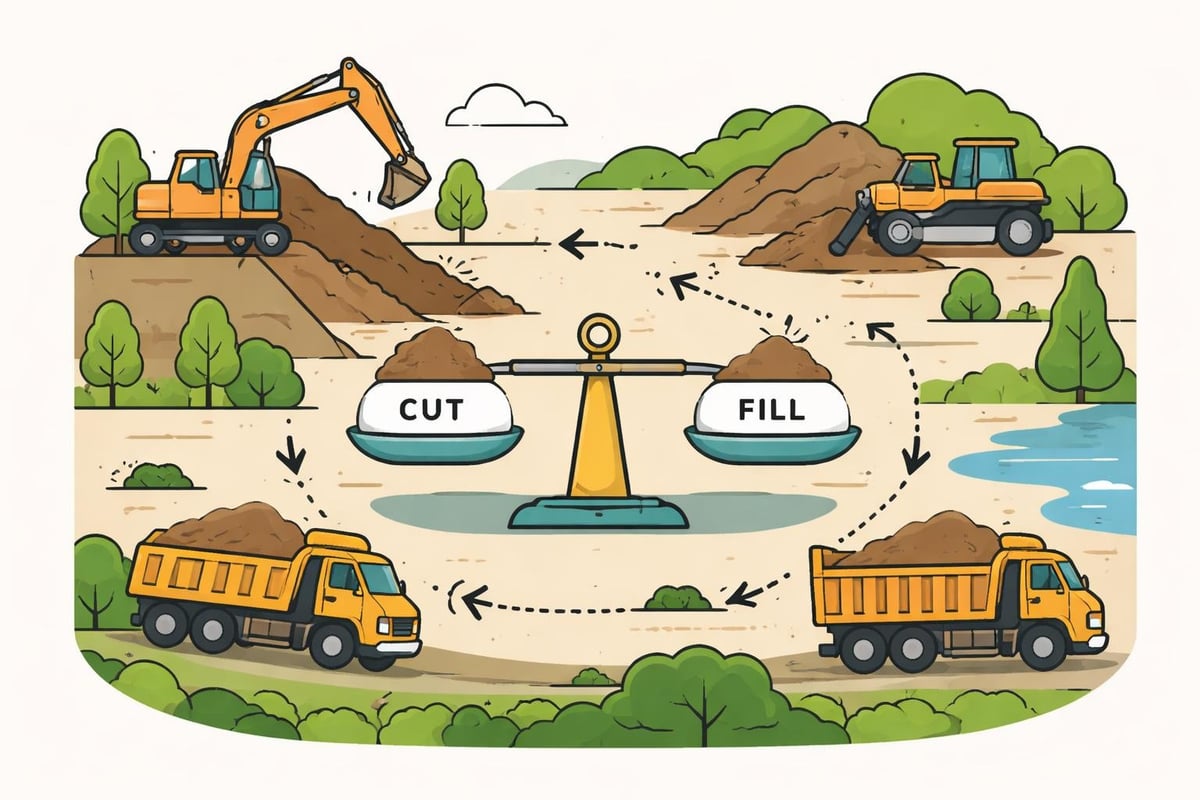
Cut-and-fill balancing optimizes earthwork efficiency by reusing excavated material as fill in other areas of the site. This approach reduces hauling distances, lowers disposal costs, and minimizes the need for imported borrow material. Successful balancing requires accurate quantity takeoffs, soil characterization, and coordination between excavation and placement operations.
Grading and Compaction
Grading establishes final surface elevations and drainage patterns to direct stormwater away from structures and sensitive areas. Precision grading uses laser-guided equipment and GPS technology to achieve tight tolerances, ensuring compliance with design specifications and regulatory requirements. Proper grades prevent ponding, erosion, and structural settlement.
Compaction increases soil density and load-bearing capacity by reducing air voids and optimizing particle arrangement. Compaction specifications typically reference percentage of maximum dry density determined through laboratory testing such as Proctor tests. Field density testing verifies compliance, with nuclear density gauges and sand cone tests providing rapid, reliable results. Adequate compaction prevents differential settlement, pavement failures, and foundation distress.
| Compaction Method | Soil Type | Typical Lift Thickness | Equipment |
|---|---|---|---|
| Impact | Cohesive soils | 150-300 mm | Sheepsfoot rollers |
| Vibratory | Granular soils | 200-400 mm | Smooth drum rollers |
| Static | Fine-grained fills | 100-200 mm | Pneumatic tire rollers |
Geotechnical Considerations in Earthwork Services
Geotechnical engineering provides the scientific foundation for earthwork services, characterizing subsurface conditions and recommending appropriate construction methods. Soil properties-including grain size distribution, moisture content, plasticity, and strength-govern excavation difficulty, slope stability, and compaction requirements. Geotechnical engineering integrates field investigations, laboratory testing, and analytical modeling to inform earthwork design and execution.
Subsurface Investigation and Characterization
Geotechnical investigations identify soil stratigraphy, groundwater conditions, and geologic hazards that affect earthwork operations. Test pits, boreholes, and cone penetration tests collect samples and in-situ data to develop soil profiles and engineering parameters. This information guides excavation planning, slope design, and material reuse strategies.
Understanding soil behavior under load and moisture variation prevents common earthwork failures. Expansive clays swell when wetted, exerting uplift pressures on foundations and pavements. Collapsible soils lose strength and settle when saturated. Frost-susceptible soils heave during freeze-thaw cycles. Identifying these conditions during investigation allows designers to specify remedial measures such as soil replacement, chemical stabilization, or drainage improvements.
Groundwater management represents a critical aspect of earthwork services. High water tables complicate excavation, reduce soil strength, and increase costs. Dewatering systems-including wellpoints, sumps, and deep wells-lower groundwater levels to enable dry excavation and compaction. Drainage design maintains long-term stability by preventing water accumulation and pore pressure buildup.
Slope Stability and Erosion Control
Temporary and permanent slopes must remain stable under static and dynamic loading. Slope angle, soil strength, groundwater conditions, and external loads determine stability. Flatter slopes in weak soils prevent failures, while steeper slopes in competent materials optimize land use. Stability analyses using limit equilibrium or finite element methods verify design adequacy.
Erosion control measures protect exposed soils from water and wind damage during and after construction. Silt fences, sediment basins, and inlet protection capture sediment before it enters waterways. Hydroseeding, erosion control blankets, and mulching establish vegetation cover that binds soil and reduces runoff velocity. Compliance with erosion and sediment control regulations prevents environmental violations and community impacts.
Environmental and Regulatory Compliance
Earthwork services intersect with numerous environmental regulations designed to protect water quality, air quality, and ecological resources. Projects disturbing more than one acre typically require stormwater permits, erosion and sediment control plans, and construction inspections. Understanding and complying with these requirements prevents work stoppages, fines, and reputational damage.
Stormwater Management and Permitting
The National Pollutant Discharge Elimination System (NPDES) regulates stormwater discharges from construction sites. Permit coverage requires development and implementation of a Stormwater Pollution Prevention Plan (SWPPP) that identifies potential pollutant sources and describes control measures. Regular inspections, maintenance, and record-keeping demonstrate ongoing compliance.
Best management practices (BMPs) minimize sediment and pollutant discharge. Perimeter controls such as silt fences and wattles capture sediment at site boundaries. Stabilized construction entrances prevent sediment tracking onto public roads. Sediment basins detain runoff, allowing particles to settle before discharge. Vegetation establishment and surface roughening provide long-term erosion resistance.
Soil and Groundwater Protection
Contaminated soil discovery during earthwork operations triggers specific handling and disposal requirements. Phase I and Phase II Environmental Site Assessments identify potential contamination before excavation begins, enabling proactive risk management. If contamination is encountered, soil sampling characterizes the nature and extent, guiding remediation or disposal decisions.
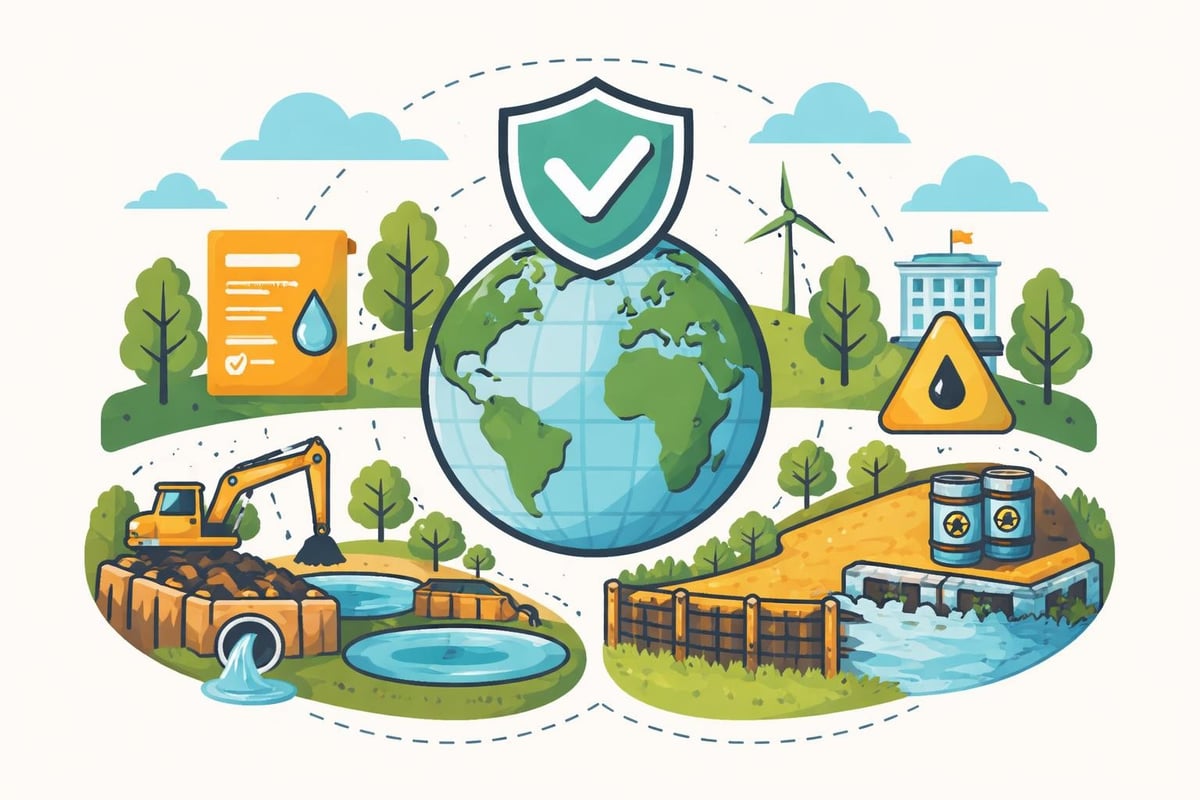
Groundwater protection prevents excavation and dewatering activities from contaminating aquifers or degrading water quality. Proper fuel and chemical storage, spill prevention plans, and containment systems reduce pollution risk. When dewatering discharges to surface waters or storm systems, treatment or filtration may be required to meet discharge limits.
Federal regulations such as the National Environmental Policy Act (NEPA) require evaluation of environmental consequences for certain projects. Documentation of environmental impacts, mitigation measures, and alternatives supports permitting and public review processes. Early environmental planning prevents costly delays and design modifications during construction.
Quality Assurance and Materials Testing
Quality control programs ensure earthwork services meet specifications and performance standards. Field and laboratory testing verify material properties, placement methods, and compaction results. Documented testing provides defensible evidence of compliance and supports dispute resolution.
Field Testing Protocols
In-situ density testing confirms that compacted fills achieve specified relative compaction. Nuclear density gauges measure wet density and moisture content rapidly, enabling real-time adjustments. Sand cone tests provide alternative verification without radioactive sources. Testing frequency depends on fill volume, material variability, and specification requirements-often one test per 1,000 to 2,000 cubic meters.
Proof rolling identifies soft spots and inadequate compaction in subgrade layers before pavement or structural construction. Heavy pneumatic-tired rollers apply uniform loads across the surface, revealing deflections, pumping, or rutting that indicate insufficient support. Remediation includes additional compaction, material replacement, or geotechnical fabric reinforcement.
Moisture-density relationships govern compaction effectiveness. Soils compact best at optimum moisture content, where particle arrangement maximizes density. Excessively wet soils become plastic and unstable, while dry soils resist densification. Field moisture adjustment through drying, wetting, or aeration brings soils into the acceptable range.
Laboratory Testing and Specification Compliance
Laboratory tests characterize soil engineering properties and establish acceptance criteria. Grain size analysis determines soil classification and suitability for specific uses. Atterberg limits measure plasticity and predict behavior under changing moisture conditions. Proctor compaction tests define maximum dry density and optimum moisture content.
Specialized testing addresses specific geotechnical concerns. Direct shear tests measure soil strength parameters for slope stability analysis. Consolidation tests predict settlement under sustained loads. California Bearing Ratio (CBR) tests evaluate pavement subgrade support. Results inform design, specification development, and construction quality control.
Documentation and traceability maintain quality assurance integrity. Test reports include sample locations, visual classifications, test methods, results, and compliance statements. Chain-of-custody procedures ensure sample integrity. Regular calibration of testing equipment and technician certification maintain accuracy and reliability.
Integration with Infrastructure Design and Construction
Earthwork services do not occur in isolation but integrate closely with structural, drainage, and utility design. Coordination among disciplines optimizes constructability, minimizes conflicts, and reduces change orders. Early involvement of geotechnical and earthwork specialists improves design efficiency and construction sequencing.
Foundation Support and Structural Interface
Earthwork establishes the bearing surface for foundations, pavements, and other structural elements. Subgrade preparation directly affects structural performance and longevity. Inadequate compaction leads to differential settlement, cracking, and premature failure. Proper preparation includes removal of unsuitable materials, installation of drainage layers, and achievement of specified density.
Foundation design relies on geotechnical parameters derived from subsurface investigation and laboratory testing. Bearing capacity, settlement estimates, and lateral earth pressures inform foundation type selection and sizing. Shallow foundations suit competent soils, while deep foundations transfer loads through weak strata to suitable bearing layers. Specialized deep foundation solutions address challenging subsurface conditions.
Retaining structures manage grade changes and provide lateral support for excavations and embankments. Wall selection considers height, surcharge loads, available space, and aesthetics. Gravity walls, mechanically stabilized earth (MSE) walls, and soldier pile walls each suit specific applications. Proper backfill selection, drainage provision, and construction sequencing ensure wall stability and performance.
Earthwork services that prioritize thorough geotechnical investigation, precise execution, and rigorous quality control deliver stable, long-lasting building platforms. Projects benefit from fewer surprises, reduced costs, and improved constructability when earthwork planning begins early and integrates with overall project goals.
Drainage and Stormwater Infrastructure
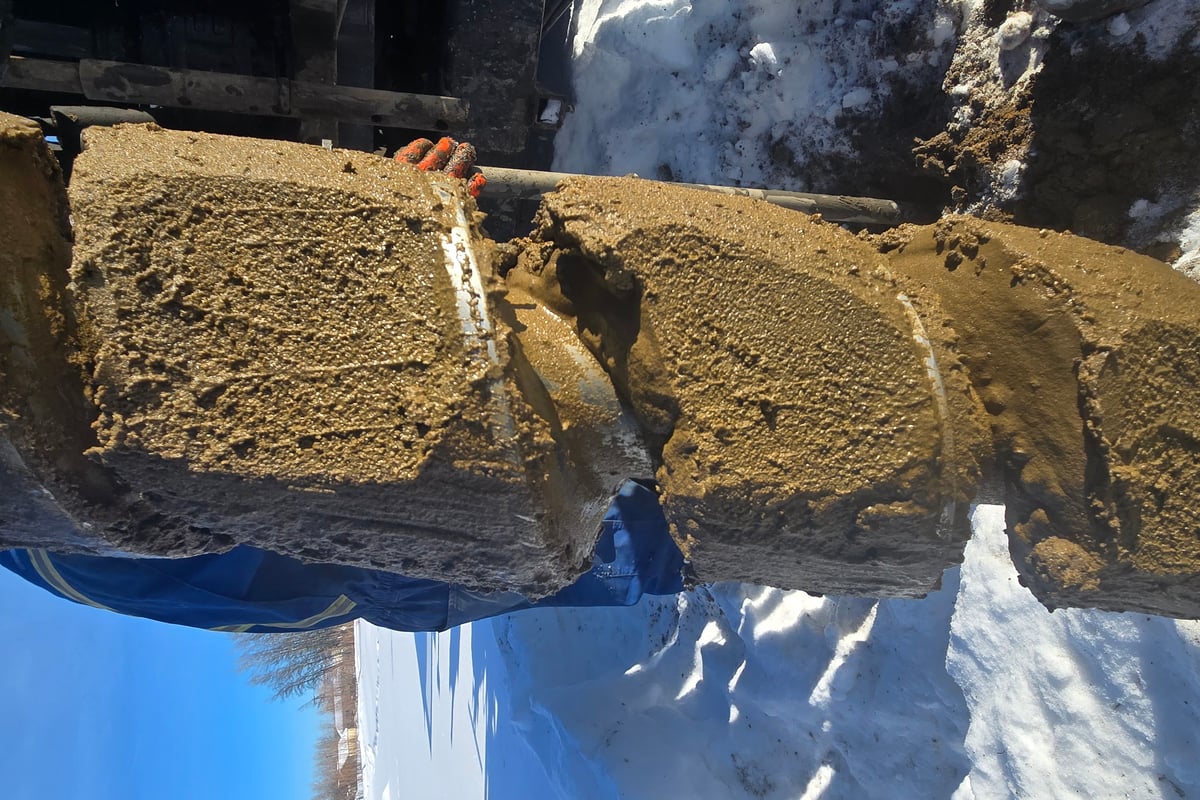
Surface and subsurface drainage systems manage water movement to prevent erosion, saturation, and structural damage. Earthwork grading establishes surface flow paths that direct runoff to collection points, inlets, and conveyance systems. Positive drainage away from structures prevents foundation wetting and basement flooding.
Subsurface drainage removes groundwater and infiltration from foundation zones, retaining wall backfills, and pavement sections. Perforated pipes, drainage geocomposites, and granular layers collect and convey water to discharge points. Proper sizing, slope, and outlet design ensure effective long-term performance.
Stormwater management facilities such as detention ponds, infiltration basins, and bioswales require precise earthwork construction. Pond bottom elevations, side slopes, and inlet/outlet configurations control storage volume and discharge rates. Compaction of pond bottoms and berms prevents seepage and failure. Vegetation establishment stabilizes surfaces and enhances treatment performance.
Best Practices and Technology Integration
Modern earthwork services benefit from technological advances that improve accuracy, efficiency, and environmental performance. GPS-guided equipment, unmanned aerial systems (UAS), and building information modeling (BIM) transform traditional practices and enable real-time decision-making.
Machine Control and GPS Technology
GPS-equipped excavators, dozers, and graders achieve design grades with centimeter-level accuracy, reducing rework and speeding construction. Three-dimensional models loaded into machine control systems guide operators in real time, eliminating traditional grade stakes and reducing surveying costs. Productivity increases while material waste decreases.
Automated blade control adjusts equipment continuously to maintain target elevations and slopes. Operators focus on machine operation rather than grade interpretation, improving consistency and reducing operator fatigue. Complex grading transitions, drainage swales, and multi-slope surfaces execute precisely without manual interpolation.
Data collection and as-built documentation occur automatically as machines operate. GPS tracking records actual earthwork quantities, equipment locations, and productivity metrics. This information supports progress billing, dispute resolution, and continuous improvement efforts.
Digital Modeling and Quantity Analysis
Building information modeling (BIM) extends beyond buildings to encompass site and civil infrastructure. Three-dimensional earthwork models integrate topographic surveys, geotechnical data, and design elements to visualize cut-fill balances, haul routes, and staging areas. Quantity takeoffs from digital models improve estimate accuracy and reduce bidding disputes.
Unmanned aerial systems capture high-resolution imagery and elevation data, creating accurate digital terrain models. Regular flights document progress, measure volumes, and verify payment quantities. Photogrammetry and LiDAR technology provide rapid, cost-effective site documentation compared to traditional surveying methods. Resources like earthwork takeoff best practices emphasize thorough site assessments and advanced estimation software.
Sustainability and Environmental Stewardship
Sustainable earthwork services minimize environmental impacts through thoughtful planning and execution. Material reuse reduces demand for virgin resources and landfill disposal. Local sourcing cuts transportation emissions and costs. Soil stabilization techniques using lime, cement, or geosynthetics improve poor soils in place rather than hauling and replacing. Companies increasingly adopt environmental sustainability measures including soil stabilization and remediation methods.
Dust control protects air quality and community health during earthwork operations. Water trucks, chemical suppressants, and surface treatments reduce particulate emissions. Wind fencing and vegetation buffers minimize off-site dust migration. Standards for dust control at major infrastructure projects provide replicable guidance.
Energy-efficient equipment and optimized haul routes reduce fuel consumption and greenhouse gas emissions. Idle time reduction, equipment right-sizing, and route planning software improve environmental performance. Carbon accounting and reporting demonstrate commitment to climate responsibility.
Site-Specific Challenges and Solutions
Every site presents unique earthwork challenges requiring tailored solutions. Soft ground, rock excavation, contaminated soils, and restricted access demand specialized approaches that balance technical feasibility, cost, and schedule.
Difficult Ground Conditions
Soft, compressible soils-such as peat, organic silts, and loose fills-exhibit low strength and high settlement potential. Surcharging preloads the ground, inducing settlement before construction. Wick drains or sand drains accelerate consolidation by shortening drainage paths. Soil replacement removes unsuitable material entirely, substituting competent fill.
Rock excavation requires drilling, blasting, or mechanical breaking. Blast design balances productivity with vibration control and flyrock prevention. Community notification, seismic monitoring, and pre-blast surveys protect adjacent properties. Mechanical methods-including hydraulic breakers and rippers-suit restricted areas where blasting is impractical.
Expansive soils pose ongoing challenges for pavements and structures. Moisture barriers, lime treatment, and controlled compaction mitigate swell potential. Foundation design accommodates expected movement or isolates structures from soil moisture changes. Regular monitoring detects early distress, enabling timely intervention.
Urban and Restricted Sites
Urban earthwork services confront limited staging areas, adjacent structures, and congested utilities. Sequencing and logistics planning maximize productivity within constraints. Smaller equipment accesses tight spaces, while night and weekend work minimizes traffic disruption.
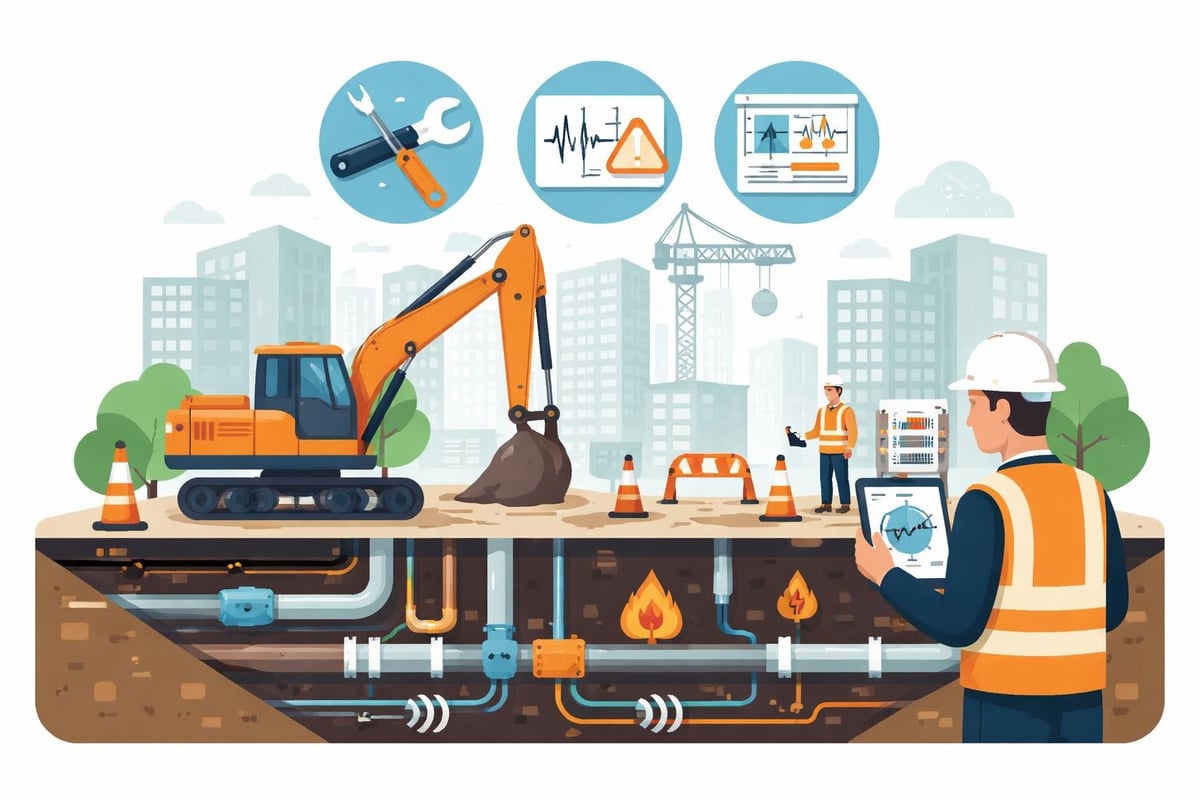
Vibration monitoring protects nearby buildings from excavation and compaction impacts. Pre-construction surveys document existing conditions, establishing baselines for damage claims. Real-time monitoring triggers work adjustments when vibration limits approach.
Utility conflicts require careful coordination and sometimes relocation. Subsurface utility engineering (SUE) identifies existing infrastructure before excavation, reducing strike risk. Potholing verifies utility locations and depths. Protective measures such as hand digging and vacuum excavation safeguard critical services.
Workforce Development and Safety Culture
Skilled personnel and robust safety programs underpin successful earthwork services. Equipment operators, laborers, surveyors, and inspectors require training, certification, and ongoing professional development. Safety leadership prevents injuries, protects equipment, and maintains project continuity. Organizations like the EARTh Center address workforce development challenges in technical fields.
Training and Competency
Operator certification programs verify proficiency in equipment operation, maintenance, and safety. GPS machine control requires additional training to maximize technology benefits. Regular refresher courses keep skills current as equipment and methods evolve.
Quality control technicians obtain certifications such as American Concrete Institute (ACI) field testing technician or Nuclear Gauge Safety Training. Laboratory technicians maintain accreditation through professional organizations. Continuing education ensures awareness of updated standards and best practices.
Safety Management Systems
Earthwork sites present numerous hazards including heavy equipment, excavations, unstable slopes, and underground utilities. Comprehensive safety programs identify risks, implement controls, and verify effectiveness through inspections and audits. Toolbox talks, job hazard analyses, and incident investigations maintain awareness and drive improvement.
Excavation safety requires protective systems for trenches deeper than 1.5 meters. Sloping, benching, shoring, and trench boxes prevent cave-ins. Competent persons inspect excavations daily and after weather events or ground changes. Atmospheric testing and ventilation protect workers in confined spaces.
Traffic management protects workers and the public near roadways. Signage, barriers, and flaggers control vehicle movements. High-visibility clothing and equipment lighting enhance worker visibility. Speed reductions and lane closures separate work zones from active traffic.
Regulatory Frameworks and Industry Standards
Earthwork services operate within complex regulatory environments encompassing environmental protection, worker safety, and technical standards. Familiarity with applicable codes, specifications, and permit requirements prevents non-compliance and supports efficient project delivery. Resources such as Harvard’s Construction Standard Specification for Earthwork provide detailed guidelines.
Technical Specifications and Standards
Industry standards establish minimum requirements for earthwork design, materials, and construction. Organizations such as ASTM International, American Association of State Highway and Transportation Officials (AASHTO), and Canadian Standards Association (CSA) publish widely adopted standards. Specifications reference these standards to define acceptance criteria and testing protocols.
Project-specific specifications tailor general standards to site conditions and owner requirements. Special provisions address unique challenges, material sources, and construction sequencing. Clear, enforceable specifications reduce ambiguity and support contract administration.
Permit Acquisition and Regulatory Approval
Earthwork projects often require multiple permits from federal, state, provincial, and local agencies. Stormwater permits, wetland permits, right-of-way permits, and building permits each involve distinct application processes, review periods, and compliance obligations. Early identification of permit requirements and initiation of applications prevents schedule delays.
Regulatory coordination involves multiple stakeholders including environmental agencies, transportation departments, and municipal authorities. Pre-application meetings clarify requirements and identify potential issues. Complete, accurate submittals expedite review. Responsive communication with regulators builds trust and facilitates approvals.
Environmental regulations continue evolving in response to scientific understanding and policy priorities. The Stream Protection Rule illustrates how mining and earthwork regulations adapt to protect waterways. Staying current with regulatory changes through industry associations, training, and legal counsel maintains compliance and competitive advantage.
Earthwork services establish the physical and regulatory foundation for successful infrastructure and development projects, integrating geotechnical science, environmental stewardship, and construction excellence. Attention to subsurface conditions, quality control, and regulatory compliance delivers safe, cost-effective, and sustainable outcomes. ZALIG Consulting Ltd brings multidisciplinary expertise in geotechnical engineering, environmental assessment, and construction materials testing to support earthwork planning, design, and execution from due diligence through commissioning. Our integrated field and laboratory services provide the technical rigor and practical solutions your project demands, working collaboratively to manage risk, improve constructability, and achieve lasting performance.