
Detailed engineering design is the backbone of every high-performing infrastructure and industrial project, especially as we approach 2026. With technology, regulations, and market expectations evolving rapidly, mastering detailed engineering design is essential for delivering successful, cost-effective, and future-ready solutions.
This guide offers practical strategies and expert insights on best practices, digital innovations, risk management, sustainability, and emerging trends. Whether you are an engineer, project manager, or industry leader, you will find actionable recommendations to ensure your projects excel and remain compliant.
Ready to future-proof your next project? Explore the essential steps and expert advice in the sections ahead.
Understanding Detailed Engineering Design: Scope and Significance
Detailed engineering design is the process that transforms creative project concepts into fully specified, buildable solutions. Unlike conceptual or basic engineering, which focus on high-level ideas and feasibility, detailed engineering design dives deep into every technical aspect, ensuring that all requirements are addressed before construction begins. This phase bridges the gap between vision and reality, setting the foundation for safe, efficient, and cost-effective project execution.
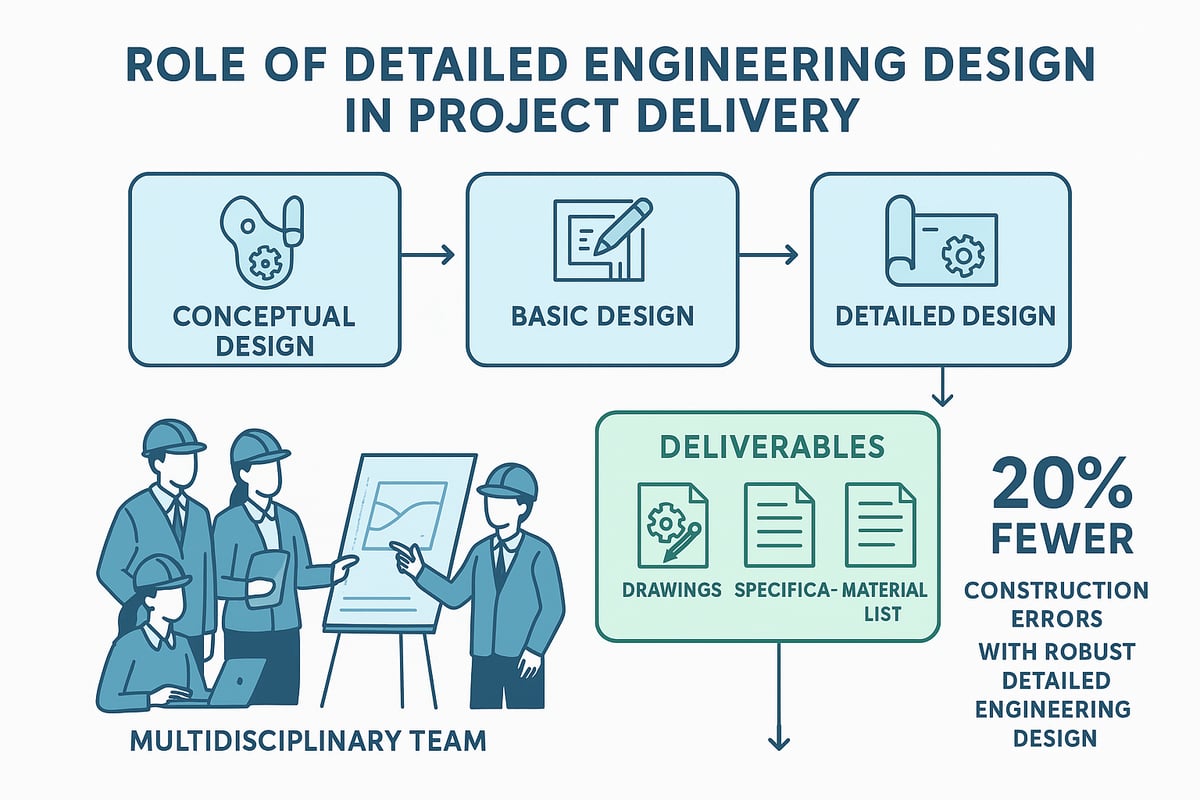
The core objectives of detailed engineering design are to translate preliminary concepts into construction-ready plans, ensuring accuracy, compliance, and practicality. Deliverables at this stage include comprehensive drawings, technical specifications, material take-offs, and cost estimates. These documents serve as the blueprint for procurement and construction teams, eliminating ambiguity and minimizing the risk of errors or costly changes later.
| Major Deliverables | Description |
|---|---|
| Construction Drawings | Detailed layouts, elevations, and sections |
| Technical Specifications | Material, workmanship, and performance criteria |
| Bill of Materials (BOM) | Comprehensive list of required materials |
| Cost Estimates | Detailed breakdown of project costs |
Detailed engineering design plays a pivotal role across industries such as oil and gas, infrastructure, manufacturing, energy, and construction. For instance, 3D modeling is used to create precise plant layouts, while detailed schematics enable reliable telecommunications system installations. Industry data shows that projects with a robust detailed engineering design phase experience up to 20% fewer construction errors, leading to smoother project delivery and significant cost savings.
The impact of detailed engineering design extends to project cost control, safety, and long-term operational efficiency. Effective collaboration among civil, mechanical, electrical, and environmental engineers is essential for success. Geotechnical specialists, for example, are often engaged early to assess ground conditions and inform foundational decisions, as highlighted in the Geotechnical Engineering Services Overview. Regulatory codes and client-specific requirements further shape the scope, demanding meticulous attention to detail and ongoing coordination to ensure compliance and satisfaction.
Step-by-Step Process of Detailed Engineering Design
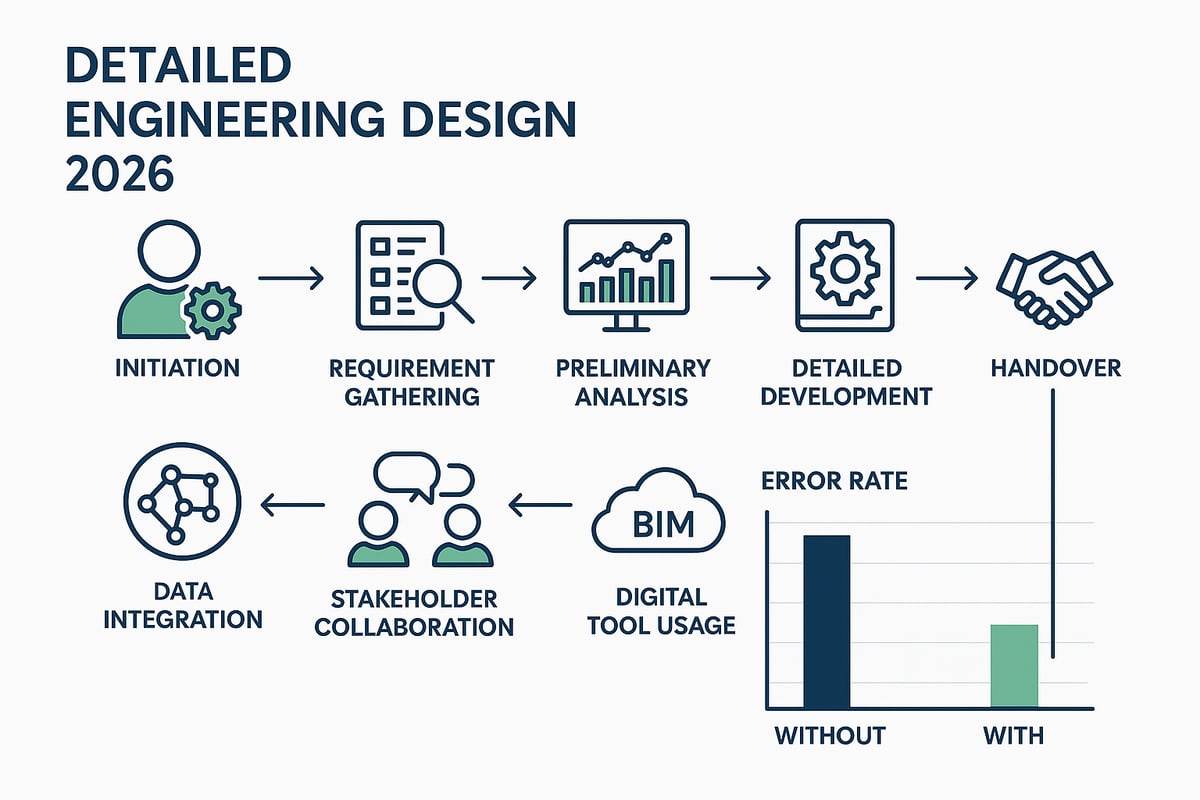
A well-structured approach to detailed engineering design is essential for transforming project concepts into reality. The process involves distinct phases, each building on the last to ensure technical accuracy, cost efficiency, and stakeholder alignment.
Project Initiation and Requirement Gathering
Every successful detailed engineering design starts with clear project scope definition. Collaborating with clients and stakeholders, engineers gather data on site conditions, regulatory requirements, and project objectives.
For infrastructure projects, geotechnical surveys play a critical role. Using digital tools in geotechnical analysis allows teams to assess soil stability and subsurface risks early, reducing costly surprises later.
Key deliverables in this phase include requirement documents and initial risk assessments. Open communication between engineers, clients, and regulators is vital, setting the foundation for all subsequent detailed engineering design activities.
Preliminary Design and Feasibility Analysis
The next phase in detailed engineering design is developing preliminary concepts and evaluating their technical and economic viability. Multiple design alternatives are considered, each analyzed for cost, safety, and practicality.
Stakeholder input is sought to refine concepts and ensure regulatory alignment. Engineers prepare preliminary drawings and cost estimates, comparing solutions to select the optimal approach. For example, structural layouts may be assessed to balance material costs with long-term safety.
This stage ensures that only feasible, compliant options progress to the detailed engineering design phase.
Detailed Design Development
In this core phase, detailed engineering design transitions from concept to actionable plans. Engineers produce comprehensive drawings, 3D models, and specifications using advanced CAD and BIM tools, ensuring every element is defined with precision.
Material specifications, dimensions, and tolerances are documented. Cross-disciplinary collaboration is crucial as civil, mechanical, electrical, and environmental engineers align their inputs. International and local standards such as ISO and ASME guide compliance.
A key benefit here is 3D modeling for process plants or manufacturing layouts, which helps detect and resolve clashes before construction begins. Work packages and detailed bills of materials are prepared.
Stakeholder review cycles ensure all parties approve the final detailed engineering design before moving forward. This phase sets the stage for safe, efficient, and compliant construction.
Verification, Validation, and Documentation
Once the detailed engineering design is developed, rigorous verification and validation take place. Design reviews, simulations, and prototype testing confirm that all specifications meet the original requirements and adhere to regulatory codes.
For instance, engineers may simulate load conditions to ensure structural integrity. Every change is documented with proper version control, maintaining a transparent record for audits.
Comprehensive documentation is prepared for construction, procurement, and operational teams, ensuring seamless knowledge transfer and accountability.
Handover and Support for Construction
The final phase of detailed engineering design involves transferring all design materials to construction teams. Engineers provide ongoing technical support, responding promptly to Requests for Information (RFIs) that arise on-site.
"As-built" drawings are updated to reflect any field modifications, maintaining alignment between design and reality. Effective handover ensures that operations and maintenance teams receive the knowledge needed for long-term asset performance.
This structured process, when followed, maximizes the value of detailed engineering design, delivering projects that are cost-effective, compliant, and future-ready.
Leveraging Digital Tools and Technologies in Detailed Engineering Design
Digital tools have become the backbone of detailed engineering design, enabling teams to achieve greater precision, efficiency, and collaboration. As projects grow more complex, adopting the right technologies is essential for meeting tight timelines and demanding specifications. In this section, we explore the latest advancements shaping detailed engineering design and how these innovations drive better project outcomes.
CAD, BIM, and Digital Twins
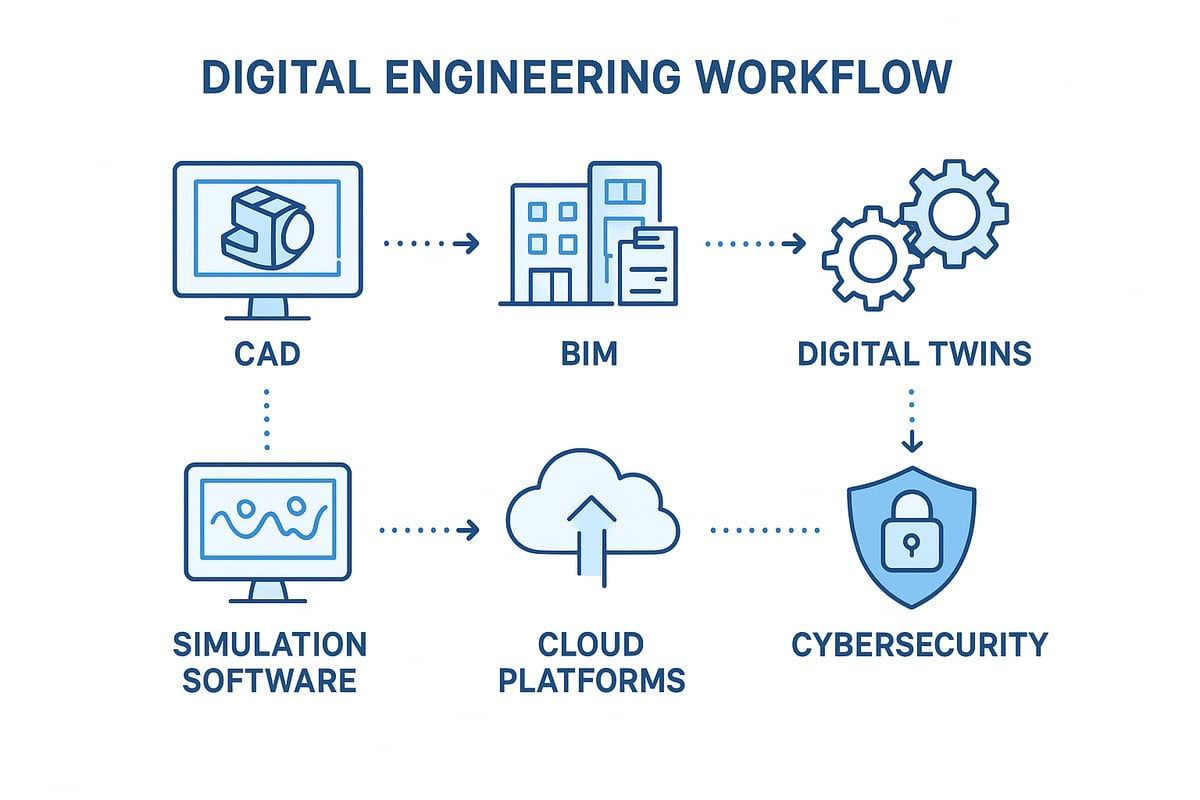
The evolution of computer-aided design (CAD) and Building Information Modeling (BIM) has revolutionized detailed engineering design. Early 2D drafting has been replaced by intelligent 3D modeling, allowing teams to visualize every component and system before construction begins.
BIM, in particular, brings together architectural, structural, and MEP (mechanical, electrical, plumbing) disciplines. This integration reduces design clashes, streamlines coordination, and supports real-time collaboration across teams. Industry data shows that BIM-driven workflows can cut rework by up to 30 percent, saving both time and resources.
Digital twin technology is the next leap forward. By creating a virtual replica of a physical asset, engineers can validate design decisions, monitor performance, and optimize operations throughout the asset’s lifecycle. For a deeper look at how digital twins are transforming detailed engineering design, visit Digital Twins in Engineering.
These tools not only enhance visualization and coordination but also ensure that detailed engineering design remains adaptable to future project demands.
Simulation, Prototyping, and Virtual Testing
Simulation and virtual prototyping are integral to detailed engineering design. Engineers use advanced software to predict how structures and systems will perform under different loads and conditions.
Finite Element Analysis (FEA) and Computational Fluid Dynamics (CFD) are common tools for analyzing structural integrity and fluid behavior. Digital prototyping eliminates the need for multiple physical mock-ups, reducing costs and speeding up the design cycle.
By testing scenarios virtually, teams can identify issues early and refine their detailed engineering design for optimal safety and performance.
Data Management and Collaboration Platforms
Centralized data management is crucial for large-scale detailed engineering design projects. Modern platforms provide secure repositories for drawings, specifications, and change logs.
Cloud-based collaboration tools enable multidisciplinary teams to work together in real time, regardless of location. Features like version control and instant document sharing help prevent errors and miscommunication.
These platforms support transparency and traceability, ensuring that every aspect of detailed engineering design is documented and accessible throughout the project lifecycle.
Automation, AI, and Machine Learning
Automation and artificial intelligence are reshaping detailed engineering design by streamlining repetitive tasks and enhancing decision-making. Automated design generation can quickly produce standard components, freeing engineers to focus on complex challenges.
AI-driven optimization tools analyze massive datasets to recommend the most efficient, cost-effective, and sustainable solutions. Machine learning algorithms also support predictive maintenance and risk management by identifying patterns in historical project data.
By leveraging these technologies, organizations can create more robust and adaptable detailed engineering design solutions.
Cybersecurity and Data Integrity
Protecting sensitive project data is a top priority in detailed engineering design. As digital tools become more interconnected, the risk of cyber threats increases.
Robust cybersecurity measures are needed to safeguard intellectual property and ensure compliance with data protection standards such as ISO/IEC 27001. Maintaining data integrity throughout the design process builds trust with clients and stakeholders.
Digital security is now as fundamental as technical accuracy in detailed engineering design projects.
Best Practices for Quality, Risk, and Compliance Management
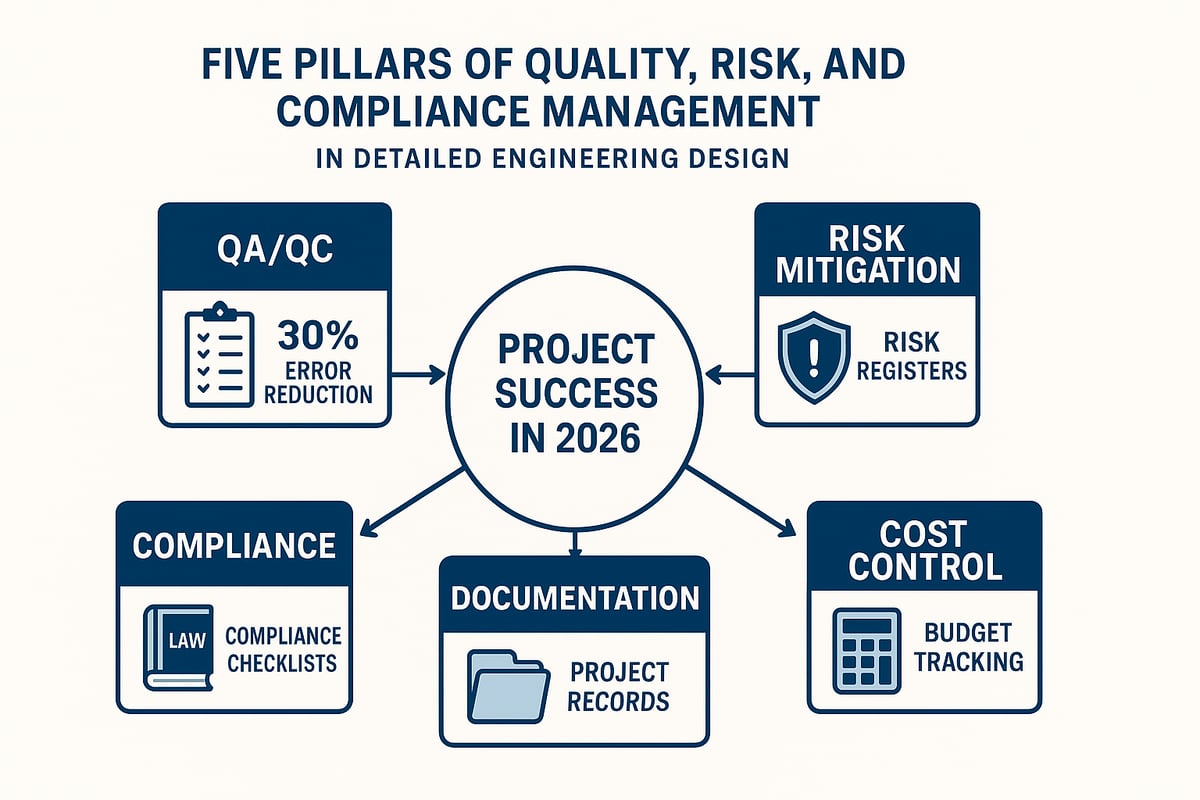
Achieving excellence in detailed engineering design requires a structured approach to quality, risk, and compliance management. Every project benefits from robust systems that ensure accuracy, consistency, and alignment with industry standards. Let us explore the best practices that underpin successful outcomes.
Quality Assurance and Control
Quality assurance and control form the backbone of detailed engineering design. Implementing structured QA/QC processes ensures every deliverable meets both project and regulatory requirements.
Best practices include the use of checklists, systematic peer reviews, and third-party audits. These steps help catch inconsistencies and errors before they reach the construction phase. For example, design review cycles can reduce costly mistakes by up to 30 percent.
A strong QA/QC program supports continuous improvement. Teams document lessons learned and apply them to future projects, raising the standard of detailed engineering design across the organization. For further insights into effective QA/QC strategies, explore Quality Control and Assurance Methods.
Risk Identification and Mitigation
Managing risks proactively is essential for detailed engineering design. Early identification of technical, regulatory, and construction risks sets the stage for effective mitigation.
Risk registers are valuable tools for tracking potential issues throughout the project lifecycle. Mitigation plans outline responses for each identified risk, ensuring teams are prepared to act quickly. For instance, addressing geotechnical risk in foundation design may involve additional soil testing or alternate design solutions.
Collaboration among disciplines helps uncover hidden risks. Regular risk workshops and open communication foster a culture of vigilance, keeping detailed engineering design on track.
Regulatory Compliance and Standards
Staying current with evolving codes and standards is vital for detailed engineering design. Projects must meet local, national, and international requirements, such as ISO, ASME, or CSA standards.
Design teams conduct regular compliance checks to ensure all deliverables align with safety, environmental, and accessibility regulations. For example, adhering to the Alberta Building Code helps avoid costly redesigns and delays.
Documentation of compliance efforts is key. Teams record code references, approvals, and any deviations, supporting transparency and audit readiness in detailed engineering design.
Cost Control and Value Engineering
Effective cost control is a hallmark of high-performing detailed engineering design. Value engineering techniques help optimize designs for performance and cost without sacrificing quality.
Lifecycle cost analysis guides the selection of materials and systems. By examining long-term maintenance and operational costs, teams make informed decisions that benefit both budget and sustainability. For example, choosing alternative piping materials can lead to significant savings over a facility’s lifespan.
Regular cost reviews and open dialogue with stakeholders ensure that detailed engineering design remains aligned with financial goals.
Documentation and Traceability
Maintaining comprehensive records is non-negotiable in detailed engineering design. Every decision, change, and approval must be documented for future reference.
Detailed documentation supports traceability, making it easier to address claims, audits, or future modifications. Teams use structured filing systems and version control to keep information organized and accessible.
This meticulous approach builds trust and accountability throughout the detailed engineering design process.
Integrating Sustainability and Innovation into Detailed Engineering Design
Integrating sustainability and innovation is essential for success in detailed engineering design today. Forward-thinking teams are embedding eco-friendly materials, energy efficiency, and cutting-edge technologies into every phase. This approach not only meets regulatory expectations but also delivers operational and cost advantages.
Sustainable Materials and Design Approaches
Selecting sustainable materials is a foundational step in detailed engineering design. Engineers are now prioritizing low-carbon, recycled, and regionally sourced options. For example, using recycled aggregates in infrastructure reduces environmental impact and supports circular economy goals.
Designing for durability and recyclability is equally important. Teams evaluate lifecycle performance to minimize waste and future resource needs. According to Sustainable Design Practices in Engineering, eco-friendly materials and green certifications are becoming standard in the industry.
These strategies ensure that detailed engineering design aligns with both client sustainability goals and evolving regulations.
Energy Efficiency and Resource Optimization
Energy efficiency is at the core of modern detailed engineering design. Engineers leverage advanced simulation tools to optimize HVAC, lighting, and process systems for reduced energy consumption. For instance, modeling building performance early enables teams to select efficient components and layouts.
Resource optimization extends to water and raw materials. Lifecycle analysis tools help teams identify areas for improvement and cost savings. Achieving certifications like LEED or BREEAM is often a project goal, driving further focus on sustainable outcomes.
By embedding these practices, detailed engineering design delivers measurable reductions in operational costs and environmental footprint.
Environmental Impact Assessment and Mitigation
Thorough environmental impact assessment is a standard part of detailed engineering design. Early studies focus on soil, water, and air quality, identifying risks and mitigation opportunities before construction begins.
Mitigation measures are integrated into the design, such as advanced stormwater systems to control runoff and protect local habitats. Collaboration with environmental specialists is vital for compliance and project approval.
For a deeper understanding of these processes, see Environmental Assessment Engineering. Proactive assessment and mitigation build trust with stakeholders and ensure regulatory alignment throughout the project.
Innovation through Emerging Technologies
Innovation is transforming detailed engineering design. Teams are adopting advanced manufacturing methods like 3D printing and modular construction for efficiency and waste reduction. These techniques enable rapid prototyping and customization.
Digital twins and IoT sensors provide real-time monitoring, allowing continuous optimization of assets. Integrating these technologies supports predictive maintenance and performance tracking.
By embracing innovation, detailed engineering design remains agile and responsive to future industry demands, setting new standards for project excellence.
Emerging Trends and Future Outlook for 2026
The landscape of detailed engineering design is rapidly evolving as we approach 2026. Industry leaders are embracing digital transformation, modular construction, resilience planning, and workforce upskilling to stay competitive. These trends are shaping how projects are conceived, executed, and maintained, ensuring that designs remain robust, cost-effective, and adaptable.
Digital Transformation and Industry 4.0
Digital transformation is redefining detailed engineering design through the integration of IoT, artificial intelligence, and automation. Smart sensors embedded in infrastructure enable predictive maintenance, reducing downtime and costs. AI-powered platforms are streamlining design workflows, optimizing layouts, and enhancing safety.
For example, the adoption of human-in-the-loop AI methodologies is enabling engineers to collaborate with intelligent systems for rapid problem-solving. This approach, explored in the AI-Guided Human-In-the-Loop Inverse Design research, highlights how advanced algorithms can optimize structural solutions while keeping engineers in control. As a result, projects benefit from improved efficiency, data-driven insights, and accelerated timelines.
Modularization and Offsite Construction
Modularization is becoming central to detailed engineering design strategies. Prefabricated modules and offsite assembly are gaining traction across sectors, offering faster project delivery, enhanced quality, and minimized site risks. By designing components for factory production, teams can ensure precision and streamline installation.
This trend enables parallel workflows between design and construction, reducing schedule overlap. Modular data centers and healthcare facilities are now delivered in record time, setting new benchmarks for efficiency. Detailed engineering design must adapt to support standardized modules while maintaining flexibility for project-specific requirements.
Resilience and Adaptability in Design
As environmental challenges grow, resilience is a core focus in detailed engineering design. Engineers are incorporating climate adaptation measures into projects, such as flood-resistant urban infrastructure and systems designed to withstand extreme weather. Evolving regulations are prompting teams to future-proof assets, ensuring long-term performance.
Designers use advanced modeling tools to simulate scenarios and validate system robustness under variable conditions. This proactive approach enables owners to safeguard investments, meet regulatory demands, and respond to unforeseen events with agility.
Skills, Collaboration, and Workforce Evolution
The future of detailed engineering design depends on multidisciplinary collaboration and digital fluency. Teams now blend traditional engineering expertise with skills in data analytics, automation, and cloud-based platforms. Continuous training and upskilling are vital as new technologies reshape project delivery.
Collaborative design environments foster real-time communication and seamless coordination across disciplines. Cross-functional teams leverage digital platforms to manage complex workflows, reduce errors, and accelerate approvals. Investing in workforce evolution ensures organizations remain agile and competitive in the face of industry change.
As you look ahead to mastering detailed engineering design for 2026, remember that the right expertise and support can make all the difference. At ZALIG Consulting Ltd, we combine geotechnical, environmental, laboratory, and construction material testing to deliver solutions tailored to your sector’s unique challenges—whether you’re in public infrastructure, industry, or private development. If you’re ready to apply these best practices or need guidance specific to your next project, let’s connect and move your vision forward together.
Contact Us: info@zalig.ca or +1 800 515 0497