
The world of engineering is transforming rapidly, with the role of the design and development engineer evolving to meet new demands in 2026. Today’s professionals face a landscape shaped by emerging technologies, the push for sustainability, and the pace of digital transformation.
This shift brings both exciting opportunities and significant challenges. How can engineers stay ahead in an environment that requires both technical mastery and adaptability across disciplines?
Having a clear roadmap is crucial for anyone seeking to thrive as a design and development engineer. This guide explores essential skills, career pathways, industry trends, and the tools you need to excel.
Whether you are just starting out or looking to advance your career, this comprehensive roadmap will equip you with practical steps to achieve success in 2026.
Understanding the Role of a Design and Development Engineer
The role of a design and development engineer is essential in shaping innovative products and systems across multiple industries. These professionals turn ideas into tangible solutions, ensuring projects meet technical, regulatory, and market demands.
Defining the Position and Key Responsibilities
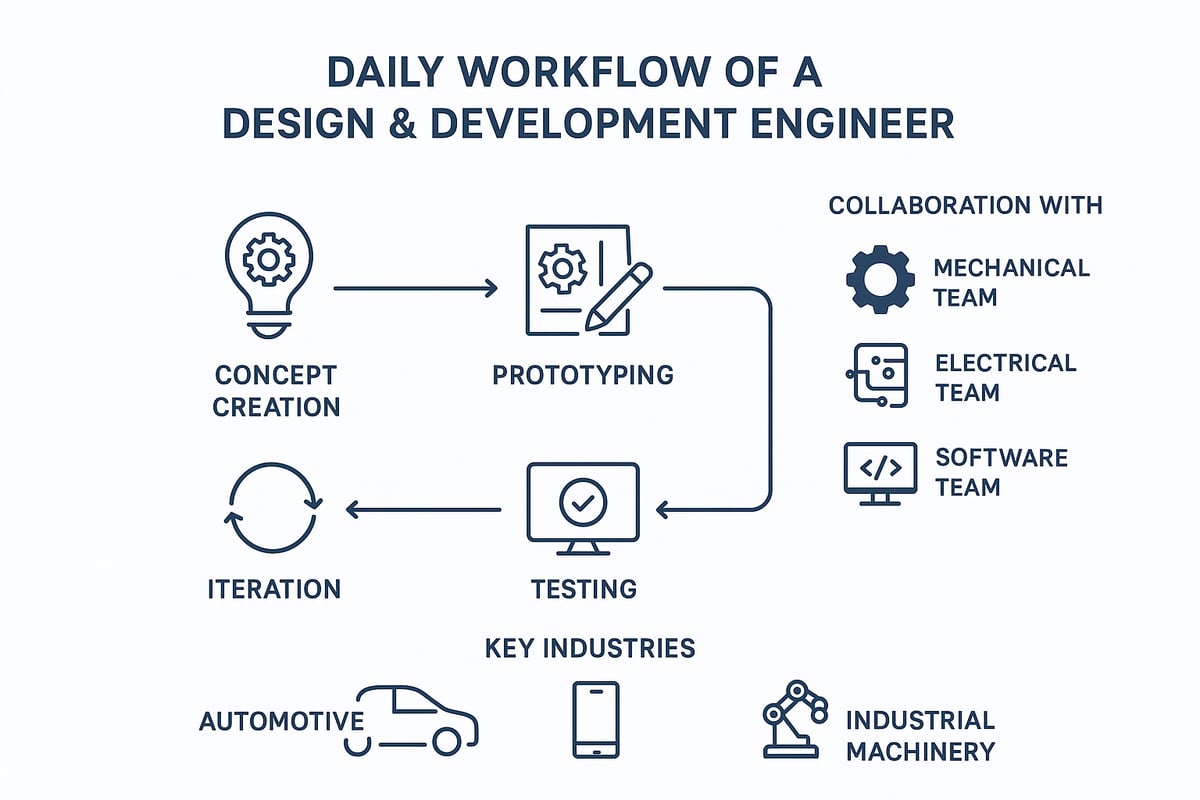
A design and development engineer transforms concepts into functional products by overseeing the entire lifecycle, from idea generation to final production. Their daily responsibilities include drafting initial concepts, creating detailed prototypes, conducting rigorous testing, and refining products based on feedback.
Projects can range from developing consumer electronics to optimizing automotive components and enhancing industrial machinery. Collaboration is central, as the design and development engineer often works closely with mechanical, electrical, and software teams. Clear documentation, adherence to compliance, and meeting regulatory standards are vital to ensure safety and quality.
Industries employing these engineers are diverse. For a deeper look into sector-specific opportunities, the Engineering industry sectors served page provides valuable insights.
Required Educational Background and Certifications
A strong academic foundation is critical for a design and development engineer. Most roles require a bachelor’s degree in mechanical, electrical, civil, or software engineering. Completing an accredited program ensures the curriculum meets industry standards and prepares you for professional practice.
Professional licensing, such as the P.Eng. or FE, is often required for advanced roles or to sign off on projects. Certifications like Six Sigma, PMP, or CAD credentials can further boost employability. These qualifications validate your expertise and commitment to ongoing learning, making you a competitive candidate in the field.
Core Competencies and Soft Skills
Technical proficiency is the backbone of success for any design and development engineer. Mastery of CAD tools, simulation software, and rapid prototyping technologies is expected. Familiarity with FEA and hands-on experience with testing equipment are important for accurate product analysis and improvement.
Equally important are soft skills. Critical thinking, creativity, and strong problem-solving abilities drive innovation. Effective communication and teamwork help engineers collaborate across disciplines, while project management skills keep projects on track and within scope.
Example Table: Core Competencies
| Technical Skills | Soft Skills |
|---|---|
| CAD & Simulation | Communication |
| Rapid Prototyping | Teamwork |
| FEA Analysis | Problem-Solving |
| Testing Protocols | Project Management |
Industry Examples and Data
The impact of a design and development engineer can be seen in various sectors. According to the U.S. Bureau of Labor Statistics, engineering fields are projected to see steady growth through 2026, reflecting the continued need for skilled professionals.
One standout example is the rapid advancement of electric vehicles. Design and development engineers played a crucial role in battery innovation, lightweight materials, and integrated software systems. Their expertise enabled automakers to bring cutting-edge vehicles to market faster, meeting both performance and sustainability goals.
This data highlights the ongoing demand for engineers who can adapt to emerging technologies and industry shifts, ensuring their relevance and value in the years ahead.
Mapping Your Career Path: Opportunities and Growth in 2026
The career journey for a design and development engineer in 2026 is more dynamic than ever. Whether you are just starting or seeking to advance, understanding the evolving landscape is crucial. Let’s explore the key pathways, specializations, industry trends, and regions shaping your future.
Career Pathways and Specializations
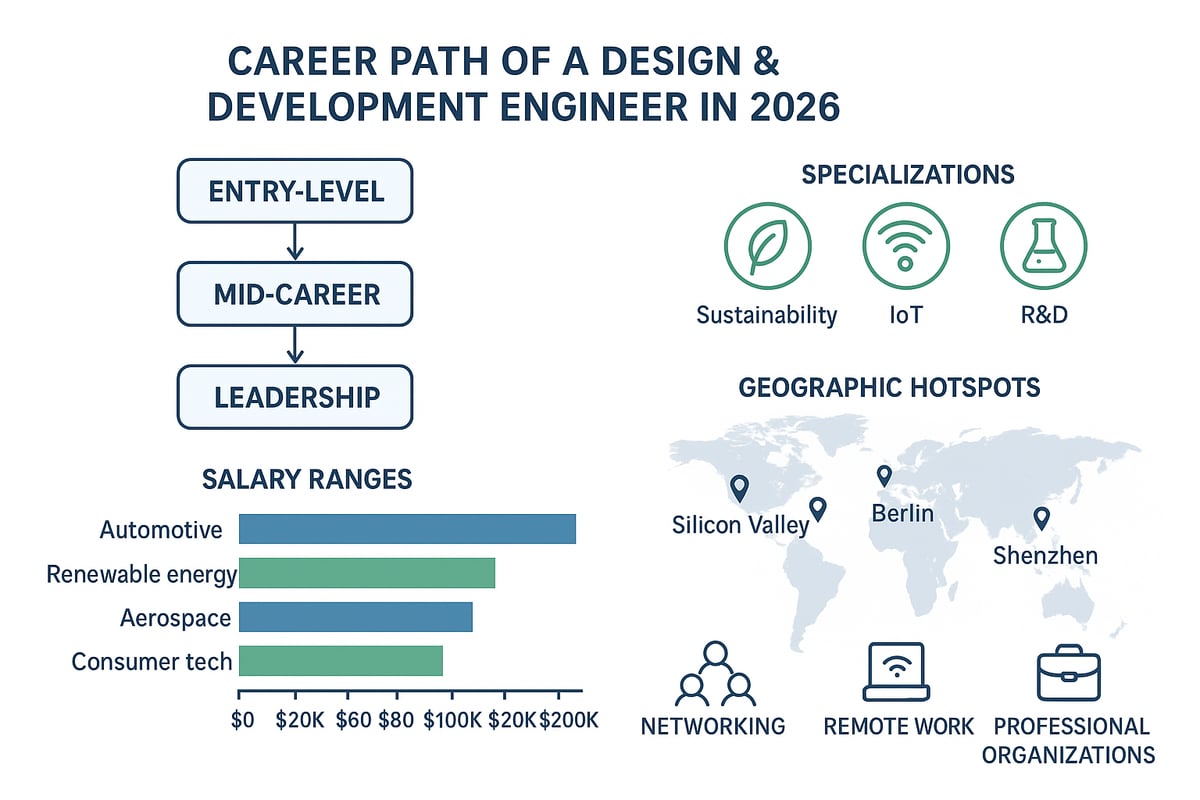
A design and development engineer holds a unique position that bridges creativity and technical expertise. Early in your career, you may start as a junior design and development engineer, focusing on concept creation, prototyping, and testing. As you gain experience, you can progress to mid-level roles, managing projects or leading small teams.
Specializations are abundant. You might focus on product design, research and development, quality assurance, or systems engineering. Niche roles like sustainability engineer or IoT product developer are emerging, reflecting industry needs for green solutions and connected devices.
Consider exploring Careers and job opportunities to understand the range of positions and specializations available. Leadership roles, such as project manager or engineering director, become attainable as you build technical and soft skills. Mapping your path early ensures you stay ahead as a design and development engineer.
Industry Demand and Salary Trends
The demand for design and development engineer roles continues to grow across major sectors. Renewable energy, automotive, aerospace, and consumer technology lead the way. Companies seek professionals who can innovate and adapt to rapid digital transformation.
Below is a simplified salary benchmark table for 2026:
| Experience Level | Sector | Salary Range (USD) |
|---|---|---|
| Entry-Level | Automotive | $70,000–$85,000 |
| Mid-Career | Renewable Energy | $90,000–$110,000 |
| Senior/Leadership | Aerospace | $120,000–$150,000 |
Automation is reshaping roles, with digital skills now essential. Staying informed about industry salary trends helps you negotiate better offers and plan your development as a design and development engineer.
Professional Development and Networking
Continuous learning is key for any design and development engineer aiming for long-term success. Upskilling through courses, certifications, and hands-on projects keeps your knowledge relevant.
Professional organizations like ASME, IEEE, and SAE offer resources, industry news, and events. Networking is equally vital. Attend conferences, participate in online forums, and join local meetups. Building connections opens doors to mentorship and new job opportunities.
Effective networking strategies include:
- Engaging in industry-specific online communities
- Participating in hackathons and workshops
- Reaching out to alumni and professional groups
Developing a strong network ensures you stay updated on trends and opportunities, helping you thrive as a design and development engineer.
Geographic Hotspots for Engineers
Location impacts your career as a design and development engineer. In 2026, cities like Silicon Valley, Toronto, Berlin, and Shenzhen stand out for engineering innovation and job opportunities. These regions boast strong ecosystems for technology, manufacturing, and research.
Remote and hybrid work trends have broadened access to roles worldwide. Many companies now support flexible arrangements, allowing you to contribute to global projects from anywhere. This shift is especially beneficial for design and development engineers who value work-life balance and diverse team experiences.
Staying aware of geographic trends helps you target regions with the best growth prospects and aligns your ambitions with the right markets.
Essential Skills and Tools for Future-Ready Engineers
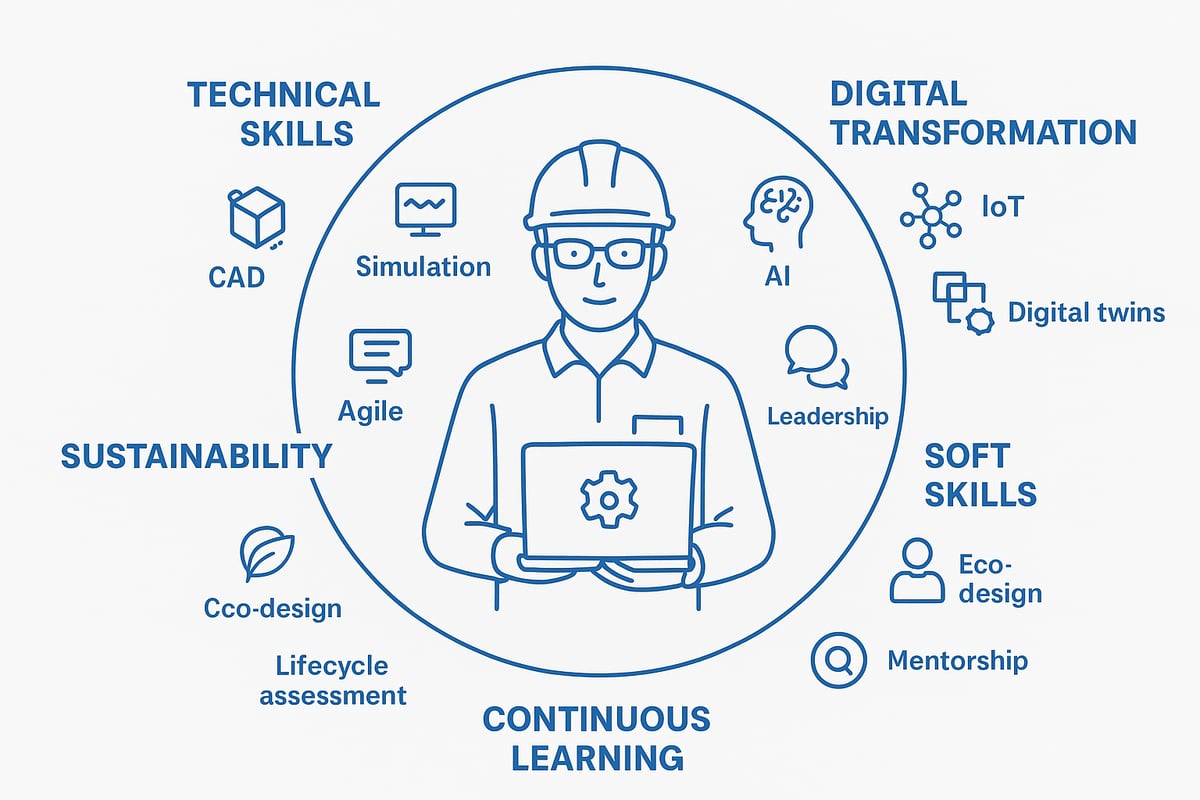
In 2026, the skills and tools needed to excel as a design and development engineer are evolving rapidly. Professionals must blend advanced technical abilities with digital fluency, strong soft skills, and a commitment to sustainability. Continuous learning is essential to thrive in this dynamic landscape.
Technical Skills for 2026
A design and development engineer must demonstrate mastery of several core technical tools. Computer-aided design (CAD) platforms such as SolidWorks, AutoCAD, and CATIA remain foundational for creating detailed models. 3D modeling and simulation software like ANSYS, MATLAB, and COMSOL are critical for analyzing designs before physical prototypes are built.
Coding skills are increasingly important. Familiarity with Python, C++, MATLAB scripting, and PLC programming enables engineers to automate tasks, analyze data, and interface with smart devices. Rapid prototyping methods, including 3D printing and CNC machining, allow for fast iteration and testing.
The following table summarizes essential technical tools:
| Skill Area | Key Tools and Languages |
|---|---|
| CAD & 3D Modeling | SolidWorks, AutoCAD, CATIA |
| Simulation | ANSYS, MATLAB, COMSOL |
| Coding/Automation | Python, C++, MATLAB, PLC |
| Prototyping | 3D printing, CNC machining |
Staying ahead means a design and development engineer must continually update their technical toolkit.
Digital Transformation and Smart Technologies
Digital transformation is reshaping how a design and development engineer works. Integration of IoT, AI, and machine learning is standard in modern product design. Digital twins—virtual replicas of physical products—enable real-time data analysis and predictive maintenance.
Collaboration is shifting to cloud-based platforms. Tools like Git and Jira streamline version control, project tracking, and communication within multidisciplinary teams. Engineers who embrace these technologies are better positioned for innovation.
To understand the broader context, review Emerging Manufacturing Trends 2026, which highlights the impact of generative design and industrial extended reality on the future of engineering.
A design and development engineer who adapts to digital trends can unlock new opportunities and drive efficiency.
Soft Skills That Set You Apart
Technical skills alone are not enough for a design and development engineer to stand out. Leadership in multidisciplinary teams is a valuable asset. Agile project management, particularly SCRUM methodologies, allows for adaptive and iterative progress.
Effective communication is essential. Explaining technical concepts to stakeholders, collaborating with non-technical colleagues, and presenting solutions clearly are daily requirements. These soft skills enhance teamwork and drive projects forward.
Resilience, adaptability, and a willingness to learn further distinguish a design and development engineer in a competitive field.
Sustainability and Green Engineering Practices
Sustainability has become a central concern for every design and development engineer. Designing for energy efficiency and minimizing environmental impact is now standard practice. Life cycle assessment tools help evaluate the environmental footprint of products from creation to disposal.
Engineers increasingly select eco-friendly materials and prioritize modular, repairable designs. For example, recent sustainable product redesigns in consumer electronics have reduced waste and improved energy performance.
Incorporating principles like biodesign and following evolving green regulations ensures a design and development engineer contributes to a more responsible future.
Staying Updated: Resources and Learning Platforms
Continuous learning is a hallmark of a successful design and development engineer. Top online platforms such as Coursera, edX, and LinkedIn Learning offer courses in emerging technologies and industry best practices. Industry publications, webinars, and podcasts provide current insights.
Mentorship and peer learning foster professional growth. Participating in engineering forums, attending workshops, and joining professional associations expand knowledge and networks.
Staying informed and proactive helps a design and development engineer remain future-ready and resilient in the face of change.
The Step-by-Step Roadmap to Engineering Success in 2026
Embarking on a career as a design and development engineer in 2026 requires a clear, actionable plan. The following roadmap breaks down the journey into eight essential steps. Each step is designed to help both aspiring and current professionals build expertise, adapt to change, and stand out in a competitive landscape.
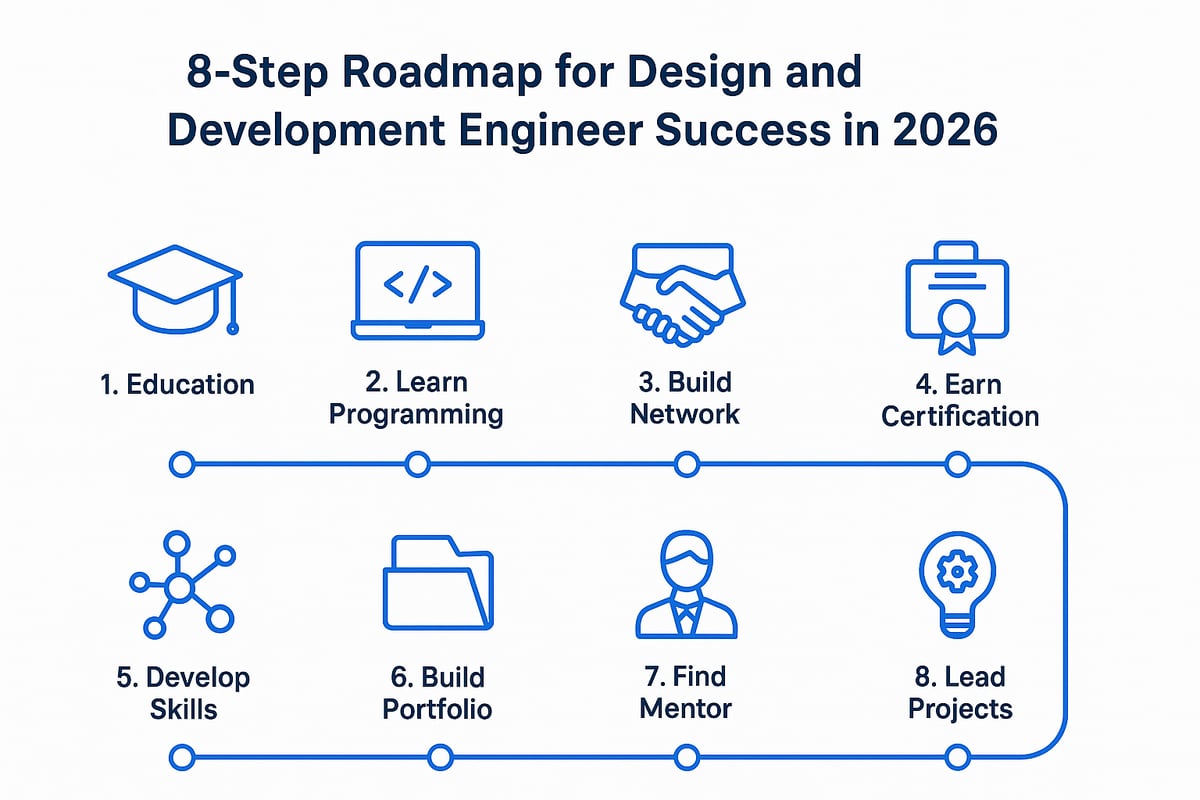
Step 1: Build a Strong Educational Foundation
The journey of a design and development engineer starts with a solid educational base. Selecting the right degree program, such as mechanical, electrical, or software engineering, is crucial. Look for accredited institutions that offer hands-on learning opportunities.
Internships and co-op placements provide real-world experience, allowing you to apply theoretical knowledge to practical challenges. These experiences also help you develop problem-solving skills and build professional relationships early in your career.
Prioritize coursework that covers both foundational science and emerging technologies. This ensures you are well-prepared for the evolving demands of the industry.
Step 2: Master Core and Emerging Technologies
To remain competitive as a design and development engineer, it is essential to master both established and emerging tools. Develop proficiency in CAD software, 3D modeling platforms, and simulation tools like SolidWorks, AutoCAD, and ANSYS.
Stay updated on trends such as IoT, AI integration, and digital twins. Enroll in workshops or online courses to keep your skills fresh. Consistent practice and exposure to new technologies will help you adapt quickly to industry shifts.
Building a habit of continuous learning ensures you stay ahead of the curve and can tackle the most complex engineering problems.
Step 3: Gain Real-World Experience
Real-world experience is vital for every design and development engineer. Participate in engineering competitions and hackathons to test your skills against peers. These events foster creativity, teamwork, and rapid problem-solving.
Join collaborative projects, open-source initiatives, or freelance work to diversify your portfolio. Each project enhances your technical abilities and demonstrates your commitment to practical learning.
Document your experiences, challenges, and solutions. This habit will help you communicate your value to future employers and colleagues.
Step 4: Pursue Certifications and Specializations
Certifications can significantly boost your credibility as a design and development engineer. Consider credentials in project management, Six Sigma, or CAD software. Specialized certifications align your expertise with industry needs and set you apart from the competition.
Quality assurance is another core aspect of the role. Staying well-versed in quality control and assurance in engineering processes demonstrates your commitment to delivering reliable, high-performing products.
Focus on multidisciplinary learning, as today’s market values engineers who can bridge gaps between mechanical, electrical, and software domains.
Step 5: Build a Professional Network
Networking is a powerful strategy for every design and development engineer. Leverage platforms like LinkedIn, join professional associations, and stay engaged with alumni groups. These connections open doors to mentorship, job opportunities, and industry insights.
Attend conferences, seminars, and workshops to expand your network. Actively participating in these events helps you stay informed about the latest trends and best practices.
Remember, a strong network can provide both support and inspiration throughout your career journey.
Step 6: Develop a Standout Portfolio
A compelling portfolio showcases your skills and achievements as a design and development engineer. Document your projects, prototypes, and unique problem-solving approaches.
Organize your work in an online portfolio for easy access by potential employers. Highlight your technical proficiencies, creativity, and teamwork through well-structured case studies.
Consider including a summary table that outlines key projects, tools used, and outcomes:
| Project Name | Tools & Skills | Outcome |
|---|---|---|
| Smart Device X | CAD, Python | Reduced cost by 15% |
| Green Car Part | FEA, 3D Printing | Improved efficiency |
Step 7: Seek Mentorship and Continuous Improvement
Mentorship accelerates the growth of a design and development engineer. Seek out mentors both inside and outside your organization. Experienced professionals can offer guidance, feedback, and industry perspective.
Embrace constructive criticism and set clear goals for ongoing development. Regularly evaluate your progress, identify skill gaps, and pursue targeted learning opportunities.
Participate in peer learning groups or online forums to exchange ideas and stay motivated.
Step 8: Prepare for Leadership and Future Roles
As you progress, prepare for leadership roles within the design and development engineer field. Build project management and communication skills to effectively lead multidisciplinary teams.
Develop a strategic mindset, focusing on long-term goals and innovation. Pursue training in agile methodologies and stakeholder management to enhance your leadership capabilities.
Position yourself for senior or specialized positions by demonstrating initiative, adaptability, and a commitment to lifelong learning.
Navigating Emerging Trends and Challenges in Engineering
The engineering landscape is evolving rapidly, and the role of a design and development engineer is at the forefront of this transformation. Staying ahead means understanding the major trends and challenges shaping the profession. These include digitalization, sustainability, diversity, global collaboration, and the integration of cutting-edge technologies. Adapting to these shifts is essential for anyone aiming to excel as a design and development engineer.
Digitalization and the Impact of Industry 4.0
Industry 4.0 is revolutionizing how design and development engineers approach projects. Automation, robotics, and smart manufacturing are becoming standard, requiring engineers to master new tools and workflows. Digital twins, which are virtual replicas of physical products, enable real-time data analysis and predictive maintenance. These advancements allow for more efficient design cycles and greater innovation.
Incorporating Responsive CAD Techniques enhances adaptability by using real-world data to dynamically update 3D models. This capability is essential as product ecosystems become increasingly interconnected. The design and development engineer must now blend mechanical, electrical, and software knowledge to succeed in this digital-first environment.
Sustainability and Regulatory Pressures
Sustainability is no longer optional for the design and development engineer. Companies face growing expectations to minimize environmental impact and comply with stricter regulations. This means integrating green engineering practices, such as life cycle assessments and eco-friendly materials, into every stage of product development.
The field is also exploring innovative approaches, such as Biodesign in Engineering, which merges biological sciences with design principles. This trend supports regenerative and sustainable solutions that address both regulatory demands and market expectations. Staying current with evolving standards ensures continued relevance and leadership in the field.
Diversity, Equity, and Inclusion in Engineering
Diverse teams are proven to drive innovation and creative problem-solving. For a design and development engineer, working within inclusive environments means benefiting from a wider range of perspectives and skills. Organizations are increasingly investing in diversity, equity, and inclusion initiatives to foster collaboration and attract top talent.
Efforts include mentorship programs, targeted recruitment, and employee resource groups. These initiatives not only improve workplace culture but also enhance project outcomes and innovation. Embracing diversity is a strategic advantage for any design and development engineer aiming to stay competitive.
Remote Work and Global Collaboration
Remote and hybrid work models are now common for design and development engineers. This shift demands fluency in digital collaboration tools, such as cloud-based project management platforms and version control systems. Effective remote teams rely on clear communication, structured workflows, and an understanding of cross-cultural differences.
Managing virtual projects requires adaptability and strong organizational skills. Engineers must develop strategies to overcome time zone barriers and ensure seamless knowledge-sharing. The ability to collaborate globally is now a core competency for the modern design and development engineer.
Case Studies and Future Outlook
Companies are leveraging artificial intelligence to accelerate product development and optimize design decisions. For instance, AI-driven simulations can drastically reduce prototyping time and improve accuracy. According to Deloitte’s 2023 survey, over 70 percent of engineering leaders identify digital skills as critical for future hires.
The table below summarizes key trends and challenges for design and development engineers in 2026:
| Trend/Challenge | Impact | Essential Skill |
|---|---|---|
| Digitalization | Faster, smarter workflows | Data analysis, CAD |
| Sustainability | Regulatory compliance, eco-design | Green engineering |
| Diversity & Inclusion | Enhanced innovation, broader talent | Teamwork, communication |
| Remote Collaboration | Global teamwork, flexible work | Digital collaboration |
| AI Integration | Accelerated development, accuracy | Machine learning, coding |
Staying informed and proactive ensures a design and development engineer is prepared for the opportunities and challenges ahead.
Resources and Communities for Design and Development Engineers
Thriving as a design and development engineer in 2026 requires more than technical know-how. Tapping into the right resources and communities can elevate your career, keep you informed, and connect you with leaders in the field. Let us explore the essential associations, platforms, networking events, and reading materials that every design and development engineer should know.
Professional Associations and Certification Bodies
Joining a professional association is a powerful step for any design and development engineer. Major organizations such as ASME, IEEE, SAE, and NSPE offer access to exclusive resources, technical events, and continuing education. Membership can also open doors to certification programs, job boards, and mentorship.
Associations often focus on specialized fields. For example, those interested in geotechnical engineering can explore the Geotechnical engineering services overview to understand a key discipline relevant to many engineering projects. Being active in these groups can enhance your credibility as a design and development engineer and keep you up to date on industry standards.
Online Platforms and Learning Hubs
In the digital era, online platforms are indispensable for the modern design and development engineer. Leading sites like Coursera, Stack Overflow, and Engineering.com provide courses, technical forums, and peer support.
Leveraging MOOCs and micro-credentials is a smart way to expand your expertise quickly. Many platforms offer up-to-date content tailored to engineering trends, ensuring that every design and development engineer can stay competitive in a rapidly changing landscape.
Networking and Career Development Opportunities
Networking has never been more crucial for the design and development engineer. Industry conferences, local meetups, and global hackathons create opportunities to connect, collaborate, and learn from peers.
Seeking out mentors and participating in knowledge-sharing communities can accelerate your growth. By attending events and engaging in professional circles, a design and development engineer can gain new perspectives and discover hidden opportunities.
Recommended Books, Journals, and Podcasts
Staying informed is key to success for any design and development engineer. Must-read engineering books, peer-reviewed journals, and leading podcasts provide deep dives into new technologies and case studies.
For those interested in how innovation strategies evolve, the Product Ecosystem Theory offers valuable insights into product design and its parallels with natural ecosystems. Regularly engaging with these resources keeps every design and development engineer at the forefront of industry knowledge.
As you map out your journey to becoming a successful design and development engineer in 2026, remember that having the right support and expertise by your side can make all the difference. If you’re seeking guidance or need comprehensive geotechnical, environmental, laboratory, or construction material testing services to bring your engineering projects to life, we’re here to help. At ZALIG Consulting Ltd, our dedicated team across Alberta is ready to collaborate and provide tailored solutions that meet your goals. Let’s turn your engineering ambitions into reality—reach out to us at Contact Us: info@zalig.ca or +1 800 515 0497.