

Deep foundations represent critical structural elements that transfer building and infrastructure loads through weak or unstable surface soils to competent bearing strata at significant depths below grade. These specialized foundation systems become essential when shallow foundations cannot economically or safely support structural loads, whether due to inadequate bearing capacity, excessive settlement potential, or challenging subsurface conditions. Understanding the selection criteria, design approaches, and construction methodologies for deep foundations enables engineering teams to deliver cost-effective, high-performance solutions across diverse project types in 2026.
Understanding Deep Foundation Systems and Applications
Deep foundations extend through unsuitable surface materials to reach stronger soil or rock layers capable of supporting imposed structural loads. The distinction between shallow and deep foundations traditionally relates to the depth-to-width ratio, with deep foundations generally exhibiting ratios exceeding four and extending beyond three meters below finished grade.
These systems serve multiple critical functions beyond simple load transfer. They provide resistance against uplift forces in structures subject to hydrostatic pressure or wind loads, offer lateral load capacity for bridges and retaining structures, and control settlement where consolidation of compressible soils poses risks to structure integrity.
Primary Deep Foundation Categories
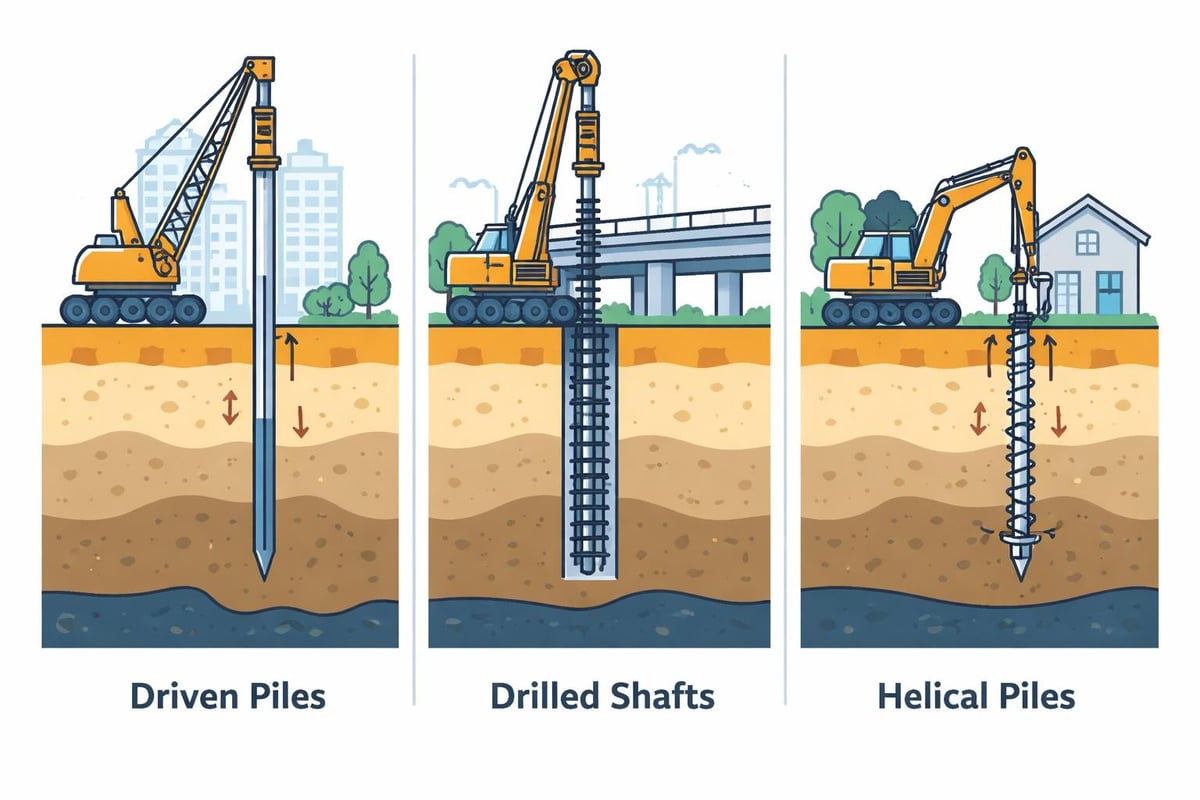
Driven pile foundations rely on impact or vibratory hammers to install precast concrete, steel H-piles, or timber elements through overlying soils. These systems develop capacity through both end bearing on competent strata and skin friction along the embedded shaft length.
Drilled shaft foundations involve excavating cylindrical shafts using specialized drilling equipment, then filling the excavation with reinforced concrete. Also known as caissons or bored piles, these elements accommodate larger diameters and loads compared to driven alternatives.
Helical piles and screw piles feature steel shafts with welded helical bearing plates that advance into the ground through rotational installation. These systems offer rapid installation, immediate load capacity, and minimal vibration in sensitive environments.
The Deep Foundations Institute (DFI) serves as the primary professional organization advancing technical knowledge and best practices across all deep foundation types, providing resources that support engineering professionals worldwide.
Geotechnical Investigation and Design Considerations
Successful deep foundation design begins with comprehensive subsurface characterization through geotechnical investigations. Borings, standard penetration testing, cone penetration testing, and laboratory analysis reveal soil stratigraphy, strength parameters, groundwater conditions, and potential construction challenges that govern foundation selection and sizing.
Design methodologies have evolved significantly with the adoption of Load and Resistance Factor Design (LRFD) principles outlined by the National Academies. These approaches apply specific load factors to service loads and resistance factors to nominal foundation capacities, achieving more consistent reliability across different foundation types and soil conditions.
Critical Design Parameters
| Parameter | Impact on Design | Testing Method |
|---|---|---|
| Soil bearing capacity | End bearing resistance | SPT, CPT, lab strength tests |
| Skin friction | Shaft resistance along pile length | Direct shear, interface testing |
| Settlement magnitude | Serviceability and structural tolerance | Consolidation testing, elastic analysis |
| Lateral capacity | Resistance to horizontal loads | p-y curve development, pressuremeter |
| Groundwater chemistry | Material durability and protection | Chemical analysis, pH testing |
Foundation depth, diameter, and reinforcement requirements emerge from iterative analysis balancing geotechnical capacity against structural demands. Engineers must account for group effects when multiple piles support a single structural element, as pile-to-pile interaction reduces individual element efficiency and overall group capacity falls below the sum of isolated capacities.
Soil-Structure Interaction Modeling
Modern deep foundation design employs sophisticated analytical tools that model complex soil-structure interaction. Finite element analysis captures load distribution, settlement profiles, and lateral response under various loading scenarios. These computational approaches complement traditional methods based on empirical correlations and simplified analytical solutions.
Geotechnical engineering services integrate field investigation data with laboratory testing and engineering analysis to develop defensible design recommendations. For deep foundations specifically, determining pile capacity through both static analysis and dynamic testing provides multiple lines of evidence supporting design assumptions.
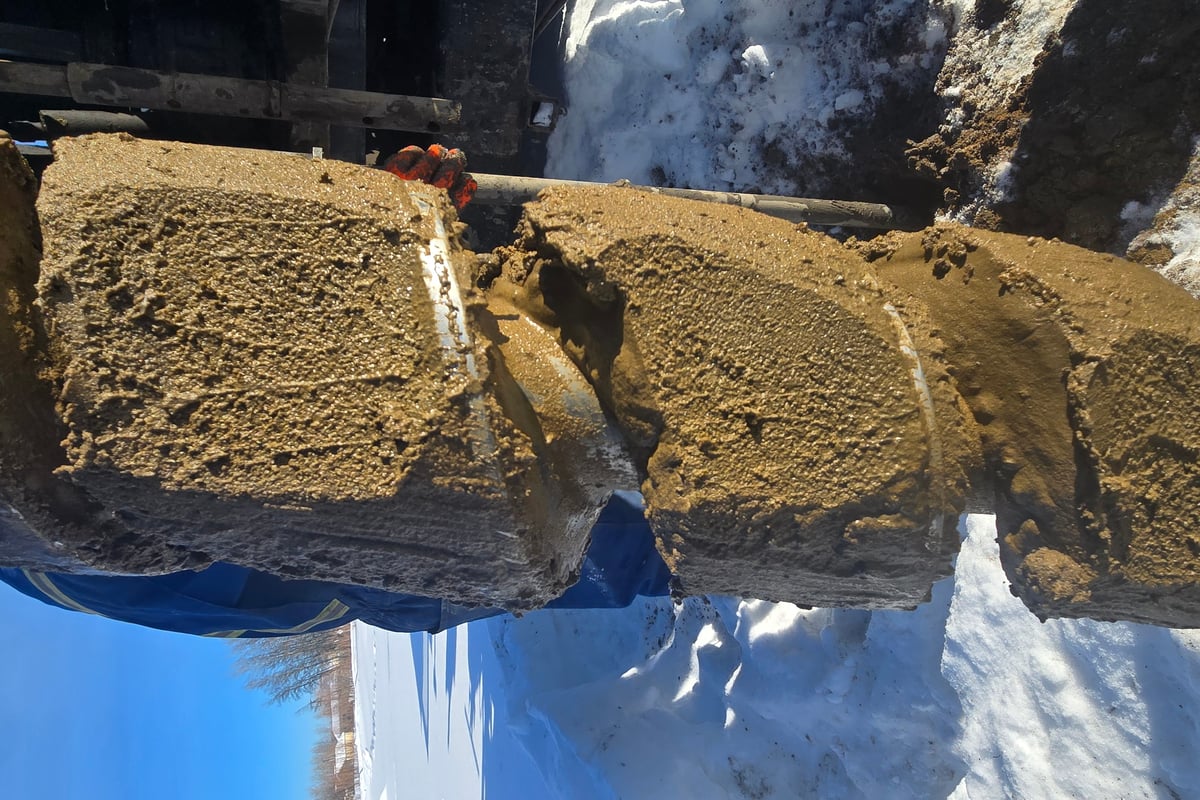
The Federal Highway Administration maintains a comprehensive manual covering deep foundation design and construction practices that reflects current industry standards and regulatory requirements. This resource addresses design methodologies, construction specifications, and quality assurance protocols applicable across transportation and building projects.
Construction Methods and Quality Control
Deep foundation construction demands specialized equipment, experienced contractors, and rigorous quality control protocols. Installation methods vary significantly among foundation types, each presenting unique challenges and verification requirements.
Driven Pile Installation
Driven pile systems require careful selection of hammer type and driving criteria to achieve design capacity without damaging pile materials. Impact hammers, diesel hammers, and hydraulic systems each offer distinct advantages depending on pile size, soil conditions, and project constraints.
Wave equation analysis (WEAP) predicts pile behavior during driving, optimizing hammer selection and assessing driveability through anticipated soil profiles. Dynamic monitoring during installation using Pile Driving Analyzer (PDA) equipment captures force and acceleration data, enabling real-time capacity assessment and installation quality verification.
Post-installation testing through static load tests or additional dynamic testing confirms design assumptions. The FHWA Deep Foundation Load Test Database compiles results from thousands of tests, supporting correlation development and design refinement.
Drilled Shaft Construction
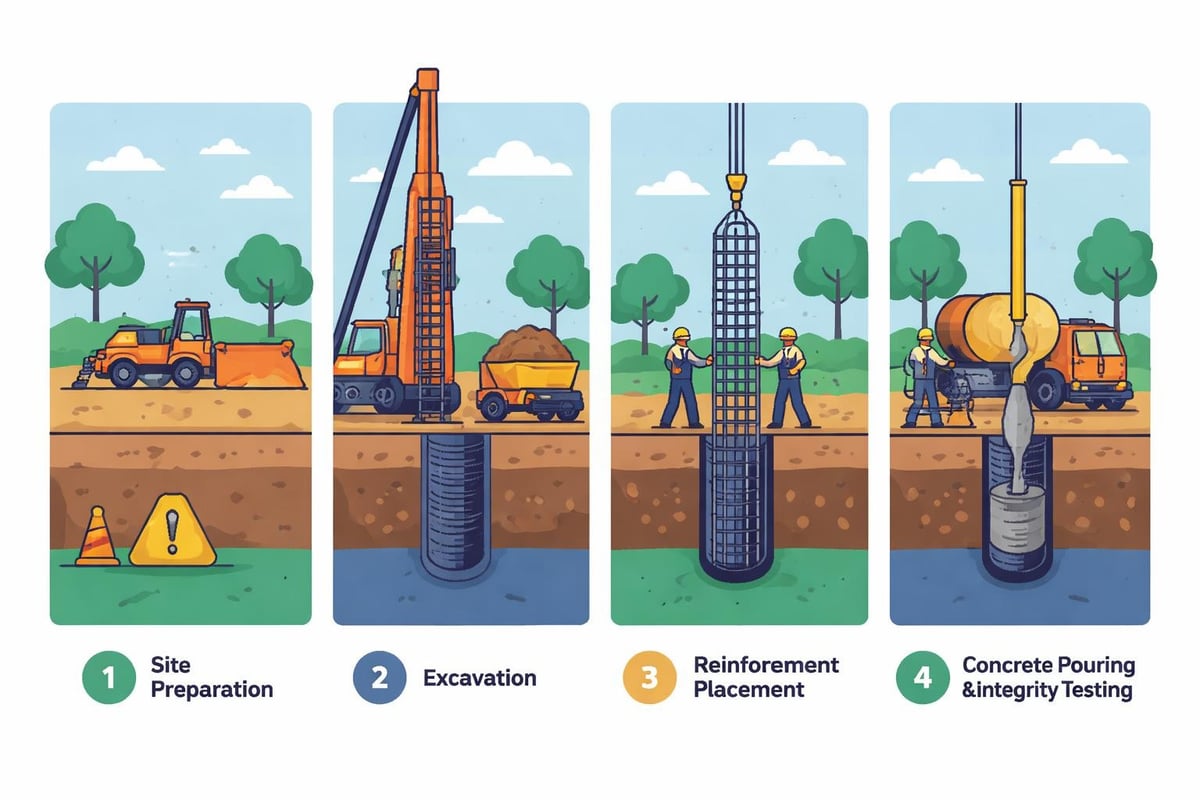
Drilled shaft installation involves multiple critical steps where quality control directly impacts foundation performance:
- Excavation and stabilization using drilling fluid or temporary casing maintains hole stability
- Inspection and cleaning removes sediment and debris from shaft bottom before concrete placement
- Reinforcement installation positions steel cage to design tolerances
- Concrete placement using tremie methods displaces drilling fluid and fills the shaft continuously
- Integrity testing verifies shaft continuity and identifies defects
Concrete quality becomes paramount in drilled shaft construction, as mix design must balance workability for tremie placement against strength requirements. Specifications typically mandate high slump concrete with controlled aggregate size and supplementary cementitious materials improving durability and workability.
Testing and Performance Verification
Deep foundations require comprehensive testing programs confirming design assumptions and verifying construction quality. Testing approaches span from pre-construction feasibility studies through post-construction performance monitoring.
Static Load Testing
Static load tests apply controlled loads to individual foundation elements, measuring displacement response under incremental loading and unloading cycles. These tests provide the most reliable capacity verification but involve significant cost and time commitments.
Compression load tests verify bearing capacity and settlement characteristics under service and ultimate load conditions. Test procedures follow ASTM D1143 standards, with loading increments maintained until failure occurs or predetermined displacement limits are reached.
Tension load tests confirm uplift resistance for foundations resisting buoyancy forces or tension loads. Specialized reaction systems and loading equipment apply upward forces while monitoring displacement.
Lateral load tests assess horizontal load capacity and deflection characteristics critical for bridge piers, retaining structures, and buildings in seismic zones.
Dynamic Testing and Monitoring
Dynamic testing methods offer cost-effective alternatives to static testing while providing valuable capacity and integrity information. High-strain dynamic testing during pile driving captures force and acceleration data, applying signal matching analysis to estimate capacity and assess installation effects.
Low-strain integrity testing using sonic echo or impulse response methods detects shaft discontinuities, length verification, and potential defects. These non-destructive techniques enable testing of every production pile at minimal cost compared to static alternatives.
| Test Type | Primary Application | Typical Timing | Information Provided |
|---|---|---|---|
| Static compression | Ultimate capacity verification | After concrete cure | Load-displacement, capacity, settlement |
| High-strain dynamic | Production pile acceptance | During/after installation | Dynamic capacity estimate, hammer performance |
| Low-strain integrity | Defect detection | After concrete cure | Length, continuity, major defects |
| Crosshole sonic | Drilled shaft integrity | During concrete cure | Concrete quality, defect location |
The American Society of Civil Engineers offers specialized training covering testing methodologies, result interpretation, and quality assurance protocols that ensure deep foundation systems meet design requirements and performance expectations.
Special Considerations and Challenging Conditions
Certain site conditions and project requirements introduce additional complexity into deep foundation design and construction. Recognizing these challenges early in project planning enables appropriate system selection and risk mitigation.
Contaminated Sites and Environmental Constraints
Sites with soil or groundwater contamination require special consideration during deep foundation installation. Drilling operations may encounter hazardous materials, necessitating containment protocols, specialized disposal procedures, and worker protection measures.
Coordination with environmental professionals ensures that foundation installation does not create new contaminant pathways or mobilize existing contamination. Understanding the subsurface environmental conditions through thorough soil sampling and analysis informs both foundation design and environmental risk management strategies.
High Groundwater and Artesian Conditions
Groundwater management becomes critical where high water tables or artesian pressures exist. Drilled shaft construction in these conditions requires specialized drilling fluids or casings maintaining hydrostatic pressure and preventing hole collapse.
Permanent casing systems isolate foundation elements from aggressive groundwater or maintain excavation stability through unstable zones. These systems add cost but provide essential construction feasibility and long-term durability in challenging conditions.
Seismic Design Requirements
Earthquake-prone regions impose additional demands on deep foundation systems. Seismic design considers lateral load capacity, ductility requirements, and soil liquefaction potential. Foundation elements must accommodate ground displacement, develop adequate lateral resistance, and maintain structural integrity under cyclic loading.
Pile-to-cap connections receive particular attention in seismic design, with detailing ensuring force transfer and preventing brittle failure modes. Modern seismic provisions emphasize capacity design principles where foundation capacity exceeds structural element capacity, forcing ductile behavior in controlled locations.
Material Selection and Durability
Deep foundation materials must withstand installation stresses while providing long-term structural performance in aggressive subsurface environments. Material selection balances structural requirements, durability considerations, constructability, and project economics.
Concrete Deep Foundations
Cast-in-place concrete systems dominate drilled shaft and bored pile applications. Mix design considerations include:
- Cement type and content addressing sulfate resistance, low heat of hydration, or rapid strength gain
- Aggregate selection ensuring adequate strength while maintaining workability for tremie placement
- Admixtures controlling set time, improving workability, and enhancing durability
- Cover requirements protecting reinforcing steel from corrosion in aggressive environments
Precast concrete piles offer factory quality control, immediate availability, and resistance to many soil chemicals. However, handling stresses, driving stresses, and connection details require careful engineering and quality assurance.
Steel Foundation Elements
Steel H-piles and pipe piles provide high structural capacity, excellent driving characteristics, and ability to penetrate dense or obstructed soils. Corrosion protection becomes essential in many environments, with strategies including:
- Cathodic protection systems applying impressed current or sacrificial anodes
- Protective coatings such as fusion-bonded epoxy or coal tar
- Increased section thickness accounting for anticipated metal loss
- Concrete encasement isolating steel from aggressive soils
The decision to implement corrosion protection depends on soil chemistry, groundwater characteristics, and design service life requirements established by the project owner.
Timber Piles
While less common in 2026 than historical practice, treated timber piles remain viable for certain applications. Marine environments, temporary structures, and projects requiring sustainable materials may favor timber systems. Preservative treatment protects against biological degradation, with creosote, chromated copper arsenate, or newer alternative treatments extending service life.
Cost Considerations and Value Engineering
Deep foundation costs represent significant portions of overall project budgets, warranting careful evaluation of alternatives and value engineering throughout project development. Cost drivers include materials, installation equipment, labor productivity, testing requirements, and site-specific challenges.
Comparative Cost Analysis
Foundation cost comparison requires evaluation beyond simple unit pricing. Total installed costs reflect:
- Mobilization expenses for specialized equipment and crews
- Production rates influenced by soil conditions and system type
- Material costs varying by availability and project scale
- Testing requirements proportional to risk and regulatory standards
- Construction duration affecting overall project schedules and soft costs
Systems offering lower unit costs may prove more expensive when productivity, testing, and schedule impacts are comprehensively evaluated. Construction material testing requirements also contribute to overall project costs while providing essential quality assurance.
Design Optimization Strategies
Foundation engineers employ several approaches optimizing design economy while maintaining performance and safety margins:
Load testing programs on preliminary piles can justify reduced safety factors or demonstrate higher capacities than predicted by empirical correlations, potentially reducing the number of required piles.
Foundation type comparison evaluating driven piles, drilled shafts, and alternative systems for specific project conditions often reveals surprising economic advantages for systems not initially favored.
Constructability review engaging contractors early in design identifies installation challenges, refines construction details, and improves bidding accuracy, ultimately reducing contingency pricing and change orders.
Industry Standards and Regulatory Framework
Deep foundation design and construction operate within comprehensive frameworks of standards, codes, and regulatory requirements ensuring public safety and project performance. Multiple organizations contribute standards applicable across different project sectors and jurisdictions.
Building codes reference standards developed by organizations including the American Concrete Institute (ACI), ASTM International, and the American Association of State Highway and Transportation Officials (AASHTO). These consensus standards establish minimum requirements for materials, design methods, construction practices, and quality assurance.
Professional registration requirements mandate that licensed engineers seal foundation designs, accepting responsibility for technical adequacy and regulatory compliance. This professional oversight provides essential accountability throughout the design and construction process.
The DFI publications library includes technical manuals, case histories, and research papers advancing professional knowledge and documenting industry best practices as they evolve with new materials, methods, and analytical capabilities.
Emerging Technologies and Future Directions
Deep foundation practice continues evolving with technological advancement, sustainability priorities, and improved understanding of soil-structure interaction. Several trends characterize contemporary practice and likely future development.
Digital monitoring and instrumentation increasingly integrate sensors within foundation elements, providing real-time performance data during construction and throughout structure service life. This data enables validation of design assumptions, early detection of developing issues, and improved understanding supporting future designs.
Building Information Modeling (BIM) extends into geotechnical practice, with three-dimensional subsurface models integrating geological data, foundation layouts, and construction sequencing. These digital environments improve coordination, reduce conflicts, and support construction planning.
Sustainable foundation design considers embodied carbon, material sourcing, and lifecycle impacts alongside traditional performance criteria. Lower-carbon concrete mixes, reclaimed or recycled materials, and optimized designs reducing material quantities support broader sustainability objectives without compromising safety or performance.
Advanced load testing equipment enables more sophisticated capacity evaluation with reduced cost and time requirements. Rapid load testing methods apply load durations intermediate between static and dynamic approaches, offering advantages of both techniques.
Project Integration and Multidisciplinary Coordination
Successful deep foundation implementation requires coordination across multiple disciplines and project stakeholders. Foundation engineers work closely with structural designers ensuring compatible assumptions, load definitions, and connection details. Geotechnical, structural, and construction professionals must communicate effectively throughout project phases.
Early contractor engagement during design development improves constructability, refines cost estimates, and identifies potential value engineering opportunities. This collaborative approach reduces the adversarial dynamics that sometimes characterize construction projects, promoting problem-solving partnerships.
Owners benefit from understanding foundation alternatives, associated risks, and cost-performance tradeoffs during project planning. Well-informed decisions regarding investigation extent, testing programs, and design conservatism balance initial costs against long-term performance expectations and risk tolerance.
Regulatory coordination ensures timely permit approvals and compliance with jurisdiction-specific requirements. Some agencies maintain specific foundation standards, approval processes, or inspector certification requirements that must be addressed during project planning.
Deep foundations provide essential support for structures across diverse soil conditions and loading scenarios, with success depending on thorough investigation, appropriate system selection, careful design, quality construction, and comprehensive testing. As infrastructure demands grow and construction environments become increasingly challenging, deep foundation expertise remains critical to delivering safe, economical, and high-performance projects. ZALIG Consulting Ltd integrates geotechnical investigation, foundation engineering, and construction quality assurance to support deep foundation projects from initial feasibility through final acceptance, delivering practical solutions that manage risk and ensure long-term performance across civil infrastructure, commercial, and industrial developments.