

When shallow foundations cannot adequately support structural loads due to weak surface soils, high water tables, or significant settlement concerns, engineers turn to deep foundation systems. These specialized geotechnical solutions extend well below the ground surface to transfer loads from buildings, bridges, towers, and industrial structures to competent bearing strata. Understanding when to specify a deep foundation, which type to select, and how to verify performance is fundamental to delivering safe, cost-effective infrastructure across civil engineering disciplines.
What Defines a Deep Foundation System
A deep foundation is any foundation system that derives its primary load-carrying capacity from soils or rock located at significant depth below the structure, rather than from near-surface bearing. The transition from shallow to deep is not defined by an arbitrary depth measurement but rather by the mechanism of load transfer.
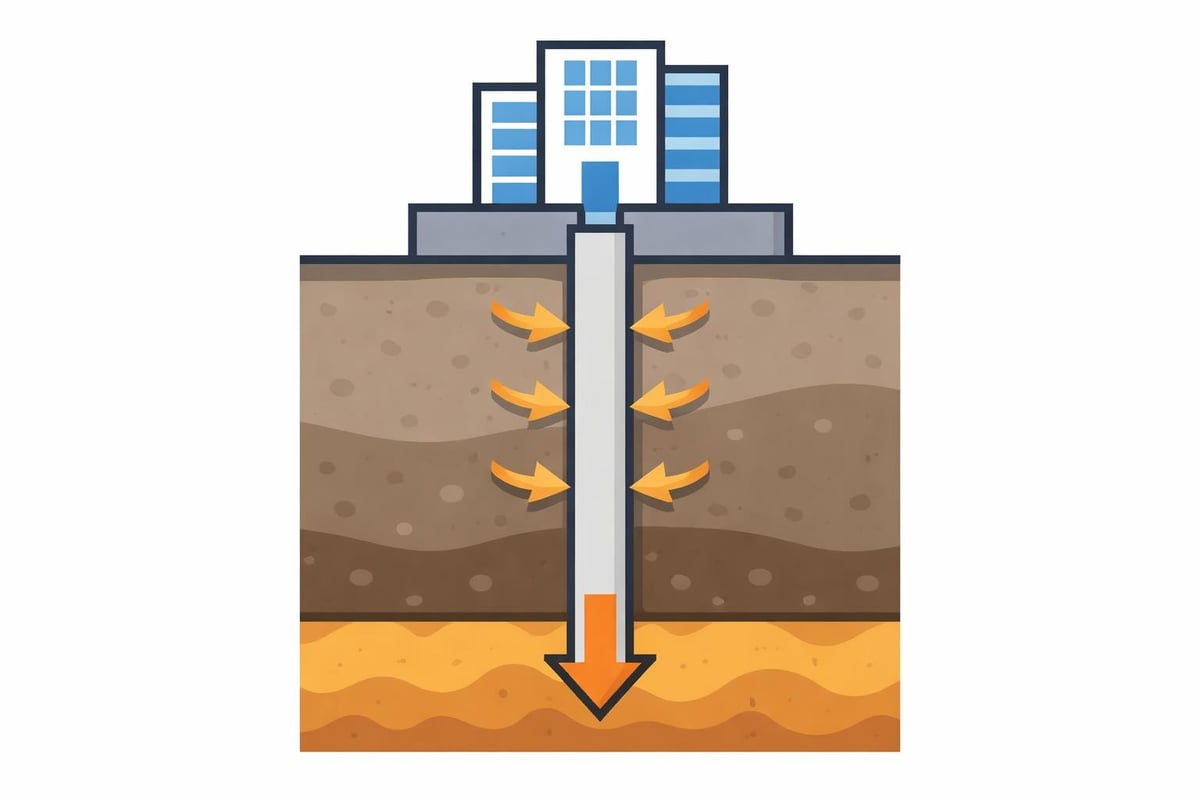
Deep foundations engage soil through three primary mechanisms:
- End bearing on competent strata such as bedrock or dense till
- Friction along the embedded shaft perimeter through skin resistance
- Combined end bearing and shaft friction working together
Most practitioners consider foundations extending deeper than three meters as potentially deep, though the classification ultimately depends on the ratio of embedment depth to foundation width. A foundation with a depth-to-width ratio exceeding four typically qualifies as deep, though site-specific geotechnical conditions govern the final determination.
The distinction matters because design methodologies, construction equipment, quality assurance protocols, and cost structures differ substantially between shallow and deep systems. Deep foundation methods encompass a wide range of construction techniques tailored to specific ground conditions and structural requirements.
Common Deep Foundation Types and Applications
Different structural demands and subsurface conditions call for specific deep foundation configurations. Engineers select among several proven systems based on load magnitude, soil stratification, environmental constraints, and construction economics.
Driven Pile Systems
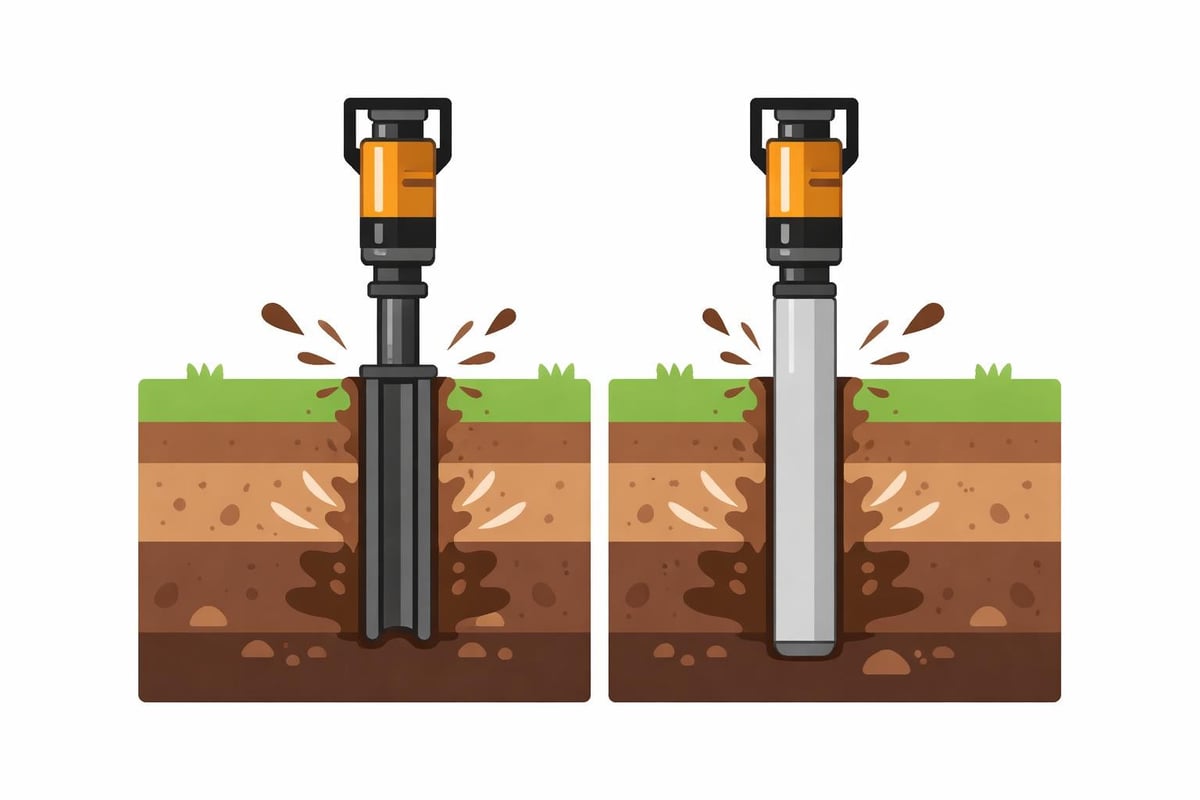
Driven piles represent one of the oldest and most widely used deep foundation types. Contractors use impact hammers, vibratory drivers, or hydraulic presses to advance preformed elements into the ground. Materials include steel H-piles, pipe piles, precast concrete piles, and timber piles for lighter loads.
The driving process displaces soil rather than removing it, which densifies granular deposits and can increase bearing capacity. However, displacement piles may cause heave in adjacent structures and generate vibrations that limit their use near sensitive facilities.
Key advantages of driven pile systems:
- High production rates in favorable conditions
- Immediate load capacity upon installation
- Reliable performance in most soil types
- Verifiable capacity through dynamic testing
Drilled Shaft Foundations
Drilled shafts, also called caissons or bored piles, involve excavating a cylindrical hole, installing reinforcement, and placing concrete. Diameters typically range from 600 mm to over 3000 mm, making them suitable for very heavy loads from bridge piers, high-rise towers, and industrial equipment.
The excavation process allows direct inspection of bearing strata, providing quality assurance unavailable with displacement piles. Engineers can readily accommodate variable shaft diameters, create enlarged bases for enhanced end bearing, and penetrate obstructions that would stop driven piles.
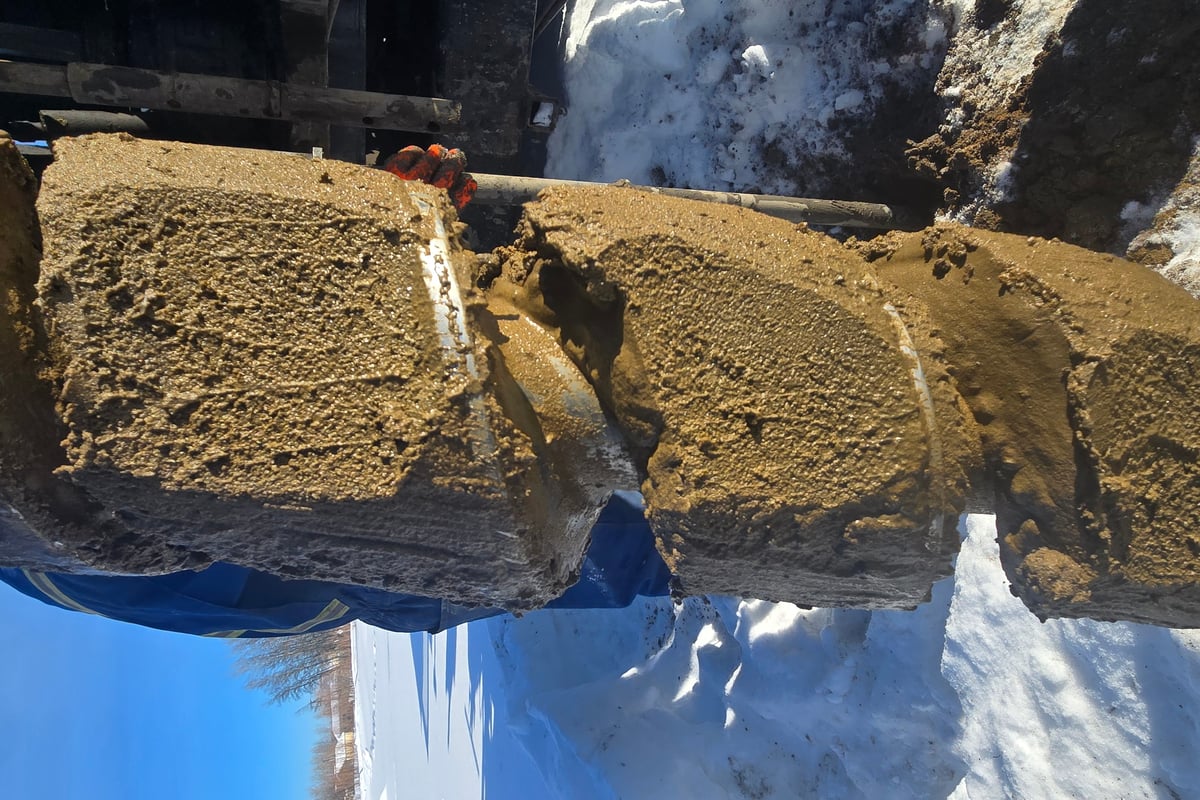
Construction requires specialized drilling equipment and careful attention to borehole stability. Temporary casing or drilling fluids maintain hole integrity in caving soils or below the water table. The continuous flight augering technique combines drilling and concrete placement in a single operation, reducing risks in unstable ground.
Helical Piles and Screw Foundations
Screw piles feature one or more helical bearing plates welded to a central steel shaft. Installation involves rotating the pile into the ground using hydraulic torque motors, creating minimal vibration and noise compared to impact driving.
These systems excel in restricted access locations, environmentally sensitive sites, and projects requiring immediate load testing. Installation torque correlates with bearing capacity, providing real-time quality control. Limitations include reduced capacity in very dense soils or rock and potential for installation difficulties with obstructions.
| Foundation Type | Typical Capacity Range | Suitable Soil Conditions | Primary Limitations |
|---|---|---|---|
| Driven Steel H-Piles | 500-2000 kN | Most soils, dense till | Vibration, noise |
| Precast Concrete Piles | 750-3000 kN | Granular soils | Handling, splicing |
| Drilled Shafts | 2000-50000 kN | All conditions | Cost, complexity |
| Helical Piles | 200-1500 kN | Cohesive soils | Obstructions |
| Micropiles | 300-1000 kN | Any ground | Specialized equipment |
Geotechnical Investigation and Design Considerations
Proper deep foundation design begins with comprehensive subsurface investigation. Engineers must characterize soil and rock stratigraphy, strength parameters, groundwater conditions, and potential hazards to select appropriate foundation types and predict performance.
Standard penetration testing provides initial soil classification and consistency data at regular depth intervals. Undisturbed sampling enables advanced laboratory testing to measure consolidation characteristics, shear strength, and soil-structure interface friction. Rock coring assesses bedrock quality and provides samples for uniaxial compression testing.
Specialized in-situ tests including cone penetration testing and pressuremeter analysis deliver continuous profiles of soil resistance and stiffness. These methods particularly benefit deep foundation design by identifying subtle variations in bearing strata and detecting weak layers that could cause unexpected settlement.
Load Transfer and Capacity Analysis
Deep foundation capacity calculations account for both ultimate resistance and settlement under working loads. Engineers analyze end bearing using bearing capacity theories modified for deep embedment, while shaft friction calculations integrate unit skin resistance over the embedded surface area.
Critical design parameters include:
- Effective overburden stress at pile tip elevation
- Undrained shear strength for cohesive soils
- Friction angle for granular materials
- Rock mass quality and discontinuity spacing
- Groundwater elevation and pore pressure distribution
The design process also considers group effects when multiple foundation elements work together. Closely spaced piles interact through stress overlap, potentially reducing individual capacity and increasing settlement compared to isolated elements. Block failure mechanisms may govern large pile groups in soft clays.
Negative skin friction represents a unique challenge in deep foundations. When compressible soils consolidate around a pile due to external loading or groundwater lowering, downward drag forces develop that add to structural loads rather than providing resistance. Proper analysis accounts for this "downdrag" in final capacity calculations.
Construction Methods and Quality Assurance
Successful deep foundation performance depends heavily on construction quality. Each foundation type requires specific installation procedures, equipment capabilities, and field controls to achieve design capacity and maintain structural integrity.
For driven pile systems, contractors select hammer energy and driving resistance criteria based on wave equation analysis. The installation process follows dynamic formulas or pile driving analyzers that correlate blow count to capacity. Overstressing during driving can damage piles, while inadequate penetration leaves capacity unrealized.
Drilled Shaft Construction Controls
Drilled shaft installation presents unique quality challenges because the bearing stratum remains hidden until excavation. Qualified inspectors verify bearing material through direct observation or sampling before authorizing concrete placement.
Key construction controls include:
- Verify plumbness and alignment throughout drilling
- Inspect bearing stratum for adequate strength and cleanliness
- Remove all loose debris and sediment from hole bottom
- Place concrete continuously to avoid cold joints
- Maintain concrete head above water table during placement
Specialized techniques address challenging conditions. Permanent casing prevents caving in loose granular soils. Polymer slurry stabilizes boreholes in water-bearing formations while allowing concrete displacement during placement. Rock sockets require careful cleaning to develop full side shear resistance.
Load Testing Protocols
Physical load testing provides the most reliable verification of deep foundation performance. High strain dynamic testing applies impact loads while measuring force and acceleration, enabling capacity analysis through wave mechanics. This method tests many piles economically during or shortly after installation.
Static load testing applies sustained loads through hydraulic jacks while measuring foundation movement over time. Although more expensive, static tests directly measure load-displacement response under conditions closely matching service loads. Osterberg cells enable bottom-up testing of drilled shafts at depths where traditional reaction systems become impractical.
When projects involve specialized foundation systems like deep cement mixing for ground improvement beneath shallow foundations, verification sampling and laboratory strength testing ensure adequate treatment.
Specialized Applications and Emerging Technologies
Deep foundation engineering continues advancing through new materials, installation methods, and analysis techniques. These innovations address project challenges while improving sustainability and reducing construction impacts.
Micropiles represent one significant advancement, combining small diameter drilling with high-strength steel reinforcement and grout. These slender elements penetrate restricted headroom spaces, support underpinning projects, and stabilize slopes where conventional piles cannot access. Typical diameters range from 100 mm to 300 mm with capacities reaching 1000 kN through innovative bonding techniques.
Modern deep foundation applications include:
- Seismic retrofit of existing structures through supplemental piles
- Wind turbine foundations in challenging soil profiles
- Marine structures requiring corrosion-resistant materials
- Permafrost conditions demanding thermal performance
- Vibration-sensitive urban environments requiring low-impact installation
Numerical modeling now enables sophisticated three-dimensional analysis of pile groups, lateral loading, and soil-structure interaction. Finite element software simulates installation effects, time-dependent consolidation, and combined loading scenarios that previously required simplified hand calculations. These tools help engineers optimize foundation layouts and predict long-term performance with greater confidence.
Instrumentation and monitoring technologies provide real-time feedback during and after construction. Strain gauges embedded in piles measure load distribution along the shaft. Inclinometers track lateral deflection under service loads. Piezometers monitor pore pressure changes that affect capacity and settlement.
Integration with Geotechnical Engineering Services
Deep foundation design rarely occurs in isolation. Effective solutions integrate subsurface investigation, laboratory testing, analytical design, construction support, and performance verification into coordinated workflows.
ZALIG Consulting Ltd provides comprehensive geotechnical engineering services that support deep foundation projects from initial site assessment through construction closeout. Our multidisciplinary teams coordinate subsurface characterization with structural requirements, regulatory constraints, and construction economics to deliver practical foundation solutions.
Field investigation programs include drilling, sampling, and in-situ testing tailored to deep foundation design needs. Laboratory services characterize soil strength, consolidation behavior, and interface friction properties. Engineering analysis considers ultimate capacity, settlement, lateral loading, and group effects using current codes and proven methodologies.
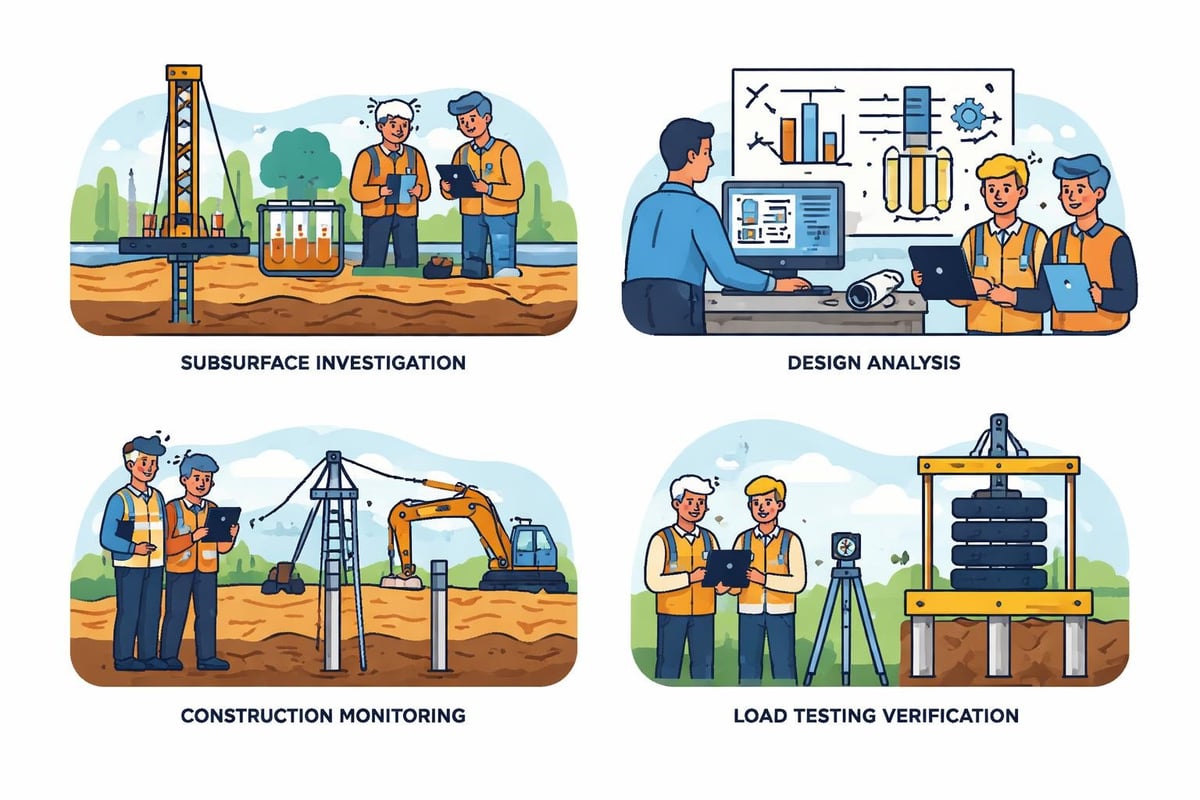
Construction phase services ensure quality through drilling inspection, concrete sampling, and load testing programs. Our CCIL-certified technicians verify compliance with specifications and document as-built conditions. This integrated approach manages technical risk while supporting project schedules and budgets.
Regulatory Compliance and Building Code Requirements
Deep foundation design must satisfy building codes, municipal standards, and specialized regulations governing subsurface construction. The National Building Code of Canada establishes minimum design requirements, while provincial codes may impose additional provisions.
Geotechnical reports supporting deep foundation design typically include site-specific soil parameters, groundwater conditions, bearing stratum characteristics, and recommended foundation types. Engineers prepare detailed design drawings showing pile layout, depths, reinforcement, and connection details.
Permitting often requires demonstration that construction will not impact adjacent properties through settlement, vibration, or groundwater alteration. Monitoring programs may become permit conditions for projects near sensitive structures or environmentally protected areas.
Quality assurance requirements vary by jurisdiction and project type. Many municipalities mandate minimum testing frequencies for production piles, inspection protocols for drilled shaft construction, and professional oversight by qualified engineers. Understanding these requirements early in planning prevents costly construction delays.
Cost Considerations and Value Engineering
Deep foundations represent significant project costs, making value engineering and constructability review essential. Material costs, installation productivity, testing requirements, and mobilization expenses all influence economic feasibility.
Comparing foundation alternatives requires life-cycle analysis beyond initial construction costs. Driven piles may install faster but require expensive mobilization for small quantities. Drilled shafts offer flexibility but depend on skilled labor and specialized equipment. Helical piles reduce environmental impact at premium unit costs.
| Cost Factor | Driven Piles | Drilled Shafts | Helical Piles |
|---|---|---|---|
| Mobilization | High | Moderate | Low |
| Unit Cost | Moderate | Variable | High |
| Testing Required | Moderate | High | Low |
| Schedule Impact | Fast | Slow | Fast |
| Access Requirements | Open site | Moderate clearance | Restricted OK |
Site conditions dramatically affect costs. Rocky terrain increases drilling difficulty and tool wear. High groundwater demands dewatering or specialized construction techniques. Urban sites with overhead restrictions limit equipment options and reduce productivity.
Early contractor involvement helps identify cost drivers and alternative approaches. Partnering with experienced foundation contractors during design development often reveals constructability improvements that maintain performance while reducing expense.
Deep Foundation Performance Monitoring
Long-term monitoring programs verify design assumptions and provide early warning of potential issues. Instrumentation installed during construction measures actual foundation behavior under service loads, validating analytical predictions or triggering intervention if unexpected performance occurs.
Settlement monitoring compares foundation movement against predicted values and structural tolerance criteria. Optical surveying, digital levels, or automated total stations track vertical displacement over time. Critical structures may warrant continuous monitoring with threshold alarms.
Lateral deflection becomes important for foundations supporting retaining structures, bridge abutments, or structures subject to wind or seismic loads. Inclinometer casings grouted into drilled shafts enable periodic measurement of horizontal movement at depth.
Load distribution measurements using embedded strain gauges reveal how shaft friction and end bearing develop over time. These data prove particularly valuable when construction differs from design assumptions or when long-term soil consolidation affects capacity.
Forensic investigations of foundation distress benefit from historical monitoring data. Understanding actual performance helps engineers diagnose problems, evaluate repair strategies, and improve future designs. Common issues include unexpected settlement, lateral movement, structural damage from overloading, and deterioration from corrosive environments.
Deep Foundation Selection for Different Structures
Different structure types present unique foundation challenges that influence deep foundation selection. High-rise buildings concentrate enormous loads requiring large-diameter drilled shafts with both end bearing and shaft friction. Transportation structures like bridges demand lateral load resistance and seismic performance.
Industrial facilities supporting heavy equipment may specify battered piles to resist horizontal forces or pile groups optimized for moment resistance. Marine structures require corrosion protection through material selection, coatings, or cathodic protection systems. Liebherr’s overview of deep foundation methods illustrates the range of specialized equipment available for different applications.
Transmission towers and renewable energy projects often use helical piles in remote locations where access limitations preclude conventional pile driving equipment. Temporary structures may warrant removable piles that can be extracted and reused, reducing material waste and site disturbance.
Understanding project-specific performance requirements guides foundation type selection more effectively than relying solely on lowest initial cost. Factors including design life, maintenance access, expansion provisions, and decommissioning considerations all influence the optimal deep foundation solution.
Deep foundation systems provide essential support for structures when shallow alternatives prove inadequate, transferring loads through weak near-surface soils to competent bearing strata at depth. Proper selection, design, and construction of driven piles, drilled shafts, or helical systems depends on comprehensive geotechnical investigation, rigorous analysis, and quality-focused construction practices. ZALIG Consulting Ltd integrates subsurface characterization, foundation engineering, construction materials testing, and field inspection services to deliver deep foundation solutions that manage risk, satisfy regulatory requirements, and support successful project outcomes across civil infrastructure and land development applications.