
As the construction industry advances toward 2026, the importance of rigorous testing cannot be overstated. Reliable processes are essential for safeguarding project safety, ensuring regulatory compliance, and delivering lasting results.
New technologies, evolving regulations, and heightened sustainability expectations are transforming how projects are evaluated. Navigating this complexity requires expertise and a deep understanding of modern construction testing solutions.
With the right guidance, stakeholders can minimize risks, avoid costly setbacks, and achieve the highest standards of quality. Informed decision-making is crucial for success in this dynamic environment.
This guide offers a comprehensive exploration, from foundational concepts to cutting-edge methods, regulatory updates, and emerging trends. Equip yourself to make confident choices for your next project in 2026.
Understanding Construction Testing: Foundations and Importance
Construction testing solutions form the backbone of every successful building project. At their core, these solutions are designed to guarantee quality assurance, uphold safety, and ensure compliance with regulatory standards. As construction becomes more complex and high-stakes, testing is the safeguard that helps prevent costly failures and protects lives.
What Is Construction Testing?
Construction testing solutions are systematic processes used to evaluate materials, structures, and environmental conditions throughout a project's lifecycle. The primary objective is to verify that all components meet specified standards for safety, durability, and functionality. This includes both laboratory and field assessments, ensuring that each phase of construction aligns with design and regulatory requirements.
Testing is not a one-time event. It is an ongoing practice, embedded from the earliest planning stages to project completion. By prioritizing construction testing solutions, project teams can identify potential issues before they escalate, saving time and resources.
Main Categories of Construction Testing Solutions
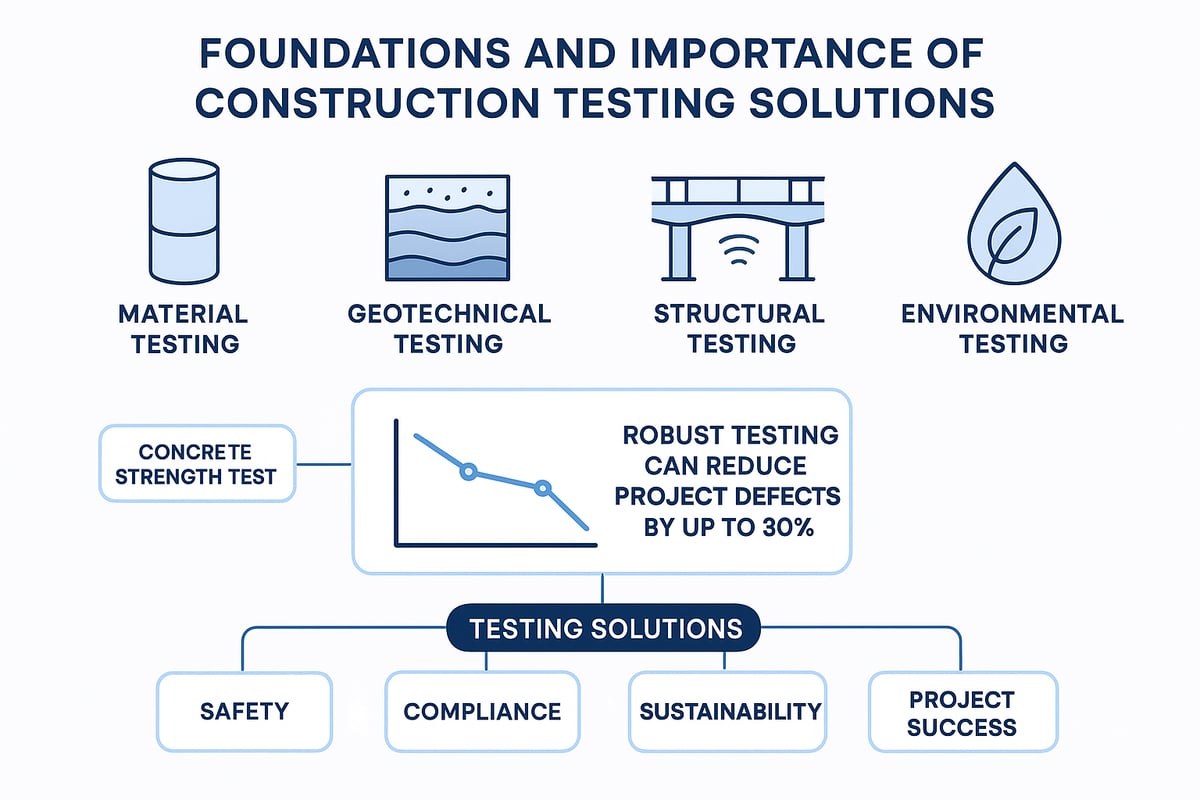
There are four main categories in modern construction testing solutions:
- Material Testing: Assesses concrete, steel, asphalt, aggregates, and other building components for strength, composition, and durability.
- Geotechnical Testing: Examines subsurface soil and rock properties to inform foundation design and site safety.
- Structural Testing: Evaluates the integrity and performance of completed structures, using static and dynamic load assessments.
- Environmental Testing: Monitors air, water, and soil for contaminants or hazards, supporting compliance and sustainability.
Each category plays a critical role in the overall quality and resilience of a construction project. Material testing, for example, is essential for confirming that building elements will perform as intended. For a deeper look at these services, see Construction Material Testing Services.
Legal and Financial Implications
Inadequate or poorly executed construction testing solutions can have severe consequences. Legal risks include fines, failed inspections, or litigation if a structure does not meet safety codes. Financially, undetected flaws may lead to expensive repairs, project delays, or even total structural failure.
Recent industry data shows that comprehensive testing can reduce project defects by up to 30 percent, according to the Construction Industry Institute. This reduction not only saves money but also builds trust with clients and regulatory bodies.
Risk Mitigation and Project Success
Robust construction testing solutions are essential for mitigating risks. They help prevent structural failures, minimize environmental hazards, and reduce the likelihood of costly change orders or delays. By catching potential issues early, teams can address them proactively, keeping projects on schedule and within budget.
Effective testing also supports due diligence for insurance and lending purposes. When stakeholders see thorough testing documentation, confidence in the project’s success increases significantly.
Sustainability and Green Building
Sustainable construction is now a priority across the industry, and construction testing solutions play a vital role in this shift. Testing helps verify the use of low-impact materials, ensures compliance with green building certifications, and monitors environmental impacts onsite.
For example, environmental testing can confirm that construction practices meet requirements for LEED or similar certifications. By integrating sustainability checks, projects contribute to long-term environmental stewardship and community health.
Common Tests and Industry Stats
Some of the most common tests within construction testing solutions include:
- Concrete compressive strength testing
- Soil compaction and classification
- Asphalt composition analysis
- Water permeability assessments
These tests provide critical data that inform construction decisions at every stage. Industry statistics reinforce their value. As noted earlier, robust testing can lead to a 30 percent reduction in defects, directly impacting project quality and reputation.
Documentation and Traceability
Today, there is a growing expectation for detailed documentation and traceability within all construction testing solutions. Digital records, standardized forms, and transparent reporting are now standard requirements. This trend is driven by stricter regulations and the need for accountability throughout the construction process.
Maintaining accurate and accessible testing documentation not only supports compliance but also simplifies future maintenance, audits, and renovations. As the industry evolves, robust traceability will remain a hallmark of best practice in construction testing solutions.
Key Types of Construction Testing Solutions in 2026
The landscape of construction testing solutions in 2026 is more dynamic and vital than ever. Modern projects demand precision, efficiency, and compliance at every stage. As technology advances and regulations tighten, diverse testing solutions are essential for quality, safety, and sustainability.
Material Testing Solutions
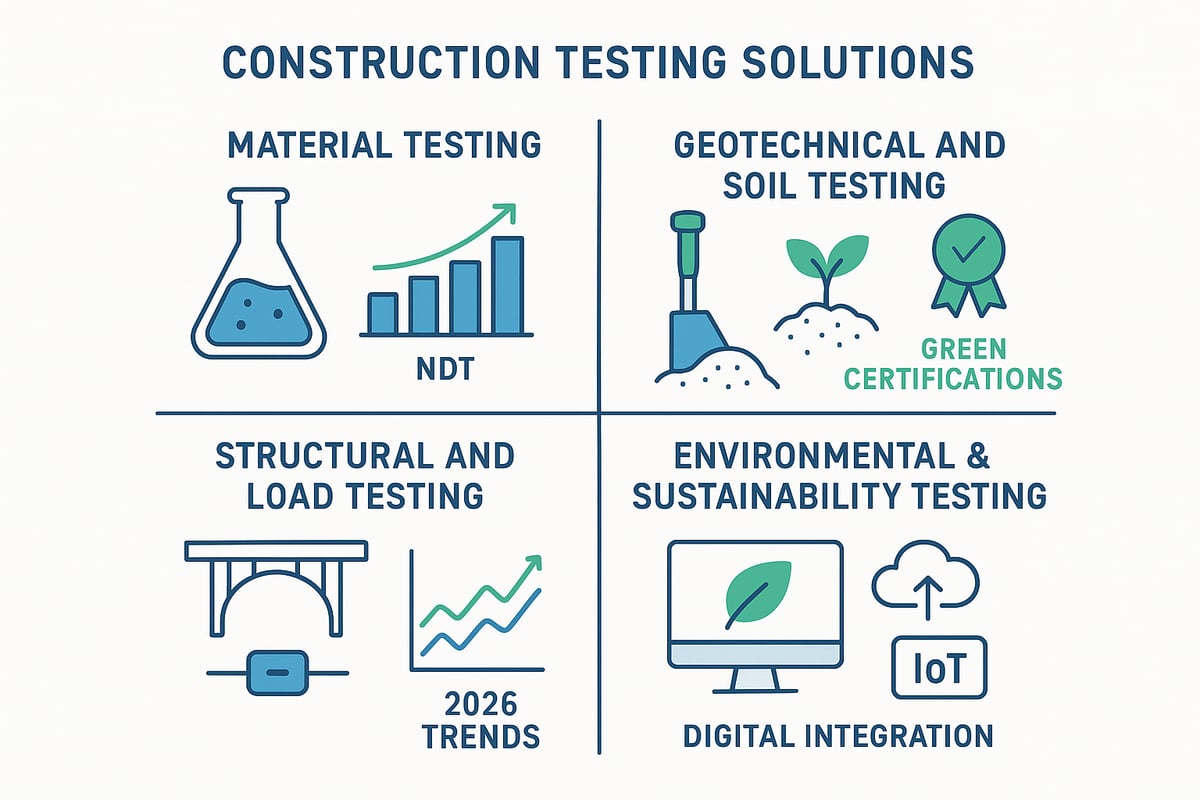
Material testing forms the backbone of construction testing solutions, verifying that every component meets safety and durability standards. In 2026, both laboratory and field testing are performed on concrete, steel, asphalt, and aggregates. These tests ensure materials comply with ASTM and CSA benchmarks.
Advancements in non-destructive testing (NDT) are transforming industry practices. Techniques like ultrasonic pulse velocity allow for rapid, in-situ concrete analysis without damaging structures. The NDT market is projected to reach $24 billion by 2026, reflecting its growing importance. For a deeper dive into breakthroughs, see Advancements in Non-Destructive Testing for Innovative Construction Materials and Applications.
Digital data capture and real-time reporting have become standard features. Mobile devices and cloud platforms enable instant sharing of test results, supporting better decision-making and documentation. These innovations help construction testing solutions deliver faster results and greater traceability.
Typical tests include compressive strength for concrete, gradation analysis for aggregates, and asphalt density checks. As expectations rise, accurate documentation and digital traceability are now mandatory for most projects.
Geotechnical and Soil Testing Solutions
Geotechnical and soil testing solutions are crucial to understanding the subsurface conditions that influence foundation design. Construction testing solutions in this area use advanced methods to reduce project risks and delays.
Standard Penetration Test (SPT) and Cone Penetration Test (CPT) are widely used to assess soil properties and bearing capacity. Automated data logging and remote sensing tools, such as drones, have improved site mapping and soil moisture analysis. These innovations make geotechnical investigations more efficient and accurate.
According to Ground Engineering Magazine, up to 60% of construction delays are linked to unforeseen ground conditions. Regulatory demands for soil contamination and stability testing have increased, emphasizing the need for robust geotechnical construction testing solutions.
Providers now integrate digital reporting, automated sampling, and cloud-based management. This approach ensures compliance with local codes and supports comprehensive documentation for every phase of the project.
Structural and Load Testing Solutions
Structural and load testing solutions verify that bridges, buildings, and critical infrastructure can safely handle expected loads. Modern construction testing solutions employ static and dynamic load tests to evaluate structural integrity.
Sensor integration is a defining trend. Real-time structural health monitoring uses technologies like fiber optic sensors to measure bridge deflection and track performance over time. Predictive analytics help schedule maintenance before issues arise, reducing long-term costs and risks.
Compliance with global standards, including ISO 19901 3 and ACI 318, is non negotiable. Detailed documentation and sensor data support transparent reporting and regulatory approval, ensuring construction testing solutions deliver lasting safety and reliability.
Environmental and Sustainability Testing Solutions
Environmental and sustainability testing solutions address the need to monitor and minimize project impacts on air, water, and soil. With stricter regulations and growing demand for green certifications, construction testing solutions now include comprehensive environmental assessments.
On site monitoring of volatile organic compounds (VOCs), water permeability, and soil contaminants is standard. Environmental Impact Assessments (EIAs) and adherence to LEED certification requirements are increasingly required. The USGBC reports that green building certifications grew by 12% annually from 2020 to 2025, highlighting the expansion of sustainability focused construction testing solutions.
The industry is also pushing for low carbon materials and life cycle analysis. Digital platforms now support real time tracking of environmental data, making compliance and reporting more efficient. As sustainability becomes central, robust construction testing solutions are vital for project success.
Step-by-Step Guide: Implementing Construction Testing Solutions in 2026
Implementing construction testing solutions in 2026 requires a structured approach that addresses both technical and regulatory demands. Each phase, from planning to compliance, plays a vital role in ensuring project success.
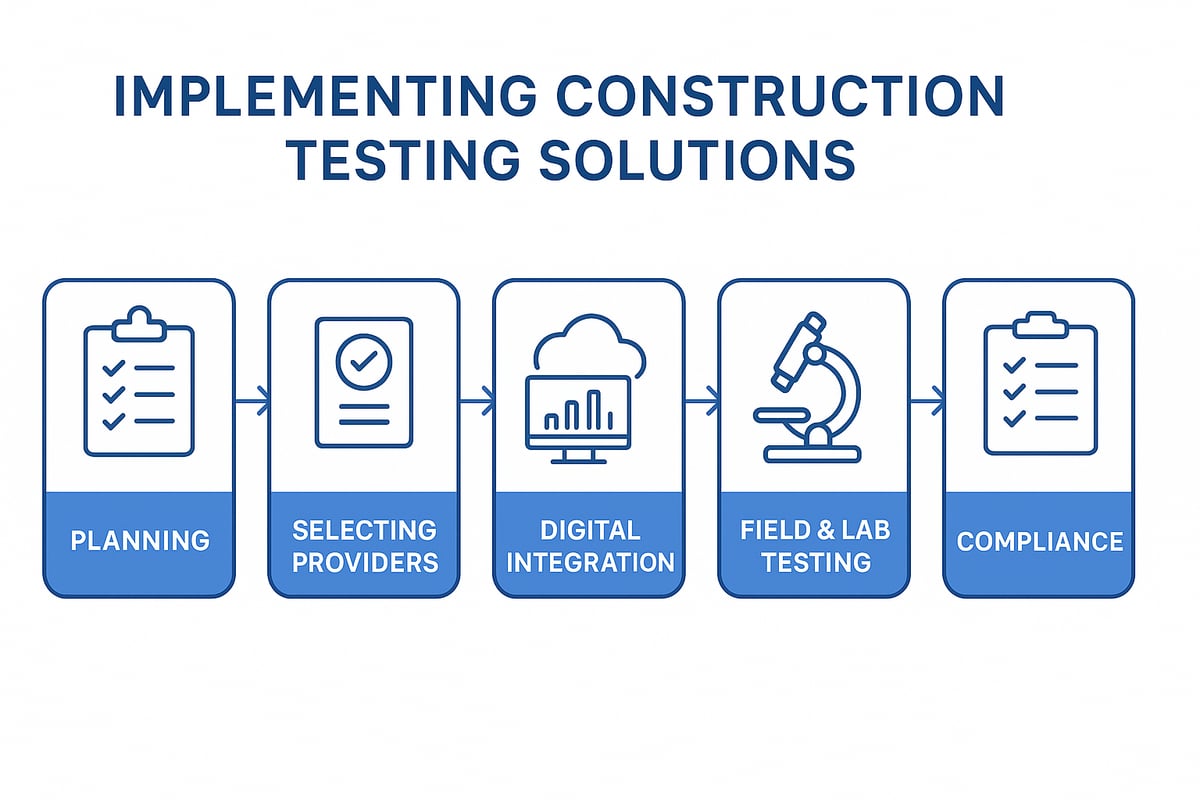
Step 1: Planning and Defining Testing Requirements
Every project begins with careful planning. Start by assessing the project scope, site-specific challenges, and applicable regulations. Early identification of risks and requirements ensures that construction testing solutions are tailored to the project’s unique needs.
Engage with engineers, architects, and stakeholders to define clear objectives. This collaboration helps establish:
- The types of tests needed for quality and safety
- Regulatory benchmarks to be met
- Documentation procedures for traceability
Develop a comprehensive testing plan that aligns with both client expectations and legal standards. This foundation will guide the entire construction testing solutions process.
Step 2: Selecting Accredited Testing Providers and Labs
Choosing the right partners is crucial for reliable construction testing solutions. Evaluate providers based on:
- Accreditation (such as ISO/IEC 17025 or CCIL certification)
- Experience with similar project types and sizes
- Knowledge of local and provincial regulations
Prioritize labs with a proven track record in Alberta’s regulatory environment. Local expertise can minimize delays and ensure compliance. For projects involving complex ground conditions, consider providers with specialized Geotechnical Engineering Solutions experience.
Ask for references and review past performance to confirm quality management systems are in place. This due diligence helps avoid costly mistakes and ensures your construction testing solutions meet the highest standards.
Step 3: Integrating Digital Tools and Data Management
Digital transformation is reshaping construction testing solutions. Adopt cloud-based platforms and mobile data capture tools to streamline communications and reporting.
Benefits include:
- Faster turnaround times for test results
- Real-time data access for project managers
- Enhanced traceability and error reduction
Implement digital dashboards to monitor progress and flag issues instantly. Automation in data collection helps maintain consistency and accuracy throughout the construction testing solutions process.
Step 4: Conducting Field and Laboratory Testing
Effective execution relies on precise coordination between field teams and laboratory analysts. Schedule on-site sampling, ensuring sample integrity and adherence to chain of custody protocols.
Modern construction testing solutions often use automated monitoring, such as continuous concrete temperature logging or remote sensors. These technologies allow for:
- Immediate detection of anomalies
- Reduced human error
- Real-time adjustments to construction processes
Quality control is maintained by following standardized procedures and using accredited labs. Regular communication between field and lab teams fosters a seamless flow of information, ensuring construction testing solutions deliver accurate, actionable insights.
Step 5: Interpreting Results and Ensuring Compliance
Analyzing test data is a critical phase of construction testing solutions. Compare results to project specifications and regulatory standards to verify compliance.
Prepare detailed documentation for submission to authorities and clients. Ensure all findings are clearly reported and traceable. When discrepancies arise, initiate corrective actions promptly, such as re-testing or adjusting construction methods.
Two key outcomes of effective construction testing solutions are risk mitigation and regulatory approval. Maintain open communication with stakeholders to address concerns and validate results. This approach reduces delays, minimizes legal risks, and upholds the reputation of your project team.
Regulatory Landscape and Standards in 2026
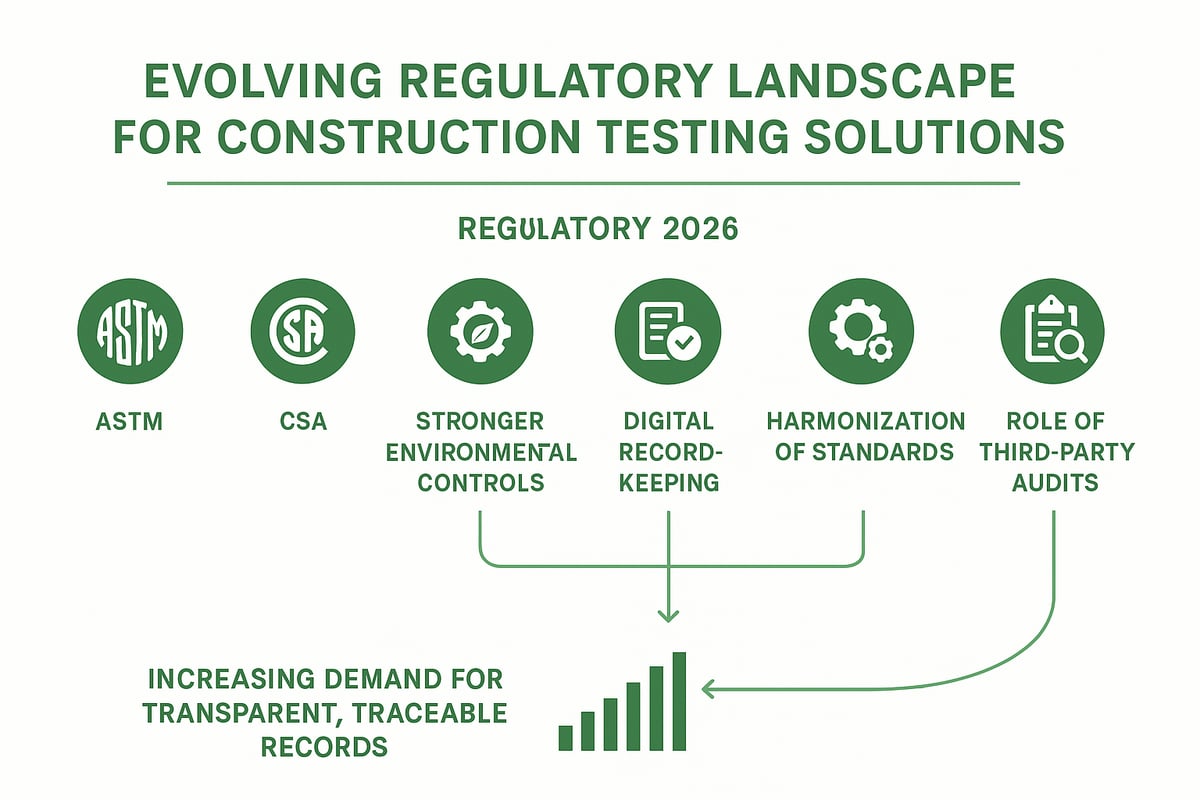
The regulatory landscape for construction testing solutions in 2026 is more complex and rigorous than ever before. International and national standards such as ASTM, CSA, and ISO provide the backbone for quality assurance and safety in the industry. Provincial and local codes add another layer, ensuring that construction testing solutions meet the unique requirements of each region.
As construction projects grow in scale and complexity, adherence to these standards is essential. Regulatory bodies have introduced updated protocols to address emerging risks, sustainability goals, and technological advances. Navigating this environment requires a deep understanding of both the letter and spirit of the regulations governing construction testing solutions.
Recent Regulatory Updates
In recent years, regulatory authorities have implemented stricter controls to enhance the reliability of construction testing solutions. For example, environmental mandates now require more comprehensive air, water, and soil testing. Digital documentation has become mandatory in many jurisdictions, streamlining compliance and enabling real-time audits.
A notable example is Alberta's 2025 introduction of mandatory digital record-keeping for all material testing reports. This shift has improved traceability and reduced the risk of data loss or tampering. These updates reinforce the importance of staying current with evolving requirements to avoid project delays or legal complications.
Harmonization and Accreditation
One significant trend shaping construction testing solutions is the harmonization of standards across provincial and national borders. This movement aims to simplify cross-jurisdictional projects and reduce confusion for industry professionals. Major organizations like ASTM and CSA are working to align their specifications, making it easier for companies to adopt consistent practices.
Third-party audits and accreditation play a critical role in maintaining quality assurance. Accredited labs and providers demonstrate adherence to the highest standards, giving project owners confidence in the reliability of their results. As a result, many contracts now require proof of accreditation and regular external audits.
Standards for Sustainability and Digitalization
Sustainability is now at the forefront of construction testing solutions. New standards, such as CSA's guidelines for recycled construction materials, encourage the use of eco-friendly alternatives and promote responsible resource management. Environmental impact assessments and green building certifications are driving demand for advanced testing methods.
Additionally, digital documentation mandates are transforming how testing data is managed. Real-time reporting and cloud-based storage solutions are becoming industry norms. For further insight into how environmental testing supports compliance and sustainability, see Environmental Engineering in Construction.
Compliance, Penalties, and Traceability
Non-compliance with construction testing solutions standards can lead to severe penalties, including project shutdowns, fines, and legal liabilities. Regulatory bodies are increasingly vigilant, conducting regular inspections and demanding transparent, traceable records for all testing activities.
The industry now expects detailed documentation for every test conducted, from initial sampling to final analysis. This level of traceability not only ensures regulatory compliance but also builds trust with clients and stakeholders. In 2026, the ability to provide clear, accessible records has become a competitive advantage for organizations delivering construction testing solutions.
Innovations and Future Trends in Construction Testing Solutions
As the construction industry accelerates toward 2026, innovations in construction testing solutions are transforming project delivery, risk management, and sustainability standards. The future is being shaped by advancements in automation, artificial intelligence, robotics, eco-friendly practices, data integration, and workforce development. Staying ahead means understanding these trends and how they impact construction testing solutions at every stage.
Automation, AI, and Robotics in Testing
Automation and artificial intelligence are redefining construction testing solutions by making processes faster, more accurate, and less labor-intensive. Automated sampling equipment, AI-driven analysis, and robotics are now integral to modern testing labs and field operations.
For instance, robotic core drilling systems minimize human error and improve sample consistency, while automated soil classification increases throughput. AI-powered platforms can analyze thousands of data points in real time, reducing analysis time by 40 percent in pilot projects, according to Construction Tech Review.
These innovations enable smarter predictive maintenance and more reliable structural assessments. The integration of non-destructive testing technologies, such as those detailed in Non-Destructive Testing Advancements, further enhances quality assurance and extends asset lifespans.
AI-driven predictive analytics are also enabling automated, data-driven quality control for materials. Recent research, such as the Comparative Assessment of Concrete Compressive Strength Prediction at Industry Scale Using Embedding-based Neural Networks, Transformers, and Traditional Machine Learning Approaches, demonstrates the growing role of advanced machine learning in construction testing solutions.
These trends are not just about efficiency. They are setting new benchmarks for safety and compliance in construction testing solutions.
Sustainability and Green Testing Initiatives
Sustainability is now a core driver in construction testing solutions. Eco-friendly testing methods are replacing harmful chemicals and single-use materials. Biodegradable testing kits, low-impact sampling, and green-certified laboratory practices are becoming industry standards.
Construction testing solutions increasingly include carbon footprint tracking and life cycle assessment of materials. These efforts support LEED certification and other green building standards. On-site recycling verification for materials and waste streams is also gaining traction.
Green initiatives in construction testing solutions are not just about meeting regulatory demands. They offer a competitive edge by aligning projects with the values of clients, communities, and investors.
Data Integration and Smart Infrastructure
The digital transformation of construction testing solutions is accelerating, driven by the integration of IoT sensors, cloud data platforms, and big data analytics. Real-time data from embedded sensors enables predictive maintenance, early fault detection, and improved resource allocation.
Consider smart concrete embedded with wireless sensors. These solutions continuously monitor structural performance and environmental conditions, providing immediate feedback to project managers. The benefits of such integration include enhanced traceability, reduced delays, and better compliance documentation.
A quick comparison:
| Traditional Testing | Smart Infrastructure Testing |
|---|---|
| Manual data entry | Automated sensor data |
| Delayed reporting | Real-time dashboards |
| Limited traceability | Full digital audit trail |
Adoption of digital tools in construction testing solutions is not without challenges. Interoperability between platforms and data security are ongoing concerns, but industry-wide collaboration is steadily improving these systems.
Skills, Training, and Workforce Development
The evolution of construction testing solutions demands a new skill set. Professionals must be adept not only in traditional testing but also in digital tools, data analytics, and regulatory compliance.
Certification programs and continuing education are now essential. Online training modules for non-destructive testing technicians, for example, help bridge the digital skills gap. Employers increasingly value multidisciplinary expertise that spans engineering, IT, and environmental science.
Investing in workforce development ensures teams can maximize the potential of advanced construction testing solutions, maintain compliance, and deliver higher quality outcomes for every project.
Choosing the Right Construction Testing Partner in Alberta
Selecting the right partner for construction testing solutions in Alberta is a decision that can define the success of your project. With evolving regulations, rapid advances in testing technology, and the unique geological and environmental conditions of the region, your choice should be strategic. The right partner will help you navigate compliance requirements and optimize both quality and efficiency.
Technical expertise and accreditation are fundamental when evaluating construction testing solutions providers. Look for teams with a proven track record in Alberta and certifications such as ISO/IEC 17025 or CCIL. This ensures their methods meet industry benchmarks and regulatory standards. Local regulatory knowledge is invaluable, as Alberta’s codes and environmental regulations can differ from national norms. A partner who understands these nuances will help prevent compliance pitfalls.
Comprehensive service offerings distinguish top-tier construction testing solutions partners. The best firms provide geotechnical, environmental, and material testing under one roof, streamlining your workflow and minimizing coordination errors. Assess their quality management systems—ask about documented procedures, audit results, and how they handle non-conformances. Reliable partners are transparent about their processes and results.
A local presence is a major advantage for construction testing solutions in Alberta. Partners with offices in cities like Edmonton, Fort Saskatchewan, or Slave Lake can respond quickly to on-site needs and offer insights into site-specific challenges. Review case studies or request references from similar projects in Alberta. This demonstrates the provider’s ability to deliver consistent, high-quality results in diverse field conditions.
When evaluating cost, remember that the lowest price does not always equate to the best value in construction testing solutions. Investing in quality and expertise can prevent costly delays, rework, or legal issues down the line. Consider the provider’s investment in advanced equipment and technology—according to the Construction Material Testing Equipment Market Size & Share report, the market is rapidly expanding with new technologies enhancing accuracy and efficiency. Providers who keep pace with these advancements can offer more reliable and timely results.
Before engaging a construction testing solutions partner, ask questions such as:
- What accreditations and certifications does your lab hold?
- How do you ensure compliance with Alberta’s local regulations?
- Can you provide references from recent projects similar to ours?
- What digital tools do you use for reporting and traceability?
- How do you handle unexpected site issues or non-conforming results?
Choosing wisely sets the foundation for project safety, compliance, and long-term success. The right construction testing solutions partner will bring not just technical skill, but also a collaborative approach and deep understanding of Alberta’s construction landscape.
As you plan ahead for the challenges and opportunities in construction testing in 2026, having the right partner by your side can make all the difference. We’ve explored how advanced technologies, evolving regulations, and sustainability goals are shaping the industry—now it’s about putting that knowledge into action. If you want to ensure your project is safe, compliant, and built to last, reach out to professionals who understand Alberta’s unique construction landscape inside and out. Ready to discuss your specific needs or get tailored guidance? Contact Us: info@zalig.ca or +1 800 515 0497