
As the construction industry rapidly evolves, professionals face new challenges driven by advanced technology and increasing project demands. Staying ahead requires a deep understanding of construction management and engineering services.
This guide is designed to equip you with the knowledge and strategies needed for success in 2026. Discover key industry trends, essential roles, and the project lifecycle steps that shape modern construction.
Explore how technology, regulations, and best practices can transform outcomes. Ready to future-proof your expertise? Dive in and embrace the next era of construction management and engineering services.
The Evolving Landscape of Construction Management and Engineering Services
The landscape of construction management and engineering services is transforming rapidly as we approach 2026. Companies must adapt to shifting market dynamics, new technologies, and changing client expectations. To stay competitive, understanding the current trends, challenges, and opportunities is essential.
Key Industry Trends for 2026
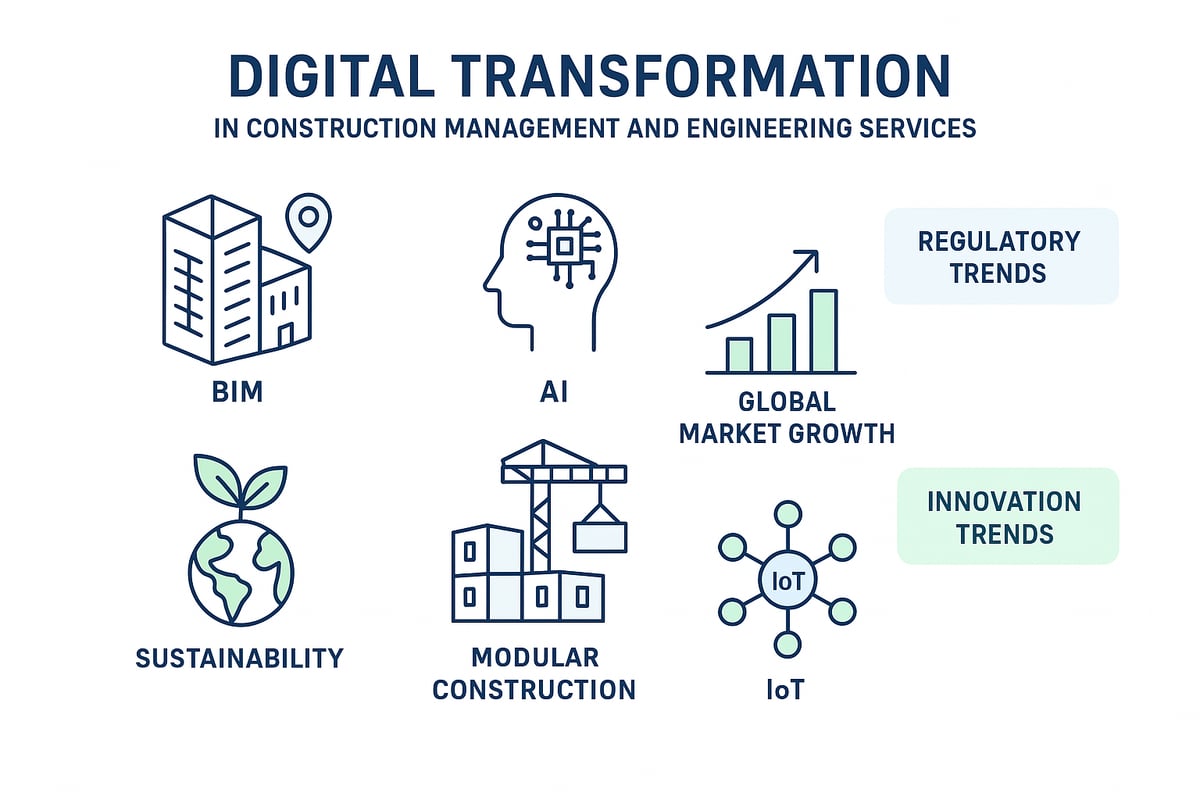
Several major trends are reshaping construction management and engineering services. Digital transformation stands at the forefront, with Building Information Modeling (BIM), artificial intelligence, and digital twins driving efficiency and collaboration. Sustainability is increasingly prioritized, with projects pursuing green building certifications and incorporating eco-friendly materials.
Modular and offsite construction methods are gaining traction, improving quality control and reducing timelines. Integrated project delivery is fostering greater collaboration among stakeholders, leading to better outcomes. Companies are leveraging real-time analytics for data-driven decision-making, which enhances predictability across the project lifecycle.
Globalization is opening new markets, but also introduces supply chain complexities. The workforce is evolving, with automation addressing labor shortages and upskilling programs preparing teams for future demands. For a deeper look at these shifts and workforce strategies, see the 2026 Engineering and Construction Industry Outlook.
Market Data and Growth Projections
The global market for construction management and engineering services is set for robust growth by 2026. Industry analysts project a steady increase in overall construction spending, with North America and Asia-Pacific emerging as key growth areas.
The engineering services sector is expected to see a healthy compound annual growth rate (CAGR), driven by infrastructure investments and urbanization. Technology spending within the sector is also rising, as organizations prioritize digital tools and automation to boost productivity.
Investors are drawn to companies that embrace innovation, reflecting a broader industry shift. As construction management and engineering services evolve, understanding these market forces will help leaders make informed, future-ready decisions.
Challenges Facing the Industry
Despite strong growth, the construction management and engineering services sector faces significant hurdles. Rising material costs and ongoing supply chain disruptions have increased project risk and unpredictability.
Regulatory requirements are becoming more complex, with new codes and compliance demands requiring careful navigation. Firms must invest in robust compliance programs to avoid costly delays or penalties.
A widening skills gap poses another challenge. Attracting and retaining top talent is difficult as experienced professionals retire and new technologies reshape job requirements. Companies must address these issues to remain effective and competitive in delivering construction management and engineering services.
Opportunities for Innovation
Innovation is unlocking new value in construction management and engineering services. The circular economy is gaining ground, with projects emphasizing resource efficiency and waste reduction. Smart infrastructure, powered by the Internet of Things, is enabling real-time monitoring and predictive maintenance.
Wearable technology is enhancing onsite safety, providing instant feedback and reducing incidents. As companies adopt these innovations, they gain a competitive edge and deliver higher-quality outcomes.
Embracing these opportunities allows organizations to transform challenges into growth drivers, ensuring their construction management and engineering services are both resilient and future-focused.
Core Roles and Responsibilities in Construction Management and Engineering
Modern construction management and engineering services depend on a network of specialized professionals. Each role contributes unique skills to ensure projects are delivered safely, efficiently, and to the highest standards. Understanding these responsibilities is key to building successful teams.
Construction Project Manager
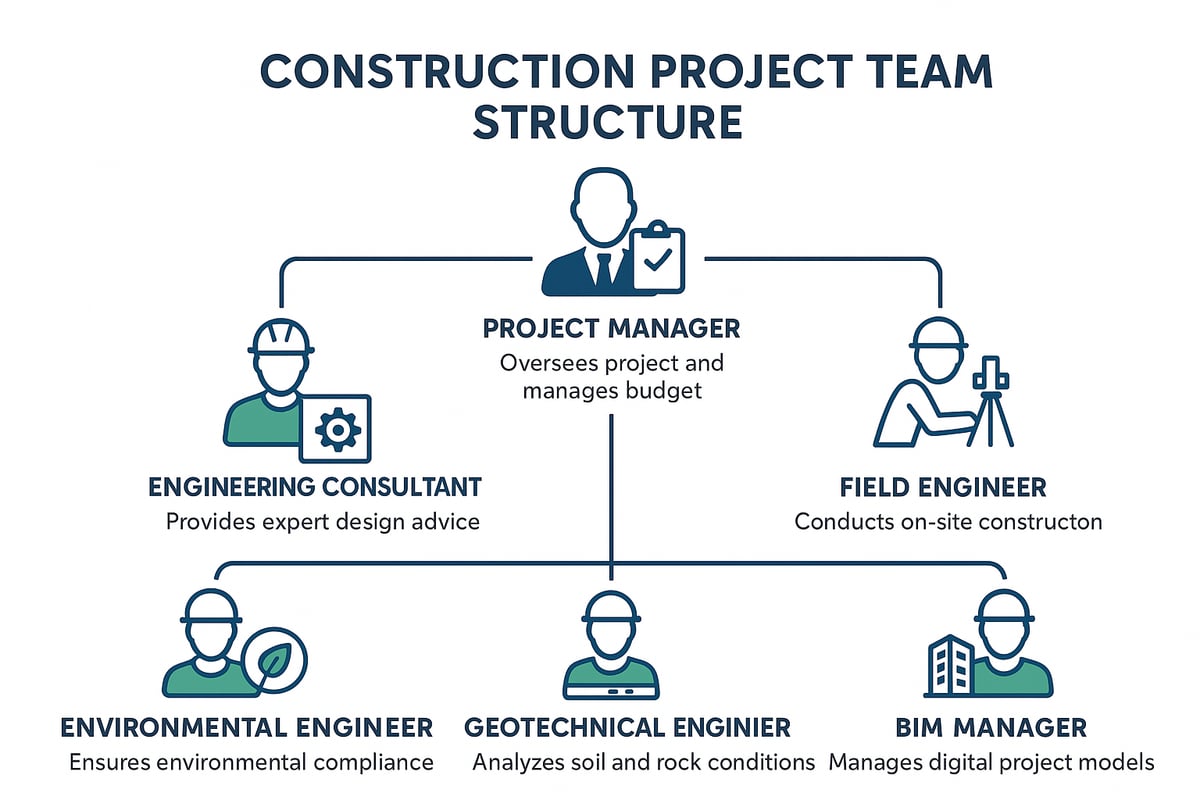
A construction project manager is the driving force behind project success. This leader oversees the planning, execution, and final delivery of construction management and engineering services.
- Guides projects from concept through completion
- Coordinates multidisciplinary teams and resources
- Manages budgets, schedules, and risk factors
Project managers must balance competing priorities, adapt quickly to changing conditions, and keep all stakeholders aligned. Their ability to anticipate and resolve challenges ensures that projects stay on track and meet client expectations.
Engineering Consultants
Engineering consultants provide essential technical guidance throughout project development. Their expertise is critical in shaping the design and feasibility of construction management and engineering services.
- Conducts feasibility studies and technical assessments
- Oversees compliance with codes, standards, and regulations
- Ensures quality assurance at every stage
By working closely with architects, project managers, and field staff, consultants help bridge the gap between design intent and practical execution. Their input safeguards both safety and innovation.
Site Supervisors and Field Engineers
Site supervisors and field engineers are the eyes and ears on the ground. They ensure that construction management and engineering services are executed safely and efficiently.
- Oversees daily site operations and workflow
- Enforces safety protocols and regulatory compliance
- Communicates real-time updates to stakeholders
These professionals are skilled problem solvers. They respond quickly to site issues, coordinate with contractors, and maintain a focus on both productivity and safety.
Specialized Roles
Specialized professionals add depth and expertise to construction management and engineering services. Environmental engineers focus on sustainable practices and regulatory compliance. Geotechnical engineers perform site investigations and foundation design, ensuring projects are built on solid ground. For a deeper understanding of their impact, see the Geotechnical Engineering Services Overview.
BIM managers lead digital modeling and coordination efforts, streamlining information flow and reducing costly errors. These roles are increasingly vital as projects become more complex and environmentally conscious.
Collaboration and Communication
Integrated teams are the foundation of effective construction management and engineering services. Transparent communication fosters trust, reduces misunderstandings, and keeps projects moving forward.
Successful collaboration is demonstrated when project managers, consultants, and field staff work together to address challenges. For example, a cross-disciplinary team might resolve a design conflict using BIM, leading to cost and time savings. Open dialogue and mutual respect are essential for delivering exceptional project outcomes.
The Construction Project Lifecycle: Step-by-Step Guide
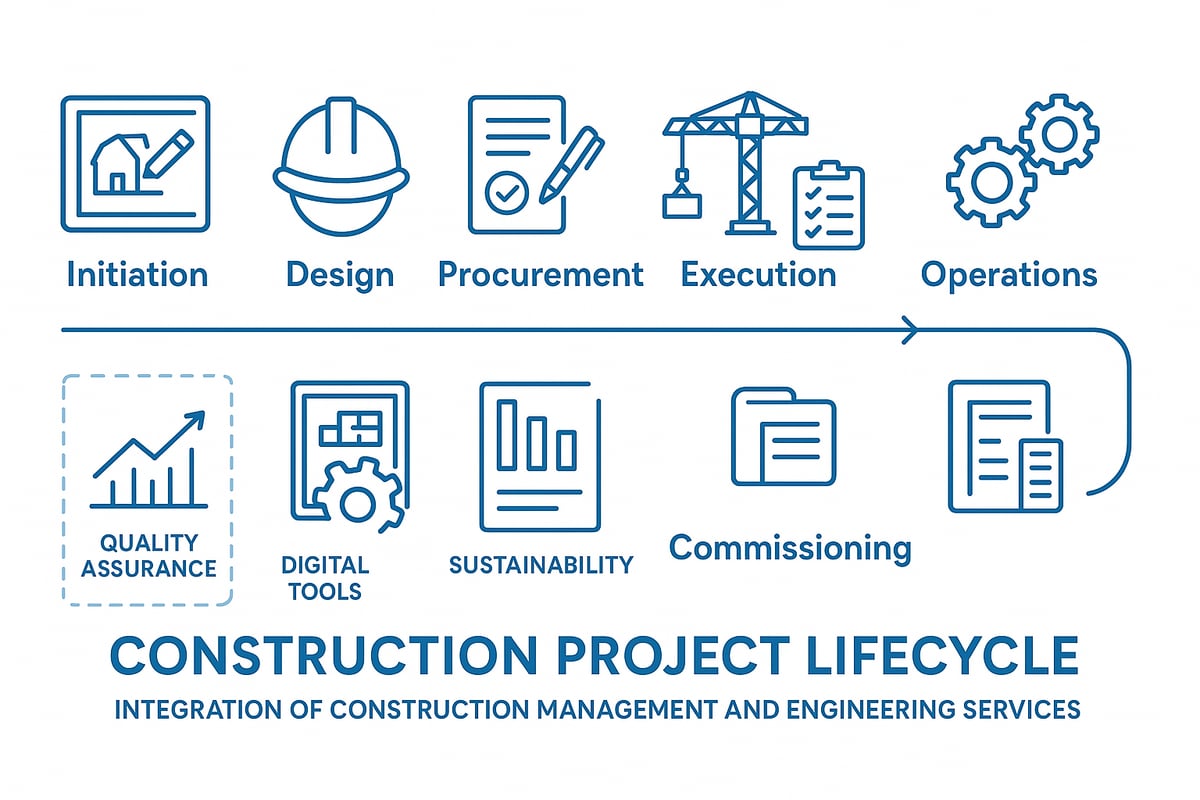
Navigating the construction project lifecycle requires a structured approach, integrating construction management and engineering services at every phase. Each step builds on the previous, ensuring projects meet performance, quality, and sustainability goals. This guide outlines each stage, highlighting critical tasks, best practices, and the role of technology in achieving successful outcomes.
Step 1: Project Initiation and Feasibility
Every successful project begins with a clear foundation. During initiation, teams define objectives, scope, and key stakeholders. Early engagement of construction management and engineering services ensures alignment between client vision and technical realities.
Feasibility studies are essential. They assess site conditions, regulatory constraints, and financial viability. Geotechnical surveys, for example, help identify soil properties and potential challenges before design begins. When construction management and engineering services collaborate from the start, risks are identified early, reducing costly surprises later.
A robust risk assessment framework is developed at this stage. It evaluates environmental, legal, and market factors. Teams use these insights to determine whether the project should move forward, pivot, or pause. This step creates a roadmap for subsequent phases, ensuring clarity and shared expectations.
Stakeholder mapping is another key task. By understanding who influences or is affected by the project, teams can develop effective communication and engagement strategies. This proactive approach builds trust and streamlines future decision-making.
Step 2: Design and Planning
Once feasibility is confirmed, the focus shifts to detailed design and strategic planning. Here, construction management and engineering services work closely with architects and regulatory agencies to translate concepts into actionable plans.
Integrated design processes combine architectural vision with engineering practicality. Advanced digital tools, such as Building Information Modeling (BIM), allow teams to visualize structures, identify design clashes, and optimize layouts before construction begins. This reduces errors and supports value engineering.
Regulatory approvals and permitting come next. Navigating this landscape requires expertise in local codes and environmental standards. Construction management and engineering services ensure all documentation is in order, streamlining the permitting process and minimizing delays.
Project scheduling and resource planning are critical. Teams use tools like Gantt charts and the Critical Path Method (CPM) to map out timelines, allocate resources, and anticipate bottlenecks. Early involvement of construction management and engineering services in these processes leads to more reliable outcomes.
Sustainability goals are integrated at this stage. Material selection, energy modeling, and water conservation strategies are evaluated to align with green building standards. This holistic approach sets the stage for efficient, compliant, and sustainable construction.
Step 3: Procurement and Contracting
With plans in place, attention turns to securing the right partners and resources. Procurement is a strategic process, guided by construction management and engineering services to ensure quality, cost efficiency, and risk mitigation.
Contractor and supplier selection is carried out using prequalification criteria. This assesses technical capability, financial stability, and safety records. Transparent tendering processes promote competition and fairness.
Several contract types are available, each with distinct advantages:
- Lump sum: Fixed price for defined scope.
- Design-build: Single entity responsible for design and construction.
- Construction management at risk: Manager assumes risk for delivery.
Construction management and engineering services guide the selection of the most suitable contract, balancing project complexity and stakeholder needs.
Procurement also involves negotiating terms, setting performance benchmarks, and establishing communication protocols. These actions lay the groundwork for effective collaboration and accountability.
Step 4: Construction Execution
The construction site comes alive during this phase. Mobilization involves preparing the site, setting up temporary facilities, and organizing logistics. Construction management and engineering services coordinate multidisciplinary teams to ensure smooth operations.
Schedule management is maintained using CPM and real-time project monitoring tools. Progress is tracked against milestones, allowing for timely adjustments. Quality control is paramount. Rigorous material testing protocols, such as those provided by Construction Material Testing Services, help verify that materials meet project specifications and regulatory standards.
Safety management is integrated into daily operations. Site supervisors enforce safety procedures, conduct regular inspections, and use digital checklists to minimize incidents. Wearable technology can further enhance worker safety by providing real-time alerts.
Effective communication is vital. Regular meetings, digital dashboards, and transparent reporting keep all stakeholders informed. Construction management and engineering services play a key role in resolving issues quickly, ensuring that project goals are met.
Environmental considerations are addressed through waste management, dust control, and noise mitigation measures. These actions support compliance and community relations, reducing the project's environmental footprint.
Step 5: Commissioning and Handover
After construction, the focus shifts to verifying that all systems perform as intended. Commissioning includes system testing, inspections, and obtaining necessary certifications. Construction management and engineering services oversee these activities to guarantee quality and compliance.
Comprehensive documentation is prepared, including maintenance manuals, warranties, and as-built drawings. Training sessions are conducted for facility operators, ensuring they understand building systems and can manage them effectively.
A final walkthrough is organized with the client. Any outstanding issues are addressed promptly. When all requirements are satisfied, the project is formally handed over, marking the transition from construction to operational use.
This phase is crucial for building long-term client trust. It demonstrates that construction management and engineering services deliver not just structures, but lasting value.
Step 6: Operations and Maintenance
The lifecycle continues beyond handover. Operations and maintenance are essential for preserving asset value and performance. Construction management and engineering services support this phase through predictive maintenance strategies.
IoT sensors and smart building technologies enable real-time monitoring of equipment and systems. Data analytics help identify potential failures before they occur, reducing downtime and maintenance costs.
Post-occupancy evaluations are conducted to gather feedback from users. Insights gained inform future projects, driving continuous improvement in design, construction, and facility management.
A proactive approach to operations and maintenance extends the lifespan of assets. Construction management and engineering services remain involved, offering expertise and support throughout the facility's lifecycle.
Technology Integration in Modern Construction Management
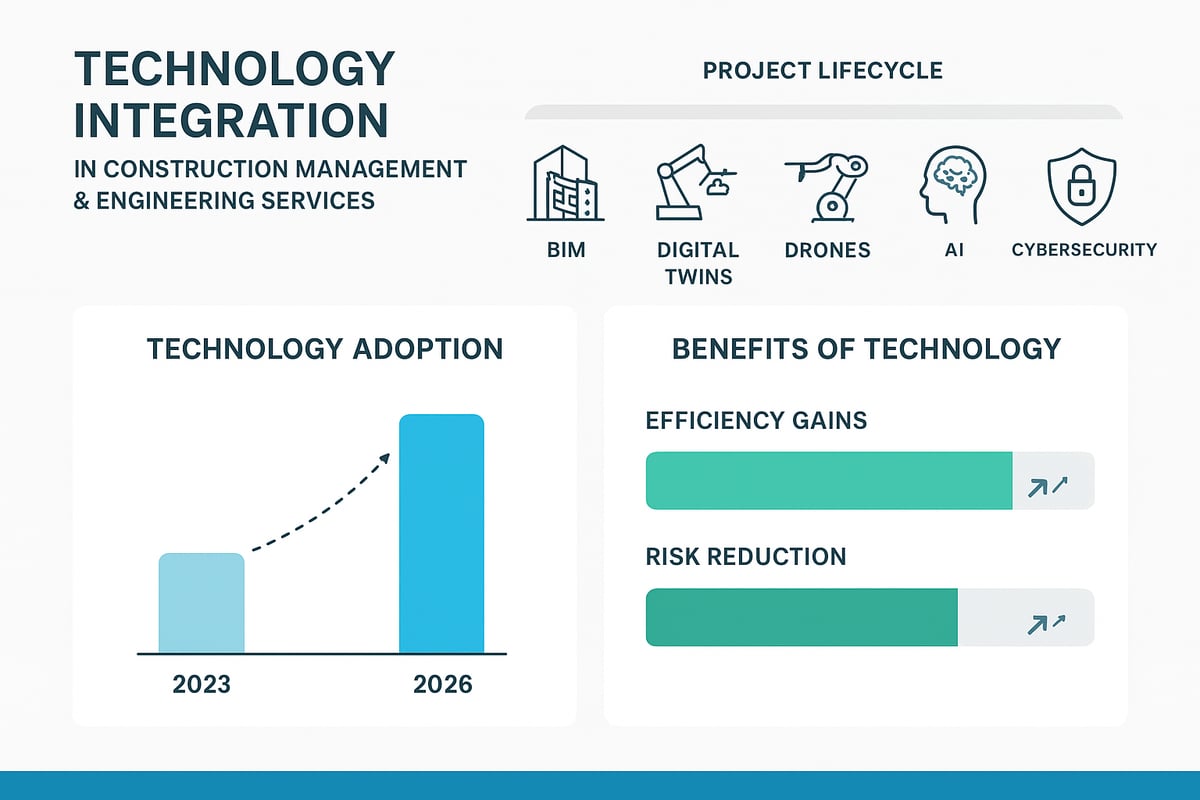
Modern construction management and engineering services are being transformed by a wave of innovative technologies. These tools are reshaping project delivery, collaboration, and decision-making. Staying ahead means understanding and leveraging the right solutions.
Building Information Modeling (BIM) and Digital Twins
BIM and digital twins are revolutionizing construction management and engineering services. BIM provides a detailed digital representation of a project, enabling enhanced visualization and coordination.
Digital twins take this further by mirroring the physical asset in real time. This enables data-driven decisions throughout the project lifecycle. Teams can identify issues early, optimize designs, and improve facility management.
- Improved clash detection
- Streamlined collaboration
- Lifecycle asset management
BIM and digital twins have become essential for complex builds and long-term asset performance.
Automation and Robotics
Automation is rapidly changing the landscape of construction management and engineering services. Drones conduct site surveys and monitor progress, delivering real-time data with minimal manpower.
Robotics handle repetitive or hazardous tasks, such as bricklaying or concrete pouring. This boosts productivity and safety, helping address labor shortages.
- Drones for aerial mapping
- Robotic arms for precision tasks
- Automated equipment for efficiency
Automation reduces errors and enhances quality control on every project.
Artificial Intelligence and Machine Learning
AI and machine learning are now integral to construction management and engineering services. Predictive analytics help manage risks, optimize schedules, and allocate resources more effectively.
AI-powered platforms streamline project management and automate documentation. As noted in the 2026 Real Estate and Construction Industry Forecast, AI is expected to drive further automation in back-office operations and on the jobsite.
- Forecasting project delays
- Optimizing workflows
- Enhancing decision-making
AI is unlocking new levels of efficiency and foresight for the industry.
Internet of Things (IoT) and Smart Sensors
IoT devices and smart sensors are enhancing construction management and engineering services by providing real-time monitoring of equipment, materials, and environmental conditions.
For example, IoT-enabled concrete curing ensures quality and reduces waste. Sensors track structural health, temperature, and humidity, allowing for rapid adjustments.
- Equipment tracking
- Environmental monitoring
- Predictive maintenance
IoT integration leads to safer, more responsive project environments.
Cloud Collaboration and Mobile Solutions
Cloud platforms and mobile apps are now standard in construction management and engineering services. These tools centralize project documents and enable real-time communication between stakeholders.
Mobile solutions empower field teams with instant access to plans and updates. This supports transparency and reduces delays.
- Document sharing and storage
- On-site reporting
- Instant messaging
Cloud collaboration accelerates project workflows and enhances stakeholder engagement.
Cybersecurity in Construction
With the rise of digital tools in construction management and engineering services, cybersecurity has become a critical concern. Protecting sensitive project data and intellectual property is essential for business continuity.
Best practices include robust access controls, regular security training, and encrypted communications. Organizations must also stay vigilant against evolving threats.
- Data encryption
- Secure file sharing
- Employee awareness programs
Prioritizing cybersecurity helps safeguard both projects and reputations.
Regulatory, Environmental, and Safety Considerations
Navigating regulatory, environmental, and safety factors is essential for effective construction management and engineering services. As the industry evolves, professionals must stay alert to changing codes, sustainability mandates, and safety expectations. Let’s break down the most critical considerations for 2026.
Regulatory Compliance and Permitting
Adhering to building codes and regulatory standards is foundational in construction management and engineering services. In 2026, jurisdictions will continue updating codes to reflect emerging technologies and sustainability goals.
Securing timely permits demands thorough documentation and proactive coordination with local authorities. Teams should track code revisions and leverage digital tools for compliance management. Streamlined permitting processes reduce project delays and support risk mitigation. Ultimately, staying compliant protects both reputation and project viability.
Environmental Sustainability
Sustainable construction is no longer optional in construction management and engineering services. Projects increasingly target certifications like LEED and BREEAM, using eco-friendly materials and energy-efficient systems.
Environmental impact assessments are now standard, helping teams minimize ecological disruption and reduce carbon footprints. For tailored solutions, many firms consult experts in Environmental Engineering Solutions to meet stringent environmental requirements. Integrating these practices sets the stage for long-term project value.
Health and Safety Management
Robust safety systems are non-negotiable in construction management and engineering services. Implementing a Safety Management System (SMS) ensures hazards are identified and mitigated before incidents occur.
Wearable technology is gaining traction for real-time monitoring of worker health and site conditions. Consistent safety training and transparent reporting foster a culture where everyone is accountable. Prioritizing health and safety not only protects lives but also enhances productivity and morale.
Risk Management and Insurance
Risk management is a cornerstone of resilient construction management and engineering services. Identifying potential risks, from site hazards to financial exposures, is the first step.
Comprehensive insurance coverage, including builder’s risk and liability policies, shields stakeholders from unforeseen events. Clear protocols for claims management and incident reporting are essential. Regular risk reviews and documentation keep the project on track and reduce costly surprises.
Example: Adapting to Alberta’s Regulatory Environment
Construction management and engineering services in Alberta require a nuanced understanding of local regulations. Recent updates to the province’s construction codes have influenced both permitting timelines and environmental compliance.
Teams must remain agile, tracking regional changes and adjusting project plans accordingly. Familiarity with Alberta’s unique environmental standards and permitting processes is key to avoiding project delays. Adapting quickly helps ensure successful outcomes in a dynamic regulatory landscape.
Best Practices and Future-Proof Strategies for Success
To thrive in the evolving world of construction management and engineering services, organizations must adopt a future-focused mindset. Implementing best practices and forward-looking strategies ensures resilience, efficiency, and consistent project success.
Lean Construction and Continuous Improvement
Lean principles drive efficiency and waste reduction in construction management and engineering services. By focusing on value, streamlining workflows, and empowering teams, organizations can significantly improve project outcomes. Techniques such as pull planning, just-in-time delivery, and continuous feedback loops support ongoing improvement.
A compelling example is the adoption of Lean 5.0, which integrates human expertise with AI for predictive project management. According to Lean 5.0 in Construction Management, this approach has led to measurable gains in productivity and adaptability. Embracing lean practices positions teams to respond swiftly to industry changes.
Collaborative Contracting and Integrated Project Delivery (IPD)
Collaboration is fundamental in construction management and engineering services. IPD brings together owners, designers, contractors, and consultants from the project's inception, fostering shared accountability and innovation. Early stakeholder engagement promotes risk-sharing and accelerates problem-solving.
Notable IPD projects have demonstrated reduced costs and faster delivery, thanks to transparent communication and collective goal setting. By breaking down silos, organizations can harness the full expertise of every participant, leading to superior project results and stronger partnerships.
Workforce Development and Training
The future of construction management and engineering services depends on a skilled, adaptable workforce. Upskilling and reskilling initiatives prepare teams to leverage emerging technologies, such as BIM and automation. Regular training programs reinforce a culture of safety and quality.
Organizations can partner with academic institutions and industry training providers to offer certifications in digital tools and sustainable practices. Investing in people not only addresses skills gaps but also boosts retention and morale, driving long-term organizational growth.
Embracing Change and Innovation
Innovation is a cornerstone of successful construction management and engineering services. Fostering a culture that encourages experimentation and pilot projects enables organizations to test new technologies and processes incrementally. Leadership should champion change, set clear innovation goals, and reward creative problem-solving.
Strategies include establishing innovation labs, engaging in technology trials, and participating in industry think tanks. Organizations that continually adapt are better equipped to navigate market shifts and regulatory changes, maintaining a competitive edge.
Measuring Success and Continuous Feedback
Effective measurement is essential for optimizing construction management and engineering services. Key performance indicators (KPIs) such as schedule adherence, cost control, safety incidents, and client satisfaction provide actionable insights. Regular feedback loops—through post-project reviews and stakeholder surveys—drive continuous improvement.
A structured approach to performance tracking helps organizations identify areas for refinement and celebrate successes. Integrating digital dashboards and real-time analytics streamlines the evaluation process, turning data into strategic decisions that enhance future projects.
Industry Partnerships and Networking
Collaboration with industry associations, research consortiums, and peer networks is vital for staying at the forefront of construction management and engineering services. These partnerships facilitate knowledge sharing, access to emerging technologies, and advocacy for industry standards.
Participation in construction technology consortiums enables organizations to pilot new solutions and influence best practices. Networking at conferences and industry forums also fosters business development and cross-disciplinary collaboration, strengthening the sector as a whole.
As you’ve seen throughout this guide, navigating the future of construction management and engineering services means staying ahead of industry trends, embracing innovation, and ensuring every project meets the highest standards of quality and safety. Whether you’re planning a new build or looking to optimize your operations, having the right partner can make all the difference. If you’re ready to take the next step or have questions about how these strategies can work for your project, let’s connect.
Contact Us: info@zalig.ca or +1 800 515 0497
We’re here to help you build with confidence.