
The world of construction and engineering services is evolving at an unprecedented pace as we approach 2026. With global construction output projected to reach 14.8 trillion dollars, the sector is more vital than ever in shaping sustainable, smart, and resilient infrastructure for future generations.
This essential guide delivers a comprehensive overview for industry professionals, developers, and decision-makers seeking to navigate this transformative landscape. Inside, you will find the latest industry trends, core service categories, cutting-edge technologies, regulatory frameworks, innovative project delivery methods, and a forward-looking outlook.
By exploring emerging innovations and understanding the benefits of staying ahead, you can position your organization for long-term success. Ready to lead in construction and engineering services? Dive into actionable insights and practical guidance designed to help you thrive in 2026 and beyond.
The Evolving Landscape of Construction and Engineering Services
The landscape of construction and engineering services is undergoing rapid transformation as 2026 approaches. Industry professionals are witnessing a shift toward smarter, more resilient infrastructure shaped by technology and sustainability. Understanding these changes is essential for anyone involved in the sector.
Key Industry Trends Shaping 2026
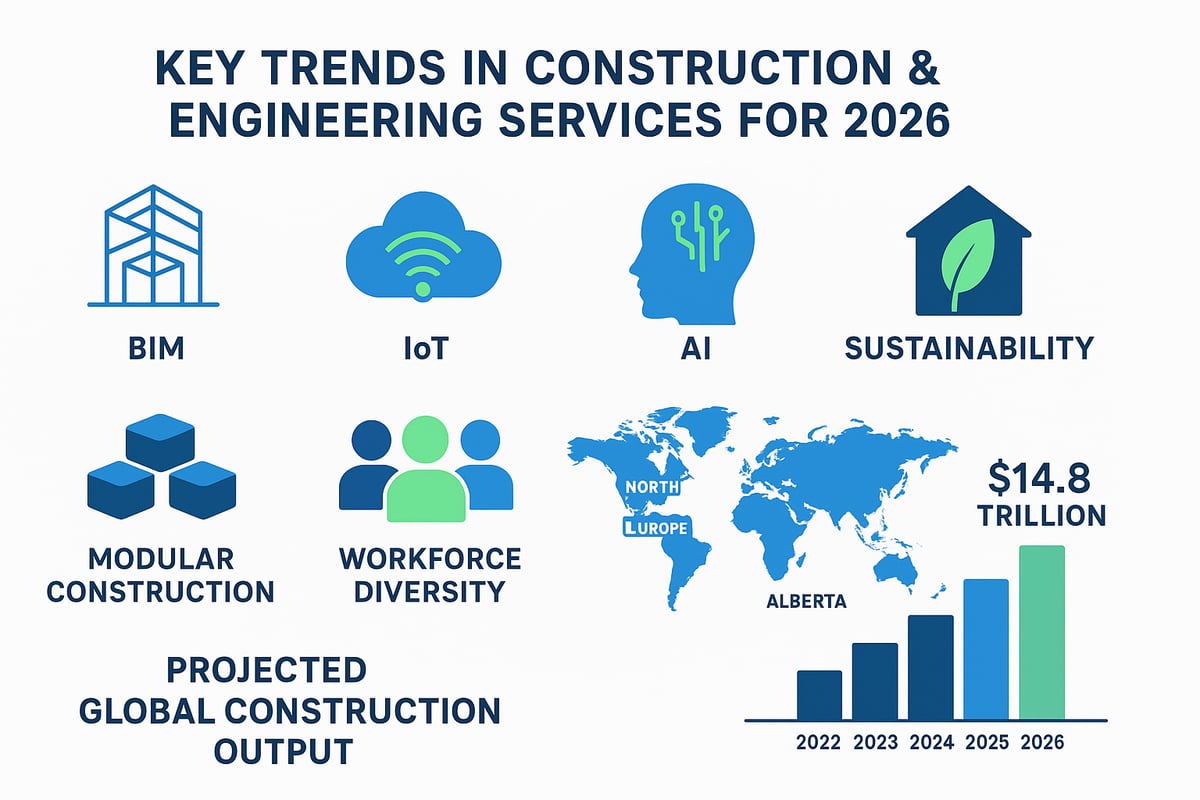
Digital transformation is redefining construction and engineering services. Technologies like BIM, IoT, and artificial intelligence are now integrated into daily workflows. Sustainability targets are driving the adoption of green certifications and net-zero strategies.
Modular and offsite construction are gaining momentum, while the need for resilient, adaptive infrastructure continues to grow. Data-driven project management ensures greater efficiency and risk mitigation. A leading example is the use of digital twins in major urban projects.
According to Oxford Economics, global construction output is set to reach $14.8 trillion by 2026. For a comprehensive look at upcoming trends and technology shaping the industry, see the Construction Industry Outlook 2026. Construction and engineering services are evolving rapidly, demanding new strategies and expertise.
Major Service Categories and Market Segments
Construction and engineering services span diverse categories. Key fields include geotechnical, civil, structural, environmental, and MEP engineering. Firms also offer construction management, consulting, and robust material testing and quality assurance services.
Specialized sectors such as transportation, hydrotechnical, energy, and urban planning are expanding. The rise of smart city projects illustrates the increasing demand for multidisciplinary expertise. Construction and engineering services now require teams skilled in multiple disciplines to address complex project needs.
Clients expect integrated solutions that combine technical excellence with regulatory compliance and innovation. The sector is no longer defined by traditional boundaries but by its adaptability to new market demands.
Drivers of Change: Client Demands and Societal Needs
Evolving client expectations are a major force in construction and engineering services. There is a heightened focus on lifecycle cost, safety, and minimizing environmental impact. Urbanization and aging infrastructure have increased pressure on public and private sectors to invest in upgrades.
Regulatory frameworks and community engagement are shaping project delivery. Public-private partnerships are now popular for large-scale infrastructure renewal, blending public oversight with private sector efficiency. Construction and engineering services must balance compliance with the need for innovation.
Stakeholders are pushing for solutions that offer long-term value and resilience. This shift is transforming how firms approach planning, design, and execution.
Workforce and Skills Evolution
The workforce behind construction and engineering services is changing fast. Demand for multidisciplinary teams is rising, with professionals needing expertise across engineering and digital technologies. Engineering education now integrates digital tools, preparing graduates for future challenges.
Diversity and inclusion are increasingly important in project teams. According to the World Economic Forum, 40 percent of construction roles will require advanced digital skills by 2026. Construction and engineering services providers are investing in upskilling and training to remain competitive.
These changes ensure teams can deliver innovative solutions while meeting regulatory and client expectations. The sector’s future depends on its ability to attract and retain top talent.
Challenges and Opportunities
Firms delivering construction and engineering services face significant challenges. Supply chain disruptions continue to impact material availability and project timelines. Rising costs for materials and labor require smart management and creative solutions.
Balancing the adoption of new technology with regulatory compliance is a delicate task. However, opportunities abound in retrofitting and adaptive reuse markets. As cities look to modernize aging assets, retrofitting offers cost-effective, sustainable alternatives to new builds.
Construction and engineering services must remain agile to adapt to these market realities, turning challenges into avenues for growth and differentiation.
Regional and Global Perspectives
The approach to construction and engineering services varies across regions. North America, Europe, and Asia-Pacific each have unique market drivers and regulatory landscapes. Alberta, for example, faces specific environmental and regulatory challenges that influence project delivery.
Infrastructure stimulus programs are fueling increased demand for services, particularly in regions investing in modernization. Construction and engineering services in Alberta must navigate complex regulations and environmental considerations.
Understanding regional nuances is critical for firms seeking to expand or refine their operations. Global trends influence local markets, but tailored strategies ensure success in diverse environments.
Core Construction and Engineering Services Explained
Understanding the range and depth of construction and engineering services is crucial for modern infrastructure success. Professionals rely on specialized expertise to tackle complex projects, ensure compliance, and deliver lasting value. Let’s explore the essential service categories shaping the industry in 2026.
Geotechnical and Environmental Engineering
Geotechnical and environmental engineering form the foundation of construction and engineering services, ensuring projects begin with a thorough understanding of site conditions. Site investigations, soil analysis, and risk mitigation are essential steps before any major development. Environmental assessments and remediation strategies help manage potential impacts and secure regulatory approvals.
For example, brownfield redevelopment projects demand both technical and environmental expertise. Notably, 60% of major projects now require environmental impact studies, reflecting the industry's commitment to sustainability.
For a detailed breakdown of these core services, see the Geotechnical Engineering Services Overview.
Structural and Civil Engineering Services
Structural and civil engineering services are central to the safe and efficient design of buildings, bridges, and vital infrastructure. These disciplines address challenges such as seismic, wind, and climate resilience, ensuring that structures can withstand both natural and human-made stresses.
Projects like high-rise construction in seismic zones highlight the need for advanced analytical methods and innovative materials. By integrating the latest tools, construction and engineering services deliver robust solutions that meet evolving safety standards and community needs.
Construction Material Testing and Quality Assurance
Construction material testing and quality assurance are pivotal components of construction and engineering services. Laboratory and field testing of concrete, asphalt, steel, and soils verify that materials meet strict codes and performance criteria.
For example, failure analysis and prevention strategies in public works projects minimize costly delays and enhance safety. This rigorous approach ensures compliance with both national and local regulations, giving stakeholders confidence in the integrity of their investments.
Project Management and Consulting
Project management and consulting services bring cohesion and efficiency to construction and engineering services. Risk management, scheduling, and cost control are key functions that keep projects on track, even when faced with uncertainties.
Lean construction practices and value engineering further optimize resources, reducing waste and improving outcomes. Integrated project delivery (IPD) models exemplify how collaboration among all stakeholders can streamline decision-making and boost overall project success.
Specialized Engineering: Hydrotechnical, Transportation, and Urban Planning
Specialized engineering within construction and engineering services covers a diverse range of needs. Hydrotechnical experts design water management and flood control systems to protect communities and infrastructure.
Transportation engineers plan and analyze roads, bridges, and transit networks, while urban planners shape smart, livable cities for the future. Green infrastructure in urban redevelopment projects demonstrates the sector’s ability to blend innovation with environmental stewardship.
ZALIG Consulting Ltd: Leading Geotechnical, Environmental, and Material Testing Services in Alberta
ZALIG Consulting Ltd stands out in Alberta’s construction and engineering services sector, offering comprehensive geotechnical, environmental, and material testing solutions. With offices strategically located in Edmonton, Fort Saskatchewan, and Slave Lake, they deliver tailored support for public, industrial, and private sector projects.
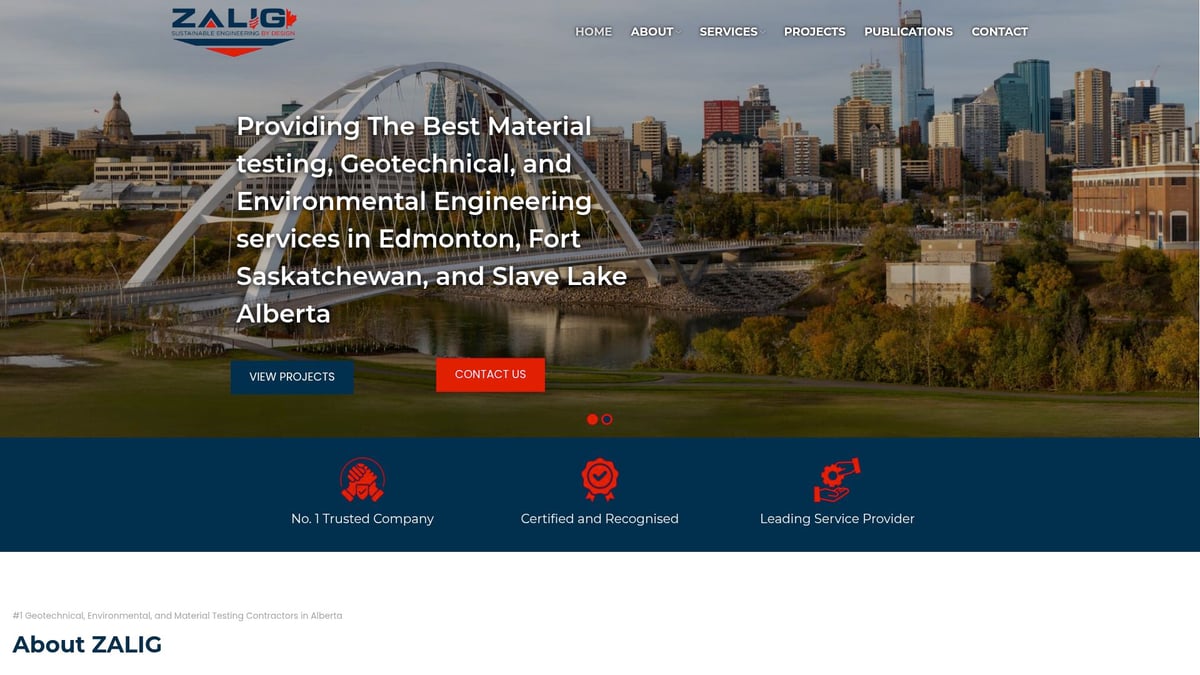
Clients benefit from ZALIG’s integrated, multidisciplinary approach, which ensures quality, safety, and regulatory compliance at every stage. Their commitment to innovative, cost-effective solutions makes them Alberta’s trusted partner for construction and engineering services, regardless of project size or complexity.
Emerging Technologies Transforming the Industry
As we move toward 2026, emerging technologies are fundamentally reshaping construction and engineering services. Digitalization, automation, and sustainable solutions are setting new industry standards. Staying ahead of these changes is essential for firms seeking to remain competitive and deliver value in a rapidly evolving landscape.
Building Information Modeling (BIM) and Digital Twins
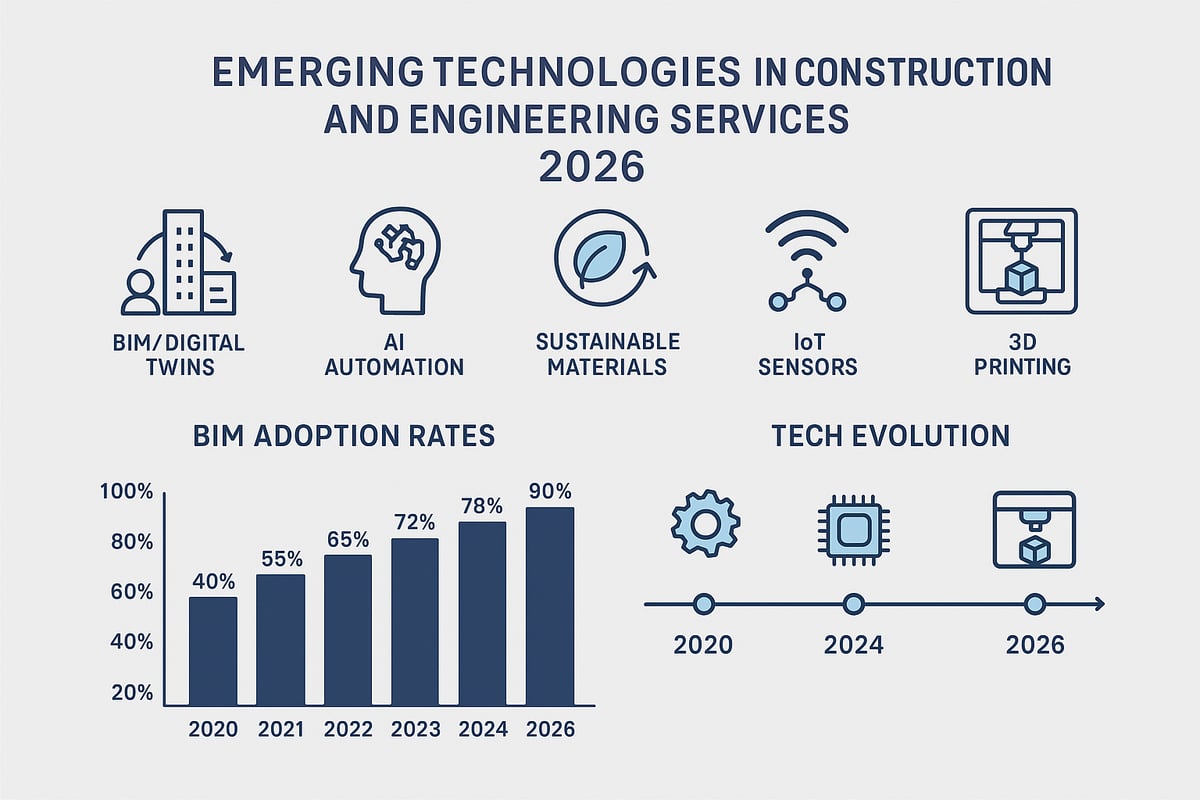
Building Information Modeling (BIM) has become central to construction and engineering services, enabling collaborative design, improved accuracy, and real-time data sharing. Digital twins take this further by creating dynamic, virtual replicas of physical assets. These models support lifecycle management, predictive maintenance, and enhanced decision-making.
For example, major infrastructure projects now rely on BIM to coordinate complex teams and streamline workflows. Adoption of BIM is accelerating, with expectations that it will reach 89% in leading markets by 2026. This widespread use is transforming how construction and engineering services deliver safer, more efficient, and sustainable outcomes.
Artificial Intelligence and Automation
Artificial intelligence is revolutionizing construction and engineering services by optimizing project management, scheduling, and risk analysis. AI-powered tools analyze vast datasets to predict delays, allocate resources, and mitigate risks. Automation, including robotics and drones, boosts productivity and improves on-site safety.
For instance, automated site inspections using drones and AI-driven software enhance quality and reduce human error. According to AI-Powered Tools and Predictive Analytics, integrating AI throughout project lifecycles leads to measurable efficiency gains. These innovations are making construction and engineering services smarter and more responsive to evolving client needs.
Sustainable Construction Technologies
Sustainability is at the forefront of construction and engineering services as the industry pursues net-zero targets. Emerging technologies include low-carbon materials, energy-efficient systems, and circular economy approaches. Prefabrication and modular construction also help reduce waste and streamline project delivery.
A notable example is the rise of net-zero energy buildings utilizing advanced insulation, renewable energy sources, and smart building systems. These solutions not only lower environmental impact but also improve operational efficiency. Construction and engineering services that embrace sustainable technologies are well-positioned to meet regulatory demands and market expectations.
Internet of Things (IoT) and Smart Sensors
The Internet of Things (IoT) is transforming construction and engineering services with real-time site monitoring, asset tracking, and predictive maintenance. Smart sensors embedded in infrastructure provide continuous data on performance, safety, and environmental conditions.
For example, large-scale projects now deploy IoT solutions to monitor structural health and detect issues before they escalate. Predictive maintenance systems reduce downtime and extend asset life. By leveraging IoT, construction and engineering services can deliver safer, more reliable, and cost-effective projects.
3D Printing and Advanced Manufacturing
3D printing is unlocking new possibilities for construction and engineering services. On-site 3D printing of building components accelerates project timelines and enables greater customization. Advanced manufacturing techniques further enhance speed and precision.
Recent innovations include 3D-printed bridges and affordable housing prototypes, demonstrating the technology’s potential for scalability and cost savings. The adoption of 3D printing allows construction and engineering services to respond to complex design requirements and market shifts with agility.
Regulatory and Compliance Considerations in 2026
Navigating regulatory and compliance demands is a defining challenge for construction and engineering services as we move into 2026. The sector faces a rapidly shifting landscape, where codes, standards, and expectations are more stringent and complex than ever. Proactive adaptation is not just recommended, it is essential for project success and long-term business resilience.
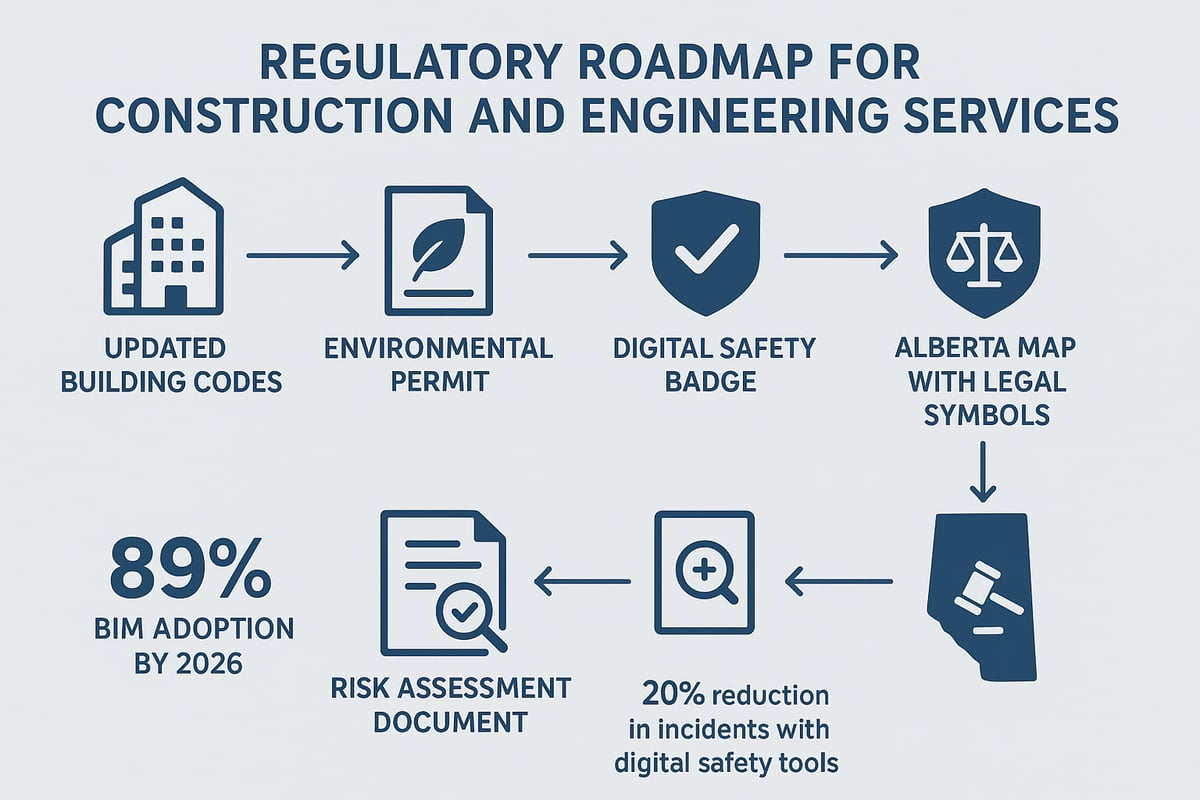
Evolving Building Codes and Standards
The evolution of building codes is reshaping construction and engineering services globally. In 2026, authorities are updating national and regional standards to prioritize safety, climate resilience, and sustainability. Performance-based codes are now widely adopted, encouraging innovative solutions while maintaining rigorous safety benchmarks.
For example, Western Canada has introduced new seismic standards to address earthquake risks in urban development. These changes require teams to remain current on code updates and integrate them into every stage of project planning and delivery. Staying compliant means not only meeting legal requirements but also creating safer, more sustainable built environments.
Environmental Regulations and Permitting
Environmental compliance is a cornerstone of construction and engineering services. Stricter requirements for environmental impact assessments, carbon reduction, and green certifications are now the norm. Permitting processes are more comprehensive, covering everything from emissions to water use and habitat protection.
Organizations must demonstrate leadership in sustainability to secure approvals and community trust. For those seeking specialized support, Environmental Engineering Expertise provides guidance on assessments, remediation, and regulatory strategy. As 60% of major projects now require detailed environmental studies, proactive management of these regulations is critical to project viability and reputation.
Occupational Health and Safety Compliance
Health and safety protocols have evolved significantly in construction and engineering services, especially after recent global events. Enhanced digital safety monitoring, real-time reporting, and rigorous on-site standards are now integral to operations.
Adoption of digital safety tools has resulted in a 20% reduction in onsite incidents. Compliance goes beyond legal minimums, fostering a culture of safety and accountability. Construction and engineering services providers that invest in advanced training and technology are better positioned to protect workers and minimize risks.
Risk Management and Liability
Managing risk is at the core of modern construction and engineering services. Professional liability, insurance, and contract management are increasingly complex due to new project delivery models and regulatory demands. Design-build and public-private partnership projects require clear allocation of risks and robust documentation.
Dispute resolution remains a critical focus, especially in large infrastructure contracts. By implementing comprehensive risk management frameworks, organizations can safeguard financial stability and maintain client confidence throughout the project lifecycle.
Regional Nuances: Focus on Alberta and Western Canada
Construction and engineering services in Alberta and Western Canada face unique regulatory challenges. The region’s energy sector, environmental sensitivities, and Indigenous engagement requirements all shape project planning and execution. For instance, compliance with Alberta’s Environmental Protection and Enhancement Act (EPEA) is mandatory for many infrastructure projects.
Infrastructure stimulus programs have further increased demand for compliance expertise. Understanding these regional nuances is vital for success, as it enables teams to anticipate requirements and build stronger, more resilient projects tailored to local needs.
Project Delivery Methods and Best Practices for 2026
Selecting the right project delivery method is essential for optimizing outcomes in construction and engineering services. As the industry evolves, professionals must adapt to new models, digital tools, and best practices to ensure projects are delivered efficiently, cost-effectively, and with high quality.
Traditional vs. Modern Delivery Models
Project delivery models in construction and engineering services have diversified to meet the demands of complex projects. Traditional approaches like design-bid-build offer clear separation between design and construction, while design-build integrates both under one contract, enhancing collaboration.
Modern models such as Integrated Project Delivery (IPD) and Public-Private Partnerships (PPP) have gained traction. IPD brings together owners, designers, and builders from the outset, fostering teamwork and shared risk. PPPs blend public oversight with private sector efficiency, often used in large infrastructure development.
A comparison table:
| Model | Collaboration | Speed | Cost Control | Risk Allocation |
|---|---|---|---|---|
| Design-Bid-Build | Low | Slow | Moderate | Owner |
| Design-Build | Medium | Fast | High | Shared |
| IPD | High | Fast | High | Shared |
| PPP | High | Fast | High | Shared |
Choosing the right model ensures that construction and engineering services align with project goals and stakeholder expectations.
Lean Construction and Value Engineering
Lean construction focuses on maximizing value and reducing waste in construction and engineering services. Teams apply continuous improvement, just-in-time delivery, and collaborative planning to streamline workflows.
Key principles of lean construction:
- Identify value from the client’s perspective.
- Map and optimize the value stream.
- Eliminate waste in processes and materials.
- Foster continuous improvement.
Value engineering is another best practice, systematically analyzing project functions to achieve the best balance between cost, performance, and quality. For example, lean principles applied in hospital construction have resulted in faster project delivery and reduced costs.
By integrating lean and value engineering, professionals in construction and engineering services can drive efficiency and deliver superior results.
Digital Project Management Tools
Digital tools are transforming project management in construction and engineering services. Cloud-based platforms enable real-time collaboration, document sharing, and progress tracking across multiple sites.
Solutions like Procore and BIM-enhanced dashboards support scheduling, budgeting, and communication. The widespread adoption of Building Information Modeling (BIM) Adoption helps teams visualize projects, coordinate trades, and minimize rework.
Digital tools empower teams to make informed decisions, monitor key metrics, and adapt quickly to any changes. As digital adoption accelerates, construction and engineering services are becoming more transparent and responsive.
Stakeholder Engagement and Communication
Effective stakeholder engagement is vital for successful construction and engineering services projects. Early involvement of all parties—owners, designers, contractors, and the community—builds trust and aligns expectations.
Transparent communication strategies include regular updates, public consultations, and digital feedback channels. For example, community engagement in urban redevelopment ensures that projects meet local needs and gain public support.
By prioritizing open dialogue, project teams can identify potential issues early, address concerns, and foster a collaborative environment throughout the project lifecycle.
Quality Assurance and Continuous Improvement
Quality assurance (QA) is a cornerstone of reliable construction and engineering services. Establishing robust QA/QC processes helps prevent defects, reduce rework, and ensure compliance with standards.
Best practices include:
- Conducting regular inspections and testing.
- Implementing standardized checklists and documentation.
- Reviewing project outcomes to identify lessons learned.
Leveraging specialized Construction Material Testing Solutions supports comprehensive QA for materials like concrete, asphalt, and soils. Post-project reviews further drive continuous improvement, resulting in a 15% average reduction in rework industry-wide.
Continuous improvement ensures that construction and engineering services providers maintain excellence, adapt to new challenges, and consistently deliver value to clients.
Future Outlook: Construction and Engineering Services Beyond 2026
As we look beyond 2026, the future of construction and engineering services is marked by rapid transformation and opportunity. The sector is poised to harness digital advances, sustainable practices, and global collaboration. Professionals who anticipate these shifts will be best equipped to thrive in the evolving landscape.
Anticipated Industry Shifts and Innovations
The next era of construction and engineering services will be defined by disruptive technologies and innovative delivery models. Artificial intelligence, generative design, and robotics will automate complex tasks, reducing errors and accelerating project timelines. Autonomous equipment and smart materials will reshape the way infrastructure is built and maintained.
Sustainability will move from a goal to a baseline expectation. Predictive analytics will optimize maintenance schedules, reducing lifecycle costs and improving asset reliability. The convergence of digital and physical systems will drive new standards for resilience and flexibility, ensuring construction and engineering services deliver long-term value.
The Role of Data and Analytics
Data will become the backbone of construction and engineering services, driving smarter decision-making at every stage. Big data and advanced analytics will enable predictive maintenance, resource optimization, and risk management on a scale never seen before.
Digital twins and cloud-based platforms will allow for real-time collaboration and continuous improvement. Open knowledge-sharing initiatives, such as Open Science in AEC Community, will foster innovation by enabling industry-wide access to digital resources and best practices. Embracing data-driven strategies will be essential for organizations aiming to lead in construction and engineering services.
Workforce of the Future
The future workforce in construction and engineering services will be diverse, multidisciplinary, and highly skilled in digital tools. Upskilling will be crucial as roles evolve to require expertise in automation, data analytics, and cross-functional collaboration.
Attracting next-generation talent will depend on offering meaningful work, flexible environments, and clear pathways for growth. By 2030, an increasing percentage of engineering graduates will specialize in digital construction, positioning the industry to meet new challenges. Investing in workforce development ensures construction and engineering services remain competitive and innovative.
Sustainability and Social Responsibility
Sustainability and social responsibility will be at the heart of construction and engineering services. Circular economy principles, such as material reuse and regenerative design, will guide project planning and execution.
Firms will prioritize carbon-neutral infrastructure and community-focused outcomes. Social value will become a key performance metric, with projects measured not just on cost and schedule, but also on their positive impact. Construction and engineering services will play a pivotal role in creating equitable, resilient communities for future generations.
Globalization and Market Expansion
Construction and engineering services will increasingly operate on a global stage. Firms will collaborate across borders, exporting expertise and leveraging international partnerships to deliver complex megaprojects.
Emerging markets will offer significant growth opportunities, particularly in regions investing heavily in smart cities and sustainable infrastructure. Canadian firms, for example, are already leading international projects, setting new benchmarks for quality and innovation. Globalization will drive knowledge exchange and raise industry standards worldwide.
Preparing for Uncertainty and Disruption
The future will bring both uncertainty and opportunity for construction and engineering services. Scenario planning and robust risk mitigation strategies will help organizations navigate changing market conditions, regulatory shifts, and technological disruptions.
Agility and resilience will be crucial. Lessons learned from recent global events, such as the pandemic, highlight the need for flexible business models and strong contingency plans. By embracing change, the industry can turn disruption into a catalyst for growth and long-term success.
Article written using RankPill.