

Discover how a civil material testing laboratory plays a pivotal role in shaping construction quality and regulatory compliance for 2026. As the industry evolves, this guide offers a clear roadmap for professionals, lab managers, and stakeholders aiming to stay ahead of standards and expectations.
Explore how these laboratories ensure safety, reliability, and sustainability in every project. Inside, you will find essential insights on equipment, workflow best practices, quality standards, and future innovations. Ready to optimize your lab operations and achieve up-to-date compliance? Let’s begin your journey toward laboratory excellence.
The Role and Importance of Civil Material Testing Laboratories
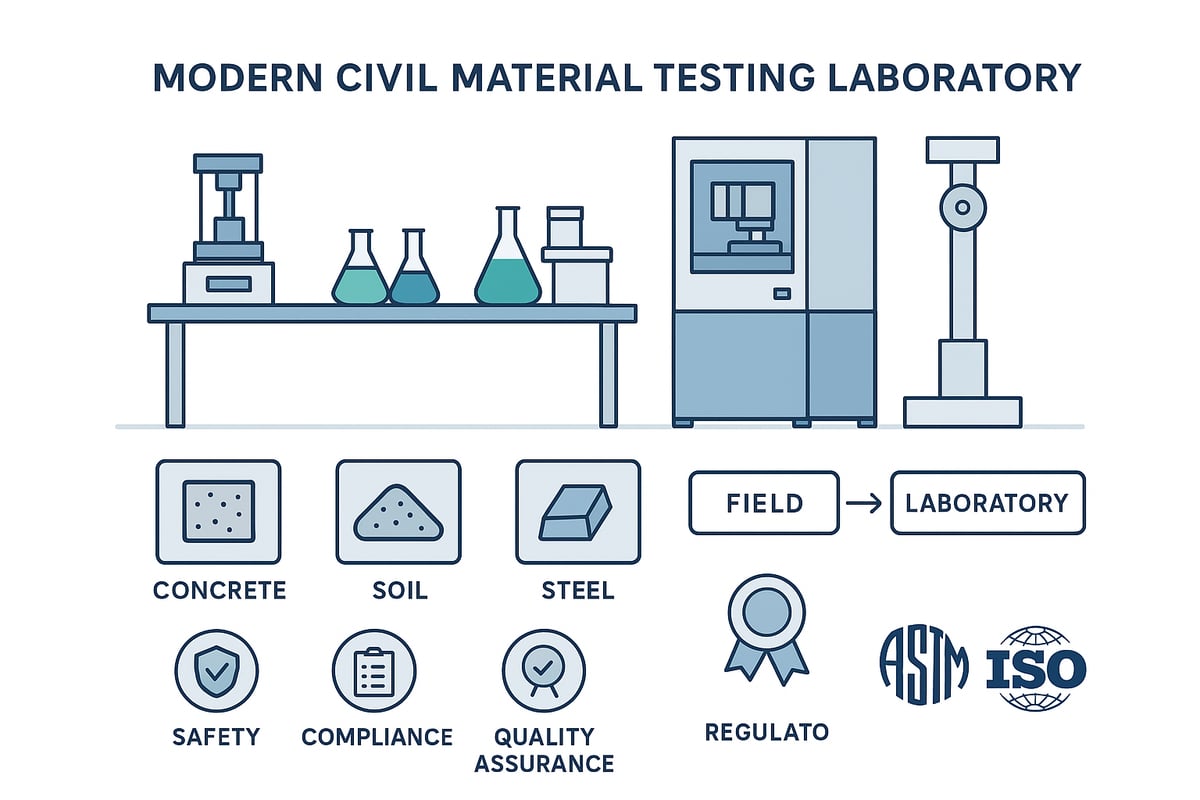
Civil material testing laboratories are specialized facilities dedicated to analyzing the physical and chemical properties of materials used in construction and infrastructure. These labs evaluate concrete, asphalt, soil, aggregates, steel, and other essential building components. The distinction between field testing, which occurs on-site, and laboratory testing, which is performed in controlled environments, is crucial for accurate results. A civil material testing laboratory ensures safety, compliance, and quality assurance for every project. Typical lab settings range from compact urban facilities to large-scale operations supporting major infrastructure. Regulatory agencies require testing to meet strict standards, making these labs indispensable for modern construction.
Defining Civil Material Testing Laboratories
A civil material testing laboratory serves as the backbone of construction quality control. It specializes in evaluating materials such as concrete, asphalt, soil, aggregates, and steel to ensure they meet specified criteria. Field testing provides immediate results at construction sites, while laboratory testing offers detailed analysis using advanced equipment in controlled environments.
Typical civil engineering labs feature designated zones for sample preparation, mechanical testing, and chemical analysis. Their core functions include ensuring structural safety, regulatory compliance, and consistent material quality. The role of a civil material testing laboratory is especially important in infrastructure projects where public safety and long-term durability are non-negotiable. Regulatory requirements from organizations like ASTM, CSA, and ISO set the standards these labs must follow.
Why Material Testing Matters in 2026
The importance of a civil material testing laboratory is set to grow in 2026, driven by new construction technologies and higher safety expectations. Accurate testing directly impacts structural integrity, preventing failures that could lead to costly repairs or even catastrophic incidents. Recent studies have linked numerous construction failures to poor material quality and insufficient testing.
Sustainable construction practices also rely on robust testing to minimize environmental impact and support green building initiatives. For example, thorough material analysis has prevented major issues in bridge and highway projects, saving millions in potential losses. Insurance and liability providers increasingly require comprehensive documentation from a civil material testing laboratory, reflecting clients' demands for transparency and accountability.
Stakeholders and Applications
A civil material testing laboratory serves a broad range of stakeholders, including contractors, engineers, developers, and government agencies. Its services are vital for public infrastructure, commercial buildings, and residential developments. These labs support regulatory bodies by providing data for certification and permitting processes.
Applications extend to bridges, highways, schools, and high-rise buildings, where rigorous testing mitigates project risks. Testing requirements often vary by project type and region, but all rely on accurate data from a civil material testing laboratory. Collaboration with geotechnical, structural, and environmental engineers ensures a holistic approach to quality control and compliance.
Industry Statistics and Trends
The global demand for civil material testing laboratory services continues to rise, fueled by expanding construction markets and evolving regulatory standards. North America, particularly Canada, has seen notable growth in accredited labs and advanced testing solutions. Automation and digital technologies, such as AI-driven data analysis, are becoming standard in modern labs.
Regulatory updates now emphasize traceability and digital record-keeping, driving the adoption of Laboratory Information Management Systems (LIMS). According to the Material Testing Market Growth Forecast, the sector is projected to expand significantly through 2035. Accreditation rates are also increasing, reflecting the industry's commitment to quality and compliance.
Essential Equipment and Technologies for 2026
To stay competitive and compliant, every civil material testing laboratory must invest in modern equipment and innovative technologies. The right tools and systems drive accuracy, efficiency, and sustainability, setting the foundation for reliable results and industry leadership.
Core Laboratory Equipment
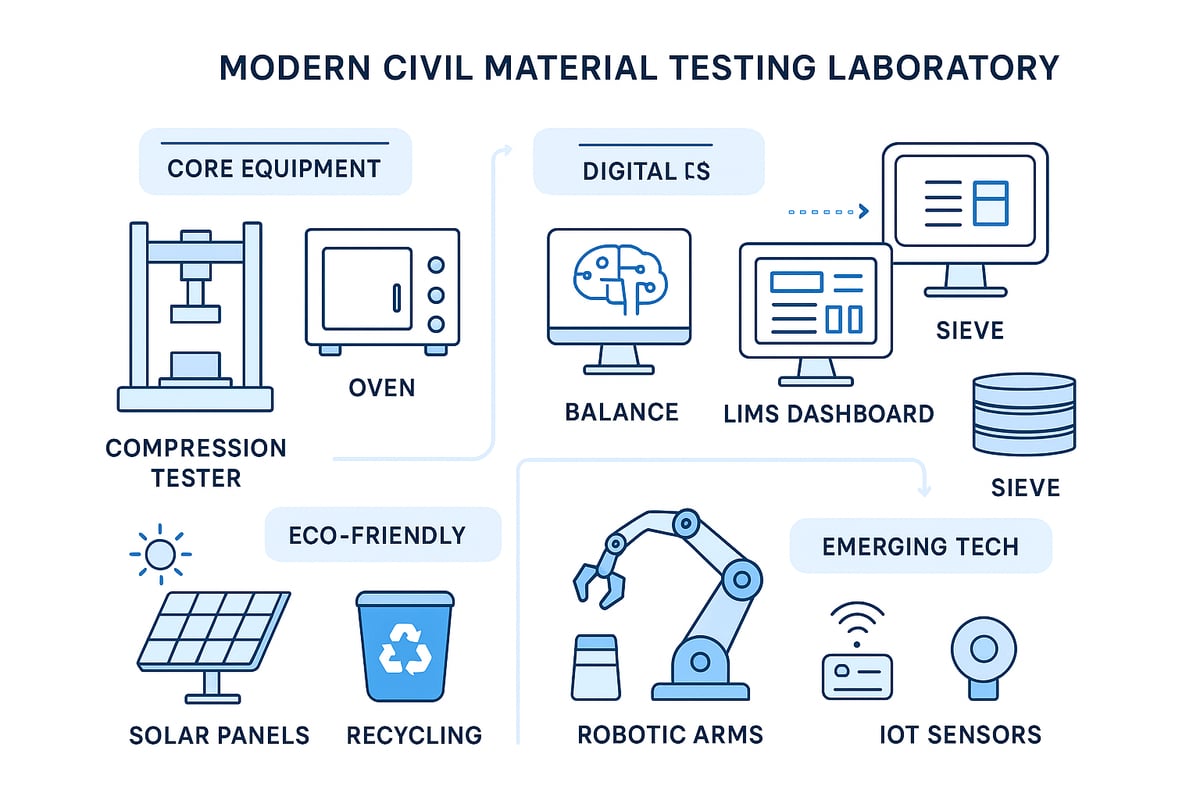
A civil material testing laboratory relies on a suite of essential equipment to perform accurate and standardized tests. Typical must-have items include:
- Compression testing machines for concrete and masonry strength
- Sieves and shakers for gradation analysis of soils and aggregates
- Ovens and furnaces for moisture and loss-on-ignition tests
- Precision balances for weighing samples
- Curing tanks and molds for concrete specimens
Each piece must meet relevant ASTM, CSA, or ISO specifications for accuracy and repeatability. Regular maintenance and calibration are vital to prevent drift in results. Advances in testing machines, such as digital load indicators and automated data logging, help streamline workflows and improve reliability. When budgeting for a civil material testing laboratory, consider both initial investment and ongoing maintenance costs to ensure long-term value.
Emerging Testing Technologies
In 2026, the civil material testing laboratory landscape is rapidly evolving with new testing technologies. Automated systems now handle sample preparation and testing, reducing manual labor and error. Digital data capture, combined with AI and machine learning, accelerates result analysis and flags anomalies in real time.
Non-destructive testing (NDT) methods, such as ultrasonic pulse velocity and ground-penetrating radar, are more widely adopted for their ability to assess materials without causing damage. Remote monitoring and IoT-enabled sensors provide instant feedback and allow lab managers to supervise multiple sites simultaneously. For more insights on automation, AI, and smart sensors transforming lab operations, see Emerging Technologies in Civil Engineering Labs. These advancements position the civil material testing laboratory for greater efficiency and accuracy.
Laboratory Information Management Systems (LIMS)
A modern civil material testing laboratory benefits greatly from implementing a Laboratory Information Management System. LIMS automates sample tracking, test scheduling, and result reporting, which minimizes paperwork and reduces turnaround times. Key features include:
- Digital chain of custody and sample management
- Automated compliance checks and alerts
- Integration with billing and project management software
- Secure data storage and backup
Case studies show that labs adopting LIMS experience faster reporting and improved client satisfaction. Data integrity is enhanced, and regulatory compliance becomes more manageable. For a civil material testing laboratory aiming for accreditation, LIMS is now considered essential for workflow optimization.
Sustainability and Green Lab Initiatives
Sustainability is a growing priority for every civil material testing laboratory. Labs are adopting eco-friendly equipment, such as energy-efficient ovens and LED lighting, to lower their carbon footprint. Waste reduction protocols, including recycling of sample containers and water reclamation systems, help minimize environmental impact.
Energy-efficient building designs, like natural ventilation and solar panels, further support green goals. Many labs seek compliance with green building standards such as LEED, demonstrating a commitment to responsible operations. Achieving sustainability certifications not only benefits the environment but also enhances the reputation of a civil material testing laboratory among clients and regulatory bodies.
Setting Up a Civil Material Testing Laboratory: Step-by-Step Roadmap
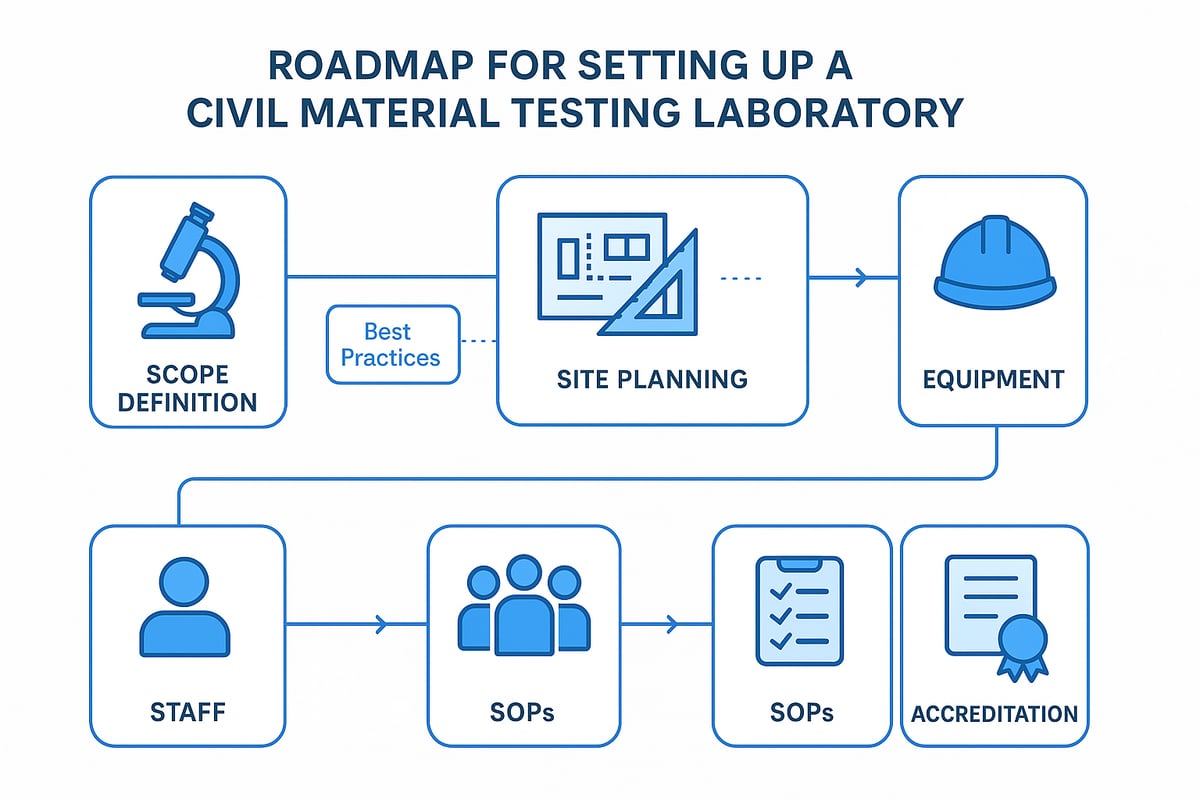
Establishing a civil material testing laboratory in 2026 requires a strategic and methodical approach. Each phase, from defining your scope to achieving accreditation, is crucial for long-term success. Let us walk through the essential steps so your lab meets industry standards, delivers reliable results, and stays ahead of evolving regulations.
Step 1: Defining Scope and Services
The first step in launching a civil material testing laboratory is determining which materials and services you will offer. Will you focus on concrete, soil, asphalt, or provide a full suite of testing solutions? Conduct market research to identify local demand and study competitors’ offerings.
Align your services with regional regulations and client requirements. For example, some labs specialize in geotechnical testing, while others offer broader construction material testing. You may want to review Construction Material Testing Services to see how a comprehensive approach can attract diverse clients.
Decide whether to target public infrastructure, commercial, or residential projects. A clear scope ensures your civil material testing laboratory meets client expectations and regulatory needs.
Step 2: Facility Planning and Layout
Selecting the right location for your civil material testing laboratory is fundamental. Consider proximity to major construction projects, accessibility for clients, and compliance with zoning laws.
Design your lab layout to promote efficient workflow and safety. Allocate adequate space for sample preparation, testing equipment, and staff work areas. Factor in environmental needs such as ventilation, dust control, and proper waste management.
Modular lab designs can help you scale operations as demand grows. Careful planning at this stage lays a solid foundation for a productive civil material testing laboratory.
Step 3: Equipment Procurement and Installation
Next, create a detailed list of equipment required for your civil material testing laboratory. Essential items may include compression testing machines, ovens, balances, and sieves. Source equipment from reputable vendors who provide certified products meeting industry standards.
Plan for installation, initial calibration, and validation to ensure all equipment performs accurately. Establish a maintenance schedule to extend the lifespan of your investments.
Budgeting for both initial procurement and ongoing upkeep is vital. Proper equipment setup is central to delivering reliable results in your civil material testing laboratory.
Step 4: Staffing and Training
Recruit skilled professionals for your civil material testing laboratory, including a lab manager, technicians, and quality assurance staff. Verify that team members hold necessary certifications and have experience with relevant testing protocols.
Implement continuous training programs to keep staff updated on safety procedures, new technologies, and evolving industry standards. For instance, training aligned with ISO/IEC 17025 can enhance your lab’s credibility.
Establish a safety culture through regular drills and clear emergency protocols. Well-trained staff are the backbone of a successful civil material testing laboratory.
Step 5: Developing Standard Operating Procedures (SOPs)
Documenting all test methods and processes is essential for consistency and compliance in your civil material testing laboratory. Develop SOPs that reflect industry standards such as ASTM, CSA, and ISO.
Include procedures for sample handling, equipment calibration, and quality control checks. Review and update SOPs regularly to address changes in technology or regulations.
For example, create a detailed SOP for soil compaction testing that outlines each step, required materials, and acceptance criteria. Comprehensive SOPs reduce errors and support accreditation efforts.
Step 6: Accreditation and Compliance
Achieving accreditation is a major milestone for any civil material testing laboratory. Familiarize yourself with requirements from bodies like ISO/IEC 17025 or CCIL.
Prepare for audits by maintaining thorough records, documenting processes, and demonstrating compliance with all standards. Accreditation enhances your lab’s reputation and opens doors to new business opportunities.
Establish a timeline for the accreditation process, accounting for documentation, staff training, and system validation. Staying compliant ensures your civil material testing laboratory operates at the highest level of quality and trust.
Quality Assurance and Best Practices in Laboratory Operations
Quality assurance is the backbone of every successful civil material testing laboratory. Consistent best practices not only ensure accurate results, but also build client trust, support compliance, and drive continuous improvement. Let us explore the core elements that define excellence in laboratory operations.
Implementing Robust Quality Control Systems
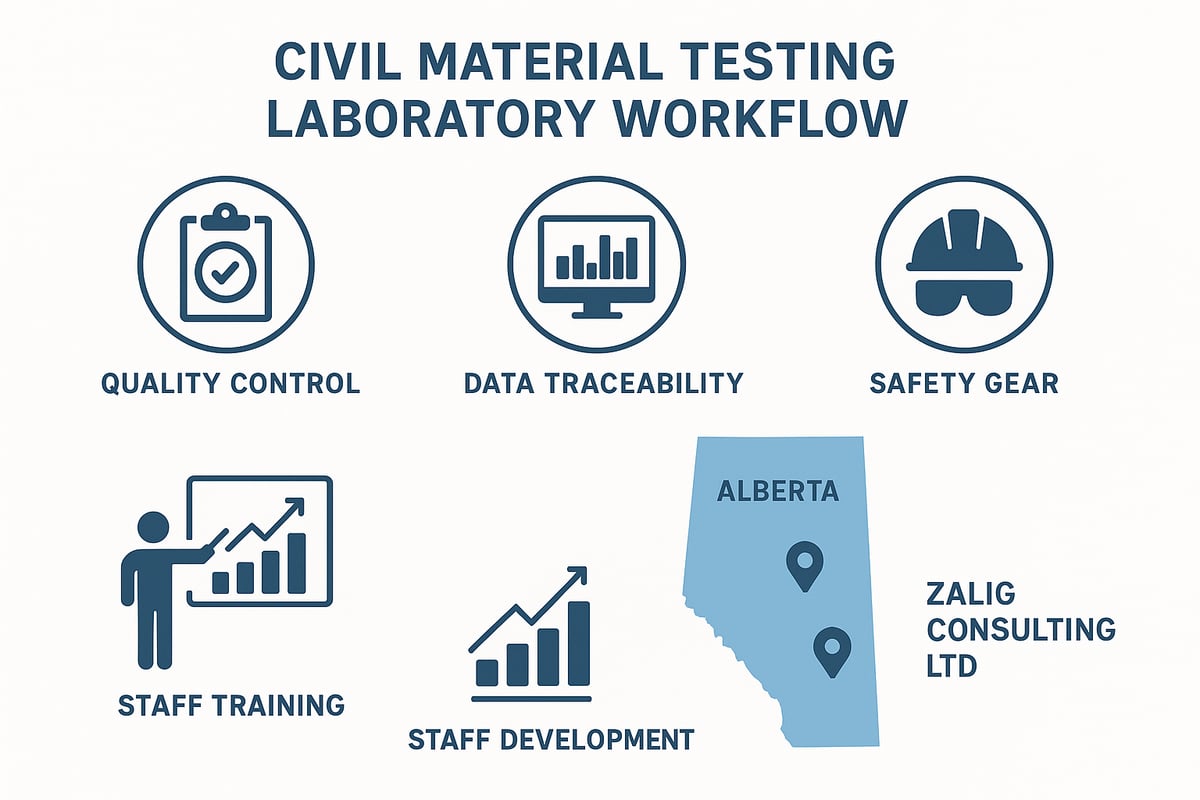
A robust quality control system is essential for a civil material testing laboratory to deliver reliable and reproducible results. Labs should establish internal QC checks and participate in proficiency testing to benchmark performance.
Effective strategies include:
- Using control samples and reference materials to monitor consistency
- Scheduling regular equipment calibration and maintenance
- Documenting all test procedures and outcomes
For example, implementing a systematic QC program can significantly reduce test result variability and improve overall lab performance. To learn more about optimizing your approach, review these Quality Control and Assurance Practices. Embedding these habits into daily routines helps a civil material testing laboratory meet regulatory expectations and client needs.
Data Integrity and Traceability
Ensuring data integrity is a top priority for any civil material testing laboratory. Every test result must be accurate, traceable, and reproducible to maintain credibility.
Key practices include:
- Establishing a clear chain of custody for all samples
- Using digital record-keeping systems with secure audit trails
- Backing up data regularly and having a disaster recovery plan
Digital tools make it easier to safeguard data and support compliance with privacy regulations. By prioritizing traceability, a civil material testing laboratory can quickly resolve disputes and respond to audits with confidence.
Health, Safety, and Environmental Compliance
A safe and compliant workplace is non-negotiable in a civil material testing laboratory. Occupational health and safety standards protect staff, while environmental protocols safeguard the community and ecosystem.
Best practices involve:
- Enforcing PPE requirements and routine safety training
- Identifying hazards and implementing mitigation strategies
- Managing waste responsibly and following environmental regulations
Fostering a proactive safety culture encourages staff to report concerns and participate in regular safety drills. This approach ensures the civil material testing laboratory remains a trusted partner on every project.
Continuous Improvement and Staff Development
Continuous improvement is vital for every civil material testing laboratory seeking long-term success. Regular performance reviews, staff feedback, and benchmarking against industry leaders drive progress.
Areas to focus on:
- Providing ongoing training in new technologies and standards
- Recognizing and rewarding innovative ideas from staff
- Aligning development programs with certifications like ISO 9001
By investing in professional growth, a civil material testing laboratory can adapt to industry changes and maintain a competitive edge. Staff empowerment leads to higher morale and better results.
ZALIG Consulting Ltd: Your Trusted Partner in Alberta
ZALIG Consulting Ltd stands out as a leader among civil material testing laboratory providers in Alberta. With offices in Edmonton, Fort Saskatchewan, and Slave Lake, ZALIG offers certified material testing, geotechnical, and environmental engineering services for diverse sectors.
What sets ZALIG apart:
- Accredited for quality, reliability, and regulatory compliance
- Innovative, cost-effective, and sustainable testing solutions
- Experienced teams delivering accurate results on time
ZALIG Consulting Ltd is the civil material testing laboratory partner of choice for complex infrastructure and construction projects, ensuring peace of mind and project success.
Regulatory Standards and Compliance: Staying Ahead in 2026
Staying ahead in regulatory standards is essential for any civil material testing laboratory. As industry requirements evolve, compliance becomes the foundation for credibility and growth. Let’s break down the key aspects of maintaining top-tier standards in 2026.
Key Standards and Regulatory Bodies
A civil material testing laboratory must align with major industry standards to operate legally and competitively. The most recognized standards include ASTM for materials, CSA for Canadian specifications, and ISO/IEC 17025 for laboratory competence. CCIL also plays a significant role in Canadian lab accreditation.
Local, provincial, and national authorities regularly update requirements. For example, recent changes in Canadian concrete testing demand more rigorous documentation and traceability. Monitoring these updates is crucial, as falling behind can risk project approval or funding.
Table: Key Standards and Their Focus
| Standard | Focus Area |
|---|---|
| ASTM | Materials & Methods |
| CSA | Canadian Specifications |
| ISO/IEC 17025 | Lab Competence & QA |
| CCIL | Canadian Accreditation |
Staying informed ensures your civil material testing laboratory remains compliant and competitive.
Navigating Accreditation Processes
Achieving and maintaining accreditation is a multi-step journey for any civil material testing laboratory. Start by reviewing the requirements from bodies like ISO/IEC 17025 or CCIL. Prepare comprehensive documentation, including SOPs, equipment calibration logs, and quality manuals.
Regular internal audits streamline external assessments. Avoid common pitfalls, such as incomplete records or outdated methods, by updating documentation regularly. Multi-standard accreditation can boost your lab’s reputation and open new business opportunities.
For a detailed walkthrough of the Canadian Council of Independent Laboratories process, consult The CCIL Accreditation Guide. This resource outlines each step and offers tips to ensure a smooth audit.
Successful accreditation demonstrates your civil material testing laboratory’s commitment to excellence.
Documentation and Reporting Requirements
Effective documentation is the backbone of compliance for any civil material testing laboratory. Reports must meet regulatory guidelines and client expectations. They should be clear, accurate, and delivered promptly.
Transitioning from paper-based to digital documentation streamlines reporting and audit readiness. Laboratory Information Management Systems (LIMS) automate report generation, reduce errors, and ensure data is securely stored. Transparency in documentation builds client trust and supports regulatory reviews.
Best practices include version control, clear signatures, and archiving protocols. Comprehensive records give your civil material testing laboratory a competitive edge.
Managing Client and Regulatory Audits
Preparing for audits is an ongoing process for every civil material testing laboratory. Scheduled and surprise audits require teams to be ready at all times. Train staff on audit protocols and maintain audit-ready documentation.
Organize records so they are easily accessible during inspections. Proactive audit management, such as regular mock audits, can reveal gaps before regulators do. For example, one lab avoided costly penalties by identifying and correcting documentation errors during a pre-audit review.
After each audit, conduct a post-audit review to drive continuous improvement. This approach keeps your civil material testing laboratory aligned with best practices.
Future-Proofing for Regulatory Changes
Anticipating change is key for a civil material testing laboratory to remain resilient. Stay informed about upcoming standards and industry shifts by engaging with professional associations and regulatory newsletters.
Invest in adaptable equipment and workflows that can accommodate new requirements. Foster a compliance-focused culture, where staff value quality and continuous learning. Early adoption of digital compliance tools streamlines updates and ensures readiness.
Collaboration with industry peers provides valuable insights and helps your civil material testing laboratory shape best practices for years to come.
Future Trends and Innovations in Civil Material Testing Laboratories
The civil material testing laboratory is entering an era defined by rapid innovation and digital transformation. As the construction industry evolves, these labs are adopting new technologies, methodologies, and workforce strategies to stay ahead. Here, we explore the future trends reshaping how laboratories operate, deliver value, and ensure compliance.
Automation and Digital Transformation
Automation is revolutionizing the civil material testing laboratory, streamlining sample processing and eliminating repetitive manual tasks. Robotics now handle routine testing, from sample preparation to data entry, increasing speed and reducing human error.
Digital twins and real-time analytics are becoming standard, allowing labs to simulate material performance under various conditions. Automated systems not only boost efficiency but also support traceability by integrating with Laboratory Information Management Systems (LIMS).
Labs embracing automation have reported up to 30 percent faster turnaround times. However, successful adoption requires strategic planning, investment in robust digital infrastructure, and ongoing staff training to maximize the benefits of these innovations within the civil material testing laboratory.
Advanced Materials and Testing Methods
As construction materials evolve, so do the testing protocols in every civil material testing laboratory. Nanomaterials, high-performance concrete, and advanced composites demand specialized analysis and new proficiency benchmarks.
Non-destructive evaluation (NDE) is now essential for assessing internal structure without damaging specimens. Cutting-edge tools, such as X-ray CT scanning and ultrasonic imaging, enable detailed aggregate and flaw analysis. For a comprehensive look at how digitalization and automation are enhancing NDE, see Advancements in Nondestructive Testing.
Integration with Building Information Modeling (BIM) systems streamlines data exchange between labs and project stakeholders. These advancements ensure the civil material testing laboratory remains equipped to meet the challenges of tomorrow’s construction materials.
Sustainability and Circular Economy in Testing
Sustainability is at the forefront of civil material testing laboratory innovation. Labs are increasingly testing recycled aggregates, low-carbon concrete, and other eco-friendly materials to support green construction initiatives.
Protocols now include verifying compliance with environmental certifications and supporting clients in achieving LEED or similar designations. Waste reduction, energy-efficient equipment, and water recycling systems are becoming standard practices.
Moreover, laboratories play a crucial role in validating claims for sustainable sourcing and circular economy participation. This shift positions the civil material testing laboratory as a key player in promoting responsible construction and resource stewardship.
Remote and Mobile Testing Solutions
The rise of remote and mobile testing solutions is transforming the civil material testing laboratory landscape. Mobile labs can be dispatched directly to construction sites, providing on-the-spot analysis for soil, concrete, and asphalt.
These mobile units are equipped with advanced instruments and digital connectivity, enabling real-time supervision and data transmission to central labs. This approach is particularly valuable for large-scale or remote infrastructure projects where timely results are critical.
Despite challenges such as logistics, calibration, and managing data integrity, remote solutions greatly enhance accessibility, responsiveness, and efficiency for the civil material testing laboratory.
Skills and Workforce Evolution
The modern civil material testing laboratory requires a workforce with diverse skills, blending technical expertise and digital literacy. Technicians are now expected to operate automated systems, analyze data, and understand AI-driven insights.
There is a growing demand for staff trained in both material science and information technology. Upskilling is facilitated through partnerships with technical colleges, on-the-job training, and certification programs.
Lab managers and quality leads are also taking on broader roles, focusing on process optimization and regulatory compliance. This evolution ensures the civil material testing laboratory remains agile and competitive in a rapidly changing industry.
As you look ahead to 2026 and consider the evolving landscape of civil material testing, remember that having a knowledgeable, reliable partner can make all the difference. Whether you’re setting up a lab, seeking ways to optimize operations, or navigating new compliance standards, our team at ZALIG Consulting Ltd is here to help you every step of the way. You deserve confidence in your results and peace of mind for your next project. If you’re ready to discuss tailored solutions or have questions about your roadmap to success, reach out to us directly at Contact Us info@zalig.ca or +1 800 515 0497.