

Cities worldwide are transforming rapidly, with transportation engineering at the heart of efforts to create sustainable, efficient, and resilient communities. The urgent demand for smarter and safer mobility systems is reshaping how we plan and build urban spaces.
This comprehensive guide explores everything you need to know about civil engineering transportation engineering in 2026. We cover foundational concepts, educational pathways, must-have skills, emerging technologies, career opportunities, and future trends.
Whether you are a student, professional, or simply curious, use this guide as your roadmap to mastering a field that blends technical, environmental, and societal challenges—and offers rewarding, impactful careers.
Understanding Civil Engineering Transportation Engineering
Transportation is the backbone of modern society, and civil engineering transportation engineering shapes how people and goods move safely and efficiently. As cities grow and technology advances, this field becomes increasingly vital. Let us explore what makes civil engineering transportation engineering so essential, its role in infrastructure, and how it stands apart from general civil engineering.
What is Transportation Engineering?
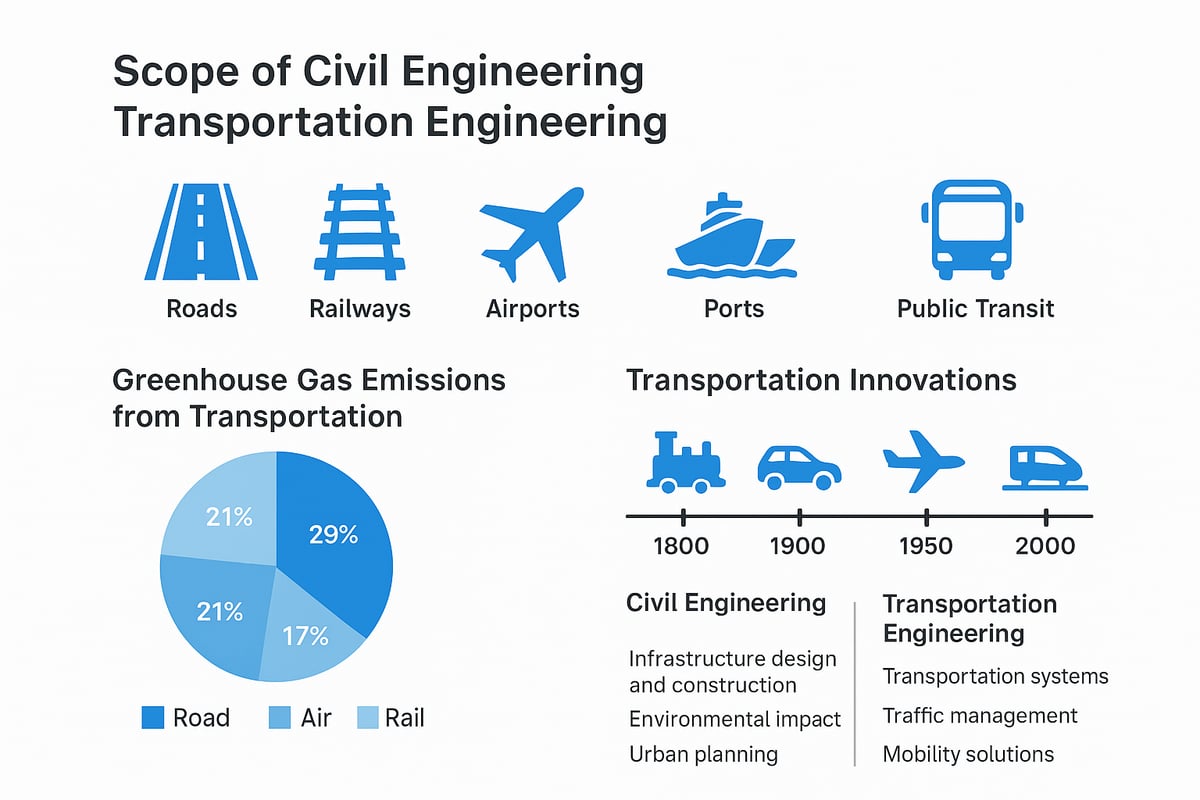
Civil engineering transportation engineering is a specialized branch focused on the planning, design, construction, operation, and management of transportation systems. These systems include roads, highways, railways, airports, seaports, and public transit networks.
This discipline is inherently interdisciplinary. It blends civil, environmental, and systems engineering to solve mobility challenges. Civil engineering transportation engineering ensures that cities can grow while maintaining accessibility and safety for all residents.
The importance of civil engineering transportation engineering is clear in urban planning. For example, expanding metro rail lines in growing metropolitan areas requires careful coordination between engineers, planners, and policymakers. The result is improved mobility, economic growth, and better access to essential services.
The Role of Transportation Engineering in Modern Infrastructure
Civil engineering transportation engineering plays a critical role in connecting communities and supporting commerce. It takes a systems approach, considering the interaction between travel demand, mobility options, environmental concerns, and socio-economic factors.
One of the most visible impacts is on quality of life. Accessible, safe, and sustainable transportation networks enable people to reach jobs, education, and healthcare. For instance, smart traffic management systems in cities like Los Angeles use real-time data to optimize traffic flow, reduce congestion, and lower emissions.
According to the EPA (2023), the transportation sector is responsible for 29% of greenhouse gas emissions in North America. This highlights the urgent need for sustainable solutions within civil engineering transportation engineering. Professionals in this field tackle challenges such as balancing technical requirements, community needs, economic pressures, and political objectives.
To see real-world applications and innovative projects, you can explore the Transportation Engineering Project Portfolio, which showcases how engineers address these modern challenges.
Key Differences Between Civil and Transportation Engineering
Civil engineering is a broad field covering structures, geotechnical, water resources, and environmental systems. In contrast, civil engineering transportation engineering focuses specifically on the movement of people and goods.
Both areas require a solid understanding of materials, design, and project management. However, civil engineering transportation engineering professionals develop specialized expertise in traffic systems, transit planning, and mobility solutions.
The table below summarizes key differences:
| Aspect | Civil Engineering | Transportation Engineering |
|---|---|---|
| Scope | Structures, water, soils | Roads, transit, airports, logistics |
| Focus | Built environment | Mobility and movement |
| Skills | Structural analysis, design | Traffic modeling, systems integration |
| Career Pathways | Construction, infrastructure | Transit agencies, traffic operations |
Specializing in civil engineering transportation engineering can open doors to roles in public agencies, private firms, and research institutions, shaping how our cities move into the future.
Educational Pathways and Core Curriculum
Choosing the right educational path is essential for anyone aiming to excel in civil engineering transportation engineering. This field demands a robust foundation in engineering principles, specialized coursework, and hands-on experiences that prepare students for real-world challenges. Let’s explore the degrees, curriculum, skills, certifications, and regional services that shape a successful journey in civil engineering transportation engineering.
Degree Options in Transportation Engineering
A career in civil engineering transportation engineering typically starts with a Bachelor’s in Civil Engineering, where students can select transportation-focused electives. Many universities offer concentrations or minors in transportation, giving undergraduates an early chance to specialize.
For those seeking advanced expertise, pursuing a Master of Science in Civil Engineering or a PhD with a transportation emphasis is common. Graduate programs provide opportunities for research, internships, and exposure to cutting-edge industry practices. Specialized certificates in transportation engineering are also available, allowing professionals to deepen their knowledge or pivot their careers.
Examples of strong programs include the University of Delaware and USC Viterbi School of Engineering, both known for integrating civil engineering transportation engineering fundamentals into their curriculum.
Core Transportation Engineering Courses
Civil engineering transportation engineering education covers a blend of fundamental and advanced topics. Core courses often include:
- Transportation planning
- Traffic engineering
- Geometric design
- Infrastructure systems
Advanced coursework builds on this foundation with subjects like risk analysis, optimization, modeling, simulation, and data analysis. Students may also select electives in GIS, policy analysis, or project management to customize their expertise.
A typical graduate curriculum might include courses such as CIEG 652 (Transportation Systems), CIEG 653 (Traffic Engineering), CIEG 654 (Geometric Design), and CIEG 663 (Infrastructure Systems) at the University of Delaware.
| Core Course | Focus Area |
|---|---|
| Transportation Planning | System analysis, policy |
| Traffic Engineering | Flow theory, signal design |
| Geometric Design | Safety, roadway geometry |
| Infrastructure Systems | Asset management |
This comprehensive course structure ensures that graduates in civil engineering transportation engineering are ready to tackle diverse transportation challenges.
Skills and Competencies Required
Success in civil engineering transportation engineering relies on a blend of technical and soft skills. Technical competencies include mathematical modeling, data analytics, and proficiency with tools such as ArcGIS and MATLAB. These enable engineers to analyze complex transportation systems and propose effective solutions.
Equally important are soft skills: clear communication, teamwork, and project management. Transportation engineers often collaborate across disciplines and must translate technical findings for non-technical stakeholders. Employers in civil engineering transportation engineering value candidates who demonstrate both analytical ability and collaborative spirit.
Accreditation and Professional Licensure
Enrolling in an ABET-accredited program is critical for anyone pursuing civil engineering transportation engineering. Accreditation ensures that the curriculum meets industry standards and prepares graduates for licensure.
The pathway to becoming a licensed Professional Engineer (PE) involves obtaining an accredited degree, passing the Fundamentals of Engineering (FE) exam, gaining relevant work experience, and passing the PE exam. Continuing education and certifications from organizations like the Institute of Transportation Engineers (ITE) and the American Society of Civil Engineers (ASCE) further enhance professional standing.
Staying current with industry trends and requirements is vital for long-term success in civil engineering transportation engineering.
Transportation Engineering Services in Alberta
Regional expertise is a cornerstone of effective civil engineering transportation engineering. Firms such as ZALIG Consulting Ltd provide a full spectrum of transportation engineering services in Alberta, supporting both public and private sector infrastructure projects.

These services include integrated analysis, design, geotechnical investigations, and construction material testing. Local knowledge ensures that projects comply with Alberta’s unique standards and regulations, giving graduates of civil engineering transportation engineering programs a valuable edge in the job market.
Modern Technologies and Tools in Transportation Engineering
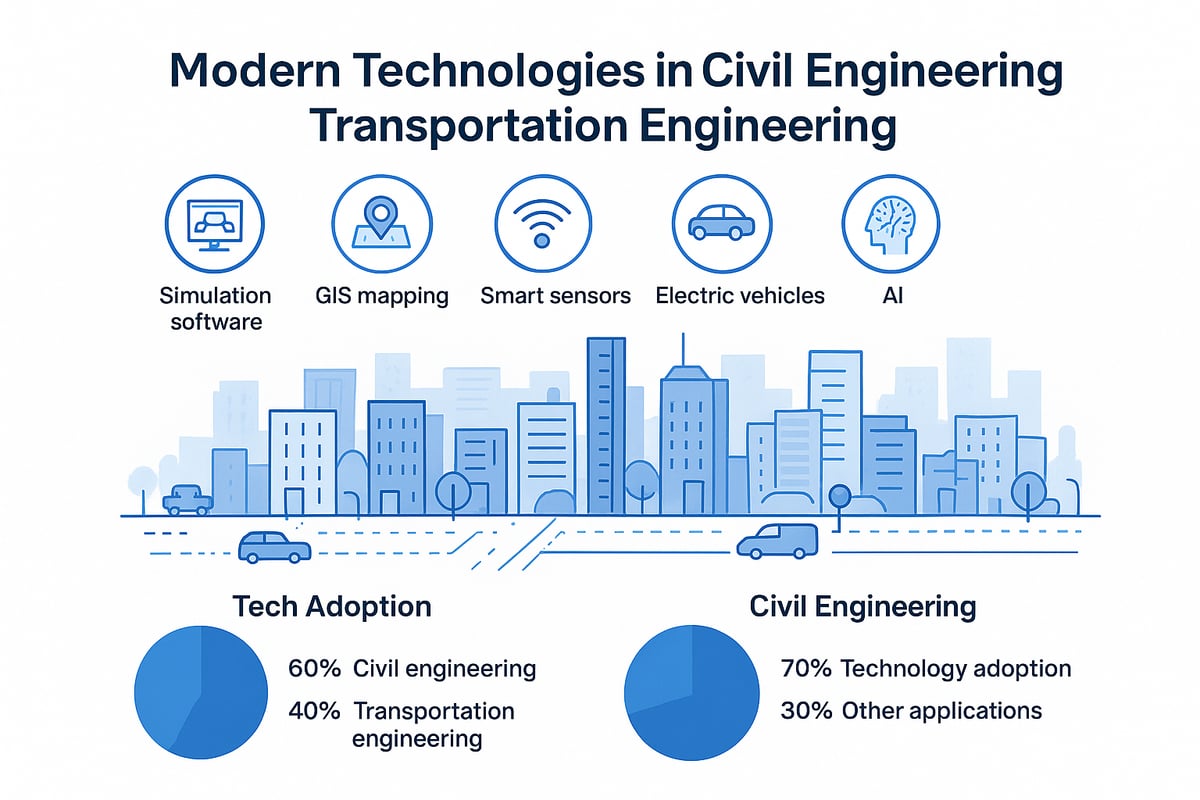
The landscape of civil engineering transportation engineering is evolving rapidly, shaped by an array of powerful digital tools and innovative technologies. These advancements are transforming how professionals plan, design, and manage complex transportation systems.
Modeling and Simulation Tools
In civil engineering transportation engineering, modeling and simulation tools are foundational for predicting traffic patterns and evaluating infrastructure performance. Engineers use software like VISSIM, Synchro, and TransCAD to replicate real-world scenarios and test solutions before implementation.
These tools allow for the assessment of roadway designs, signal timings, and public transit schedules. By simulating traffic flow and demand, professionals can optimize transportation networks for efficiency and safety.
A typical workflow might involve importing traffic data, creating digital models, and running simulations under various conditions. This approach helps identify bottlenecks and prioritize investments, supporting smarter decision-making in civil engineering transportation engineering.
Geographic Information Systems (GIS) and Data Analytics
Geographic Information Systems (GIS) are indispensable in civil engineering transportation engineering for visualizing spatial data and managing assets. GIS enables engineers to map road networks, analyze traffic incidents, and plan new routes with precision.
Combining GIS with big data analytics allows professionals to monitor real-time traffic conditions and forecast future trends. For example, GIS-based urban transit planning supports the development of efficient bus and rail systems in growing cities.
A typical project might use GIS to identify underserved neighborhoods or optimize emergency response routes. The integration of GIS and analytics is key to smarter, more responsive civil engineering transportation engineering solutions.
Intelligent Transportation Systems (ITS)
Intelligent Transportation Systems (ITS) represent a major leap forward in civil engineering transportation engineering. ITS includes smart sensors, adaptive traffic signals, and connected vehicles, all working together to enhance mobility and safety.
Cities like Los Angeles have deployed ITS to manage congestion and improve public transit reliability. These systems collect data from roadways and vehicles, enabling real-time adjustments to traffic flow and rapid incident response.
ITS technologies also support eco-friendly initiatives by reducing idling times and promoting smoother travel. As a result, civil engineering transportation engineering is better equipped to address urban challenges and deliver sustainable mobility.
Sustainable and Green Technologies
Sustainability is now a central pillar in civil engineering transportation engineering. Innovations such as electric vehicles, green infrastructure, and multimodal integration are helping reduce environmental impacts.
Projects may feature permeable pavements, solar-powered transit stations, and bike-sharing networks to support active transportation. LEED-certified facilities and environmentally friendly construction practices are becoming standard.
These advancements reflect a broader commitment to lowering carbon footprints and promoting healthier communities. Every sustainable choice in civil engineering transportation engineering contributes to a greener future.
Emerging Trends: Automation and AI
Automation and artificial intelligence are revolutionizing civil engineering transportation engineering. Autonomous vehicles, AI-driven traffic prediction, and automated infrastructure monitoring are now part of forward-thinking transportation projects.
Smart cities are deploying pilot programs for self-driving shuttles and using AI to optimize maintenance schedules. These trends increase efficiency and safety, while opening new career opportunities for engineers.
For a deeper dive into how safety and efficiency are shaping the future, explore Emerging Trends in Transportation Engineering. Staying ahead of these trends is essential for anyone building a career in civil engineering transportation engineering.
Planning, Design, and Management of Transportation Systems
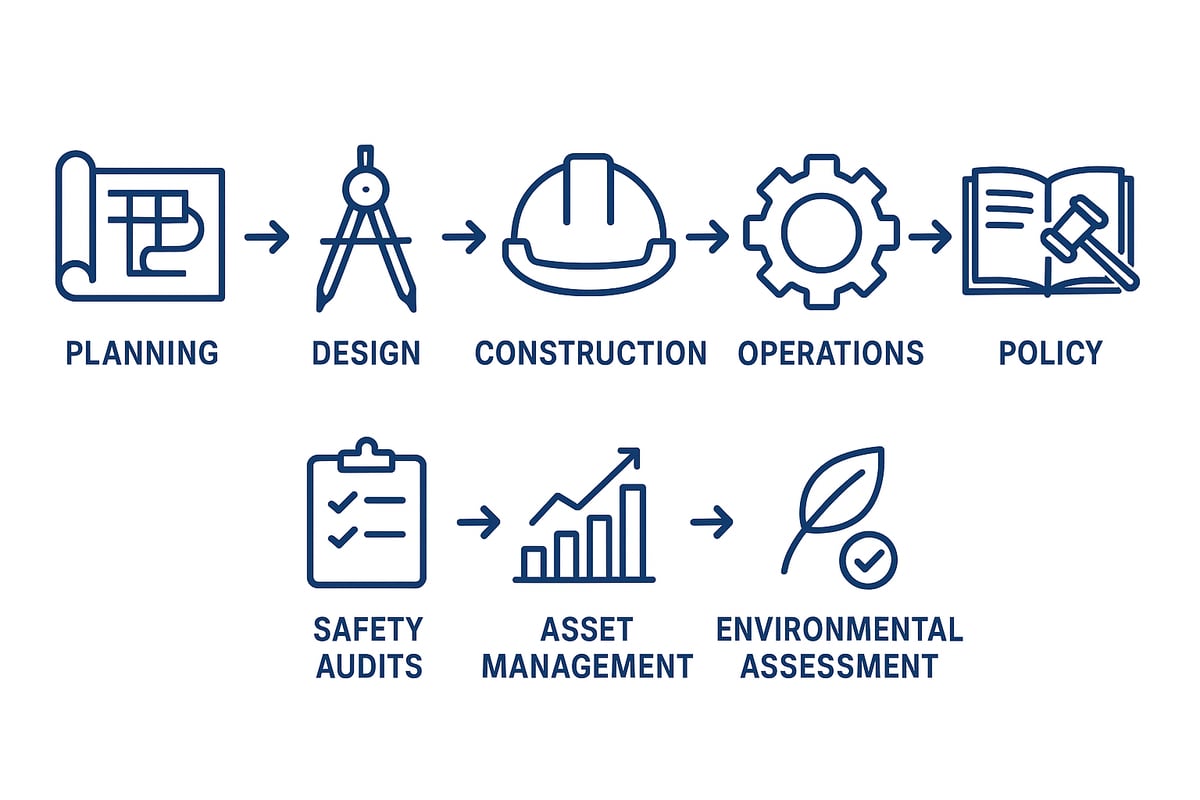
Effective planning, design, and management are the backbone of civil engineering transportation engineering. Each stage, from initial assessment to long-term operations, shapes how transportation systems serve communities, adapt to change, and meet safety, economic, and environmental standards.
Transportation Planning Principles
Transportation planning is the first step in civil engineering transportation engineering projects. It starts with a comprehensive needs assessment to identify current and future mobility requirements. Data collection follows, using surveys, sensors, and demographic studies to understand travel behaviors.
Forecasting relies on mathematical models to predict traffic volumes, transit demand, and land use changes. Public engagement is essential, ensuring community voices shape project priorities. Policy integration aligns plans with local, regional, and national objectives.
For example, an urban transportation master plan will guide the development of new transit corridors, bike paths, and road improvements for the next 20 years.
Design Standards and Safety Considerations
Design in civil engineering transportation engineering must comply with rigorous standards to maximize public safety and performance. Guidelines from AASHTO, MUTCD, and local codes govern roadway geometry, signage, and signalization. Safety audits and risk assessments are standard practice, identifying hazards before construction begins.
Crash analysis uses historical data and predictive models to reduce accident risks. For instance, geometric design adjustments can improve sight distances and intersection safety. Collaboration with law enforcement and public agencies ensures that safety remains central throughout the design process.
A summary table of key design standards:
| Standard | Focus Area | Example Use |
|---|---|---|
| AASHTO | Road geometry | Highway curves |
| MUTCD | Traffic control | Signage, signals |
| Local Codes | Regional context | Urban streets |
Construction and Materials in Transportation Projects
Construction in civil engineering transportation engineering demands careful material selection and quality assurance. Common materials include asphalt, concrete, and advanced composites, each chosen for durability and cost-effectiveness. Quality assurance involves laboratory and field testing to confirm materials meet project specifications.
For rigorous material testing, firms often partner with specialized providers. For example, Construction Material Testing for Infrastructure supports public and private projects by ensuring that pavements, bridges, and foundations meet safety and longevity standards.
Pavement analysis and design courses, such as CIEG 658, teach future engineers how to evaluate material performance under real-world conditions.
Operations, Maintenance, and Asset Management
Long-term success in civil engineering transportation engineering depends on effective operations and maintenance. This includes routine inspections, timely rehabilitation, and the deployment of asset management systems. Asset management uses digital tools to track the condition of roads, bridges, and transit assets.
Predictive maintenance leverages technology, such as sensors and data analytics, to anticipate problems before they escalate. State Departments of Transportation (DOTs) use these systems to allocate resources efficiently and extend infrastructure lifespan.
A proactive approach to maintenance ensures that transportation networks remain safe and reliable for the public.
Policy, Economics, and Environmental Impact
Civil engineering transportation engineering projects operate within a complex policy and regulatory landscape. Regulatory frameworks set the rules for safety, environmental protection, and public engagement. Cost-benefit analysis is critical to justify investments and prioritize projects.
Environmental assessments evaluate potential impacts on air quality, water resources, and ecosystems. Sustainability goals are increasingly integrated into project approvals, encouraging green infrastructure and carbon reduction.
For example, integrating environmental policy into transportation project planning ensures compliance and supports resilient, future-ready infrastructure.
Career Opportunities and Professional Development
Career opportunities in civil engineering transportation engineering are both diverse and rapidly evolving. Professionals can choose from a range of roles that shape the future of mobility and infrastructure. The field offers pathways in the public sector, private consulting, and academia, each with unique challenges and rewards.
Major Career Paths in Transportation Engineering
Professionals in civil engineering transportation engineering can pursue careers in several sectors. In the public sector, roles are available with departments of transportation, local municipalities, and transit agencies. These positions focus on planning, policy, and project management for public infrastructure.
The private sector offers opportunities with engineering consultancies, construction contractors, and technology firms. Employees may work on everything from design to implementation of innovative transportation solutions. Firms like ZALIG Consulting Ltd illustrate how consulting services support both public and private projects in Alberta, showcasing the importance of regional expertise.
Academic and research careers are also vital, enabling professionals to contribute to education, policy, and the advancement of emerging technologies within civil engineering transportation engineering.
Required Qualifications and Certifications
To succeed in civil engineering transportation engineering, professionals need specific qualifications and credentials. Essential certifications include:
- Professional Engineer (PE) licensure
- Project Management Professional (PMP)
- Leadership in Energy and Environmental Design (LEED)
- Membership in organizations such as ASCE, ITE, and TRB
These certifications demonstrate technical proficiency and commitment to ongoing professional development.
In-Demand Skills and Employer Expectations
Employers in civil engineering transportation engineering seek a blend of technical and soft skills. Technical abilities include:
- Proficiency in modeling and design software
- Data analysis and mathematical modeling
- Knowledge of transportation systems and infrastructure
Equally important are soft skills:
- Effective communication
- Leadership and teamwork
- Stakeholder engagement and interdisciplinary collaboration
Employers highly value real-world project experience and the ability to adapt to evolving technologies in civil engineering transportation engineering.
Salary Outlook and Job Market Trends
The salary outlook for civil engineering transportation engineering professionals is strong. Median salaries in North America range from $85,000 to $110,000, reflecting the high demand for expertise in this field. Job growth is projected to remain steady, driven by increased infrastructure investment and urbanization.
| Role | Median Salary (USD) | Job Growth (2024–2034) |
|---|---|---|
| Transportation Engineer | $90,000 | Rapid |
| Civil Engineer | $88,000 | Steady |
For more details on projected openings and industry trends, see the Transportation Engineering Job Outlook.
Networking, Internships, and Professional Development
Building a successful career in civil engineering transportation engineering requires more than technical knowledge. Internships and co-op programs provide valuable industry experience and networking opportunities. Participation in student chapters, such as ITE and ASCE, helps aspiring engineers connect with industry leaders and peers.
Professional development also includes attending industry conferences and engaging in mentorship. For instance, events and programs offered by organizations like the METRANS Transportation Consortium foster research collaboration and knowledge sharing. These activities support lifelong learning and advancement in civil engineering transportation engineering.
Future Trends and Challenges in Transportation Engineering
The future of civil engineering transportation engineering is shaped by rapid innovation, evolving societal needs, and a focus on sustainability. As cities expand and technology advances, professionals in this field must anticipate and adapt to emerging trends. Let us explore the key challenges and opportunities that will define transportation engineering in the coming years.
Smart Cities and Urban Mobility
In 2026 and beyond, smart cities are at the forefront of civil engineering transportation engineering. Urban mobility solutions are becoming increasingly integrated with digital infrastructure. Features like real-time transit apps, adaptive traffic signals, and Mobility-as-a-Service (MaaS) platforms are transforming how people move through metropolitan areas.
Shared mobility options, such as bike-sharing and ride-hailing, are reducing congestion and improving access to transportation. Last-mile connectivity is prioritized, ensuring seamless transitions between different modes of travel. By leveraging data and technology, engineers are creating urban environments that are efficient, flexible, and responsive to residents' needs. Civil engineering transportation engineering professionals play a crucial role in planning and implementing these systems, ensuring both sustainability and resilience.
Climate Change and Resilient Infrastructure
Climate adaptation remains a core concern in civil engineering transportation engineering. Infrastructure must withstand more frequent floods, heatwaves, and extreme weather events. Engineers are designing roads, bridges, and transit systems to be both robust and flexible, with materials and layouts that minimize climate vulnerability.
Innovative monitoring systems, such as Intelligent Distributed Optical Fiber Sensing in Transportation, are increasingly used to track structural health and environmental stressors in real time. These technologies help identify risks early, allowing for proactive maintenance and disaster mitigation. By integrating sustainability and resilience, civil engineering transportation engineering ensures long-term reliability and safety for communities.
Equity, Accessibility, and Social Impact
Equity and accessibility are vital in civil engineering transportation engineering. Engineers must ensure that all populations, including those in underserved areas, have reliable and affordable transportation options. Addressing transportation deserts, improving accessibility for individuals with disabilities, and promoting social inclusion are now central to project planning.
Community engagement is standard practice, and policies increasingly require measurable equity outcomes. The social impact of projects is evaluated alongside technical metrics, making inclusivity a core value in modern transportation engineering.
Funding, Policy, and Regulatory Shifts
Civil engineering transportation engineering faces evolving funding models and regulatory landscapes. Initiatives like the US Infrastructure Investment and Jobs Act are increasing investment in transportation systems. At the same time, new regulations prioritize emissions reduction, safety, and innovation.
Cost-benefit analyses and environmental assessments are more rigorous than ever. Engineers must navigate these complex requirements while delivering cost-effective and forward-thinking solutions. Adapting to policy and funding changes is essential for the success of future projects in civil engineering transportation engineering.
Globalization and International Best Practices
Globalization is shaping civil engineering transportation engineering through the adoption of international standards and collaboration on cross-border projects. High-speed rail and transnational corridors require harmonized regulations and shared technical expertise.
Learning from successful projects abroad helps engineers implement best practices at home. This global perspective enhances efficiency, fosters innovation, and strengthens the profession’s ability to address universal transportation challenges.
The Evolving Role of the Transportation Engineer
The role of the transportation engineer is expanding. Professionals are now expected to integrate systems thinking, sustainability, and advanced technology into every phase of their work. Lifelong learning is a necessity, as new tools and methods continuously emerge.
According to the Civil Engineers Occupational Outlook, demand for transportation engineers will remain strong, with skills in digital design, project management, and interdisciplinary collaboration highly valued. This evolving landscape offers exciting opportunities for those entering or advancing in civil engineering transportation engineering.
As you explore the evolving landscape of civil and transportation engineering in 2026, it’s clear that expertise and local insight are essential for building resilient, future-ready infrastructure. Whether you’re seeking guidance on the latest technologies, best practices in sustainability, or region-specific standards for your next project, partnering with specialists can make all the difference. If you want to discuss your goals, get advice tailored to Alberta’s unique environment, or learn how our team can support your transportation initiatives, feel free to Contact Us: info@zalig.ca or +1 800 515 0497—we’re here to help you move forward with confidence.