

Civil engineering solutions are revolutionizing the way we design, build, and maintain the infrastructure that supports our daily lives. From smart cities to resilient transportation networks, recent breakthroughs have transformed expectations for safety, sustainability, and efficiency.
This comprehensive guide explores the innovations shaping civil engineering solutions in 2026. Discover emerging technologies, sustainable practices, and practical strategies to help professionals, stakeholders, and decision-makers stay ahead in a rapidly evolving industry.
Unlock expert insights and learn how to adopt the latest civil engineering solutions to drive progress, enhance project outcomes, and create lasting value for communities.
The Evolution of Civil Engineering Solutions
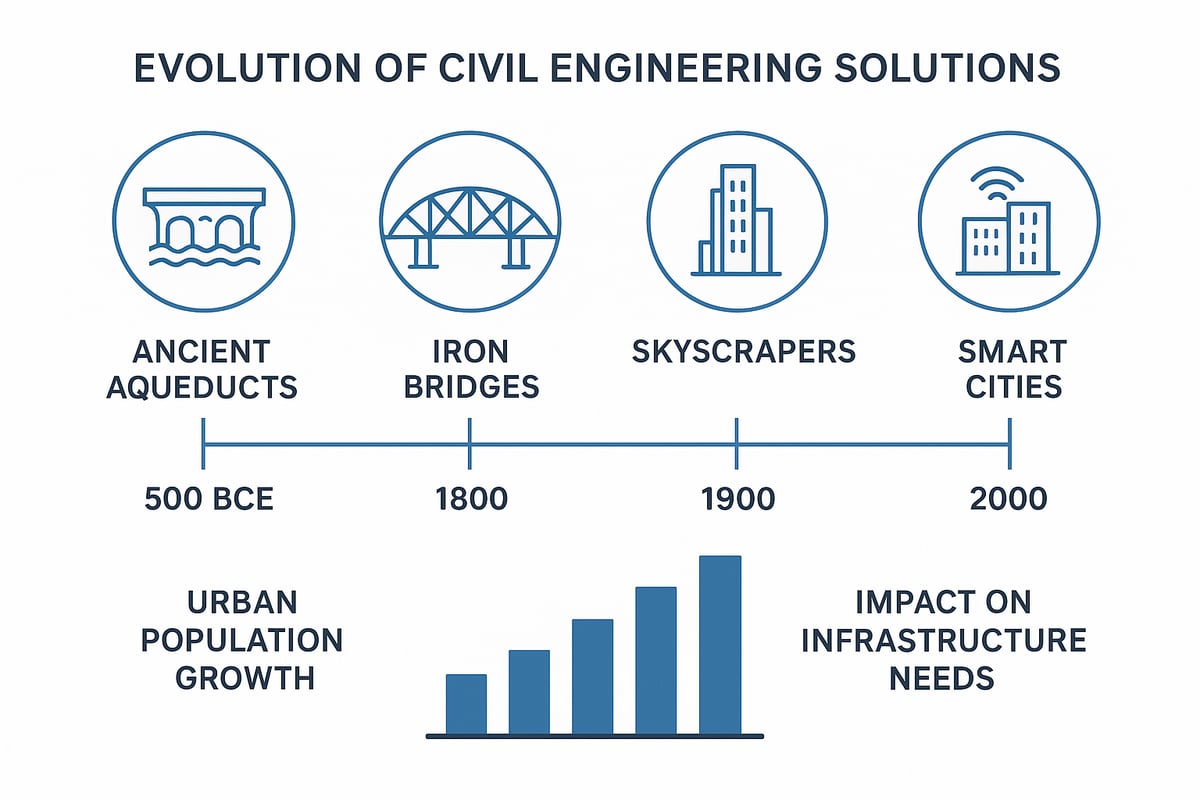
The story of civil engineering solutions is deeply intertwined with the progress of civilization itself. From the first stone bridges to the digital blueprints powering today’s smart cities, civil engineering solutions have consistently shaped the way societies live and grow. Understanding this evolution is key to appreciating how the field is positioned for the future.
Historical Perspective and Key Milestones
Civil engineering solutions have long served as the backbone of societal development. Ancient civilizations built iconic infrastructure, such as Roman aqueducts and Egyptian pyramids, using rudimentary yet effective engineering methods.
As centuries passed, the field saw remarkable milestones:
| Era | Milestone | Impact |
|---|---|---|
| Ancient | Roman roads, aqueducts | Enabled trade and urban growth |
| Industrial | Iron bridges, railways | Revolutionized transport and connectivity |
| 20th Century | Skyscrapers, highways, dams | Urban expansion, resource management |
| 21st Century | Smart cities, digital project management | Efficiency, sustainability, resilience |
The evolution of materials, from stone and timber to steel and reinforced concrete, allowed civil engineering solutions to support larger, more complex projects. Project management advanced with the introduction of computer-aided design and now embraces digital collaboration platforms.
Urbanization and globalization exerted new pressures. Over the past decade, urban population growth has driven infrastructure needs up by 60 percent. This surge challenges engineers to deliver civil engineering solutions that are not only robust but also adaptable and forward-thinking.
Drivers of Change in 2026
Today, the industry stands at the forefront of rapid transformation. Several key drivers are shaping civil engineering solutions in 2026:
- Technological advancements: Artificial intelligence, Internet of Things, automation, and data analytics are revolutionizing the way projects are designed and managed.
- Environmental regulations: Stricter standards push for greener, more efficient practices.
- Sustainability imperatives: The need to minimize carbon footprints and promote resource efficiency is stronger than ever.
- Safety, resilience, and efficiency: Modern civil engineering solutions must address higher expectations for long-term performance and disaster readiness.
- Cross-disciplinary collaboration: Teams now integrate expertise from various fields, enhancing innovation and project outcomes.
For example, Building Information Modeling (BIM) is projected to be adopted in 90 percent of major projects by 2026, reflecting a shift toward digital-first approaches. As highlighted in the Civil Engineering Industry Outlook 2026, these trends are redefining what is possible and setting new benchmarks for excellence in civil engineering solutions.
This dynamic environment requires professionals to stay agile, continuously learning and adapting as new technologies and regulations emerge. The next sections will further explore the innovations driving this exciting evolution.
Core Innovations in Civil Engineering for 2026
The year 2026 is set to redefine what is possible with civil engineering solutions. From the construction site to the urban skyline, new technologies and materials are reshaping how we design, build, and maintain infrastructure. Let's explore the groundbreaking advances that are setting the standard for the industry.
Smart Materials and Advanced Construction Techniques
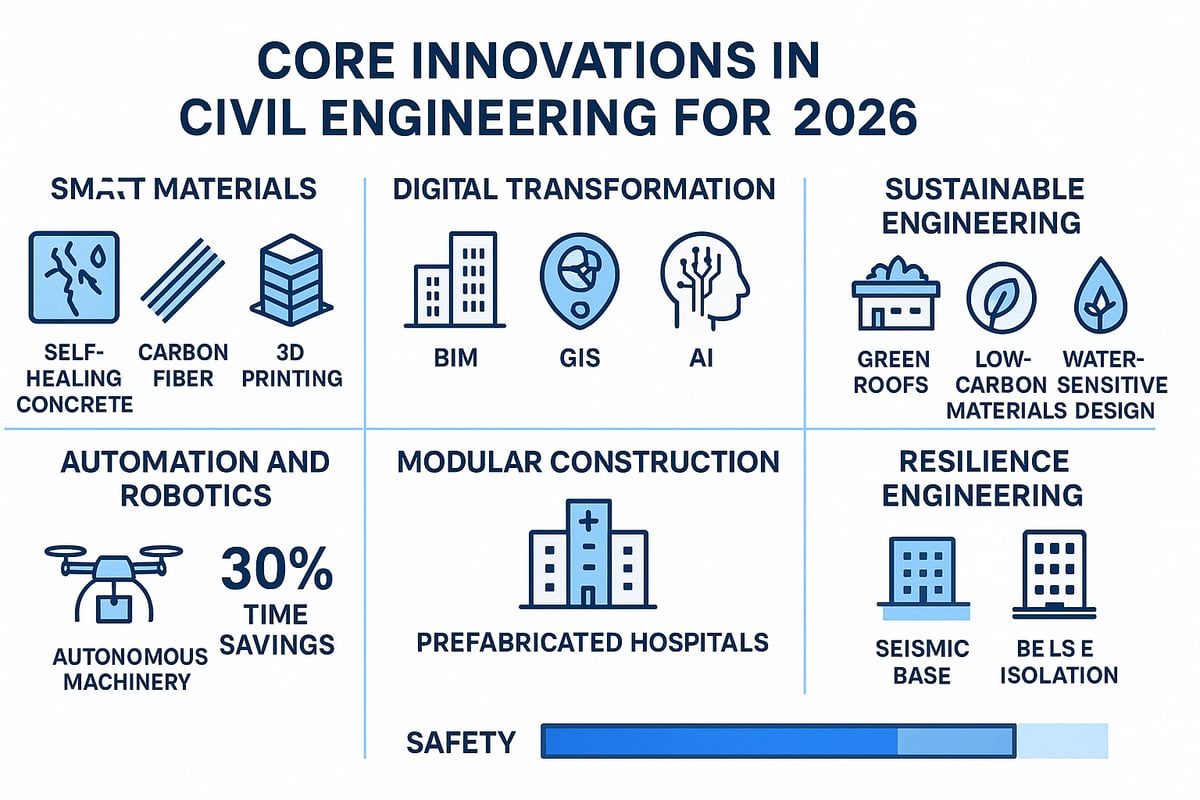
Smart materials are revolutionizing civil engineering solutions by enhancing durability and efficiency. Self-healing concrete can repair its own micro-cracks, extending the lifespan of structures and reducing maintenance costs. Carbon fiber composites are lightweight yet incredibly strong, making them ideal for bridges and high-rise buildings.
3D-printed structures are gaining traction, especially for complex or custom designs. For instance, using 3D printing in bridge construction can halve project timelines. These advanced techniques make it possible to deliver projects faster, safer, and with improved quality. The integration of these materials sets a new benchmark for innovation in the sector.
Digital Transformation: BIM, GIS, and AI
Digital technology is at the core of modern civil engineering solutions. Building Information Modeling (BIM) is now essential for managing the entire lifecycle of infrastructure projects, from design to demolition. Geographic Information Systems (GIS) provide precise site analysis, improving planning and risk assessment.
Artificial intelligence is optimizing design and automating maintenance tasks, while digital twins create real-time virtual replicas for monitoring asset performance. Notably, 75 percent of firms report greater efficiency when digital twins are integrated into their workflows. Digital transformation is no longer optional but a competitive necessity for the industry.
Sustainable Engineering and Green Infrastructure
Today’s civil engineering solutions prioritize sustainability to meet environmental and regulatory demands. Low-carbon materials, such as recycled aggregates and eco-friendly cement, significantly cut emissions. Green roofs and energy-efficient designs reduce urban heat and enhance building performance.
Water-sensitive urban design and advanced stormwater management are vital for resilience. For more details on how these innovations are shaping the industry, explore Sustainable Environmental Engineering Practices. Green infrastructure can lower city temperatures by up to two degrees Celsius, making urban environments healthier and more livable.
Automation and Robotics in Construction
Automation is becoming central to civil engineering solutions, boosting productivity and safety. Drones are widely used for surveying and inspections, providing accurate data with minimal risk to workers. Autonomous machinery handles earthworks and repetitive tasks, ensuring precision and consistency.
Robotic systems are increasingly deployed for hazardous or detail-oriented jobs, reducing the likelihood of human error. These technologies have led to a 30 percent drop in on-site accidents, illustrating their impact on workplace safety. Automation accelerates timelines while maintaining high standards of quality.
Modular and Prefabricated Construction
Modular and prefabricated approaches are streamlining how civil engineering solutions are delivered. Offsite fabrication allows for parallel construction processes, reducing project duration and minimizing site disruption. Prefabricated components are assembled under controlled conditions, ensuring consistent quality.
This method proved crucial during recent health crises, with modular hospitals constructed in a matter of weeks. Modular construction also supports sustainability by cutting waste and enabling easier recycling of components. As demands for speed and adaptability grow, modular solutions are becoming a preferred strategy.
Resilience Engineering and Disaster Mitigation
The focus on resilience is sharpening in civil engineering solutions as climate risks and urban density rise. Designs now incorporate features to withstand earthquakes, floods, and fires, using advanced simulation and modeling for risk assessment. Seismic base isolation systems are increasingly common in high-rise buildings, protecting them from earthquake damage.
Scenario planning and digital testing help engineers anticipate and mitigate potential threats before construction begins. These forward-thinking practices are essential for safeguarding communities and ensuring infrastructure endures under stress.
Key Application Areas of Civil Engineering Solutions
Civil engineering solutions are the backbone of modern infrastructure, enabling progress across diverse sectors. From smarter roads to energy-efficient buildings, these innovations are transforming how communities function. Let’s explore the most impactful application areas shaping the future.
Transportation Infrastructure
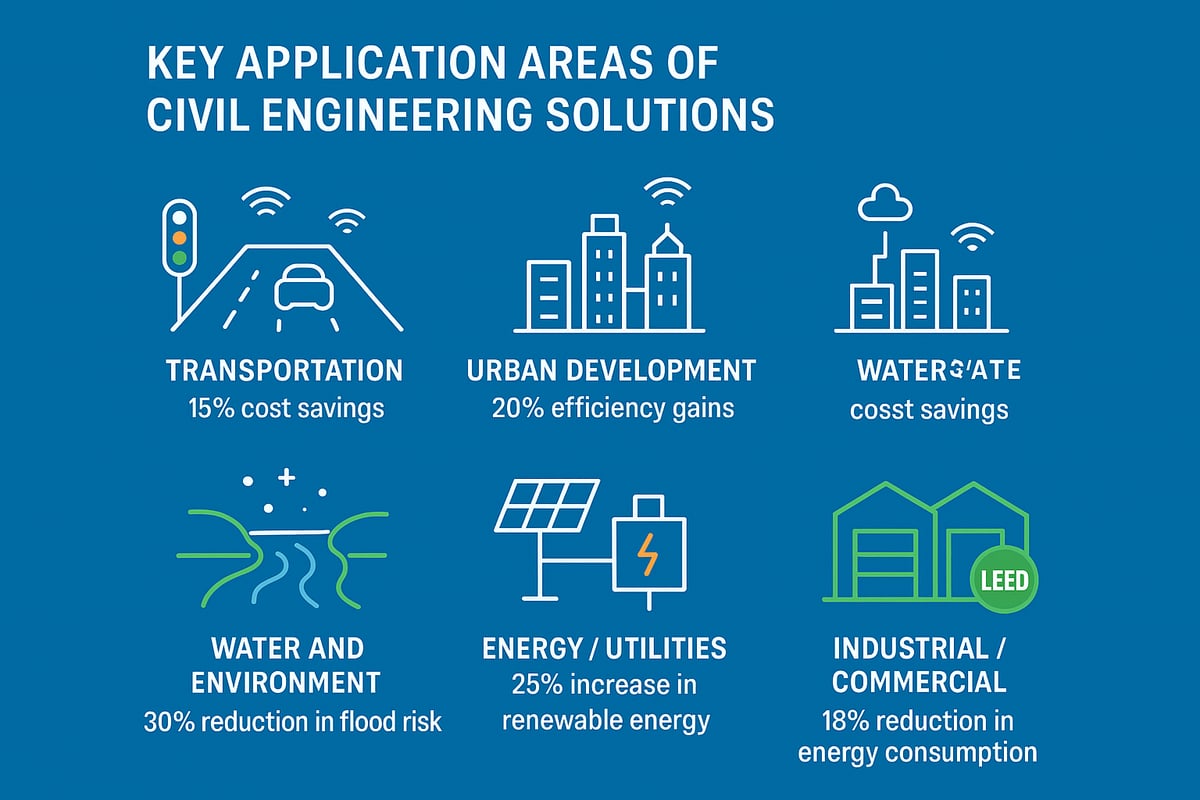
Modern transportation infrastructure relies on civil engineering solutions to enhance safety, efficiency, and sustainability. Smart highways feature embedded sensors that monitor traffic flow and detect hazards in real time. Connected rail systems use predictive analytics to optimize scheduling and maintenance, while sustainable airports incorporate green building principles and advanced materials.
Notably, smart sensors can reduce bridge inspection costs by 40%, freeing up resources for other critical needs. For those seeking deeper insights into the latest advancements, the Transportation Engineering Innovations overview provides a comprehensive look at the newest solutions in mobility infrastructure.
Key features powering this transformation include:
- Automated traffic management systems
- Durable, low-maintenance construction materials
- Integration of renewable energy for stations and terminals
These advances ensure reliable and future-ready mobility for growing populations.
Urban Development and Smart Cities
Urban development is rapidly evolving with civil engineering solutions that prioritize connectivity and sustainability. IoT-enabled infrastructure allows cities to collect and analyze data for smarter planning, resource allocation, and service delivery. Mixed-use developments are designed to promote walkability and reduce reliance on personal vehicles.
Smart city principles are now embedded in 68% of new urban projects, reflecting a shift toward integrated living and working spaces. Transit-oriented design places public transportation at the core of urban planning, making cities more accessible and reducing congestion.
Key benefits in this area include:
- Real-time monitoring of utilities and public spaces
- Energy-efficient lighting and building systems
- Flexible infrastructure adaptable to future needs
These strategies foster resilient, livable urban environments for diverse communities.
Water and Environmental Engineering
Civil engineering solutions are essential for managing water resources and protecting the environment. Advanced water treatment technologies deliver cleaner water with lower energy consumption. Flood control infrastructure, such as levees and retention basins, mitigates the risks of extreme weather events.
Sustainable drainage systems and pollution mitigation efforts help preserve ecosystems while supporting urban growth. The use of AI in flood prediction and response is a standout example, enabling faster, more targeted interventions during emergencies.
Major innovations in this sector include:
- Smart metering for water conservation
- Nature-based solutions like constructed wetlands
- Real-time environmental quality monitoring
These advancements ensure long-term water security and environmental health.
Energy and Utilities Infrastructure
The integration of renewable energy into civil engineering solutions is transforming the utilities sector. Grid and microgrid designs now accommodate solar, wind, and other renewable sources, increasing resilience and reducing emissions. Smart utility networks for water, gas, and electricity enable real-time monitoring and predictive maintenance.
One innovative example is solar-integrated roadways, which provide clean energy for street lighting and traffic systems. These projects showcase the versatility and impact of modern engineering in addressing sustainability goals.
Key developments include:
- Automated fault detection and response systems
- Distributed energy storage solutions
- Infrastructure designed for rapid scalability
Such progress supports the transition to cleaner, more efficient utility networks worldwide.
Industrial and Commercial Facilities
Industrial and commercial developments benefit from civil engineering solutions that emphasize efficiency and sustainability. Sustainable site development reduces energy consumption and environmental impact from the outset. Circular economy principles are increasingly adopted, focusing on resource reuse and waste reduction.
LEED-certified warehouses, for instance, demonstrate how green building practices can lead to a reduced energy footprint and lower operating costs. Industrial parks now integrate renewable energy and smart systems to optimize performance.
Key focus areas involve:
- High-performance building envelopes
- Recyclable and locally sourced materials
- Digital tools for monitoring and optimization
These innovations drive business value while supporting broader environmental objectives.
Sustainability and Circular Economy in Civil Engineering
The shift to sustainability and the circular economy is redefining civil engineering solutions worldwide. As the industry faces mounting environmental and regulatory pressures, professionals are adopting new frameworks to minimize waste, reduce carbon, and ensure long-term value. This section explores the core principles, certifications, innovative practices, adaptation strategies, and the broader benefits driving this transformation.
Principles of Sustainable Civil Engineering
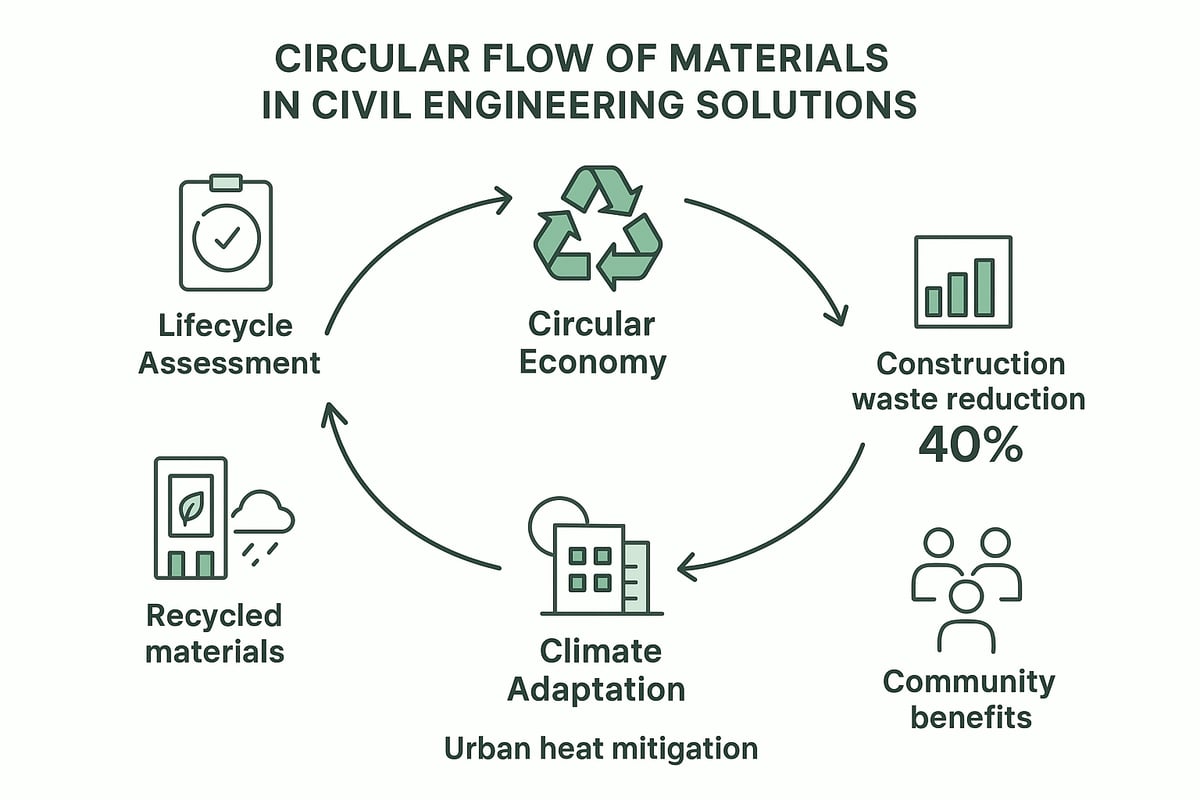
Sustainable civil engineering solutions focus on maximizing resource efficiency while minimizing environmental impact. Lifecycle assessment is central, tracking the energy, water, and materials used from design through decommissioning. The adoption of circular economy models enables projects to reuse materials and reduce waste, cutting construction waste by 35 percent. Holistic approaches, such as those detailed in Circular Economy in the Construction Sector: Advancing Environmental Performance, show how systemic thinking can drive better outcomes. These principles are now foundational to modern infrastructure projects.
Green Certifications and Regulatory Compliance
Achieving recognized green certifications is a key goal for many civil engineering solutions. Standards like LEED and BREEAM ensure projects meet strict sustainability benchmarks. Navigating these evolving regulations requires careful documentation and robust quality controls. Projects that reach platinum certification demonstrate leadership in sustainable practices and often enjoy enhanced reputations. Staying ahead of shifting regulatory landscapes is essential for compliance and long-term success.
Innovations in Waste Reduction and Material Reuse
Modern civil engineering solutions increasingly rely on recycled aggregates, reclaimed materials, and digital tracking systems to minimize waste. Closed-loop construction methods support the reuse of building components, reducing landfill impact. Urban redevelopment projects now use more than 60 percent recycled content, setting new benchmarks for efficiency. Onsite material sorting and real-time data collection ensure that resources are managed responsibly throughout the project lifecycle.
Climate Adaptation and Resilience Strategies
Climate adaptation is a growing priority within civil engineering solutions. Engineers are implementing flood defenses, heat mitigation measures, and disaster-resistant designs to address future risks. Scenario planning and advanced modeling help identify vulnerabilities before construction begins. Coastal cities, for example, are investing in adaptive seawalls to manage rising sea levels. These strategies improve resilience and safeguard communities against climate threats.
Social and Economic Benefits of Sustainable Solutions
Sustainable civil engineering solutions deliver broad social and economic advantages. Communities benefit from improved air quality, reduced urban heat islands, and healthier living environments. Lower operating costs and increased asset value make sustainable projects attractive to investors and stakeholders. Case studies reveal that adopting green infrastructure leads to measurable improvements in both public health and long-term project performance.
Integrating Technology and Data in Civil Engineering
The integration of advanced technology and data analytics is revolutionizing civil engineering solutions. By leveraging digital tools, professionals are enhancing project outcomes, improving safety, and driving sustainability. This shift empowers teams to make informed decisions and deliver smarter, more resilient infrastructure.
The Role of IoT and Real-Time Monitoring
IoT devices are transforming civil engineering solutions by providing continuous, real-time data on structural health, traffic patterns, and utility systems. Wireless sensors embedded in bridges, roads, and buildings capture critical information that supports predictive maintenance and rapid response to potential issues.
- Real-time alerts help prevent costly failures.
- Continuous monitoring extends asset lifespan by 20 percent.
- Data integration offers a holistic view of infrastructure health.
With IoT, civil engineering solutions are more proactive, ensuring safer and longer-lasting assets.
Artificial Intelligence and Machine Learning
Artificial Intelligence is streamlining civil engineering solutions through automation and smart analytics. AI-driven tools optimize design, automate scheduling, and enable advanced quality control across project phases.
- Machine learning algorithms identify risks early.
- Automated scheduling reduces human error.
- Predictive models help allocate resources efficiently.
By embracing AI, civil engineering solutions achieve greater accuracy and reduce project overruns by 25 percent, resulting in improved project delivery.
Digital Twins and Virtual Simulation
Digital twins provide a dynamic, digital replica of physical assets, enhancing civil engineering solutions from design to operation. These virtual models enable teams to test scenarios, detect issues, and engage stakeholders before construction begins.
- Virtual simulation reduces design errors.
- Stakeholder collaboration improves with interactive models.
- Real-time updates reflect actual asset conditions.
Digital twins are now central to civil engineering solutions, allowing for smarter planning and efficient operations.
Data-Driven Decision Making and Analytics
Data analytics empower teams to make strategic decisions throughout the lifecycle of civil engineering solutions. By integrating big data sources and visualization tools, project managers gain insights into cost, performance, and quality.
- Analytics-driven dashboards track project metrics.
- Predictive models forecast maintenance needs.
- Enhanced quality assurance through advanced testing methods.
For more on quality assurance, see the Construction Material Testing Methods, which supports data-driven improvements in civil engineering solutions.
Enhancing Collaboration with Cloud-Based Platforms
Cloud-based platforms are streamlining collaboration in civil engineering solutions by enabling real-time data sharing and communication. Teams can access up-to-date project information from any location, improving transparency and accountability.
- Shared platforms reduce request-for-information cycles by 30 percent.
- Version control ensures everyone works from the latest plans.
- Faster decision-making speeds up project delivery.
By adopting cloud-based tools, civil engineering solutions become more agile and responsive to project demands.
Practical Guide: Adopting Civil Engineering Innovations in 2026
Adopting the latest civil engineering solutions in 2026 demands a strategic, stepwise approach. Organizations must align technology, people, and processes to achieve sustainable, efficient, and resilient outcomes. This practical guide outlines the essential steps for integrating innovation into your next project, ensuring you stay ahead in a rapidly evolving industry.
Step 1: Assessing Project Needs and Objectives
Start by defining clear project goals and understanding the unique challenges your team faces. Engage all stakeholders early, from planners to community members, to capture diverse perspectives.
Assess local regulations, environmental constraints, and sustainability targets. This groundwork ensures that civil engineering solutions are tailored to project requirements and community priorities.
Use checklists and stakeholder interviews to identify desired outcomes and potential risks. Aligning ambitions with available resources sets a strong foundation for innovation.
Step 2: Selecting the Right Technologies and Partners
Evaluate emerging technologies and partners that fit your project’s scope and vision. Prioritize civil engineering solutions with proven scalability, ROI, and compliance with industry standards.
Consider specialized services such as Geotechnical Engineering Services Overview when site conditions demand expert analysis. Multidisciplinary collaboration—bringing together architects, engineers, and IT professionals—strengthens decision-making.
Ask these questions:
- Does the technology integrate with existing systems?
- What is the cost-benefit ratio?
- Are partners experienced in similar projects?
Selecting the right mix of tools and collaborators is key to project success.
Step 3: Building a Skilled, Future-Ready Team
Invest in ongoing training and certification to keep your workforce ahead of the curve. Focus on cross-functional skills and encourage a culture of innovation.
Diversity in backgrounds and expertise enhances creative problem-solving. Civil engineering solutions are most effective when teams blend technical, digital, and soft skills.
Firms investing in staff development report up to 40% higher project success rates. A future-ready team is your most valuable asset.
Step 4: Implementing Lean Project Management
Adopt lean methodologies to streamline workflows and minimize waste. Agile project management enables quick adaptation to changes, improving both schedule and budget control.
Leverage digital tools for scheduling, resource allocation, and quality assurance. Regular stand-up meetings and transparent communication keep teams aligned.
Lean practices applied to civil engineering solutions can reduce project timelines by 15%. Continuous improvement becomes part of the organizational DNA.
Step 5: Ensuring Compliance and Quality Assurance
Meet regulatory requirements and pursue third-party certifications for credibility and marketability. Establish robust testing, monitoring, and reporting systems to ensure safety and performance.
For projects aiming to maximize material reuse and sustainability, consider frameworks like the Probabilistic Grading and Classification System for End-of-Life Building Components. This approach aligns with circular economy principles within civil engineering solutions.
Regular audits and peer reviews further support compliance and quality benchmarks.
Step 6: Measuring Performance and Continuous Improvement
Define key performance indicators (KPIs) covering sustainability, cost, and stakeholder satisfaction. Use real-time dashboards and analytics to monitor progress and quickly address any issues.
Feedback loops—post-project reviews and lessons learned—drive ongoing improvement in civil engineering solutions. Data-driven decisions help teams adapt and optimize for future projects.
A proactive approach ensures your innovations deliver measurable value.
Step 7: Scaling and Replicating Successful Solutions
Document best practices and lessons learned for future reference. Share knowledge across teams and participate in industry partnerships to accelerate adoption of effective civil engineering solutions.
Scaling up involves adapting proven strategies to new contexts, such as city-wide smart water management programs. Replication is easier when processes and outcomes are clearly recorded.
By fostering a culture of continuous learning, organizations can lead industry transformation.
Future Outlook: Trends Shaping Civil Engineering Beyond 2026
Looking ahead, the landscape of civil engineering solutions is poised for dramatic transformation as we move beyond 2026. The integration of quantum computing, advanced robotics, and nanomaterials is expected to redefine what is possible in infrastructure design, construction, and maintenance.
Artificial intelligence will become central to autonomous infrastructure management, enabling real-time decision-making and self-optimizing systems. Quantum computing promises to solve complex engineering problems at unprecedented speeds, while robotics and nanomaterials will deliver structures that are safer, longer-lasting, and more efficient.
A growing emphasis on climate adaptation will shape civil engineering solutions, as cities and nations invest in resilient infrastructure to withstand more frequent and severe weather events. Social equity will also come to the forefront, with projects increasingly designed to ensure accessibility, community well-being, and inclusive growth.
The table below highlights some of the key trends expected to drive the sector forward:
| Trend | Projected Impact |
|---|---|
| Quantum Computing | Faster, more accurate simulations |
| Advanced Robotics | Safer, more precise construction |
| Nanomaterials | Greater durability, new capabilities |
| AI & Automation | Autonomous infrastructure management |
| Climate Adaptation | Resilient, sustainable cities |
| Public Engagement | Participatory, community-focused design |
| Global Collaboration | Mega-projects across borders |
As investment in smart infrastructure is projected to double by 2030, regulatory frameworks and client expectations will evolve rapidly. Stakeholder engagement and participatory design will be essential, ensuring that civil engineering solutions are both innovative and responsive to societal needs. For insights into how stakeholders view the economic implications of these evolving strategies, see Stakeholder Perspectives on Circular Construction Costs and Benefits.
In this dynamic environment, civil engineering solutions will increasingly rely on data-driven approaches, cross-disciplinary teamwork, and adaptive strategies. The future belongs to those who embrace change, prioritize resilience, and champion sustainable, inclusive progress.
As you consider the incredible advancements in civil engineering—from smart materials and digital transformation to sustainable practices and resilient design—it becomes clear that staying ahead means partnering with experts who truly understand these innovations. At ZALIG Consulting Ltd, we’re committed to helping you navigate the evolving landscape of 2026 and beyond, offering tailored geotechnical, environmental, laboratory, and material testing solutions across Alberta. If you’re ready to elevate your next project with proven expertise and cutting edge technology, let’s connect and discuss how we can support your goals.
Contact Us: info@zalig.ca or +1 800 515 0497