

Civil engineering plans are at the core of every successful infrastructure project, shaping how our cities and communities evolve. In 2026, these plans are being transformed by new industry standards, cutting-edge technologies, and a strong focus on sustainability.
Understanding civil engineering plans is essential for professionals, stakeholders, and decision-makers who want to ensure project success and regulatory compliance. This article delivers a comprehensive, step-by-step guide to civil engineering plans for 2026. You will learn the fundamentals, explore plan types, review regulatory changes, discover digital tools, and gain insight into best practices and common pitfalls.
Fundamentals of Civil Engineering Plans
Civil engineering plans are the backbone of every successful infrastructure project. These documents set the technical foundation for everything from small site developments to major urban expansions. Without clear and accurate civil engineering plans, projects risk delays, budget overruns, and compliance failures.
What Are Civil Engineering Plans?
Civil engineering plans are comprehensive technical documents that guide the entire lifecycle of a construction project. They define how land, structures, and infrastructure will be developed, starting from concept to final construction. Unlike architectural plans, which focus on aesthetics and layout, civil engineering plans emphasize technical specifications and functionality.
These plans communicate essential requirements such as grading, drainage, and structural details to all project stakeholders. Accurate civil engineering plans ensure that every party understands the project's scope, reducing the risk of miscommunication and costly revisions.
Core Components of Civil Engineering Plans
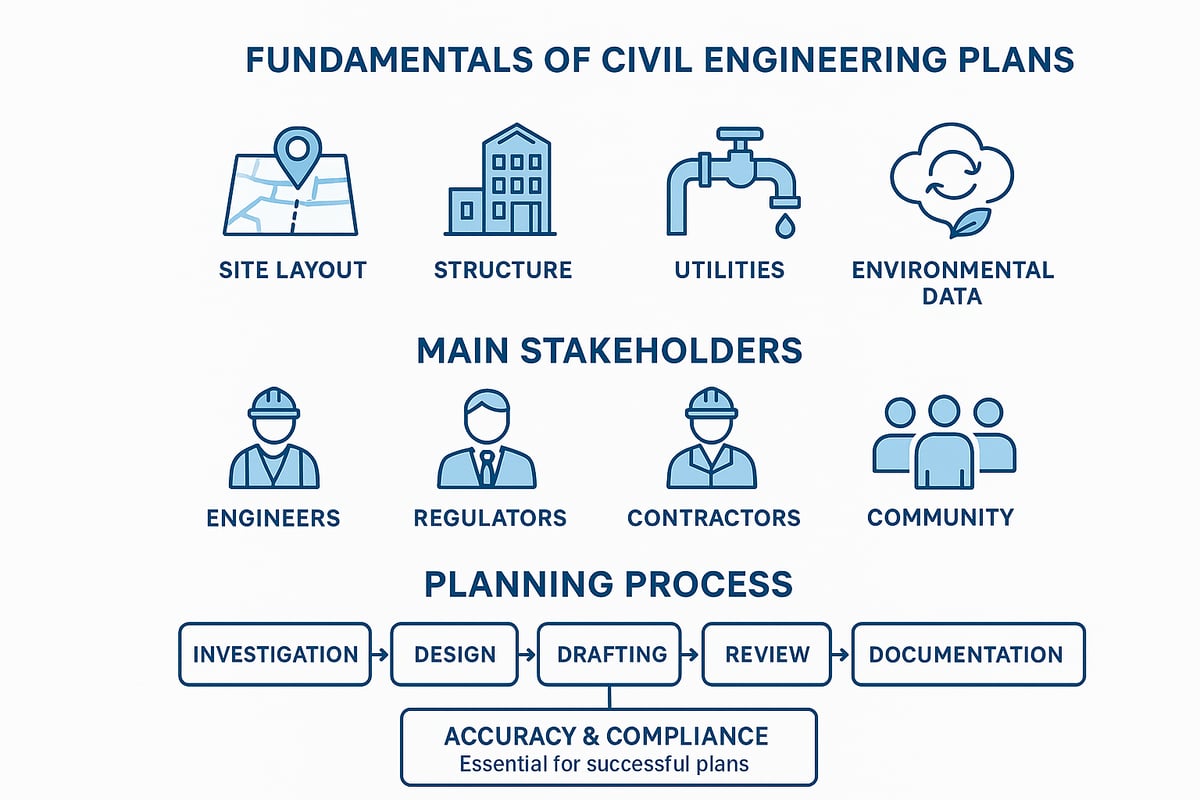
A standard set of civil engineering plans includes several core elements:
- Site layout and grading plans showing land contours and elevations.
- Structural and foundation details for stability and safety.
- Utility and drainage schematics for water, wastewater, and electrical systems.
- Material specifications and a legend for symbols and abbreviations.
- Integration of environmental and geotechnical data for informed decision making.
For example, a municipal road project plan set might include detailed grading, pavement layers, drainage systems, and utility corridors. Each component plays a vital role in achieving functional, safe, and sustainable infrastructure.
Stakeholders Involved in Plan Development
Developing civil engineering plans is a collaborative process involving a diverse group of stakeholders:
- Civil engineers lead the technical design and specifications.
- Architects and planners contribute layout and integration expertise.
- Regulatory authorities and permitting agencies review for compliance.
- Contractors and construction managers handle practical execution.
- Environmental consultants ensure sustainability and regulatory alignment.
- Community members provide feedback and local insight.
This multidisciplinary approach ensures that civil engineering plans address technical, regulatory, and social requirements, resulting in more robust and accepted projects.
The Planning Process: Step-by-Step Overview
Civil engineering plans evolve through a structured process:
- Initial site investigation and feasibility studies assess constraints and opportunities.
- Conceptual design and preliminary drawings outline the project's vision.
- Detailed engineering and technical drafting refine specifications and resolve challenges.
- Review, revisions, and approvals ensure plans meet all standards.
- Final construction documentation prepares the project for execution.
Each step builds on the last, providing stakeholders with a clear path from concept to completion. Proper sequencing reduces errors and streamlines the entire development process.
Importance of Accuracy and Compliance
Precision in civil engineering plans is essential. Errors or omissions can lead to costly delays, safety risks, or regulatory penalties. Meeting local and national standards is not optional but a requirement for project approval and long-term success.
A notable case involved a municipal project that faced significant delays due to inaccurate grading plans, underscoring the importance of quality assurance. For further insight into how quality control safeguards both accuracy and compliance in civil engineering plans, see this resource on Quality Control and Assurance in Engineering.
Types of Civil Engineering Plans for 2026
In 2026, civil engineering plans are more diverse and specialized than ever before. Each plan type serves a unique purpose in guiding design and construction for safe, efficient, and sustainable infrastructure. Understanding the distinctions between these plans is essential for professionals and stakeholders involved in any civil project.
Site Development and Grading Plans
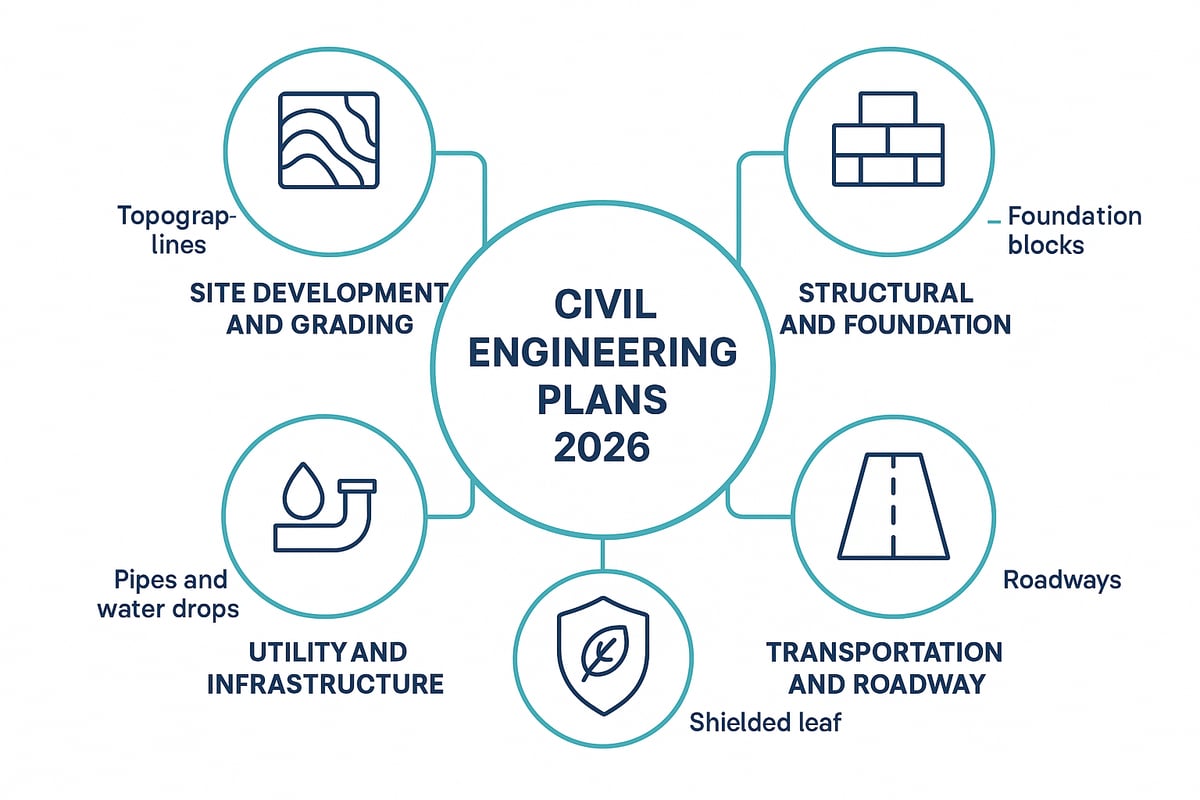
Site development and grading plans are the backbone of civil engineering plans, setting the stage for all subsequent work. These plans detail land preparation, including grading, earthworks, and shaping the site for optimal drainage and usability.
Key elements include:
- Contour lines and elevations
- Cut and fill calculations
- Stormwater flow paths
- Limits of disturbance
For example, a residential subdivision grading plan will show how the land is leveled, where slopes are adjusted, and how water will move across the site. Accurate civil engineering plans in this category ensure efficient site use and reduce risks of flooding or erosion.
Structural and Foundation Plans
Structural and foundation plans form a core component of civil engineering plans for 2026, detailing how buildings, bridges, and other structures are anchored and supported. These plans integrate information from geotechnical surveys, specifying foundation types, reinforcement, and materials.
Typical features include:
- Footing and pile layouts
- Retaining wall sections
- Reinforcement schedules
- Material specifications
A bridge foundation plan, for instance, outlines load-bearing requirements and soil interactions. For more insight into subdivision structural planning, see Subdivision Structural Plan Details. Accurate structural plans are vital for ensuring safety and long-term stability.
Utility and Infrastructure Plans
Utility and infrastructure plans are essential civil engineering plans, mapping out the backbone systems serving a project. They coordinate water supply, wastewater, stormwater, and electrical layouts, ensuring seamless integration with municipal systems.
Key considerations:
- Pipe routes and sizes
- Manhole and valve placements
- Stormwater detention systems
- Sustainability and resilience features
An urban water supply network plan, for example, illustrates how potable water is routed through a community. Effective utility plans support public health, efficiency, and adaptability to future needs.
Transportation and Roadway Plans
Transportation and roadway plans are integral to civil engineering plans, focusing on the safe and efficient movement of people and goods. These plans detail road alignments, profiles, cross-sections, and include provisions for all users.
Components include:
- Roadway geometric design
- Traffic flow patterns
- Safety features (signals, signage)
- Pedestrian and cycling infrastructure
A complete street design for an urban corridor demonstrates how modern civil engineering plans prioritize multimodal access and safety. These plans help shape communities that are accessible and resilient.
Environmental and Erosion Control Plans
Environmental and erosion control plans are critical civil engineering plans that protect sensitive ecosystems and comply with regulations. These plans outline measures to prevent sediment loss, manage construction impacts, and integrate findings from environmental impact assessments.
Key elements:
- Erosion and sediment control devices
- Protected area boundaries
- Mitigation strategies for sensitive habitats
- Regulatory compliance documentation
For example, a wetland protection plan for a highway project details how construction will avoid or minimize environmental harm. These plans ensure projects meet sustainability goals and legal requirements.
Regulatory and Industry Updates for 2026
The regulatory landscape for civil engineering plans is rapidly evolving as we approach 2026. New codes, digital requirements, and sustainability mandates are reshaping how professionals design and submit projects. Staying updated is crucial for success and compliance.
Evolving Codes and Standards
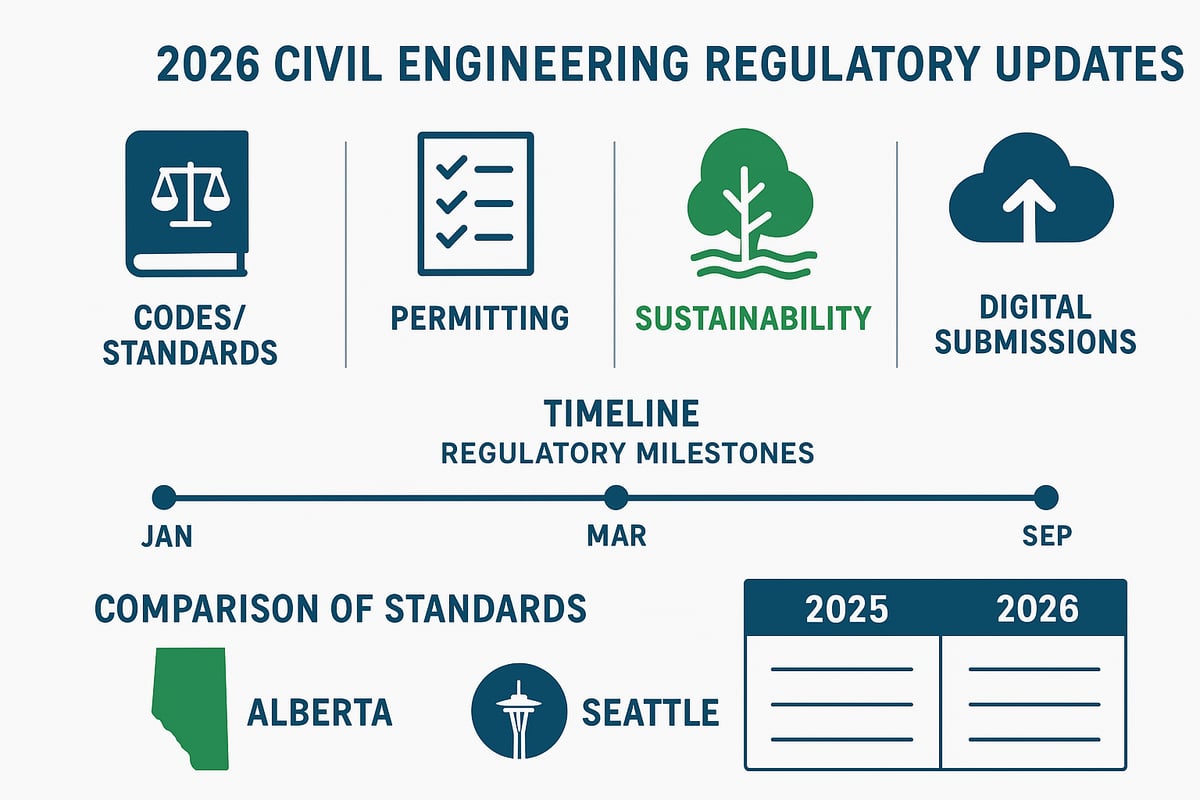
In 2026, national and provincial regulations for civil engineering plans are seeing significant changes. Updated building codes emphasize sustainability, climate resilience, and stricter stormwater management. For example, new runoff calculation standards and green infrastructure requirements are now standard practice.
Municipalities are also adopting their own specifications. Seattle’s 2026 Seattle Standard Specifications and Plans illustrate how cities are setting benchmarks for civil engineering plans that integrate environmental and community priorities.
Staying informed on these evolving standards is vital for ensuring project approval and long-term success.
Permitting and Approval Processes
The process for submitting civil engineering plans has become more structured and transparent. Applicants must often undergo public consultation and comprehensive environmental reviews before approval. Regulatory authorities have introduced digital portals to streamline the submission process, which reduces paperwork and enhances tracking.
Common reasons for plan rejection include incomplete documentation or failure to address environmental impacts. In Alberta, the average approval timeline now ranges from several weeks to a few months, depending on project complexity and community feedback.
Careful preparation and clear communication with agencies help avoid costly delays.
Sustainability and Green Infrastructure Mandates
Sustainability is now a core focus for civil engineering plans in 2026. Low-impact development (LID) is frequently required, with incentives for projects that incorporate green roofs, permeable pavements, and urban tree planting. Municipalities are adopting policies that prioritize stormwater reuse and habitat restoration.
A recent case study highlights a city that implemented green infrastructure policies, leading to reduced flooding and improved public spaces. Civil engineering plans must now demonstrate how they minimize environmental impact and support climate adaptation strategies.
These mandates align with industry trends and public expectations for resilient infrastructure.
Digital Submission and Record-Keeping
Digital transformation continues to impact how civil engineering plans are managed. Many jurisdictions now require digital plan submissions, complete with electronic signatures and secure record-keeping. This shift ensures better version control, audit trails, and transparency throughout the project lifecycle.
Alberta’s digital permitting platform is a prime example, allowing for real-time updates and easier collaboration among stakeholders. The benefits include faster review times and fewer errors compared to manual processes.
Embracing digital tools is essential for compliance and efficiency in today’s regulatory environment.
Digital Tools and Technologies in Civil Engineering Planning
Digital tools have revolutionized how civil engineering plans are created, reviewed, and implemented. With rapid advancements in technology, professionals can now deliver projects with greater accuracy, efficiency, and sustainability. For those looking to stay ahead in 2026, mastering these digital solutions is essential. Explore the most impactful tools shaping the future of civil engineering plans.
CAD and BIM Integration
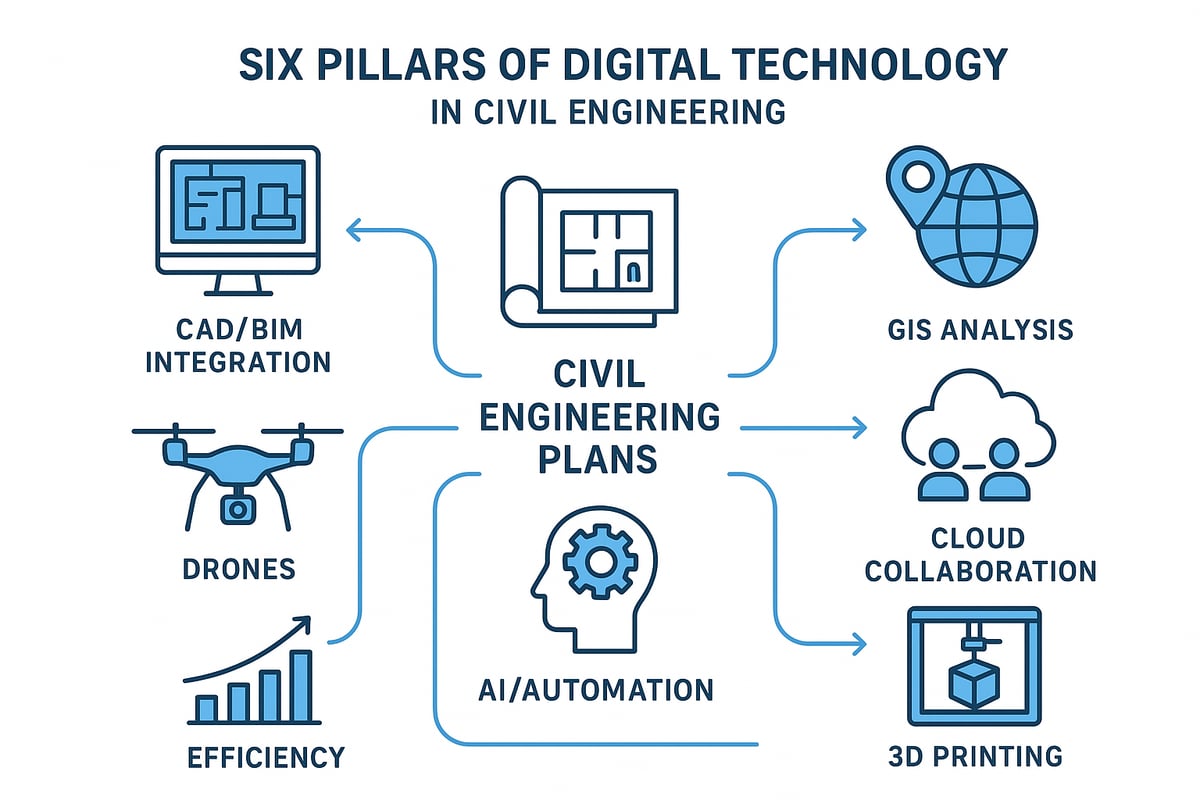
Computer-Aided Design (CAD) remains foundational for drafting civil engineering plans. CAD software enables precise technical drawings, ensuring all specifications are communicated clearly.
Building Information Modeling (BIM) takes this further by fostering real-time collaboration between architects, engineers, and contractors. BIM allows for 3D visualization, clash detection, and seamless data sharing. A BIM-integrated workflow reduces errors in civil engineering plans and streamlines project delivery.
For example, large infrastructure projects now rely on BIM to coordinate multi-disciplinary teams, minimize rework, and improve project outcomes. Adopting CAD and BIM is no longer optional for modern civil engineering plans.
GIS and Geospatial Analysis
Geographic Information Systems (GIS) are critical for analyzing spatial data in civil engineering plans. GIS tools map topography, utilities, and environmental constraints, providing a comprehensive site overview.
By integrating GIS, planners can overlay data layers, identify potential risks, and optimize designs for land use and sustainability. GIS also supports regulatory compliance by tracking sensitive areas and protected zones within civil engineering plans.
For instance, flood risk assessments leverage GIS to model water flow and inform drainage design. This level of analysis is vital for resilient, future-ready civil engineering plans.
Drones and Remote Sensing
Drones have transformed site investigation and monitoring for civil engineering plans. Aerial surveys capture high-resolution imagery, generate accurate topographic maps, and measure stockpile volumes with remarkable speed.
Remote sensing technology reduces the need for manual site visits, saving time and resources. Data collected by drones is easily integrated into civil engineering plans, enhancing decision-making and progress tracking.
Regulatory compliance is essential when deploying drones, especially in urban areas. Still, their benefits for earthworks calculations and project documentation are significant, making drones a valuable asset for civil engineering plans.
Cloud Collaboration Platforms
Cloud-based platforms are now the backbone of collaboration for civil engineering plans. These tools allow real-time document sharing, version control, and secure access for all project stakeholders, regardless of location.
Remote teams can review and update civil engineering plans simultaneously, reducing delays and miscommunication. Enhanced transparency and audit trails help ensure all revisions are tracked, supporting accountability and quality assurance.
For example, civil teams managing multi-site projects benefit from cloud collaboration platforms, as they enable seamless workflow integration and faster decision-making in civil engineering plans.
Automation and AI in Plan Review
Automation and artificial intelligence (AI) are streamlining the review and optimization of civil engineering plans. Automated code checks accelerate compliance verification, while AI-driven tools suggest design improvements based on historical data and best practices.
These technologies minimize human error and free up engineers to focus on complex problem-solving. AI is especially effective in structural analysis, identifying potential issues before construction begins.
Incorporating automation in civil engineering plans leads to higher accuracy, faster approvals, and reduced risk, making it a game-changer for the industry.
3D Printing and Rapid Prototyping
3D printing is emerging as a practical tool for visualizing civil engineering plans. Physical models created from digital designs help stakeholders better understand project concepts and design intent.
Rapid prototyping supports stakeholder engagement by making abstract plans tangible. Although adoption is still growing, 3D printing is proving valuable for design validation, especially in complex projects like bridge construction.
For a comprehensive overview of essential digital tools shaping the industry, see this guide to the top digital tools for civil engineers in 2026. These innovations are setting new standards for civil engineering plans.
Best Practices for Creating Civil Engineering Plans in 2026
Creating effective civil engineering plans in 2026 requires strict adherence to best practices. These standards ensure accuracy, foster collaboration, and support regulatory compliance, resulting in safer and more resilient infrastructure. Embracing the following strategies will help teams deliver successful civil engineering plans that meet modern demands.
Ensuring Data Accuracy and Consistency
High-quality data forms the backbone of reliable civil engineering plans. Begin with accurate topographic surveys and geotechnical investigations to eliminate guesswork. For instance, using a Geotechnical Site Investigation Subdivision service can reveal soil conditions, helping prevent costly errors down the line.
Quality assurance protocols are vital. These include:
- Double-checking all calculations
- Validating field measurements
- Maintaining version control for plan revisions
Thorough documentation and use of digital tools minimize errors and ensure each element of the civil engineering plans is precise and consistent.
Collaboration and Communication
Civil engineering plans are rarely developed in isolation. Effective collaboration between engineers, architects, consultants, and stakeholders is critical for project success. Digital platforms, such as cloud-based project management tools, enable real-time sharing and feedback, reducing miscommunication.
Best practices include:
- Regular stakeholder meetings
- Clear role definitions for each team member
- Shared access to plan documents and revisions
Integrated project delivery (IPD) approaches further streamline communication, ensuring all voices are heard and all civil engineering plans reflect collective expertise.
Incorporating Sustainability and Resilience
Modern civil engineering plans must address sustainability and resilience from the outset. This means considering climate adaptation, material selection, and environmental impact at every stage.
Key strategies:
- Incorporate flood-resilient and green infrastructure features
- Select materials with low environmental footprints
- Design for durability against extreme weather events
For example, civil engineering plans for flood-prone areas might include elevated roadways or permeable pavements, ensuring long-term resilience and compliance with sustainability mandates.
Regulatory Compliance and Risk Management
Staying current with evolving codes and standards is non-negotiable for civil engineering plans. Document all compliance measures, and use regulatory checklists to avoid omissions.
Risk management should be embedded into every phase. This includes:
- Conducting risk assessments for design choices
- Preparing mitigation strategies for identified hazards
- Tracking regulatory updates and integrating them into documentation
A systematic approach to compliance reduces approval delays and enhances the credibility of civil engineering plans.
Continuous Professional Development
Ongoing education is essential for professionals involved in civil engineering plans. Training in the latest digital tools, standards, and sustainability practices keeps teams competitive and compliant.
Best practices for development:
- Attend industry workshops and conferences
- Pursue certifications in specialized areas
- Participate in knowledge-sharing sessions within the organization
Civil engineering plans benefit directly from a workforce committed to continuous learning, ensuring every project leverages the most current knowledge and techniques.
Common Challenges and How to Overcome Them
Civil engineering plans are essential to the success of any project, but even the best plans are not immune to challenges. In 2026, professionals face a range of obstacles, from complex regulations to unpredictable site conditions. Understanding these issues and knowing how to address them will help ensure smoother project delivery and improved outcomes.
Navigating Complex Regulations
Frequent code changes and evolving standards pose significant hurdles for those developing civil engineering plans. Keeping up with new requirements can be time-consuming and increases the risk of non-compliance.
To overcome this, teams should regularly review updated codes and use regulatory checklists. Leveraging digital technologies transforming civil engineering can also streamline compliance, as specialized software can automate checks and alert users to changes. Staying proactive with training and digital tools helps prevent costly mistakes and project delays.
Managing Multidisciplinary Teams
Collaboration between engineers, architects, consultants, and contractors is vital for effective civil engineering plans. However, communication breakdowns and unclear roles often lead to errors or missed details.
Implementing project management platforms and regular coordination meetings ensures all stakeholders are aligned. Clearly defining responsibilities and using shared digital workspaces can minimize misunderstandings. By fostering open communication and leveraging technology, teams can work together efficiently, reducing rework and improving project outcomes.
Budget and Schedule Constraints
Balancing design quality with limited budgets and tight timelines is a common challenge in civil engineering plans. Cost overruns and delays are frequent, often due to unforeseen complexities or scope changes.
Adopting value engineering techniques, phased planning, and continuous monitoring of both costs and schedules can mitigate these risks. Teams should build in contingencies and remain flexible to adapt as circumstances evolve. Transparent tracking and frequent reviews help ensure projects remain on target and within budget.
Addressing Site-Specific Issues
Unexpected geotechnical or environmental conditions can disrupt even the most carefully prepared civil engineering plans. Soil contamination, unstable ground, or protected habitats often require adaptive strategies.
Early site investigations and ongoing monitoring are essential. When issues arise, adaptive design solutions and contingency plans can keep projects moving forward. For example, soil remediation or realignment of infrastructure can address obstacles while maintaining compliance and safety. Flexibility and robust planning are key to overcoming these site-specific hurdles.
As you look ahead to the evolving standards and technologies shaping civil engineering plans in 2026, having the right expertise on your side can make all the difference. Whether you are navigating updated codes, integrating sustainability, or ensuring precise testing and data analysis, we’re here to support your goals and help you achieve successful project outcomes. If you have questions or want tailored guidance for your next project, let’s connect—you can reach our experienced team directly at Contact Us: info@zalig.ca or +1 800 515 0497.