

As cities grow and infrastructure needs become more complex, the importance of geotechnical engineering in civil projects has never been greater. Civil engineering geotechnical engineering stands at the forefront of ensuring the safety, resilience, and sustainability of our built environment.
This essential guide gives you a comprehensive overview for 2026, from foundational concepts and site investigation methods to the latest digital technologies shaping the industry. You will also discover real-world applications, sustainability trends, education pathways, and the evolving career landscape.
By mastering these principles, you can contribute to safer, more efficient, and future-ready infrastructure. Ready to stay ahead in civil engineering geotechnical engineering? Explore this guide for actionable insights and up-to-date industry knowledge.
Core Principles of Geotechnical Engineering
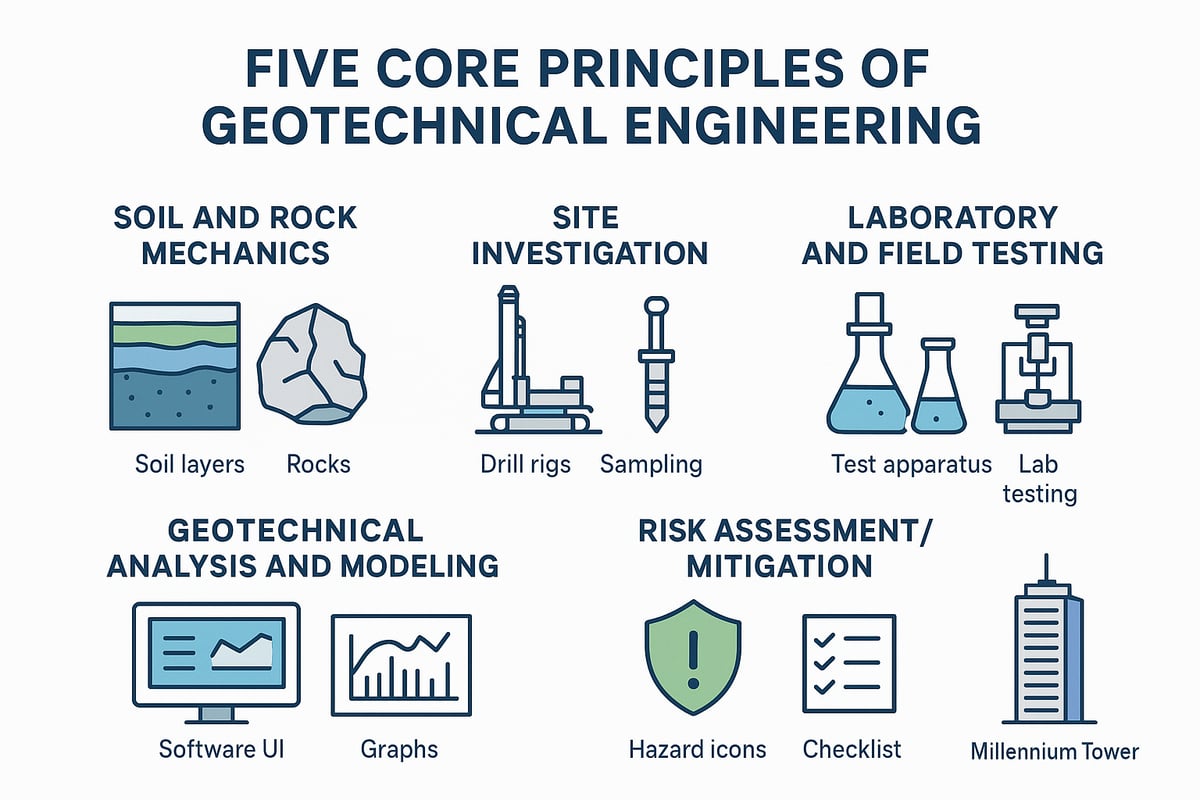
Geotechnical engineering is the backbone of safe, efficient, and sustainable civil infrastructure. The core principles of this discipline provide the analytical and practical foundation for every successful project in civil engineering geotechnical engineering. Understanding these fundamentals is essential for professionals who want to navigate the evolving challenges of the built environment.
Understanding Soil and Rock Mechanics
Soil and rock mechanics serve as the scientific foundation for civil engineering geotechnical engineering. These principles help engineers assess the strength, compressibility, and permeability of natural materials, which directly impact foundation stability and structural safety. For instance, the Millennium Tower in San Francisco highlights the consequences of inadequate soil analysis, as its foundation settlement led to significant structural concerns. Since soil is the most variable engineering material, rigorous study of its properties is critical. According to industry data, proper analysis can prevent costly failures and ensure that every aspect of civil engineering geotechnical engineering is built on solid ground. For a deeper dive into these principles, explore the Fundamentals of geotechnical engineering.
Site Investigation and Characterization
Before any construction begins, site investigation is a key phase in civil engineering geotechnical engineering. The primary goal is to gather accurate subsurface information using drilling, sampling, and in-situ testing methods like the Standard Penetration Test (SPT) and Cone Penetration Test (CPT). Geophysical techniques further enhance the understanding of site conditions. Major infrastructure projects now employ advanced site characterization to identify potential risks early. By investing in thorough investigations, project teams can minimize delays and avoid unforeseen costs, making this process indispensable in civil engineering geotechnical engineering.
Laboratory and Field Testing
Laboratory and field testing validate the assumptions made during initial site analysis in civil engineering geotechnical engineering. Laboratory tests such as triaxial, consolidation, and permeability tests provide essential data on soil behavior, while field tests like plate load, vane shear, and pressuremeter tests offer real-world insights. Integrating results from both environments leads to more reliable design parameters. For example, laboratory testing is vital in confirming theoretical models, ensuring that civil engineering geotechnical engineering solutions are both safe and efficient.
Geotechnical Analysis and Modeling
Modern civil engineering geotechnical engineering relies on both analytical and numerical methods to predict soil and structural behavior. Analytical approaches, such as limit equilibrium, are complemented by advanced numerical modeling using software like PLAXIS and GeoStudio. Constitutive modeling allows engineers to simulate complex soil responses under various loads. For example, urban slope stability assessments benefit from these tools, enabling safer and more cost-effective designs. Advanced modeling has become an industry standard, leading to improved performance in civil engineering geotechnical engineering projects.
Risk Assessment and Mitigation
Risk assessment is central to civil engineering geotechnical engineering, as projects face hazards like settlement, liquefaction, and landslides. Engineers use both quantitative and qualitative frameworks to evaluate these risks. Mitigation strategies include ground improvement, design modifications, and continuous monitoring. Lessons from high-profile projects, such as urban tunnel construction, underscore the value of proactive risk management. Studies reveal that early risk assessment reduces failure rates by up to 30 percent, making it a cornerstone of responsible civil engineering geotechnical engineering practice.
Modern Technologies and Innovations in Geotechnical Engineering
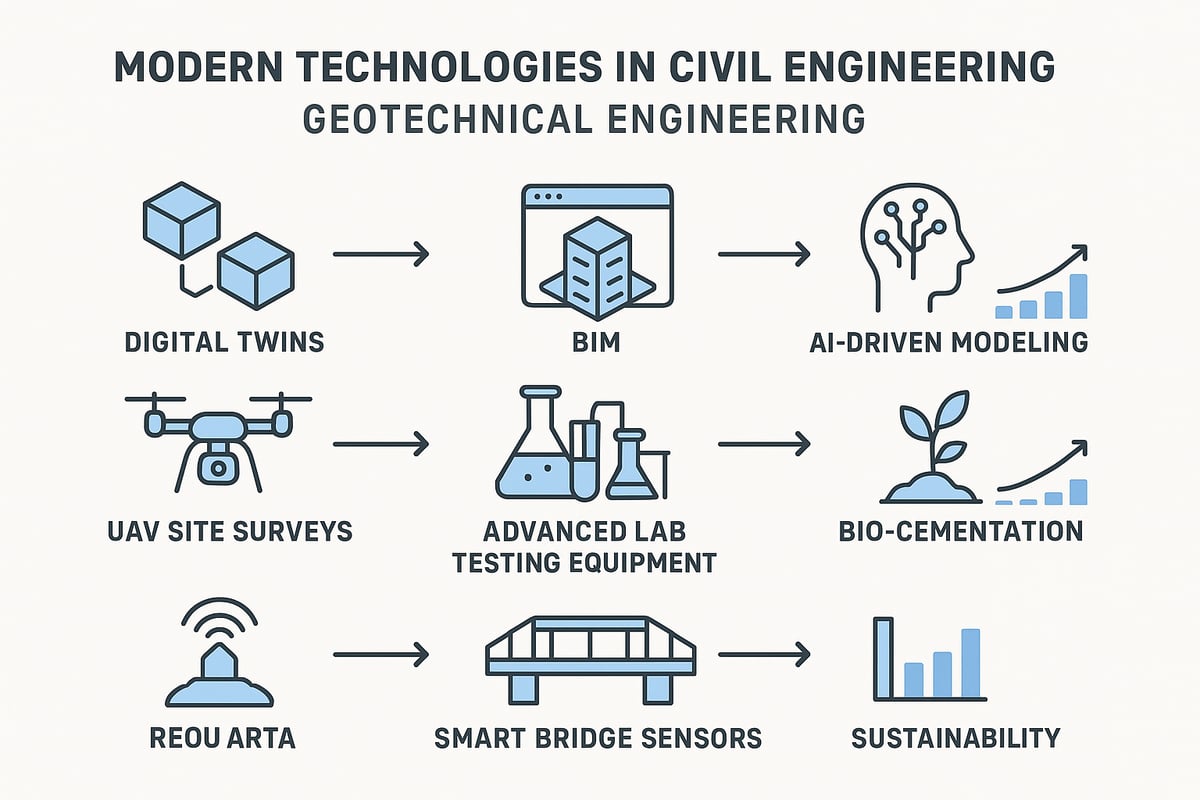
Modern advances are transforming civil engineering geotechnical engineering at a rapid pace. New tools and digital processes are reshaping how engineers analyze, design, and monitor ground conditions. These innovations drive safer, more sustainable infrastructure and keep professionals at the forefront of their field.
Digitalization and Data-Driven Approaches
Digitalization is revolutionizing civil engineering geotechnical engineering through tools like BIM, GIS, and digital twins. These platforms centralize project data, making collaboration seamless and reducing costly errors. Real-time data acquisition from embedded sensors enables ongoing monitoring of ground performance.
For example, smart bridges such as the Kavita and Lalit Bahl Smart Bridge use sensor networks to track movement and stress. This approach allows engineers to make data-driven decisions, respond proactively to changes, and optimize maintenance schedules.
The integration of digital workflows ensures that projects stay on track and that information is always up to date. Geo-Congress 2026 Conference Details will showcase the latest digital innovations in civil engineering geotechnical engineering.
Advanced Testing and Monitoring Techniques
Innovation in testing and monitoring is a cornerstone of civil engineering geotechnical engineering. Non-invasive geophysical methods like ground penetrating radar (GPR) and seismic tomography provide detailed subsurface images without disturbing the ground.
Remote sensing and UAVs offer rapid, large-area site surveys, while Raman spectroscopy is now used for advanced chemical analysis of soils. Purdue University’s research highlights how these tools identify anomalies early, reducing the risk of unforeseen problems.
By incorporating these technologies, engineers gain a better understanding of site conditions. This leads to more accurate designs and fewer surprises during construction.
Sustainable Ground Improvement Methods
Sustainability is a major driver in civil engineering geotechnical engineering today. Green ground improvement methods, such as biogeotechnics and recycled materials, are gaining traction for their environmental benefits. Soil stabilization now considers both strength and ecological impact.
One notable method is bio-cementation, which uses natural processes to bind soil particles and prevent erosion. Projects using these techniques meet regulatory standards and address the growing demand for green construction.
Adopting sustainable practices in civil engineering geotechnical engineering not only protects the environment but also supports long-term infrastructure resilience.
AI and Machine Learning Applications
Artificial intelligence is reshaping civil engineering geotechnical engineering by automating data interpretation and enhancing predictive modeling. AI-driven algorithms analyze vast datasets to forecast soil behavior and identify failure risks before they occur.
Machine learning streamlines design optimization, reducing human error and expediting project delivery. Academic programs now include AI as a core skill for future geotechnical engineers.
With AI, civil engineering geotechnical engineering professionals can tackle complex challenges more efficiently, ensuring safer and more reliable results.
Innovations in Foundation and Retaining Structures
Material science and construction methodologies are advancing foundation and retaining solutions in civil engineering geotechnical engineering. High-performance concretes and geosynthetics deliver greater durability and flexibility.
Modular and prefabricated foundation systems simplify on-site assembly and reduce construction time by up to 20 percent. Deep foundation advances have enabled the construction of taller buildings in challenging soil conditions.
These innovations allow civil engineering geotechnical engineering teams to meet the demands of modern infrastructure with speed and confidence.
Case Studies: Cutting-Edge Projects
Recent projects highlight the practical benefits of innovation in civil engineering geotechnical engineering. The Millennium Tower’s foundation analysis demonstrated the importance of real-time performance monitoring and advanced modeling.
Smart infrastructure projects now integrate sensor networks for ongoing assessment. Large-scale ground freezing, featured in the G.A. Leonards Lecture, has enabled safe tunneling in unstable ground.
Case studies like these underscore the value of adopting new technologies and learning from both success and failure in civil engineering geotechnical engineering.
Applications in Design and Construction
Civil engineering geotechnical engineering plays a pivotal role in transforming project concepts into resilient infrastructure. Applications span from foundation design to environmental protection, each requiring specialized knowledge and practical expertise. Let us explore how these core applications shape the built world.
Foundation Engineering
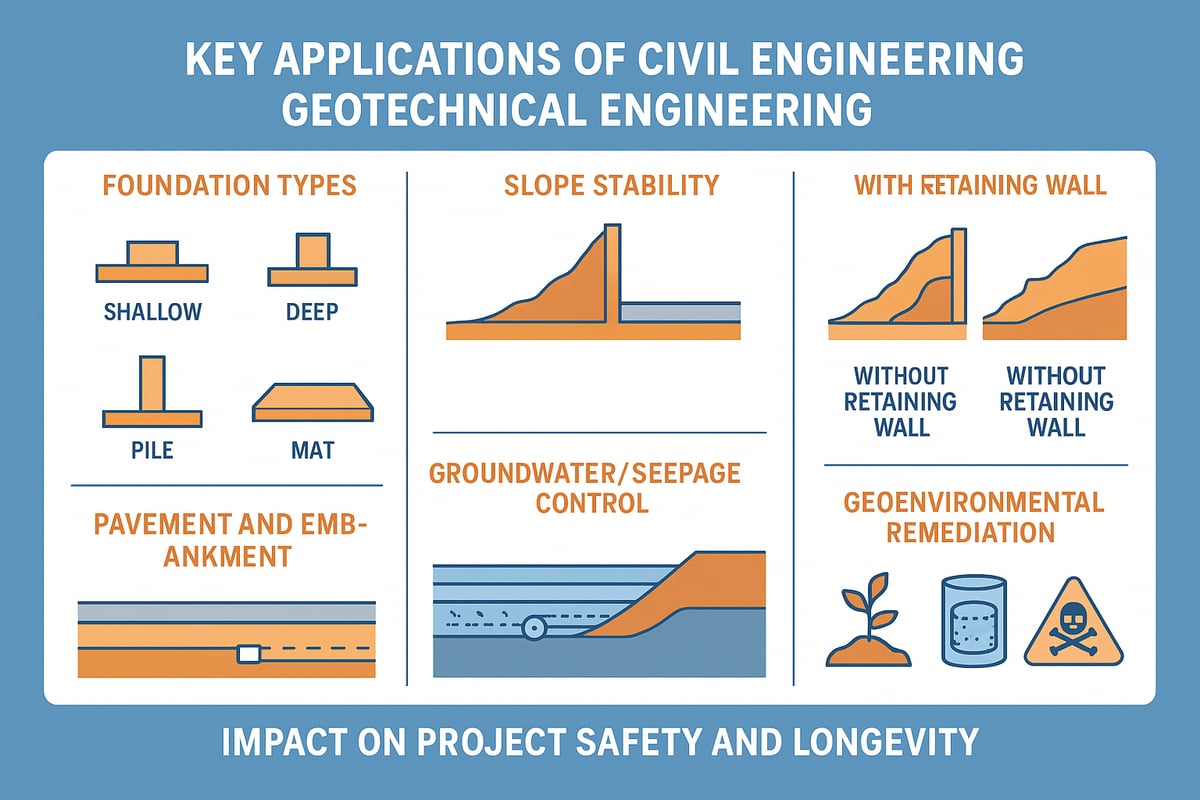
Foundation design is the cornerstone of civil engineering geotechnical engineering. Engineers select from shallow, deep, pile, or mat foundations based on site-specific soil and load conditions.
| Foundation Type | Typical Use | Key Consideration |
|---|---|---|
| Shallow | Low-rise buildings, good soils | Bearing capacity |
| Deep | High-rise, weak soils | Settlement, stability |
| Pile | Bridges, waterfront, soft ground | Load transfer |
| Mat | Heavy, closely spaced columns | Uniform settlement |
For challenging urban sites with variable soils, combining soil mechanics data with innovative design ensures stability. Proper foundation selection within civil engineering geotechnical engineering directly prevents uneven settlement and long-term structural issues.
Slope Stability and Earth Retaining Structures
Assessing natural and engineered slopes is essential for safe infrastructure. Civil engineering geotechnical engineering experts analyze slopes, design retaining walls, embankments, and cut slopes to withstand static and dynamic loads.
Advanced modeling and site monitoring inform decisions, reducing the risk of costly failures. In transportation corridors, slope stabilization prevents landslides and protects public safety. For deeper insights into best practices, explore slope stability engineering solutions that demonstrate how modern analysis methods minimize risks.
Slope failures account for substantial annual repair costs, making proactive design a priority in every project.
Groundwater and Seepage Control
Managing groundwater is a core challenge in civil engineering geotechnical engineering. Effective control ensures safe construction and reliable long-term performance of structures.
Common techniques include dewatering, cutoff walls, and engineered drainage systems. For example, controlling groundwater inflow during tunnel construction prevents flooding and soil instability. Integrating seepage control strategies early in design reduces construction risks and future maintenance expenses. This proactive approach is essential for complex civil engineering geotechnical engineering works.
Pavement and Embankment Design
Geotechnical input is critical in pavement and embankment design for roads and railways. Civil engineering geotechnical engineering determines material selection, compaction standards, and structural layering.
Recycled materials are increasingly used in embankments, promoting sustainability without compromising performance. Proper geotechnical design extends pavement lifespan and lowers lifecycle costs. For every project, engineers balance load requirements, environmental factors, and long-term durability using civil engineering geotechnical engineering principles.
Geoenvironmental Engineering
Geoenvironmental engineering addresses contaminated site assessment, landfill design, and regulatory compliance. Specialists in civil engineering geotechnical engineering develop solutions that protect human health and the environment.
Projects often require integrating geotechnical data with environmental remediation plans. For example, brownfield redevelopment combines soil stabilization with leachate control to enable safe land reuse. As regulations tighten, geoenvironmental practices have become essential for public safety and sustainable development in civil engineering geotechnical engineering.
Education, Skills, and Career Pathways in Geotechnical Engineering
The journey into civil engineering geotechnical engineering starts with a blend of academic training, technical skills, professional networking, and a commitment to diversity. As the field evolves, so do the qualifications and experiences needed to excel. Understanding these pathways helps future engineers align their education and career goals with the demands of the industry.
Academic Pathways and Accreditation
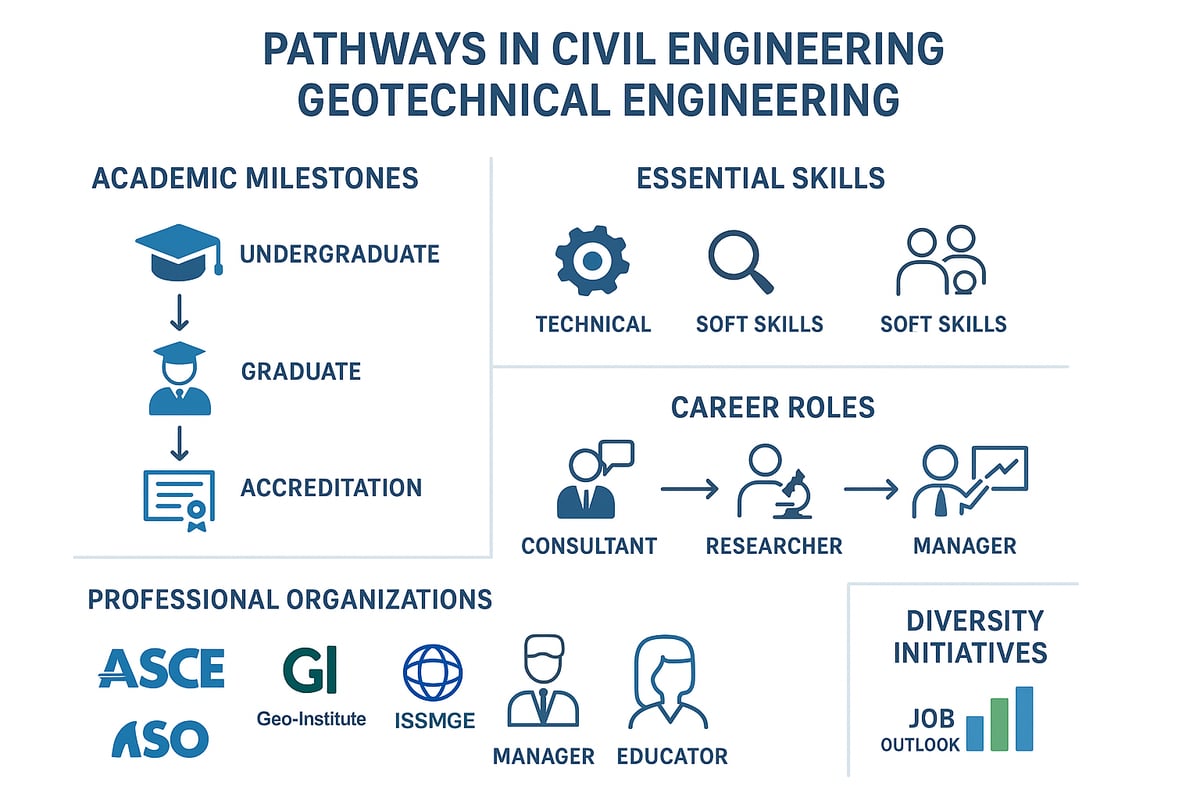
A strong foundation in civil engineering geotechnical engineering begins with formal education. Undergraduate programs introduce core concepts of soil mechanics, site investigation, and foundation design. Many students pursue graduate degrees to specialize further, focusing on advanced analysis, modeling, or geoenvironmental topics.
Accreditation by bodies like ABET or CEAB ensures programs meet rigorous standards, which is crucial for professional credibility. Leading universities, such as Purdue and Illinois, offer specialized courses and hands-on research, giving students exposure to the latest technologies. Enrollment in civil engineering geotechnical engineering programs continues to rise, driven by infrastructure investment and global demand for resilient construction.
Essential Skills for Geotechnical Engineers
Success in civil engineering geotechnical engineering requires a diverse skill set. Technical expertise includes proficiency in soil and rock mechanics, numerical modeling, and advanced laboratory testing. Engineers must also interpret field and lab data, applying it to real-world design challenges.
Equally important are soft skills. Communication, teamwork, and project management help engineers collaborate effectively across multidisciplinary teams. Many employers value certification, such as the Professional Engineer (PE) license, and encourage ongoing education to stay current. A well-rounded approach ensures professionals in civil engineering geotechnical engineering can adapt to evolving industry needs.
Professional Organizations and Networking
Membership in professional organizations supports growth in civil engineering geotechnical engineering. Groups like the American Society of Civil Engineers (ASCE), Deep Foundations Institute, and regional geotechnical societies offer resources, publications, and access to expert communities.
Participation in conferences, workshops, and lecture series, such as the Lovell Lecture and Leonards Lecture, fosters knowledge exchange and professional development. For instance, the Purdue Geotechnical Society connects students and professionals, providing mentorship and networking opportunities. Active involvement accelerates career advancement and helps engineers stay at the forefront of civil engineering geotechnical engineering.
Career Opportunities and Industry Demand
Graduates in civil engineering geotechnical engineering find opportunities in infrastructure, energy, environmental, and transportation sectors. Typical roles include consultant, researcher, project manager, and educator. The job outlook remains robust, fueled by the need to upgrade aging infrastructure and improve climate resilience.
According to the Geotechnical Engineering Career Outlook 2026, demand for skilled professionals will continue to grow, with competitive salaries and opportunities for leadership. Pursuing a PE license can further enhance career prospects, making civil engineering geotechnical engineering an attractive choice for those seeking long-term stability.
Diversity, Equity, and Inclusion in Geotechnical Engineering
Diversity is a growing priority in civil engineering geotechnical engineering. Universities and industry leaders are working to increase representation of women and minorities through targeted programs, scholarships, and mentorship. Early pioneers in the field, like the first women of CEE, paved the way for broader participation.
Inclusive environments foster innovative problem-solving and better project outcomes. Institutions are implementing diversity initiatives, encouraging all voices to contribute. As civil engineering geotechnical engineering advances, embracing equity and inclusion will be vital for attracting and retaining top talent.
Future Trends and Challenges in Geotechnical Engineering
The future of civil engineering geotechnical engineering is shaped by rapid change, new demands, and technological breakthroughs. As the industry adapts, professionals must anticipate trends and overcome emerging challenges to ensure resilient, sustainable infrastructure worldwide.
Climate Change and Resilient Infrastructure
Climate change is fundamentally altering the landscape for civil engineering geotechnical engineering. Increasing weather extremes, such as intense rainfall, flooding, and drought, impact soil behavior, foundation stability, and infrastructure reliability.
Designers are now prioritizing resilience, adapting foundations and embankments to withstand floods, rising groundwater, and permafrost thaw. For example, engineering frozen ground solutions, as discussed in the Leonards Lecture, are critical in northern regions.
Civil engineering geotechnical engineering professionals must integrate climate data, risk models, and adaptive strategies into every project. This focus on resilience is essential for safeguarding communities and ensuring long-term infrastructure performance.
Urbanization and Mega-Projects
The global surge in urbanization is pushing civil engineering geotechnical engineering to new limits. Mega-cities demand complex solutions for space constraints, deep excavations, and variable subsurface conditions.
High-rise buildings and underground transit systems require innovative foundation and tunneling techniques. Urban projects now drive the majority of new geotechnical work, emphasizing the need for advanced site characterization and monitoring.
Civil engineering geotechnical engineering teams must collaborate across disciplines to deliver safe, efficient solutions in dense urban environments. This trend will only accelerate as cities continue to grow and evolve.
Regulatory and Environmental Considerations
Regulatory frameworks for civil engineering geotechnical engineering are becoming more stringent and complex. Evolving state, federal, and international standards require detailed environmental impact assessments and compliance documentation.
Integration of geoenvironmental engineering into permitting processes is now standard practice. Projects must address contaminated land, groundwater protection, and sustainable remediation.
Civil engineering geotechnical engineering practitioners must stay informed on regulatory trends and adopt proactive compliance strategies. Navigating this landscape ensures project approval and public trust, while also protecting the environment.
Technological Disruption and the Digital Workforce
Technological advances are transforming civil engineering geotechnical engineering workplaces. Automation, robotics, and remote monitoring enable safer, more efficient construction and data collection.
Digital twins, AI tools, and cloud-based platforms are reshaping design and project management. Upskilling the workforce is crucial, as digital literacy becomes a core competency. According to the 2026 Engineering and Construction Industry Outlook, these changes are central to meeting future industry demands.
Civil engineering geotechnical engineering professionals who embrace technology will gain a competitive edge, delivering better outcomes and adapting to evolving client needs.
Research Frontiers and Academic-Industry Collaboration
Innovation in civil engineering geotechnical engineering is driven by research at the intersection of academia and industry. New frontiers include bio-inspired materials, nanogeotechnology, and smart soils that respond to environmental changes.
Joint research centers at leading universities, such as Purdue and Illinois, accelerate the transfer of breakthroughs into practice. Conferences like the Advancements in Soft Soil Engineering 2026 showcase the latest developments in testing, modeling, and construction.
Civil engineering geotechnical engineering will continue to evolve as these collaborations foster rapid innovation, ensuring the discipline remains at the forefront of infrastructure solutions.
Globalization and Cross-Border Projects
Civil engineering geotechnical engineering is increasingly global, with teams working on projects that cross national and cultural boundaries. Managing geotechnical risks in diverse environments requires balancing international standards with local expertise.
Standardization of design practices streamlines collaboration, while localization ensures solutions fit unique geological and regulatory contexts. Lessons from multinational developments highlight the importance of cultural competence and flexible project management.
By embracing global collaboration, civil engineering geotechnical engineering professionals spread best practices and drive innovation, shaping the future of infrastructure worldwide.
As you explore the evolving landscape of geotechnical engineering in 2026—from foundational soil mechanics to the latest digital and sustainable innovations—it becomes clear how critical expert support is for successful projects. Whether you are planning a complex infrastructure build, require specialized laboratory testing, or need guidance navigating new regulatory requirements, our experienced team at ZALIG Consulting Ltd is here to help. We offer tailored geotechnical, environmental, and material testing services across Alberta, ensuring your projects are safe, efficient, and future ready. If you have questions or want to discuss your next steps, reach out to us at Contact Us: info@zalig.ca or +1 800 515 0497.