

The future of infrastructure relies on robust, innovative solutions in civil engineering geotechnical fields. As 2026 approaches, are you prepared for the complexities ahead?
This guide brings expert insights, current trends, and proven strategies to help civil engineers navigate an evolving geotechnical landscape. You will explore core principles, digital technologies, regulatory changes, sustainability practices, and career opportunities shaping the field.
Today's projects face rising challenges from climate change, urban growth, and new materials. The importance of civil engineering geotechnical expertise has never been greater.
Gain actionable knowledge and future-ready skills to lead in your profession. Use this guide as your resource to stay ahead and excel in the dynamic world of geotechnical engineering.
Foundations of Geotechnical Engineering in Civil Projects
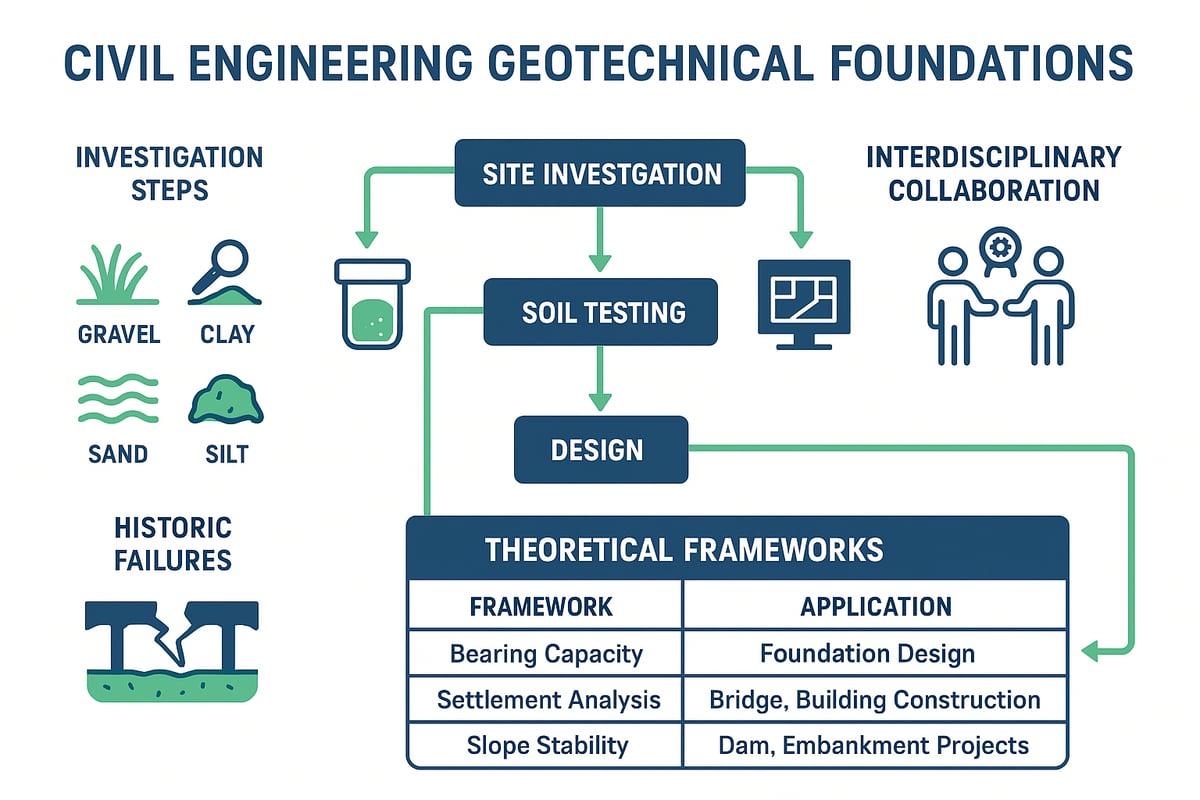
Geotechnical engineering forms the backbone of modern infrastructure. As part of civil engineering geotechnical work ensures that every structure stands on secure, well-understood ground. Its principles guide the safe design and construction of everything from buildings to bridges.
Defining Geotechnical Engineering
Geotechnical engineering is a specialized branch within civil engineering geotechnical disciplines that focuses on the behavior of earth materials. It is responsible for analyzing, designing, and constructing foundations, slopes, earth-retaining structures, and embankments.
Historically, geotechnical failures have emphasized its importance. Notable incidents, such as the collapse of the Leaning Tower of Pisa, reveal how inadequate subsurface investigation can lead to costly problems. Today, professionals rely on advanced tools and standards to prevent such failures.
A solid grasp of geotechnical principles is essential for ensuring safety, stability, and the longevity of infrastructure. For a comprehensive look at the services and expertise involved, see this Geotechnical Engineering Services Overview.
Core Principles and Theoretical Frameworks
The foundation of civil engineering geotechnical practice lies in soil mechanics and rock mechanics. These core sciences explain how soils and rocks respond under various loads and environmental conditions.
Key theoretical concepts include:
- Constitutive modeling: Predicts material behavior under stress, vital for modern design.
- Analytical vs. numerical analysis: Analytical methods offer clarity for simple cases, while numerical techniques, such as finite element modeling, address complex scenarios.
- Experimental modeling: Physical models validate theoretical predictions, enhancing reliability.
In 2026, data-driven design and performance prediction are transforming how engineers approach projects. Numerical analysis enables teams to simulate real-world conditions before construction begins. This proactive approach helps reduce risk and optimize resources, making civil engineering geotechnical solutions more efficient.
| Principle | Application in Projects |
|---|---|
| Soil Mechanics | Foundation design, settlement analysis |
| Rock Mechanics | Tunnel stability, slope reinforcement |
| Constitutive Modeling | Predicting soil-structure interaction |
| Numerical Analysis | Complex site simulations |
| Experimental Modeling | Model testing for validation |
By combining these frameworks, engineers can anticipate challenges and design safer, more sustainable infrastructure.
Geotechnical Investigation and Site Characterization
A thorough geotechnical investigation is the cornerstone of every civil engineering geotechnical project. The process unfolds in several steps:
- Desk study: Review of historical records and site data.
- Field investigation: Techniques like Cone Penetration Testing (CPT), Standard Penetration Testing (SPT), and geophysical methods are used to gather in-situ data.
- Laboratory testing: Soil and rock samples are analyzed for strength, compressibility, and other properties.
- Reporting: Findings are synthesized for design and risk assessment.
Modern projects leverage GIS and remote sensing to enhance site analysis. For example, a recent large-scale highway expansion used a combination of drone surveys and advanced geophysical imaging to map subsurface conditions. This integration of technology led to a more accurate soil profile and minimized unforeseen risks.
Accurately characterizing the subsurface ensures that civil engineering geotechnical designs are both safe and cost-effective. It also supports effective risk mitigation, safeguarding projects from delays and failures.
Interdisciplinary Collaboration and Education
Civil engineering geotechnical practice thrives on collaboration. Engineers routinely work with geologists, mathematicians, chemists, agronomists, and other specialists to solve complex problems.
Academic programs and research centers, such as Purdue’s Geotechnical Facilities, offer tailored study plans for aspiring specialists. These programs combine classroom learning with practical experience, preparing students for the evolving demands of the field.
Continuous professional development is essential. By staying updated on the latest methods and technologies, civil engineering geotechnical professionals maintain their expertise and adaptability. This commitment to learning ensures infrastructures remain resilient and innovative.
Emerging Technologies and Digital Transformation in Geotechnical Engineering
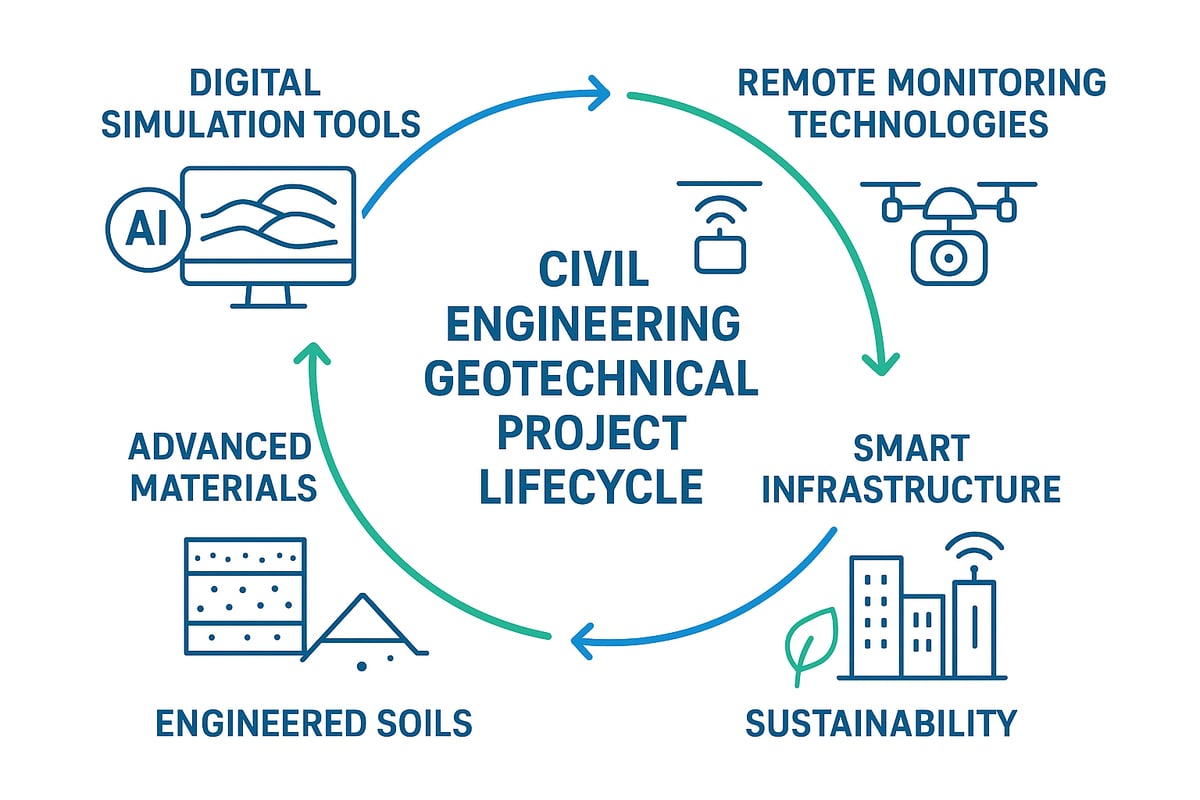
The civil engineering geotechnical landscape is undergoing rapid transformation as technology reshapes how infrastructure is analyzed, designed, and maintained. From digital simulation to data-driven monitoring, these advances empower civil engineers to meet the complex demands of 2026 with greater precision and efficiency.
Digital Tools and Simulation Advances
Digital innovation is at the core of civil engineering geotechnical progress. Advanced finite element modeling (FEM) and 3D simulation platforms now provide highly accurate representations of soil-structure interactions. These tools enable engineers to visualize complex scenarios, optimize designs, and anticipate failure modes early in the project lifecycle.
Digital twins have emerged as a game changer, creating real-time, virtual replicas of physical infrastructure. This technology allows for continuous monitoring and performance assessment, reducing the likelihood of unexpected issues. Cloud-based platforms further enhance collaboration, offering centralized data access for distributed project teams and streamlining workflows.
Artificial intelligence and machine learning are redefining predictive modeling and risk assessment. By analyzing historical and real-time data, AI can identify anomalies and suggest mitigation strategies before problems escalate. For those seeking deeper insight into analytical and numerical approaches, the Geotechnical Numerical Analysis Techniques resource provides a comprehensive overview of the latest simulation methodologies relevant to civil engineering geotechnical professionals.
These advances not only improve design reliability but also speed up project delivery and help control costs.
Innovative Testing and Monitoring Techniques
The evolution of testing and monitoring tools is revolutionizing the civil engineering geotechnical field. Remote and automated site monitoring systems now deliver continuous, real-time data, supporting faster decision-making and improved project safety. Sensors such as piezometers and inclinometers are routinely embedded in the ground to track pore water pressures and slope movements with high precision.
Drones and robotics are increasingly employed for site investigation, enabling the collection of data from challenging or hazardous locations without putting personnel at risk. These aerial and ground-based platforms can rapidly map terrain, identify subsurface conditions, and monitor ongoing construction activities.
Raman spectroscopy, pioneered at leading research institutions, is now used to identify and characterize geotechnical materials with unmatched accuracy. The integration of these technologies enhances data quality, reduces manual errors, and supports safer, more efficient project execution.
By leveraging these innovations, civil engineering geotechnical teams can quickly adapt to site conditions and proactively address potential hazards.
Materials Science and Engineered Solutions
Advances in materials science are opening new frontiers for civil engineering geotechnical applications. The development of engineered soils and geosynthetics allows for tailored ground improvement, addressing site-specific challenges such as weak or expansive soils. These solutions enhance bearing capacity, control settlement, and extend the service life of critical infrastructure.
Nano-materials are making a substantial impact, offering soil stabilization and reinforcement at the microscopic level. These materials improve strength, reduce permeability, and facilitate rapid construction, especially in complex environments.
Rigorous material testing remains essential to ensure quality and compliance with project specifications. Modern testing methods assess properties like stiffness and damping, even for non-homogeneous engineered particles. Sustainability considerations now play a key role, with lifecycle analysis guiding the selection of materials that minimize environmental impact and support long-term project goals.
Civil engineering geotechnical projects increasingly depend on innovative materials to meet both technical and sustainability requirements.
Data-Driven Decision Making and Smart Infrastructure
Big data analytics is transforming how civil engineering geotechnical professionals approach design, construction, and maintenance. By aggregating data from sensors, site investigations, and historical records, engineers can make informed decisions that enhance safety, efficiency, and cost control.
Smart infrastructure is characterized by embedded sensors within foundations and earthworks, continuously transmitting data on performance and condition. This real-time feedback supports predictive maintenance, allowing issues to be addressed before they escalate and reducing unplanned downtime.
Urban informatics and smart city initiatives increasingly integrate geotechnical data to optimize urban development. For instance, in large-scale projects, continuous data streams inform adaptive design strategies, ensuring infrastructure remains resilient in the face of changing environmental conditions.
By embracing these data-driven approaches, civil engineering geotechnical teams are better equipped to deliver reliable, future-ready infrastructure.
Regulatory, Environmental, and Safety Considerations for 2026
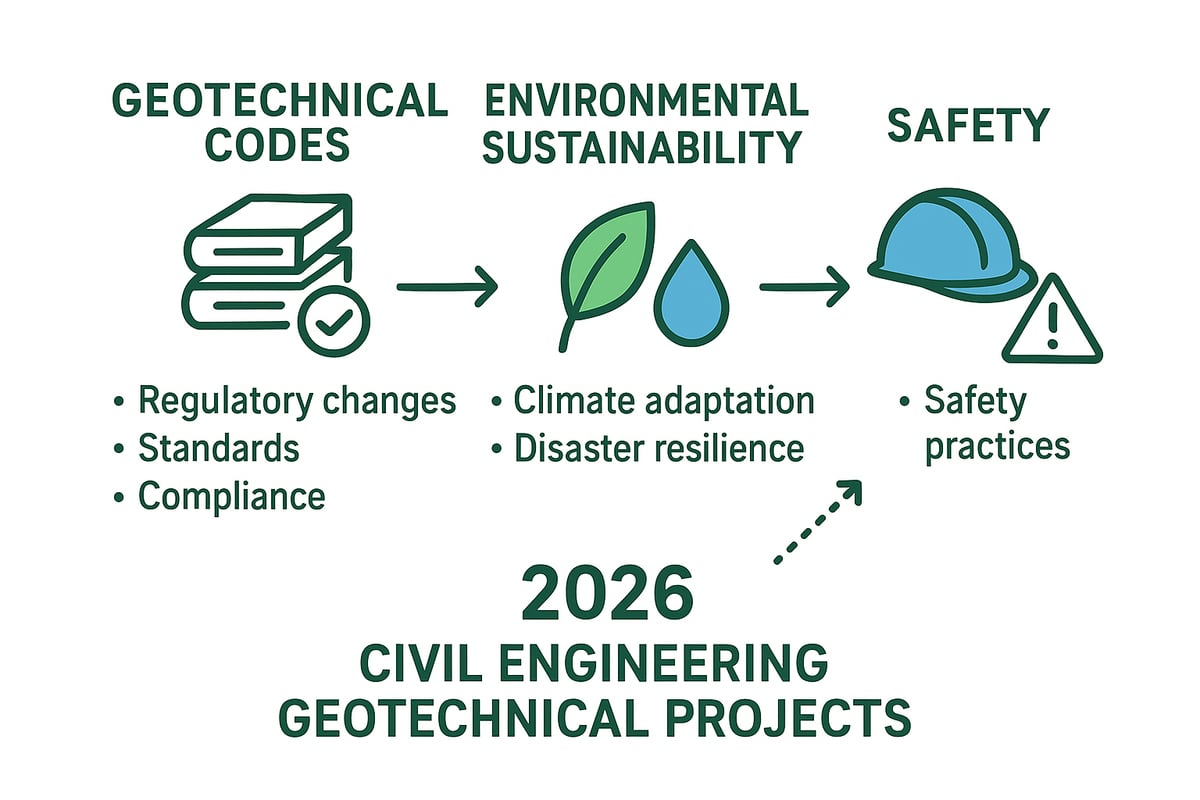
Meeting the demands of modern infrastructure requires civil engineering geotechnical professionals to proactively address regulations, environmental impacts, and safety concerns. As the field advances, staying aligned with new codes, sustainable practices, and risk management is crucial for long-term project success.
Evolving Codes, Standards, and Best Practices
The civil engineering geotechnical sector is seeing rapid changes in codes and standards. Organizations like ASCE, CSA, and ISO regularly update requirements to reflect new research and technology. These updates impact everything from site investigation protocols to foundation design criteria.
Traceability and thorough documentation have become essential. Civil engineering geotechnical projects must demonstrate compliance through detailed records and standardized workflows. Professional certification, such as ASCE’s board certification, is increasingly recognized as a mark of expertise and adherence to best practices.
Keeping pace with these changes means engaging with industry events and resources. For example, the Geo-Congress 2026 Conference Details will highlight the latest innovations and regulatory shifts, offering professionals an opportunity to stay ahead. Proactive adaptation ensures that civil engineering geotechnical teams can deliver safe, reliable, and future-ready infrastructure.
Table: Key Geotechnical Codes and Standards
| Organization | Standard Focus | 2026 Update Highlights |
|---|---|---|
| ASCE | Soil & Foundation | Digital documentation, resilience |
| CSA | Site Investigation | Sustainability, traceability |
| ISO | Material Testing | Global harmonization |
Environmental Impact and Sustainable Design
Environmental responsibility is a central concern for civil engineering geotechnical projects. Regulatory requirements increasingly demand environmental assessments, erosion control, and groundwater protection. Teams must integrate circular economy principles, using recycled materials and minimizing waste.
Sustainable site development practices include habitat preservation and careful management of construction impacts. Lifecycle analysis is now standard in material selection, ensuring long-term viability and compliance. By adopting these measures, civil engineering geotechnical professionals can reduce environmental footprints while delivering reliable infrastructure.
Major projects now showcase sustainability as a core objective. Integrated approaches, such as green retaining structures and permeable foundations, set new benchmarks for environmentally sound engineering. This shift not only meets regulatory mandates but also addresses community and stakeholder expectations.
Health, Safety, and Risk Management
Safety remains a top priority in civil engineering geotechnical operations. Rigorous protocols govern site investigations, excavation, and construction activities. Risk assessment frameworks are used to identify hazards like landslides or soil liquefaction early in the project lifecycle.
Technology further enhances safety outcomes. Remote monitoring and predictive analytics allow teams to track site conditions in real time, reducing exposure to dangerous situations. Ongoing training and adherence to established standards support a strong safety culture in every civil engineering geotechnical project.
Disaster Response and Resilience Planning
Disaster resilience is an integral part of civil engineering geotechnical design. Engineers prepare for earthquakes, floods, and other hazards by building redundancy and adaptability into infrastructure systems. Rapid assessment strategies enable quick evaluation of foundation performance after major events.
Designing for resilience involves regular scenario planning and the inclusion of recovery pathways. Lessons learned from seismic events and flood responses inform new standards and construction methods. By prioritizing resilience, civil engineering geotechnical professionals safeguard communities and critical assets, ensuring infrastructure can withstand and recover from unforeseen challenges.
Sustainable Solutions and Future Trends in Geotechnical Engineering
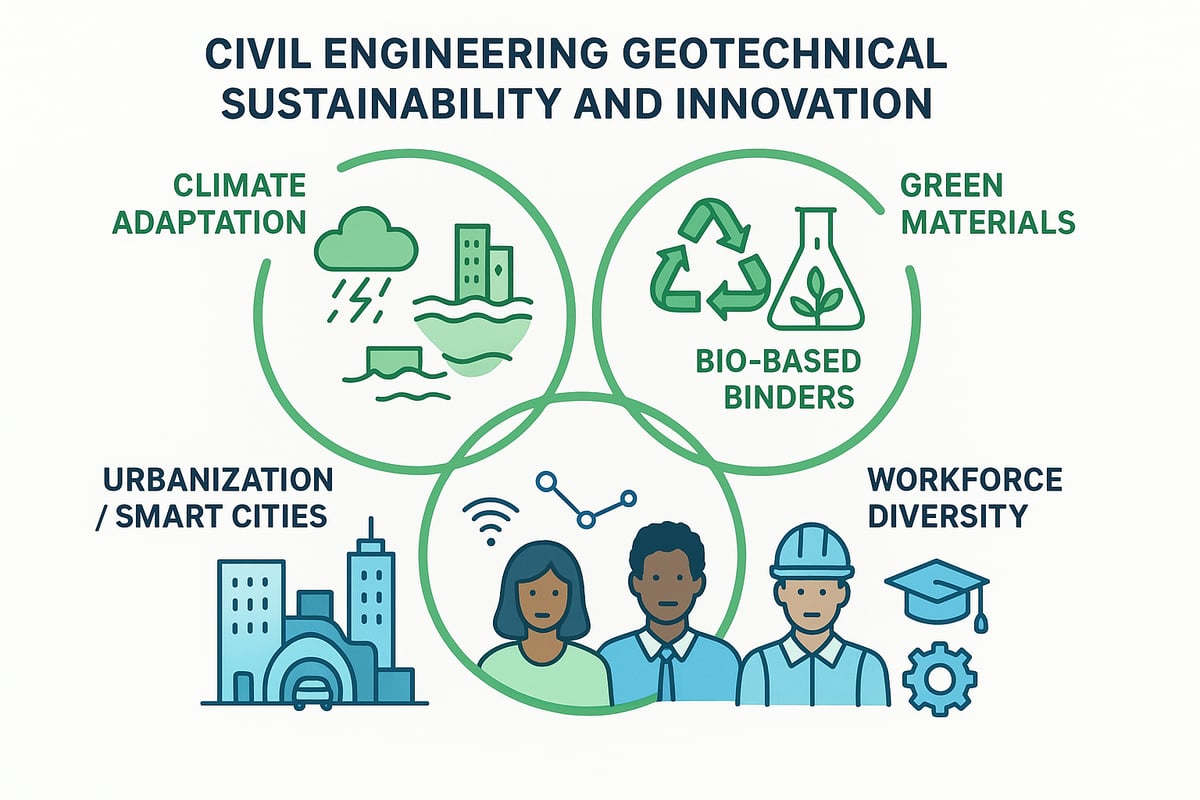
The future of civil engineering geotechnical practice is being shaped by a convergence of sustainability demands, rapid urbanization, and transformative technologies. As we look ahead to 2026, geotechnical engineers must embrace forward-thinking strategies that address climate change, reduce environmental impact, and foster a diverse, future-ready workforce. The following trends and solutions are redefining the field, ensuring that infrastructure remains resilient, efficient, and sustainable.
Climate Change Adaptation in Geotechnical Design
Extreme weather, rising sea levels, and unpredictable climate patterns are presenting new challenges for civil engineering geotechnical professionals. Foundations, embankments, and slopes now require adaptive design approaches to withstand flooding, soil erosion, and thermal effects. Advanced modeling tools and site-specific risk assessments are being integrated to predict soil behavior under variable climate loads.
Techniques such as dynamic slope stabilization, permeable retaining walls, and reinforced flood barriers are gaining traction. Retrofitting infrastructure in flood-prone regions is a priority, with civil engineering geotechnical teams deploying resilient materials and flexible foundation systems. For a deeper understanding of how these trends will shape the industry, review the Geotechnical Engineering Market Trends Report, which highlights the market's growth and the increasing demand for climate-adaptive solutions.
Looking ahead, geotechnical engineers will be central to disaster resilience, integrating climate data into every stage of project delivery. The civil engineering geotechnical field must remain agile, constantly updating best practices to address the evolving climate landscape.
Low-Carbon and Green Geotechnical Practices
Sustainability is now at the core of civil engineering geotechnical innovation. Engineers are prioritizing low-carbon materials, such as recycled aggregates and eco-friendly binders, to reduce the environmental footprint of foundations and earthworks. Bio-mediated soil improvement, using microorganisms to enhance soil properties, is emerging as a promising technique.
Life-cycle assessment tools are guiding material and method selection, ensuring that long-term environmental impacts are minimized. Green retaining structures—like vegetated walls and permeable foundations—offer both structural integrity and ecological benefits. These approaches align with circular economy principles, promoting resource efficiency throughout the project lifecycle.
By adopting these low-carbon strategies, civil engineering geotechnical teams are demonstrating leadership in sustainable construction and helping clients meet stringent environmental regulations.
Urbanization and Smart Cities: Geotechnical Challenges
Rapid urbanization is intensifying the complexity of civil engineering geotechnical projects. As cities densify, underground construction—tunnels, subways, and deep basements—becomes more prevalent. Managing geotechnical risks in these environments requires advanced monitoring, precise data integration, and proactive risk management.
Smart city initiatives are embedding sensors within foundations and earthworks, enabling real-time performance monitoring and data-driven decision-making. Integrating geotechnical data with urban informatics platforms enhances collaboration among engineers, planners, and city officials.
A notable example is the deployment of automated geotechnical monitoring systems in major metropolitan projects. These systems improve safety, reduce maintenance costs, and ensure infrastructure longevity. Civil engineering geotechnical expertise is fundamental to the success of next-generation urban infrastructure.
Workforce Development and Diversity in Geotechnical Engineering
The future of civil engineering geotechnical excellence depends on a skilled, diverse workforce. Training programs now emphasize digital literacy, sustainability, and interdisciplinary collaboration to prepare professionals for emerging technologies and standards.
Professional societies and academic-industry partnerships are driving initiatives to attract talent from underrepresented groups and foster inclusive workplaces. Recognition programs, such as educational awards and research grants, encourage innovation and celebrate achievement within the field.
Continuous learning is essential. As civil engineering geotechnical challenges evolve, engineers must stay current with advancements in AI, smart infrastructure, and global project delivery. By investing in workforce development and diversity, the industry ensures it remains resilient, innovative, and responsive to the needs of society.
Practical Guide: Steps to Successful Geotechnical Project Delivery in 2026
Civil engineering geotechnical projects in 2026 require a disciplined, stepwise approach to ensure safety, compliance, and lasting value. Each phase, from initial planning to lifecycle management, demands precision and collaboration. Below, we break down the essential steps every project team should follow, with actionable insights for successful delivery.
Step 1: Preliminary Planning and Feasibility
The first step in civil engineering geotechnical project delivery is thorough preliminary planning. Teams engage stakeholders to define project goals, assess site constraints, and identify potential risks early. A robust feasibility analysis examines regulatory requirements, available resources, and environmental considerations.
Establishing clear communication channels with all parties is crucial. Early collaboration helps avoid costly scope changes later. Budgeting and timeline estimation are refined with input from geotechnical experts, ensuring realistic expectations.
For example, planning a new transportation corridor involves evaluating soil conditions, access logistics, and regulatory hurdles. By prioritizing detailed planning, civil engineering geotechnical professionals set the foundation for project success and minimize surprises during later stages.
Step 2: Site Investigation and Data Collection
Effective data collection is the backbone of any civil engineering geotechnical project. Teams design investigation programs tailored to site complexity, using a mix of field and laboratory tests. Modern tools like drones, remote sensors, and automated data loggers improve accuracy and efficiency.
Selecting the right testing methods is essential. Techniques such as cone penetration testing (CPT), standard penetration testing (SPT), and geophysical surveys provide critical insights into subsurface conditions. To learn more about advanced field testing, visit In-Situ Geotechnical Testing Methods.
All collected data is integrated and validated for quality assurance. Accurate site characterization informs design decisions and reduces risk. Civil engineering geotechnical teams rely on comprehensive data to ensure safe and cost-effective solutions.
Step 3: Geotechnical Analysis and Design
Once data is collected, civil engineering geotechnical professionals move to analysis and design. They apply analytical, numerical, and empirical methods to model soil and rock behavior, selecting appropriate software for simulation and calibration.
Design optimization focuses on safety, sustainability, and cost-effectiveness. Peer review and design validation are standard, ensuring compliance with codes and best practices. Teams explore alternatives to address challenging ground conditions, drawing on the latest research and digital tools.
Civil engineering geotechnical analysis often involves iterative modeling and scenario testing. This step ensures that foundation designs, slope stabilizations, and retaining structures will perform as intended under real-world loads.
Step 4: Construction Support and Material Testing
During construction, civil engineering geotechnical teams provide on-site support to address unexpected ground conditions. Regular communication with contractors ensures that designs are implemented correctly and that any deviations are promptly addressed.
Material testing, both in the field and laboratory, verifies that soils, aggregates, and other materials meet project specifications. Adjustments to construction techniques or designs are made as necessary, guided by real-time data and ongoing testing.
For instance, real-time monitoring can detect settlement or instability during foundation installation. By proactively responding to field data, civil engineering geotechnical experts maintain quality assurance and minimize delays.
Step 5: Monitoring, Maintenance, and Lifecycle Management
The final step in civil engineering geotechnical project delivery is ongoing monitoring and maintenance. Teams implement sensor-based systems, such as piezometers and inclinometers, to track performance over time.
Scheduled inspections and data analysis allow for predictive maintenance, addressing issues before they escalate. Integration with asset management systems supports long-term infrastructure health and regulatory compliance.
By embracing smart monitoring, civil engineering geotechnical professionals ensure that projects remain safe, resilient, and cost-effective throughout their lifecycle. This proactive approach is essential for infrastructure that must withstand evolving environmental and operational demands.
Career Pathways, Professional Development, and Industry Leadership
A successful career in civil engineering geotechnical fields requires a blend of technical expertise, ongoing education, and strong leadership. As the industry evolves, professionals must adapt to emerging challenges and embrace opportunities for growth. Let us examine how career trajectories, certification, research, and future skills are shaping the landscape for geotechnical engineers in 2026.
Geotechnical Engineering Career Trajectories
Civil engineering geotechnical careers span a diverse range of roles, each offering unique challenges and rewards. Entry-level positions often include field engineers, who oversee site investigations and testing, and laboratory specialists, responsible for soil and material analysis. As experience grows, professionals may become design consultants, developing solutions for foundations, slopes, and retaining structures.
Project management is a natural progression, providing oversight for complex projects and multidisciplinary teams. Key skills for advancement in civil engineering geotechnical careers include analytical thinking, technical writing, leadership, and proficiency with digital tools. According to workforce data, demand for geotechnical engineers is projected to rise in 2026, driven by infrastructure renewal and increased focus on sustainable development.
| Role | Typical Duties | Advancement Path |
|---|---|---|
| Field Engineer | Site testing, data collection | Project Engineer |
| Laboratory Specialist | Soil/material analysis, reporting | Senior Analyst |
| Design Consultant | Foundation and slope design | Lead Designer |
| Project Manager | Team leadership, project delivery | Senior Manager |
This upward mobility makes the civil engineering geotechnical field attractive for those seeking both technical and managerial growth.
Certification, Licensure, and Continuing Education
Professional certification is essential in civil engineering geotechnical practice. Licensure as a Professional Engineer (P.Eng or PE) is often required for independent project oversight and is recognized as a mark of competence and trust. Board certifications, such as those offered by the ASCE, further validate specialized knowledge and commitment to the field.
Continuing education is critical to remain current with evolving standards and technologies. Opportunities abound through university programs, online courses, and conferences. Many organizations provide structured learning paths tailored to civil engineering geotechnical professionals, covering topics like advanced soil mechanics, digital modeling, and sustainability.
- Certifications: P.Eng, PE, Board Certifications (ASCE)
- Education: Graduate Certificates, Master's/PhD, Online Modules
- Professional Development: Workshops, Seminars, Industry Conferences
Investing in certification and lifelong learning not only enhances technical skills, but also opens doors to leadership roles and greater project responsibility within civil engineering geotechnical teams.
Leadership, Research, and Community Engagement
Leadership in civil engineering geotechnical practice is exemplified by academic pioneers, industry innovators, and active contributors to professional societies. Notable figures such as Dr. Milton E. Harr and Gerald A. Leonards have advanced the discipline through research, teaching, and mentorship. Today, involvement in societies like ASCE and ISSMGE is vital for networking, knowledge exchange, and advocacy.
Research centers and collaborative projects are at the forefront of innovation, addressing complex challenges with new methodologies. For example, exploring Physics-Informed Extreme Learning Machine for Soil-Pile Interactions demonstrates how machine learning is revolutionizing predictive modeling in geotechnical engineering.
Mentorship, outreach, and community engagement further strengthen the profession. Participation in workshops, technical committees, and volunteer programs supports the next generation of civil engineering geotechnical experts.
Future Skills and the Next Generation of Geotechnical Engineers
The future of civil engineering geotechnical practice demands digital literacy, sustainability expertise, and interdisciplinary collaboration. Skills in data analytics, AI, and smart infrastructure are increasingly important as projects become more complex and technology-driven. Diversity is also a key focus, with initiatives aimed at attracting talent from varied backgrounds.
Professional societies and academic-industry partnerships are investing in training programs for emerging technologies and standards. Events such as the International Conference on Advances in Soft Soil Engineering 2026 provide platforms for learning, networking, and showcasing innovation.
Profiles of award-winning students and educators highlight a commitment to excellence, while recruitment and retention strategies ensure a robust pipeline of civil engineering geotechnical professionals. Preparing for new challenges, from AI integration to global project delivery, positions the next generation at the forefront of infrastructure advancement.
As you look ahead to the evolving world of geotechnical engineering in 2026, having the right knowledge and support is essential for every successful project. Whether you're tackling complex site investigations, navigating new sustainability standards, or seeking innovative testing solutions, you deserve a partner dedicated to your goals. At ZALIG Consulting Ltd, we blend local expertise with a commitment to quality and tailored service across Alberta. If you have questions or want to discuss how we can help bring your next project to life, I encourage you to Contact Us: info@zalig.ca or +1 800 515 0497.